It was July 1, 1963 and Terry O’Neill was just one of dozens of staff and freelance photographers who worked for the ultra-competitive “Fleet Street” newspapers in London. But he was also one of—if not the—youngest shutterbugs.
So when his editor at the Daily Sketch asked him to head over to EMI Studios on Abbey Road to take some shots of a pop group who he felt might have something going on, O’Neill did. He already knew a lot of the bands and club scene in London, but this was a group who’d come down from Liverpool. Some band who called themselves the Beatles.
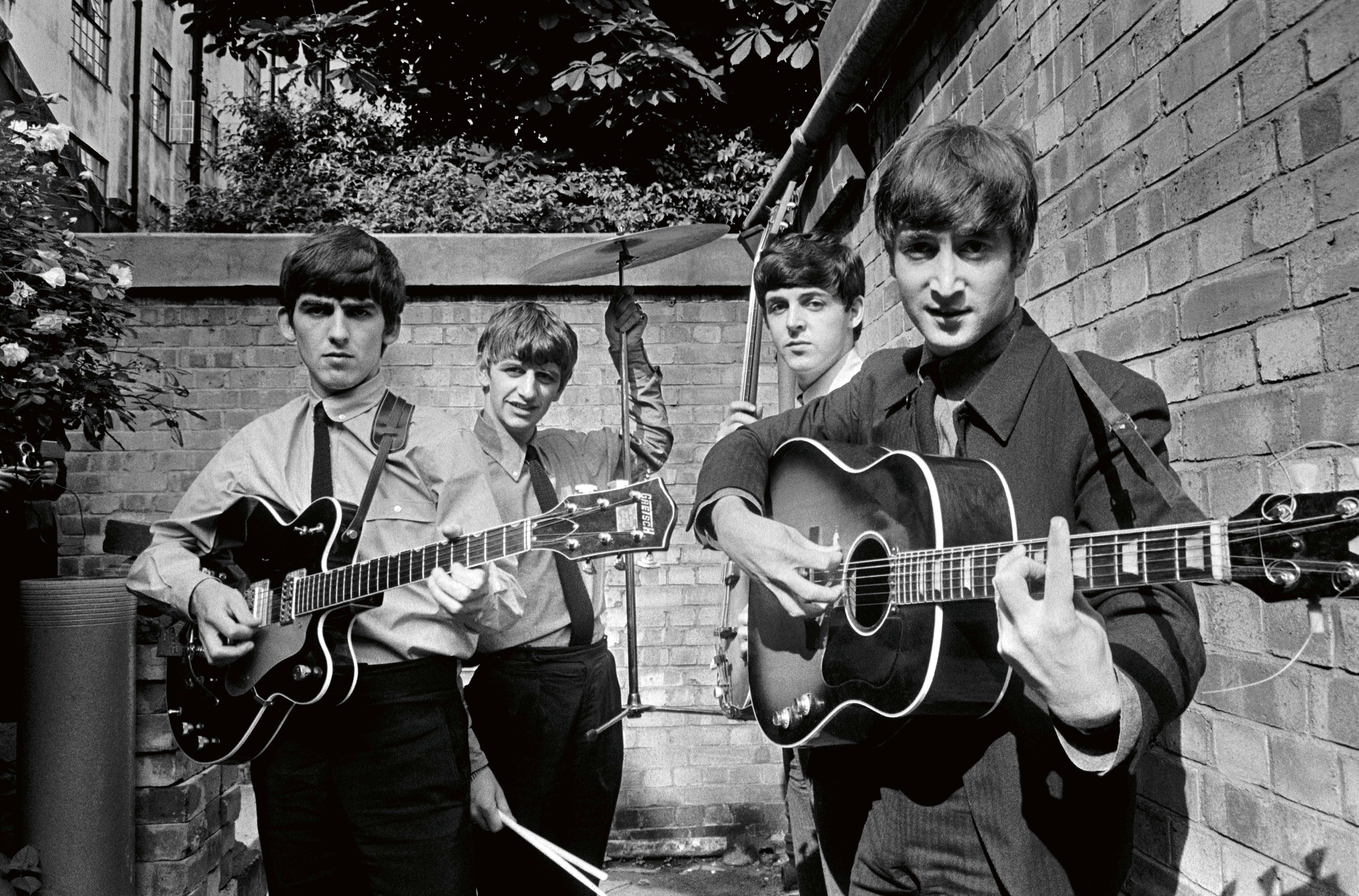
During a break while recording their new single “She Loves You” and B-side “I’ll Get You” O’Neill took John, Paul, George and Ringo into the back yard, clicking off some quick shots of the group posing with their respective instruments. Since they didn’t want to carry Ringo’s entire drum kit out, he’s got sticks and a cymbal in his hand. They all look pretty serious.
Looking at the photo today, it’s compelling to think what would lay ahead for these four young lads, and how they and their music would affect the world.
It’s also one of O’Neill’s most famous of the many, many images he took of the group both together and apart. It’s not suprising that it’s this image which graces the cover of The Beatles by Terry O’Neill: The Definitive Collection (256 pp., $39.99, Weldon Owen/Simon & Schuster).
O’Neill and his paper were on to something for sure. When his session pictures were chosen to appear on the front page, the issue quickly sold out. Maybe there was something to this beat music—and teenagers with money to purchase newspapers and magazines—after all.
“The Beatles knew how to work the camera—my camera, as well as the television cameras,” O’Neill, who died in 2019, is quoted in the book’s intro. “They were magic on film, and what we were doing behind those cameras was to propel them from a club band to number-one recording artists.”

The book includes the band in settings ranging from TV and record studios and stages to homes and outdoors scenes, sometimes—gasp—smoking cigarettes! Most are relaxed and unposed.
O’Neill also captures some other famous faces with the band. Both figures from Beatles history like producer George Martin, publisher Dick James, and wives Pattie Harrison and Cynthia Lennon. There’s also musicians Eric Clapton, Carl Perkins and Dave Edmunds along with showbiz figures like Laurence Olivier, Marlene Dietrich, Twiggy and Raquel Welch.
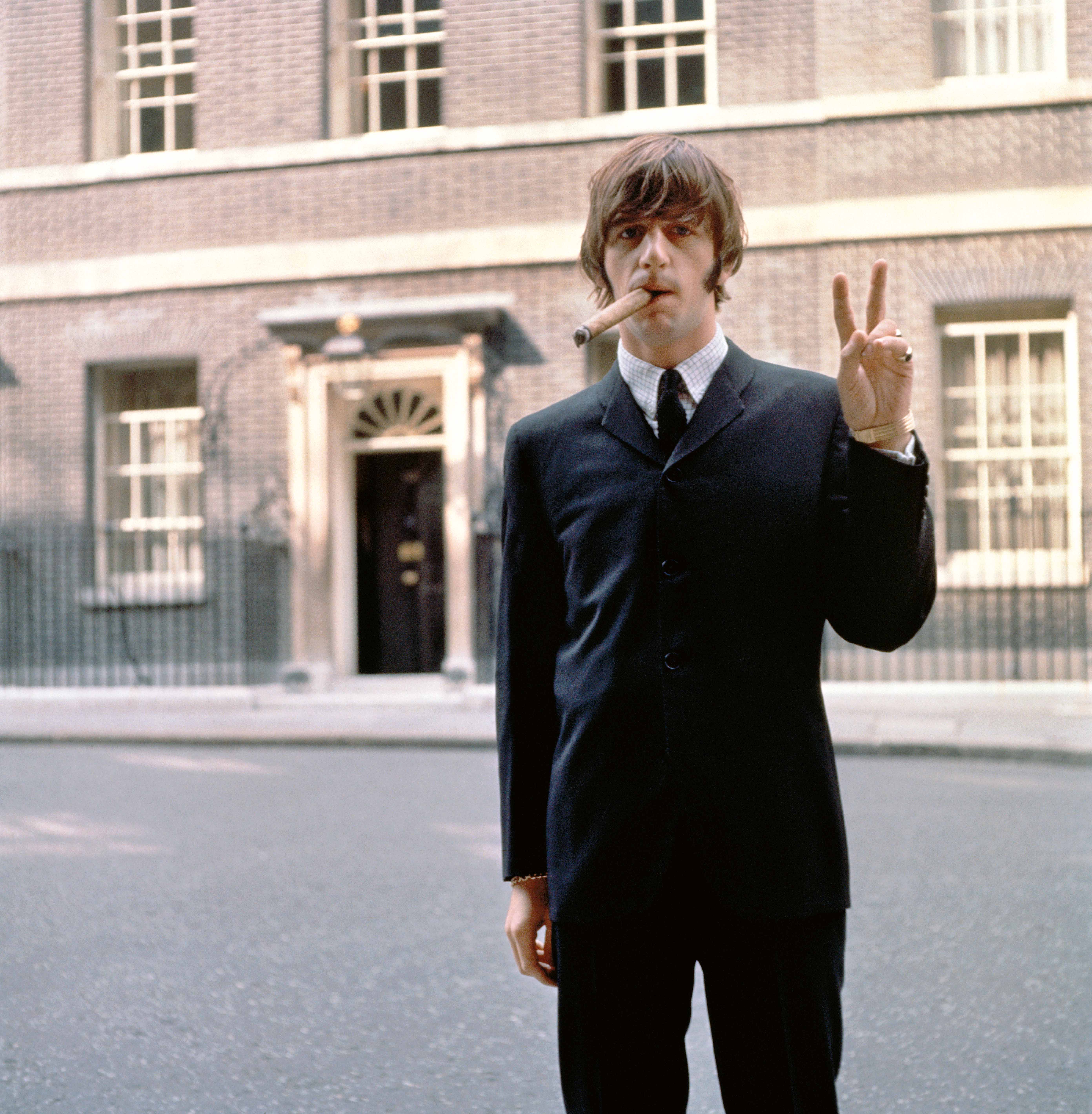
A drummer himself, O’Neill was closest to Ringo Starr, and there’s shots of him imitating Winston Churchill with a big cigar and flashing a peace sign right outside the Prime Minister’s residence at 10 Downing Street in the early days of Beatlemania. O’Neill is there on opening night of the ill-fated Apple Boutique, where readers learn only apple juice was served as they did not have a liquor license.

He also visits a post-breakup George Harrison on the grounds of his estate, looking very guru-esque. He’s also on the ground with Paul McCartney and Wings rehearsing for their 1975 tour, as well as with Paul and Ringo on the set of the film Give My Regards to Broad Street.
But the run of photos of the most interest as those he took at Ringo Starr’s 1981 wedding to Barbara Bach, where O’Neill was both a guest and tasked with taking photos to provide to the world. It was the first time the three surviving Beatles were all together (with their wives) since the assassination of John the year before.
O’Neill remembers a courier on a motorbike was standing ready at the Marylebone Registry Office where the ceremony took place. The freshly-shot film was given to him, then speeded to a lab for developing so the contact sheets could then be rushed back to Starr and Bach at their reception for their approval or rejection.
Over the course of their career, the Beatles established relationships with a number of photographers, including Robert Freeman, Ethan Russell, Iain MacMillan, Harry Benson, David Redfern and—back when they were a scruffy, leather-clad club band call the Silver Beetles—Astrid Kirchherr.
But in Terry O’Neill, they had someone behind the lens who was more of a contemporary and who they trusted. It’s this relationship that jumps off the pages in the images of this coffee-table tome, which is definitely not Just Another Beatles Photo Book.
This article originally appeared at HoustonPress.com


 Classic Rock Bob