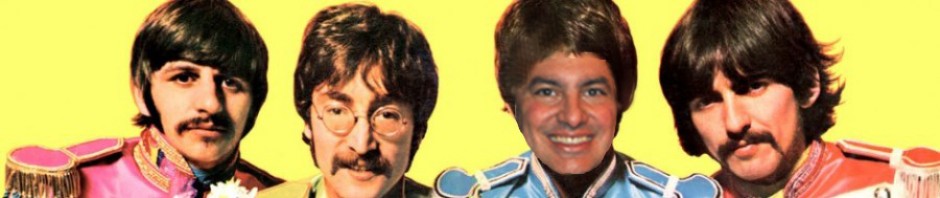
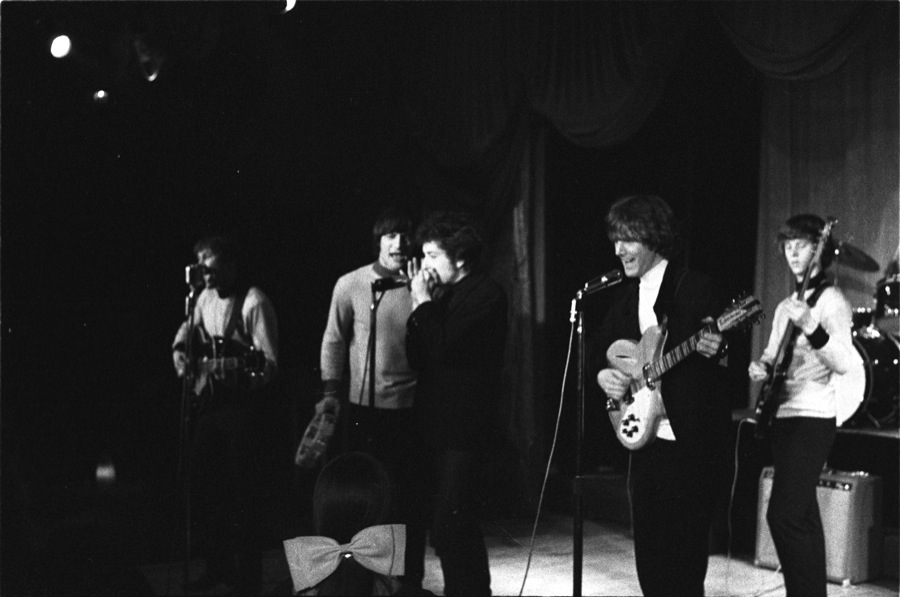
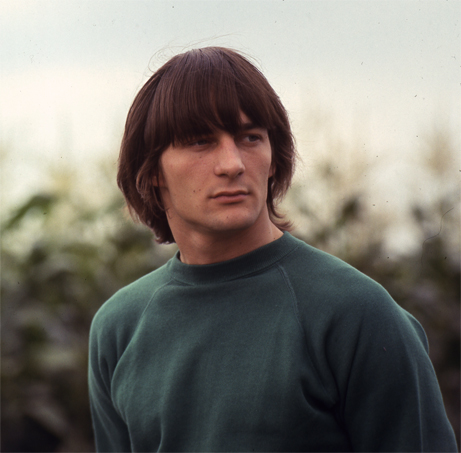
As a founding member of the Byrds, Gene Clark was folk rock royalty. Onstage, he usually stood center, leaning into his microphone while occasionally shaking a tambourine. Though his well-built physicality, near-bowl haircut and cool inscrutability instantly drew the eye.
Clark’s real value to the Byrds was as a songwriter. He was by far the most prolific penner of their original material, co-writing “Eight Miles” high and penning alone “I’ll Feel a Whole Lot Better,” “She Don’t Care About Time,” and “Set You Free This Time.”
Still, it came as a bit of a shock when less than eight months after the band’s debut single—a danceable cover of Bob Dylan’s “Mr. Tambourine Man”—hit #1, Clark abruptly left the band, citing frustrations with his bandmates and—ironically—a fear of flying.
The next few decades would find him following a Quixotic career of solo releases, collaborations, and different bands. His death came in 1991 at the age of 46 from a heart attack, though a bleeding ulcer and heavy drug and alcohol use were contributing factors. But his group of growing admirers praised his contributions, especially to the formation of country rock and alt country.
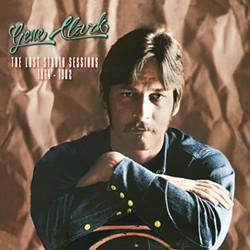
Clark was always in the studio, often under the guidance of producer Jim Dickson, who always kept tape rolling. Gene Clark: The Lost Studio Sessions 1964-1982 (Liberation Hall) collects 24 unreleased tracks from five sessions showcasing him in both solo acoustic and band settings. He’s backed by members of the Byrds, Flying Burrito Brothers, and Manassas, along with musician Leon Russell and Hugh Masekela.
Originally released in 2016, it made its CD debut for Record Store Day this year. It’s a tour de force for Clark, and should only burnish his reputation.
Tom Sandford probably knows more about the life and music of Gene Clark than anyone, a diehard fan and archivist who has run the exhaustively detailed Clarkophile blog (www.clarkphile.blogspot.com) since 2008. He’s an Associate Producer on this release.
One of the remarkable things is how The Lost Studio Sessions chronicles the evolution of Clark’s voice. From dramatic, showy vibrato to straight up Dylan impersonator and smooth troubadour to country rock twanger. Though by the last sessions, the vocals shows a weathered roughness that was reflected in his life.”
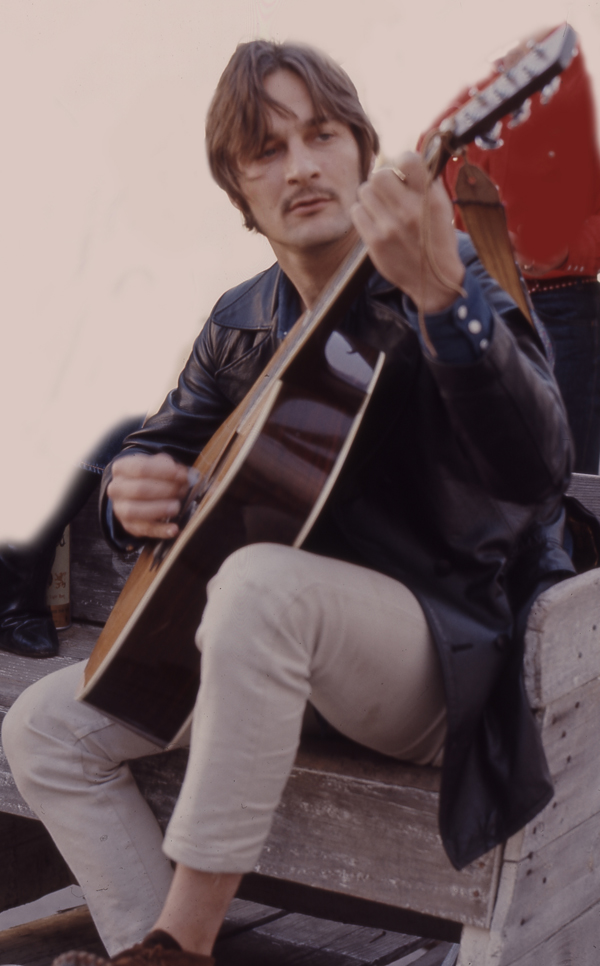
“That’s a perceptive assessment. Early on, someone described his voice as having a ‘peach fuzz’ quality, and he’s trying to find his voice early on. And everyone was obsessed with Dylan at the time,” Sandford says.
“It’s not a rock voice but has a bit of folk. He’s flirting with a mid-tempo, melancholy sound that he made his own. And by the time you hit the 1970s, that’s pure Gene Clark. And the breadth and scope of the acoustic material is astonishing.”
It’s the sound of White Light (1971), Roadmaster (1973), often considered his best work. And after an short-lived Byrds reunion came the bigger sound of No Other (1974). Sandford adds that Clark’s “most heartrbreaking ballads” usually came on the heels of failed romantic relationships.
“He’s also dealing with themes of philosophy, ecology and spirituality. His voice has a quality of grace, on the acoustic material here, and I don’t use that term lightly. I’m not sure that he ever captured that sound again,” he continues.
“It’s due to Jim Dickson’s forethought that these recordings were preserved. They’re all his that he had ownership of. And he said that Gene never sounded better than the 1972 recordings here.”

And the true hero of this project? John Delgatto of Sierra Records, who unearthed, preserved, and archived these sessions, inheriting Dickson’s source material form the producer (who died in 2011) himself, then working with the Clark Estate.
Sandford also believes that Clark was “leaps and bounds” ahead of songwriting compared to most of his more famous and better known contemporaries—though he admits he’s a “little biased” in that area.
Another aspect of The Lost Studio Sessions is that every song is a complete or almost complete track. There’s no demo or “working it out” sound to any of this. As to why it all stayed in the can, the record’s extensive and informative liner notes note that Gene Clark’s scattered sessionography was littered with “planned, half-realized or abandoned projects.”
“There was bad luck, bad decisions along the way in terms of management. All of this material is not half-assed and it’s well-recorded. And that’s the miracle of this set,” Sandford says. “It’s really kind of astonishing that this material never saw the light of day because so much effort was put into it. Gene put so much effort in. It’s a shame that it didn’t come out, but it’s revelatory for Byrds and Gene Clark fans.”
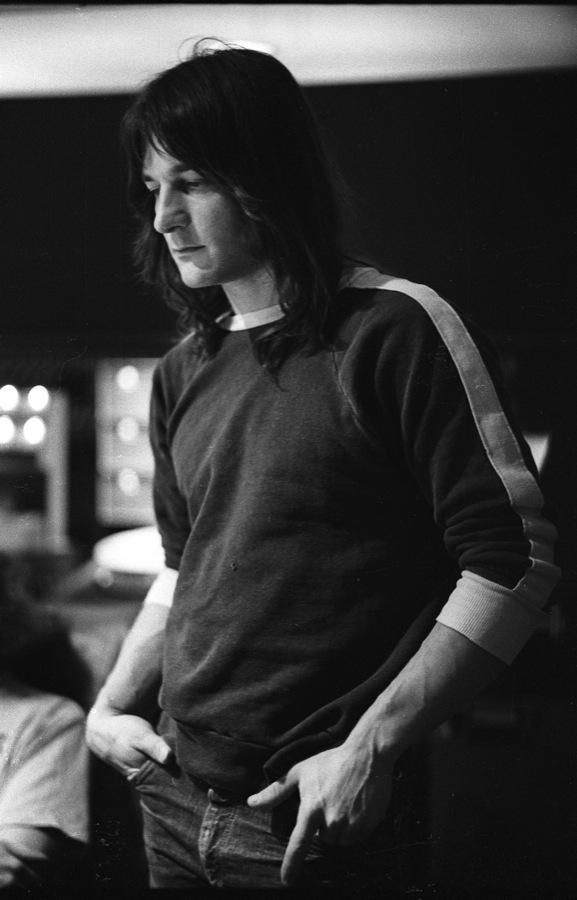
Gene Clark had a latter career boost with So Rebellious a Lover, his 1987 collaboration with Carla Olson. It was right on the edge of the burgeoning No Depression/Alt Country movement that was critically well received. And maybe just a tad bit ahead of the curve.
“Gene was always looking forward. He made a conscious decision not to repeat himself on any albums. He wanted new styles, no approaches. White Light is very stark and acoustic. Roadmaster has rich country sounds and No Other is completely bombastic in production that people ever lover or hate,” he says.
“So Rebellious a Lover came out at the right time, it just didn’t catch on. Gene was even big among the Paisley Underground movement of the ‘80s. A lot of people were emulating is look and style,” Sandford continues.
“Had he lived, he would have been embraced by bands like Uncle Tupelo. I’m not sure he would have stayed with the alt country sound. But he passed at precisely the wrong time. It’s a shame he couldn’t have held on longer, because he would have seen true appreciation of his music. And that’s something that eluded him in life.”
A sort of companion release from Liberation Hall release is the 29 track/2 CD The Flying Burrito Brothers: Live in Amsterdam 1972 (the CD and digital versions include five bonus tracks not on the vinyl). This is not the original lineup that appears with Clark on portions of his CD and put out the groundbreaking country rock release The Gilded Palace of Sin and Burrito Deluxe
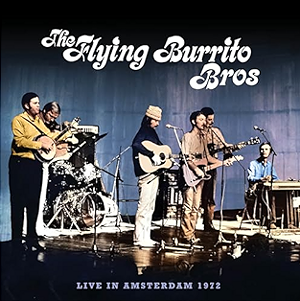
It’s a loose-feeling show (perhaps reflective of the fact that they hadn’t had a single rehearsal together) that runs the gamut from some of the most recognizable FBB material (“Sin City,” “Christine’s Tune,” “My Uncle,” “The Image of Me”) to country classics (“Sing Me Back Home,” “Six Days on the Road,” “She Thinks I Still Care,” “The Wild Side of Life”).
And many geographically named bluegrass “breakdown” tune. Also Chuck Berry’s “Roll Over Beethoven” and the Rolling Stones “Wild Horses”—the latter said to be inspired at least in spirt by Gram Parsons’ influence on the band .
Lead vocalist/guitarist Rick Roberts—who made his debut on the Brothers third album—is prominent with his solo-written “Colorado,” “Four Days of Rain” and “Why Are You Crying.” He would dissolve the band the next year to form Firefall.
The rest of the group here includes Byron Berline (fiddle/vocals), Roger Bush (bass/vocals), Kenny Wertz (guitar/vocals), Alan Munde (banjo/guitar), Eric Dalton (drums) and Don Beck (pedal steel/mandolin). The last three had actually been drafted in to fulfill the band’s last concert bookings in the Netherlands, Sweden, and Denmark, making it the seventh unique lineup in the band’s short history.
The article originally appeared at HoustonPress.com


 Classic Rock Bob