It’s understandable why the general public’s perception of what music writers do is based on Cameron Crowe’s semi-autobiographical 2000 film Almost Famous. Hanging out with the band for a week! Backstage and hotel parties! Drugs! Groupies!
But the reality of profession in 2024 is that for features to advance a concert, you might get 20 minutes on the phone with a bandmember, sandwiched between similar chinwags with a bunch of other writers likely asking many of the same questions.
The one boon from the pandemic, though, is the prolificacy of the Zoom interview. More and more musicians are OK with this option and both writer and subject get to actually see who they’re talking to. It makes for a better conversation, better answers, and a better story.
Still, it’s a bit of a shock to see The Metal God himself, Rob Halford of Judas Priest, pop up on the laptop screen in my dining room in all of his bald/bearded/tattooed/nose-ringed glory. And yes, I can confirm that his Zoom screen name is actually “The Metal God.”
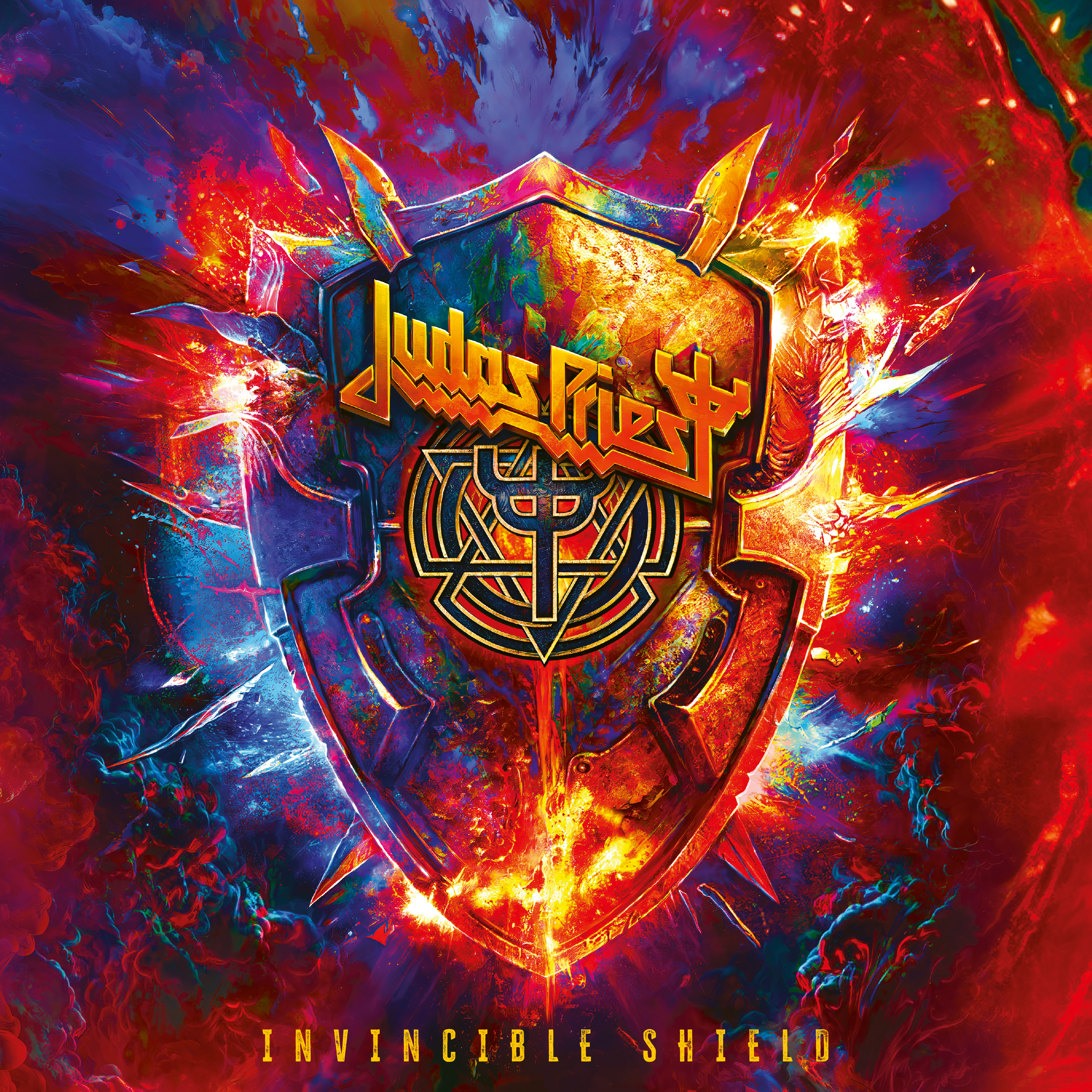
“Texas is nuts for Priest!” the lead vocalist says on a call whose main purpose is to discuss their powerful latest record Invincible Shield. And the tour that will bring them to Houston. “There’s a lot of heavy metal fans in that state. Always have been.”
When the I last spoke with Halford back in 2008, he was calling all the way from Bucharest, Romania during a tour stop. And while U.S. fans certainly love heavy metal and have supported Judas Priest for now more than 50 years, fans in Eastern Europe and Latin/South America are in particularly rabid, even if they don’t speak English.
Halford has some thoughts as to why.
“Metal hits everybody in the same way. But there are some cultures that display their emotions and passions a bit differently,” he offers. “We’re all on the same field, we’re all together, the heavy metal community. But there were certain countries that were very repressed and depressed with music and what they could listen to or not. There are no inhibitions. They just let it out.”
Beyond that, he’s notes it’s just this explosive joy of coming together with thousands and thousands of people at a concert. And not just with Judas Priest, but any kind of music.

Halford tells the story of appearing on a TV show hosted by Slavi Trifonov, who he calls “the Johnny Carson of Bulgaria.” Trifonov told him how as a teenager he and his friends would sneak into a basement and play Judas Priest records—but softly—since the band and heavy metal in general were actually banned by the government at the time.
Last year’s Invincible Shield is Judas Priest’s 19th studio album. It’s a shockingly strong effort, better than their previous release, 2018’s well-regarded Firepower. Even more shockingly, Halford’s trademark scream and falsetto seem untouched by time, further cementing his stature as one of the top three classic heavy metal vocalists of all time (along with Mssrs. Dickinson and Dio).
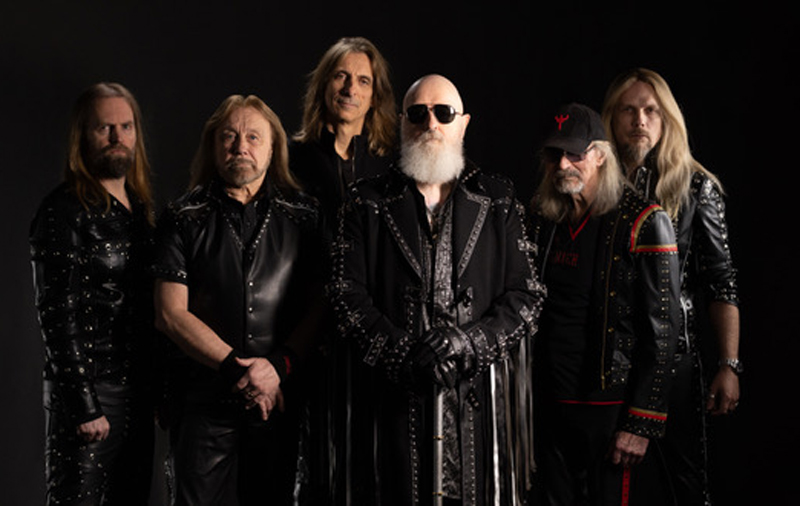
Halford is passionate that Judas Priest does not want to become a “legacy band” simply living in the past. And that the creative fire still burns hotly within the current lineup that includes Halford, founding bassist Ian Hill, longtime drummer Scott Travis, and guitarists Richie Faulkner and Andy Sneap. Founding guitarist Glenn Tipton, unable to tour due to his health, also contributed to writing and playing.
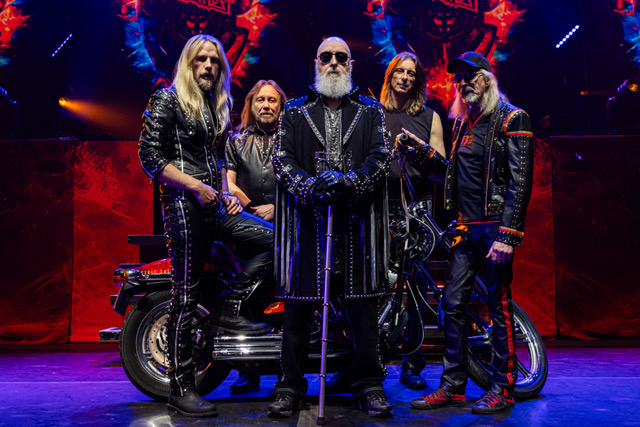
“It’s about not resting on your laurels. Burn the laurels, throw them on the fire! Priest is determined to give you the best metal that we can make. We are here representing metal in 2024. It’s a love and passion and desire,” Halford says.
“The joy about music is that you can’t control it. It should be uncluttered and free as its being created. And the way these songs came together was really no different that the hundreds we’ve done in Priest. It’s the connectivity between the start of the record and the back end. We’ve always been an album band. And it’s the passion and thinking what can we do next and push the gas pedal a little harder.”
Invincible Shield was recorded in a way that the band wasn’t used to. Due to years lost because of the pandemic, then the band’s “50 Years of Heavy Metal” tour, members often recorded their parts separately.
Faulkner and Scott in Nashville. Halford in Phoenix. And Hill “in various hotels rooms throughout Europe.” Through the magic of technology, it was all patched together, still sounding cohesive. Halford calls the process “difficult,” but realizes it was necessary.
Still, Halford is aware of the “treasure trail” of their back catalog, from 1974’s debut Rocka Rolla (about to get the 50th anniversary reissue treatment), through Sad Wings of Destiny, Screaming for Vengeance, British Steel, Painkiller, Turbo, and beyond.
During the past few years, Rob Halford has also become—much to his chagrin—an “author.” First came his highly entertaining and revealing 2020 autobiography, Confess. It was followed two years later his Halford’s-Thoughts-on-Heavy-Metal-and-Other-Topics, Biblical. Both were written with (uncredited) ghostwriter Ian Gittins.
“I’m not an author. It’s a book with my yabbering in it! But it is nice. And if you’re going to do an autobiography, you really only get one chance. Because once it’s out there, you can’t change it,” Halford says. Detailing he’d “yabber” into Gittins’ three simultaneously running tape recorders, which would then be sent to a transcription service, then returned to the pair for editing.
“We had so much fun!” he notes. When asked about a potential third book, Halford says it’s been on his mind, but he’s stuck for a topic or theme. “If you have any ideas, Bob, please call the office and let me know! I could use some inspiration!”
Of all the current members, Halford undoubtedly has the closest and longest relationship with Ian Hill. In fact, it was Hill who brought Halford and his voice into the already-existing band in the first place, while he was dating Halford’s sister in the early ‘70s (Halford would replace singer Al Atkins in 1973, prior to Rocka Rolla).
“We have an unspoken language. He’s the brother from another mother. He’s such a beautiful man, just a remarkable person. He’s so calm where I’m so explosive!” Halford laughs.
“He’s the anchor of the band with his bass. Just the way that he stands there. Originally, he would never move like his friend the Ox, John Entwistle of the Who. Eventually he started rocking [side-to-side] like on a Heavy Metal Galleon. And his work with Scott on percussion, man that is vital to the band!”
Finally, in a bit of unintended heavy metal confluence, the I recently spoke with Tim “Ripper” Owens. He famously replaced Halford in 1996 after Halford quit Judas Priest, and stayed until Halford’s return in 2003. Owens was in town recently fronting K.K.’s Priest, an offshoot group led by original Priest guitarist K.K. Downing, who left the group in 2002. Got all of that?
And while Owens says some of the press has made them out to be enemies, he says he “loves” Halford, and asked this writer to pass along his greetings when told their interviews would take place a week and a half apart.
When Halford hears this, he is pleased.
“I love that guy! There’s an enormous amount of mutual respect between me and Tim. He sings what he feels. I’m so happy he’s out with K.K.,” Halford says
“It’s such a great time because you’ve got them out on the road, also Priest, Iron Maiden, Accept, and Saxon. Look at the longevity of these bands. It says a lot about these guys and the validity. All of us were pioneers of heavy metal. It’s a blast!
For more on Judas Priest, visit JudasPriest.com
This interview originally appeared at HoustonPress.com


 Classic Rock Bob
Pingback: Rob Halford: KK Downing's Judas Priest Place is Permanent - World Today News
DONALD FAGAN AMRCIAN COUNTRY SINGER