Firefall Drop First New Record in Two Decades

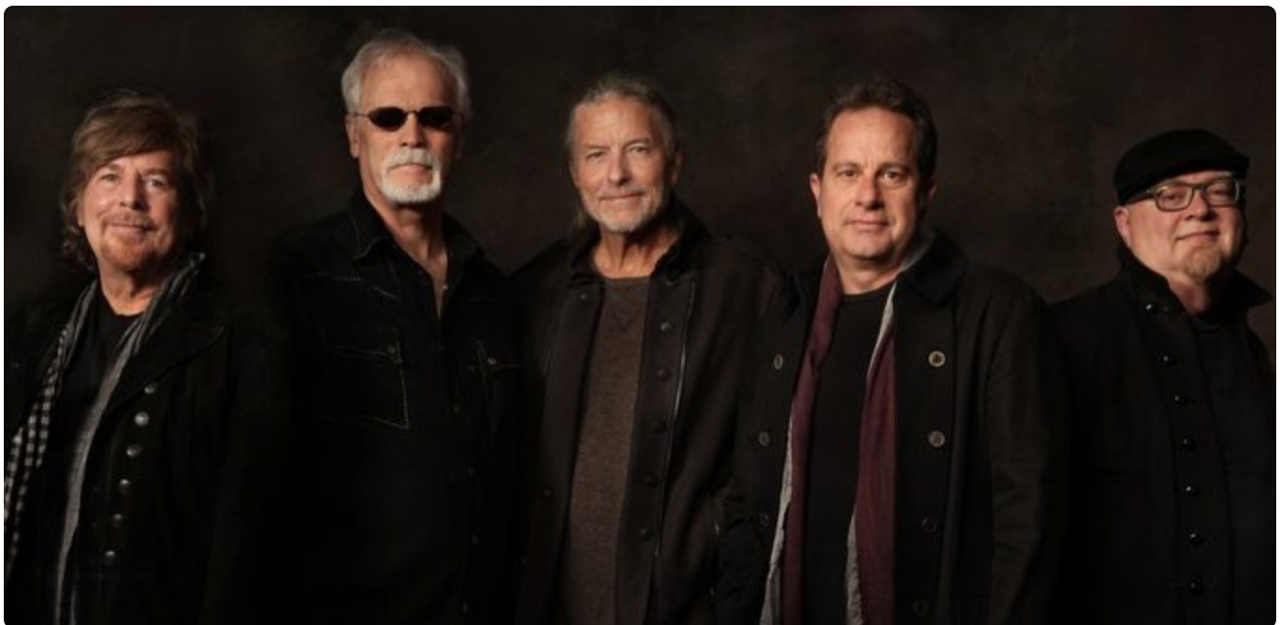
Firefall in 2020: Jock Bartley, David Muse, Mark Andes, Gary Jones, and Sandy Ficca. Photo by Jamey Bartley/Courtesy of Leighton Media

It was, according to guitarist/singer Jock Bartley, not only one of the highlights of his musical career, but of his life. And it happened onstage at Liberty Hall in Houston late in the evening of February 24, 1973.

Bartley was playing just his second gig behind country rock pioneer Gram Parsons in his backing band, the Fallen Angels. It also included singer/guitarist Emmylou Harris. That’s when they were joined by two musical luminaries, fresh off their own Houston show earlier that evening at the much larger Sam Houston Coliseum.

“We were onstage, and Neil Young and Linda Ronstadt walked out and started playing and singing with us. And that was the first night Linda and Emmylou met and sang together,” Bartley recalls on the phone via Zoom.
“Then they invited us all to go back to their swanky Houston hotel, and we stayed up all night playing and singing and taking massive quantities of everything. If there was a guitar around, Gram would pick it up and play 20 or 30 country songs. But to hear Emmylou and Linda sitting next him and blending their voices together, it was magical. And wonderful.” Ronstadt and Harris would become lifelong friends, musical collaborators, and – with Dolly Parton – later record as the Trio.

But just five days before that Liberty Hall show, Bartley was holding not a guitar in his hand, but a brush. He was laying down fresh coats of paint at his apartment building in exchange for his rent.

“I wasn’t a country picker, but I was better than the last guy in Gram’s band, I guess. He was nervous and had gotten drunk and the show was awful,” Bartley continues. “They called me up and the next morning, and I was on the road to play Austin at the Armadillo World Headquarters. The next gig was in Houston.”

Bartley’s stint it the Fallen Angels wouldn’t last much longer, but there were bigger things on the horizon. He – along with Rick Roberts and Larry Burnett (vocals/guitars), Mark Andes (bass), and Michael Clarke (drums) formed the country rock group Firefall in 1974, adding David Muse (keyboards/flute/sax) shortly thereafter.Firefall scored three big radio hits on their first trio of albums with “You Are the Woman,” “Just Remember I Love You,” and “Strange Way.” Fans also enjoyed deeper cuts like “Livin’ Ain’t Livin’,” “Cinderella,” “Mexico,” and “Headed for a Fall.”

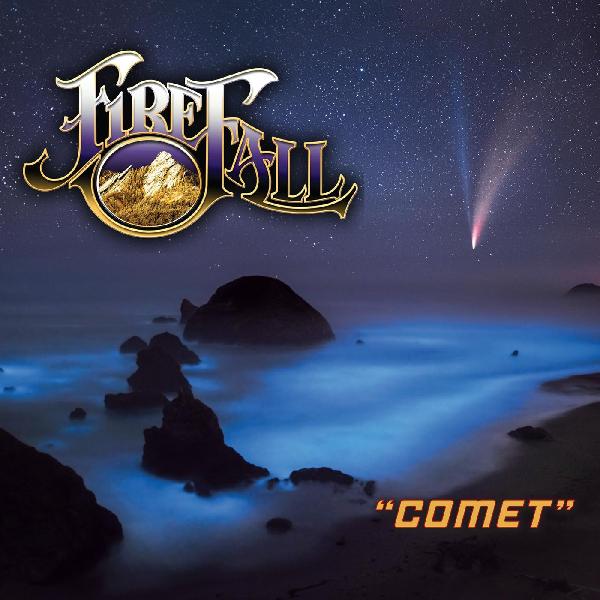
The group went through breakups, reunions, and many lineup changes, but the current band (Bartley, Andes, Muse, singer/guitarist Gary Jones, and drummer Sandy Ficca,) have just released Comet (Sunset Blvd. Records). It’s their first new studio album in over two decades.

The 10 tracks are penned by both bandmembers and outside writers. Jones handles most of the lead vocals, with contributions from Bartley and one by band friend Mark Trippensee. But the whole project started when they recorded a cover of Spirit’s “Nature’s Way” with a lead vocal by Andes, a former member of that group.

“Firefall’s been doing a log of package shows, and we’ve been playing the same 45 minute set for 20 years. So for me, it was nice to include ‘Nature’s Way’ in the set as a doff of our hats to Spirit and Randy California,” Bartley says. “A lot of classic rock bands won’t put out albums because it won’t get on radio and will just be sold at the gigs. We have new stuff to play and to say. And we’re excited that it’s out.”

Leadoff track “Way Back When” has Bartley reminiscing about some of the great performers of the ‘60s, weaving in song titles in the lyrics in which each chorus is dedicated to a different year.

“I wrote the first verse about the Beatles, the Rolling Stones, and the Byrds in 1965. Then, I Googled the top 100 hits of 1967 and I saw Aretha Franklin and the Rascals and all the songs,” he says. “Then I did the same on the next verse for 1969 with Creedence Clearwater Revival, Crosby, Stills and Nash, and Led Zeppelin.”

Other tracks include “A Real Fine Day, “Younger,” “There She Is,” “Ghost Town,” “Before I Met You,” and “A New Mexico.” The band actually finished recording it in November 2019, but the pandemic delayed its release. And while some voices in their management wanted to hold the album even longer, Bartley and Andes made the final call.

Jock Bartley onstage recently. Photo by Jamey Bartley/Courtesy of Leighton Media

“The new record is our way of staying in touch with our audience without being able to tour,” Andes says via video on the same Zoom call. “We’re gonna have to test the waters with [concerts], but doing it in a responsible way. Like being careful and hopefully getting vaccinated. It’s just so complicated.”

The original Firefall was already in existence in the mid-‘70s when Bartley, Andes, and Roberts were moonlighting in former Byrd/Flying Burrito Brother Chris Hillman’s band. A tour was ending with a three-date run at New York’s The Other End when Hillman fell ill after the first gig. The trio convinced the club owner to let them fly out Burnett and Clarke to finish the shows as Firefall. Hillman also produced the band’s demo that helped get them a deal with Atlantic Records, whose reps had seen the band play at the club.

The band took its name from a longstanding tradition at Yosemite National Park, where organizers would light a large wooden bonfire, then push it over the edge of a cliff as thousands watched it fall. After the practice was discontinued due to safety and image reasons, visitors can now see a “natural” firefall during mid- to late February. That’s when the setting sun makes the Horsetail Fall near El Capitan appear to be “on fire,” with an optical illusion river of flames cascading down the cliff. 

Asked as to how his and the band’s base in Boulder, Colorado affected their music, Bartley says it’s partially because Firefall was smack dab in the middle of the burgeoning scene that mixed county and rock, but with a different perspective than their California cousins.

“I grew up in Boulder, and in 1972 or so Stephen Stills, Chris Hillman, Richie Furay, Dan Fogelberg, Carl Wilson from the Beach Boys, and the great Mark Andes all moved there,” Bartley says. “When Rick and I were first getting together and Mark came and sat in with us, it felt like we could be a band. The California sound that started with the Byrds and Buffalo Springfield and Poco moved to Colorado, and Firefall was an outgrowth of that.”

“That western kind of music has a depth and feel that is more expanded than typical [rock],” Andes adds. “The songs sounded like they filled the void of desertscape.”

With the success of the Roberts-penned “You Are the Woman” – the third single off the band’s 1976 self-titled debut record and the band’s biggest hit – casual listeners pegged them in the soft rock/ballad category. That had its pros and cons.

“In later years, Rick didn’t want to even play it anymore! And I said ‘Rick that’s our biggest hit! People are buying tickets to hear that song!’ Thousands of people have told me over the years they got married to that song!” Bartley says.
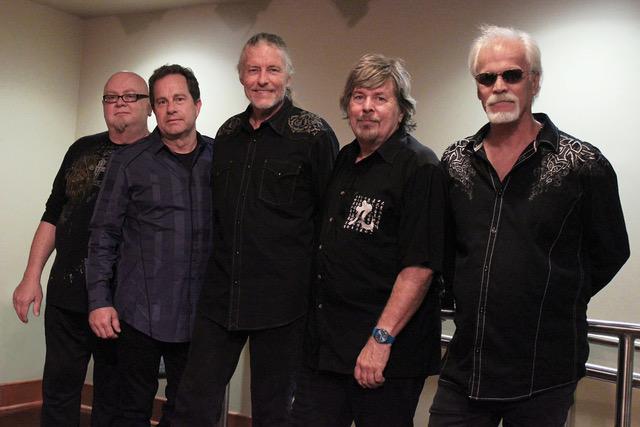
Firefall backstage recently. Photo provided by Leighton Media.

“When Rick presented it, it was a late addition to the album. But we all figured it could be a hit. I’ve been working 25 years because of that song!” he continues. “But the downside is that after it was huge, and so was ‘Just Remember I Love You,’ people who listened to AM radio thought we were just a ballad band. But a lot of our other music was more rock and roll.”

In its commercial heyday, Firefall opened for many contemporaries including Lynyrd Skynyrd, the Doobie Brothers, and even the Band on the last dates before their breakup—the last being Bartley’s personal favorite.

But their most memorable run may have been with Fleetwood Mac on the massive Rumours tour. “It was unbelievable. We opened for them during the previous album in ’76 and they liked us,” Bartley says. “To walk onstage in front of 80 or 100,000 people a couple of nights a week, it was amazing. Those were some of the best shows we ever played.”

This interview originally appeared in longer length at HoustonPress.com
Posted in Firefall | Tagged , , , , , , | Leave a comment

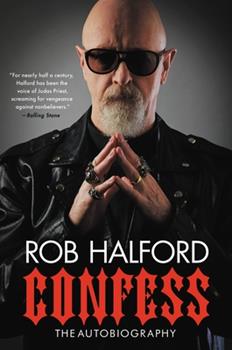
Rob Halford of Judas Priest Confesses Everything. EVERYTHING.

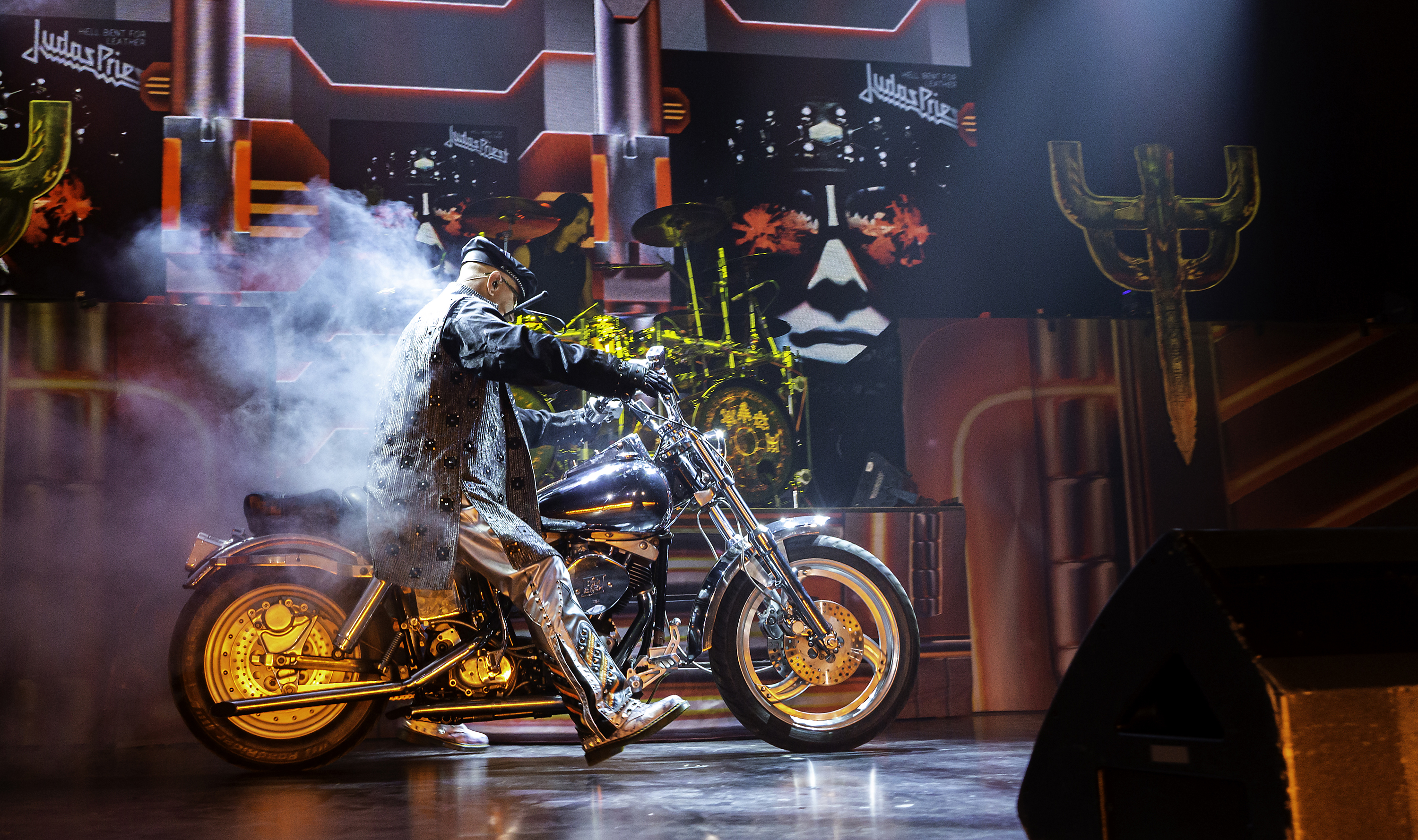
Rob Halford’s trademark entry is roaring onstage astride a Harley. Photo by Gary Peterson/Provided by Hachette Books

Confess: The Autobiography by Rob Halford

368 pp., $30, Hachette Books

For much of the 1970’s and ‘80s, even as he was fronting Judas Priest, one of the most popular, loved, and revered heavy metal bands of all time, lead singer Rob Halford was scared shitless. Scared that if the truth ever came out about his homosexuality, his legions of fans would turn their backs in disgust, he’d be held up to ridicule, and it would immediately kill the band’s career.

Growing up in the tough Black Country area of Walsall, England, where everyone’s father seemed to work at the nearby giant metalworks factory, Halford knew from an early age that he preferred boys to girls. And even after he joined Judas Priest, his band mates and business confidantes knew. But as long as he could sing those notes and kick ass…nobody really cared what he did in his personal life.

In those days of pre-cell phones and TMZ, Halford knew he was taking risks with some of his behavior. So imagine his surprise when he finally came out on the spur of the moment in a 1998 MTV interview and…nothing much happened. Fans still bought records and concert tickets in droves, and a huge weight was lifted from the singer’s shoulders. “I imagine[d] a mass chorus of the voices of our hard-won fans in the Midwest and Texas: Fuck! I isn’t going to see no band with a goddamn faggot singer!” he writes.

Though as wags would point out later, Halford’s preferred stage attire of leather, studs, whips, and other regalia was not exactly subtle. Nor were the many hints he dropped in Judas Priest songs as the band’s lyricist. Even he was shocked few caught on to lines like those from “Raw Deal” mentioning leather guys, denim dudes, colts playing “rough stuff,” and even name checking New York’s Fire Island, long a celebrated as a favored destination for homosexual men.

So it’s no surprise that Halford’s struggle with his sexuality – along with booze and cocaine – dominates as much (and maybe even more of) Confess as reminiscing about music, concerts, and recording sessions. Some readers might be taken aback by his tales of truck stop bathroom sex in stalls with glory holes, sweaty trysts with strangers and fans, and details of passionate sex-and-drug fueled relationships with men who someone always turned out to be straight (including one who killed himself with a gun shortly after a screaming fight with Halford).

Though at the top of his career, Halford hit rock bottom in 1986 when with self-loathing and substance abuse. Fortunately, the book’s easygoing narrative style (likely written by an uncredited ghostwriter, music journo Ian Gittins) offers great doses of humor and self-deprecation. And makes it less shocking that it might been. Judas Priest fans will also get a peek behind the curtain at some of the bandmember’s relations and key moments over the years, and he writes insightfully about them.

This includes the bizarre incident in which the band was sued for purportedly inserting subliminal and backwards-masking messages in their songs that “led’ a 20-year-old and 19-year-old fans to make a suicide pact after a day of drinking booze, smoking pot, and listening to the album Stained Class. One was successful in killing himself with a gun and the other was severely maimed, later dying of a methadone overdose.

Lawyers for both sets of parents played snippets from songs in which Halford seemed to say (if you listened really, really hard) phrases like “try suicide,” “sing my evil spirit,” “Fuck the Lord, fuck all of you,” and “do it.” As the sole member of the band who testified, Halford said was utter nonsense, adding to reporters that if he was putting secret subliminal messages in songs to fans, it would be to “buy more records” and certainly not kill themselves.

Still, these were the days of the PRMC and “heavy metal hysteria, and Ozzy Osbourne has been sued for a similar situation, so emotion may have ruled over logic. But Halford’s authoritative testimony carried weight. As did his own lawyers who produced evidence other incidents of “backward masking” in Priest songs that said (again, if you listened really, really hard) phrases like “Look ma, my chair is broken,” “they won’t take our love away,” and “I-I-I asked for a peppermint.” The band and their record company were acquitted. 

Rob Halford would leave Judas Priest some years due to a “miscommunication” and to pursue a solo career, but “The Metal God” returned to the fold and has been touring and recording since. Drug and booze free for 34 years and in a stable, healthy relationship, he writes that while coronavirus has put the kibosh on the band’s planned next album and tour, he’s ready to ride that Harley on stage again and melt audiences faces off, just as soon as he can. 

This review originally appeared at HoustonPress.com

Posted in Books, Judas Priest, Rob Halford | Tagged , | Leave a comment

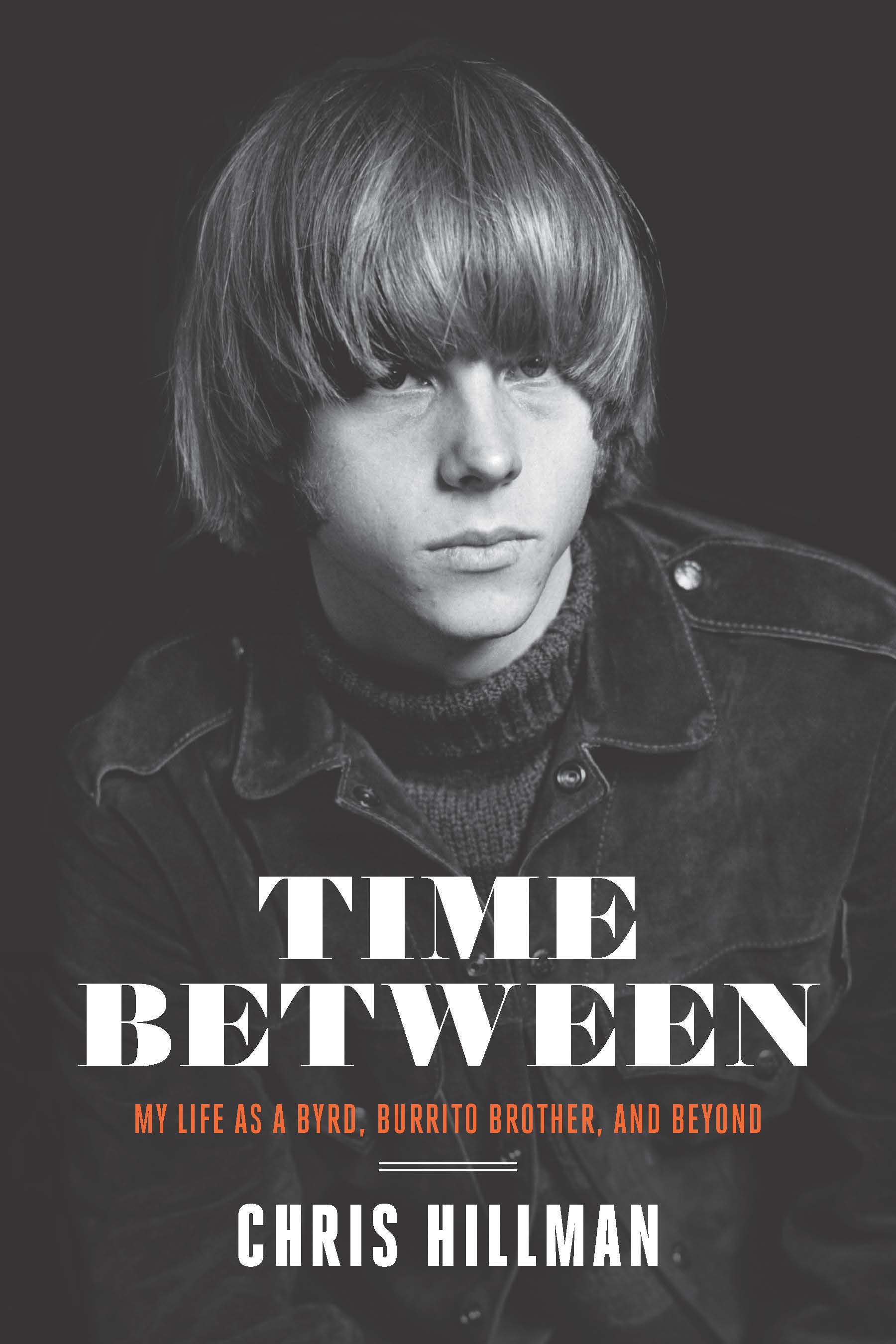
Chris Hillman Looks Toward the Byrds, the Burritos, and Beyond

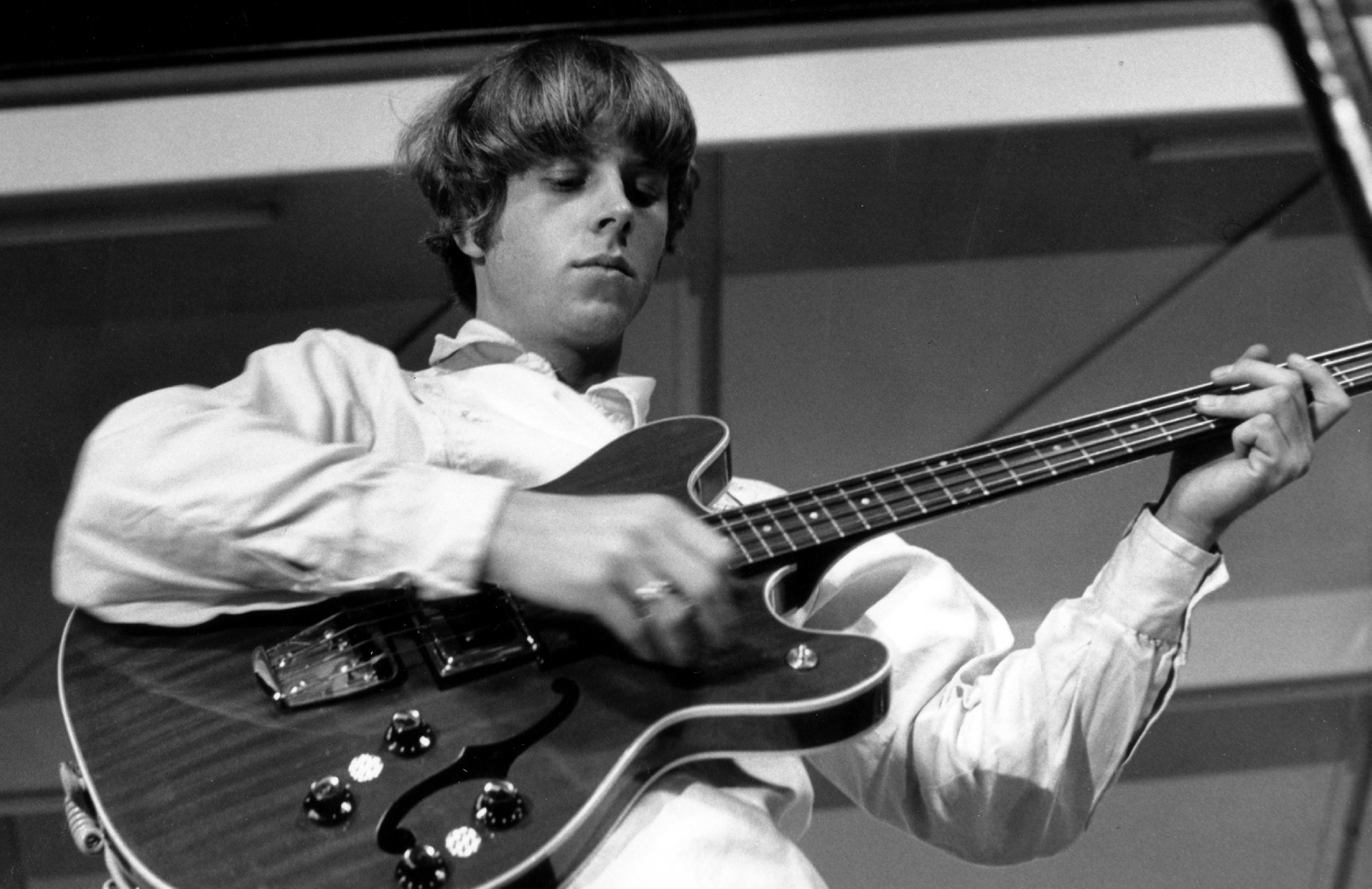
Chris Hillman onstage with the Byrds in the mid-1960s. Photo by Getty Images/Provided by Conqueroo PR

Throughout his nearly 60-year career in music, he’s flown high as a Byrd and a Burrito Brother. He’s served as a Squirrel Barker and a Golden State Boy. He left the train depot in Manassas on his way out west to pick a Desert Rose. And he’s been rightfully lauded as a founding father of country rock.

So Chris Hillman has a lot of stories to tell and observations to make about music, life, and his former bandmates. And he does in Time Between: My Life as a Byrd, Burrito Brother, and Beyond (315 pp., $29.99, BMG books). And while the book takes its title from a Hillman song, it’s not exactly what he wanted it to be called.

“I was going to call it My Life as a Beatle, but nobody wanted to publish it!” he laughs. “I just don’t understand why!”

Hillman’s story opens up with a childhood near San Diego in Rancho Sante Fe, California. His father was an advertising and newspaper man, with great assist from his mother. And while family finances were sometimes issues, it was a youth filled with horse riding, surfboarding, car riding, and music. 

He also met western-tinged local characters like The Red Cowboy and Old John Robertson, the latter of whom would be immortalized in a Byrds song. “John Robertson was just a lovely man. He was also always throwing money at us,” Hillman recalls. “If you saw him on the street he’d say ‘I think you dropped a dollar,’ and point to the ground where one was. I’d say I didn’t have a dollar. He’d go ‘Well, you better keep this one until you find out who it belongs to.’”

Barely out of his teens, Hillman was drafted to play bass the Byrds. They exploded in popularity and helped invent the genre of folk rock (sometimes tinged with psychedelia) with songs like “Turn! Turn! Turn!” “Eight Miles High,” “So You Want to Be a Rock ‘n Roll Star” and their danceable Dylan cover, “Mr. Tambourine Man”—which in turn influenced the Bard of Hibbing to steer his own career in a more rock direction.

Among music nerds though, it’s the band’s Sweetheart of the Rodeo album that has taken on the most mythical status as Ground Zero for Country Rock. And while new Byrd Gram Parsons has been given “credit” for moving the band in that direction, it’s a misnomer. One that’s only grown given the Cult of Gram that has developed around the late performer.

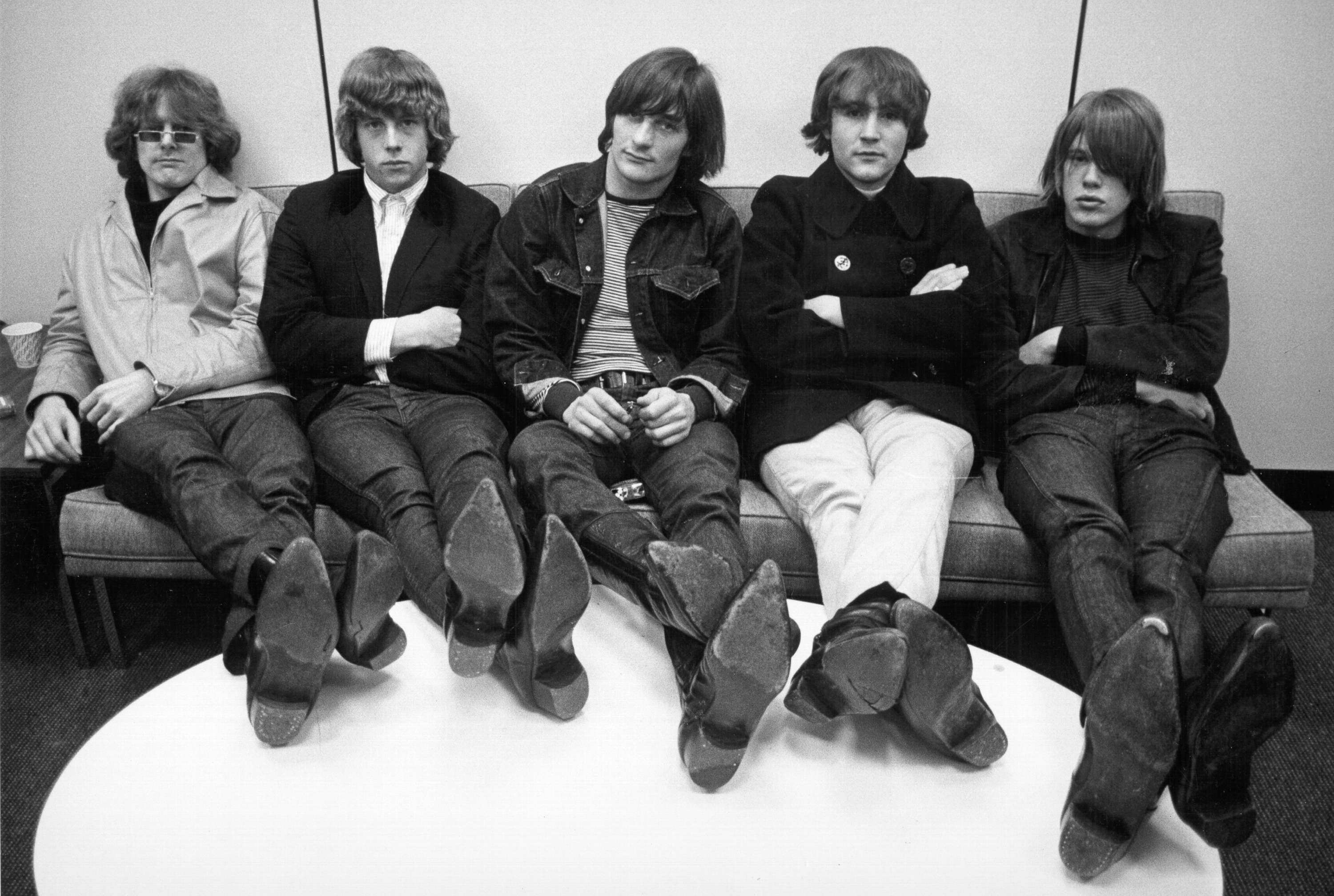
The original Byrds: Roger McGuinn, Chris Hillman, Gene Clark, David Crosby,and Michael Clarke. Photo by Getty Images/Provided by Conqueroo PR

“I didn’t think it was the best album we ever did, but we were doing country songs in 1965, and lot of people don’t understand that,’” Hillman offers. “They say ‘Well, Gram Parsons got them to do a country record,’ and that’s not the case at all. He loved the music and it was great to have an ally, and it sounded great to Roger [McGuinn] and I. But on the second Byrds album we did a Porter Wagoner song. So Sweetheart wasn’t really a stretch for us.”

Hillman also notes that all of the Byrds had come out of folk music, and is proud that the album “blew open the door” for bands like Poco, Pure Prairie League, the Eagles, and even Hillman’s next group (co-founded with Parsons), the Flying Burrito Brothers.

In the book, Hillman writes candidly about bandmates Parsons and David Crosby. And while he respects them as friends and musicians, their ego, hubris, and sometimes childish behavior derailed important moments.

In the case of Parsons, he had become enamored of the Rolling Stones and especially his new drug buddy, guitarist Keith Richards. He began spending more time with that group hanging out than his own. Hillman and Roger McGuinn saw the writing on the wall when the Stones took the Byrds to see Stonehenge one early misty morning while the American group was on tour in England.

“We were walking through the wet ground and Mick Jagger and Keith were ahead and Gram just went running after them [like a puppy]. I’ll never forget Roger says ‘Uh-oh, someone’s fascinated with the Rolling Stones.’” Hillman says.

Gram Parsons and Chris Hillman onstage with the Flying Burrito Brothers at the ill-fated 1969 Altamont concert. Photo by Getty Images/Provided by Conqueroo PR

Jagger – who sent his chauffeur to bring back dry socks for the bands – was not enamored of Parsons. Hillman writes that one day when he had to search out his bandmate to ensure he made a concert that evening, he found Parsons stoned out with the Stones. Parsons would receive a tongue lashing from Jagger.

“Mick was really onto him, saying he needed to be professional and responsible and owed it to the audience who had paid their money to see him. If people are buying tickets, you need to show up,” Hillman says.

Hillman recalls that when the Burrito Brothers were scheduled to play in apartheid-era South Africa, Parsons made an “impassioned” speech about why he wasn’t going, and how growing up in Georgia and Florida made him extra sensitive about racism in all forms. Hillman was nonplussed.

“He really just wanted to stay behind with Keith Richards. I had to fire him three or four months later. But it’s all water downstream,” he says. “I liked the guy, but his biggest problem was having the family trust fund and getting a check every month. You have to struggle and suffer to attain success, it’s part of the process. And he had this safety net behind him. I think it held Gram back.”

As for the still-alive-against-all-odds David Crosby, Hillman says “David has outlived a lot of people. What an amazing constitution! Yes, he gets into mischief every five seconds by something he’s done or said. He can’t seem to keep his mouth shut, but I love the guy.”

Hillman took on a more prominent role – even as vocalist – in Manassas, led by Stephen Stills. When it’s suggested to Hillman that he seems to have always taken the “Graham Nash role” as band peacemaker, he laughs.

“We share that role! Graham was in the middle of two maniacs with Crosby and Stills. I know. because I worked with them both!” he laughs. “But I love them. I was the mediator like he was.”

Hillman would go on to find mainstream country success with the Desert Rose Band in the ‘80s and ‘90s, and today tours with former members Herb Pederson and John Jorgenson. He’s continued to record, his most recent effort being 2017’s Bidin’ My Time. It was produced by Tom Petty (always heavily influenced by the Byrds), and included contributions by Petty and his band the Heartbreakers as well as McGuinn and Crosby.

Time Between also covers Hillman’s deep Christian faith and spiritual journey. He became an evangelical Christian in 1973. After marrying Connie Pappas, whose own religious background is in the Greek Orthodox church. Hillman got curious about that faith after attending some services with her and their two children.

“I felt a strong calling and talked to the priest for a few days and asked about icons and things like that. I love the layers and layers of tradition. I was brought into the church in 1996. And the way I see it, we’re all on the same ball team if you’re a Christian,” he says.

He goes on to describe his journey in more detail, before stopping himself and laughing. “I feel like I’m giving you a theology lesson! I’m not trying to proselytize!”

And if readers take away one lesson from Time Between, it’s this.

“What’s implied in my book is simply don’t give up. Pick yourself up and keep moving. When my dad died [by suicide] and we were flat broke, and my mom said we had to move, my sister and I didn’t complain. We went and did it, and kept moving. Nobody said anything was fair. You have to work things and respect others and stop with all this vitriol. There, I’m preaching to you again!”

This interview originally appeared at HoustonPress.com
Posted in Books, Byrds, Chris Hillman, Flying Burrito Brothers, Manassas | Tagged , , , , | Leave a comment

Jimi Hendrix: Where the Wild Thing Was

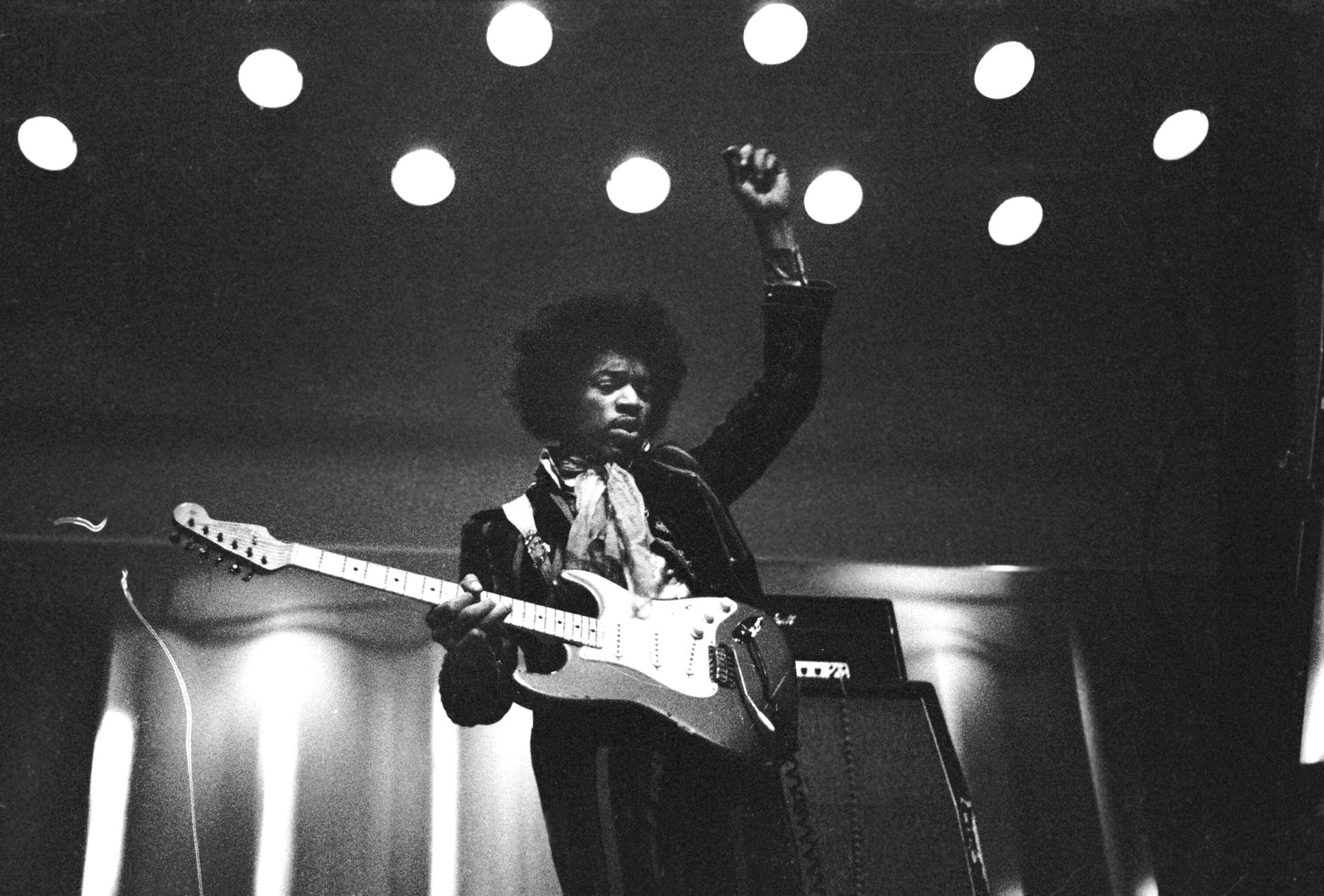
Jimi Hendrix performing in Helsinki, Finland, in 1967.
Hannu Lindroos/Lehtikuva – Wikimedia Commons

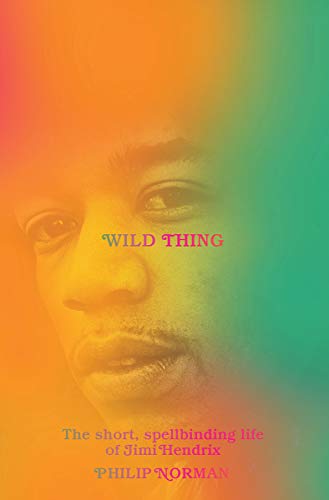
Wild Thing: The Short, Spellbinding Life of Jimi Hendrix By Philip Norman

400 pp., $28.95, Liverlight Publications

When veteran music journalist Philip Norman turns his attention to a musician, the word “definitive” is not an understatement. For while many of his subjects are themselves subjects of dozens—even hundreds—of tomes about their music and lives, Norman’s efforts tend to end up being the go-to one volume work. As he’s done with Buddy Holly, Elton John, Paul McCartney, John Lennon, and Eric Clapton.

And his 1981 Beatles bio Shout! – while not the most in-depth work on the Fabs, was the first serious look at their career in which the band themselves were not directly involved. Norman continues his higher calling streak with this work, likely the “definitive” look at perhaps the greatest guitarist in rock history.

Part of that is Norman’s very natural storytelling ability and just way he makes words flow. Whether uncovering new information via his own interviews, or retelling familiar tales, Norman writing skills are evident. When he’s describing how a young Jimi’s first instrument at the age of 12 was a one-stringed ukulele that his father found in a garbage pile, the reader can visualize the pleading on the boy’s face.

The book also goes into detail about Hendrix’s complicated relationships with his absent mother (who died early), and a stern, ego-driven father who seemed unfazed and unimpressed by his boy’s worldwide success. Despite Jimi’s every attempt to please him.

One head-scratching aspect of Hendrix’s pre-fame career Norman details is just how easily he would move from job to job seemingly without a care – even when he was fired. As a backing guitarist, he played with everyone from Little Richard, Ike and Tina Turner, Ray Charles, and Otis Redding to Solomon Burke, Chuck Jackson, and even Joey Dee and the Starliters. His tenure would always start out great, but eventually his tardiness, sloppiness in dress onstage, and showboating would make his employers sour on him.

As Norman notes, his tenure with Redding’s group ended when he was literally left on the side of the road in between gigs as the bus pulled away. Also interesting is how often he would be without a guitar, having hocked it, but always finding a way to have a bandmate or—more often—a sympathetic woman or girlfriend (and that term was a very loose one to Hendrix), pay to get it out for him.

“I still have my guitar and amp,” Jimi wrote in one letter to his father from the road. “And as long as I have that, no fool can stop me living.” And what he did with that guitar would be first appreciated by English audiences, leaving fellow players awestruck. Norman describes one scene at an early Hendrix rock show where in the wings Pete Townshend and Eric Clapton were “holding hands like awestruck toddlers at a fireworks display.”

It took Hendrix’s iconic performances at the 1967 Monterey Pop Festival to ignite his career back in his native U.S., and then the world. Though even while his star was burning brightest, it didn’t shield him from both casual and flagrant encounters with racism from how he was described by some to those who took issue with his many white girlfriends.

The book is also filled with women who jump in and out of these pages as they did in Hendrix’s bed. That the guitar god would often use them to fulfill his own sexual and career needs, then drop them, and maybe come back does not paint him in the best light, but they all kept coming back.

His personal charm seemed to go a long way. And the one consistent of any Hendrix book is how the amplifier-humping, guitar-smashing, flamboyantly-dressed and flailing wildman onstage belied an offstage persona that was actually shy, soft-spoken, and surprisingly unsure of himself.

That personality type also led many to take advantage of Hendrix – first and foremost manager Mike Jeffery, the book’s designated villain. That’s not including the countless, hangers-on, groupies, sycophants and drug pushers Hendrix would eagerly surround himself with, then bemoan their presence.

Of course, Jimi Hendrix met an untimely end. Part of the “27 Club,” he died at that age in September 1970 from what varying has been described as a drug overdose and/or choking on his own vomit. The exact details of Hendrix’s death and how he spent his last 24 hours of earth will likely never be known given that the woman he was with at the time – girlfriend Monika Dannemann – changed her story and the extent of her involvement many times over the years.

The casualness with which the investigation happened would be unimaginable for a star even half as famous as Hendrix was in today’s climate. But with new interviews, Norman pieces together what is likely an as accurate as possible chain of events. And of course, wonders what kind of music the ever inquisitive and forward-moving musician could have made. 

Wild Thing does have one weak point in that Norman seems to rush past how large Jimi Hendrix still looms in the rock and pop culture consciousness in the 50 years since his death. And the amount text on the struggles and battles involving his estate and his family members could have been fleshed out a bit more, as well as a look at his discography.

Nevertheless, Philip Norman has once again managed to write what history may look at as the most complete word on his subject, and Wild Thing deserves a place on the top tier of the Jimi Hendrix bookshelf.

This review originally appeared at HoustonPress.com
Posted in Books, Jimi Hendrix | Tagged , | Leave a comment

Vanilla Fudge Goes Sweet on Led Zeppelin

Vanilla Fudge in 2020: Mark Stein, Pete Bremy, Carmine Appice, and Vince Martell.
Photo by Tom Lewandoski/Courtesy of Dustin Hardman, Press Promotions.

One of Quentin Tarantino’s gifts as a filmmaker is to take a popular song of the ‘60s or ‘70s and use it really amplify a sequence. Think of the offbeat choice of Stealer’s Wheel’s “Stuck in the Middle with You” during the torture scene of Reservoir Dogs; John Travolta and Uma Thurman shimmying to Chuck Berry’s “You Never Can Tell” in Pulp Fiction; or Robert Forster gazing longingly at Pam Grier while “Didn’t I (Blow Your Mind This Time)” by the Delfonics wafts in the background in Jackie Brown.

In his most recent work, Once Upon A Time in Hollywood, the director chose an appropriate song as followers of Charles Manson descend upon a home on LA’s Cielo Drive to begin their murderous rampage (spoiler alert: it is not a documentary). To kick off the chaotic climax, the audience hears Vanilla Fudge’s heavy, psychedelic, spooky, and foreboding cover of the Supremes’ “You Keep Me Hangin’ On.” The 1967 track reached #6 on the Billboard chart and was the band’s biggest hit.

“That was pretty cool! And it definitely helped with our streaming numbers. A lot of young people found out about the song that way,” vocalist/keyboardist Mark Stein says. “And Tarantino did his own edit on it. He’s a real music guy.” Stein says that Fudge’s version even got the stamp of approval from Motown songwriter Lamont Dozier, who penned the song with brothers Brian and Eddie Holland.

More than 50 years after their 1966 formation, Vanilla Fudge are still productive with three-fourths of their original lineup: Mark Stein (vocals/keyboards), Vince Martell (guitar), Carmine Appice (drums), and newer bassist Pete Bremy. Original bassist Tim Bogert retired in 2009.

But it is the full original lineup featured on the upcoming record Vanilla Zeppelin (Golden Robot Records), a reissue/remastered version of the band’s 2007 all-Led Zeppelin cover record Out Through the In Door.

“Led Zeppelin actually opened for us for a bunch of shows in the late ‘60s when Jimmy Page after the Yardbirds broke up. He came to America with Plant and Bonzo and John Paul Jones. And quickly, they became the biggest band in the universe,” Stein says. “So we thought it would be cool to do a whole record of their songs. And ‘Immigrant Song’ is a great rocker. We didn’t pull it apart too much, though.”

Vanilla Fudge is best known for their “Fudged Up” covers. In addition to “You Keep Me Hangin’ On,” there was “Shotgun” (Jr. Walker and the All-Stars), “Ticket to Ride” & “Eleanor Rigby” (Beatles), “Season of the Witch” (Donovan), “She’s Not There” (the Zombies), and “The Look of Love” (Dusty Springfield). On recent tours, they’ve also tackled Rod Stewart’s “Do Ya Think I’m Sexy?” (which Appice co-wrote while a member of his band) and even NSYNC’s “Tearin’ Up My Heart.” One of the band’s hallmark sounds is Stein’s swirling, bombastic, and sweeping organ and keyboard work.

Stein says the root of Vanilla Fudge can be traced back to when they were one of scores of bands working clubs in the New York and New Jersey, where they were expected to play mostly covers of the day’s popular songs.

To make their take a bit different, bands would play the tunes with a heavier or more soulful sheen, and stretch them out far beyond the original three-minute single. It was the “Long Island Sound” that also produced acts like the Rascals and early incarnations of Mountain, Blue Öyster Cult, and Billy Joel and his band.

Vanilla Fudge’s very name represents that combination of black and white music. Though it was actually the childhood nickname of a woman they met at a club. They liked it and used it, especially since their new label, Atco Records, requested a change from the group’s original moniker – The Pigeons.

But their discography is also dotted with original material that gets overlooked. Songs like “Where Is My Mind,” “Come by Day, Come By Night,” “Lord in the Country,” and “Street Walking Woman.” “Wow, you’re quite the historian!” Stein laughs when the titles are read out. “’Come By Day, Come By Night’ was actually the flip side of ‘You Keep Me Hangin’ On.’ But we’re known for taking songs and remaking them on our own. That’s what people like.”

Over the ensuing decades, Vanilla Fudge have gone through periods of activity and inactivity, with various lineups featuring multiple combinations and numbers of original members. Stein also kept busy with a solo career, and playing onstage and in the studio with Alice Cooper (on the “Welcome to My Nightmare” tour) and the Tommy Bolin Band.

But perhaps the oddest day of his career came while recording with classic rocker and ex-Traffic member Dave Mason for his 1980 album Old Crest on a New Wave (on which Stein wrote or co-wrote half of the songs). And here’s how Stein and Mason got a young man by the name of Michael Jackson to sing the chorus on “Save Me.”

“We were in the studio and taking a break and I walked into the foyer and the Jacksons were down the hall in a different studio. It was before Thriller, but Off the Wall was already multi-platinum,” Stein says. “Michael was just hanging out by the soda machine, and I went up to him, introduced myself, and said he should come check it out since ‘Save Me’ has some of the same grooves as in ‘Off the Wall.’”

Jackson came into the studio – to the shocked face of Mason – and started snapping his fingers when he heard the track. “He put the headphones on and sang his part in one take. It was awesome!” Stein continues. “He and Dave went back and forth and I was doing backing vocals. Those were the days when a lot of artists just sat in on each other’s sessions.”

The current lineup of Vanilla Fudge plus Bogert were planning their next record project, a nod to their biggest hit with the all-Motown covers Supreme Vanilla Fudge. But then had to stop everything when the Age of Coronavirus hit.

“Hopefully, we’ll get to that in 2021. The sooner we get the vaccine, the sooner we’ll get in the studio,” the now 73-year-old Stein says. “It’s madness. It’s a very tough time for the entertainment industry and the service industry. Cruises, venues, tours, all shut down. It’s a strange trip and a never-ending Twilight Zone. We’ll get through it and be back out there, though. You just gotta keep the faith.”

For more on Vanilla Fudge, visit HERE.

This interview originally appeared at HoustonPress.com
Posted in Vanilla Fudge | Tagged , , , , , | Leave a comment

America’s Book of History

America today: Dewey Bunnell and Gerry Beckley celebrate 50 years of nameless horses, California highways, tin men and lonely people.
Photo by Erik Halvorsen/Courtesy of Rowman & Littlefield

If you’re a fan of the band America – the trio behind the classic rock warhorses as, well, “A Horse with No Name” along with “Sister Golden Hair,” “Ventura Highway,” “Tin Man,” “Lonely People,” “Sandman,” “I Need You,” and “You Can Do Magic,” you have one organization to thank: The United States Air Force.

Singer/guitarists Dewey Bunnell, Gerry Beckley, and Dan Peek met in late ‘60s London, England. That’s where their active duty military fathers were stationed, and all three attended the same high school. After stints with other groups, the teens were inspired by the acoustic music of the day (and especially Crosby, Stills, Nash & Young) to form their own act.

Combining a brand of jukebox, the name of a defunct band, and their own yearning for the home country, they decided to call the group “America.” Barely out of their teens, their first single was a #1 hit in Bunnell’s country psychedelic “A Horse with No Name.” Which in a neat circle, replaced Neil Young’s “Heart of Gold” for the slot in 1972. Even as many people assumed that Young was the voice on “Horse!”

The 50-year journey of America is told in music journalist Jude Warne’s America the Band: An Authorized Biography (288 pp., $24.95, Rowan & Littlefield).

The book’s genesis began when Warne interviewed Beckley for his 2016 solo album Carousel. As the only tome about the group was Peek’s memoir, she approached the band’s management about doing a full on biography. After about year of contact and finding a publisher, everyone agreed to terms. It also gave Warne access to the band’s archives and many, many hours of new interviews with Beckley and Bunnell (Peek left the band in 1977 and passed away In 2011).

“I could tell that they [Bunnell and Beckley] wanted to get their story down the way that it happened in their recollections, and we were all motivated to get it right in terms of the facts,” Warne says.

While Warne was somewhat familiar with the hits of America, it wasn’t until she was working on her 2015 New York University master’s thesis (which compared the literature of Sherwood Anderson to Bruce Springsteen’s Darkness on the Edge of Town album) that she really discovered America. She admits it was an “anxious” period while deciding about her future.

“Mom played the Greatest Hits record for me, and I had found the sonic experience I was looking for. To me, they reminded me of the Beatles, that positivity. And that made me want to go into the deep cuts,” she says.

In the book, Warne discusses America’s as a “Logo Band.” A group – like Chicago, REO Speedwagon, Yes, Grand Funk Railroad, Foreigner, or the Doobie Brothers – where the average person might have trouble coming up with actual band member’s name, but certainly knows the logo and the hits.

“At the height of their career, there’s an interview I quote in the book where the members are frustrated that people might not know them as individuals. But the music was so recognizable and successful,” Warne says. She puts it down to the fact that the band avoided any controversy or tales of wild rock and roll behavior that would get their names out there. Also, there was no “lead singer” (though the trio did utilize extra musicians for live concerts and recordings).

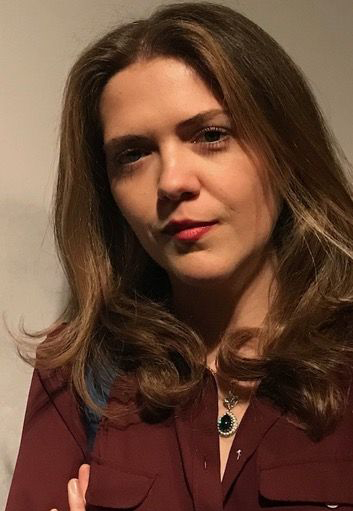
Author Jude Warne
Photo by Mary Jane Warne

America – like most other classic rock bands – are still finding new fans among Millennials and Gen Z, who have unprecedented access to music and videos of classic rock-era bands via Spotify or YouTube. Which can have an even greater influence than a parents’ record (or CD) collection.

“Everything is digitized and you can get it at the touch of a button. So [the music] is history, but a tangible piece of history,” Warne offers. “And they can view it as art rather as nostalgia with [no] memories attached to it.”

After severe drug and alcohol problems led him to leave America, Dan Peek became a born again Christian and mostly Christian music artist. America as a duo has lasted far longer than America as a trio, even if the hits dried up by the early ‘80s. Still, the current band (pre-COVID, of course) regularly plays around 100 shows a year to packed audiences and sometimes puts out new music.

Despite being offered insane money for a trio reunion tour or album at the behest of record companies and promoters, Bunnell and Beckley chose to remain a duo. Even after Peek himself warmed a bit to the idea.

“Gerry and I just felt…well, Dan never pursued it [a reunion] either. We were all resigned to our respective paths after he left. But, of course, the finality of his death quashed any idea,” Bunnell told this writer in 2013. “But I don’t have any terrible regret about it. We bring Dan to life every single night we’re onstage, his contributions.”

For her part, Warne recognizes that the key parts of the band’s catalog were recorded with the original lineup, but understands the mindset. “[Gerry and Dewey] went through a rough patch after Dan left, and they had to rebuild and reprove themselves to maintain their longevity. They remade the band,” she offers. “But [a reunion] always seemed semi-open to me.”

Her own “Desert Island Disc” for America is third studio effort, Hat Trick. “It’s my favorite album of theirs and one of my favorites of all time. It’s unique in that it has more of a concept sound to me, and the last album they produced on their own before they got to work with [Beatles producer] George Martin,” she says. “The ‘Hat Trick’ suite sounds like the Beatles to me, and ‘Green Monkey’ is a great rock and roll song.”

With this book, a new single CD anthology, box set, collection of rarities, and a fully booked tour schedule, America was hoping to celebrate their 50th anniversary in 2020 in grand style. But like every other band, the coronavirus put a squash on any live shows. Nevertheless, Warne is happy that the story of America is out finally there.

“The timing is just…I’m sure everyone has a version of that with things that were cancelled or put on hold, so not being on tour wasn’t part of the plan,” she says. “My book had just been sent to the printer’s in March when this all started. So I was glad it was even able to come out!”

For more on Jude Warne, visit JudeWarne.com

This article originally appeared at HoustonPress.com
Posted in America, Books | Leave a comment

Chris Frantz Remembers Talking Heads, Tom Tom Club, and – of course – Tina!

Talking Heads as the Esmerelda Theater, NYC, 1978: Jerry Harrison, Chris Frantz, David Byrne, and Tina Weymouth. Photo and copyright by Ebet Roberts/Courtesy of St. Martin’s Press

Chris Frantz remembers very vividly the first time he ever laid eyes upon one Martina Weymouth. It was September of 1971, and was lounging on a grassy park with a fellow student at the Rhode Island School of Design. When he saw a vision.

“Suddenly, as in a scene from a Truffault movie, I saw a girl pedaling down Benefit Street in our direction on an old yellow three-speed bicycle,” he writes in his upcoming memoir, Remain in Love: Talking Heads * Tom Tom Club * Tina (400 pp. , $29.99, St. Martin’s Press). “She wore a blue-and-white-striped French sailor’s shirt and very short sorts. She was a slender, fit, and her legs were fabulous. As she pedaled by, her blonde shag haircut tossed in the breeze.”

After Frantz pondered aloud as to the woman’s identity, his friend piped up that he knew her and mentioned her name. Frantz was entranced, even though he had a girlfriend at the time and soon found out Weymouth had a boyfriend. “Even though this was the first time I’d seen her, I felt some kind of familiarity or even kinship. I had to meet Martina.”

On the phone nearly 50 years later, it’s easy to hear how Frantz exemplifies his book’s title. “She was a very good looking young woman, but as I got to know her, found out she was also really smart and perceptive with a fine sense of aesthetics in music, art, and literature. Tina just knew a lot!” Frantz says. “And music! She could read it, whereas David Byrne and I couldn’t! And the more I got to know her, the more I liked her. A strong feeling of love that remains to this day.”

On a back cover blurb, a lovelorn Bill Murray – who had a crush on Weymouth after seeing an early Talking Heads gig — says with dry understatement “it’s become pretty clear to me that she’s already in a relationship, and what’s more, it looks to be serious.”

In Remain in Love, Frantz details their musical and matrimonial partnership – which included stints for both of them in a couple of well-known acts from the mid-‘70s to early ‘90s. The genesis of Talking Heads began when he (on drums) and a former RISD student David Byrne (vocals/guitar) began playing music together. They added Weymouth on bass – even though she had never played the instrument – and began gigging at area clubs like New York’s CBGB’s.

Tina Weymouth and Chris Frantz as students at the Rhode Island School of Design. Photo and copyright by Roger Gordy/Courtesy of St. Martin’s Press

It was clear that these preppy-looking art students were miles away in look and sound from other groups that played the club like Television, the Ramones, Richard Hell and the Voidoids, and Blondie. But then again, while they were all lumped together as “punk” they were all wildly different from each other.

The band added guitarist/keyboardist Jerry Harrison just before recording debut album Talking Heads in 1977. And until they officially broke up in 1991, put out a series of challenging and groundbreaking records, a concert film, and memorable singles like “Psycho Killer,” a cover of Al Green’s “Take Me to the River,” “Life During Wartime,” “Once in a Lifetime,” “Girlfriend is Better,” “Road to Nowhere,” “And She Was,” and “Wild Wild Life.”

The book was originally scheduled to come out in May, but due to the pandemic now has a July 21 publication date. Frantz, Weymouth, and their two sons and three dogs are holed up in their country house in Connecticut. “We’re very fortunate in that we can go out and roam around. We’re not stuck in a tiny New York apartment,” he says. But even before he put pen to paper, he had to ask himself an important question.

“I thought ‘What is the tone of this book going to be?’ And the last thing I wanted was a book by a whiny drummer beating up on a lead singer,” he says. “That’s not me. I’m grateful and have wonderful memories of my times with Talking Heads.”

While David Byrne is likely the only member of Talking Heads (and yes, there’s no “The” in front of the band’s moniker), that the general public could name, an unfortunate myth has grown that the band was his sole creative vision with all credit due to him. Frantz is firm that this was not the case – that Talking Heads were much more collaborative – and Byrne is guilty of the “sin of omission” when it came to songwriting credits that usually had his name only.

Frantz also notes many other occasions where the very idea of sharing credit or the spotlight or musical decision making was anathema to Byrne. And that as the band got more successful and popular, it made him even more “cold and dyspeptic.” Asked as to why he, Weymouth, and Harrison didn’t confront Byrne about these issues, Frantz says it was all about balance.

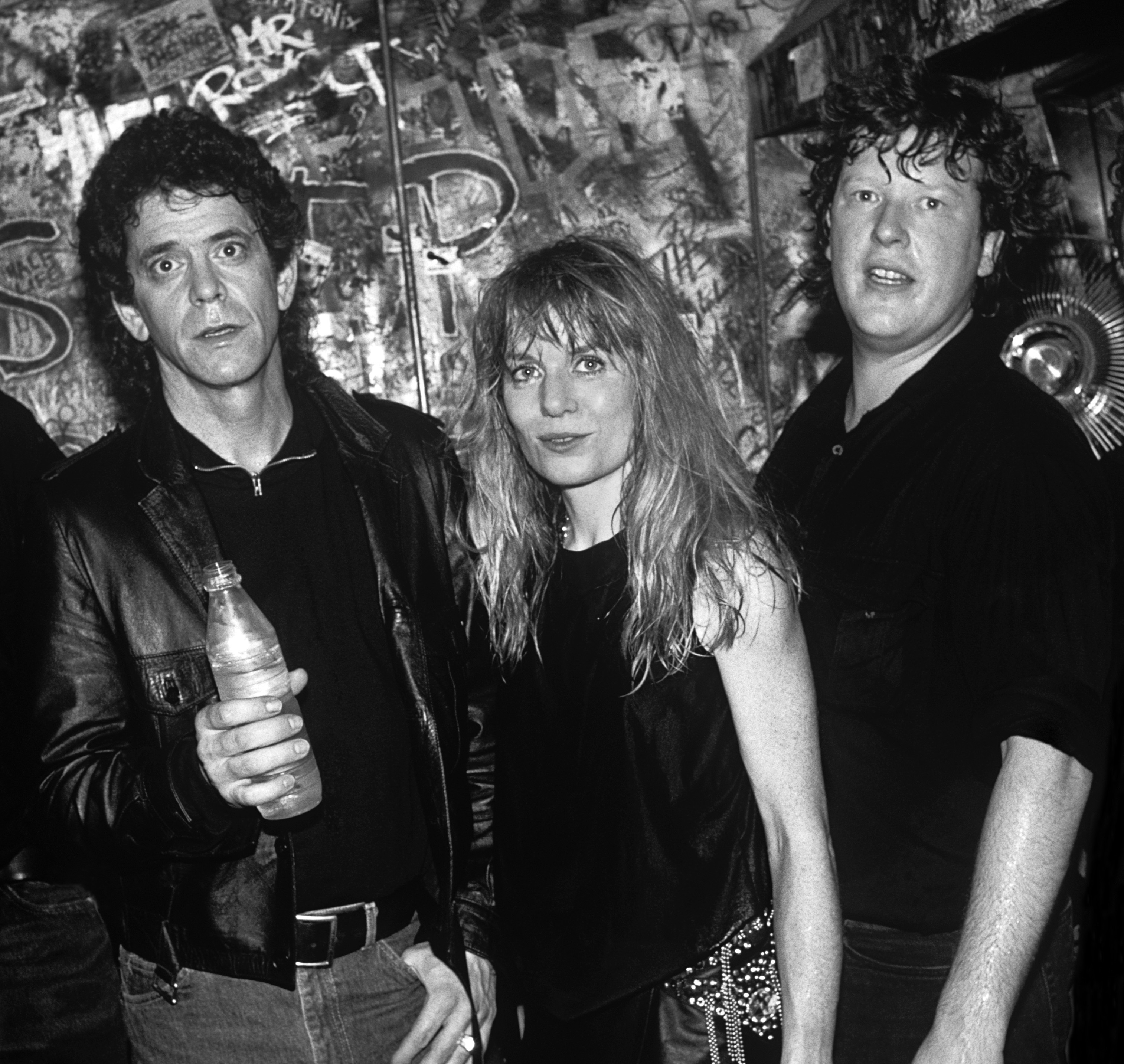
Lou Reed (left) joined Tina, Chris, and the Tom Tom Club onstage at CBGB’s in the late ’80s. Photo and copyright by Ebet Roberts/Courtesy of St. Martin’s Press

“Well, we did talk to him about it. And David is not wired the same way I am in his brain. It’s a different type of chemistry going on in his head. You can call it being on the spectrum or narcissism, but it’s a real thing,” he says. “It was something we had to learn to work with. We were working against that aspect of David’s character from the time of our first recording, like 1977 through 1991. We had to weigh in our minds what’s more important, keeping the band together or having a knock-down, drag-out fight with David that would break up the band. It was a dilemma, but I thought we dealt with it damn well.”

Frantz also writes about the many occasions that Byrne and others in the band’s orbit would marginalize Weymouth and her playing and contributions due to outright sexism, making things extra sensitive for the man who served a dual role as bandmate and boyfriend/husband.

“It was very difficult for me. I was very close to Tina, but I was also close to David and Jerry – not in the same way, of course!” Frantz laughs. “And I admired [Talking Heads producer] Brian Eno. I had to take a deep breath and at some point you realize that being in a rock and roll band is not easy. I mean, it’s easier than digging a ditch, but there’s a lot of ups and downs and twists and turns, and you just have to ride them out.”

Remain in Love isn’t skimpy on some details, especially about the Talking Heads’ early tours as names of clubs, opening acts, meals consumed, crowd size, and even what the band made unfold. Frantz says that he consulted Weymouth’s well-kept datebooks for a lot of that information, adding that she is writing her own book which he has not read yet, and that she didn’t see Remain in Love until it was almost completed.

“Both of us felt like we had good stories to tell, but we were also sensitive to the fact that most of what has been written about Talking Heads was either made up and not true or regurgitated information from [the past],” he says.

Frantz and Weymouth also formed the core of the offshoot band the Tom Tom Club, whose music showcased far heavier influences in dance, rap, and R&B. In 1981, they scored a massive radio and club hit with the utterly unique “Genius of Love,” sung by Weymouth and her sisters. An animated video was in constant rotation on MTV, and likely the first time a lot of its audience even heard the name “James Brown.”

Frantz says he knew it had become something big one afternoon in New York as he was walking around Sixth Avenue and Houston Street (“I know you’re in HOU-ston, but there it’s pronounced HOW-ston!” Frantz laughs). He passed by an area of bustling basketball courts populated mostly black and Latino players. Local R&B radio station WBLS was playing an extended mix of the song, and every boom box on the courts seemed to be tuned into the station.

“All these guys, like 50 of them, stopped playing basketball and just started dancing to ‘Genius of Love!’ I sat on a bench and just watched. And I thought ‘Well, this is it. We’ve made it and crossed over into a whole different realm from Talking Heads.’”

Ever the romantic, Chris Frantz today. Photo by James Swaffield/Courtesy of St. Martin’s Press

Talking Heads were inducted into the Rock and Roll Hall of Fame in 2002. And unlike other groups which had a history of conflict among themselves (Creedence Clearwater Revival, Blondie, KISS), the four members reunited for a one-off set of three songs. It remains the last time the quartet were together.

“It was intense, but in a good way. And nerve-wracking since we hadn’t played together in many years,” Frantz offers. “We rehearsed four songs for three days. It felt really good. It was bittersweet but mostly sweet. What was great is that our kids got a little taste of what their parents’ band was like. I know Jerry [Harrison] felt the same way.”

As for the future, Frantz says he is working on another book while Weymouth finishes hers. Then they might record a low-key EP of electronic/synthesizer music as a duo. “Something like Kraftwerk. Talk about a band that should be in the Rock and Roll Hall of Fame!” Frantz says. “I think I voted for the five times on the last ballot!” And eventually, they hope to welcome audience members once more to their Club.

“We’re waiting for the coronavirus to cool down so we can play as the Tom Tom Club again,” he says, before singing off with a well-wish based on local current events. “And good luck to you and the rest of the Houston crowd. I see the news is bad down there!”

This article originally appeared at HoustonPress.com
Posted in Books, Talking Heads | Tagged , , , , | Leave a comment

The Raw Rock of Michael Des Barres

Michael Des Barres: A multi-hyphenate entertainer with boundless energy and a bottomless reservoir of stories. Photo by Ross Halfin/Provided by Michael Des Barres

With 50 years in the music business, singer Michael Des Barres certainly counts as rock royalty. But he’s also actual royalty, as in the 26th Marquis Des Barres of France—though his childhood was anything but a soft ride on a royal horse-drawn coach.

“My father was a Marquis, but he was in prison when I was born for embezzling money. And my mother, who was 17 when she had me, was his fifth wife, a stripper, and was put in a mental institution. They were Caligula and Lord Byron,” he says.

“So I was sent to these very expensive boarding schools at a young age. I never went home. There was no home. I thought the only way I was going to survive was to really understand humanity, what people want from me, and what I could give them to make my life secure. Because I was on my own. And that was a blessing to me in many ways.”

Die Laughing Records cover

Des Barres has channeled his exuberant and seemingly boundless energy into multiple and simultaneous careers and a rocker, actor, Sirius XM DJ, and video game voice actor. He’s also currently writing a musical.

His extraordinary life and career was the subject of this year’s documentary Michael Des Barres: Who Do You Want Me To Be? It’s title is taken from “Obsession,” the song he co-wrote with Holly Knight and which became a big hit for the group Animotion in 1985.

“I’ve been using my vibe as currency since I was 8 years old,” he says in the documentary.

His most recent project is the EP Michael Des Barres and the Mistakes: Live at the Hi-Hat (Die Laughing Records). It’s six songs of raucous, raw rock and roll, and oozes a club vibe that seems like a lifetime ago, pre-pandemic.

“My new band, we’ve only had six gigs, and this was our second show ever. When everything shut down, I knew I had this magic night recorded,” he says. “I don’t think we’ll be shoulder to shoulder for a couple of years. But listen, man, there’s a lot more we can do with our lives than to go rock and roll shows. We’re going to have to sacrifice for things that really matter in life.”

The Mistakes include Erik Himel and Loren Molinare (guitars), Paul Ill (bass) and Matt Starr (drums). Not surprising given their relative short lifespan so far, the six songs on the EP are all covers: Three from Des Barres’ ‘70s bands, glam rockers Silverhead (“Hello New York,” “16 and Savaged”), and hard rockers Detective (“Detective Man”), as well as Marvin Gaye (“What’s Goin’ On?”) and a Little Richard medley.

“Hello New York” was about Silverhead’s very first night in the city in the early ‘70s, which saw them take in a show by the New York Dolls and return to their hotel…which was on fire.

“I walked into what most people would consider a nightmare, but to me it was a dream because my life has always been on fire!” Des Barres laughs. “We went to Max’s and there were five people there. We went back to the hotel and got in the elevator and the fucking thing was on fire. There were firemen in outfits from 20,000 Leagues Under the Sea breaking down the fucking door to get us out! [Dolls guitarist] Johnny Thunders was so stoned he was saying ‘It’s really warm in here.’ We left covered in soot!”

Of a deeper meaning to him is Gaye’s timeless (and now timely) classic. “When I first heard it, I already loved Marvin Gaye. Everyone did,” he offers. “In that sophisticated, sexy way, he could talk about things and police brutality. It was Black Lives Matter, 50 years ago!”

There’s also the T. Rex cover “Bang a Gong (Get It On),” which became a 1985 hit for the Duran Duran offshoot group The Power Station. Robert Palmer sang on the record, but Des Barres took over for the band’s live appearances. That put him on stage at JFK Stadium in Philadelphia on July 13, 1985 as part of Live Aid to sing it in front of nearly 90,000 audience members and millions more watching at home around the world.

As to what makes the Mistakes different from his other bands, Des Barres says there’s no comparison to their situations. “Silverhead and Detective were bands with record deals and managers and agents and press,” he says. “The Mistakes are an odd piece, which is why I called them that. Over the years, I discovered the best songs I wrote and gigs I played…there were a lot of mistakes! You have to do rock and roll carefully, but carelessly. You have to throw it up and see where it lands. Rock and roll is not a discipline.”

Even before he was a rocker, Des Barres was a child and teen actor, most memorably as the student-behind-sunglasses in the 1967 Sidney Poitier film To Sir, with Love. But he dove head first into the rock clubs of Swinging ‘60s London, attending shows not only by big names, but those known only to record crate diggers.

“I went to school with [drummer] Mitch Mitchell, and he told me one night he was playing with this black, left-handed guitar player from America and to come to the club and see him. That was Jimi Hendrix, and he was something!” Des Barres says. He also rattles off the names unfortunately often unknown in the U.S. like Chris Farlowe, Steve Marriott, Terry Reid, Brian Auger, and Graham Bond.

“[Bond] was into Aleister Crowley, black magic and all that shit. In those days, everyone was experimenting with everything,” he says. “It was a piece of shit nonsense. Black magic, my ass! We were all strung out on hashish and velvet and sex.”


Today, Des Barres hosts a daily three-hour program on Sirius XM’s Underground Garage Channel, where he’s found like-minded spirits in his listeners and channel/Wicked Cool Records (where he’s also signed) honcho Steven Van Zandt.

“I love doing it, it’s really something. How great am I?” he laughs. “It’s just great for rock and roll music in general. I’ve been there almost seven years. I have such enthusiasm for this music, and I feel like I’m listening to it with the audience. It’s a beautiful thing.”

Finally, in the U.S., his TV acting credits over the years have been expansive, appearing on everything from Miami Vice, St. Elsewhere, and Alf to Seinfeld, Suits, Bones, and NCIS. Music nerds remember him on the original WKRP in Cincinnati as one of the oddly well-dressed members of the band Scum of the Earth, who specialized in their own genre: “We play Hoodlum Rock,” one of his bandmates offered. “It’s several levels below Punk Rock.”

But his most famous stint was in the original MacGyver show, as the recurring assassin villain Murdoc (he’s also returned for the current reboot, but in another role). That led to his most, um, interesting request from a paying customer on the celebrity video greeting service Cameo.

“A guy asked me to do one in character as Murdoc for his wife. He wanted me to tell her that I loved her, and that I want to take her to dinner, and make mad love to her in a hotel!” he laughs. “I get a lot of sexual stuff, but that was the funniest fucking thing. And the truth of the matter, is that he was serious. He told me he wasn’t kidding. How about that?”

For more on Michael Des Barres and the Mistakes, visit MichaelDesBarres.com

This interview originally appeared at HoustonPress.com
Posted in Michael Des Barres | Tagged , , , , | Leave a comment

Peter Frampton Shows the Way to His Past in Memoir

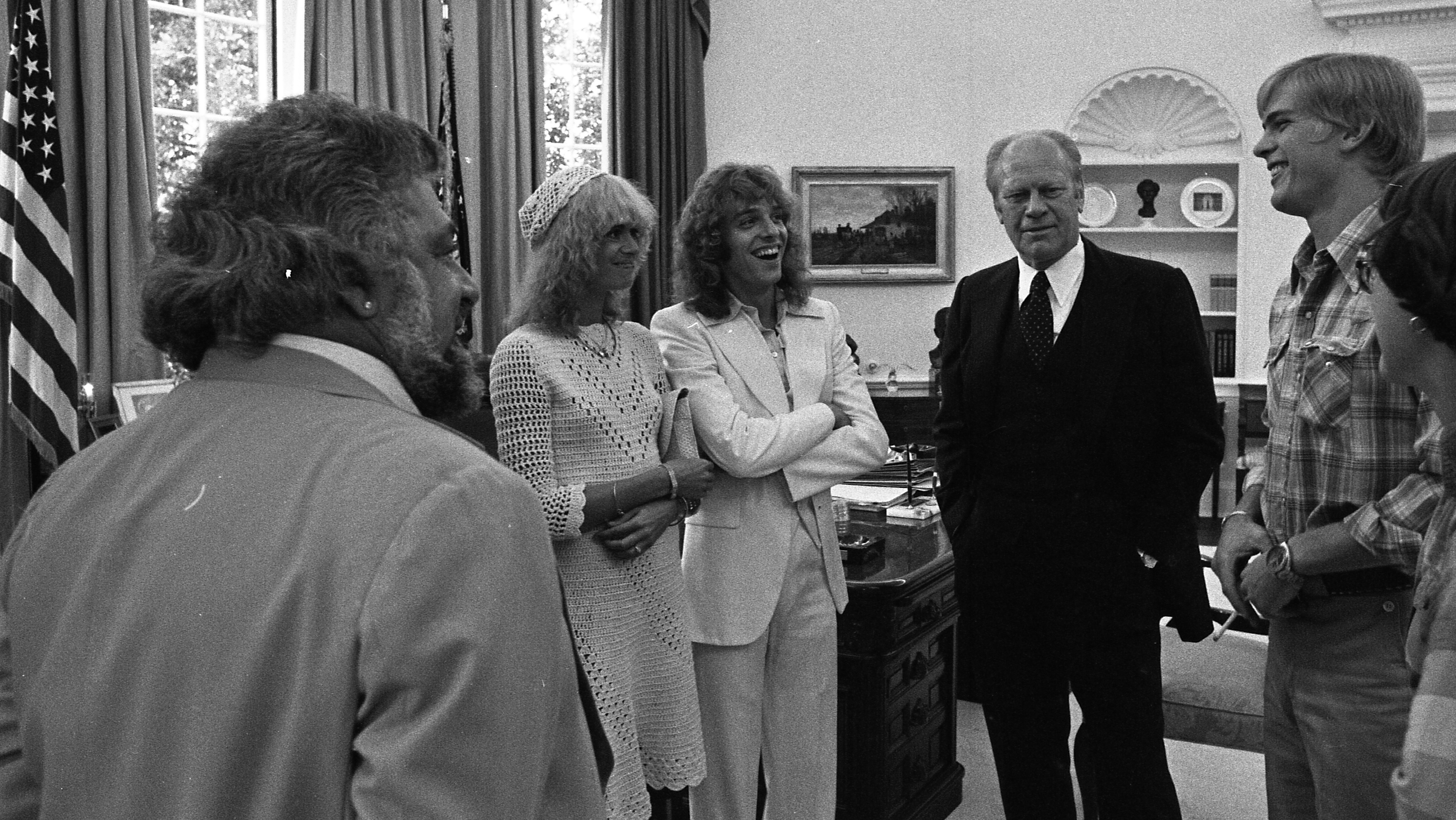
Peter Frampton was such a huge rock star in 1976 that he got invited to the White House. L to R: Manager Dee Anthony, girlfriend Penny McCall, Frampton, President Gerald Ford, and first son Steven Ford. Gerald R. Ford Presidential Library/Provided by Hachette Books

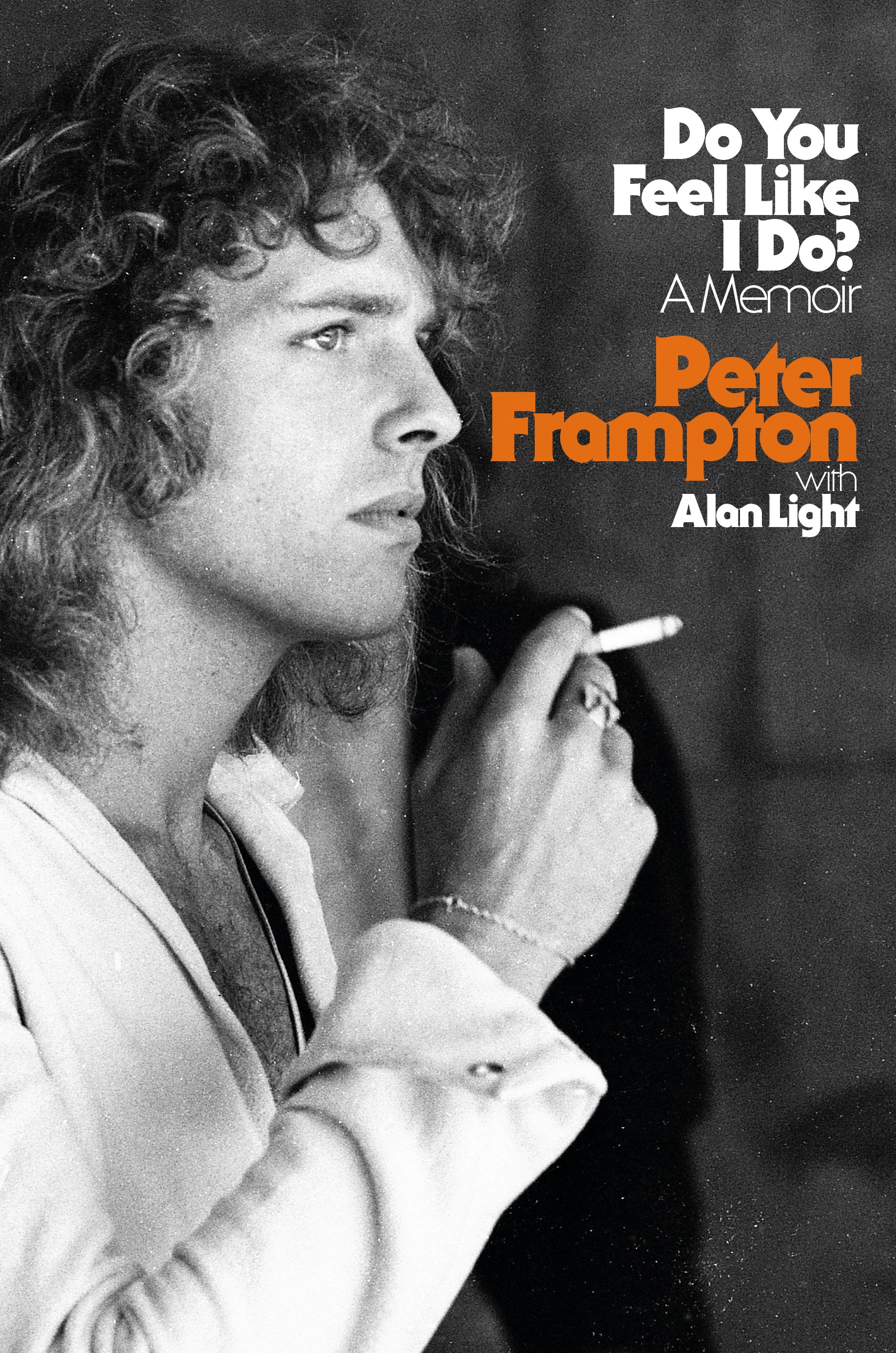
Do You Feel Like I Do?: A Memoir By Peter Frampton with Alan Light

352 pp., $28, Hachette Books

If rock star careers were measured in terms of their level of roller coaster-ness, then Peter Frampton’s would be a ride on (shout out to Astroworld) the Texas Cyclone, Greezed Lightnin’, and X-LR8 combined for sheer combined highs and lows, twist and turns.

He started out as a young guitar prodigy with the Herd, becoming a teen idol as “The Face of ’68.” His next group was the well-regarded power boogie rock behemoth Humble Pie…but he quit the group on the cusp of their commercial fame. A few solo albums failed to gain traction, but then came 1976’s double LP Frampton Comes Alive! It sold millions of copies and made him one of the biggest and most recognizable rock stars on the planet. Cue the procession of girls, substances, money, private planes, limos, and creative challenges.

Then a couple of unfortunate photo shoots involving shirtless and satin pants combos, a tepid follow up album (I’m in You) and the co-starring with the Bee Gees in the flop Sgt. Pepper’s Lonely Hearts Club Band movie laid him low. Meanwhile, his Mafia-connected manager, Dee Anthony, was busily stealing what his client estimates was about $30 million in 2020 dollars from the kitty. Refreshingly, Frampton takes full responsibility for the part he played in his own career/financial downturns.

But wait, there’s more! Bankruptcy, bad relationships, alcoholism, a horrible car wreck, and divorces. Then came wilderness years of an occasional album that only his diehard fans bought. But his guitar cred skyrocketed as a sideman-for-hire gigs on record and on tour with Ringo Starr and good friend/former classmate David Bowie. Frampton credits the latter with literally saving his life and career.

And slowly, over the course of the past two decades, Peter Frampton rebuilt his live audience, who gladly looked past the ‘70s image to focus on the great songs, the good vibes, and Frampton’s still-formidable singing and guitar playing. He won a Grammy (for the all-instrumental Fingerprints), was inducted into the Musicians Hall of Fame, voiced himself on the Simpsons and Family Guy, and had a small role and served as a ‘70s rock and roll technical advisor in Cameron Crowe’s Almost Famous.

And when things were looking really, really great…Peter Frampton was diagnosed with IBM a few years back, a degenerative and irreversible muscular disease that will eventually rob him of the ability to play guitar. So he reluctantly embarked on a Farewell Tour (which played Houston in September of last year). A few final overseas dates were…cancelled by coronavirus.

In Do You Feel Like I Do?, Frampton (along with noted music journo and SiriusXM host Alan Light) tells his tale with a good deal of humor and aplomb. He comes across as a decent, genuine guy, the reader goes on the roller coaster with him. He also sprinkles in anecdotes about fellow musicians like Stevie Wonder, Eric Clapton, George Harrison, Steve Miller, Steve Marriott, Alice Cooper, members of the Who, and more.

The book is filled with a lot of nuggets. Readers learn he picked up his first guitar at 3:30 am on Christmas Day when he was eight years old. That as a young teen, he lost his virginity to a young lady with the help of Rolling Stone Bill Wyman, his musical mentor who facilitated the encounter (leaving him with a case of the crabs and his mother to exclaim “Oh, that Bill Wyman!”).

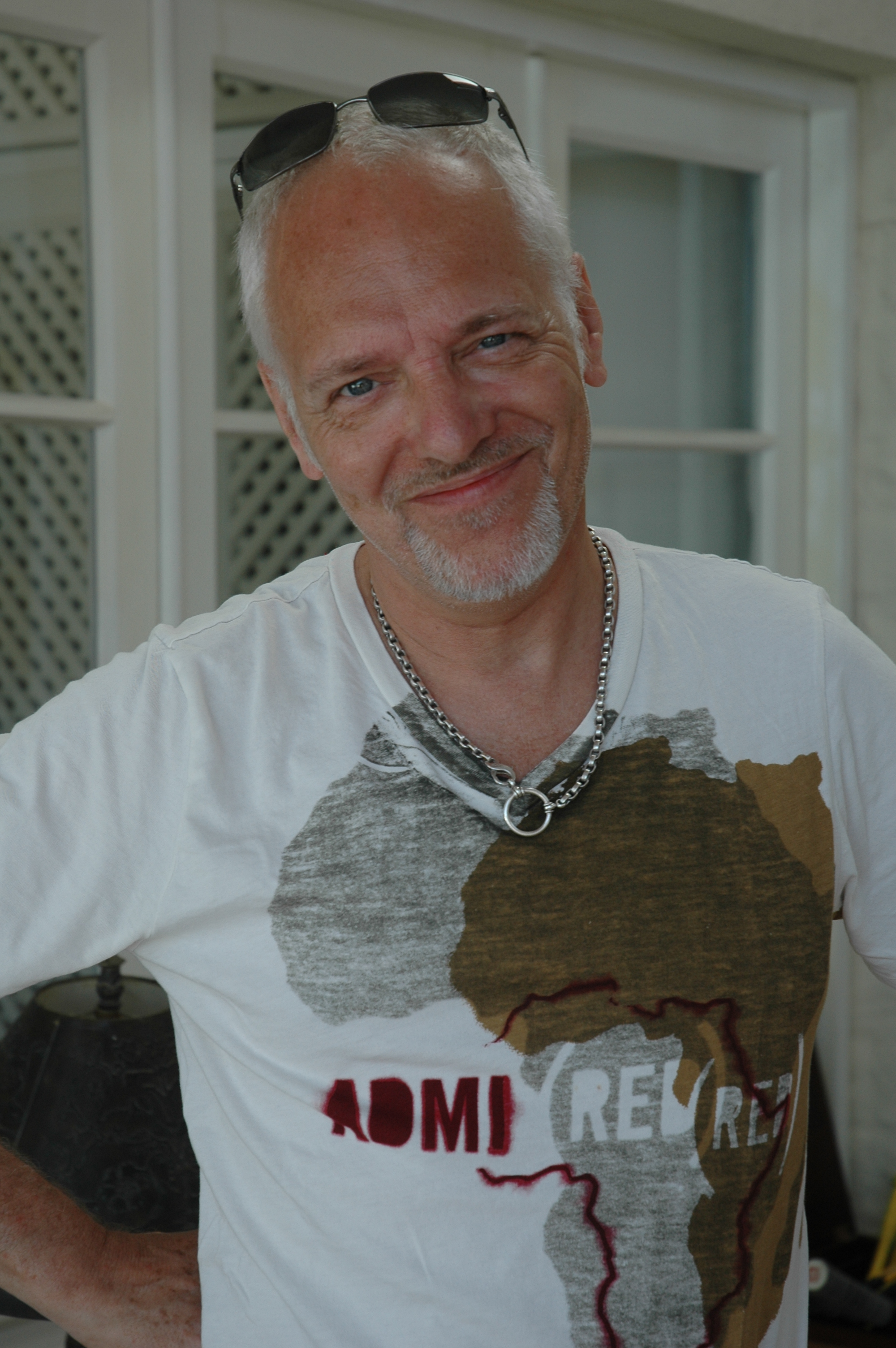
Peter Frampton recently, on vacation on the island of Mustique. Peter Frampton personal photo/Provided by Hachette Books

He also discusses how his signature Talk Box effect originated with he became enamored of one used by Nashville-based steel guitarist Pete Drake. And how a tempestuous relationship with Penny McCall (who left her husband, Frampton’s friend, for him) inspired many of his biggest songs including “Baby, I Love Your Way,” “Show Me the Way,” “Baby (Somethin’s Happening)”, and “I’m in You.”

Interspersed in the book are chapters telling the story of Frampton’s fabled 1954 black Gibson Les Paul guitar – his favorite and the one on the cover of Frampton Comes Alive! Thought destroyed in a 1980 plane crash on a Venezuelan runway that also killed crew members, it resurfaced decades later. It was “liberated” from the crash site and sold to a local musician, who played it for years before throwing in a closest.

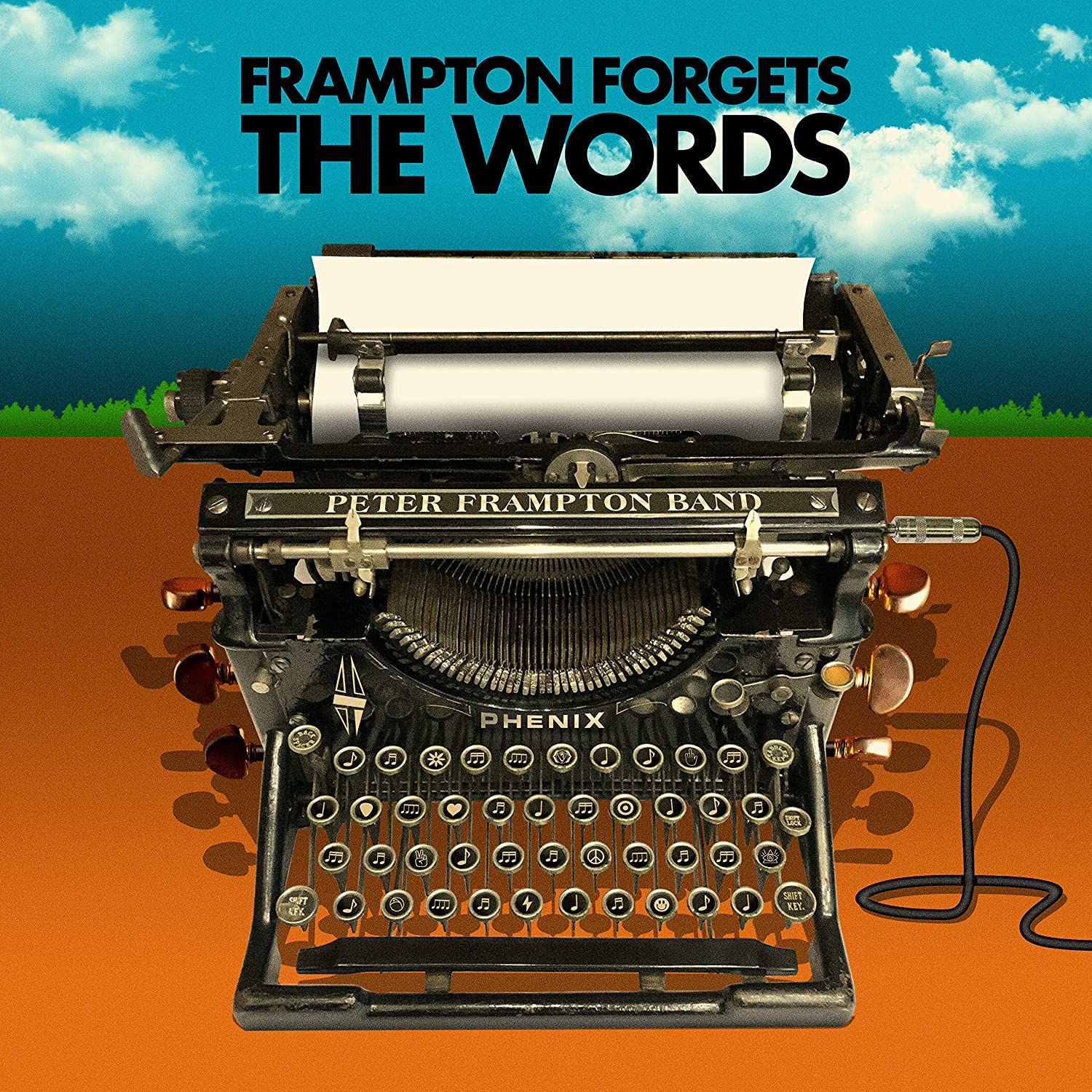
The new record from the Peter Frampton Band is out and features all instrumentals of songs by artists like Radiohead, David Bowie, Lenny Kravitz, and George Harrison.

In a turns worthy of a spy novel, the musician’s son brings it into a repair shop for repair – the sharp owner recognizes it for what it is – and contacts Frampton. But before any negotiations could be made, the teen runs off with it and is not heard from for years. Eventually, the guitar makes its way back to Frampton via a government courier and the shop owner, it is meticulously repaired, and called back into duty for the Frampton Comes Alive! 35th anniversary tour, the instrument now dubbed “The Phenix.”

That Peter Frampton is not in the Rock and Roll Hall of Fame makes this writer’s #1 slot on List of Snubs, and Frampton himself is one of the nicest musicians I’ve interviewed in 30+ years of music journalism. Perhaps the Finale Tour, a reevaluation of his music, and this book will push things along to an appearance on the ballot (co-author Light is on the Nominating Committee).

But regardless, Do You Feel Like I Do? Is an honest (often brutally honest) book that flows exceedingly well, has enough to interest both the diehard fan as well as those who only own Frampton Comes Alive!, and is sure to be a top classic rock bio/autobio of 2020.

This review originally appeared at HoustonPress.com
Posted in Books, Peter Frampton | 1 Comment

Artimus Pyle Remembers Lynyrd Skynyrd’s Fateful Ride in Film

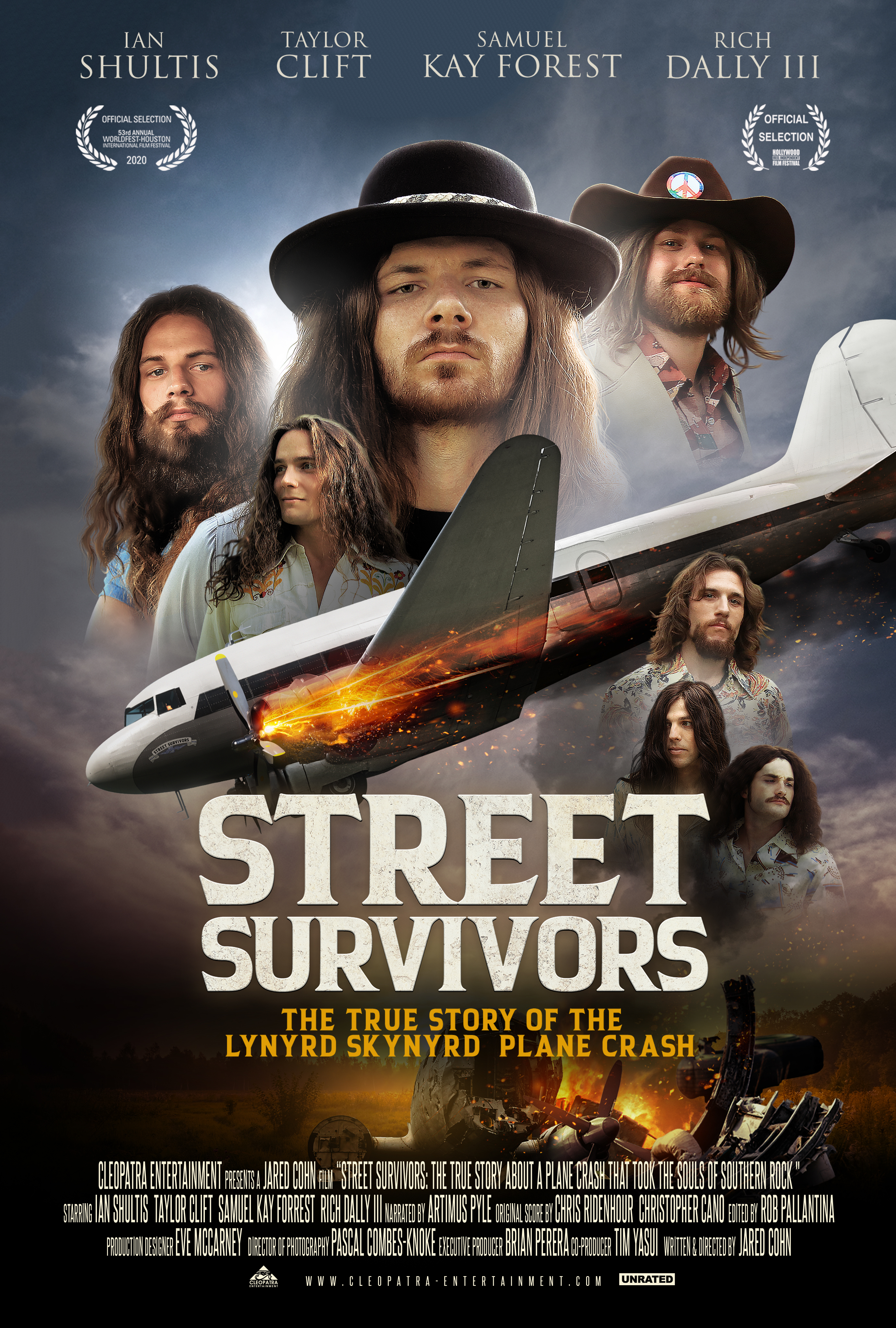
Ian Shultis as Lynyrd Skynyrd drummer Artimus Pyle in Street Survivors: The True Story of the Lynyrd Skynyrd Plane Crash. Screen grab/Courtesy of Cleopatra Entertainment

Sometimes, the sound of impending doom is quiet. And sometimes it is loud. Less often, it is both. That’s how Lynyrd Skynyrd drummer Artimus Pyle recalls what he and 25 other band members, crew, associates, and pilots heard inside of their Convair CV-240 plane over the swamps near Gillsburg, Mississippi on October 20, 1977.

“It was dead silence, everybody was holding their breath. When we first went into the the trees, it was just a brushing sound, the soft parts of the tops. But when we started lowering more, that’s when it sounded like a thousand baseball bats beating the fuselage. It was horrendous,” he recalls. “And then the plane started breaking up. It took us a long time to crash and stop. I was hurt, I was bleeding, I was cut, and all the cartiladge from my throat to my breastplate was ripped. And I cut my legs up getting out of the plane to look for help.”

Pyle’s tale and that of one of rock’s greatest tragedies is told in the film Street Survivors: The True Story of the Lynyrd Skynyrd Plane Crash.

The timeframe is mostly concerned with the day before, day of, and day after the plane crash, which occurred due to a combination of engine mechanical issues and pilot error in miscalculating fuel levels. In fact, the plane’s engines had already had fiery trouble on the previous flight, shaking all aboard as they deplaned at Greenville, South Carolina, where the band would play its final show. A mechanic was set to meet the aircraft after it would have landed in their next destination of Baton Rouge, Louisiana. But that flight would never happen.

There were a total of 26 people on the plane. Killed were Skynyrd lead singer Ronnie Van Zant, guitarist Steve Gaines, his sister/backup singer Cassie Gaines, assistant road manager Dean Kilpatrick, pilot Walter McCreary, and co-pilot William Gray. Others sustained injuries that would take years to recover from.

And while it’s a talented group of actors playing real-life participants, Pyle himself narrates portions of the film and makes occasional but not disruptive on-screen appearances. “There have been many variations and accounts and contradictions of this story. But I was there,” he offers. “This is something that shouldn’t have happened, but it did.” Pyle and his drummer sons also wrote and performed three new songs – including “Street Survivors” – that are heard.

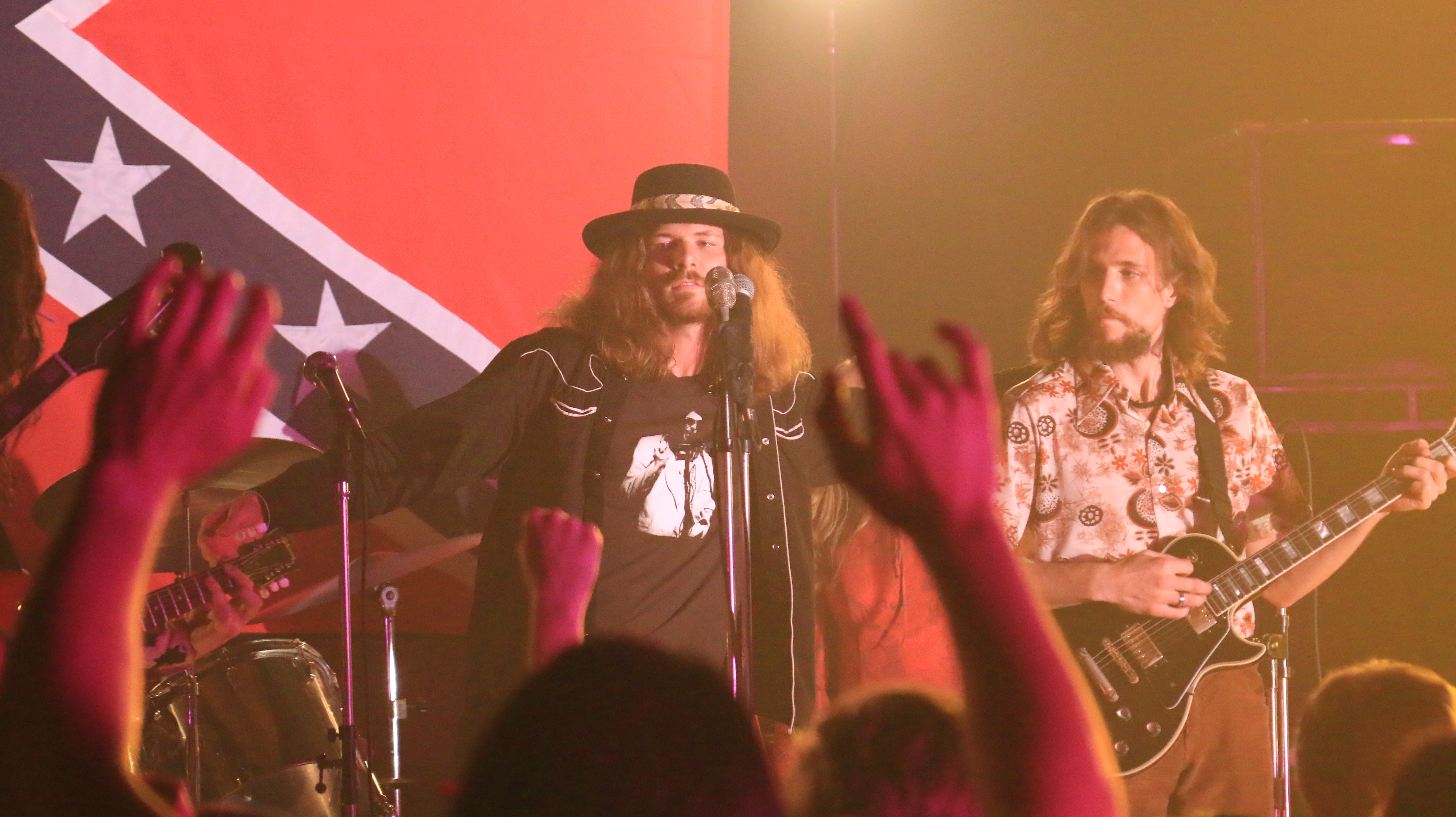
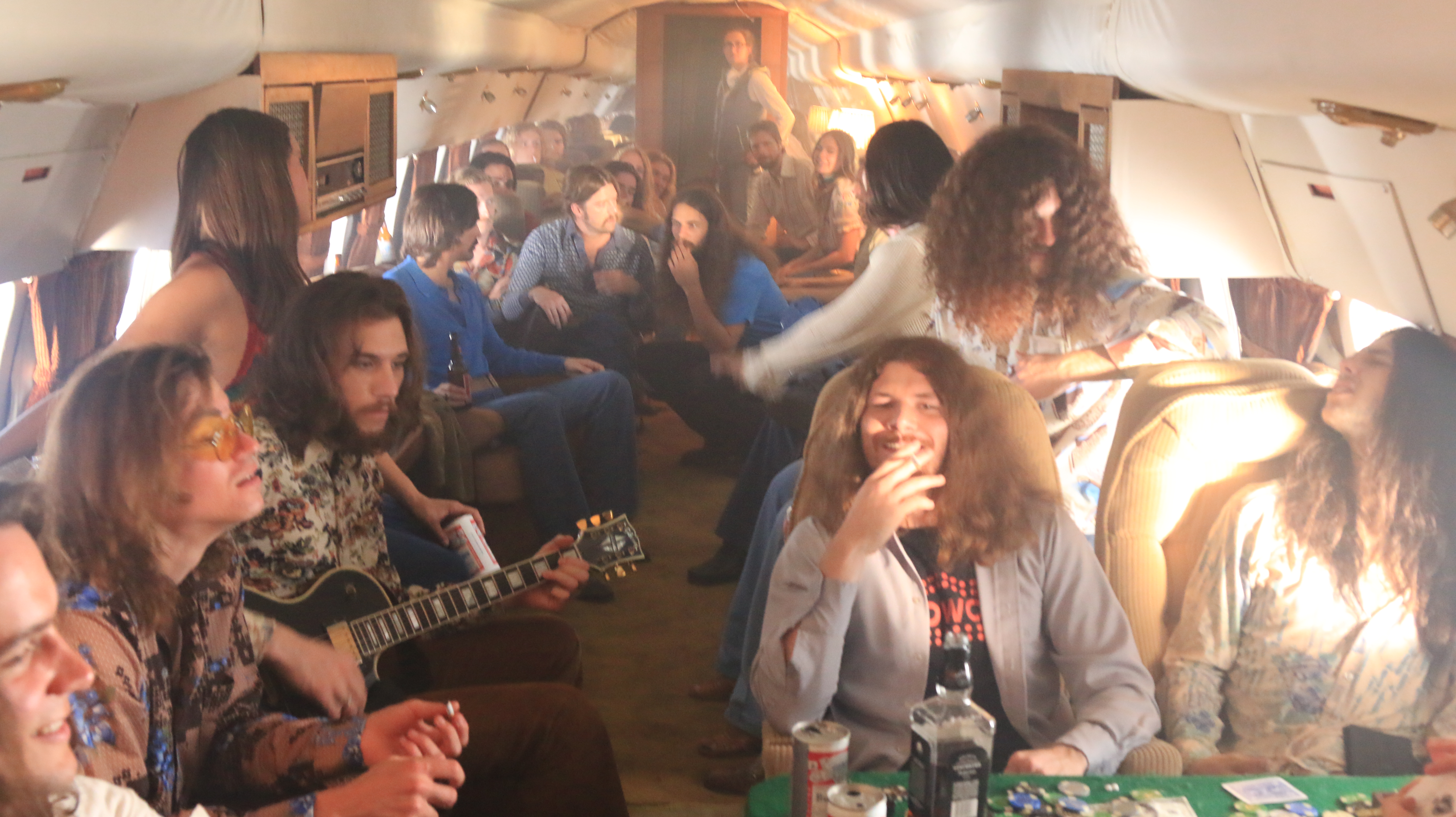
The movie recreates Lynyrd Skynyrd’s ill-fated plane journey. Taylor Clift (behind bottle) plays lead singer Ronnie Van Zant. Screen grab/Courtesy of Cleopatra Entertainment

Produced on a small budget of $1.5 million, Street Survivors looks a lot more expensive. Hardcore Skynyrd fans will snap to attention at the period-correct detail down to bandmember’s favorite T-shirts and the texture of wigs and facial hair (though Pyle says they could have done even better with more budget and his involvement – more on that later). Ian Shultis stars as Pyle, and gives an affecting performance.

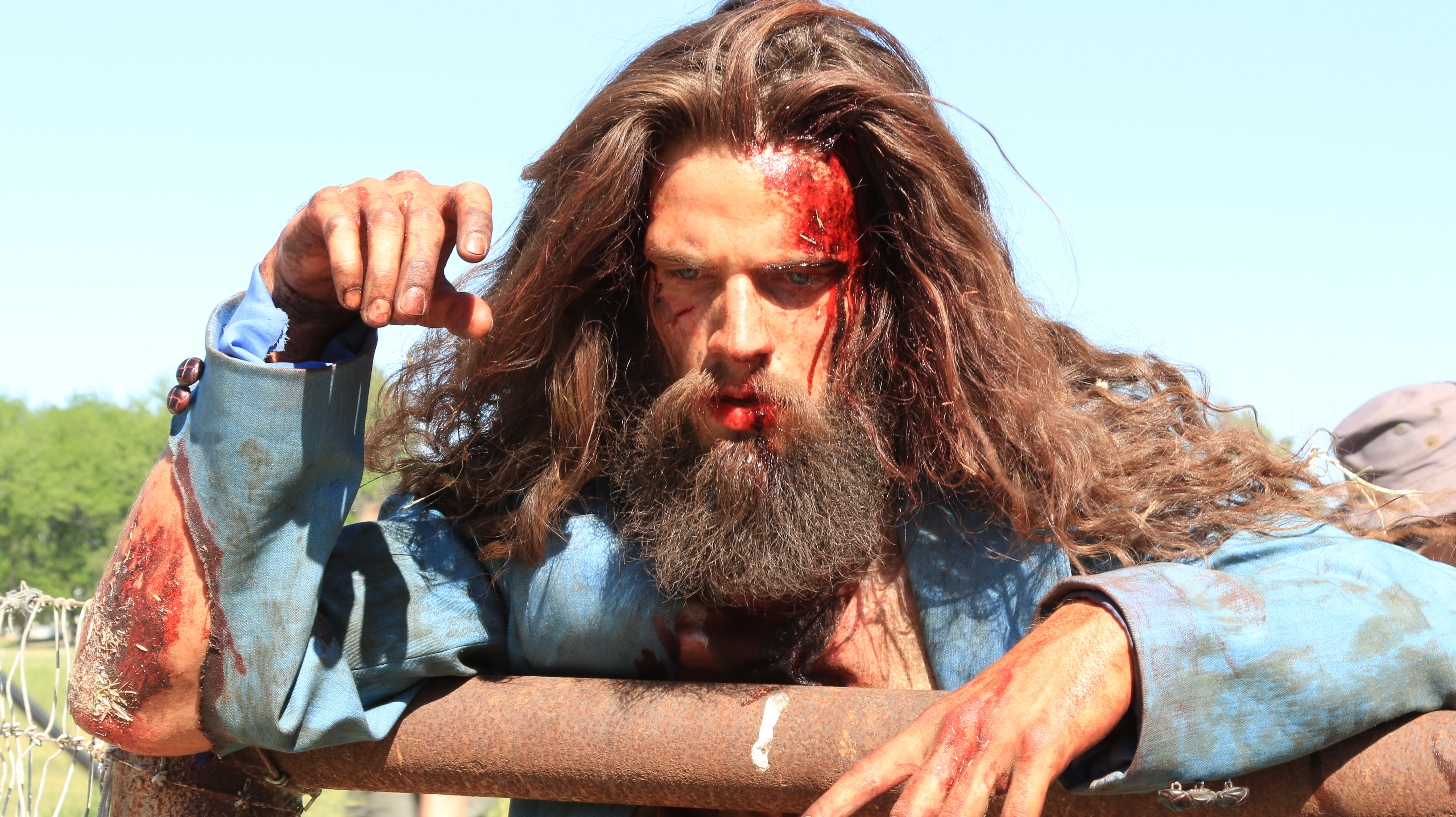
In the film – as in real life Pyle stumbled out of the wreckage to find those around him dead, dying, or screaming in pain. These scenes are incredibly realistic and hard to watch at some points, more horror movie than music biopic.

And despite his own serious injuries, the drummer decided to head out to find help, which he eventually did at a nearby farmhouse. Just prior to that, the film shows Pyle wading waist-deep through dark swamp water and coming upon a water snake and yelling at it “I will bite your fucking head off!”

The real Artimus Pyle greeting fans in 2011. Photo by Carl Lender/WikiCommons

“It really happened, but I didn’t scream like a madman which is what Ian did in the movie. The snake slithered up to me in the dusk and I said calmly ‘I will bite your fucking head off.’ And then I laughed at myself. And in that moment, knowing I was talking to a snake, it made me feel alive. And that’s what drove me to get help back to my friends. And I trudged on with my Marine Corps training.”

The story’s basis comes from 22 hours of videotaped interviews that Pyle did with Director/Writer Jared Cohn. “It was difficult. I cried, I laughed, I screamed, sometimes I’d get up and punch a wall,” Pyle recalls. “I went to the deep tracks with that.”

There’s scenes of ‘70s-era rock star partying involving topless women, drinking, fighting, and the word “SKYNYRD” spelled out in cocaine on a glass table top. But there is also the band working on music, forging bonds, navigating their home lives, and talking about plans for the future.

That the film is being released at all is a story in itself. In August 2017 after the movie was completed, Judy Van Zant Janness (Ronnie’s widow), along with a group including reps and estates of other bandmembers, successfully won a U.S. District Court injunction to stop the film’s release. They cited a consent order members (including Pyle) signed in 1988 concerning usage of the band’s name and story.

That decision was overturned by a U.S. Circuit Court of Appeals in October 2018, clearing Street Survivors to be seen –  though Pyle had to disassociate himself from producer Cleopatra Entertainment and business relations during the filming process in order for that decision to come down in Cleopatra’s favor.

Pyle has a lot to say about the lawsuits – and Janess – enough to fill an another entire story. As he does about a number of other players in the Lynyrd Skynyrd story past and present, by name. Suffice to say, they are not complimentary. There’s also Skynyrd-related financial windfalls totaling $15 million that he says have been taken or stolen from him.

“Judy was coming at us the entire time with vicious, nasty lawsuits. But it was a film that needed to be done. And I wanted the Skynyrd fans to know what happened and what we had been through,” he says.

Viewers will notice there is no authentic Lynyrd Skynyrd music in the movie, nor any songs made famous by the band, even in cover versions (the sole number the band performs in the film is the J.J. Cale-penned hit “They Call Me the Breeze.” Pyle says Cleopatra wanted to explore either of those options, but the lawsuits it might generate would just bring additional headaches and delays. Though he actually puts it in more…um…colorful terms.

Taylor Clift (as singer Ronnie Van Zant) and Samuel Kay Forrest (as guitarist Steve Gaines) perform in the film. Attention to detail: Clift’s Neil Young T-shirt is a replica of the one the singer actually wore. Despite the barbs traded in Young’s “Southern Man” and Lynyrd Skynyrd’s response “Sweet Home Alabama,” the musicians actually respected each other. Screen grab/Courtesy of Cleopatra Entertainment

Asked why the band willingly got on an aircraft they saw for themselves had mechanical issues – buoyed by Ronnie Van Zant’s seemingly nonchalance and his philosophy of when it’s your time to go – you go.

“It wasn’t that cut and dried. On the plane before it crashed, we had gotten together and decided to buy two tour buses – one for the girls and one for the crew. And we had decided as a band to get a Lear Jet so our time in the air between shows would be 45 minutes instead of 2 ½ hours,” Pyle says.

“After our [planned landing] in Baton Rouge, they were sending a guy over from Falcon Airways, where we leased the airplane, to fix the engine. And if he couldn’t fix it, we were going to fly commercial. We had a contingency plan. Ronnie wasn’t just like ‘Hey, let’s jump on this airplane and go have a crash.’ It was like ‘Look, we’ve got a gig in Baton Rouge. Let’s get there the best way you can and let’s go.’”

In the end, Pyle says he is “very proud” of Street Survivors, and that the young actors put their “hearts and souls” into the project. He watched it the first time by himself and cried. And he’s screened it seven more times since, including a public premiere at a pre-pandemic Hollywood Reed Independent Film Festival where he walked the red carpet along with much of the cast and filmmakers.

Though he quit performing with Lynyrd Skynyrd in 1991 several years after the band started up again, he and guitarist Gary Rossington are the sole surviving members of the plane crash lineup.

The pandemic has also put a halt on the pandemic-delayed Lynyrd Skynyrd’s “Last of the Street Survivors” worldwide farewell tour. Rossington himself has faced frequent health scares in recent years, and Pyle adds the only “silver lining” of the pandemic crisis is that it’s allowing Rossington to rest up.

And though he and other members came together to play a short set at their 2006 induction into the Rock and Roll Hall of Fame, he’s had no involvement with the band since then. As leader of the Artimus Pyle Band, the drummer and bandmates performer a mostly Skynyrd set to enthusiastic fans.

Still, time and mortality have a way of bringing seemingly bitter musician feuds to some sort of closure, if not a full reconciliation. Robbie Robertson has written about visiting ex Band-mate Levon Helm on his deathbed, and estranged former Allman Brothers Band guitarist Dickey Betts met with Gregg Allman toward the end of the latter’s life.

So, does Pyle see a time when he might have a similar encounter with Gary Rossington – related to either of their health statuses or not?

“Bob, I would give anything to talk to Gary. I would love to talk to Gary. I saw him at [Skynyrd keyboardist] Billy Powell’s funeral. He hugged me and kissed me, and we were surrounded by [current band reps] Vector Management and Gary’s wife Dale,” Pyle says, adding he feels that Rossington is easily manipulated by others and acquiesces to them, and it often involves money.

“I love Gary and I miss him. I know he’s surrounded by some snakes. I would give anything for us to have a private moment together. Just me and him meet. And it would be totally cool.”

This interview originally appeared at HoustonPress.com
Posted in Lynyrd Skynyrd | Tagged , | Leave a comment