The Allman Brothers & Their Family Ways

The lineup that recorded “Brothers and Sisters:” Jaimoe (aka Jai Johanny Johanson), Gregg Allman, Butch Trucks, Chuck Leavell, Lamar Williams, and Dickey Betts. The Big House Museum Archives.

In the fall of 1972, the Allman Brothers Band found themselves at a crossroads—one with more ominousness and uncertainty than the one Robert Johnson went down to. A year earlier, they had lost Duane Allman, the group’s founder, leader and driving force in a freak motorcycle accident.

Almost exactly year later after that, another loss came with the eerily similar freak motorcycle accident death of bassist Berry Oakley, just three blocks from the site of Duane’s demise.

Ironically, the band had finally broken through commercially and becoming more popular with 1971’s epochal Live at Fillmore East and follow up Eat a Peach. So, there was much, much riding on the group when they entered Capricorn Studios in their hometown of Macon, Georgia to piece together what would become 1973’s Brothers and Sisters.

The tale of this record that clocked in at just over 38 minutes—and the ensuing years up until the group’s initial breakup in 1976—is told in Alan Paul’s Brothers and Sisters: The Allman Brothers Band and the Inside Story of the Album That Defined the ‘70s (352 pp., $32, St. Martin’s Press).

That subtitle, Paul admits, might be hard for some to swallow in a decade that also saw the release of Exile on Main Street, Who’s Next, Dark Side of the Moon, Rumours and Hotel California.

“I knew I’d have to answer this question!” Paul laughs from his home via Zoom. “But the book is bigger than just the album. It brings together a lot of things about the era, and I wanted to convey that.”

In addition to detailing the creation of some jaw-dropping music, the book’s narrative also covers the band’s internal and external tensions, drugs, booze, more drugs, legal tangles, career peaks and valleys, and the explosion of Southern Rock. Along the way, there are important cameos from players as diverse as Geraldo Rivera, the Grateful Dead, Jimmy Carter, and Cher.

Paul is uniquely qualified to tell this story. Arguably the world’s foremost expert on the Allman Brothers Band, he’s already written a definitive oral history (One Way Out) and has personal and professional ties with various bandmembers and players in the ABB orbit. He even sings and plays guitar in the gigging “continuation group” Friends of the Brothers.

Gregg Allman onstage, 1972. Photo by Dina Regine.

For Brothers and Sisters, Paul had something of a guardian angel in the form of the ABB’s longtime friend, photographer, archivist and “tour mystic” Kirk West. In the mid-1980’s West conducted hundreds of hours of interviews with band members for a biography he never wrote. The band would reunite in 1989 and make him an employee.

The boxes containing those cassettes gathered dust in West’s office for nearly four decades until he sold and entrusted them to Paul (who had long known about their existence) in 2021.

Paul recalls carrying the precious cassette container with him on the plane home and storing it in the overhead compartment, not wanting to risk it becoming lost luggage. He then began the process of absorbing and digitizing many of them for use in Brothers and Sisters, first simply on his iPhone and then having an associate do them professionally in batches.

The Grateful Dead’s Jerry Garcia and Dickey Betts onstage in 1973. Photo by Sidney Smith, AllmanBrothersBookbySidneySmith.com.

“Kirk thought the book was a good idea, and I had already started on it when he offered me the tapes,” Paul says. The handover is documented in the book’s expansive photo insert, the shots taken by Paul’s son Jacob.

“The volume of what I had was overwhelming, and I didn’t [digitize] every single tape,” he continues, adding that the audiobook of Brothers and Sisters will feature some 40+ audio snippets of the bandmembers themselves talking, licensed from West.

“He’s really happy that these have finally come to light and people can hear them,” Paul says.

The Allman Brothers Band went through two major changes with Brothers and Sisters. The first was the stepping-up of singer/guitarist Dickey Betts as a writer, player and vocalist. He was reluctant front man who shared a sometimes-uneasy power balance with Gregg.

And the second was the arrival of two new member who provided the energy, freshness, and joy that the ABB desperately needed: Lamar Williams, Jr. (replacing Oakley) and Chuck Leavell, who was added on keyboards.

Gregg Allman and Phil Walden at Capricorn Music Weekend, 1973. Photo by Sidney Smith, AllmanBrothersBookbySidneySmith.com.

“Dickey was definitely reluctant to step out. Neither he nor Gregg were natural leader types. And what I mean by that is there’s a certain burden to that in making decisions and interacting with people,” he says.

“Gregg was withdrawn and self-centered and struggling with his own issues. And Dickey would sometimes just disappear into himself to where even his bandmates weren’t comfortable talking to him. That was an issue for all of the band, except Duane. And I think Dickey knew that about himself.”

For Gregg, he says, it would have been hard to change roles from the little brother who adored his older sibling with the big personality and calm demeanor and step into his place. To complicate matters, Allman was recording his first solo record, Laid Back at the same time the sessions for Brothers and Sisters were going down. Betts would also later release a solo effort, Highway Call.

Paul also goes into the complicated role that Phil Walden played (and some feel, abused) in the career of the Allman Brothers Band. A charming but slightly-sketchy industry character along the lines of Morris Levy or (for Houstonians) Don Robey and Huey Meaux.

Not only was he the head honcho at Capricorn Records, the band’s label and recording home. But he was also the their manager, booking agent, merchandiser and publisher. Roles that brought with them heavy conflicts into what was the band’s best interests at a time.

He was also going full-bore into Southern Rock with other acts like the Marshall Tucker Band, Charlie Daniels Band and Wet Willie, while indulging in his own substance abuse issues.

Jimmy and Rosalynn Carter (right) visit Dickey Betts (arms folded) and Phil Walden (leaning) in the Capricorn studio while Betts records his “Highway Call” solo record, 1974. Photo by Herb Kossover.

Brothers and Sisters also gives perhaps the most in-depth print dissection of the extremely close relationship between then-Presidential hopeful Jimmy Carter and the band, and in particular Allman and Walden.

“If it hadn’t been for Gregg Allman, I never would have been President,” Carter is quoted in the book. And indeed, the band and Walden threw early clout, exposure, and—perhaps most importantly—financial contributions the long-shot candidacy of the Bob Dylan-quoting peanut farmer from Georgia with the sizable choppers and honey-soaked accent.

Paul says that to his credit, even after he was elected President, Carter stood by Allman when the latter was going through very public issues surrounding drug and legal issues. That exploded when Allman testified in open court against his own road manger and valet/bodyguard, John “Scooter” Herring in a criminal trial. Herring had also supplied Allman with drugs. For most, the “Brotherhood” code had been not just been broken, but betrayed and destroyed.

Kirk West (left) hands over interview tapes to Alan Paul. Photo by Jacob Blumenstein Paul.

“It’s been interesting and surprising to me that a lot of people don’t know about that relationship with Jimmy Carter. And I didn’t realize the extent to which everyone abandoned Gregg and Jimmy didn’t,” Paul says.

“Carter by far had the best reason to abandon him. What politician wouldn’t issue a statement [against] Gregg? No one would have blamed him. But he didn’t do that, and I think that’s impressive. Jimmy Carter wouldn’t have existed as a national figure without the Allman Brothers. And they used the national popularity they had with Brothers and Sisters to boost him when he needed it.”

Paul adds that there is a direct link between the album’s Betts-penned/sung tracks “Southbound,” “Pony Boy,” and their biggest ever commercial hit, “Ramblin’ Man” and the Outlaw Country movement of Waylon, Willie, and the boys. Ironically, “Ramblin’ Man” peaked at #2 but was held off by “Half-Breed,” a tune performed by Cher…the future Mrs. Gregg Allman!

But back to West’s audio tapes. The question must be asked: When Paul first got his hands on the irreplaceable complete collection, did he ever consider purchasing an extra plane seat next to him just to keep the container in sight at all times?

“No!” he laughs. “But that would have been such a good story!”

This interview originally appeared at TheHoustonPress.com

Posted in Allman Brothers Band, Books | Tagged , , , , | Leave a comment

Kenny Loggins Says “This Is It” for Touring

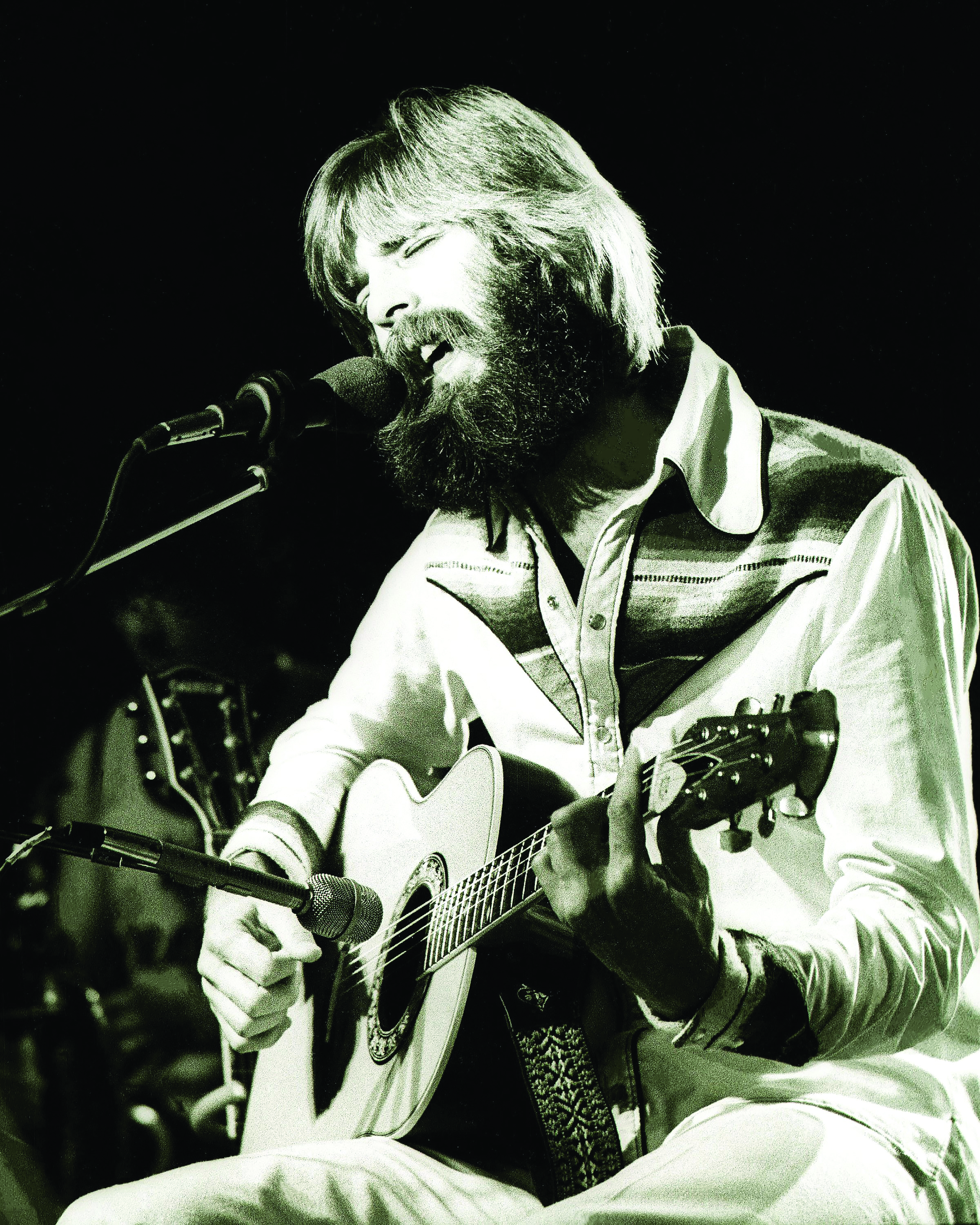
Kenny Loggins will have time to put his feet a lot more after his final tour. Photo by Nick Spanos.

When musicians start planning farewell tours, it’s time to get creative with names, which often reference song titles. Elton John proffered “Farewell Yellow Brick Road” and Ozzy Osbourne promised “No More Tours” while the O’Jays put on the brakes with “The Last Stop on the Love Train.”

Kenny with a favorite Ovation guitar. Photo by Larry Hulst.

But it would be tough to beat the moniker picked for Kenny Loggins’ last run across the country: “This is It.” The title taken from his 1979 #11 hit co-written with Michael McDonald.

“We debated what it should be, and it was either ‘This is It’ or ‘Celebrate Me Home.’” Loggins says via Zoom from his own home. “I was concerned that was inadvertently what Michael Jackson’s last tour dates were supposed to be called. But I had a hit song with the title, so I thought I had some rights to it.”

Ah, but can we take anyone on a “Farewell Tour” at their word? It’s become something of a set joke since the Who launched what was supposedly theirs in 1982 (40+ years later, they’re still on the road). Mötley Crüe signed a “binding agreement” that was then broken. Even Peter Frampton with a debilitating muscular disease is back again on the “Never Say Never” run of dates, albeit now performing seated.

So, is this really “it” for Kenny Loggins?

“I think so!” he laughs. “I don’t want to do it indefinitely. I don’t. It just gets physically more and more difficult each year. And the voice has to be in shape for me to hit those high notes.”

To that end, Loggins has been working with a vocal coach for a year and a half, and he says it’s absolutely working. “People say I sound the same, but I can hear the difference and feel the difference,” he says. “I want to go out while I can still hit the notes and not have people say, ‘He’s not what he used to be’ and just disappear.”

Kenny Loggins onstage in 1975 with Don Roberts. Photo by Larry Hulst.

Loggins’ set list includes his big hits either from his time with Loggins & Messina or solo (“Whenever I Call You Friend,” “Danny’s Song,” “I’m Alright,” “Danger Zone,” “Heart to Heart,” “Footloose”), deeper cuts, and fan favorites.

In a brilliant piece of pairing, opening the show will be The Yacht Rock Revue, the nation’s premier touring act in that universe. I spoke with YRR co-founder Nicholas Niespodziani in 2021.

And if there were a Mount Rushmore of the genre (with smooth surfaces, of course), the visage of Kenny Loggins would be in the George Washington slot. According to the website YachtorNyacht.com, Loggins had a hand singing and/or writing four of the top six most Yachty songs ever.

“I’d heard about them and my manager said, ‘How does this hit you?’ I know that Daryl Hall is open hostile toward [Yacht Rock]. And at first, I thought it was mildly insulting,” Loggins says.

“But then it got traction and became the name of a whole genre. When we were making the music back then we weren’t thinking that. It’s not necessarily the best moniker, but people get it and know what they’re talking about. And SiriusXM radio has run with it.”

When I last spoke with Loggins, his memoir (I’m Alright from Hachette Books – now available in paperback) had just been published. In it, he was open and honestly raw about his up and down personal relationship and musical partnership with Jim Messina at the start of his career. And while Loggins did send his former partner the chapters about their time together, it was with the caveat that nothing would be changed. Though Loggins was open to discussing any issues with him.

Since then, the pair have performed together a handful of times. So, did Messina say anything?

“No. He did send me a note that said, ‘I guess it’s time for the truth to be told,’ and I guess that’s how he’s holding it,” Loggins says. “It’s inadvertently an admission that the stuff I wrote about him as true. I tried to balance credit where credit was due. There were some idiosyncrasies of his then I perceived as emotional issues…but was kind of an OCD approach to making records. And that allowed me to not take it personally.”

The last concert will place November 4 at the Santa Barbara Bowl in California. Given the heaviness of the situation, Loggins says he’ll probably be very emotional hitting that particular stage.

“I’d like to keep it one breakdown. I don’t want it to be ‘Loggins didn’t sing for 15 minutes,’’ he chuckles, before turning serious.

“It’s a big deal, and I’ve been working on it in that I don’t want anything to blindside me emotionally. I know there are things you can’t go through until you actually go through them,” he says. “This is the beginning of retirement. The main thing is to keep my voice going. I have a physical trainer and play a lot of pickleball. So, if I can do 2 ½ hours of that, I can do 90 minutes onstage.”

What, pickleball? Yes, it turns out that Kenny Loggins is an avid aficionado of the newly popular sport, which he picked up about five or six years ago while with friends in Mexico. He’s a regular presence at his local municipal court in both planned and pickup games, often in the company of his lady friend.

So, while this is the music and not the sports section, we must ask: What is his greatest strength and greatest weakness on the court?

“I have a really good backhand serve. I consider it to be like a free throw in basketball. It’s a free shot, so you might as well make it a difficult one to return,” he says. “As for what needs improvement, I’m weak on the third shot drop from the back. It’s tricky!”

But just because Kenny Loggins is retiring from the road doesn’t mean he’ll stop being creative, with plans to continue recording and writing, sometimes with collaborators. In fact, he co-wrote a theme song for an upcoming documentary on his life and career with fellow chart topper Richard Marx. There’s no title chosen yet, but Loggins hopes it will start making the rounds of film festival circuits in the summer of 2024.

Finally, it’s long been something of a trivia question that Kenny Loggins is also related to another man with a ‘70s soft rock hit: singer/songwriter Dave Loggins, a one hit wonder with 1974’s “Please Come to Boston.”

A natural question would be: Have the two ever performed together? Either at a concert or even a family gathering?

“I like the idea, but the family isn’t close. That second cousin meaning is kind of distant. I’ve only met him briefly,” Loggins offers. “But he’s had a great career as a songwriter.”

For more on Kenny Loggins, visit KennyLoggins.com

This interview originally appeared at HoustonPress.com

Posted in Kenny Loggins | Tagged , | Leave a comment

New Documentary Explores Syd Barrett and the Seeds of Pink Floyd

The original Pink Floyd in 1967: Roger Waters, Rick Wright, Nick Mason and Syd Barrett Photo © Syd Barrett Music Ltd.

Though he identified primarily as a punk rocker, as a young man Roddy Bogawa did have an affinity for the music of Pink Floyd. After all, his very first concert was seeing the group on the 1977 Animals tour.

Later, as a film director, he put another foot in their camp by directing a documentary on the band’s close friend/longtime graphic designer and the firm he co-founded, 2011’s Taken by Storm: The Art of Storm Thorgerson and Hipgnosis.

Though—as Bogawa admits—when a musician friend first brought up that name, he thought it sounded like “some Finnish death metal singer.”

Classic Rock fans know Hipgnosis images from the covers for Pink Floyd records including Atom Heart Mother, The Dark Side of the Moon, and Wish You Were Here, as well as memorable projects for Black Sabbath, Led Zeppelin, AC/DC and Genesis.

It was at a screening of that film that musician Rob Dickinson of the band Catherine Wheel first floated the idea that Bogawa’s next doc should be about Pink Floyd’s “lost” co-founder, Syd Barrett. Thorgerson was listening nearby.

“And so, the next morning we were at breakfast and and Storm said to me ‘So, what are you doing about Syd Barrett, Roddy? Maybe you are the one!” Bogawa laughs via Zoom from his home.

Intrigued, he spent the summer digesting books about Barrett and other documentaries, and even making a brief outline with Thorgerson and an illustrator about what a potential film would look like. But if he thought the decision to go forward was still his, he was mistaken.

“Storm called me from LA and said ‘We’ve started the film on Syd!’ He was already conducting interviews!” Bogawa says.

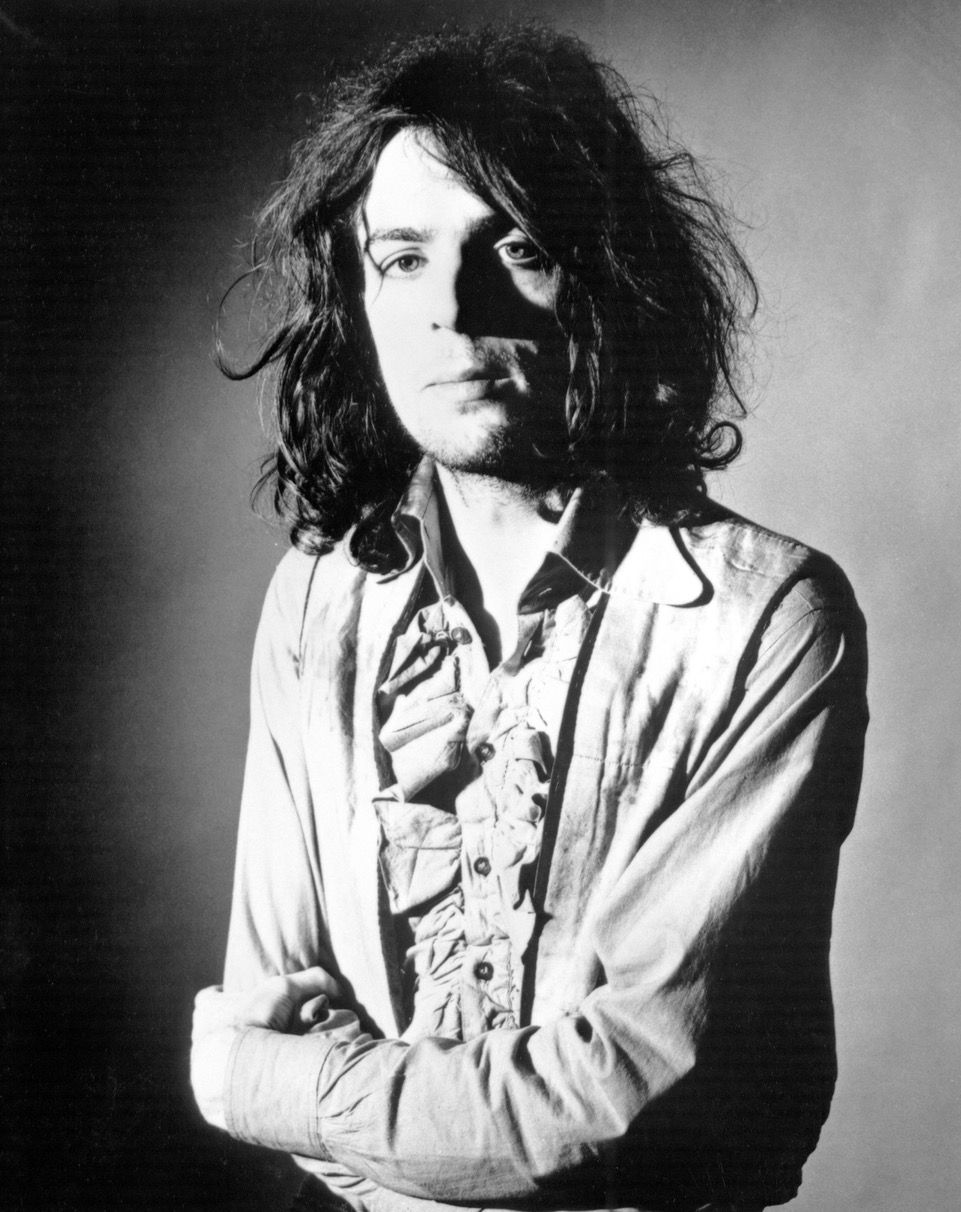
Syd in his finery Photo © The Pink Floyd Archive.

And thus, years later, we now have the deep-dive documentary Have You Got It Yet? The Story of Syd Barrett and Pink Floyd (Mercury Studios/Believe Media/A Cat Called Power/Abramorama).

One of rock’s most enduring legends and cautionary tales (usually with the descriptor “tragic” attached) is that of Syd Barrett and Pink Floyd. And here it is in a nutshell.

Art school student take up singing and the guitar and forms a band with friends under the weird name The Pink Floyd Sound. Their spacey, psychedelic sound is like nobody else and they put out two well-regarded albums with said student—Syd Barrett—as the creative force.

He wrote the band’s first two singles “Arnold Layne” and “See Emily Play.” He also contributed offbeat subject material like “Bike,” a tune about his admiration for. . .his favored form of transportation.

But a combination of insecurity, career pressure, undiagnosed mental illness, and copious, copious usage of LSD makes Barrett slowly fade away until he’s let go from the now-named Pink Floyd. Though there was no official firing—the group simply didn’t pick him up on the way to a gig one day.

Barrett puts out two solo records now considered cult favorites, but then drops out to spend his last decades living in childhood home, painting and gardening. Pink Floyd go on to become one of Classic Rock’s greatest acts, but always with the shadow of Syd somewhere in the background.

Unlike other documentaries on Syd and Floyd, this one has a legitimacy. It’s chock filled of actual Pink Floyd and Syd Barrett music, home movies, TV appearances and rare videos and photos. Then there’s a bevy of new interviews with Syd’s relative, friends, collaborators, ex-girlfriends, and contemporary musicians influenced by him.

And the coup de grace: Floyd bandmates Roger Waters, David Gilmour, and Nick Mason. Their participatioin was likely eased by Thorgerson’s participation (keyboardist Rick Wright died in 2008).

Unfortunately, Thorgerson is not around to see the long-gestating final fruits of his and Bogawa’s project. He died from cancer in 2013 at the age of 69. A decade later, Bogawa views his collaborator’s participation in a different light.

Director Roddy Bogawa. Photo by Roddy Bogawa.

“Storm was basically using the film to say goodbye to everybody. He’s said he was doing this film with, but he was dying. And this was a way to see all those people one more time,” he says.

Thorgerson conducts many of the interviews filmed in London (Bogawa handled the New York ones), and you can sometimes hear his voice. This intimacy works because his subjects—most of who he knows personally—speak and remember Barrett as if in conversation with a friend and not a journalist. To the point where “Remember that, Storm?” is heard several times.

“The [band members] appreciated the honesty in the film and the emotional element. Roger said there wouldn’t have been any Pink Floyd without Syd. And David saying he wished he had gone to see him,” Bogawa offers.

“It’s always tricky with Pink Floyd. They all liked my film on Storm and because he was part of the production…it was constantly negotiating. But [Roger, David and Nick] were all super generous. I didn’t know what to expect with Roger, but he was incredibly sweet. And it was my idea to get him to recite the words to ‘Shine On You Crazy Diamond.’ I was terrified to ask him, but he did it!”

That song, of course, was the band’s direct tribute to Syd. It’sone of the more famous stories in Pink Floyd history how, when the band were recording the original track, a man showed up Abbey Road Studios. He was overweight, with head and eyebrows shaved, and wearing a raincoat. Neither the band nor their studio personnel knew who the mystery man was. Then, it dawned on the shocked assembled: It was Syd Barrett, unrecognizable.

“They memorialized him on Dark Side of the Moon and Wish You Were Here and even The Wall. [Syd] became this kind of mythological character. But they made sure he got royalties,” Bogawa says. “David and Roger and Rick even helped with his solo record. Syd was their childhood friend and they wanted to make sure he was taken care of.”

Syd circa his solo years Photo © The Syd Barrett Archive.

In 1982, near the end of his mental rope, Barrett left London for good and walked the 50 miles back to his mother’s home in Cambridge, where he spent the rest of his life until passing from the combination of pancreatic cancer and diabetes in 2006.

Every few years he would be “found” by some photographer to snap a few shots, but he never spoke to anyone. Late in the doc, Gilmour expresses regret he and Thorgerson never visited him, though it’s noted that the family was not keen on Roger (Syd’s real name) Barrett’s past showing up at the doorstep, regardless of their intentions.

The docs end with the one-off Pink Floyd performance at Live 8, the last time the estranged Roger Waters, Nick Mason, David Gilmour and Rick Wright played together. Fittingly, Waters pays tribute to Syd as they launch into “Shine On You Crazy Diamond.”

“Syd’s interesting because he didn’t die until long after he left the band, so there’s a fascination with the mystery,” Bogawa adds. “Maybe he just didn’t want to be in a band anymore. But he does get lumped into that ‘rock star drug casualty’ kind of category.”

All in all, Bogawa hopes that everyone from the Syd Barrett obsessive to those who have never head the man take away something from Have You Got It Yet?

“I hope it will confirm or debunk some of the stories around him. I hope this—like all my films—functions as a trigger to bigger things. It’s the story of the musician, but also someone’s friend,” Bogawa sums up.

“My dream as a director is that someone will see it and get intrigued and open up some discussion. Or run back home to look for the record. Then get pissed when they find out their boyfriend or girlfriend from 20 years ago stole it!”

For more in the film visit SydBarrettFilm.com

This article originally appeared at HoustonPress.com

Posted in Documentaries, Pink Floyd | Tagged , , , , , , | Leave a comment

The Mamas and the Papas’ Book of Dreamin’

The Mamas and the Papas: John Phillips, Michelle Phillips, Cass Elliot and Denny Doherty Record cover detail.

The Mamas and the Papas were the epitome of California-based sunshine hippie pop and folk-rock, blending their voices to create two huge anthems of the ‘60s in “California Dreamin’” and “Monday, Monday.”

They also had a string of other hits with “Creeque Alley,” “Dedicated to the One I Love,” “Words of Love” “Dream a Little Dream of Me,” “I Saw Her Again Last Night” and “Twelve Thirty (Young Girls are Coming to the Canyon”).

The uniformity of their blended voices was at odds with their visual appearance: Tall, lanky, hip facial-haired guitarist leader John Phillips, wife and consummate winsome stunning blonde hippie girl Michelle Phillips; short, robust, and handsome tenor Denny Doherty’ and equally diminutive vocal powerhouse and overweight Cass Elliot.

Surprisingly, the Mamas and Papas bookshelf is thin. John and Michelle both wrote highly subjective and often at odds memoirs (Papa John and California Dreamin’). There was an oral history (Go Where You Wanna Go) while Cass was the subject of Dream a Little Dream of Me. No comprehensive or deep bio has appeared, until now.

It’s welcome news for fans that an expertly-researched, densely detailed, and likely definitive bio arrives in the form of Scott G. Shea’s All the Leaves are Brown: How the Mamas and Papas Came Together and Broke Apart (422 pp., $32.95, Backbeat Books).

In it, Shea deftly interweaves the story of the group’s music (almost completely written by John) with their interpersonal relationships, struggles, endless parties, drugs. And sex. Lots and lots and lots of sex, in and out of the group.

In that area, Fleetwood Mac has nothing on the Mamas and Papas. John left his wife and two young children for the teenaged Michelle. They married, but both indulged in many extramarital affairs.

Denny had a longtime crush on Michelle, which led to intense flirting, eventually consummated multiple times. Upon finding out, John leave to move in with…Denny, so he could sleep with willing groupies (oddly, the situation seemed to make the best friends grow closer and inspired “I Saw Her Again Last Night”). Denny carried a giant torch for Michelle for years, only finding solace in thousands of purple bags of Crown Royal.

Cass had had an intense, longtime crush on Denny, becoming angry at Denny and jealous of Michelle, who would briefly be ousted from the group for her supposed sins and starting an affair with Gene Clark of the Byrds, replaced with producer Lou Adler’s girlfriend Jill Gibson, then welcomed back. The Phillips marriage would then go through cycles of intense coupling, flamboyant cheating, and indifference. Got all of that?

The book gives the most detailed yet accounting of the lives and budding careers of the four members prior to joining forces. John’s story not surprisingly, emerges as the most messed up from his background. Though his egotism, ambition and hedonism were equally destructive. And the reader can’t help but feel sorry for Cass, whose heaviness made her the butt of jokes and derision for most of her life.

And while she developed a sassy, self-deprecating I’ll-joke-about-it-first approach, it clearly still stung. John actually put off adding her to the group as long as possible, fearful that she would present the “wrong” physical image for his imagined group. Though it became clear that her considerable vocal talent and on-stage charm was very much needed, especially since Michelle’s frail voice simply couldn’t carry the material, a point which even she conceded.

And Cass doesn’t get enough credit for running a musical salon-cum-party-pad out of her home that brought together or sewed and fermented the seeds of such groups as diverse as the Lovin’ Spoonful, Crosby, Stills and Nash, the Monkees, singer/songwriter Joni Mitchell and British ex-pats like Dave Mason and Eric Clapton.

Unintentionally funny are Shea’s seemingly bottomless chronicles of how broke, desperate, scuffling, or at-rope’s-end the quartet were at various stage of their pre-fame career when it came to music or money. Only to be seemingly “saved” by an odd circumstance or connection.

When pre-M&P formation Phillips’ and their eight friends were stuck in the U.S. Virgin Islands and needing to escape bill collectors after an extended drug-fueled vacation/working trip, they cleaned up, put on stage clothes, and took their last $50 to the craps table at a nearby casino. After Michelle (who had never played before) rolled an astonishing 17 winning throws in a row, there was enough funds for all ten to ger airline tickets and fly back to New York—first class.

The group’s rise is fairly quick with hits off their first two albums. But even as success flushes them with cash, it’s only used to exacerbate issues of drugs, sex, and bad behavior. John spends lavishly on himself and Michelle but offers not a penny to the care of the two children he left behind.

This includes Mackenzie Phillips, who would shoot to superstardom on the TV show One Day at a Time, go through decades of drug and emotional issues, and then in 2009 drop the bomb that she and her father engaged in a decade-long, consensual incestuous relationship after he reportedly raped her on her wedding night. Opinions on the veracity of this claim vary wildly.

Shea’s chapters on the groundbreaking Monterey Pop Festival (of which John was heavily involved in organizing and promoting) are especially interesting, down to a detailed recounting of performers’’ sets.

However, the love-flowers-and-music aesthetic was both the pinnacle and the beginning of the end for the group, as they saw their brand of sunshiney pop and harmonies gives way to the burgeoning popularity of harder music.

It wasn’t the purported headliners’ subpar set that made news, but the incendiary and revelatory performances by Jimi Hendrix, the Who, Big Brother and the Holding Company (featuring Janis Joplin) and soul man Otis Redding who galvanized the crowds. Their sets then (and now) were easily deemed the shows highlights.

Shea adeptly fills in the narrative following their final contractually-forced record in 1971 after which the original quartet split for good. They were inducted into the Rock and Roll Hall of Fame in 1998, by which time Cass had died. Since then, John and Denny have also done so, leaving the now 79-year-old Michelle as the last group member standing.

All the Leaves are Brown is the book that finally tells the full story of the music and madness that was the relatively brief—but era-defining—lifespan of the Mamas and the Papas.

This article originally appeared at HoustonPress.com

Posted in Books, Mamas and the Papas | Tagged , , , , , | 1 Comment

Book Spotlights Women the Stones Rolled With—and Sometimes Over

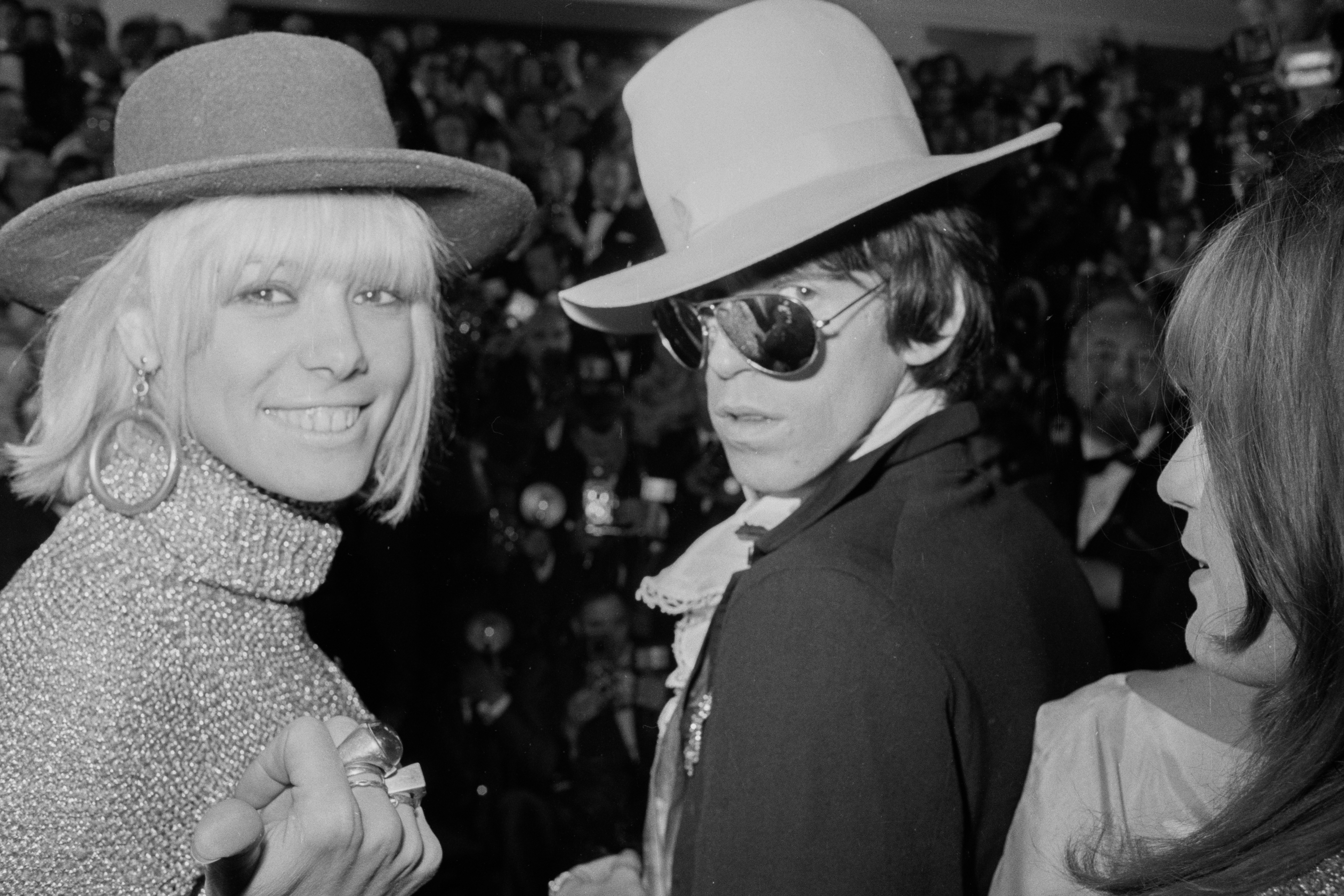
Anita Pallenberg and Keith Richards at the Cannes Film Festival, May 1967. Photo courtesy of Getty Images. Photo by REPORTERS ASSOCIES/Gamma-Rapho via Getty Images.

In their music of the ’60s and ‘70s, the Rolling Stones weren’t exactly paragons for promoting gender equality and women’s issues. Songs like “Under My Thumb,” “Mother’s Little Helper,” “Stupid Girl,” “Brown Sugar,” “She’s So Cold,” and “Bitch” were rife with misogyny and have not exactly aged well.

Ironically, you’d be hard-pressed to find a contemporary group—especially members Brian Jones, Mick Jagger and Keith Richards—who not only relied on input and direction from their paramours, but who were shaped by them both artistically and personally. Until sometimes they were of no more use.

In Parachute Women: Marianne Faithfull, Marsha Hunt, Bianca Jagger, Anita Pallenberg, and the Women Behind the Rolling Stones (320 pp., $29, Hachette), author Elizabeth Winder shows how a quartet of women helped the Stones become the Stones, whether any of them were aware or not.

“These four women put the glimmer in the Glimmer Twins and taught a band of middle-class boys to be bad,” Winder writes in the introduction. She notes that they opened doors to art, literature, drugs, sex, fashion, alternative lifestyles, and even flirtations with the occult that would steer the group.

“The Rolling Stones may have risen to fame as rock’s favorite outlaws but only under the tutelage of these remarkable women, whose attitudes, creativity, vision, and style were devoured, processed, spat out, and commodified by the relentlessly male music industry.”

And while her prose sometimes dips into polemics, as well as look at historical times through a current lens, Winder notes there are three distinct and strict roles for women in rock culture (and especially of yesteryear). Wife/Girlfriend, Groupie or Bad Girl.

Mick and Bianca Jagger at their wedding at the Church of St. Anne, St Tropez, May 12, 1971. (Photo by Reg Lancaster/Daily Express/Hulton Archive/Getty Images)

The four women in the narrative couldn’t have been more different: Faithfull was an actual convent school student pushed into a singing career (scoring with “As Tears Go By,” the first Jagger/Richards composition) who found freedom in pleasures of the flesh and the silver screen. Pallenberg was the witchy German-Italian actress, model, and style icon fearless in her zest for living a lifestyle that was exploratory in all areas.

Taking up fewer pages are Hunt, the quixotic, traveling R&B singer with an academic background at Berkeley (and the only Black woman of the four). It is with her that Jagger comes off as the most prickish.

Marsha Hunt on tour in 1972 with 16-month-old Karis in tow. Photo courtesy of Getty Images. (\Photo by -/HO/AFP via Getty Images.

After relentlessly pursuing her and stating his desire to have a child, they did only to be abandoned for a new conquest—the high society maven and future wife Bianca Jagger (of which the least is written). Hunt and her daughter with Jagger were reduced to living on welfare and begging for handouts when the Stone refused to acknowledge paternity.

That Jagger was involved at various points with all four women speaks volumes as to which Stone rolled the most.

“They paid a steep price to be consorts of rock gods. Caught in the vortex of the biggest rock band in the world, they struggled everyday to maintain their identities,” Winder offers.

Sometimes, Winder overreaches, as when she claims that Pallenberg singlehandedly “saved the Stones from slipping into oblivion” musically between the paned Their Satanic Majesties Request” and the praised Between the Buttons.

She correctly points out unfair (both then and now) certain double standards. Jagger’s rampant promiscuity was expected and celebrated as the desirable front man of “The World’s Greatest Rock and Roll Band.” When Faithfull took multiple lovers of both genders, she was slut-shamed.

During the famous drug bust at Richards’ home in Redlands, the topic of narcotics was all but forgotten when it was reported that police found Faithfull clad only in a bear skin rug (she had simply been taking a bath when the law barged in and rushed out) or had been “violated” with a candy bar during an “orgy.”

Likewise, Richards’ deep and rampant use of all sorts of drugs, including heroin, added to his mystique as the rascally indestructible pirate. Pallenberg, indulging alongside, was the unfit and embarrassing junkie mother. Faithfull also became a drug addict.

Anita Pallenberg and Keith Richards at the Cannes Film Festival, May 1967. Photo courtesy of Getty Images.

Sometimes, the storylines would cross their streams, especially in the case of Pallenberg. After beginning as Doomed Stone Brian Jones’ girlfriend, his abusiveness and rampant drug use led her to the arms of bandmate Richards. But when she was cast opposite Jagger in the film Performance (in the non-stretching roles of a decadent rock star and his equally decadent girlfriend) they had an on-set affair, with their sex scenes likely involving, uh, some extras realism not taught in any acting class.

Winder does make the life seem pretty glamorous and appealing, with the couples on a seemingly never-endless run of European and beach vacations, glitzy film/play premieres and parties, poetry readings and shopping sprees, cafes and art galleries, and endless ingestions of booze, drugs, and Bacchanalia.

Quotes and incidents from the book are culled mostly from other sources, but Winder did (according to the book’s publicist) conduct some original but on-the-down-low interviews. She expertly weaves the stories of these four women who floated in and out of the Stones’ orbit, and often simultaneously or overlapping. Far more than just “rock chicks,” they helped mold the men and their music—even if it came at their own expense.

This article originally appeared at HoustonPress.com

Posted in Books, Rolling Stones | Tagged , , , , , , , , | Leave a comment

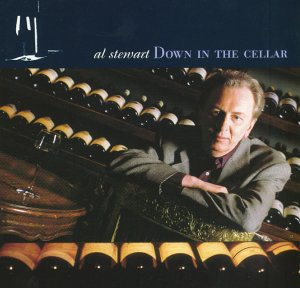
Al Stewart: Of Zodiac Cats, Succulent Grapes and the Genius of Chuck Berry

Al Stewart at a recent concert. Photo by David W. Clement.

It’s an enviable position for any musician to find him or herself in: You have enough disposable income to need something to spend it on. But instead of drugs, flashy cars or shady offshore investment situations, in the early 1970s Scottish singer/songwriter Al Stewart decided he’d literally put his money where his mouth was—and learn everything he could about wine.

“I’m somewhat good at it!” Stewart—who wrote and played an entire concept album about wine in 2001 with Down in the Cellar—says. And it all started when he picked up a copy of the evergreen Bible of the Grape The World Atlas of Wine by Hugh Johnson.

“Being European, I grew up on Bordeaux, and the book had all these labels in it from the seven different regions. I would open a bottle, stream the label off, and put it in a book and write my comments underneath it,” he continues. “After I had 100 bottles of red Bordeaux, it all swam into focus!”

Stewart then gives a lengthy dissertation about vinology including weather conditions for growing, his own ability to nail a specific year’s vintage by taste, and how the prices have grown to today’s “eye watering” levels for rare or particularly good vintages, which often end up mostly as “status symbols for billionaires.”

Stewart is known as such an expert on the grape that he led a wine tasting earlier this month for the classic/soft rock-themed On the Blue Cruise. He was part of a lineup that included a bevy of like-minded acts including Justin Hayward of the Moody Blues, the Zombies, Alan Parsons, Dave Mason, Little River Band, Ambrosia and Firefall. And while he may not have the facial recognition to the general public that would cause him to get mobbed while strolling around the boat, he says it’s all OK.

“We walk around all the time. I mean, it’s not like we’re a boy band and people are screaming at you. The average age on these cruises is around 60!” he laughs. “They’re basically pleasant and polite and tell me how much they liked the show. Although you do have to be a bit of a politician getting asked the same questions. To be honest, that tends to happen most in elevators!”

Stewart is also an avid reader, especially of history. The study often finds its way into his songs like “Lord Grenville” about the UK naval commander who died during an ill-advised and ultimately devastating naval attack against a Spanish Fleet in 1591. And “Roads to Moscow” about Hitler’s double-crossing of Stalin during World War II. He estimates that he tore through “about 100 books” during his pandemic-forced layoff from the road, and with his wife also did a lot of jigsaw puzzles, which he hadn’t really attempted since his youth.

Al Stewart started his career in the ‘60s as a UK singer/songwriter very much in the folk vein and was a contemporary or acts like Fairport Convention, Steeleye Span and Richard Thompson. But he added a bit of an electrical tinge in lengthy narrative songs like “Bedsitter Images,” “In Brooklyn,” “Carol” and “Electric Los Angeles Sunset.” He also crossed over into broader pop success with “On the Border,” “Song on the Radio” and “Time Passages.”

But he’s best known for the fantastical feline-inspired “Year of the Cat.” As he explained to Wall Street Journal music journalist Marc Myers last year for the “Anatomy of a Song” column, the tune has a long and yearslong winding path. Stewart originally wrote the melody for “Foot of the Stage,” a tribute to British comedian Tony Hancock who committed suicide by overdosing on pills in 1968 at the age of 44. After being told most Americans wouldn’t relate to the subject, it morphed into “Year of the Horse”—though its subject the still Anglophilic tale of the real-life Princess Anne and her show horse.

By 1975, he was dating a woman who was into astrology, and one day she had left open a book on the Vietnamese Zodiac: 1975 was the “Year of the Cat.” He reworked the lyrics to relay an abstract fantasy of a romantic trip to Morocco for two lovers who just go with the flow on whatever situation they happen to find themselves in. He added some Dylanesque word phrases and a reference to the movie Casablanca over sounds that included jazz, folk, and electric rock.

The distinctive piano intro and motif was created by Peter Wood as a concert warmup exercise Stewart happen to overhear. Stewart loved and Wood received a co-writing credit, with Alan Parsons producing the track.

Al Stewart. Photo by Lori Stoll.

By the time “Year of the Cat” came out (it was also the name of the album), Stewart and his girlfriend had broken up, and he doesn’t know if she ever realized how she kickstarted the title. It eventually rose to #8 on the Billboard singles chart in 1976 and has become Stewart’s signature tune. Last year, a deluxe and expanded 45th anniversary box set of the album as released.

“In doing this for so many years, I know that, for better or worse, a lot of [musicians] end up with a ‘signature tune’. For Steve Forbert, it was ‘Romeo’s Tune’ and for Loudon Wainwright III it was ‘Dead Skunk!’” he says. “I supposed if you throw enough stuff against the wall, something will stick. But the ‘signature songs’ aren’t necessarily the best ones.”

Usually playing with Al Stewart on tour and doing a short opening set will be the Empty Pockets. Stewart first saw the Chicago-based rock/folk/blues quartet when they were the backup band for his onetime co-headlining tourmate Gary Wright (“Dream Weaver,” “Love is Alive”). They came up one night and guested on “Year of the Cat” with Stewart, and when their time with Wright was up, Stewart scooped them up.

“You could say I inherited them about six or seven years ago!” he laughs. “It’s been hundreds of shows now, and they know a lot of my songs. It adds a lot to what I was doing, which was mostly solo acoustic things.”

Finally, Stewart then enthuses about his earliest songwriting heroes from the dawn of rock and roll including Chuck Berry and Eddie Cochran.

“I mean, ‘I was motorvatin’ over the hill’ from Chuck Berry’s ‘Maybellene.’ It’s not smarmy ballads like ‘You broke my heart and tore it apart!” he says. “Chuck was such a breath of fresh air. So were [songwriters] Jerry Leiber and Mike Stoller. I mean, ‘Love Potion No. 9!’ Then you had Dylan, Joni Mitchell, Paul Simon and Leonard Cohen changing everything again! Plus, Ray Davies, John Lennon and Pete Townshend.”

Stewart also professes a disdain for “All the Bobbys” in music during the early ‘60s. That would be the safe, often Italian-bred crooners with last names (real or invented) like Rydell, Vinton, Vee, Rydell and Goldsboro. The last had a hit with the particularly treacly “Honey” about the death of the narrator’s girlfriend. “They were always dying, weren’t they?” Stewart laughs. “So morbid. But I did like [Jody Reynolds’] ‘Endless Sleep.’”

For more on Al Stewart, visit AlStewart.com

This interview originally appeared at HoustonPress.com

Posted in Al Stewart | Tagged , | 1 Comment

A Fab Four Foto Fest

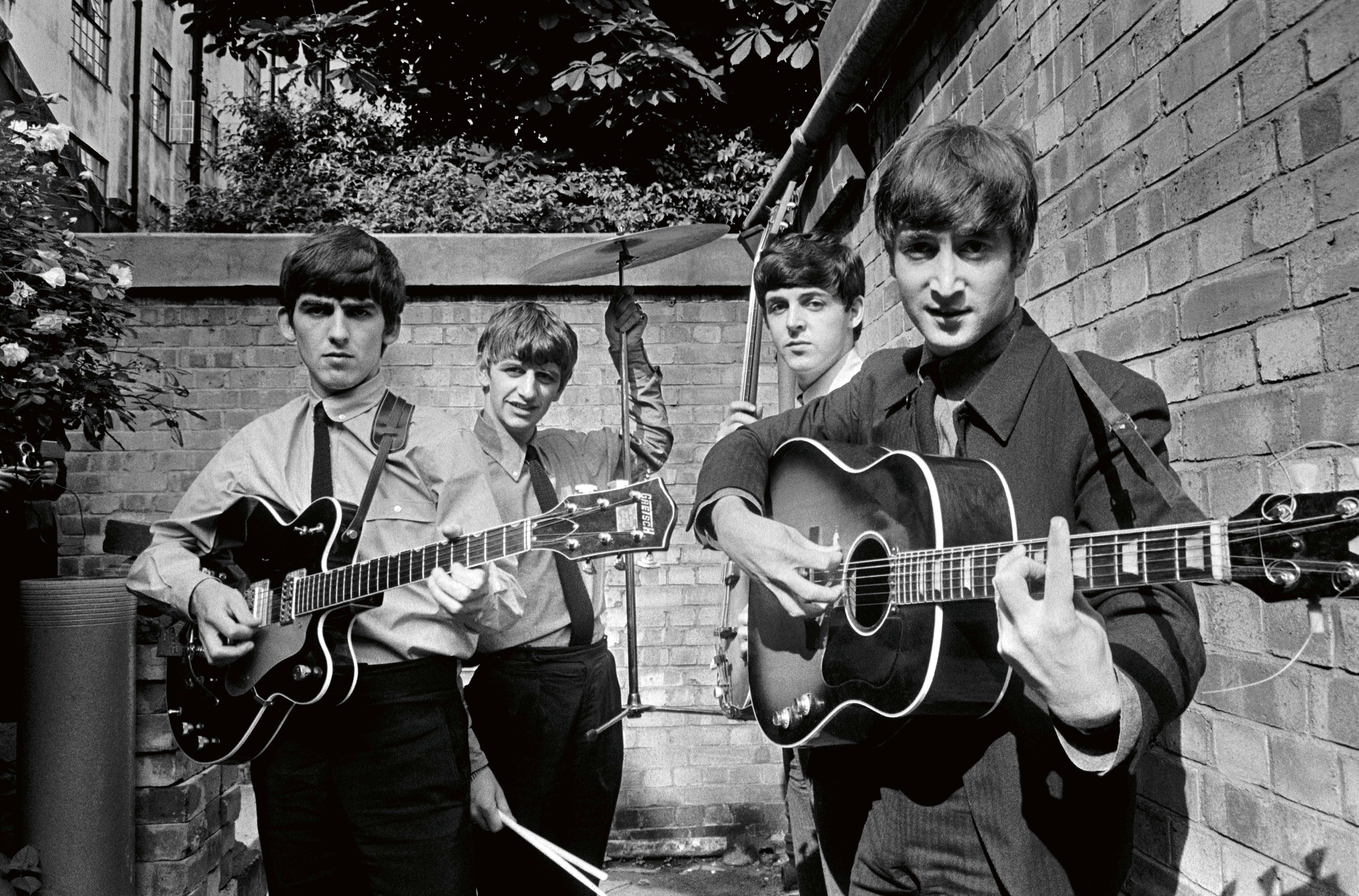
The Beatles in the garden at EMI Studios on July 1, 1963. Photo by Terry O’Neill.

It was July 1, 1963 and Terry O’Neill was just one of dozens of staff and freelance photographers who worked for the ultra-competitive “Fleet Street” newspapers in London. But he was also one of—if not the—youngest shutterbugs.

So when his editor at the Daily Sketch asked him to head over to EMI Studios on Abbey Road to take some shots of a pop group who he felt might have something going on, O’Neill did. He already knew a lot of the bands and club scene in London, but this was a group who’d come down from Liverpool. Some band who called themselves the Beatles.

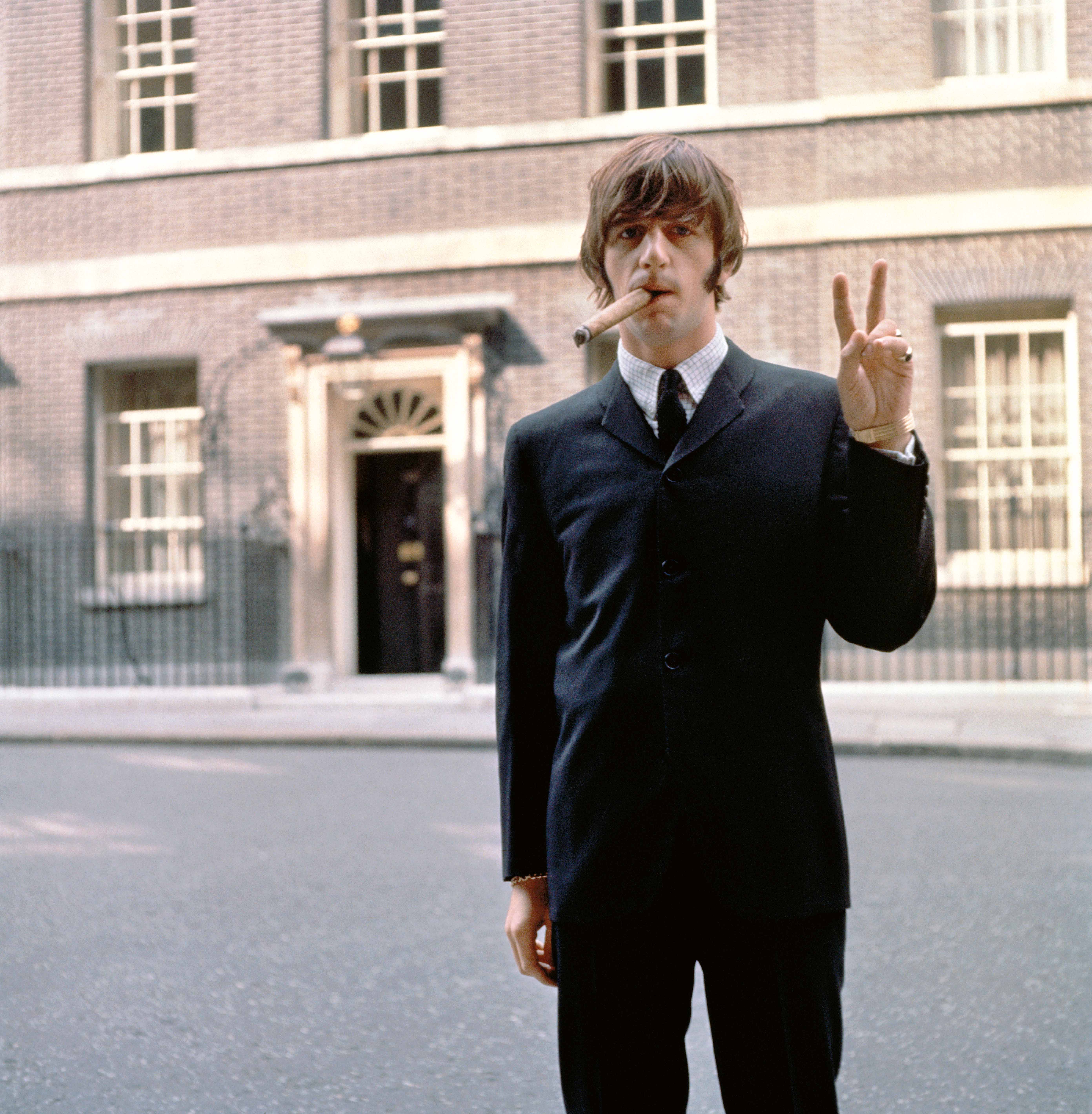
Ringo Starr outside 10 Downing St. on October 17, 1964 Photo by Terry O’Neill.

During a break while recording their new single “She Loves You” and B-side “I’ll Get You” O’Neill took John, Paul, George and Ringo into the back yard, clicking off some quick shots of the group posing with their respective instruments. Since they didn’t want to carry Ringo’s entire drum kit out, he’s got sticks and a cymbal in his hand. They all look pretty serious.

Looking at the photo today, it’s compelling to think what would lay ahead for these four young lads, and how they and their music would affect the world.

It’s also one of O’Neill’s most famous of the many, many images he took of the group both together and apart. It’s not suprising that it’s this image which graces the cover of The Beatles by Terry O’Neill: The Definitive Collection (256 pp., $39.99, Weldon Owen/Simon & Schuster).

O’Neill and his paper were on to something for sure. When his session pictures were chosen to appear on the front page, the issue quickly sold out. Maybe there was something to this beat music—and teenagers with money to purchase newspapers and magazines—after all.

“The Beatles knew how to work the camera—my camera, as well as the television cameras,” O’Neill, who died in 2019, is quoted in the book’s intro. “They were magic on film, and what we were doing behind those cameras was to propel them from a club band to number-one recording artists.”

The Beatles inside EMI Studios on July 1, 1963. Photo by Terry O’Neill.

The book includes the band in settings ranging from TV and record studios and stages to homes and outdoors scenes, sometimes—gasp—smoking cigarettes! Most are relaxed and unposed.

O’Neill also captures some other famous faces with the band. Both figures from Beatles history like producer George Martin, publisher Dick James, and wives Pattie Harrison and Cynthia Lennon. There’s also musicians Eric Clapton, Carl Perkins and Dave Edmunds along with showbiz figures like Laurence Olivier, Marlene Dietrich, Twiggy and Raquel Welch.

A drummer himself, O’Neill was closest to Ringo Starr, and there’s shots of him imitating Winston Churchill with a big cigar and flashing a peace sign right outside the Prime Minister’s residence at 10 Downing Street in the early days of Beatlemania. O’Neill is there on opening night of the ill-fated Apple Boutique, where readers learn only apple juice was served as they did not have a liquor license.

He also visits a post-breakup George Harrison on the grounds of his estate, looking very guru-esque. He’s also on the ground with Paul McCartney and Wings rehearsing for their 1975 tour, as well as with Paul and Ringo on the set of the film Give My Regards to Broad Street.

But the run of photos of the most interest as those he took at Ringo Starr’s 1981 wedding to Barbara Bach, where O’Neill was both a guest and tasked with taking photos to provide to the world. It was the first time the three surviving Beatles were all together (with their wives) since the assassination of John the year before.

O’Neill remembers a courier on a motorbike was standing ready at the Marylebone Registry Office where the ceremony took place. The freshly-shot film was given to him, then speeded to a lab for developing so the contact sheets could then be rushed back to Starr and Bach at their reception for their approval or rejection.

Over the course of their career, the Beatles established relationships with a number of photographers, including Robert Freeman, Ethan Russell, Iain MacMillan, Harry Benson, David Redfern and—back when they were a scruffy, leather-clad club band call the Silver Beetles—Astrid Kirchherr.

But in Terry O’Neill, they had someone behind the lens who was more of a contemporary and who they trusted. It’s this relationship that jumps off the pages in the images of this coffee-table tome, which is definitely not Just Another Beatles Photo Book.

This article originally appeared at HoustonPress.com

Posted in Beatles, Books | Tagged , , , , , | Leave a comment

John Ford Coley’s Tales of Texas, “England Dan,” and the Torah

John Ford Coley onstage. Photo by Lappen Enterprises.

Analyzing misheard lyrics in rock have provided music nerds endless hours of fun (and even been the subject of a series of books).

Needless to say, the actual words to some famous tunes were not “Hold me closer, Tony Danza” (Elton John, “Tiny Dancer”); “Scuse me while I kiss this guy” (Jimi Hendrix, “Purple Haze”); or “There’s a bathroom on the right” (Creedence Clearwater Revival, “Bad Moon Rising”).

For ‘70s hitmakers England Dan and John Ford Coley, their breakthrough hit “I’d Really Love to See You Tonight” does not include the phrase “I’m not talkin’ ‘bout the linen.” But in the 1996 action movie The Long Kiss Goodnight, that’s exactly what Samuel L. Jackson’s character tries to convince Geena Davis they’re singing (for the record, what sounds like “the linen” is actually “movin’ in”).

“I joke about it onstage! And it thrills me!” Coley laughs from his home in Nashville. “We didn’t even know the song was in that film because it wasn’t licensed! Shane Black, who wrote it, just liked the song. We wrote them and got a nice chunk of money out of it. But they never clarified in the movie what it was that we were actually saying!”

John Ford Coley (left) and Dan Seals. Record cover.

The pair and their breakthrough chart song had been on a very long and winding path. Their version—often played live by the duo in various offices of record company execs and A&R men—got rejected many times.

It was only released after two scrappy execs from a smaller label who heard it through the office walls of another exec who had turned it down that it was snapped up because they could smell a hit. And they were right.

“The funny thing is that I rejected the song too!” Foley laughs. “Both Dan and I thought it was a female song, so we didn’t want to do it. They talked us into it! And when it took off, we were like okay…

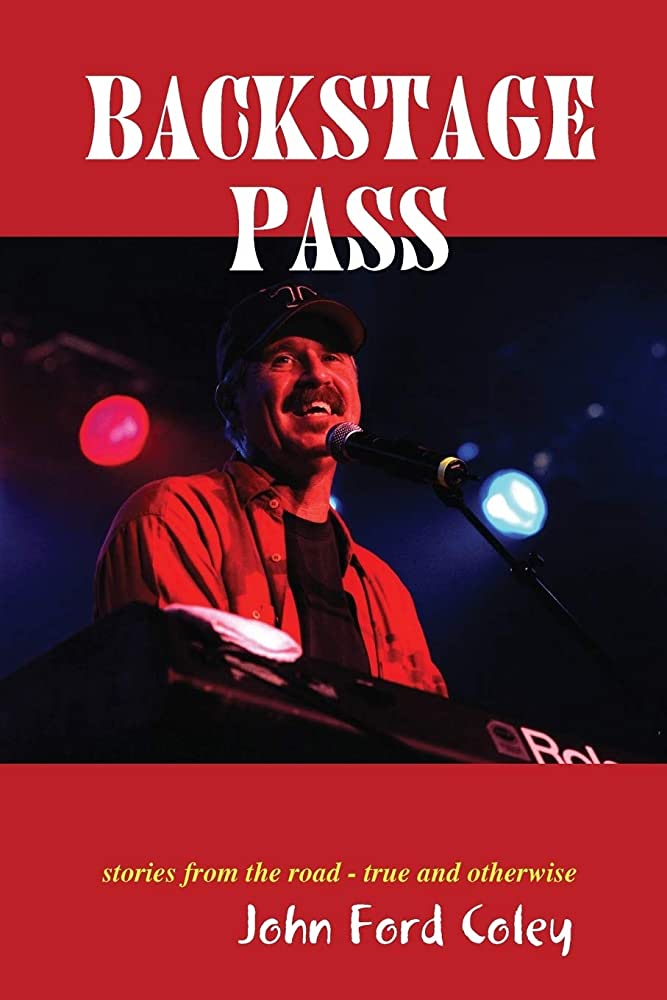
Coley also tells the story in his entertaining “unauthorized autobiography” Backstage Passes along with plenty of others from his life in and out of music. Like the first of many times he was mistaken by someone in public for…Sonny Bono. It happened initially when he was at a restaurant with his family. “My grandmother was pissed!” Coley laughs. “She was so proud of me!” Must have been that mustache.

Born in Dallas, Coley first met Dan Seals as a teenager, and the pair played in bands including Theze Few and Southwest F.O.B. (the latter barely missing the Top 40 in 1969 with the very-of-its-time tune “The Smell of Incense”).

After becoming a duo England Dan & John Ford Coley, they scored a minor hit with “Simone,” but A&M Records released them. They signed with Atlantic subsidiary Big Tree and spit out ‘70s soft rock gold hits including “I’d Really Love to See You Tonight,” “Nights Are Forever Without You,” “It’s Sad to Belong,” “Gone Too Far,” “In it For Love,” “We’ll Never Have to Say Goodbye Again” and a cover of the Todd Rundgren-written “Love is the Answer.”

The pair often toured with like-minded and even bigger hit makers Seal & Crofts, which featured Dan’s older brother Jim (who gave Dan his nickname, stemming from a childhood love of the Beatles).

Amazingly, Coley says that he and Seals received considerable blowback about “It’s Sad to Belong.” A bit of a head-scratcher since it’s about a married guy who finds a new love…but still stays with his wife.

“I don’t know why! I thought it was a comedy song. My attitude was you’re with the ‘right one,’ but a new ‘right one’ comes along. And then a new one and then a new one again! You end up finding the real, real, real right one!” he laughs. “I just call it the Noncommittal Song. And I didn’t play it after 1977 until 2000!”

John Ford Coley with his Martin guitar. Photo by Lappen Enterprises.

One of the duo’s deeper cuts is the lengthy “Solider in the Rain.” Written about a returning Vietnam Vet at a time when that was actually happening across the country, it features shifts in tempos and some classical-style music, which was party of Coley’s background.

“This song just kind of came to me, and I didn’t know what to do with it. So [co-writer] Sunny Dalton said, ‘Let’s work on it,’ and we did. It’s not about what happens in a war, but after when everything’s changed,” Coley says.

“Your friends are doing different things and you’ve just come out of this incredibly dangerous situation. And you just don’t fit when you come back. I saw a lot of guys like that, including the drummer in one of our [early] bands. He’s a big guy, and he’s got PTSD.”

The pair broke up in 1980, with Seals finding success as a country artist (“Bop” and the Marie Osmond duet “Meet Me in Montana”) while Coley formed a trio with the sisters Leslie and Kelly Bulkin and dabbled in acting. Most notably as the crappy boyfriend in the 1989 Corey Feldman/Corey Haim teen flick Dream a Little Dream.

He was also cast as a “dead drug dealer” in an episode of TV’s America’s Most Wanted. And the irony of it, especially for a rock star of the 1970s? “I never actually did drugs! I only watched people do it!” Coley says.

He calls himself much more of a “seeker,” and especially when it comes to religion and spirituality. Coley says he’s on a constant and lifelong journey for enlightenment and asks a lot of questions, even if he knows they may annoy or challenge some.

And while not aligning himself to one discipline, he’s got one foot in Christianity and one in Judaism, the latter buoyed by his extensive research on the Torah since 2008.

Book Cover

“In fact, most people think I’m Jewish because I’m study in synagogues all the time. I’ve gone through a lot of searches looking for spiritual connections. And I’ve always been a great questioner of things,” he offers.

“Once in a synagogue, they told me ‘If you have two Jews in a room, you have three opinions!’ [Sometimes] in a church, they just tell you to sit down and shut up and listen. Or reshape me into something I already believe in. But I’m doing double duty!”

John Ford Coley spent the last few decades as a solo act. Coley’s most recent album was 2021’s Sketches Vol. 1. It’s a compilation of demos of unreleased songs, and the first of a planned three-album series.

It includes a “Falling,” the last song he wrote with Dan Seals during their time together. Seals died in 2009 at the age of 61 from the effects of lymphoma and had received treatment at Houston’s M.D. Anderson hospital.

Houston appears a few times in Backstage Passes. Coley vividly recalls a bad review for one of the movies he was in from The Houston Chronicle. And like many performers of a certain vintage, remembers his somewhat wobbly time performing on the rotating stage at the Celebrity Circle Theatre (now Arena Theatre).

“The funny thing about those rotating stages—we call them rotisseries—is that you wait for that thing to start up and it’s always with a jerk, so you feel like you’re going to fall down,” he laughs. “You better brace yourself!”

Coley also recalls that he was “almost born” in Houston because his father worked in the city, and that his “great-great-great grandfather” fought at the Battle of San Jacinto. But he loves Houston, maybe even more than his own hometown.

“Dallas at the time was a great city. But that was before Dallas the TV show come out. We went from 600,000 people to seven million! I still go down there to visit family, but boy that place has changed!”

For more on John Ford Coley, visit JohnFordColey.com

This interview originally appeared at HoustonPress.com

Posted in Books, England Dan and John Ford Coley | Tagged , , , | Leave a comment

Doug Sahm: The Texas Tornado Spins Again

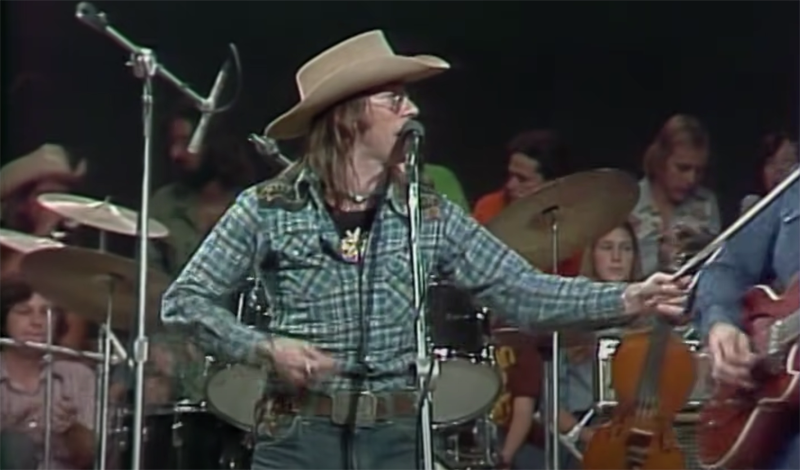
Doug Sahm on “Austin City Limits,” 1975. Screen shot.

It wasn’t quite subterfuge, and it wasn’t exactly a scam. But during the mid-‘60s—any band that smacked of the British Invasion was hot and sure to get attention. So, a number of, um, decidedly American groups tried to adapt a Union Jack sin their quest for attention and chart positions.

There were a slew of groups with English sounding names and Beatlesque harmonies. Like the Buckinghams from Chicago (“Kind of a Drag,”); the Knickerbockers of New Jersey (“Lies”); the Beau Brummels of San Francisco (“Laugh, Laugh,”), and the Count Five of San Jose (“Psychotic Reaction”).

But perhaps the most credibility-stretching entry in this subgroup was the Sir Douglas Quintet. Probably because the leader of the San Antonio-based group was singer/multi-instrumentalist Doug Sahm, a known quantity in the Lone Star State music industry since his days as a child prodigy.

Their sound was also more Cajun and Tex-Mex flavored. And some of the Quintet’s were clearly of Hispanic origin (hence some photos that show bandmembers shrouded in shadows).

Still, the group notched a bit hit and Garage Rock classic with notorious Houston music producer Huey P. Meaux (aka “The Crazy Cajun”) in 1965 with “She’s About a Mover.”

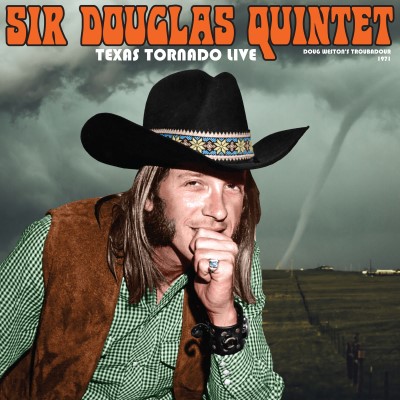
Fans of the Sir Douglas Quintet will get to hear some previously unheard live material this April 22 on Record Store Day with the vinyl release of Texas Tornado Live: Doug Weston’s Troubadour, 1971 (Liberation Hall Records). Its eight songs were soundboard-recorded by Daniel Rose at a pre-show rehearsal, with a 29-minute running time and recorded to play at 45 rpm.

“I was pretty intrigued because [the recording] came at one of these moments in time that was right before Doug ended up signing with Jerry Wexler at Atlantic Records,” says noted music journalist Joe Nick Patoski. He wrote the liner notes for the record and has penned books on Stevie Ray Vaughan and Selena as well as the definitive take on Willie Nelson (An Epic Life).

Sahm had originally hastened to California and spent years there outrunning a December 1965 band drug bust at the Corpus Christi airport. Shortly after the Troubadour set was recorded, Sahm would move back to San Antonio before finally landing in Austin. It put him squarely at the nexus of hippies and rednecks, with more of a nod to the former than his friend and similarly-minded uniter Nelson.

SDQ in 1971: Perez, Sahm, Morin, Meyers (back), and Light. Personal photo from the Jimmy Stallings collection.

Once at Atlantic, Sahm would then record a string of seminal and influential records (even Bob Dylan was a fan!) including Doug Sahm and Band, Texas Tornado, and Groovers Paradise.

The lineup for this record includes 4/5ths of the original group: Sahm (vocals, guitar, piano), Augie Meyers (organ), Frank Morin (saxophone), and Johnny Perez (drums), along with newer recruit Jimmy Stallings (aka “JJ Light”) on bass. Saxophone player/percussionist Martin Fierro, who had previously appeared on the more experimental LP Honkey Blues credited to the “Sir Douglas Quintet +2” also guests.

Stallings had come into the group via Perez, as the pair had played together in a band called The Truth. “I’m so happy that they are putting out this record, and for Doug. And he definitely belongs in the Rock and Roll Hall of Fame!” an energetic Stallings says on the phone. “I didn’t even know anybody had recorded it. And I’m anxious to see what happens with it!”

“Someone found the tape, that’s all I know. It came from out of left field because no one I know in Doug World even knew about it,” Patoski offers. “I like getting into these details and nuances. I love this stuff! This [album] was a great reveal.”  

And he’s definitely plugged into “Doug World,” having directed and co-written (with Jason Wehling) the 2015 documentary Sir Doug and the Genuine Texas Cosmic Groove. After being out of circulation for a few years due to music rights, it’s back for viewing at SirDougFilm.com.

In addition to hits “She’s About a Mover” and “Mendocino,” the album includes SDQ/Sahm tunes like “Tortilla Flats,” “And It Didn’t Even Bring Me Down,” “Be Real,” and “Dynamite Woman.” Also, a cover of “I’m Glad for Your Sake (But I’m Sorry for Mine).” Sahm jokes and talks with the audience. Then there’s “Heya, Heya”—which gave Stallings a vocal role on a tune he co-wrote with producer Bob Markley and had recorded and put out previously as “Heya.” For Patoski, “Heya, Heya” is the real star of the record, despite the absence of Doug Sahm’s voice.

“Bob told me I should write something about my heritage, and I didn’t know what the heck to do. Then I remembered my mother taking me to Gallup, New Mexico where we used to watch the Indians dance. And I remember them chanting ‘Heya!’ So, I went with that,” Stallings says. “And that was it. It was a big hit in Europe. I even went over there to do it on a TV show!”

“It sticks with you, especially knowing that JJ is a Native American,” Patoski says. “A friend of mine’s son is on the crew for the TV show Reservation Dogs. ‘She’s About a Mover’ was a theme in the first season, and for the third one they’re doing some flashback to the ‘70s and they asked me for a Sir Doug poster. But I had them listen to that track too! JJ was right in the middle of the mainstreaming of Native American sounds with Redbone [“Come and Get Your Love’], Buffy Saint-Marie and Jesse Ed Davis.”

Doug Sahm died in 1999 at the age of 58 of a heart attack. Ironically, he was having a huge resurgence as the leader of the popular Tex-Mex supergroup the Texas Tornados with Freddy Fender, Flaco Jimenez, and Augie Meyers (“A Little Bit is Better Than Nada,” “Who Were You Thinkin’ Of?”).

Stallings says the two were close, and Sahm even lived with him for a few months when he was in between residences.

“He had all his clothes in my garage back in the day! We were all young, scuffling, and just trying to get together!” Stallings laughs. “I first met Doug when he came down in a white Cadillac. A couple of days later, he asked me if I wanted to play bass. I didn’t know anything about the Sir Douglas Quintet!”

A couple of days after invitation, Stallings remembers that Sahm and Perez came by and played a song that Sahm was writing, asking Stallings if he should record it. Stallings liked it and said, “Let’s cut it now!” That tune was “Mendocino,” the band’s second biggest hit.

Today, despite some health challenges, Jimmy Stallings/JJ Light is still very much active, having self-released three records recently: a compilation of his ‘70s material, a blues record, and one called I’d Rather Be a Has Been Than a Wanna Be. But his enthusiasm for the new Texas Tornado is just as passionate and genuine.

“Doug was a character. One of a kind and very talented. Just one of the best guys I’ve ever known,” Stalling says. “I miss him so much.”

This article originally appeared at The Houston Press.

Posted in Sir Douglas Quintet | Tagged , , , | Leave a comment

DVD Collects Three Rare Rock Docs on the San Francisco ’60s Music Scene

He was more than a generation older than the original hippies, had short hair, smoked a pipe, and mostly covered jazz. But San Francisco Chronicle music writer Ralph J. Gleason knew that the new rock music coming out the city’s scene in the mid/late ‘60s was important, and something to be listened to and taken seriously. Hell, he co-founded the city’s Rolling Stone magazine with Jann Wenner, who saw Gleason as a mentor.

He was an early and fervent proponent of bands like the Grateful Dead, Jefferson Airplane, Santana, and other rock groups concentrated in the Bay Area. In addition to covering them in the paper, he co-produced three of-the-moment documentaries for the city’s KQED Public Television.

Carlos Santana leads his band in the documentary “A Night at the Family Dog.” Screen shot from Mercury Studios.

Rarely seen since their original broadcasts more than 50 years ago (and fortunate to still exist, given the proclivity for one-off TV shows of the era to be discarded or – gasp – even taped over!), a new DVD from Mercury Studios collects three of the specials in one package. They provide an incredible window of the place and an era from both a musical and sociological perspective.

Go Ride the Music (1969) focuses on live performances from the then white-hot Jefferson Airplane (seven songs, filmed on a soundstage) and Quicksilver Messenger Service (four songs, filmed at an outdoor festival).

The revelation here is how more expansive and rocking the Airplane are, especially for those who only know their most famous hits (“White Rabbit,” “Somebody to Love”). A ferocious “Volunteers” (with its “Got a Revolution!” exhortation) really smokes and is intercut with new footage of protest rallies. Co-lead vocalists Grace Slick and Marty Balin shine on “Mexico” and an extra funky “Plastic Fantastic Lover” respectively.

Guitarist Jorma Kaukonen wastes not a single note throughout, and Balin’s vocal power is on full display, especially in the hard rock of “Emergency.” True to the tenor of the times, he tells the camera in one of the few spoken interview segments of his stage practice.

“I usually like to pick a chick out of the crowd. I find it’s a lot easier to focus on a girl. Especially if she’s dancing,” he says. Friend David Crosby drops by, and he and Kaukonen go into a comedy bit about drugs, finally asking the cameraman if he has any.

The Jefferson Airplane’s Paul Kantner and Grace Slick in “Westpole.” Screen shot from Mercury Studios.

Quicksilver Messenger Service are usually not mentioned in discussions of the “big bands” out of San Francisco, but for a while they were among the most popular locally, they just never broke through.

Of the songs here, the countryfied “Warm Red Wine” and “Somebody’s Crying” flatline. They’re much more successful with a groovy “Subway” (intercut with footage of roadies setting up their equipment for the festival) and a psychedelic blues take on Bo Diddley’s “Mona.” Vocalist Dino Valenti and lead guitarist John Cipollina (who sings “Mona”) make the most impact here.

Videos throughout are intercut of familiar topless (male and female) fans grooving to music as part of a larger audience. One can imagine someone today recognizing a grandparent and going “Poppy! Is that you smoking a joint?” “Nana, are you showing your boobs?”

But it’s Jerry Garcia of the Grateful Dead—filmed in his backyard with his family of Mountain Girl and daughter Sunshine swinging in a tire—who is the most clear-eyed and succinct about the family and bonds of the San Francisco groups He calls the Airplane “amazing musicians, poets, and crazy people,” as well as vocalizing his hopes and aspirations for the San Francisco Scene going forward. It’s not surprising when Captain Trips is credited in the end roll as “Guru.”

We get to see mustachioed Ralph J. Gleason himself as the avuncular and erudite on-screen narrator of Westpole (1969), subtitled An Essay on the San Francisco Adult Rock Scene. He gives an even-keeled history of San Francisco music history, but this is not from the distance of time. It’s definitely of the now period as he namechecks local venues like the Avalon, Fillmore West, and Carousel. As well as the free concerts in the city’s parks that were so important.

Of the best historical importance here are live performances from the all-female group Ace of Cups (the gorgeous “Music,” “Simplicity,” and “Gospel Song,” showcasing their vocal harmonies) and Sons of Champlin (a horn-driven “Freedom”). Both are rare since precious little footage of these groups exist. In fact, Ace of Cups only released their debut album more than 50 (!) years after forming, as lead singer Denise Kaufman detailed to the Houston Press back in 2018.

There’s of course ubiquitous footage of happy hippies grooving (with the occasional holding-hands circle dance) and lines outside of clubs. Music fan-on-the-street interviews add some really cool context. Kudos to the fans who namecheck deep cut bands It’s a Beautiful Day and the Flamin’ Groovies.

Quicksilver Messenger Service in “Go Ride the Music.” Screen shot from Mercury Studios.

Gleason says that an informal list of then-playing SF rock groups is at 135—including like ones seem today like parody names: like: African Creeps Up & Up, Celestial Hysteria, Colossal Pomegranate, Curly Cook’s Hurdy Gurdy Band, the Freudian Slips, Frumious Bandersnatch, the Loading Zone, Magnesium Water Lily, Peter Wheat and the Bread Men, Purple Earthquake, Truman Coyote, and Wierd [sic] Harold.

Filmed performances, and early music videos from the Steve Miller Band, Grateful Dead, Jefferson Airplane, and Quicksilver Messenger service are either shown or soundtracked the footage. Though there’s an overuse of “psychedelic” or specialized video effects and aren’t especially good. San Francisco, as Gleason says, is where music “changed from teenaged entertainment, where it grew up.”

Finally, Chet Helms was a transplanted Texan who heard the siren call of San Francisco (as would a Lone Star State friend who he convinced to follow him…Janis Joplin).

But his biggest contribution to the SF rock scene was producing on shows at the Fillmore Auditorium under the banner of Family Dog Productions, putting together inventive bills that might match and acid rock group with an elderly blues legend or jazz icon (frenemy Bill Graham would take the same approach, and ultimately emerge as the scene’s Alpha Dog).

So, the straight concert film A Night at the Family Dog (1970) showcases the city’s two biggest groups—the Jefferson Airplane and the Grateful Dead—along with newcomers Santana, who had electrified the audience at Woodstock the year before. The video and sound quality and camera angles here is the best of the three documentaries.

Santana’s portion is simply stunning, combining a tightness and improvisation under the leadership of guitarist Carlos Santana in the all-instrumental “Incident at Neshabur” and “Soul Sacrifice” Both are buoyed by percussionists/conga players Michael Carabello, José “Chepito” Areas, and drummer Michael Shrieve. Santana—seemingly high on something—alternately looks on approvingly or closes his eyes in bliss.

Keyboardist and occasional vocalist Ron “Pigpen” Mckernan kicks of the Dead’s set with the Otis Redding (later Black Crowes) cover “Hard to Handle” before Jerry Garcia—looking like one of cartoonist Gilbert Shelton’s Fabulous Freak Brothers come to life—takes over with a jammy “China Cat Sunflower” and countrified “I Know You Rider.” The Airplane go psychedelic (though a bit more disjointed) with “The Ballad of You and Me and Pooneil” and Grace Slick-sung “Eskimo Blue Day.”

And ending “Super Jam” features members of all three groups, creating an almost Avengers-like team of future rock legends. In the end, the importance of these three documentaries—written and shot at a time when the San Francisco rock scene was actually occurring in real time—make them important cultural artifacts. Plus, the light shows are groovy.

This article originally appeared at HoustonPress.com

Posted in Documentaries, Grateful Dead, Jefferson Airplane, Quicksilver Messenger Service, Santana | Tagged , , , , | Leave a comment