
Steely Dan’s Rogues Gallery Holds a Dysfunctional Family Reunion

Walter Becker and Donald Fagen onstage as Steely Dan ihn 2007. Photo by Kotivalo/WikiMedia Commons.

Take the body of work of any Classic Rock band—or that of any other genre—and you’d be hard pressed to name a group with more characters of note than in the lyrics than Steely Dan.

Dr. Wu. Mr. La Page, Hoops McCann. Deacon Blues. Buzz. Chino & Daddy Gee. Michael & Jesus. The Babylon Sisters. The Dandy of Gamma Chi. The Gaucho Amigo. Real people like Mr. Parker and Cathy Berberian. And that trio of seductive sirens Rikki (also a real person!), Peg, and Josie.  

But these aren’t traditional heroes in villains. Instead, the Two Headed Mind Meld of Donald Fagen and Walter Becker give us weirdos and wackos, schnooks and junkies, dead end suburbanites and hipsters, wanna-bes and never-wases, hustlers, junkies, horny hotties, and pedophiles.

They’re all within the pages of the wonderfully weird and insightful Quantum Criminals: Ramblers, Gamblers, and Other Sole Survivors from the Songs of Steely Dan (240 pp., $35 University of Texas Press). It’s from the partnership of writer Alex Pappademas and illustrator Joan Lemay.

The Steely Dan story is a shifting and sometimes inscrutable enigma. They’re a “cult” band with more than a dozen identifiable radio hits. They took a 20-year break from touring. They’ve been unfairly lumped in with Soft Rockers of the ‘70s, “jazz rock” bands, and Dad Rock scorn. “Donald Fagen” and “Walter Becker” were even unceremoniously beaten up by “Don Henley and “Glenn Frey” in the satirical Yacht Rock miniseries.

But right around the time they came back after two decades of inactivity with 2000’s Two Against Nature, the “Danaissance” began. The pair and their entire body of work now deservedly receive critical hosannas and admiration from a surprisingly wide swatch of contemporary artists with meme-making Millennials leading the charge.

Pappademas starts the journey with the Dan’s first protagonist on the first song on their first album, the hapless Jack from “Do It Again.” He also notes Jack is an archetype the band will visit again and again over nine studio albums.

“He’s a loser strapped to the karmic wheel, forever slipping out of one trap set by his own dumb desires into another one, rescuing doom from the jaws of salvation,” he writes, adding that Fagen-as-vocalist will “sing about people who can’t help driving headlong toward one form of destruction or another, people telling themselves they’re doing something other than that even when they know the truth.”

It’s heady and deep dive stuff in a book that’s part biography, part musical thematic analysis, and part snarky subversion. In other words, the Steeliest of all the Steely Dan books out there. And it’s wholly refreshing. Pappademas’ prose is certainly fun to read.

Lemay’s illustrations—more than 100 in all—greatly deserve equal billing with the text. Her utterly unique style brings an almost folk-art look to her subjects, whether they’re real-life people like Becker, Fagen, Michael McDonald or bandmates, historical figures like Richard Nixon, or her own interpretations of Dan characters and lyrical references (a Squonk! A pair of Green Earrings!).

And dildos. Pappademas says if most people know one piece of trivia about Steely Dan, it’s that they took their name from the sex device mentioned in William Burroughs’ novel Naked Lunch.

Like any good SD biographer, Pappademas digs into their studio meticulousness—some would say obsessions. That means Fagen will mix the song “Babylon Sisters” some 278 times. And the record it hails from (Gaucho) will eat up 11 engineers, 42 studio musicians, and take more than two years to complete.

He also tells why the band has been something of a surprising go-to source for rappers and hip-hop artists to sample, and how Becker and Fagen gleefully (or greedfully) go after both authorized and unauthorized uses. Though they’re less, um, up front about some of their own musical pilfering (see Horace Silver and Keith Jarrett).

The pair return in the 2000’s with two new albums and actually embrace touring. They’re inducted into the Rock and Roll Hall of Fame where—true to their wry and iconoclastic nature—Becker “opens the floor to questions” from the audience. Becker died in 2017 and Fagen continues to tour under the Steely Dan name with a sizable band (but then again…there were technically only two “members” of the group, even in the early days).

In the end, Pappademas says real times have finally caught up with Steely Dan. “Donald and Walter’s songs of monied decadence, druggy disconnection, slow-motion apocalypse, and self-destructive escapism seemed satirically extreme way back when; now, they just seem prophetic.”

There have been a number of fine books on Steely Dan, but Quantum Criminals is the one whose spirit, vivacity, and off-kilterness matches its subjects and their body of work.

This article originally appeared at HoustonPress.com

Posted in Books, Steely Dan | Tagged , , , , | Leave a comment

JD Souther’s Road of Well-Traveled Hits, Eagles & Linda, and Some Jazzy Detours

JD Souther today. Photo by Jeremy Cowart.

In 1979, JD Souther released the lush, plaintive ballad “You’re Only Lonely,” which hit #7 on the Billboard Top 100 and #1 on the Adult Contemporary charts. But it wasn’t on these shores that he first realized he had a giant hit on his hands.

“It had already peaked in the U.S. and Europe, but it was massive in Japan even more, and I couldn’t figure out why!,” he says from his home in Northern New Mexico with a fire going and his dogs nearby.

“It turns out that was when Sony had absorbed Columbia Records, and Sony was using it on commercials to advertise sound systems in a new Lexus or something. So, every 12 minutes on TV, this guy would open the door and ‘You’re Only Lonely’ would come out!”

Souther adds that he had to add a bunch of shows on the spot due to demand. And there was something else. “I’d never been on a stage before where girls were screaming at us. That’s not the type of music I do! They were following us around in taxis! But it was fun for a couple of weeks.”

He played that tune—along with plenty of other well-known numbers—on his recent solo guitar-and-piano tour with the truth-in-advertising titled “All the Hits. Some of the Stories.” Its inspiration comes from a decidedly non-musical source.

“I was a huge fan of Hal Holbrook’s one-man Mark Twain show and saw it [multiple] times over the decades. I just loved the transitions going from the stories of Twain to a comment of Hal’s to a performance as Twain,” he says. “I wanted to have that kind of latitude with my music. But I’ve got to be careful—I could go on for two hours!”

While he was born in Detroit, JD Souther spent the ages of 5 through 18 as a Texan in Amarillo. He “attended” Amarillo College—though by his own admission skipped most of it except for band and the class taught by a “brilliant” music teacher, Evan Tonsing.

“Instead of taking finals one year, I went to California where there was pot and naked girls and the ocean!” he says. “I just seemed preferable to sitting through a test that I wasn’t prepared for.”

But all was forgiven a few years ago when the college invited Souther back to be honored as a “Distinguished Alumni”—even if his scholastic records couldn’t be found! He also played at a fundraising concert. “I wasn’t a natural student,” he laughs. “I was a natural daydreamer!”

After moving to Los Angeles in the late ‘60s, Souther played drums in Natty Bumpo with Norman “Spirit in the Sky” Greenbaum and also with Houston bluesman Bobby Doyle. (“Bobby sounded like Ray Charles. He was a killer musician and singer!”).

He then hooked up with fellow Motor City-bred singer/guitarist Glen Frey in the duo Longbranch Pennywhistle, releasing one album. Souther also played open mic nights at the fabled Troubadour Club and got a solo deal while Frey hooked up with a singer/drummer named Don Henley to hatch the Eagles.

When 1971’s debut John David Souther didn’t exactly catch fire, manager and Asylum Records honcho David Geffen put him together in something of a Country Rock supergroup with Chris Hillman (Byrds, Flying Burrito Brothers) and Richie Furay (Buffalo Springfield, Poco). But the Souther-Furay-Hillman band never gelled as a group, and broke up after two records.

The Eagles career started taking off in a big way, and the band remained friends with Souther as well as pal, singer/songwriter Jackson Browne. Souther is even shown as a dead outlaw among band members on the back cover of 1973’s Desperado.

“It was the most fucking fun time in the world!” he says. “Take a bunch of guys in their ‘20s, turn them loose in Western costumes on a movie ranch set, give them a bunch of guns and movie horses and 1,500 rounds of blank ammunition and beer and weed. And we got to rob a bank!”

Souther would also co-write with various Eagles, penning giant hits like “Best of My Love,” “Victim of Love,” “New Kid in Town,” and “Heartache Tonight” (and later, Henley’s solo hit “The Heart of the Matter”).

Two years after “You’re Only Lonely,” his co-written song and duet with James Taylor “Her Town Too” was also a hit. And somewhere along the line John David Souther became J.D. Souther (inspired by classical composer J.S. Bach) and finally, JD Souther.

He also had a professional relationship with Linda Ronstadt writing, producing, recording, and performing with her (including duets “Faithless Love” and “Prisoner in Disguise”). They also had a romantic bond. As the story goes, when they first met, he cheekily asked her to make him dinner. She agreed, and the next night she served him…a peanut butter and jelly sandwich.

“I fell in love with her instantly. That was the funniest thing!” Souther says. “So, the next night I just took her to my house and she moved in.”

I offer to Souther that I’ve been jealous of him for decades since Linda Ronstadt is my #1 celebrity crush. It’s probably about the billionth time he’s heard the sentiment.

“Yeah, her poster’s hanging on a lot of walls. She’s a lot of people’s #1 crush. She’s still mine! I just love her and I talk to her every month,” he says. “She’s a delightful soul. And considering what she has been through [medically] and what she’s lost for having the greatest voice of my generation, she’s remarkably upbeat!”

Over the next few decades, Souther sporadically released albums, wrote, and hung out at home or traveled. Often on skis or horses while also dabbling in acting (the TV show Thirtysomething, film Postcards from the Edge).

When he reemerged in 2008 with If the World Was You, it leaned very heavily toward jazz—his first music love—which continues through his most recent record, 2015’s Tenderness. He praises the “amazing” and “stone genius” jazz players on these efforts.

Recently, Souther did a guest DJ hour on SiriusXM’s the Bridge Channel, playing some of his favorite tunes by famous friends and personal favorites like late bluesman Mose Allison. The Songwriters Hall of Fame inductee discussed how in addition to the lyrics and the music, there’s really one just-as-if-not-more important aspect to a great song: Sentiment.

“You can’t write a great song without a great deal of feeling behind it. It’s too much work. Or you can just get lucky now and then and a bunch of stuff rhymes and makes sense and maybe is profound,” he says.

“I’m not in this to write stupid songs. I work really hard at this, and so did Don, Glenn, Jackson, and [Warren] Zevon. You’ve got to feel there’s something powerful behind it that people can relate to.”

Souther and Henley remain close. In fact, the pair were at Henley’s home this week watching the Grammys together. “You can imagine the comedy in that room! A lot of it was mindless spectacle. But it was delightful that both Bonnie [Raitt] and Harry Styles won,” he says.

Harry Styles?

“Yes!” Souther says. “My manager is also Harry Styles’ manager!” (That would be with Full Stop Management).

JD Souther is also a self-described “gentleman farmer” who has previously grown wheat on his land south of Nashville. Though he says he didn’t make any money on it and gave most of the crop away to neighbors. When it’s suggested that, given the economy today, he should start up again and shift to egg production, Souther is on board.

“That’s for sure! I was in Sprouts the other day, and they were out of eggs! They guy there said they were hard to come by this week!” he laughs. “But all we can grow up here in New Mexico is cactus!”

This interview originally appeared at HoustonPress.com

Posted in JD Souther | Tagged , , , , , | 1 Comment

Journalist Steve Rosen Pens Titanic Tome on His Long Odyssey with Edward Van Halen

Edward Van Halen and Steve Rosen at an early meeting, July 23, 1978, at Oakland’s Day on the Green Festival. PHOTO BY NEIL ZLOZOWER.

It was the early evening of December 30, 1978, and Steve Rosen figured he had blown it big time. Big Time.

As a music listener, he was enthralled and captured by the guitar playing of one Edward Van Halen, member of a newish hard rock group that bared his surname, and which was about to release its sophomore album. As a music journalist with guitar-centric interests, he had both met and interviewed Van Halen previously. They were even starting to build a budding friendship.

But their talk on this night ended on a bit of an awkward note. As Rosen—trying to be cool—stammeringly offered his guest a joint to smoke together.

I really don’t smoke. I just drink. Got anything to munch on?” the guitarist queried.

Yeah, I’ve got some potato chips,” the writer offered.

Yeah, could I get some?” the guitarist responded.

Nearly 45 years later, the memory of that night still causes Rosen to wince a bit.

“I’m sure you’ve experienced similar things as a journalist, Bob. But yeah, I was thinking ‘Rosen! You could have had some food for the guy!” he laughs. “I wondered ‘What did I do?’”

The personal anecdote is one of hundreds Rosen offers in his doorstop of a tome, Tonechaser—Understanding Edward: My 26-Year Journey with Edward Van Halen (580 pp., $35, self-published. Purchase HERE).

Tonechaser was almost a very different book. In 1985, Rosen actually got Van Halen to sign an informal agreement to cooperate on an authorized biography with him.

As the years and decades wore on, though, for many reasons it just never came to fruition. Despite the fact that Rosen had conducted scores of supporting interviews and was even given a $5,000 advance from Van Halen’s skeptical lawyer. Even though the subject’s overall interest in the project often ran from lukewarm to cold.

Then in August 2020, Rosen was looking at shelves that held books containing cassettes of the hundreds of interviews he’d done over the years for magazines including Guitar Player and Guitar World. One battered folder contained more than 50 separate recorded talks between the Rosen and Van Halen, both on and off the record, in formal query sessions and casual conversation.

And when Eddie Van Halen died a few months later, Rosen set to work on what would he wanted to be a tribute to his friend. He also makes an arguable case that his first spring 1978 interview with “EVH”— in an international magazine—was actually the first ever published with the soon-to-be-superstar guitarist.

But Tonechaser is no straight-ahead biography. Nor is it simply a collection of previously-published interviews. Instead, Rosen calls is a “memory journal” that includes his questions and Van Halen’s answers interspersed with his own stories, observations, emotions, triumphs, joys, regrets, and often Monday Morning-quarterbacking and interjections. Sometimes, the prose even veers into gushing hero worship.

“I never set out to make this ‘my’ book, to put myself in the driver’s seat. The word ‘memoir’ always bothered me. There were other excellent books out there more third person, historical, or interview works,” he says.

A friend suggested he write much of Tonechaser in first person, and Rosen took off with that. “At the end of the day, I’d like to think it’s a little different than other books.”

There is absolutely a raw honesty—from both Van Halen and Rosen—contained in these pages, and even a few tears. Rosen elicits thoughts from Van Halen on many of his bandmates (note: fans of bassist Michael Anthony will not be happy), the music biz, and meeting heroes, for some of which Rosen made the introduction to (Deep Purple’s Ritchie Blackmore, ZZ Top’s Billy Gibbons).

The pair clearly had a close relationship and were together many, many times. Whether it was informal guitar jams at Rosen’s house or visits to Van Halen’s home and 5150 studio. Rosen was even invited to Eddie’s wedding to actress Valerie Bertinelli. She later even challenged the writer to a game of Scrabble at their home (which he says he lost on purpose), and ended up giving him a dog.

So, a big theme of the book, Rosen writes, is just how to behave when in Eddie Van Halen’s company: A close friend? A journalist? A psychoanalyst or sounding board? A coke-snorting party buddy? Some combination of those? And how to handle delicate revelations in the course of their talks that Van Halen may or may not even want to see in print?

“I think you read stuff in my interviews that you didn’t read anywhere else. And there are things we know about him and his story in 2023 that nobody knew then. But I felt that [weight] every single time I was with him,” Rosen says.

An admitted “over-analyzer,” Rosen also didn’t want to be a sycophant—even when he knew that if he and Eddie Van Halen walked into a room at the same time, not a single eye would be on him. He likens the effect to the TV show Entourage.

“It was a quandary, but I was always aware of it. And I really tried not to ask him inside nerd fan questions and go deeper. Though that always didn’t work!” he laughs.

“Sometimes, he didn’t want to be pushed! But he went from playing backyard parties to being the most famous guitarist on the planet, and nobody said ‘no’ to him or ‘that’s enough.’ There’s a lot of power that comes with that insulation.”

Still, one of the biggest takeaways from the book is something in Rosen’s interviews that mostly aren’t found elsewhere. And that is Eddie Van Halen suffered from an almost crippling insecurity about his guitar playing and musical skills and talent. A nagging voice that no amount of “Best Guitarist of the Year” awards, huge record sales, or sold-out concerts could stifle.

“I thought that was unbelievable. But it was also part of his charm. He won every guitar poll, he’s an amazing looking guy, he’s got every woman wanting him, but he’d make those insecure comments about his playing or a performance,” Rosen says. “And if I [complimented] him, it only made him mad. So, I tried not to do it too often!”

The pair were tight for a long, long time. So, it’s sad to read how, in the latter years, Van Halen purposefully pulled himself away from the friendship, for any number or reasons including drug issues, newfound fatherhood, disinterest, or just no concept of time.

And while Rosen to then had a direct line of communication to Van Halen, his newer calls weren’t returned. And he now found himself having to wade through layers of studio personnel and publicists.

During one session of one-on-one round robin interviews with journalist to promote a record, Rosen says Van Halen treated him like a completely generic writer with no recognition of their prior relationship and didn’t even crack a smile or call him by his name.

“Ed changed, and I’m still trying to figure out why. He became a different person. I wanted to use the description in the book like he had Alzheimer’s when it came to remembering me. But I felt that was too mean-spirited,” Rosen says.

“Somewhere, inside of him, he had to know that we were friends. But he consciously chose to not acknowledge it. And that’s what was the most painful…he just really wanted to hurt me. That’s the part I could never quite come to grips with.”

It all came to a screeching and final halt when an angry Van Halen chastised Rosen for taking part in an unauthorized documentary on the band. A move that Rosen tried countless times to discuss with him or apprise him of—even though he says that Van Halen acted like he was blindsided by it.

Rosen writes he knew from others that Van Halen was sick when he was in the early stages of putting together Tonechaser (its title coming from Van Halen’s self-description in one of their talks). And by the time the guitarist died in October 2020 from a stroke after a series of years-long health problems at the age of 65, the pair had not mended fences.

A few years before, Rosen writes how he ran into a then-divorced-from-Van Halen Bertinelli with their young son, Wolfgang, on the street. Trying to get their attention, he then realized that she was possibly purposefully ignoring him by moving faster and not responding. And when he did catch up with her, the interaction was brief and awkward, before she and her son skitted away.

So, we have to ask: If Steve Rosen was sitting across the table from Bertinelli and a now-adult Wolfgang today, what would he say to them?

“Wow. That’s a good one. I hope they’re aware of the book, and I tried to write the most honest one I could,” he says.

“And if they are reading this, I would say that I loved your dad and husband. He loved me. He was the most remarkable guitar player of his generation and influenced more guitarists than anyone in history. And there were only two things in his world: his family—the two of you—and his music.”

“And Valerie, I want to play Scrabble with you! And Wolf, I have the utmost respect for you. Gimme a call!”

For more information on Steve Rosen, Tonechaser, or to order the book, visit Tonechaserbook.com

Posted in Books, Van Halen | Tagged , , | 2 Comments

The Spacey Life and Times of Leon Russell

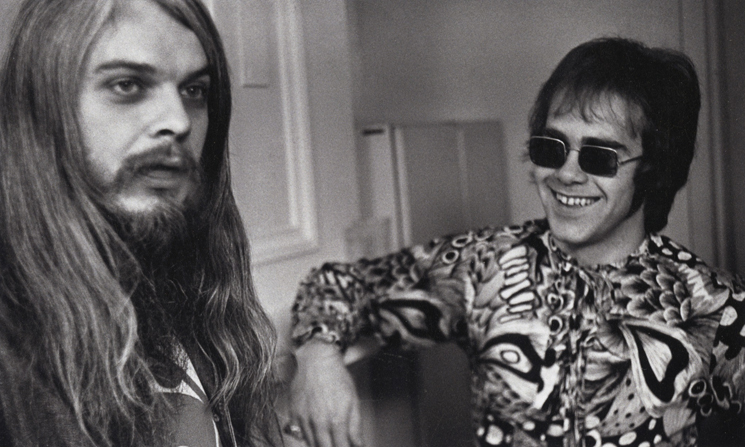
Leon and his most famous acolyte, Elton John, soon after they first met in Los Angeles, 1970. Elton said Leon “was everything I wanted to be as a pianist, vocalist, and writer. His music has helped me and millions of others in the best and worst of times.” Photo by Don Nix, courtesy of the OKPOP Museum.

Sometimes we tend to forget that even musical heroes have musical heroes. When Elton John came to these shores to play his first highly-anticipated run of shows at L.A.’s Troubadour Club in 1970 he was ecstatic to meet one of his: Leon Russell.

Cut to nearly four decades later and John wasn’t happy. That’s because Russell—who for the first half of the 1970’s was one of rock’s biggest stars—had been largely forgotten. Even, he admits, by Elton. Russell was playing sporadic and uneven shows in small venues and battling health issues and bad business decisions of his own making. This is a man who Billboard deemed in 1973 was the “top concert attraction in the world.” Also touring that year: Led Zeppelin.

So, John and lyricist Bernie Taupin coaxed the reluctant singer/pianist into the studio for a collaborative album of duets, The Union. It won Grammys and spun off a documentary and concert special.

With his long snow-white beard and hair, ever present sunglasses, and preference for white suits and white cowboy hat—Russell resembled a cowboy/hippie Saruman from The Lord of the Rings.

And while his gait was slower (he had a lifelong limp), the girth larger, and the Oklahoma-born drawl a bit drawlier, he enjoyed a career resurgence, culminating in an emotional, tearjerking speech upon his 2011 induction into the Rock and Roll Hall of Fame for Musical Excellence. He thanked John—who did the induction honors—after being “found in a ditch by the side of the highway of life” and saving him. He also entered the Songwriter’s Hall of Fame at the same time.

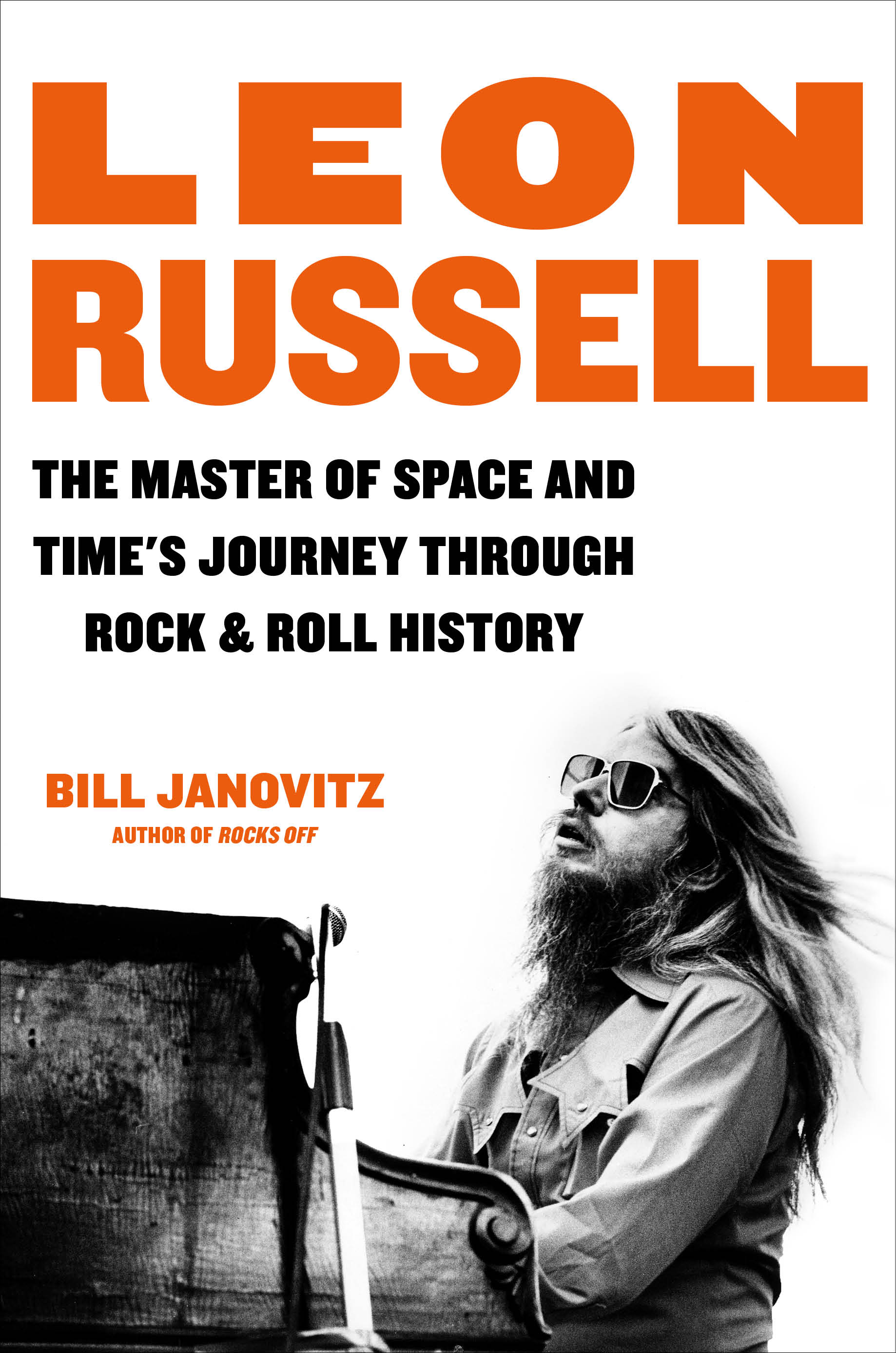
Russell died in 2016 at the age of 74 while recovering from heart surgery. And now the story of the life and music of “The Master of Space and Time” is told in Bill Janovitz’s massive and thorough biography, Leon Russell: The Master of Space and Time’s Journey Through Rock and Roll History (592 pp., $31, Hachette Books).

Through highly-detailed archival research and nearly 140 fresh interviews, Janovitz (who in addition to writing is a founding member of the alt rock group Buffalo Tom), traces Russell through his upbringing in Tulsa, Oklahoma, early success as an A list session musician in L.A. and outlier member of the fabled Wrecking Crew, key motivator and musical force in ensembles like Delaney & Bonnie and Friends and Joe Cocker’s Mad Dogs & Englishmen records and tours, and his own solo ups (and downs…and ups).

But this is no hagiography. Janovitz reveals how Russell could pick up and dispose of women in his life while trying to have simultaneous relationships (including backing singers Rita Coolidge—said to be the inspiration for his “Delta Lady”—and Claudia Lennear among them). And how he could be stingy with money, praise and songwriting credits.

As noted time and time again, Russell was also influenced in a negative way by a coterie of hangers-on that he did nothing to dismiss. Both of his major homes/studios essentially became communal living crash pads. “His uncanny habit of trusting the wrong people would be an Achilles’ heel his entire life,” Janovitz writes.  

A continual theme is the respect that many of his contemporaries who were both on the front of album covers and in the liner notes held for him. And many feel in 1971’s The Concert for Bangla Desh, his performance outshone even those of organizer George Harrison, fellow Beatle Ringo Star, Bob Dylan, Billy Preston and an admittedly incapacitated Eric Clapton.

Janovitz’s also addresses the Classic Rock Parlor Game of trying to determine the balance of power and influence on the ramshackle, traveling circus of the Joe Cocker’s Mad Dogs & Englishmen Tour (and subsequent documentary and record), which initially brough Russell to mass attention. Though his utterly distinctive if range-limited vocal honk was utterly unique, it was also for many listeners and acquired taste.

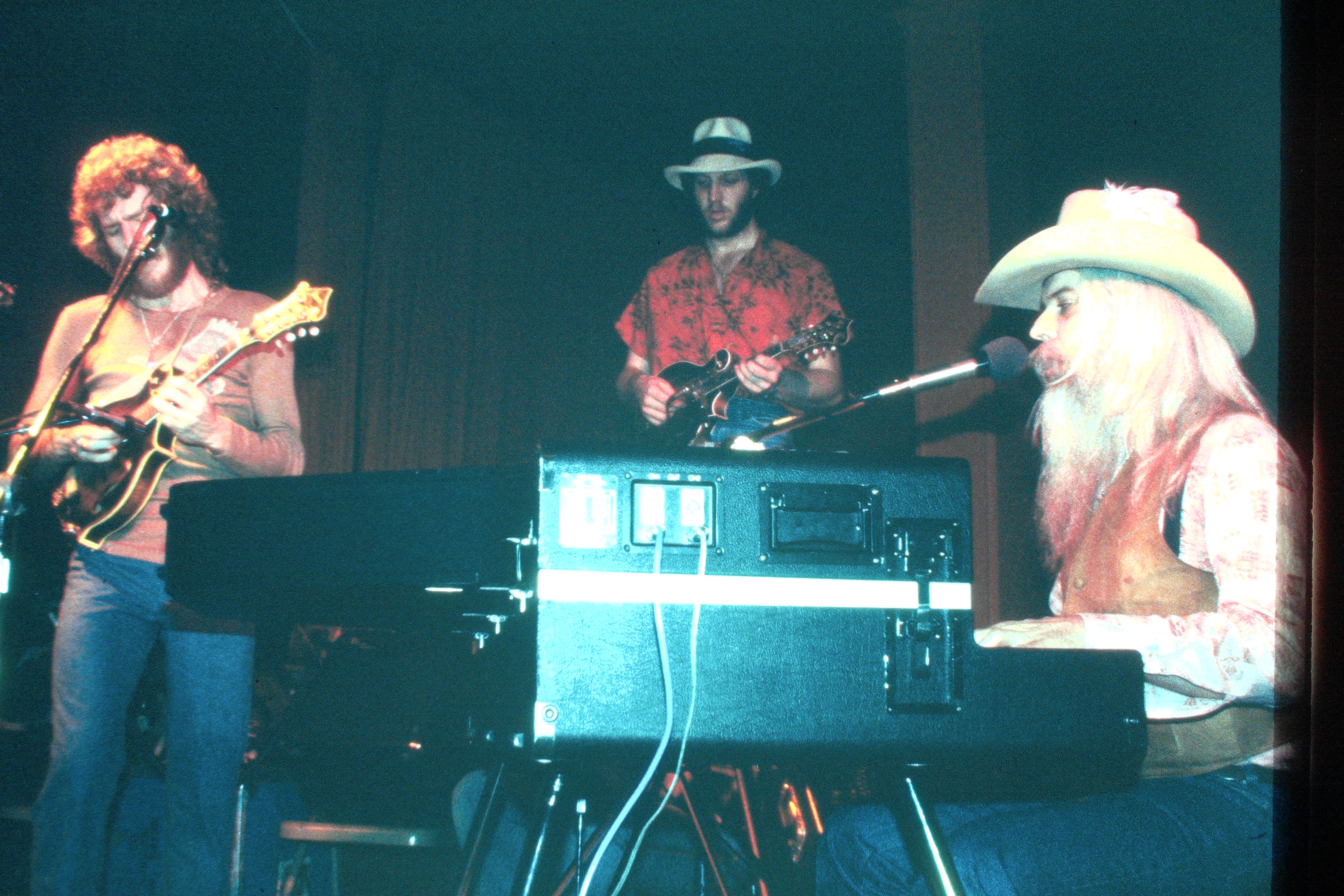
Left to right : Sam Bush, Bill Kenner, and Leon. On tour with New Grass Revival, 1981. ”For two years, we would open the show, and then we would back him, so it was strenuous work. I mean, it wore our ass down,” Bush said. Photo by Diane Sullivan, courtesy Jan Bridges.

Did he on purpose attempt to steal the spotlight and decision-making process from headliner with his solo spots and flashy stage wear and moves? Did the drug-addled and indecisive Cocker even care? Could the tour have happened at all without Russell’s guiding hand? Did Russell buoy forces against Cocker? Whatever the truth, relations between the two deteriorated and each held decades-long grudges that were never solved.

Russell had much better relations with Willie Nelson, as they gleefully planned to bring “the hippies and the rednecks” together.

Russell was by Nelson’s side at early Fourth of July picnics. Janovitz tells a story of the pair being up all-night partying and singing before the 1973 first one in Dripping Springs. But when it turned daylight and they saw crowds already appearing—seven hours before showtime—the worse-for-wear pair decided to put on an impromptu gospel concert for the early birds. Russell also has the distinction of being the first performer ever to sign/carve a name in “Trigger,” Nelson’s legendary Martin N-20 acoustic guitar that he plays to this day.

But Janovitz doesn’t just dwell on the glory years. From the ‘80s through the comeback, Russell was a man adrift. Moving around; dabbling in different types of music (including years with the New Grass Revival); divorce-remarriage-children; a business breakup with partner Denny Cordell; the shuttering of his own Shelter Records label and Church recording studio; poor health and weight gain (and possible undiagnosed bipolar or autistic tendences); a fighting family; creative lethargy; no record deals; and playing smaller and smaller venues. He even eventually bashed heads with savior Elton John and his management, slipping back into old ways.

Make no mistake, reading and digesting Leon Russell is a sizable commitment and at times even too detailed for the average listener. And while the inner workings of its subject (like his image) sometimes remain elusive and mysterious, Bill Janovitz has definitely unlocked many of The Master’s secrets. It’s an important piece of rock journalism.

Originally appeared at HoustonPress.com

Posted in Books, Leon Russell | Tagged , , | Leave a comment

Rod Argent on the Zombies Continued Resurrection, New Album, & Tour

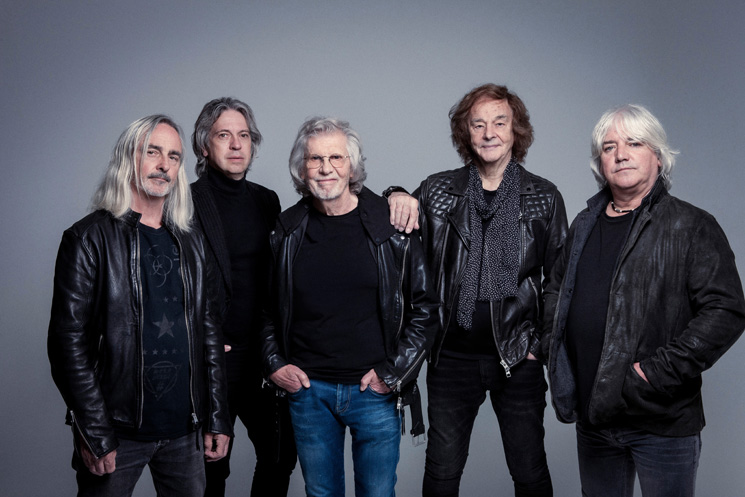
The Zombies today: Tom Toomey, Søren Koch, Rod Argent, Colin Blunstone and Steve Rodford. Photo by Alex Lake.

When I last spoke with Rod Argent way back in 2004, the keyboardist and his vocalist bandmate Colin Blunstone were only a few years past resurrecting the Zombies.

The highly influential (but short-lived) 1960’s British Invasion band hit U.S. charts and radio with “Time of the Season,” “She’s Not There,” “Tell Her No,” and “I Love You.” At the time, Argent was both “bewildered” and “gratified” by the reception at their return. And when I spoke with Blunstone nearly a decade later in 2013, he was “astounded” at the positive reaction—and that the band was even still active.

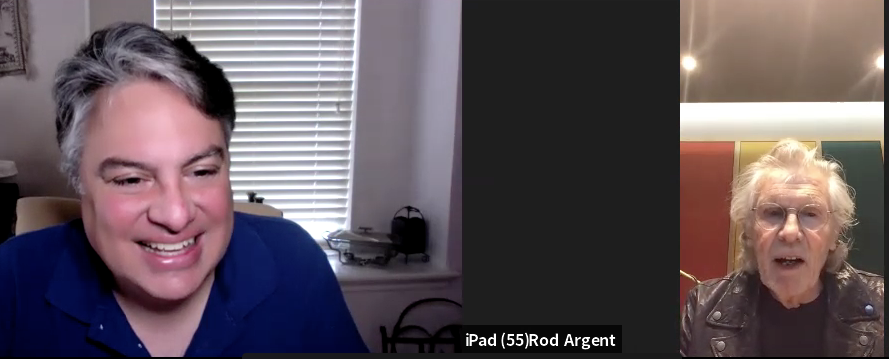
Tack yet another decade onto that and Argent—Zooming from his home studio in England—is still a bit, well, gobsmacked by it all.

“It’s extraordinary, it really is! Because we didn’t get back together with any plan. We were just having fun! I probably told you that in 2004!,” Argent laughs.

“When we first started with this reincarnation, especially in the South, we’d sometimes play to a handful of people. But when we get back there now, the audiences are completely packed! It’s just great. Everything’s on an upward spiral!”

In recent years, there’s been more Zombies activity than in a season’s worth of The Walking Dead. In addition to the recent U.S. tour, there’s a brand new studio album, Different Game. Plus, an authorized book (Odessey: The Zombies in Words and Pictures) and a documentary near completion (Hung Up On a Dream).

But most important is the band’s 2019 induction into the Rock and Roll Hall of Fame, after being on the ballot four times. Argent and Blunstone were inducted by Susanna Hoffs of the Bangles alongside original members Chris White (bass/vocals) and Hugh Grundy (drums). Guitarist Paul Atkinson, who died in 2004, was also enshrined.

Argent says what he remembers most about the evening was the “fantastic” live performance the band did and the technical proficiency of how the Rock Hall set it up—down to actually showing Argent’s hands during keyboard solos.

“All of the other [inductee] bands were fantastically friendly. And Joe Elliott of Def Leppard invited me up onstage to play keyboards on ‘All the Young Dudes,’” he says. “And the night before at a mixer, one of the members of the Cure said to Colin how much of an influence the Zombies were on them. I can’t quite hear that, but it was wonderful that he said it!”

At the ceremony Argent also paid tribute to then-current bandmate (and cousin), bassist Jim Rodford. He was nearly in the original group and spent more than two decades as a member of the Kinks before signing up with the Zombies reincarnation. Rodford died in 2018 after a freak fall at his home. His son, Steve, plays drums with the current group, and guitarist Tom Toomey and bassist Søren Koch round out the lineup.

Argent said in his induction speech that his entire rock and roll journey began in 1956 when Rodford played him a 45 of Elvis Presley’s “Hound Dog.”

“He lived 400 yards from me, and I was in awe of him because he was four years older. He played a bit of Bill Haley and I thought it was OK. But when he played Elvis, it turned my world around,” Argent says. “In the early days of the Zombies, he also loaned us all his gear. A week before he died, he was playing his ass off onstage. We don’t know if he had a heart attack when he fell, but it was completely unexpected. Bless him!”

For Different Game, Argent says he’s been told that it the group’s “best album,” since 1968’s much beloved and cherished Odessey and Oracle. Its ten tracks run the gamut from energetic rockers (“Merry Go Round,” “Move Over”), to the jaunty (“Dropped Reeling and Stupid”), ballads featuring Blunstone’s trademark breathy vocals (“You Could Be My Love,” “Love You,” “The Sun Will Rise Again”) and a Beach Boys/’50s pastiche (“Rediscover”). Several also feature strings, like a remake of their own “I Want to Fly.”

Argent says the record stands out to him because it was the first one “100% done” in house since Odessey & Oracle, this one at his home studio. The band also recorded as much of the project as possible live with everyone playing and singing at the same time.

“I’ve got some wonderful vintage instruments here as well. We wanted that old way of capturing magic in the tape,” he says. “And we were all hyped up about it. You can’t tell where that magic is, but it’s there. And I think some of my best songs are on this record.”

While some Classic Rock bands aren’t interested in putting out new music for various legitimate reasons (no one buys records anymore, only die-hard fans are interested, radio won’t play anything new by older acts) for Argent, it’s imperative.

“We’ve only got one life. And when we get to the end of it, we can say ‘OK, I made some mistakes, but I’ve made the best with what I’ve got.’ And to earn a wonderful living all my life for what I would pay to do, and still get reaction from people. That’s incredible,” he says.

“I think Colin would agree with me. What a charmed existence. So many people spend a third of their lives doing something they don’t want to, then just look forward to retirement.”

The Zombies are also seeing multiple generations in the audience—some not even born yet when they started the recent revival.

Argent mentions at a recent gig they met someone who had been listening to the Zombies “since she was 10 years old.” She’s now all of 17. “We made a big fuss about her at the show. And her mother drove her 860 miles to see us!” Argent says.

That’s not saying the day-to-day grind of touring is a bag of laughs—the 77-year-old Argent notes it’s “tough” on the body. And even though they can now zip across the U.S. in relative comfort in a van with “plush aircraft seats and wifi,” that doesn’t mean it’s all smooth. The cheeky cover of Different Game features a photo Argent took of a real-life incident when that very passenger van broke down in the middle of the desert outside of Phoenix.

“It seems to sum up what being in a band is truly like!” Argent laughs. He says that while on the road, the van was taking “extreme punishment” in temperatures of 112 degrees. Then the air conditioning went out.

“We had enough water in the van to drink, and we thought we could make it to the next stop. And then the engine caught on fire and everything stopped!” he continues. Eventually, they got in touch with a tow truck driver, but it still took two hours for him to get out. And that’s what listeners see on the cover.

Finally, after the Zombies broke up—ironically just before they scored their biggest hit with “Time of the Season”—Argent formed a new band that bared his name. Their own biggest hit was 1972’s “Hold Your Head Up” (which the current Zombies usually perform, alongside their own hits, deeper cuts, new material, and some Blunstone solo songs).

For decades, most listeners have thought the chorus goes (and lustily sang along with) “Hold you head up…whoooaa!” But as Argent always mentions onstage, it’s actually “Hold your head up…wo-man!” It gives the song a completely different vibe of female empowerment.

“Our sound engineer later came up to me and said that nobody understood it, and when I listened to it, it did sound ambiguous!” Argent laughs. “But I’ve gotten communications from people who said that that song had helped them through tough times. Chris [White] originally wrote it for his wife who he just got married to and they were just about to have a baby. But people bring their own feelings to the song. And I think all the best songs have that.”

This article originally appeared at Houstonpress.com

For more on the Zombies, visit TheZombiesMusic.com

Posted in Zombies | Tagged , , | Leave a comment

Feedspot Names ClassicRockBob.com as a Top Classic Rock Blog or Website!

I was both excited and honored to learn that Feedspot has named this blog as one of the Top 30 Classic Rock Blogs (comin’ in at #19!). Thanks to Anuj Agarwal for delivering the news. The complete list is here:

https://blog.feedspot.com/classic_rock_music_blogs/

Posted in Uncategorized | Leave a comment

My New Classic Rock Book is Out Now!

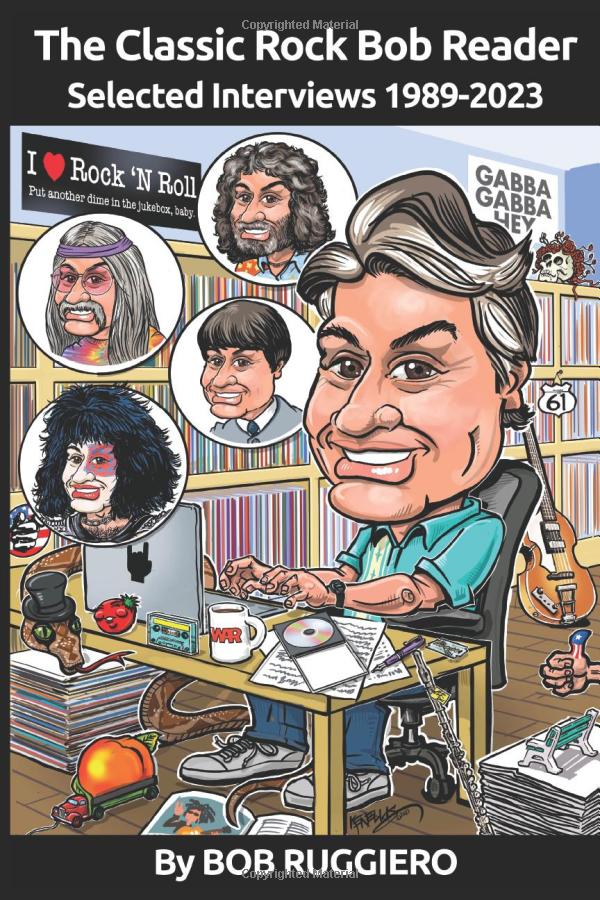
I am very, very excited to announce the publication of my second book! The Classic Rock Bob Reader: Selected Interviews 1989-2023 collects 130 of my best talks over the years with Classic Rock musicians ranging from A-List Rock and Roll Hall of Famers and legends to cult favorites to a few…interesting surprises. It’s 470 pages and was truly a labor of love to put together. Find out more and order it on Amazon here!

https://www.amazon.com/dp/B0C6BLTS49/ref=sr_1_1crid=17SFJ0Q4TNHFG&keywords=the+classic+rock+bob+reader&qid=1685287314&sprefix=%2Caps%2C354&sr=8-1

It includes frank and revealing talks with Rock and Roll Hall of Famers and/or A-list artists like Gregg Allman, Ian Anderson, Alice Cooper, Ronnie James Dio, Ray Davies, Don Felder, Peter Frampton, Sammy Hagar, Rob Halford, Joan Jett, Meat Loaf, Kenny Loggins, Graham Nash, Joe Perry, Todd Rundgren, Boz Scaggs, Rick Springfield, Eddie Van Halen, Joe Walsh, Ann Wilson, & Brian Wilson.

Also members of: Bad Company, Blue Öyster Cult, Box Tops, Buckinghams, Buffalo Springfield, Byrds, Cactus, Chicago, Creedence Clearwater Revival, Doobie Brothers, E Street Band, Foghat, Genesis, Go-Go’s, Grand Funk Railroad, Journey, Little Feat, Loverboy, Lynyrd Skynyrd, Marshall Tucker Band, MC5, Moody Blues, Nazareth, Night Ranger, Pablo Cruise, Paul Revere & the Raiders, Ramones, Rascals, Santana, Sonics, Steppenwolf, Styx, Talking Heads, Thin Lizzy, Three Dog Night, Traffic, Toto, Turtles, Vanilla Fudge, WAR, Wishbone Ash, Yes, & the Zombies. Cover illustration by Ken Ellis!

Posted in Uncategorized | Leave a comment

A Golden Anniversary for the Wheat State Band

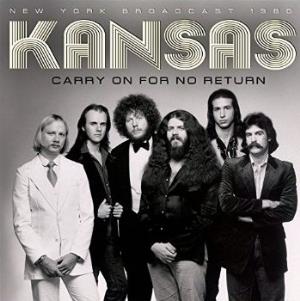
Kansas in 2022: David Ragsdale, Phil Ehart, Ronnie Platt, Richard Williams, Tom Brislin and Billy Greer. Photo by Emily Butler Photography.

During the initial flush of worldwide Beatlemania, Ringo Starr was asked by on camera what he planned on doing when the bubble eventually burst in a couple of years. With utter sincerity, he told the reporter that he planned on opening a chain of ladies’ hairdressing salons. After all, nobody expected any group’s career—must less a rock and roll one—to have any longevity.

Well, nearly six decades later, the Beatles are still just a little popular. And in the past few years, Classic Rock lovers have seen a wide variety of bands from the Doobie Brothers, Blue Öyster Cult and America to ZZ Top and Uriah Heep celebrate the 50th anniversary of their founding or first record with special tours or projects.

Next year will see golden anniversary celebrations for groups like Journey, Yes, and George Thorogood & the Destroyers. And a certain band out of Topeka that took the name of their state as their own.

“I don’t know if I ever thought we’d make it 50 years. It wasn’t until the 30 year mark that I realized we had our foot in the door and this career had some longevity!” says Kansas guitarist Richard Williams. “Early on, you can’t imagine even being 40 years old and doing this!”

And while he knows that the days of having big radio hits are “long gone” in regards to the seismic shifts in the music industry, he’s not worried. Even though in the ‘70s and early ‘80s, he says it was very common for a successful band to put out and album that went gold (500,000 copies sold) or platinum (1 million) pretty quickly. Today, any record that sells 100,000 physical copies is deemed a “major success.”

“Hard product doesn’t sell anymore. And even with the resurgence of vinyl, that doesn’t make a big dent,” he says, noting that most bands now make their primary income touring. And while streaming royalties are miniscule, they do add up.

“We have cultivated a fanbase that is extremely loyal. And as long as we continue to serve them, we can continue to do this. We’ll put out some new stuff and stay true to what Kansas is and not try to change anything. It’s actually a lot easier now.”

Kansas onstage in Las Vegas, 2022. Photo by Mark Schierholz/© Drummer Visions Magazine.

The current lineup of Kansas includes co-founders Williams and Phil Ehart (drums), along with Billy Greer (bass), Ronnie Platt (lead vocals/keyboards), David Ragsdale (violin/guitar), and Tom Brislin (keyboards). The band will announce a massive 50th anniversary tour next month.

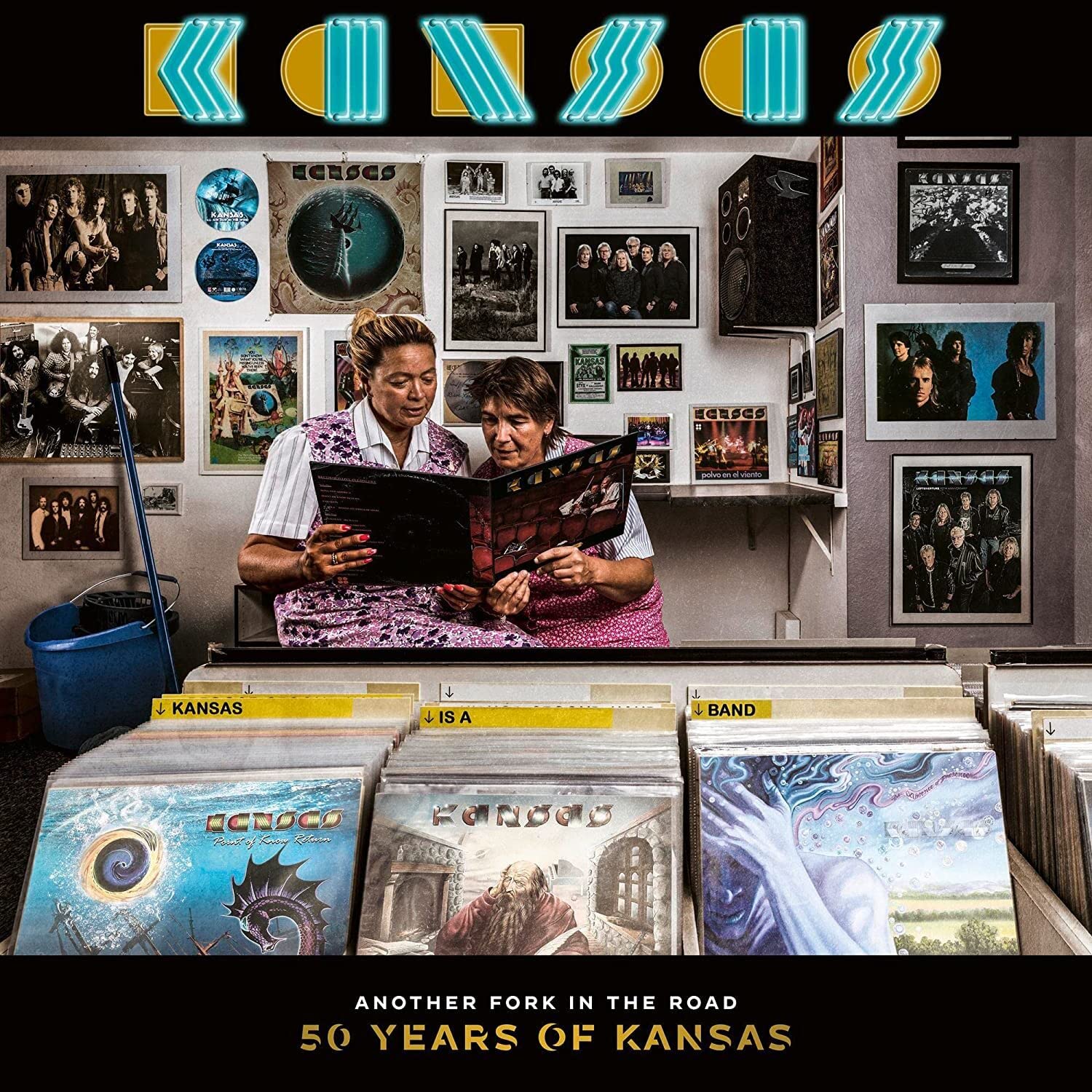
Kansas has also just released Another Fork in the Road (InsideOut Music). The new, triple-disc career anthology covers hits (“Dust in the Wind,” “Carry On Wayward Son,” “Play the Game Tonight”), deep cuts (“Down the Road,” “Journey from Mariabronn,” “Miracles Out of Nowhere”) and more recent material up to their last studio album, 2020’s The Absence of Presence (“Throwing Mountains,” “The Voyage of Eight Eighteen,” “Under the Knife”).

Williams credits Thomas Waber from InsideOut with instigating and spearheading the project, down to putting together the track selection on which Williams and Ehart had final say.

And he says Waber did it totally from a “real hardcore fan’s perspective” in not making it just another “best of” compilation. It has extensive liner notes, and the cover features ephemera from the band’s career. The two theater cleaning ladies looking at the Kansas album on the cover is a nod to a similar cover from their 1978 double live record Two for the Show.

But contrary to most anthologies, it unfolds in reverse chronological order. Adding to the time warp loop is that the opening cut “Can I Tell You” is a new version by the current lineup of a song first heard on the band’s 1974 debut.

In some ways, Williams considers the tune the most important in the band’s career, even moreso than the big hits.

“That was the song that got us the record deal. And without that song catching [legendary executive/producer] Don Kirshner’s ear, we wouldn’t have one. All the albums that followed would have never happened. Today, I’d probably be a bartender in Topeka!” Williams offers.

He says what makes the track even more interesting in that it was recorded all remotely, with each member recording their part on their own. “We were curious about it because we hadn’t tried it before. So I did all guitar here right here where I’m sitting now in my guitar room,” he says.

“Phil was in a studio in Atlanta, and then we started assembling it. Ronnie did his vocal tracks at his house from his bedroom! Tom Brislin combined it, and he sent it to Chad Singer, our front of house guy who produced it. Modern technology is pretty amazing. I could be here drinking coffee in my own home working. The process was very positive.”

Classic Kansas: Kerry Livgren, Phil Ehart, Richard Williams, Robbie Steinhardt, Steve Walsh and Dave Hope.

As for the current lineup, Williams says that what sticks out in his mind it is the chemistry of camaraderie. “It’s very much like it was when this band started in the days of yore. I’m not sure why that is,” he says.

“But one reason…things tended to get greedy [back then]. The realization of unless you have a part of a song, you’re not going to get any money from it. So people might be trying to change things, not necessarily because they needed to be made, but so someone could get their name on it and chunk of the pie.  And now, there’s not any pie. Or not enough to worry about.”

He says the current band are all “friends,” share pre-show meals together, and even rehearse for 60 to 90 minutes before each show, something that they hadn’t really done before.

The original/classic Kansas sextet experienced its first loss last year with the death of violinist Robby Steinhardt from acute pancreatitis at the age of 71. And even though he had been out of the band for years and was not in the best of health, Williams says it still came as a shock.

“We’d be in contact on occasion. But yeah, I’m sure in the back of everyone’s mind it was ‘Who’ll be the first to go?’ And what would that be like. Look at Mickey Dolenz, he’s the Monkee now,” Williams says.

“Robby’s passing was not a surprise. He’d had a quadruple heart bypass and was doing well for a few years, and then he wasn’t. It was awful. And if there’s any ex-member who would have loved to be part of the 50th anniversary and come out and done special appearances at a few shows, it would have been Robby.”

He adds that “the door is open” for any of the other original former members to make guest appearances as the tour winds its way near them, but notes that fact that guitarist Kerry Livgren had a stroke in the past, and bassist Dave Hope “made it clear he didn’t want anything to do with Kansas.” That maybe leaves singer/keyboardist Steve Walsh, who retired from the band in 2014.

Williams also has some choice words for the group of fans he calls “The Original Sixers” who have been “pissing and moaning” for years that only that lineup could or should continue under the Kansas name.

“To be blunt, I don’t give a shit anymore! Someone’s opinion of why I shouldn’t do this anymore because someone is not in the band, go fuck yourself!” he says. “I’m not going to tell you what you should do with your job and career and the passion you’re following. Stay in your lane, bro! Get off my lawn! You’re freeze-dried from 40 years ago.”

So circling back to something Williams said earlier, if this whole music thing didn’t work out—would he be that bartender in Topeka?

“Well, I spent a lot time in bars back then!” he laughs heartily. “Or it could be like Spinal Tap where [Christopher Guest’s Nigel Tufnel character] says that maybe he’d be a haberdasher!”

This interview originally appeared in The Houston Press.

Posted in Kansas | Tagged , | Leave a comment

It’s Columbus Day Every Day for Little Feat

Little Feat in 2022 still awaiting Columbus: Sam Clayton, Scott Sharrard, Bill Payne, Tony Leone, Fred Tackett and Kenny Gradney. Photo by Hank Randall.

According to The 1970s Rock Rulebook, every performer or band was required to release a double live record album.

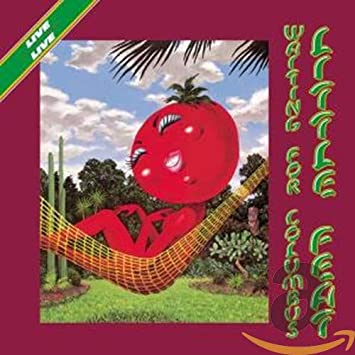
For some acts, it broke them out in terms of popularity and recognition (KISS, Peter Frampton, Cheap Trick). For others, it burnished the studio material and allowed for stretching out (The Band, Lynyrd Skynyrd, the Allman Brothers Band). For the cult favorite and multi-faceted Little Feat, 1978’s Waiting for Columbus is considered by many not only as one of the best live albums of the era, but the band’s apex as well.

Its 17 tracks were culled from seven shows and feature the six-man classic lineup tripping through their catalog with skill, passion and zeal. A bonus was the presence of the Tower of Power horn section, and songs like “Dixie Chicken,” “Time Loves a Hero, “Oh Atlanta,” “Tripe Face Boogie,” and “Fat Man in the Bathtub” received extra oomph (a 2002 double CD added 15 more tracks).

The current edition of Little Feat recently celebrated the 45th anniversary of those shows by performing Waiting for Columbus in its entirety on a tour last year.

“The album is what, 75 minutes long? We did a dry run in Jamaica a couple of weeks ago, and the show was two hours. Without an encore!” laughs co-founder/keyboardist Bill Payne.

“I think the original idea to do a live album came from Warner Brothers. They were looking for the best way to present this band that was great live but wasn’t [captured] like that on the records. And they’re just great songs.”

In the liner notes for the 2002 reissue, Payne also noted that perhaps co-founder/singer/guitarist Lowell George saw the project as a way to reassert some creative control that he had abandoned. To this day, some believe that—much like Brian Wilson and the Beach Boys—that Little Feat is the singular vision and creation of Lowell George. But Payne differs.

“Things were attributed to [him] that weren’t solely his doing. When this band started in 1969, the notion of what it would be in the future was kind of a Lego concept: What did we want to add? It was music driven, not personality driven.”

Of the original album’s lineup, Lowell George, drummer Richie Hayward, and singer/guitarist Paul Barrere have passed. Payne, bassist Kenny Gradney, and percussionist Sam Clayton remain. The current version also includes longtime guitarist Fred Tackett, and “new guys” singer/guitarist Scott Sharrad and drummer Tony Leone.

“It’s a great time to catch this group. I’ve been calling this version Act 3!” Payne—who now sings a few numbers onstage—says. “Because of the reality of events, you have to make decisions whether to go on or not. It happened with Lowell and then with Paul.”

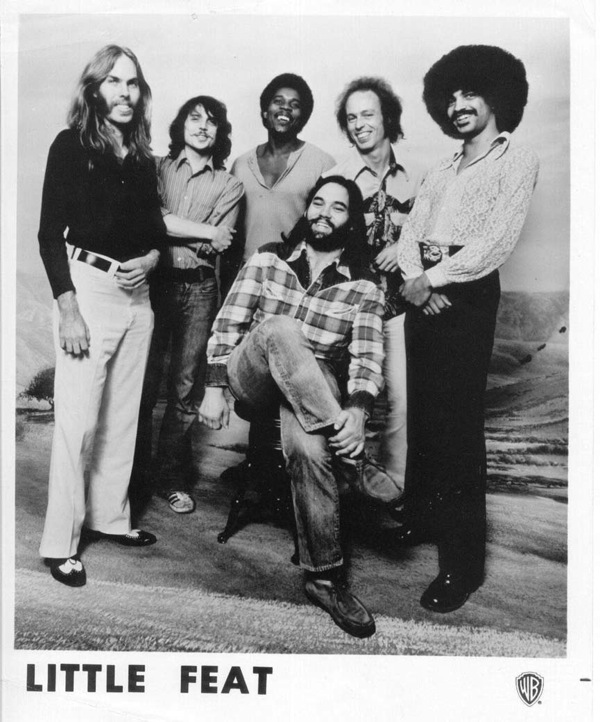
Payne, Hayward, Clayton, George (seated), Barrere and Gradney. Warner Bros. 1973 publicity photo.

A great topic of endless debate among music nerds and journalists, of course, is how authentic any purported “live” record truly is in the end. The not-so-secret-secret is that the vast majority feature post-show overdubbing, re-recording and creative editing.

Waiting for Columbus is no exception, although there’s good authority that none of Payne’s original piano or keyboard playing—of which there’s a lot—was redone (though he says a new part was added to “Dixie Chicken”), and only a small portion of Hayward’s drums.

“There were certain things that Lowell wanted to do like get the guitars a little tighter or fix up a vocal. But for the most part, it’s live. And there’s an urgency to it,” he offers. “The tracks were just like a river at springtime. They just carried you down, and you’re hanging on for dear life!”

The sexy Tomato Lady painted by Neon Park on cover of Waiting for Columbus has also become the de facto band trademark. She’s reclining in a hammock and surrounded by foliage native to the Americas.

“I guess that Columbus discovered tomatoes in the West Indies, so she’s waiting to be discovered by him!” Payne says. “Somebody the other day said if the tomato was Little Feat, we were waiting to be discovered by a new audience as well.”

But while the band will be playing the same songs from the record, they’re not looking to replicate them.

“We’ll do the album, but in our fashion. It may be different instrumentation. I want this band to put their stamp on it,” Payne says. “These songs have morphed over a 45-year-period. We may want to do a song like we did then. Or like 20 years ago. Or how we’ll want to do it weeks from now. And that’s Little Feat in a nutshell. Let’s just take this for a ride.”

Adding to that idea of evolution and currentness, Payne says that he doesn’t look across the stage at Gradney or Clayton any differently from the rest of the group, despite their shared decades of music.

“I’m don’t think in those terms. But I remember when Richie was on his last legs before he passed away, there was an immediacy when your past taps you on the shoulder. In general, I just see the joy and Sam and Kenny’s faces when playing this music. And the [new members] have brought a new energy to the band that’s contagious.”

And while Little Feat is from Los Angeles, their sonic gumbo of rock, blues, and jazz also has a distinctly New Orleans feel, especially beginning with the Dixie Chicken record. Payne to this day takes issue with writers like Elizabeth Nelson who he says questioned their fitness to play that style of music.

“I’ve told people over the years, and I’d love to tell her—I guess I can do it through you, Bob!” Payne says. “Is that I was earlier today playing some Mozart, but I’m not from Vienna, Austria. And some Beethoven, but I’m not from Hamburg, Germany. Is that OK with you? Why are you segregating music? It’s ridiculous. Would you tell a musician from New Orleans that they can’t play anything else?”

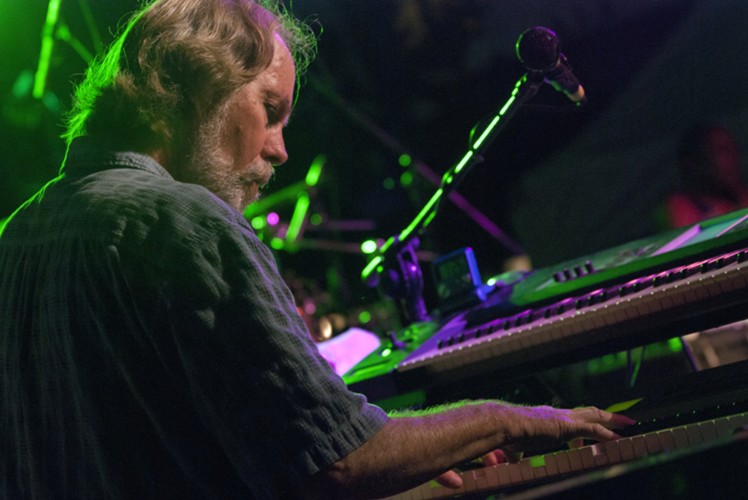
Bill Payne at one of his many, many keyboards. Photo by Polly Payne.

Outside of Little Feat, Bill Payne has written songs with collaborators ranging Pulitzer Prize-winning poet Paul Muldoon to Blackberry Smoke singer Charlie Starr (some of which he hopes appear on future Little Feat records). He is also a creative writer and photographer, working on a memoir and teases an in-progress Little Feat documentary. And he’s contributed keyboards to scores of records by artists like Toto, Linda Ronstadt, Emmylou Harris, Stevie Nicks, Bonnie Raitt, and Pink Floyd.

The 72-year-old Payne has also for years been the touring keyboardist for the Doobie Brothers, a relationship that goes as far back to their 1971 debut record. And there he was on stage left at the Woodlands Pavilion last October for the COVID-postponed tour celebrating the 50th anniversary of their founding.

“Michael McDonald is a friend and so are Pat [Simmons] and Tom [Johnston]. We have a camaraderie, and tour was fun and amazing, and I was proud to be a part of it,” he says. “With so many [instruments], we just tried to say out of each other’s way! Michael could have handled all the keyboards himself!”

Finally, the native of Moody, Texas (near Waco) says that the city of Houston plays a big part in Little Feat history. He notes that audiences here were among the most supportive and fervent, especially early in their career.

And that goes especially for, um, female admirers of the group, who are name-checked in both “Tripe Face Boogie” (“I was entertained in Houston”) and “Roll ‘Um Easy” (“And I never met girls who could sing so sweet/Like the angels that live in Houston”).

When I last spoke with Payne in 2002 before a show that was part of the Houston Press Concert series, he waxed nostalgic about “The Houston Welcoming Committee.”

“They were some very lovely, lovely girls. Before that, I was thinking that I never wanted to tour again. But in Houston, I changed my mind. It didn’t seem so bad!” he said in 2002. Reminded of the HWC two decades later, he lets out a laugh.

Hellloo! I think a few of them are still around. And we’ve seen them over the years—though not in the fashion we did when we were younger!” he chuckles. “I was born in Waco. So once a Texan, always a Texan!”

This article originally appeared at HoustonPress.com

Posted in Little Feat | Tagged , , , | Leave a comment

Hendrix: A Voodoo Child’s Not-So-Slight Return

Jimi Hendrix with his Danelectro guitar, circa August 1960, outside the family home on Yesler Street in Seattle, WA. Courtesy James “Al” Hendrix Collection/© Authentic Hendrix, LLC.

There are a lot of estate organizers, trusts and conglomerations that look after the posthumous interests and product of rock stars. But Experience Hendrix, LLC, is the gold standard in terms of how it should be done, for the artist who died in 1970 at the age of 27.

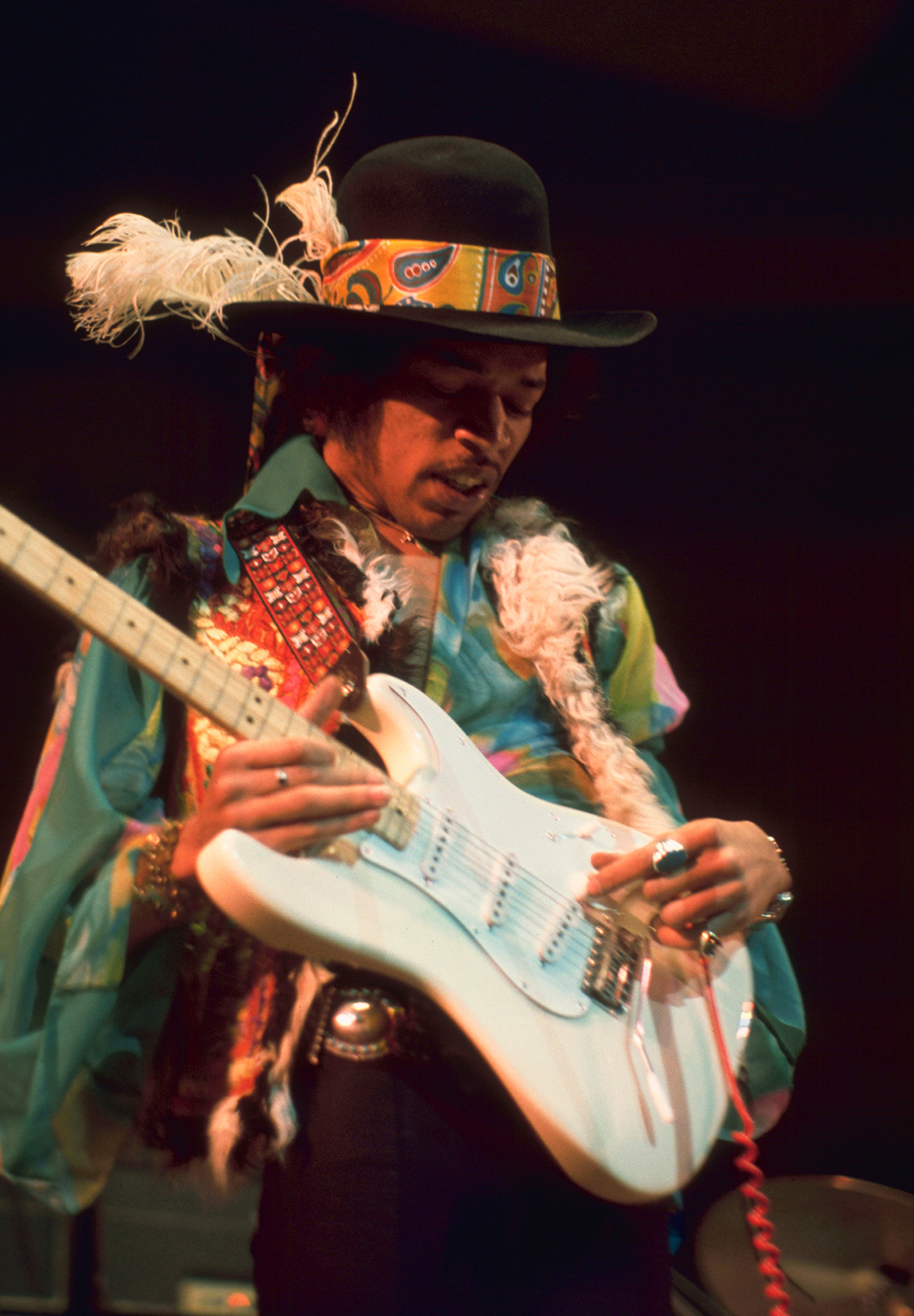
Jimi Hendrix at the Royal Albert Hall in London, Feb. 18, 1969. Photo by Graham F. Page/MoPOP/Authentic Hendrix, LLC.

In an effort to celebrate and continue the legacy of Jimi Hendrix, the organization (founded in 1995 my Jimi’s father Al and now overseen by half-sister Janie), has steadily released material by and based around the man generally thought of The Greatest Guitarist Ever. And that’s especially true in terms of putting out new (!) music in the form of box sets, live releases and obscurities, all sounding great and well annotated.

Two new releases are out to celebrate what would have been Hendrix’s 80th birthday this November 27. The first is Jimi Hendrix Experience: Los Angeles Forum, April 26, 1969.

The live recording captures the original band toward the end of their lifespan. They would play their last show together two months later, as tensions between Hendrix and bassist Noel Redding over creativity and input had reached a fever pitch.

While including popular evergreens “Foxey Lady” and “Purple Haze,” it opens with the expansive 16-minute instrumental “Tax Free.” Written as a jazz instrumental by Bo Hannson and Janne Karlsson, Hendrix turns it into pure rock magic.

In fact, Hendrix stretches out with extended improvs and solos on other tracks like the normally-compact “Spanish Castle Magic” and closer “Voodoo Child (Slight Return)” which morphs into Cream’s “Sunshine of Your Love” before going back again.

The CD includes Hendrix’s onstage raps, in which he frequently mentioned police presence at the show, dedicating one number to the “plainclothes policemen” in attendance (and also noting the TV countercultural comics the Smothers Brothers). And after the show is stopped when some excited audience members rush the stage, he attempts to calm them down by noting “I don’t feel like looking at these cats in blue hats.” It wouldn’t be the last time he’d have to calm the crowd.

This show also busts the myth that’s grown over the years of how Jimi Hendrix played his own distinct (and controversial to some) version of “The Star Spangled Banner” at Woodstock a few months after this show strictly because the event inspired him. In introducing a short version of it here, Hendrix takes a more negative view by pronouncing “Here’s a song that we were all brainwashed with. Remember this oldie but goodie?”

In addition to liner notes, there’s an essay penned by ZZ Top’s Billy Gibbons, who had befriended Hendrix, was actually in attendance at this particular show, and whose band The Moving Sidewalks had opened up some Texas dates for the Experience.

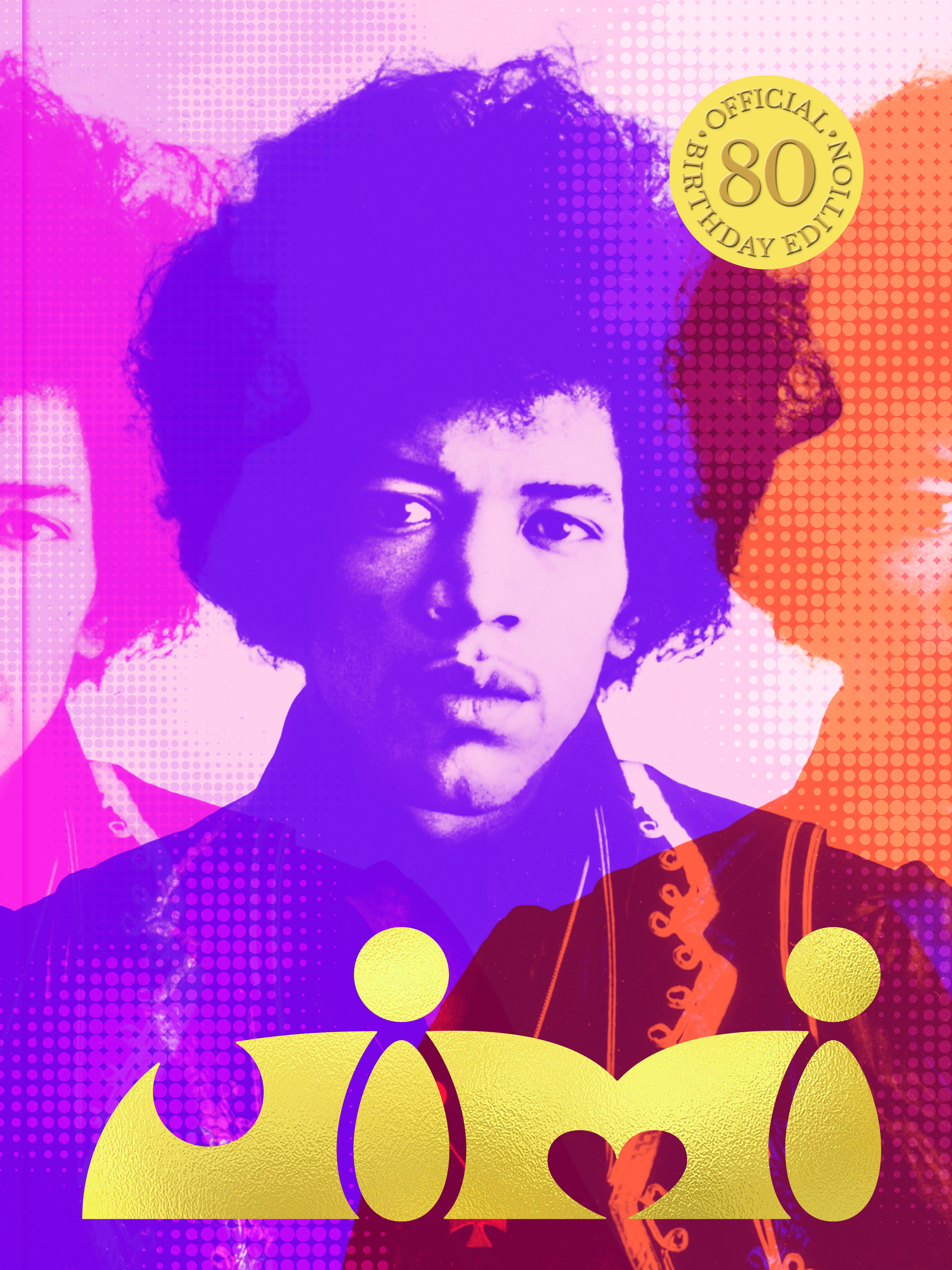
For the more literary tastes, there’s the gorgeous coffee table book, simply titled Jimi, written by Janie Hendrix with Jimi scholar/writer/director John McDermott (320 pp., $50, Chronicle Chroma). And while the text does take the reader through Hendrix’s life (even back to when he was, surprisingly, very shy onstage!), there are deeper, more detailed bios out there.

Some nuggets of info explain how Mitch Mitchell only became the drummer for the Experience when he the similarly-pursued and equally-considered Aynsley Dunbar—unbeknownst to either drummer—came out on the losing side of a private coin toss. And that Hendrix really, really disliked the UK cover of Electric Ladyland—featuring 19 nude female models in a blatant publicity grab by the record company—because he felt it diminished the music inside.

Jimi Hendrix in Nottingham, England, April 20, 1967 Photo by Tony Gale/© Authentic Hendrix, LLC

The treasures here are the hundreds of in concert, casual, and staged photographs, posters and ephemera reproduced, as well as quotes from Jimi himself sprinkled throughout.

Not surprisingly for an authorized bio, there are two areas of Hendrix’s life that the text all but ignores or glosses over: his prodigious appetites for women and drugs. In the former, names of a couple girlfriends are briefly mentioned, and nothing about negative allegations that some have made about physical or mental treatment.

In the latter, discussing a 1969 bust in Toronto where a hash pipe and heroin were found in Jimi’s bag, all that’s said on the subject is “Jimi had experimented with numerous illegal substances in recent years, but in this instance, he denied the drugs were his.” Yeah, sure.

Still, both the record and book are more than welcome additions to the Jimi Hendrix shelves. And his musical accomplishments are all the more impressive when you consider he created all that seemingly endless music in about four years.

Proof of that passion for his six-stringed instrument (which he purportedly slept with while serving in the Army) comes from not a music journalist, record producer, fan or manager. It comes from a report filed by Sgt. Louis Hoekstra in one of Jimi’s personnel files.

“Private Hendrix plays a musical instrument during his off-duty hours, or so he says,” it reads. “This is one of his faults, because his mind apparently can not function while performing duties and thinking about his guitar.”

Seems like the United States military’s loss was definitely rock and roll’s gain.

Originally appeared at HoustonPress.com
Posted in Books, Jimi Hendrix | Tagged | 6 Comments