The Hard Road and Hot Music of Sly Stone

Sly & The Family Stone (l to r, front): Greg Errico, Rose Stone, Sly Stone, Freddie Stone, Jerry Martini, Larry Graham. Cynthia Robinson (back). Record cover detail.

Maybe things started to get out of hand when the cocaine magically appeared on every possible spare bathroom countertop or mirror. Or when the huge amounts of cash arrived in suitcases. Or when the heavy dudes with gangster vibes and big fists started hanging around. Or the guns. Lots of guns. Or that old standby, Inter-Band Power Struggles for Creative Input.
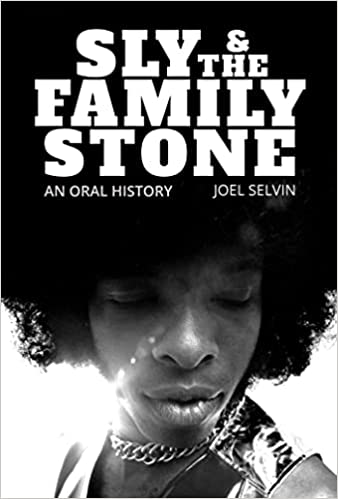
Whatever the case, the musical trajectory of Sly & The Family Stone—and especially its namesake and leader, Sly Stone (born Sylvester Stewart) makes even the most shocking episode of Behind the Music look like children’s programming. 

Esteemed music journo Joel Selvin chronicles the good, the bad, the ugly (and the really ugly), in a new reissue of his 1998 book, Sly & The Family Stone: An Oral History (256 pp., $18, Permuted Press).

Selvin spoke extensively with all but one member of the Family Stone [Rose Stone, who he says “dodged him”], along with a litany of other musicians, agents, promoters, managers, lovers, and others associated with the group.

But it wasn’t easy gaining trust. Selvin writes that “like many survivors of a catastrophic trauma, [the band] had adapted a strategy that hid the truth and protected the guilty.” But as one contact and interview led to another, the memories soon flowed.

Interestingly, he says that he doesn’t recall ever trying to reach out to Sly Stone himself to talk for the book. As if he looms large enough already dominating the story, making a bigger impact by the absence of his words.

“What was he going to say? ‘Yeah, I did all that shit?’ I was making a donut, and Sly was the donut hole. But his shape is clearly outlined,” Selvin says. “And they were incredibly brave interviews. Even if their stories sometimes changed. I don’t think I could get that if I wrote it today.”

One former manager even told the author after being sought out to tell his story “I knew you were coming. I just didn’t know it would be you.”

In the late ‘60s and early ‘70s, Sly & the Family Stone has a string of big hits (“Dance to the Music,” “I Want to Take You Higher,” “Family Affair,” “Everyday People,” “Stand,” “If You Want Me To Stay,” “Hot Fun in the Summertime,” “Everybody Is a Star,” and “Thank You [Falettinme Be Mice Elf Again].”

Their blend of rock, soul, R&B, and psychedelia also helped form the Foundation of Funk. And two records also had a particularly considerable social importance and the apex of the largely Stone-led artistry (1969’s Stand! and 1971’s There’s a Riot Goin’ On).

The band’s music directly influenced artists ranging from Parliament-Funkadelic, the Ohio Players, and Earth, Wind and Fire to Stevie Wonder, Michael Jackson, Lenny Kravitz and especially Prince.

“Sly Stone has such an enormous impact on the music scene, it went beyond what he was doing. Even Motown Records took [notice]. Berry Gordy came into a sales meeting and held up a copy of Stand! and said, ‘The old days are gone!’” Selvin says via Zoom, puffing on a cigar (at 9:30 am!) in his San Francisco home office with framed vintage R&B and rock concert posters on the wall behind him.

“And even in the world of jazz! He led Miles Davis down a road that he wouldn’t have gone. Down otherwise And Herbie Hancock! His Headhunters is the biggest selling jazz record of all time. And there’s a song on it called ‘Sly!’”

The seven-member group featured both genders and two races (and included Stone’s sister and brother). It was all part of Stone’s plan, Selvin writes, for an image that would catapult them to mass popularity and even talk and variety shows: Boys, Girls, Black, White.
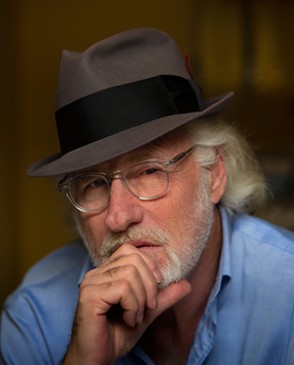
Author Joel Selvin Photo by Deanne Fitzmaurice.

“There was even a bit broader intent than that when he came up with this vision in 1966 and ’67. He already had this sort of ghetto R&B band but picking up on humanistic themes that were part of the culture at that time. He wanted to represent that,” Selvin says. “And having a White drummer was an anti-cliché! Other [integrated] bands were [White] but had the Black drummer.”

One of the most memorable characters in the book didn’t actually speak to Selvin. In fact, he couldn’t: because he was a dog. A pet pit bull named “Gun” that Stone was very fond of. The dog would obsessively chase its own tail, and even when Stone had it removed by a vet, Gun would continue to twirl around and around and around.

Later, Gun was involved in an incident that very, very nearly turned tragic. When Stone’s wife, model/actress Kathy Silva (the couple famously wed onstage during a 1974 concert at Madison Square Garden) returned to their mansion with baby boy Sylvester, Jr. after being gone, they were confronted by an abandoned and starving Gun. The dog hadn’t eaten for two weeks.

Gun soon attached and locked his mouth around the baby’s head. Only when a quick-thinking Silva got down on all fours and began growling and barking like an animal herself did Gun release the infant, who was nevertheless bloodied. The couple separated soon after but would continue to have an on-and-off again relationship.

“That dog was both a tormentor and tormented. But the whole scene was this deranged royal court which became Shakespearian in nature, made more surreal with drugs. And here you also have this vicious pet,” Selvin says. “And Gun would attack guests. Especially if you had a hat on! [Some people] found out about that the hard way.”

By the time that Selvin got a chance to hear the story from Silva herself in the ‘90s, the author found a very, very different person from the one who was all beauty and smiles at Madison Square Garden and whose nuptials were covered by even the highbrow New Yorker magazine more than two decades earlier.

“That’s a very damaged woman. I conducted her interview in one of those casino bars in Vegas where she was living at the time at about ten in the morning,” Selvin says.

“She was still so traumatized by this whole experience, there was much weeping in the interview. By the time we got around to talking about the dog attack, she was just drenched in emotion. These people were so afraid to tell their story, and I can’t imagine Kathy could have done that too many times.”

Selvin’s narrative ends just where his 1998 version did, with the dissolution of the original band in the mid-‘70s. Anyone with an internet connection can be brought up to speed on Stone’s sad decline over the years with drug problems, arrests, convictions, homelessness, lawsuits, disappearances, and ill-fated “comebacks.”

“Everybody vividly remembered their contact with Sly. It was such an intense flash and experience,” Selvin says. “I would ask people about it, and they would remember it like you and I would remember a car crash. I got there right at the right time. And the band’s reputation was at a low ebb. People weren’t talking about Sly & the Family Stone much.”

But the now 79-year-old Sly Stone may be primed for a reemergence, at least in popular consciousness. He was heavily featured last year in director Questlove’s award-winning documentary Summer of Soul. Sly & The Family Stone ripped through a fiery live performance during the 1969 Harlem Cultural Festival that many reviewers wrote was the film’s highlight. And according to Selvin, Sly Stone’s long-awaited autobiography, penned with music journo Ben Greenman, is on the horizon.

But outside of the craziness of the story, it’s ultimately the music of Sly & The Family Stone that will live on as the legacy of a very talented—but very bizarre— musical genius.

“It was a pivot point for all of Black music. And everything grew from that. Nothing was the same for Black music after Sly & The Family Stone: jazz, R&B, funk, nothing,” Selvin sums up.

“The story is a nightmare of ego and drugs and calamities and trauma and deceit and violence to the souls of the people involved. But out of that came this timeless music. And it reflects Sly’s journey. The music is embedded in his story, but it also stands alone.”

Originally appeared at HoustonPress.com

Posted in Books, Sly & The Family Stone | Tagged , , | Leave a comment

Reelin’ in the Years (and Peeling Back the Layers) of Steely Dan’s Donald Fagen

Donald Fagen leading Steely Dan in 2017. Photo by Raph_PH, CC BY 2.0/WikiMedia Commons.

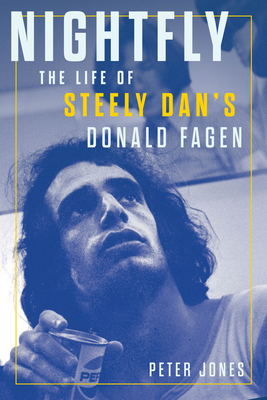
By picking Donald Fagen as the subject of a biography, Peter Jones certainly didn’t make things easy on himself.

The Steely Dan co-founder has long been wary of the press and gave relatively few interviews during the band’s prime. And when he did deem to do so, sometimes answered in riddles (albeit pretty humorous ones). Even his own memoir, Eminent Hipsters, is less revealing than even Bob Dylan’s Chronicles, with much of it is carping in his trademark curmudgeonly voice.

But despite not having the participation of his subject, Jones The Nightfly: The Life of Steely Dan’s Donald Fagen (368 pp., $30, Chicago Review Press) is an insightful, detailed, heavily researched, and wonderfully well-written tome. He adds much for fans of the man, the Dan and the body of work created in various formations. More importantly, Jones gets as close as possible to the inner workings and thoughts of the inscrutable Fagen as possible.

Fagen meets musical soul mate Walter Becker while both were students at Bard College (the subject of “My Old School”) in the late ‘60s. Social outcasts who shared a love for black humor, science fiction and jazz, they bonded immediately.

And after scuffling around for years as songwriters-and-musicians-for-hire and low impact projects, they launched Steely Dan as a group. But it was a “group”—and always would be—only in the sense of an Orwellian “all animals are equal, but some animals are more equal than others” way. There was never any doubt which co-captains ran the very tight ship.

Their lyrics were alternately described as ironic, cynical, decadent, lustful, sarcastic, sardonic, perverted, bitter and satirical. And populated by characters with names like Charlie Freak, Dr. Wu, Hoops McCann, Mr. LaPage, Kid Charlemagne, Peg and Josie. 

All of whom had adventures under the exacting and near-perfection musical accompaniment with changing tempos under a sometimes disarmingly placid surface. In the 1970s, no one sounded like Steely Dan. Especially in how the group would fuse jazz chords, melodics, and structure into traditional rock, even using the skills of some of that genre’s leading lights.

Any bio of Donald Fagen, of course, is also going to be a de facto bio on Steely Dan. And Jones does an insightful job of both amplifying the Dan stories which have appeared in previous books and interviews as well as uncover new tales.

Bandmate Walter Becker—amazingly, even more “mysterious” than Fagen, and having many of his own issues—especially with drugs and romantic relationships—is practically a supporting player as even the pair themselves have difficulty elaborating on their working partnership and who-does-what.

Jones charts Fagen’s early shyness onstage and hesitancy to take the burden on lead vocals (basically the reason David Palmer was hired for the 1972 debut and subsequent tour) and his hatred of life on the road. The latter lead Steely Dan to get off the road permanently and break up “the band” which graced Can’t Buy a Thrill, Countdown to Ecstasy and Pretzel Logic.

No matter—this band was not a democracy. And Becker and Fagen’s relentless (some would say near-psychotic) quest for sonic perfection in the studio meant that Denny Dias, Jim Hodder, and Jeff “Skunk” Baxter were sometimes used sparingly on the final product that record buyer’s took home. After that, Becker and Fagen were more than happy to cycle through sessions players for the rest of their recorded output, including two latter “reunion” records. Lots of session players.

“Torturing guitarists (and drummers) were the duo’s default modus operandi,” Jones writes. And how. It was not uncommon for Becker and Fagen to have a guitarist come in and record a solo dozens of times, only to find out over the next weeks and months they’d brought in many others to do the same.

The final vinyl would invariably end up being a pastiche to the point that positively identifying players and sessions has become something of a Steely Dan Fan Parlor Game, spread out in the pages of thewell-regarded fanzine Metal Leg and various websites. Though Elliot Randall’s famous solo for “Reelin’ in the Years” seems to be the complete second and final take—with the first one supposedly even better, but not recorded.

The wasn’t the only time that the Tale of the Tape haunted the band. Enter the legendary “The Second Arrangement.” Slated to be the first single released from 1980’s Gaucho, an engineer accidentally erased most of the master tape.

Floored, Becker and Fagen and their players attempted to re-record it over and over, but it never matched their opinion of the original, and they abandoned it altogether. The “lost” track has never been officially released and remains something of a White Whale for Dan enthusiasts and bootleg collectors who had to make due with a pastiche (though Jones mentions a version was played in a latter day concert).

And when human imperfections gnawed at them, there was “Wendel.” An early version of a computer sampler/synthesizer that cost $150,000 (about $612K today), it could take a single drum beat and repeat it to absolute perfection in timing and volume to Becker and Fagen’s exacting desires. The contraption was so much a key part of Gaucho (which itself utilized 42 musicians and 11 engineers recording in six studios), that Wendel was awarded his own platinum record.

Perhaps Jones’ best service to Fagen fans is his detailing of the post-Gaucho years as Donald Fagen puts out a series of solo records, makes guest appearances with other artists, plays R&B shows, and generally tells anyone who will listen that a Steely Dan reunion will never, ever happen.

Well, Fagen has something in common with how Don Henley felt about his group the Eagles (the two band were frenemies and namechecked each other in songs – i.e. “stab it with their steely knives” in “Hotel California”).

Because the duo reunited for a pair of new albums, many tours, and a live album, making Fagen something of a now-surprisingly enthusiastic road dog. He continues to tour under the Steely Dan moniker even after Becker’s 2017 death (and various lawsuits with Becker estate) and was in Houston recently where the Houston Press’s Tom Richards cover the show.

One thing Jones does mention is the duo’s shameful treatment of their loyal and long-serving engineer, Roger Nichols. He—along with producer Gary Katz—worked on most of Steely Dan’s records and likely had a more prominent-than-most-would-think hand in crafting the band’s sound (not to mention putting up with Becker and Fagen’s unceasing and exacting demands).

Promised a bumped-up royalty amount for several latter albums, Jones writes that Becker and Fagen reneged and found every possible way to avoid paying Nichols what his contract said he was owed. He was also fired without warning or reason after working with them for nearly three decades. When Nichols died of cancer in 2011, neither man attended the service or even sent flowers or condolences.

In The Nightfly, Peter Jones has done a great service to fans and admirers Steely Dan and Donald Fagen. And it’s a thrill that they can buy.

This review originally appeared at The Houston Press.

Posted in Books, Steely Dan | Tagged , , , | 1 Comment

Toto’s David Paich is a Boy with His Toys

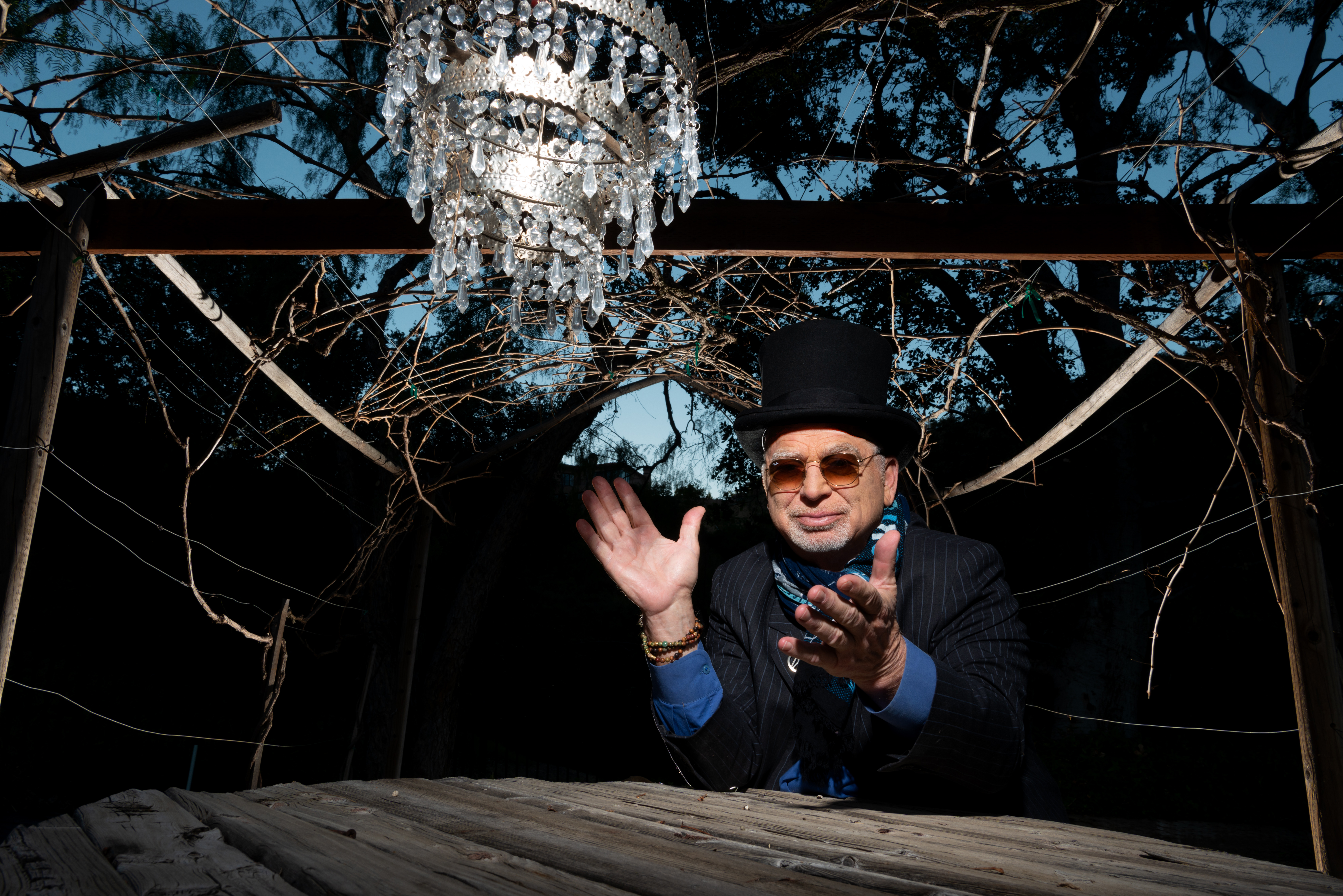
David Paich applauding, perhaps because another royalty check for “Africa” has come in? Photo © by Alessandro Solca.

In this new era of Zoom journalism interviews, it’s sometimes jarring to be instantly face-to-face (albeit via computer) with a live musician who for decades you’ve only seen on stage, in videos, or photographs.

But there’s Toto’s co-founding singer/keyboardist/songwriter David Paich popping up on screen to tell me what he’s got playing over his stereo in the background.

“Can you hear that? It’s for you!” he says excitedly. I listen but can’t place the tune.

“It’s ‘Houston, I’m Comin’ to See You’ by Glen Campbell! My first hit—well, small hit—record I wrote from 1974. I was still a teenager!”

The intro makes for a nice beginning bookend for this chat’s reason, to talk about the 68-year-old Paich’s new (and surprisingly) first-ever solo record, Forgotten Toys (The Players Club/Mascot Label Group). And as the title indicates, these were songs he’d worked on in various stages over the years, but for whatever reasons had just never completed.

“That process started when [Toto bandmates] Joseph Williams and Steve Lukather started working on their solo records before the pandemic hit. Then it got more focused for them when it did hit. They urged me to do the same because I’ve been hemming and hawing about it for years,” Paich says.

“I’ve always got plenty of satisfaction from Toto records, but I had pieces of all these unfinished songs. So, I dusted them off and put them together like a puzzle. And it was a fun satisfying process, especially because I have a home studio. And you can connect with other musicians through Zoom and Facetime.”

The EP contains eight songs which cover a variety of genres and topics from rock (“Spirit of the Moonrise,” “Queen Charade”) to romance (“willibelongtoyou,” “All the Tears that Shine,” sung by Michael Sherwood) to nostalgic balladry (“First Time”) and even jazz (“Lucy”).

The movie-visual quality “Spirit of the Moonrise” literally came to Paich in a dream. “I had a small, short dream about a girl on a painted horse. I always think cinematically when I’m writing. I wanted it to be almost Western sounding,” he says. “It just evolved the way that it did. Joseph helped me write it, Michael McDonald sings at the end, and Lukather plays one of the best solos I’ve ever heard from him!”

“First Time” is a wistful message from the perspective of a father seeing his daughter grow up and fall in love for the first time. It’s a tribute to his now 33-year-old daughter Elizabeth. After he played it for her—and unbeknownst to him—she went into the studio with Paich’s engineer and added some of her own vocals to it.

“She didn’t tell me she did that and it traumatized me at first, like ‘What are you doing to my song?’” Paich says. “But then I heard it, and it filled my eyes with tears. In fact, after this interview, she and I are recording some backing vocals for a Spanish version that’s already been done!”

Finally, the instrumental “Lucy” is a nod to the legacy of his father, jazz pianist/composer/arranger/producer Marty Paich.

“I grew up with jazz. And my father worked with Mel Tormé, Ray Charles, Ella Fitzgerald, Lena Horne and Peggy Lee. He wrote arrangements for Duke Ellington, who I met when I was eight years old!” Paich offers. The song includes some singing and scatting from Tormé’s son James, as well as piano from Mike Lang, who died earlier this month.

David Paich with a few of his Golden Friends. Photo © by Alessandro Solca.

Liner note readers will be mightily impressed by some of Paich’s guests on this record, which in addition to Toto bandmates and McDonald includes former Eagle Don Felder, Ray Parker Jr., Brian Eno, Elton John guitarist Davey Johnstone, Greg Bissonette, and Steve Jordan. So that begs the question: Did Paich just flip open his Rolodex (or possibly phonebook spreadsheet) and just send out Musician Bat Signal?

“A lot of them live near me, and we’ve all been friends for years. So anytime anybody picks up the phone to anybody [for a session], we’re happy to do it,” Paich says. “It’s great to have friends who are at that level of quality and professional musicianship. I’m blessed to have that.”

Outside of Toto, the list of performers that David Paich has written and arranged for or recorded with is deep. A partial roll call includes Miles Davis, Aretha Franklin, Stevie Nicks, Rod Stewart, Tina Turner, Barbra Streisand, Steely Dan, P!NK, the Doobie Brothers and even Mötley Crüe.

But his two best-known contributions are probably as a player/writer on Boz Scaggs’ 1976 Silk Degrees (Paich co-wrote hits “Lido Shuffle” and “Lowdown”), and playing/arranging on Michael Jackson’s epochal 1984 release Thriller.

“[Toto drummer] Jeff Porcaro introduced me to Boz Scaggs. We were working on Les Dudek’s album. Boz was looking for a keyboardist to co-write an album with, and I just jumped on it,” he says.

“That was my real coming of age album. It happened very fast. We went to my dad’s house and at my piano these songs just came out. We didn’t demo them at all. We weren’t thinking about hit records, we just wanted to make great music. And that became a watershed album. And Boz is very generous talking about me in interviews.”

Paich says the sessions also gave him, Porcaro, and bass player David Hungate part of the impetus to start Toto. As for his memories of the King of Pop, it’s about quality.

“Michael was such a perfectionist. He really got under a microscope and fine-tuned things,” Paich says. “Stereos and headphones got better, and people were more aware of hi-fidelity on records. Most artists leave thinking about that to the producer or musicians. Michael didn’t.”

Toto, of course, has enjoyed a string of big hits in the ‘70s and ‘80s (“Hold the Line,” “Rosanna,” “99,” “I Won’t Hold You Back”). But none has had as much interest and resurgence in recent years as “Africa,” which Paich co-wrote sings the (non-chorus) lead on.

Weezer released a 2018 hit cover version, it’s been a staple of essential Yacht Rock playlists and the soundtrack to a gazillion TikTok and travel videos.

“Thanks to Weezer, it just gave Toto a shot in the arm. I’m very grateful to them and it’s very flattering,” he says. “They did a great job with it, and it gave us a big boost with a younger audience.” Toto returned the favor by covering Weezer’s “Hash Pipe.”

Currently, while Paich is still very much involved with writing and playing new Toto music in the studio, he’s no longer a permanent touring member of the group. He prefers (like Mick Jones in Foreigner and Chuck Panozzo in Styx) to pop up onstage when and where his health and time schedule permits.

“I still love playing with the band. Some gigs are just super. We played Staples Center – I think it’s Crypto-something right now [note: It’s the Crypto.com Arena]. I don’t do the whole show, usually just the second half. But it’s exhilarating and exciting out there,” he offers.

“We opened for Journey this past year, but people were already seated when Toto came out. And all the houses and arenas were packed. I think we’re doing it again next year.” The band (sans Paich) is currently overseas on the Dogz of Oz tour.

Finally, another thing an interviewer can see in a Zoom video talk that one can’t over the phone is the subject’s surroundings. Hung on the wall behind Paich are the complete contents of the Wizard of Oz-themed game of Monopoly, artfully arranged in a frame. Paich explains.

“I am huge Wizard of Oz fan, as the name Toto implies!” he laughs. “The hero of that movie was a tiny dog. And Toto [the band] was always the little dog that could!

This interview originally appeared in The Houston Press

Posted in Toto | Tagged , , | Leave a comment

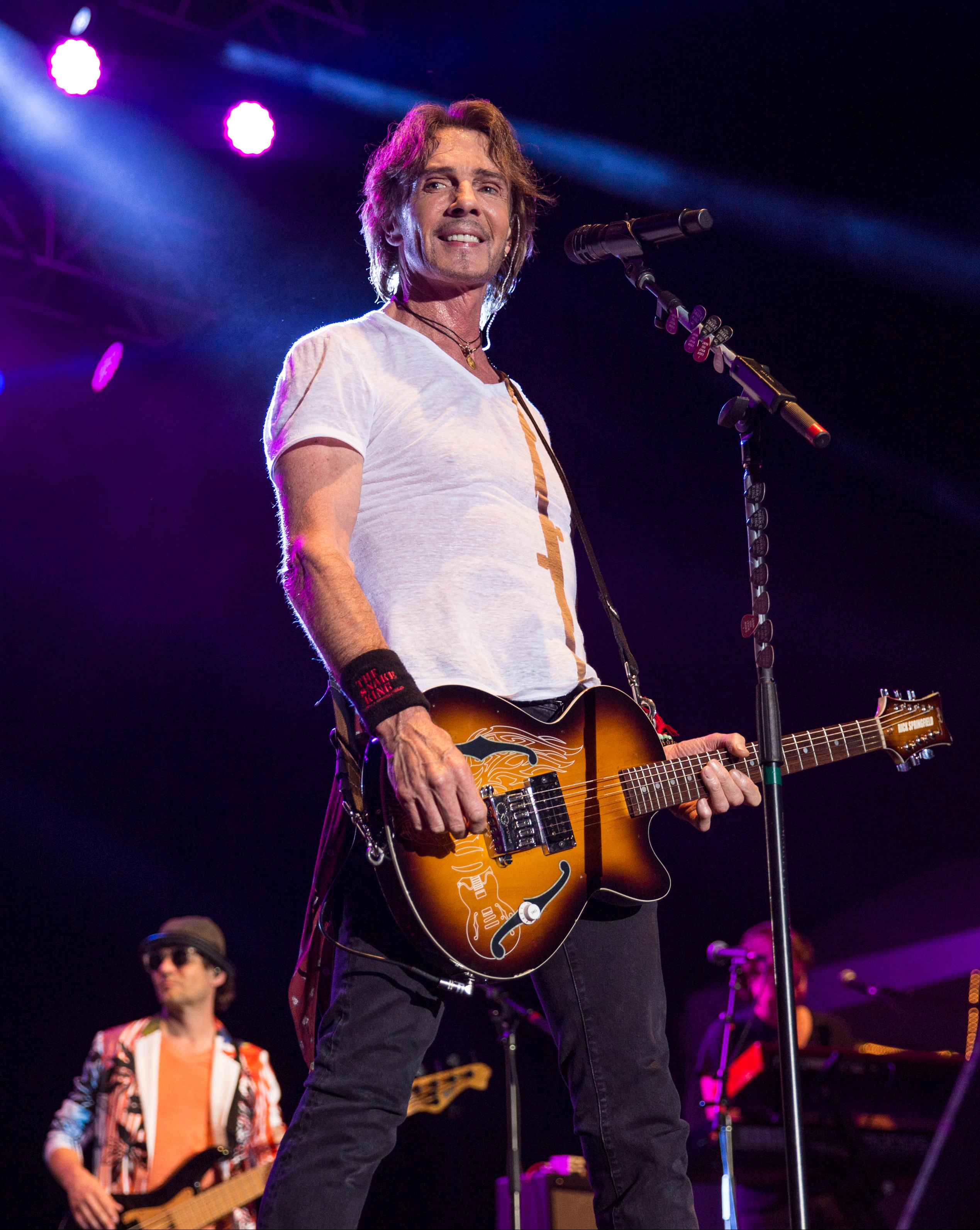
Rick Springfield Leads Tour of “Wall to Wall Hits”

Photo by Jay Gilbert

Note: This interview was done for the Rick Springfield-Men at Work-John Waite tour from 2022.

It’s a myth-busting notion that, outside of the 90 minutes or so they’re onstage performing, the reality of a successful touring rock musician is often blur of airports and airplanes, car rides, hotels and room service menus, and soundchecks.

And sometimes, interviews. As when Rick Springfield calls from his hotel room in Raleigh, North Carolina. It’s to chat in between packing his suitcase and then heading out to the airport to catch a flight to the next date of a summer tour he’s headlining with era contemporaries Men at Work and John Waite.

Photo by Jay Gilbert

“The package thing seems to be the future of touring because it’s hard to get out to see a show now. It’s not like when you were 16 or 17 and could just take off,” Springfield says. “Now, you’ve got to hire a babysitter, and there’s dinner, and exorbitantly-priced T-shirts. And then the tickets! It’s a big deal, so I wanted to do a worthwhile show for people to come out to.”

Springfield says that between the three acts, the audience can expect an evening of “wall to wall hits.” And indeed, Rick Springfield has more in his sonic arsenal than some may immediately recall: “I’ve Done Everything for You,” “Don’t Talk to Strangers,” “I Get Excited,” “Affair of the Heart,” “Human Touch,” “Love Somebody,” “What Kind of Fool Am I,” and “Love is Alright Tonite.”

First among them, of course, is the #1 hit “Jessie’s Girl” which—note for trivia buffs—was originally titled “Randy’s Girl” until Springfield changed it to a moniker that would flow more easily off his tongue.

But though its upbeat tempo pegs it as a joyous dance track in the ‘80s memory bank, when looked at with just a lyric sheet, it’s about desperation, yearning, and a lust hot enough to bust up a deep friendship. And it’s based on a true part of Springfield’s life.

“It’s a very dark song, because I didn’t get what I wanted,” he says. “Most of my songs come from dark places. ‘Don’t Talk to Strangers’ is about sexual paranoia. When you’re not feeling great, you look inward. And that’s where the inspiration for great songs come from.”

The current tour also serves as an unofficial (with a COVID-related mathematical allowance) 40th anniversary celebration of Springfield’s breakthough album, 1981’s Working Class Dog, which appeared full decade after his initial solo release. Springfield and his current band recently recorded and released a new live version of the album from front to back. He also tinkered with his catalog in 2019’s rock-meets-classical Orchestrating My Life.

“I like the original versions, and I’m not big for making new ones from what people are familiar with. I originally wrote these songs just to play them live at L.A. clubs because I didn’t have a record deal at the time,” he offers. “They’re short songs with strong hooks, and I have a killer band now today that nailed it.”

The entire project was recorded with no overdubs not on a soundstage or in a recording studio, but in Springfield’s own living room with the players and singers arranged in a semi-circle around his rugs, furniture and knick-knacks.

“I wanted to do something different that fans might find interesting. Kind of take a look around my house!” he laughs.

“It was sort of at the end of the first wave of COVID and we hadn’t seen each other in about a year and a half. And I realized that those songs on that record were very punk-infused. I was listening to a lot of Elvis Costello and the Police at the time. That was forgotten during the whole hype of the time of being a pop guy.”

Springfield says that his band is “very much family” and Barbara, his wife since 1984, even cooked for everyone. “It was a really great party!” he recalls.

But as he detailed in 2010’s Late Late at Night, his extremely raw and honest autobiography, things haven’t always been so happy with him. In it, Springfield writes extensively about his lifelong depression, fear of failure and sexual addictions—often extramarital. He even invents a third-person character of “Mr. D” to characterize himself at his lowest.

It’s an issue that he says he struggles with to this day, emotionally breaking down and in tears about it without any reservations as recently as in a 2020 TV interview with Australian host Craig Bennett. It’s where he also revealed that he tried to pull the plug on the whole thing just before it was set to be published.

“I wrote it without a ghostwriter, and it was to fun to revisit a lot of it—even a lot of the dark places—from a safer place. But once I sent it off, I thought about all the repercussions from my wife, all the sex stuff,” he says.

“But she had friends read it and they told her it was basically a love letter to her, even with all my faults. But no one focused on the sex, they focused on the depression! And that is the real story behind the success story. I didn’t realize it at the time.”

Springfield adds that his friend and fellow hitmaking musician Richard Marx (they sometimes play together as “The Two Dicks”) called him up after it came out and told him “You’re either insane or the fucking greatest guy I’ve ever known.”

Rick Springfield also has an entirely other career as an actor, with credits ranging way back in the day on TV shows like The Hardy Boys/Nancy Drew Mysteries, Wonder Woman, and The Six Million Dollar Man. That, along with an involvement with a children’s cartoon and some of his earlier recordings, made him a burgeoning teen idol.

“I was kind of taken by surprise by the whole teen thing. We didn’t have teen magazines in Australia, so when I came over here, I was doing interviews with what I thought were music magazines,” he says. “It turned out that was the least of the stories, and instead there would be headlines like ‘Is Rick Too Tall for Love?’

Springfield says he couldn’t even go to Disneyland because he’d get recognized by all the kids. Eventually, a woman friend told him that career route was a “dead end.” He fired his management team, laid low, and woodshedded on what would become Working Class Dog.

He starred in the very loosely-autobiographical 1984 film Hard to Hold but is still most widely known as Dr. Noah Drake on the soap opera General Hospital over several stints, some decades apart.

His more current thespian activities include parts on TV in Supernatural and American Horror Story, and films like Ricki and the Flash (in which he played a member of Meryl Streep’s title character’s band and taught the actress some musician tips.

He says that he hopes to focus more on this part of his career after the tour is over. But then he’s also got a new studio album already in the can and ready to come out. He also currently hosts a weekly show on SiriusXM Radio, “Working Class DJ.”

The Father Time-defying 72-year-old Springfield also has one more venture up his sleeve. Or rather, in a glass in his hand. He’s partnered with rocker Sammy Hagar (who wrote his hit “I’ve Done Everything for You”) in Beach Bar Rum. Hagar was an early pioneer in this area, having massive success with his Cabo Wabo and Santo Fino Tequilas, along with the Beach Bar brand.

“I’ve known him for a long time and was looking to get in the alcohol business. And I love rum. He called and said instead of being a competitor, why didn’t I come on board?” Springfield recalls. “He comes off as party and rock and roll, but he’s actually a great and very smart entrepreneur.”

This interview originally appeared at The Houston Press

Posted in Rick Springfield | Leave a comment

REO Speedwagon’s Bruce Hall Talks Licks and Links

Photo by Randee St. Nicholas REO Speedwagon today: Kevin Cronin, Neal Doughty, Bryan Hitt, Bruce Hall and Dave Amato.

Note: This interview was done in conjunction with the band’s summer 2022 tour.

When we recently spoke with Ricky Phillips of Styx, the bass player told us that he and his fellow four-string thumpers and the current Live and Unzoomed classic rock package tour (Bruce Hall of REO Speedwagon and Ken “Spider’ Sinnaeve of Loverboy) often have a “bass hang” at group dinners.

The next day, Hall calls from a stop on the tour, and we ask him to elaborate.

“Oh, you talked to Little Ricky!” Hall laughs. “He and I also like to play golf together, so we talk about bass stuff and golf stuff. But it’s not like we’re off in a corner by ourselves. We just gravitate that way!”

However, the pair have not had much of a chance to hit buckets of balls this summer, as the band’s schedules don’t match up. After a show, the REO Speedwagon crew tends to stay in the town they just played for a bit, while the Styx boys immediately hit the road to the next town. So, Phillips has been mostly hunting for birdies and eagles with a new greens partner—Loverboy vocalist Mike Reno.

When told that the Woodlands—where the Live and Unzoomed tour will stop—boasts a large number of golf courses, Hall’s conversation turns to a more practical matter.

“What’s the temperature like in Houston? I tried to play 13 holes yesterday and couldn’t finish—it was just too hot!”

It’s also the day after Carlos Santana unfortunately fell down on stage due to heat exhaustion and dehydration during his band’s tour with Earth, Wind and Fire (a July Woodlands show is among the dates that have been postponed while Santana recovers).

“We don’t need Carlos going down! Promoters like those big outdoor places in the summer. I like playing them, but it’s too sweaty up there! And I’m sure the people in the crowd are suffering,” Hall adds. Still, he has already seen the appetite that fans have for live music and familiar tunes in an increasingly post-worst-of-COVID world.

“This year people are just wanting to get out of the house. We’ve been sold out every night. They’re so sick and tired of being stuck indoors. They just want to get out and rock. But I do wish we played more indoors in the summertime!” he says.

And while Kevin Cronin (singer/rhythm guitarist) is REO Speedwagon’s primary voice, Hall himself has taken the lead on several tunes in the band’s catalog. That includes the more-than-appropriate “Back on the Road Again,” which is part of the summer setlist. The rest of the current lineup includes Neal Doughty (keyboards), Dave Amato (lead guitar) and Bryan Hitt (drums).

Bruce Hall, Kevin Cronin and Dave Amato onstage in 2011. Photo by Larry Philpot for http://www.soundstagephotography.com/Wiki Commons.

Of the three bands on the tour, Styx and REO Speedwagon have an especially long personal and professional history. Though both groups admit they will vie to be the answer to thousands of driving-home-from-the-show car conversations of “Who do you think was the best band of the night?” Styx and REO have alternated the closing slot on this tour.

“Sure, we think of that, and that’s a healthy thing. We all help each other to try and play our best shows. Nobody’s messing around out there, that’s for sure,” Hall offers.

“But there’s a big difference between REO and Styx. They’re fun to watch, Lawrence especially. He’s all over the place and spinning his keyboard and he’s a real showman. Kevin’s a great showman too and Dave and I run around. But we work more as a unit, and their songs are different. That’s why this package works. We’re kind of similar, but different.”

REO Speedwagon’s roots stretch all the way back to 1967 when the band was formed in Champaign, Illinois. Of the current lineup, Hall, Cronin, and Doughty were there for the group’s commercial heyday of the late ‘70s/early ‘80s with a string of hits like “Roll with the Changes,” “Keep on Loving You,” “Take It on the Run,” “Don’t Let Him Go,” “Can’t Fight This Feeling,” “Keep Pushin’,” “Time for Me to Fly” and “Ridin’ the Storm Out.”

In fact, during 1981, Styx and REO would battle back and forth for album and single chart positions with their Paradise Theater and Hi Infidelity albums respectively.

“With [Styx’s]Tommy, JY and Chuck, and me, Kevin, and Neal, we were around during the times of all the big records and competing for the top spots in the Billboard chart. So, we’ve lived a different live than the others guys in the [current] band,” Hall says. “And the competition wasn’t just Styx, it was all the other rock bands in the country.”

As a bass player, Bruce Hall is all too aware that it’s his instrument that often gets “lost” in a sound mix or is more difficulty to discern for contribution to an overall song, especially live. Though he “fights the fight” to get the bottom end heard.

In terms of releasing new music, REO Speedwagon seems to be in the center of their tourmates’ thoughts. While Styx continues to put out new records (including a full length and an EP last year), Loverboy is more reticent, with Mike Reno believing only a small group of hardcore fans would snap something like that up. They instead release the occasional new song on their website.

“We write continuously. You don’t just stop doing that, you fall in love with the craft and the art of putting together music. And we have a recording studio in Agora Hills we go to from time to time that we’ve been at,” Hall says. “We just don’t know what to do with the songs. We don’t want to just throw something we love out there in the wind and let it blow away. I’m sure a lot of bands are like that.”

Hall correctly nots that current radio—both terrestrial and satellite—never play anything new by classic rock bands. “They’ll play the old stuff all day long,” he says. “Maybe that needs to be a new radio station that just plays new music by classic rock bands. Or at least a portion of the day. It’s such a different environment now.”

Finally, asked about any memories or connections to Houston, Hall says that he had an aunt and uncle living here (his aunt has since passed away) and one of his best friends growing up relocated to the Bayou City. Maybe they’ll get together this month for a round of golf in the Woodlands. If it’s not too hot, that is.

“If it’s 100 degrees,” Hall laughs. “I’m not going out anywhere!”

Given how the Houston summer has gone so far, though, it looks like Hall won’t even have to unpack his golf clubs from the tour bus.

This article originally appeared at HoustonPress.com
Posted in REO Speedwagon | Tagged , , | Leave a comment

Stephen Bishop’s Separate Lives Come Together in Autobiography

Stephen Bishop today. Photo by Liz Kamlet for Stephen Bishop Enterprises.

In those long-ago pre-online days before TikTok, YouTube, or Bandcamp, if an aspiring songwriter wanted to get their work out there for more established artists to possibly record, he or she would cut a demo tape that would hopefully be passed along. Though it might just as easily get tossed in a garbage can.

Braver souls would lug their acoustic guitars to various record company or management offices and put on a mini-concert to a guy in a suit whose thoughts could just as easily drift to what they’re having for lunch that day as the eager musician’s words and melodies unspooling before them.

An even more select group might get a chance to perform for a top name artist in the superstar’s own home. And that’s how Stephen Bishop found himself in the living room of none other than Barbra Streisand.

“I went over to her house, and she came out on a balcony inside her home and said: ‘Oh I thought the radio was on, was that you Stephen?’” Bishop—who would also notch living rooms gigs for Diana Ross and Michelle Phillips—says. “I was star struck, she’s an incredible artist, and I still love her music today.”

Streisand would eventually record a Bishop song. As would Art Garfunkel, Dionne Warwick, Eric Clapton (who became and still is a close friend), Gene Simmons, Kenny Loggins, Sting and even Luciano Pavarotti.

But it’s his own career and string of hits for which he’s best known for, including “Save it For a Rainy Day,” “One More Night,” “Everybody Needs Love,” “Looking for the Right One,” and a string of movie themes: “Animal House,” “It Might Be You” (from Tootsie, which he sang but didn’t write), and “Separate Lives” (from White Nights which he wrote, but Phil Collins and Marilyn Martin had a giant hit with).

And then there’s “On and On.” His signature tune would reach #11 on the Billboard Top 100 in 1977. Bishop himself never thought it would be a hit, but then knew he had one when he overheard his mailman whistling the melody.

“Also, just after the song came out, I was eating at a Japanese restaurant and some guy was in the phone booth singing it to the person on the other line!” Bishop says. “I thought it was a setup, but it wasn’t!”

Stephen Bishop tells the story of his life, his music, and his encounters with a A list of musicians, film stars, and artists in his new autobiography, On and Off ($19.95, 257 pp., Windsong Entertainment).

Eschewing a traditional bio structure, Bishop’s narrative unfolds in 80 vignettes, along with some longer chapters, musical analysis, extensive photos, lists and lyrics. He says the idea came from his wife, Liz Kamlet, after she read a book on Bob Dylan that was half a standard autobiography and the other half with The Bard of Hibbing answering questions and offering short stories.

“I really liked the idea, as it made the book easier and more fun for readers,” Bishop says. He also discusses how it was almost a given he’d follow the career trajectory of a solo artist rather than as a member of a group or even fronting his own regular players.

“I was in a band called The Weeds in high school. We never had any major success, but it did teach me how to collaborate with others and be a better guitar player,” he continues. “My songs don’t exactly lend themselves to being in a band. But I do tell people that I was the sixth member of The Dave Clark Five!”

Bishop’s wry sense of humor has also helped him befriend plenty of comic actors, directors and comedians including John Belushi, John Landis, Penny Marshall and Carrie Fisher. His best-known onscreen appearance was as the all-black clad “Charming Guitar Player” (his actual credit) in 1978’s Animal House.

That’s him on the stairs at the fraternity party earnestly serenading a group of adoring college girls in togas with “I gave my love a cherry that had no stone/I gave my love a chicken that had no bone.” That is, until Belushi’s drunken Bluto Blutarsky character, his ears offended, rips the acoustic six-string from Charming Guitar Player’s hands and smashes it against the wall before offering a simple “Sorry.”

Bishop says the scene was shot in two takes, and a pair of instruments gave their lives for the cause (he had the cast sign the splintered second one). But Bishop still had to change his look to fit the character and the time period. And that meant shaving his beard down to a perfectly cheesy mustache.

“I just did it on a whim. I wanted to have a different look for the movie,” he says. “My hair was also really long back then, and they had to pin it back. This was just before I went on tour with Linda Ronstadt.”

A couple of years later, Animal House director John Landis would also give Bishop a cameo role in The Blues Brothers, this time as “Charming State Trooper” who ends up in a flipped patrol car during one of the film’s several chase scenes.

Stephen Bishop was also noticeable in an all-white suit among the scores and scores of celebrities in a chorus singing the title song at the end of the ill-fated Peter Frampton/Bee Gees vehicle Sgt. Pepper’s Lonely Hearts Club Band. Where he saved one legendary performer from serious injury, and perhaps even her life.

“I do mention in the book how I saved Carol Channing after the final scene was filmed. She slipped on the rafters, and I grabbed her arm. She would have fallen pretty far,” he says. “She was a very talented lady and thanked me. So, I am glad I was in the film—it saved her life! I also met [blues guitarist] Elvin Bishop and  asked him ‘Are we related?’ He said, ‘I don’t think so.’ And we both laughed.”

Today, in addition to seeing to the release of On and Off and recording the audio version, Stephen Bishop has new music coming out soon with an album he was working on just prior to the pandemic. He hopes to have the first single out this summer, a tune he originally wrote in 1974. And he’s also deep in the throes of making a documentary of his life and career, slated for a 2023 release.

“My career has been a wild journey, and I am grateful to all of my fans and people who believed in me. The documentary has got a lot of interviews with my friends and musical influences. Plus, photos and videos that no one has seen before,” he says. “It will be fun from start to finish. And the working title is Life’s A Bish.”

For more on Stephen Bishop and to purchase On and Off, visit StephenBishop.com

This article originally appeared at HoustonPress.com
Posted in Books, Stephen Bishop | Leave a comment

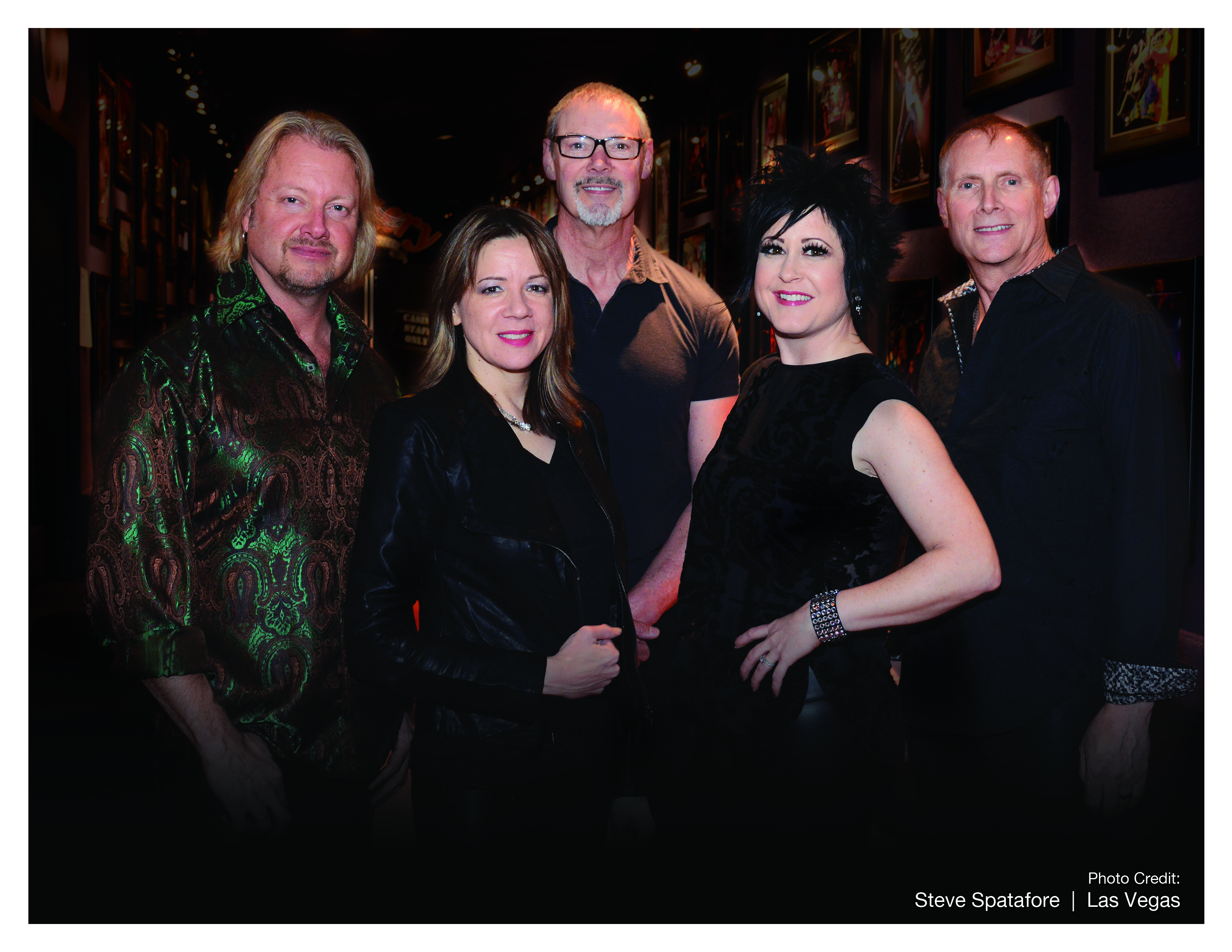
Heart by Heart: Of Magic Men and Barracudas

Heart by Heart: Chad Quist, Lizzy Daymont, Michael Derosier, Somar Macek and Steve Fossen. Photo by Steve Spatafore/Provided by Lappen Enterprises.

Asked to name any members of the band Heart, most casual listeners would be able to mentally cough up sisters Ann and Nancy Wilson. After all, the vocalist and guitarist/vocalist have been the “faces” and most photographed of the group since their 1975 debut Dreamboat Annie, as well as being the main creative songwriting forces.

Steve Fossen today. Photo from Heart by Heart LLC.

Often overlooked is that there was a band who played on all those epochal classic rock Heart tracks like “Crazy on You,” “Barracuda,” “Heartless,” “Magic Man,” “Straight On,” “Even it Up,” “Kick It Out,” and the gentle “Dog & Butterfly.” The rhythm section on all of those cuts was Steve Fossen (bass) and Michael Derosier (drums).

Both men now lead Heart by Heart, which since 2012 have toured playing the band’s catalog including hits, deep cuts, and some material recorded since both parted ways with the group in 1982.

The rest of the lineup includes lead vocalist Somar Macek, guitarist/keyboardist Lizzy Daymont and guitarist Chad Quist. They will make a return appearance to Miller Outdoor Theatre on April 30.

“I love the Miller, it’s a great building and just walking around. It seemed like a nice, mellow area,” Derosier says via Zoom with Fossen and Macek on a sofa.

“Yeah, and it’s by a zoo! That’s cool,” Fossen adds. “And it’s by a lot of medical centers nearby. People need medical attention.”

“It’s good to have them close by. You know, in case something happens to us!” Derosier laughs.

Heart by Heart started in when Fossen, Derosier, and fellow Heart founding member Roger Fisher were playing a party doing Heart songs and were looking for a vocalist. They found Macek, who happened to be the singer for another Heart cover band.

Fossen and Macek became a couple in real-life the next year (and are now married) and started to put a more formal band together with Derosier on board, and Heart by Heart debuted in 2012. “We have some, uh, lively banter about being married onstage. Sort of like George Burns and Gracie Allen!” Fossen laughs. “I’m sure no one remembers that but me since I’m 72 years old!” (Derosier is 70).

Michael Derosier today. Photo from Heart by Heart LLC.

One thing they agreed on: the songs would be played in the same arrangements, keys and format as the hit records. They were not looking to alter people’s sonic memories as the current Heart sometimes does.

Like the Doobie Brothers, Heart had two distinctive sounds in their commercial heyday. The early, rawer material mentioned earlier is continuously spun on classic rock radio. The band later moved into more synth-heavy and polished ‘80s songs (“What About Love?” “Never,” “Alone,” “These Dreams”),” all accompanied by special effects-laden videos that showcased the Wilson sisters’ sex appeal while the band wore elaborate stage costumes.

“We’re really happy that classic rock radio keeps our music alive. And the most popular songs today are those [earlier] ones,” Fossen says.

“We do all the songs that we think people want to hear, and then our favorite deeper cuts like ‘Devil Delight,’ ‘Mistral Wind,’ and ‘Lighter Touch,’” Derosier says. Fossen adds that they keep an eye on the royalty statements they receive to see which songs are the most popular in terms of sales and downloads today, but they do focus on the classic 1975-82 era they were in the band for.

Both Fossen and Derosier were part of Heart’s original lineup, and Fossen goes back even further to the 1967 founding of The Army (with Roger Fisher), which morphed into Hocus Pocus, then White Heart, and finally Heart. He predates Ann Wilson’s joining in 1971, and then Nancy a couple of years later.

Classic Heart: (back) Roger Fisher, Howard Leese, Michael Derosier, Steve Fossen; (front) Nancy and Ann Wilson. 1970s Mushroom Records Publicity Photo.

Heart By Heart is, in effect, a Heart tribute band that features two former members. But the five musicians onstage definitely put their own spin and stamp on the material.

“My favorite song to do is ‘Magic Man,’ but I also like ‘Devil Delight’ because you have to have an attitude to play that,” Macek says. “It would be very difficult to go onstage each night and thinking I have to be exactly like Ann Wilson. It’s not like the Heart tribute bands where they go on in the [‘80s-era] costumes and have to [mimic] the band. But I hope it’s pretty close to what people originally heard when they heard these songs.”

“Most [classic rock] bands nowadays have a fraction of their original lineup. That’s just the way it is for different reasons. But if you don’t represent the songs, you’re not giving people that nostalgia they want,” Derosier says. “You want your audience to go away satisfied.”

Heart by Heart onstage: Macek, Daymont, Derosier (back), Fossen and Quist. Photo by Heart by Heart LLC.

Fossen and Derosier are very glad to finally be playing in front of live people again, unlike some of their more, uh, unusual pandemic gigs.

“We’ve done some shows in front of cardboard cut outs of people and their dogs!” Derosier laughs. “It was a virtual, live broadcast thing. I guess the cut outs were there for our benefit. But I mean, you’d throw a guitar pick out there and it would bounce off some guy’s face!”

Fossen says it actually benefitted them psychologically to see smiling faces—even frozen cardboard ones—in the audience. And it was a way for them, like thousands of other bands, to create some revenue.

The pair have had an often fractious relationship with the Wilson sisters since they were voted out of the band in 1982. Both argue that the band’s songwriting was more collaborative than the Wilsons-only credits on the records. And when the original band (the Wilsons, Fossen, Derosier, Fisher, and Howard Leese) were inducted into the Rock and Roll Hall of Fame in 2013, the sextet only played together on “Crazy on You.”

The Wilsons then did an acoustic duet of “Dreamboat Annie” before bringing out their then-current version of band for “Barracuda,” even though the originals had rehearsed it together. That rankled Fossen and Derosier and still does. But as we’ve seen with Rock Hall induction performances like Creedence Clearwater Revival and Blondie, it’s the band’s most recognizable names who hold more sway over production aspects like that.

“It was very surreal and a bit uncomfortable as far as I was concerned, but I was very happy to have my son there with me,” Derosier says. “I was backstage with Dave Grohl and Taylor Hawkins of the Foo Fighters, who were there to induct Rush. We were all talking drums when ‘Barracuda’ started, and it sounded weird. Dave and Taylor said it was kind of slow and dragging!”

Today, even “official” Heart is somewhat in flux. The Wilson sisters have a very public falling out in 2016 over a family matter and put the band on hiatus, though reunited for a brief 2019 tour. Since then, Nancy Wilson has put out a solo record, Ann Wilson has one coming out soon, and a new group called “Nancy Wilson’s Heart” will be opening on dates for Styx soon (the sisters reportedly having a falling out over choice of the band’s backing musicians).

As for playing in Texas, Derosier and Fossen remember when Heart played the Texxas Jam at the Cotton Bowl in Dallas 1979 on a bill that also included Van Halen, Boston and Blue Öyster Cult among the acts (they also played the event the year before).

“All day long it was super, super hot and they were even spraying the crowd with hoses. And then they ran out of drinking water, which made it miserable. So, we were already uncomfortable and then they put the lights on, which made it even hotter,” Fossen says.

“About 2/3rds through our set, Nancy started the chords to ‘Mistral Wind’ and this breeze came through the stadium, and the temperature dropped about ten degrees. The crowds went ‘yeeeah!’ And the wind blew through our hair. When we had hair. Now, it just goes ‘whoosh’!”

“Last time I wondered how we were going to survive playing in Houston outdoors because it was so hot,” Macek offers, bringing it back to 2022. “Then they told us there are these air conditioning fans in the bottom of the [Miller Theatre] stage. And we’re like ‘No way! That’s great!’”

Originally appeared in HoustonPress.com

For more on Heart by Heart, visit HeartbyHeart.com

Posted in Uncategorized | Tagged , , , , , , | Leave a comment

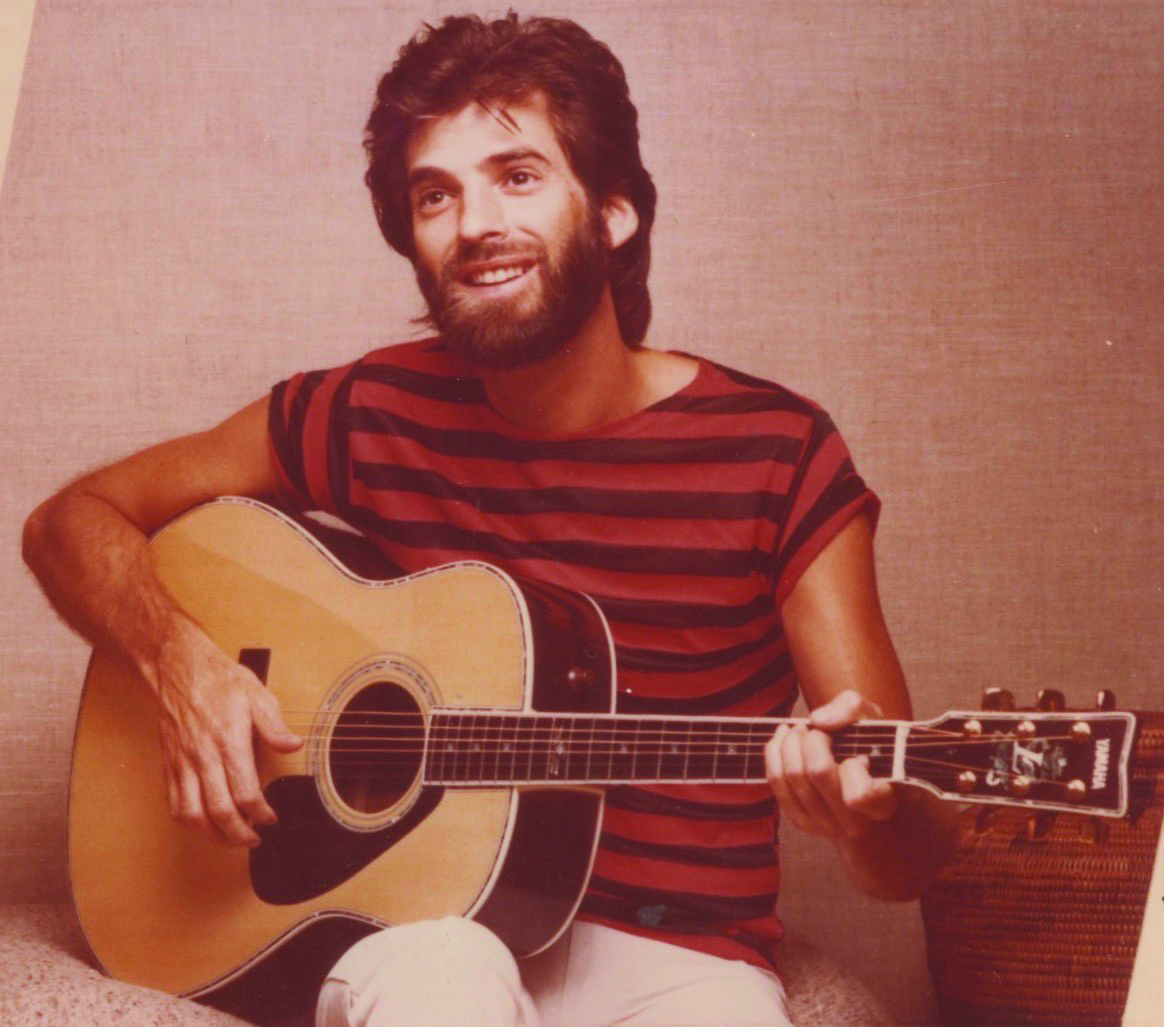
Kenny Loggins is Still Alright

Kenny Loggins looking very Yachty in an early-1980s photo session. Kenny Loggins personal collection.

Tom Cruise and Kenny Loggins are forever intertwined in pop culture by the 1986 high-flying action flick Top Gun. The actor as the star and driving onscreen force, and the musician for his hard-edged performance of the film’s theme song, “Danger Zone.”

But the pair had never actually met in person until October 2016 when they were coincidentally booked to appear on TV’s Jimmy Kimmel Live! And the singer had one question for the onscreen flyboy.

“I said to him ‘I know you’re working on the Top Gun sequel right now. Is ‘Danger Zone’ a part of it or not?’” Loggins says via Zoom from his home in Santa Barbara. “And he told me ‘Kenny, it wouldn’t be Top Gun without ‘Danger Zone.’ And I’m really glad he felt that way!’”

Now, six years later, the original track (not the version Loggins re-recorded for possible inclusion) is heard near the start of today’s hottest box office ticket, Top Gun: Maverick.

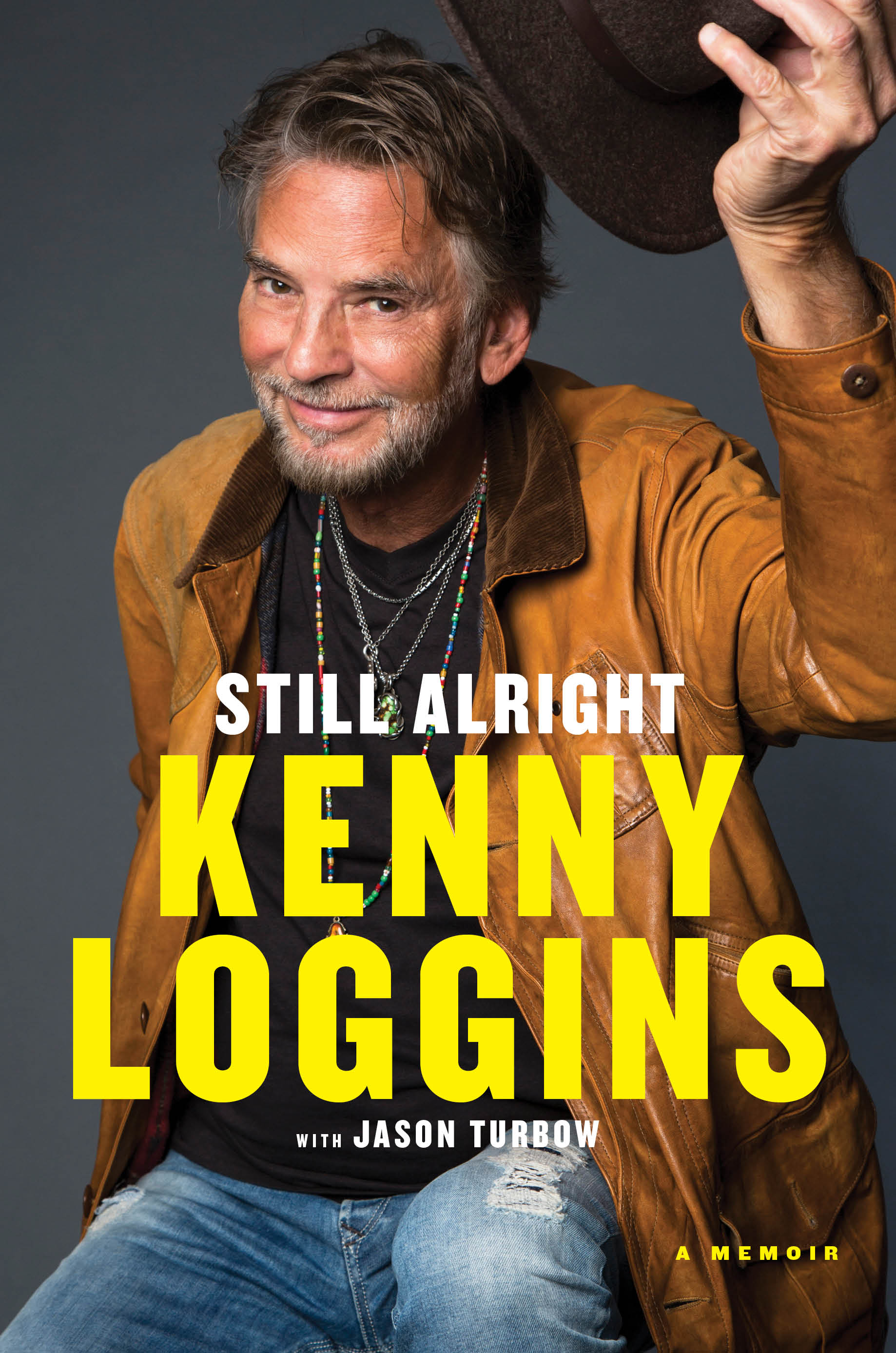
Loggins talks about that song, his other giant soundtrack hits (“I’m Alright” from Caddyshack and the theme song from Footloose), life, career, collaborations, and personal journey in and out of music in a memoir written with Jason Turbow, Still Alright (320 pp., $30, Hachette Books)

“About halfway through the process, I realized that writing this book was a cross between a therapy session and a deposition!” Loggins laughs. “I’d be in the middle of a story and Jason would tell me I had contradicted myself earlier. I realized my life is a paradox, and it was a process for me.”

As a young man, Loggins absorbed anything and everything about music, briefly touring as a member of a latter-day version of The Electric Prunes even attending both the Monterey Pop and Altamont Festivals. Both of which went down in music history for very, very different and well-documented reasons.

“Altamont became a metaphor for the end of an era, but it wasn’t consciously that way. It was just a badly-produced show. But Monterey felt like the beginning of something big. Like something was going to happen,” he recalls.

Dedicated to music (he wrote both later Loggins & Messina hits “Danny’s Song” and “House at Pooh Corner” while still in high school), his initial success came as half of that “accidental duo” with Jim Messina (ex-Buffalo Springfield, Poco). They also scored with “Angry Eyes,” “Vahevala,” “My Music” and “Your Mama Don’t Dance.”

But the five-year partnership was complicated and unequal, as Messina-as-producer had final say (and strong, unmovable opinions) about music, songwriting and touring that were not always in line with that of Loggins. They’ve had on-and-off brief reunions since their dissolution but were hardly—as the title of an early greatest hit compilation said—“best of friends.” But he did give his former partner a heads up on the book.

“I sent him the Loggins and Messina chapters. I wrote him a letter that said it’s too late to change it, but if he wanted to talk about it, he could call me and we’d talk it through together,” Loggins says. “It was the perspective of a 22-year-old [who felt] picked on. I didn’t have more chops on how to defend myself to speak up, so I didn’t.”

Nevertheless, Loggins would churn out many hits, often in collaboration with others. His breakthrough “Whenever I Call You Friend” was co-written with Melissa Manchester and performed with Stevie Nicks. Michael McDonald co-wrote and/or sang on “This Is It” (written as a motivational tune to Loggins’ sick father), “What a Fool Believes” (a big hit for McDonald’s Doobie Brothers) and “Heart to Heart” (also written with David Foster). “Don’t Fight It” was a duet with Journey’s Steve Perry, and “Celebrate Me Home” co-written with jazzman Bob James.

“It’s really musically stimulating for me because invariably, your collaborator will go somewhere you hadn’t of thought of,” he offers. “Then I bring my own personality and melodic sensibilities to the party. We come up with something neither of us would have on our own. An in a perfect world, you’ll hear both writers in that song.”

Still Alright seems almost perfect balanced in that includes plenty of words of all three legs of a good Rock Memoir Stool: Creative/recording process, personal revelations/insight, and stories/anecdotes.

Of the last in 1985, we learn that Prince was a no-show for the “We Are the World” recording session, so Loggins convinced Michael Jackson to have his new friend Huey Lewis sing the line. And he and his entire band and crew quickly left a show in Houston to catch a flight to Philadelphia to play Live Aid the next day.

He’s also completely fine with his place as a face on the Mount Rushmore of Yacht Rock. According to the website run by the moniker’s founders, YachtorNyacht.com, Loggins had some hand in four of the genre’s top six songs.

“I think it’s great there’s a whole audience for that era of rock and roll that I didn’t know was there!” he says. “We didn’t know we would be creating another genre at the time. It was just an extension of our version of R&B music.”

But despite all the chart hits, Loggins considers one work of above all in terms of importance and intimacy: 1991’s album Leap of Faith. In fact, he calls some of his diehard fans “Leapers.”

“That music came to me as part of a moment in my life and career that catches emotionally into the dissolution of my marriage to [first wife] Eva and then the creation into a new relationship and ultimately new marriage with [second wife] Julia,” he offers. “And I just happened to be making a record at a very important time in my life. The music captures that experience. It was so fluid and so much like a gift.”

Kenny Loggins is a very Zen and spiritual guy, so even when—as he writes in the book—the master tapes for Leap of Faith went missing when a van was stolen, he didn’t panic.

“The music came to me almost like it was guided, handed to me through my spirit. And I couldn’t believe that this could all happen just so someone could steal it,” he says. “I kept recording, because I knew it was coming back.”

Not coming back later in the decade was Julia, who left him after more than a decade of being together and three children (Loggins also has two with Eva). He’s extremely open about his time with Julia, which involves a nude wedding ceremony, frequent colonics, New Agey-mysticism, and their practice of a “conscious relationship.”

Kenny Loggins onstage in the ’70s at at Loggins and Messina show. Photo by Larry Hulst.

The timing of her announcement couldn’t be worse, though. The pair had just co-written and released the offbeat love guidebook The Unimaginable Life along with a companion record by Loggins.

“She asked me for a divorce. Just after we’d put out a book about how to make love last. Wait a minute! I definitely didn’t see that coming!” Loggins says. “It took 10 years to get past it, but it was an important time for my personal growth. And all that affects the music. We learn more from the heartache stuff than from any other part of our lives.”

As for this summer, Loggins has a lot of publicity to do for Still Alright, has some live dates booked that are part concert/part onstage interview and storytelling experience, and even a couple of gigs with Jim Messina. He remembers recently playing his first post-pandemic show.

“You could just feel the excitement in the audience. They were so happy to be back. There’s an energy thing that happens between an artist and an audience, a connection that can’t be fabricated on Zoom. You have to be in the room,” he says.

“It’s part of a flow. In a great concert, there’s a level of flow and the music brings a focal point to your consciousness. That’s my theory!”

Loggins then gives an avowed rave to the book Stealing Fire: How Silicon Valley, the Navy SEALs, and Maverick Scientists Are Revolutionizing the Way We Live and Work by Steven Kotler and Jamie Wheal and connects it to music. And how we can find a wonderful experience even in the aspects which are not neat and orderly in a performer.

“You have to be yourself. Let the burping and the farting be part of the show! It’s the imperfection that makes the connection,” he laughs. “Hey, I need to write that down—that rhymes!”

This article originally appeared at HoustonPress.com

For more on Kenny Loggins, visit KennyLoggins.com

Posted in Kenny Loggins | Tagged , , | Leave a comment

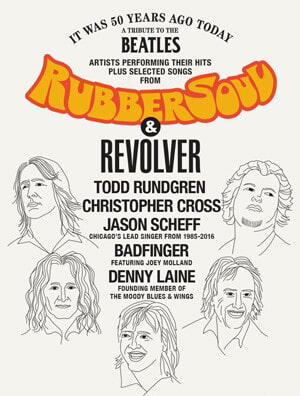
A Fab Five Pay Tribute to Beatles on Hits-Laden Tour

Todd Rundgren leads his band of merry men on a second Beatles tribute tour. Photo by and © Lynn Goldsmith.

Note: This article originally appeared in May 2022. This tour is no longer ongoing.

Glancing at his jam-packed concert schedule for 2022, it’s easy to assume that Todd Rundgren is looking to make up for stage time lost to the pandemic.

He’s currently opening shows for friend Daryl Hall on his solo tour. Two days after that ends, he’ll embark on the second U.S. leg of a jaunt celebrating the legacy of the Beatles’ pivotal records Rubber Soul and Revolver. Four days after that, he’ll begin another tour with his own band.

The mathematically questionable It Was Fifty Years Ago Today: A Tribute to the Beatles stops in Houston at Cullen Performance Hall on May 25. The all-star lineup includes Rundgren, Christopher Cross, Jason Scheff [Chicago], Joey Molland [Badfinger] and Denny Laine [Wings, Moody Blues]. With a backing band, they’ll play tunes from those Beatles records alongside some of their own many hits.

In 2019, Rundgren and many of the same artists on this Beatles tour began a similar (and pandemic-shortened) one to celebrate The Beatles (aka The White Album) record. For Rundgren, it was a no-brainer to do it again.

“There was some discussion of doing Let It Be, but I sort of protested and wanted focus on their best material. And the Beatles’ songwriting peak was at Rubber Soul and Revolver,” Rundgren says via Zoom from somewhere on the road.

“They had mastered the art of writing the perfect single already, and now they were stretching out musically. They were using string quartets and were kings of the world at the time. It was a more fecund period in the life of the Beatles, and we [original fans] were younger and more idealistic.”

In a separate talk, Joey Molland was glad to get the band back together. “I had a good time on the last tour, so they called me up again and I said yes immediately! We’ve done about 15 shows so far,” he says.”

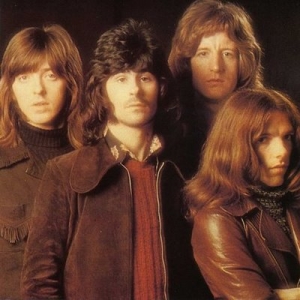
Of all the players on this tour, it’s Molland who had the closest personal and professional relationship to the Beatles. Badfinger was signed to the band’s Apple label. George Harrison served as initial producer of their Straight Up album (ironically, it’s Rundgren who finished it) and invited the band to play backing music at The Concert for Bangla Desh.

For his part, Rundgren says that the Beatles really made music part of the overall listening experience. Fans would wait for the next record to come out and devour it whole.

“You sort of got it, went into your room, locked the door, and listened to the whole thing. And then do it again. It was as religious experience in a certain sense,” Rundgren says. “But then they stopped performing live, and then they’d be doing things that couldn’t be reproduced live onstage anyway.”

Asked to name a Beatles album off the top of their heads, most people would blurt out Sgt. Pepper’s, Abbey Road, or even Meet the Beatles. But the sometimes-undervalued Rubber Soul and Revolver were pivotal in the band’s artistic progression.

Badfinger (Joey Molland on left). “Straight Up” record cover.

The former saw them move into more adult and introspective lyrics and music (and introduce new and classical instruments), while many hardcore fans considered the latter their best effort and a pivot into more of a pure rock sound.

“I agree that they get lost sometimes. A lot of people will talk about the early days of [Beatlemania] and then just jump right to Sgt. Pepper’s,” Molland says. “The songs are all short, so we try to do as many as possible. I think there’s 35 songs in the show!”

For Jason Scheff, he was eager to repeat the experience from The White Album tour, which was ego-free among the marquee classic rock names. “Everybody was just hanging out and there was no pecking order and it was just so much fun,” the singer/bassist says via Zoom from his home.

“I didn’t realize at first how much influence Paul McCartney’s bass has on people like [Elton John bassist] Dee Murray and [original Chicago bassist] Peter Cetera. So lyrical and with great lines. Chicago made no bones about being huge Beatles fans. And the best sources say these two records are the best they ever made. They were the departure from the straight up pop stuff.”

Scheff adds that the divvying up of Beatles songs for that portion of the show didn’t result in any huge disagreements among the players, and he’s happy to be tackling the more John Lennon-created numbers “Girl” and “I’m Only Sleeping.”

He also gets a kick out of his and Rundgren’s simultaneous hair-flipping during Chicago’s “25 or 6 to 4” and has high praise for Rundgren as the de facto leader of the troupe. Rundgren also joins Molland for Badfinger’s “Baby Blue,” which garnered a life of its own after it was used in the last scene in the finale for TV series “Breaking Bad.”

With four songwriters and singers in the group, you’d think that members of Badfinger would be cutthroat about getting their songs on records. However, Molland says that wasn’t the case at all.

“We only recorded the songs we wanted to that we thought as a group were the best ones. Pete, Tommy, Mike, and I all wrote. And the only cover song we ever did was [the Paul McCartney-written] ‘Come and Get it,’” Molland—who tackles Beatles’ tunes “If I Needed Someone,” “Doctor Robert” and “The Word”—says. “It was a very relaxed situation. We weren’t desperate to get our own songs on. It wasn’t a competition.”

However, there was one tune on this tour that Rundgren claimed immediately—and there would be no further discussion.

“I got ‘Tomorrow Never Knows,’ right off the bat. No one else could deliver that with the sincerity I could!” Rundgren laughs. This also coming from a man whose band Utopia (as Classic Rock Brother Jamie pointed out during the talk) put out an entire record that sounds like a lost Beatles effort, Deface the Music.

Jason Scheff

“Maybe we can do some Fake Beatles songs and see if anyone notices!” Rundgren laughs.

Over the course of his life, Rundgren has met and spent time with all four Beatles, including many years on the road in various lineups of Ringo Starr’s All-Star Band. “I met George first, and I met Paul because I knew Linda Eastman before she knew Paul. I met John during his dark years when Yoko kicked him out of the house, so he probably didn’t remember it!”

For his experience, Molland calls George Harrison an “normal person” who was “very generous with his time.” He remembers getting frequent phone calls, and not always about work. That includes one time when Harrison invited Molland and his wife to join he and his on a sort of double date to see The Band.

“It was kind of freaky when he’d just call out of the blue!” Molland laughs.

Amidist all the touring, Todd Rundgren’s fans are awaiting the long-awaited release of his guest star-laden Space Force record. Delayed in production because of (no joke) a vinyl shortage on the manufacturing side triggered by the immense demand for the latest Adele LP on the format.

During the pandemic, Rundgren—always at the forefront of technology—launched the “Clearly Human” tour in which he “visited” different cities with site-specific content while actually performing all shows in Chicago that were then livestreamed.

And while his initial ambitions didn’t quite reach fruition (the only local part of the “Houston” show was a few of Rundgren’s shout-outs to the city and a brief stage slideshow of local landmarks), the experience was educational for him.

“It’s hard to sell something when people have no previous experience of it. So, it was a challenge to promote and get people to spend money on something that was not what they really wanted, which was to go to a live show,” he says. “So, I lost a chunk of change on that! But it revealed a lot about audience dynamic and made me think it could still be done even without a pandemic.”

Still, his constant gigging in 2022 has something in spirit with a famous Revolver song—“Taxman.”

“I’m making up for lost time since disease kept us off the road. But that had no effect on my IRS [filing]. So, I need to get back on the road!”

This article originally appeared at HoustonPress.com
Posted in Badfinger, Beatles, Todd Rundgren | Tagged , , , , | Leave a comment

For Little Feat, It’s Columbus Day Every Day!

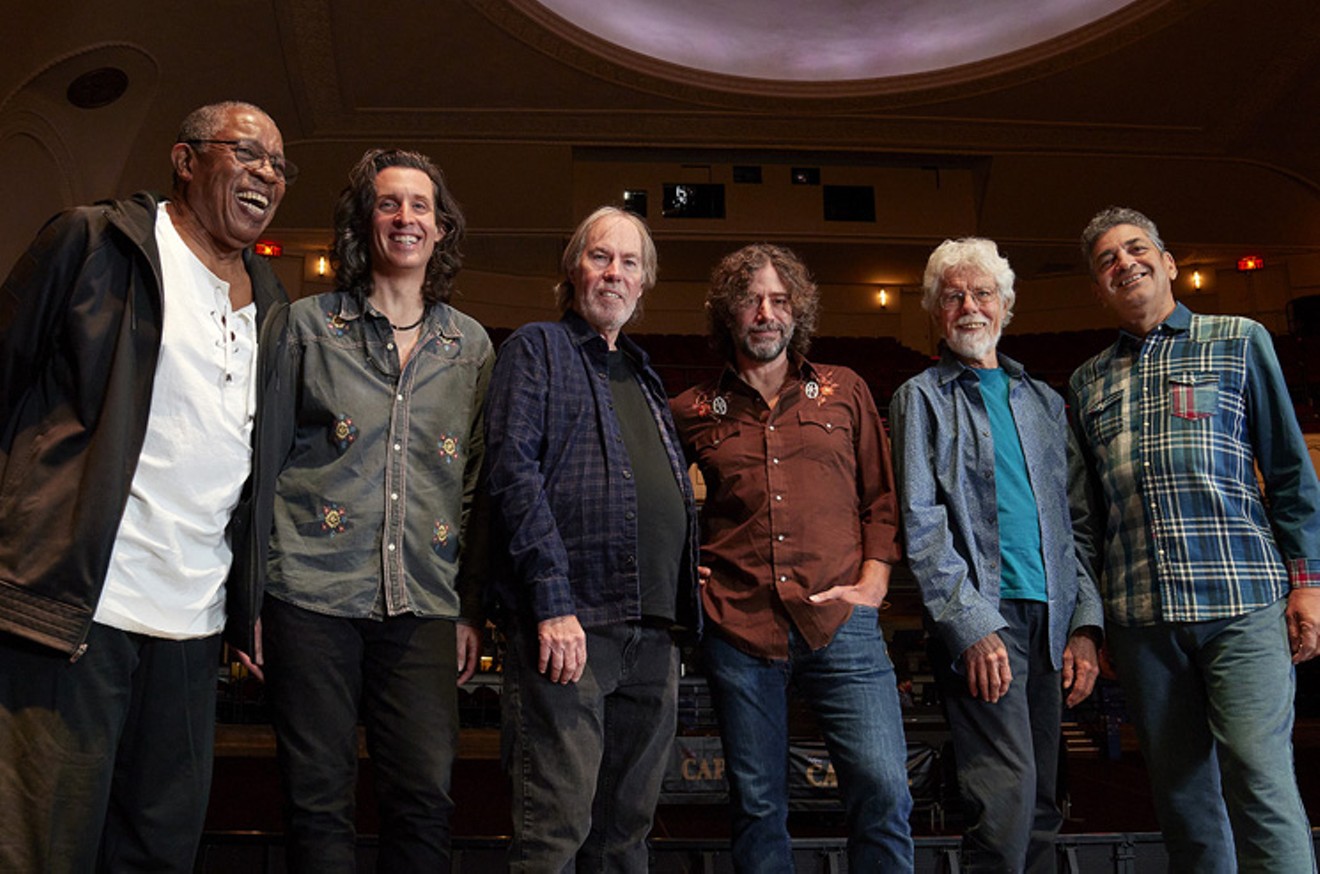
Little Feat in 2022 still awaiting Columbus: Sam Clayton, Scott Sharrard, Bill Payne, Tony Leone, Fred Tackett and Kenny Gradney. Photo by Hank Randall.

According to The 1970s Rock Rulebook, every performer or band was required to release a double live record album.

For some acts, it broke them out in terms of popularity and recognition (KISS, Peter Frampton, Cheap Trick). For others, it burnished the studio material and allowed for stretching out (The Band, Lynyrd Skynyrd, the Allman Brothers Band). For the cult favorite and multi-faceted Little Feat, 1978’s Waiting for Columbus is considered by many not only as one of the best live albums of the era, but the band’s apex as well.

Its 17 tracks were culled from seven shows and feature the six-man classic lineup tripping through their catalog with skill, passion and zeal. A bonus was the presence of the Tower of Power horn section, and songs like “Dixie Chicken,” “Time Loves a Hero, “Oh Atlanta,” “Tripe Face Boogie,” and “Fat Man in the Bathtub” received extra oomph (a 2002 double CD added 15 more tracks).

The current edition of Little Feat is celebrating the 45th anniversary of those shows by performing Waiting for Columbus in its entirety. The tour stops in Houston March 26 at the 713 Music Hall.

“The album is what, 75 minutes long? We did a dry run in Jamaica a couple of weeks ago, and the show was two hours. Without an encore!” laughs co-founder/keyboardist Bill Payne.

“I think the original idea to do a live album came from Warner Brothers. They were looking for the best way to present this band that was great live but wasn’t [captured] like that on the records. And they’re just great songs.”

In the liner notes for the 2002 reissue, Payne also noted that perhaps co-founder/singer/guitarist Lowell George saw the project as a way to reassert some creative control that he had abandoned. To this day, some believe that—much like Brian Wilson and the Beach Boys—that Little Feat is the singular vision and creation of Lowell George. But Payne differs.

“Things were attributed to [him] that weren’t solely his doing. When this band started in 1969, the notion of what it would be in the future was kind of a Lego concept: What did we want to add? It was music driven, not personality driven.”

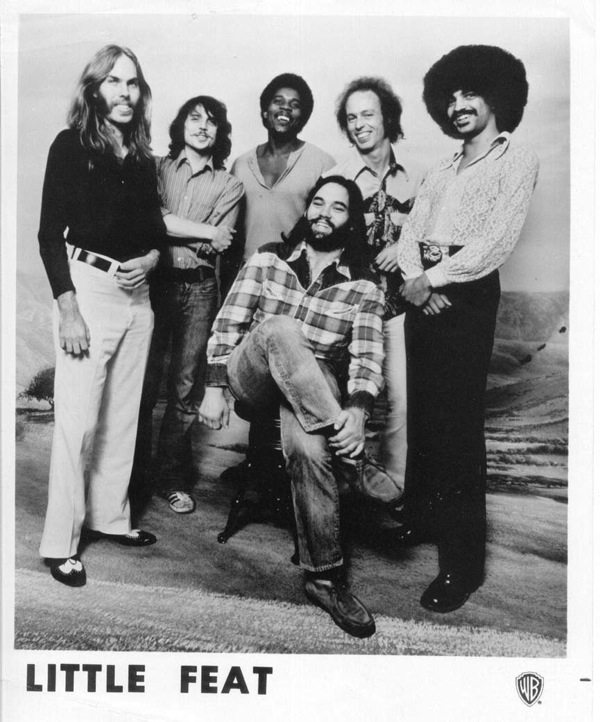
Of the original album’s lineup, Lowell George, drummer Richie Hayward, and singer/guitarist Paul Barrere have passed. Payne, bassist Kenny Gradney, and percussionist Sam Clayton remain. The current version also includes longtime guitarist Fred Tackett, and “new guys” singer/guitarist Scott Sharrad and drummer Tony Leone.

“It’s a great time to catch this group. I’ve been calling this version Act 3!” Payne—who now sings a few numbers onstage—says. “Because of the reality of events, you have to make decisions whether to go on or not. It happened with Lowell and then with Paul.”

A great topic of endless debate among music nerds and journalists, of course, is how authentic any purported “live” record truly is in the end. The not-so-secret-secret is that the vast majority feature post-show overdubbing, re-recording and creative editing.

Payne, Hayward, Clayton, George (seated), Barrere and Gradney. Warner Bros. 1973 publicity photo.

Waiting for Columbus is no exception, although there’s good authority that none of Payne’s original piano or keyboard playing—of which there’s a lot—was redone (though he says a new part was added to “Dixie Chicken”), and only a small portion of Hayward’s drums.

“There were certain things that Lowell wanted to do like get the guitars a little tighter or fix up a vocal. But for the most part, it’s live. And there’s an urgency to it,” he offers. “The tracks were just like a river at springtime. They just carried you down, and you’re hanging on for dear life!”

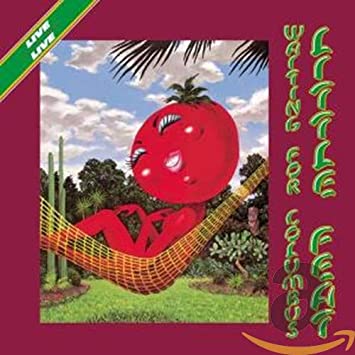
The sexy Tomato Lady painted by Neon Park on cover of Waiting for Columbus has also become the de facto band trademark. She’s reclining in a hammock and surrounded by foliage native to the Americas.

“I guess that Columbus discovered tomatoes in the West Indies, so she’s waiting to be discovered by him!” Payne says. “Somebody the other day said if the tomato was Little Feat, we were waiting to be discovered by a new audience as well.”

But while the band will be playing the same songs from the record, they’re not looking to replicate them.

“We’ll do the album, but in our fashion. It may be different instrumentation. I want this band to put their stamp on it,” Payne says. “These songs have morphed over a 45-year-period. We may want to do a song like we did then. Or like 20 years ago. Or how we’ll want to do it weeks from now. And that’s Little Feat in a nutshell. Let’s just take this for a ride.”

Adding to that idea of evolution and currentness, Payne says that he doesn’t look across the stage at Gradney or Clayton any differently from the rest of the group, despite their shared decades of music.

“I’m don’t think in those terms. But I remember when Richie was on his last legs before he passed away, there was an immediacy when your past taps you on the shoulder. In general, I just see the joy and Sam and Kenny’s faces when playing this music. And the [new members] have brought a new energy to the band that’s contagious.”

And while Little Feat is from Los Angeles, their sonic gumbo of rock, blues, and jazz also has a distinctly New Orleans feel, especially beginning with the Dixie Chicken record. Payne to this day takes issue with writers like Elizabeth Nelson who he says questioned their fitness to play that style of music.

“I’ve told people over the years, and I’d love to tell her—I guess I can do it through you, Bob!” Payne says. “Is that I was earlier today playing some Mozart, but I’m not from Vienna, Austria. And some Beethoven, but I’m not from Hamburg, Germany. Is that OK with you? Why are you segregating music? It’s ridiculous. Would you tell a musician from New Orleans that they can’t play anything else?”

Outside of Little Feat, Bill Payne has written songs with collaborators ranging Pulitzer Prize-winning poet Paul Muldoon to Blackberry Smoke singer Charlie Starr (some of which he hopes appear on future Little Feat records). He is also a creative writer and photographer, working on a memoir and teases an in-progress Little Feat documentary. And he’s contributed keyboards to scores of records by artists like Toto, Linda Ronstadt, Emmylou Harris, Stevie Nicks, Bonnie Raitt and Pink Floyd.

The 72-year-old Payne has also for years been the touring keyboardist for the Doobie Brothers, a relationship that goes as far back to their 1971 debut record. And there he was on stage left at the Woodlands Pavilion last October for the COVID-postponed tour celebrating the 50th anniversary of their founding.

“Michael McDonald is a friend and so are Pat [Simmons] and Tom [Johnston]. We have a camaraderie, and tour was fun and amazing, and I was proud to be a part of it,” he says. “With so many [instruments], we just tried to say out of each other’s way! Michael could have handled all the keyboards himself!”

Finally, the native of Moody, Texas (near Waco) says that the city of Houston plays a big part in Little Feat history. He notes that audiences here were among the most supportive and fervent, especially early in their career.

And that goes especially for, um, female admirers of the group, who are name-checked in both “Tripe Face Boogie” (“I was entertained in Houston”) and “Roll ‘Um Easy” (“And I never met girls who could sing so sweet/Like the angels that live in Houston”).

When The Houston Press last spoke with Payne in 2002 before a show that was part of the Houston Press Concert series, he waxed nostalgic about “The Houston Welcoming Committee.”

“They were some very lovely, lovely girls. Before that, I was thinking that I never wanted to tour again. But in Houston, I changed my mind. It didn’t seem so bad!” he said in 2002. Reminded of the HWC two decades later, he lets out a laugh.

Hellloo! I think a few of them are still around. And we’ve seen them over the years—though not in the fashion we did when we were younger!” he chuckles. “I was born in Waco. So once a Texan, always a Texan!”

This interview originally appeared at HoustonPress.com

Posted in Little Feat | Tagged , , , | Leave a comment