Gina Schock of the Go-Go’s Gets Snappy in Her Book

Gina Schock onstage with the Go-Go’s in recent years. Photo from the Collection of Gina Schock/Courtesy of MAD INK PR.

Almost as much as music, Gina Schock has had a love for an interest in photography for her entire life. And that includes before, during, after, and again during her career as the drummer for the Go-Go’s.

Backstage, onstage, at house parties and in various airports and hotels, Schock always kept her camera clicking, while also appearing in those taken by others. In the process, she and the rest of the band mugged for each other, and were often caught in the company of some fairly famous faces.
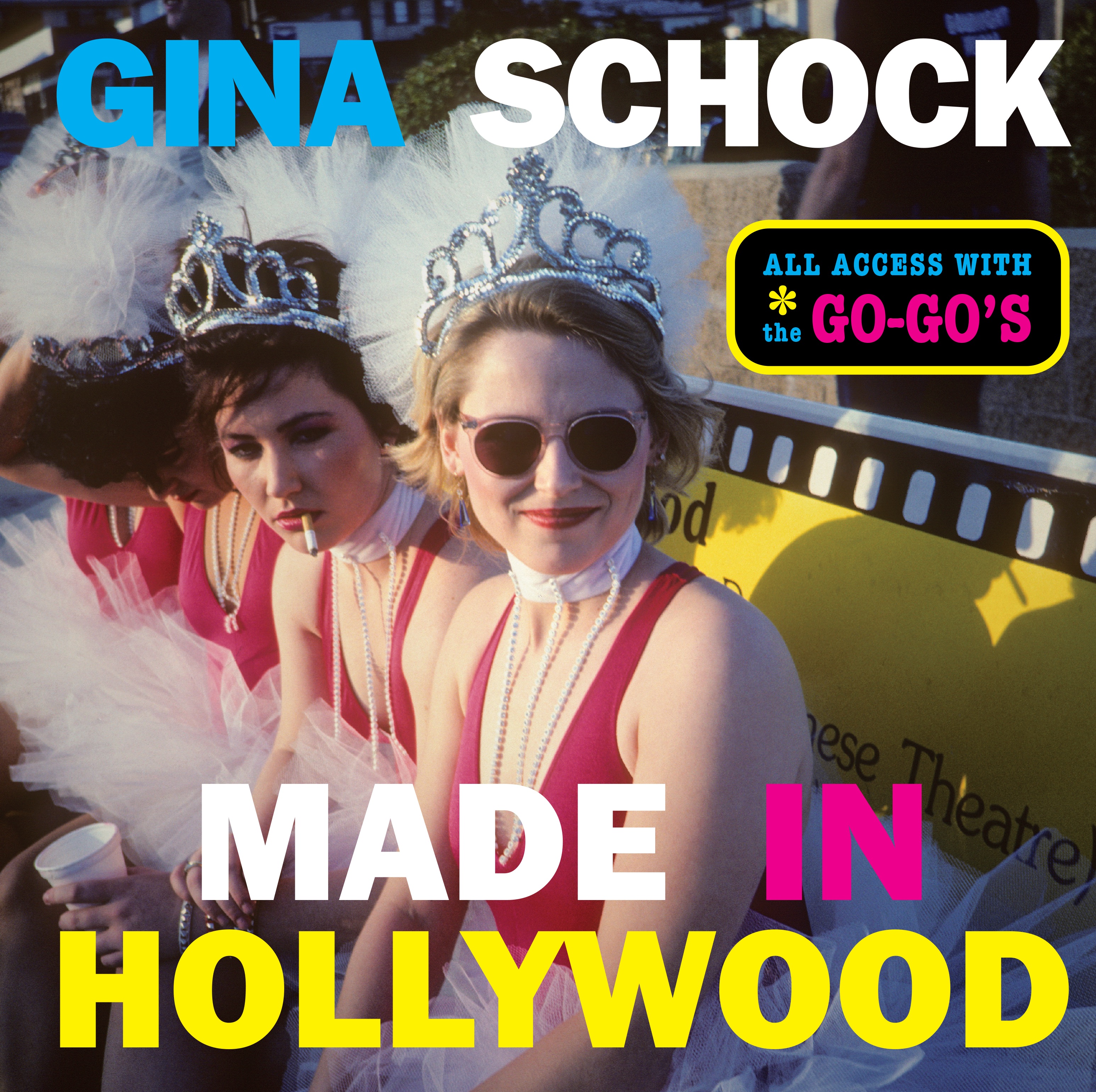
Scores of those casual photos—along with biographical text from Schock and remembrances from her bandmates and famous friends—come together in her book, Made in Hollywood: All Access with the Go-Go’s (240 pp., $40, Black Dog & Leventhal).

“I love photography. I have a lot of framed photographs on my wall at home, and I’ve always been a very visual person. Even in 1979 when I was just a kid traveling across the country, I had an Instamatic camera. And when I made a little money, I got a Canon 35 mm. And then I got into Polaroids,” Schock says from her home in California.

“A photograph tells you everything you need to know about moment in time. You look at it and you think and you remember exactly what was happening and who you were with and where you were. I’m excited and proud and happy to put this out. I’m in grateful mode.”

While her bandmates bassist Kathy Valentine and singer Belinda Carlisle have already written more prose-heavy memoirs (no word if guitarists Jane Wiedlin or Charlotte Caffey will get into the book game as well), Schock says that the much more photo-heavy format works better in her case.

In addition to the Go-Go’s, the snapshots show a who’s who of early ‘80s music and entertainment from the Police, Joan Jett, David Bowie, Billy Joel, Chrissie Hynde and Robert Palmer to Bill Murray, John Belushi, Christopher Reeve and even country stars like Johnny Cash, Dolly Parton and Tammy Wynette.

Schock with Go-Go’s singer Belinda Carlisle. Photo from the Collection of Gina Schock/Courtesy of MAD INK PR.

What’s refreshing is that they’re all very casual and often showcase a relaxed and goofy charm that no posed photo could deliver.

“It was a group of friends, we just happened to be the Go-Go’s. And everybody would do whatever I asked. They were perfect subjects!” Schock says. That includes the band in various nutty poses, with props, and in one series documenting a, uh, live “birth” of one of their own.

Tracking down the photos (most of which have never been published) wasn’t as simple as pulling down a carefully-curated scrapbook of images encased in protective mylar. Schock says they were culled from battered boxes in closets, underneath furniture and in storage facilities.

One of the photos takes on a more recent significance, from a sole October 1981 gig in Illinois where the Rolling Stones tapped the band to open for them. Posed with the Go-Go’s are then-bassist Bill Wyman and the recently-deceased drummer Charlie Watts. Not surprisingly, skin thumper-to-skin thumper, it’s that encounter that Schock may treasure above all others.

“First of all, it was a once-in-a-lifetime opportunity to open for them. We were knocked out and so excited,” Schock recalls. “I idolized Charlie Watts. I could hardly speak to him! But he was so sweet and such a gentleman and everything I’d hope he would be. Then I got to sit on his drum kit and fool around. I was in heaven!”

A couple of other photos are from backstage at a December 1981 taping of TV’s Solid Gold that featured the Go-Go’s, KISS in full makeup and costumes and hairy-chested host Andy Gibb. Quite a mixture of musical styles and looks. But if you’re thinking Shock would roll her eyes at the memory, you’d be wrong.

“Oh my god! I loved doing Solid Gold. We probably did that show more than any of the others!” she says without a hint of snark. “The thing I remember the most is that they used to make you wear this makeup that made you look orange, though I guess it didn’t pick up on the camera. And of course, the Solid Gold dancers doing their interpretation of your song around you while you’re playing it. It was a blast.”

The Go-Go’s have an extremely important career milestone coming up later this month when they’ll be onstage in Cleveland as inductees into this year’s class at the Rock and Roll Hall of Fame. The band will give speeches and are expected to play a three-song set.

The Go-Go’s are the most commercially successful all-female band ever, and still the only one to have a #1 album with their debut Beauty and the Beat (it eventually surpassed the Ghost in the Machine by the Police, for whom the Go-Go’s had opened for on a portion of that tour). Their hits include “Our Lips are Sealed,” “We Got the Beat,” “Vacation,” “Head Over Heels,” “Turn to You,” and “Get Up and Go.”

They’ve had their Rock Hall champions for years. But Schock (and the rest of the group) feels it was last year’s career-spanning documentary The Go-Go’s, directed by Allison Ellwood, that put the band back on people’s radars and Rock Hall members’ ballots.

“I gotta tell you, the documentary was the kick in the ass that the general public and the industry needed to recognize this band again and have a real look inside. Allison did an incredible and beautiful job, and we all loved it,” Schock offers.

When it’s suggested that many casual Go-Go’s listeners only know the more pop commercial hits and nothing about their much more punk rock roots, she agrees.

“At heart, we’re a punk band, and we always will be. And in our live shows, we really rock out,” she says. “The way we play, we’re not really great musicians or trained musicians, but it works for this band. The punk era was a time when everybody picked up their instruments whether they could play or not and just had a good time with their friends. And lot of bands that came out of that are a still around.”

Joan Jett with Gina Schock. Photo from the Collection of Gina Schock/Courtesy of MAD INK PR.

Schock carries that feeling over with an answer to the question: If she had a Magic Induction Pass to get any other group into the Rock Hall. Who would get the go-go sign? She first offers the names of the Clash and the Ramones (who are both already in). She’ll have to try again.

“Shit, let me just think here!” she laughs. “OK, it’s got to be X. They were an incredible band and still are. We were in awe of them when they played. They were like a hurricane coming in,” she says of one of the most critically acclaimed acts of the original L.A. punk scene. “So powerful, and all the songs had really great hooks.”

Of course, today anyone reading this can immediately pick up their phone and within minutes download the entire discography of X. Schock says that ease of access to any music is helpful for people of any age group to discover older acts, but something is lost in the process as well.

“You just push a button and get whatever you want. But [younger people] need to learn how to go to a record store and dig through vinyl. It’s coming back!” she laughs. “There was something great about going to a record store and seeing all the latest releases. And the artwork. Now, it’s all streaming.”

It’s clear leafing through Made in Hollywood that the five Go-Go’s have a deep affinity for each other (even though later years would bring quittings, breakups and lawsuits). All that’s settled now. They released a new song to go with the documentary (“Club Zero”), have some live dates in California toward the end of this year, then a UK tour supporting Billy Idol in 2022.

Finally, when Go-Go Kathy Valentine spoke with the Houston Press last year for her memoir All I Ever Wanted, she likened the chemistry of the classic five member lineup to a really good cake: Take one ingredient out, and it just doesn’t taste the same. Her fellow rhythm section member agrees.

“That’s a great analogy. When the five of us get into a room together, it just…starts!” she laughs. “And then when we pick up our instruments, it goes up ten levels. So by the time we’re about to play, we’re ready to explode! And that doesn’t happen with anybody else. It’s a magical thing. It just is.”

Note: This interview originally appeared at HoustonPress.com

Posted in Books, Go-Go's | Leave a comment

Rickie Lee Jones Won’t Run Out of Chances

Rickie Lee Jones is ready to get back on the road after sharing family stories in her memoir. Photo ©Astor Morgan/Courtesy of Kid Logic Media.

It’s common for musicians to feel that their work lets listeners into their minds, their souls, or their hearts. It’s less common that fans are invited into their actual homes.

But that’s what many artists did — at least virtually — when the pandemic caused mass cancellations of tours that are most performers’ main source of income. So fans saw a lot of living rooms, garages, and home studios via live-streaming where the performance was often free, but the star of the show’s Venmo and CashApp accounts were open.

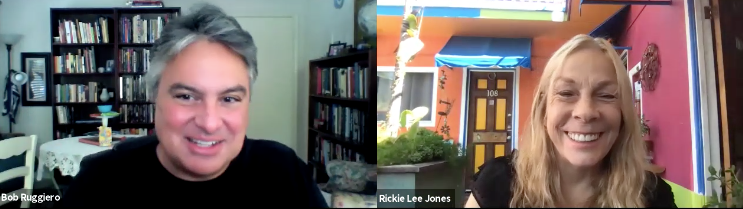
Classic Rock Bob (that’s me!) and Rickie Lee Jones chat over Zoom. She’s got a colorful house!

Singer/songwriter/guitarist Rickie Lee Jones did a number of livestreams from her home in New Orleans. First, tentatively trying to work the camera with just her and a guitar, later including other instruments and players as well.

“At first, it seemed like a revolutionary act to not have any middlemen and bring the show to the people directly. It was a brand new idea. I’m not there physically, but it’s between me and my audience personally,” she says from Los Angeles on a Zoom interview.

Rickie Lee Jones is an avid gardener. Photo ©Astor Morgan/Courtesy of Kid Logic Media.


“In a live show, there’s more pressure because they’ve traveled to see you and you have to be more snappy. But with these, it’s more like you’re talking to your friends. But people still want to come see a live show in person.”

To that end, Jones is about to embark on a short tour that will bring her to Houston for a September 30 show at the Heights Theater (which will have COVID protocols).

She’ll be performing material that will span the entirety of her career, beginning with 1979’s debut Rickie Lee Jones. Its leadoff track is her best known song, the  No. 4 hit, “Chuck E.’s in Love.” She’ll be accompanied onstage by multi-instrumentalist Kai Welch and drummer Mike Dillon.

“I did a couple of shows last week and once you break that into the membrane as a [performer], it’s the same. It feels good to be in front of people, and they’re happy to be out again,” she adds.

Outside of music, Jones has been in the literary news for this spring’s release of her inventive and engaging memoir, Last Chance Texaco: Chronicles of an American Troubadour. The book takes its title from one of her best known songs, nominated for a Grammy for Best Female Rock Vocal Performance despite never being released as a single (though she did win Best New Artist at the 1980 ceremony).


While most musician’s memoirs tend to gloss over or speed through their childhood and teenage years, that’s what makes up the bulk of this text. In fact, the book is 50 pages from the end when Rickie Lee Jones is released (though she considers its follow-up, Pirates, her best album).

But in this case, Jones tells about her unorthodox family, shaky relations both with and between her parents, frequent moves, and a vagabond lifestyle. Her story is filled with colorful real-life characters as she starts to take an interest in writing and playing music.

All from a girl whose was rejected from membership in her high school choir because her voice was “too unusual.” But unusual enough to have been featured on more than a dozen studio albums and many collaborations.

A true hippie girl, at the age of 14, Jones started hitchhiking around the country, with later jaunts to Canada and Mexico. Most often not knowing or having planned out where she was going, how she was going to get there, who she would be staying with or where her next meal was coming from. And mix in the cocktail of drugs, alcohol and free love.

“I had an unusual life and came from an unusual background. And the book is about my family. I can still see through my 14-year-old eyes why that was a good idea. But as a mother of a daughter, I am horrified!” Jones laughs.

“I truly believe I still had this sort of innocence that kept me safe. It made me just catapult through really dangerous situations, glide through things that could be and often were very dangerous. I had a child’s view of life. And it was also the end of the hippie time where it was ‘Come and we’ll take care of you.’”

At the start of her career, as she writes, Jones was flooded with comparisons to Joni Mitchell – though only on the surface of a high-voiced-blond-girl-singer-with-guitar. But since then she’s followed wherever her creative muse has taken her to rock, pop, R&B, avant garde and her beloved jazz music.

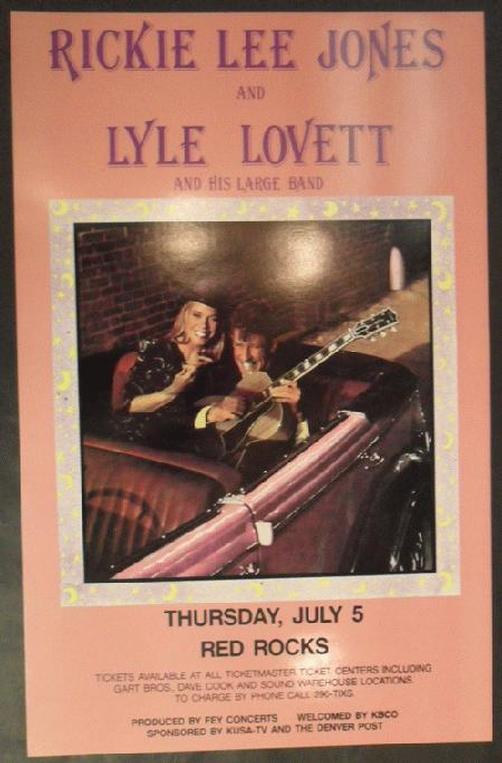
Tour poster


“No, it wasn’t a good career move because it confused the audience. Everybody likes to decide who someone is and put a frame around them and keep them that way,” she says. “So I have a diverse group of people who like different things that I do and may not like each other at all! But it gives some elbow room to have a more diverse career. I always knew that, and I was always drive to do what I had not done before.”


Among her other musical compadres was area boy (via Klein) Lyle Lovett, who opened for Jones on a 1990 tour of outdoor theaters early in his career. Her new manager from Texas had talked him up.


“Lyle was able to slip into this thing because people weren’t sure exactly what he was,” she says. “We did this photo session to make a poster for the tour and Lyle never smiled at all. So we got into a car and I don’t remember what I did, but he smiled—and that’s the picture we used! Him and his great big hair!”

Jones adds that by the end of the tour, Lovett had met director Robert Altman who would cast him in his film The Player, as well as future wife, actress Julia Roberts. “And by then was a big star!” Jones laughs. “So, you’re welcome, Lyle!”

But one relationship that Jones writes about in Last Chance Texaco is her years-long on again-off again intense and pyrrhic romance with fellow troubadour Tom Waits. And if Jones was—as Time magazine dubbed her—“The Duchess of Coolsville,” then the growly, ramshackle Waits was her Duke. The pair rolled around California in a world with equal residency in reality and fantasy, acting out scenarios from the Bohemians, Beats or a Charles Bukowski book.

“Now we were religions, we converted to each other, we inspired each other and we spoke in tongues,” she writes in the book. “We stayed in character for our entire romance and our characters were sometimes cruel and often selfish. We needed those characters to love from our ‘real’ selves, but maybe our real selves were too damaged to trust.”

The final break came when Jones admitted to Waits that she had been secretly hiding a heroin addiction, but was ready to quit and asked for his help. Instead, she writes that seemed to get miffed and abruptly left for good. It took more time for Jones to get truly clean.


“We were that way from the time we got up in the morning. We had made those people, those characters to be, and we didn’t take them off,” she says now. “I really think that together we began to imagine becoming regular people like our parents. But I felt that he and I weren’t wholly developed people. We were figures from books or the past, characters.”

Finally, there was the death of songwriter/performer/and Waits’ top bro Chuck E. Weiss this past July from a longstanding battle with cancer. As the subject of Jones’ most famous song, Weiss has had an up and down relationship with the tune and Jones herself. She eulogized Weiss with a piece in the LA Times, though they hadn’t been close in a long time.

“A friend called to let me know that he was gravely ill, and I wrote a letter and sent it to him,” Jones says wistfully. “But he died before he got it.”

After the current tour ends, Jones says she has some projects in the fire, possibly springing from Last Chance Texaco as well as a potential separate theatrical production. “And who knows?” she laughs. “I might even do more shows from my living room!”

This interview originally appeared at HoustonPress.com
For more on Rickie Lee Jones, visit RickieLeeJones.com

Posted in Books, Rickie Lee Jones | Tagged , , | Leave a comment

Yes Keyboardist Geoff Downes is on a Proggy Quest

Yes in 2021: Steve Howe, Jon Davison Billy Sherwood, Alan White, and Geoff Downes Photo © 2021 Gottlieb Bros/Courtesy of SRO PR.

Note: Since the original publication of this interview, Yes drummer Alan White passed away in March 2022 at the age of 72.

When MTV celebrated their 40th anniversary, the old trivia question about “What was the first video ever played on the channel?” came around again. It was, of course, “Video Killed the Radio Star” by the English duo Buggles, made up of singer/bassist Trevor Horn and keyboardist Geoff Downes.

In 1980 both would later (very) briefly join the Prog Rock group Yes, and Downes returned to the band full-time in 2011. Still, it’s surprising that when he appears onscreen via a Zoom interview from his home in England, sporting a T-shirt with an old school MTV logo decorated as the United States flag. That begs the question: Did Buggles know how prophetic that song would become?

“The song had been out two years before and had been #1 all over the world except in America!” Downes laughs. “By the time MTV showed it, Trevor was off doing productions and I was in [the band] Asia. So we didn’t give it a thought! Though in hindsight, it was pretty prophetic.”

Today, Downes is ready to discuss the new record from Yes, The Quest (Inside Out Music). Featuring eight tracks and three bonus tracks, the songs were largely discussed and at least started coalescing at the end of 2019 and early 2020. But then the pandemic hit and things changed. It would now have to be recorded with members flung across the U.K., the U.S., and Barbados.

“It was a challenge,” Downes offers. “But I was used to doing it that way before, in the albums I did with the Chris Braide in the Downes Braide Association. But for the other guys in Yes, I think it was a bit different.”

The “other guys” include Downes, classic lineup members Steve Howe (guitar) and Alan White (drums), Jon Davison (vocals) and newish bassist Billy Sherwood, who took over after the death of founding member Chris Squire. Squire was the only member of a constantly-rotating lineup who appeared on every Yes record. And The Quest marks the studio debut of Davison.

“I think we’re the longest lasting lineup of all time! Over six years or something!” Downes laughs. “It was nice that we had this opportunity to make this album. We’ve talked about it for years. We exchanged all the ideas before the pandemic, then we had to figure out how to make it.”

Some of those ideas in an overall more gentle-sounding record include calls for unity and humanity working together, hope for the future, and some romance. Close to Downes’ heart in particular is the material about climate change like lead single “The Ice Bridge.”

“But we didn’t want to be too heavy about it,” he adds. “Like stand on soapbox and dictate to the world about it.”

Geoff Downes Photo © 2021 Gottlieb Bros/Courtesy of SRO PR.

For Downes, putting fingers to keys is something of the family business. His mother was an accomplished piano player, and his father the local church organist—and a bank manager.

“He was good at both things!” his son laughs. “I would say there was a lot of piano and keyboard music around me in the house. That was the way I was brought up, and I started playing piano when I was six and then went to music college. I was fortunate I got involved in the music scene in London.”

Downes arrived in London in the mid-‘70s, and by that time English Rock Stars had developed something of an exclusive intermingling practice at clubs and venues like the Speakeasy, the Scotch of St. James, the Marquee, Bag O’Nails, and the Ad Lib. By that time, the group that he would eventually join were already known.

“All of the members of Yes met at the Speakeasy and the Marquee. These were clubs that musicians went to. You’d see Jimi Hendrix having a drink with George Harrison,” Downes says. “I think all of Yes also met their wives at the Speakeasy! I heard all the stories from Chris and Steve!”

In the 1980s, Downes found commercial success with Asia, who hit with singles like “Heat of the Moment,” “Time Will Tell,” and “Don’t Cry.” All got a boost by (there is is again) frequent videos plans on MTV. For many Gen Xers, it was their first exposure to Prog Rock, albeit greatly infused with a pop sensibility. 

“The other three guys had come from huge Prog bands. John [Wetton, singer/bassist] from U.K. and King Crimson, Steve [Howe guitarist] from Yes and Carl [Palmer, drummer] from Emerson, Lake and Palmer,” Downes says. 

“They were at the top of their game. I think when I came into the fray, I think I took it more into the melodic and pop areas. And they rose to that challenge. They’d done all the long pieces and the massive progressive rock tours in the ‘70s. This was like a breath of fresh air to them. It still – especially the first couple of albums – had the underlying progressiveness, but it was condensed. There was still musicality in there.”

Finally, while the pandemic has put the kibosh on any touring to promote The Quest, Yes, has booked dates in Europe beginning in May 2022 in which they’ll play the entirely of 1974’s Relayer album (of which only Howe and White actually played on) as well as a greatest hits set. 

Downes says it will be a challenge, but he’s looking forward to working on songs that no lineup of Yes has ever played live. The band was inducted into the Rock and Roll Hall of Fame in 2017, but Downes was not among the members chosen to be enshrined at the glass pyramid in Cleveland.

“We’ve done a lot of those early albums in their entirety after I joined in 2011, but Relayer really stuck out,” he says. “It’s a very challenging record, especially for a keyboard player. It’s very intense. It will be a big challenge. I come from a line of Yes keyboardists like Tony Kaye and Rick Wakeman and Patrick Moraz.”

But don’t be surprised if some of the material from The Quest also gets a delayed workout. And even when Yes isn’t active, the 69-year-old Downes has plenty of other musical avenues and collaborations waiting.

“It’s been a very wide ranging career, and I’ve enjoyed every aspect of that,” he sums up. “Working on this Yes album was great to communicate with the guys again. I’m very happy with it.”

For more on Yes, visit YesWorld.com

This article originally appeared at HoustonPress.com

Posted in Yes | Tagged , , | Leave a comment

The Many Mugs of Stevie Van Zandt Come Together in Memoir

Since it was the Beatles who started Stevie Van Zandt on his rock and roll journey, he was thrilled and amazed to finally share a stage with Paul McCartney. Photo by Kirsten Donovan/Courtesy of Hachette Books.

When talking to the multi-hyphenate man Steven Van Zandt, it’s a challenge to pick which version of him to start off with. 

The musician who’s the best bud of Bruce Springsteen and core member of the E Street Band, but also has a thriving solo career? The actor of breakthrough cable series like the Sopranos and Lillyhammer? The political activist whose all-star “Sun City” record informed so many for the first time about South Africa’s apartheid policies? The writer/director/producer/arranger/DJ? The radio visionary behind the Underground Garage format/station? Owner of the Wicked Cool Records label?

Well, all of the Van Zandt Versions come together under his guise of author of the highly entertaining and rollicking memoir Unrequited Infatuations (416 pp., $31, Hachette Books). 

It traces his story as a rock and roll teenager who hit the road early (earning this valuable advice from soul singer Lloyd “Personality” Price: if you wash the lube off a condom, you’ll last longer), found a soulmate in Springsteen, then took a wildly varying career and personal growth.

In the book, Van Zandt details how he was there and urged Springsteen at pivotal moments in his career: adding an important note to “Born to Run” or arranging the distinctive horns on “Tenth Avenue Freeze Out”; encouraging him to put his name in front of the band’s; questioning a shady contract with manager Mike Appel and putting him together with influential promoter Frank Barsalona; releasing Nebraska as his spare original demo; and giving a rousing speech when half of E Street was ready to quit.

But just when 15 years of hard rock was about to pay off with the massive success,  millions of records shipped, and sold-out stadiums of the Born in the USA era, Van Zandt did the unimaginable: he quit, simply walked away when he felt his voice in the decision-making process was unheard or ignored in favor of manager Jon Landau. In the book, he admits it was a mistake (especially to his band account). But then he also know what he wouldn’t have done had he stayed.

“When you look back, you come to the inescapable and illogical conclusion that you could have done it all. I kind of abandoned by my friend at his moment of glory, and I regret that. Aside from the money and the fame. I’ve never been a big fan of celebrity,” he says. 

“It happened once in Rome when I had two hit singles. My wife came over and we couldn’t walk down the street with all the autographs and pictures. I thought I should be happy about this, that I found some commerce to go with my art, but I didn’t like it. I just want to be able to go to a café.”

Stevie Van Zandt never wanted to be The Guy, but The Guy Behind the Guy. A trusted and valued second in command, a consigliere for either a fictional boss like his Silvio Dante was to Tony Soprano, or the actual Boss.

“I liked being the underboss in the E Street Band. The consigliere. It kept me out of the spotlight but allowed me to make a significant enough contribution to to justify my own existence in my own mind,” he writes in the book.

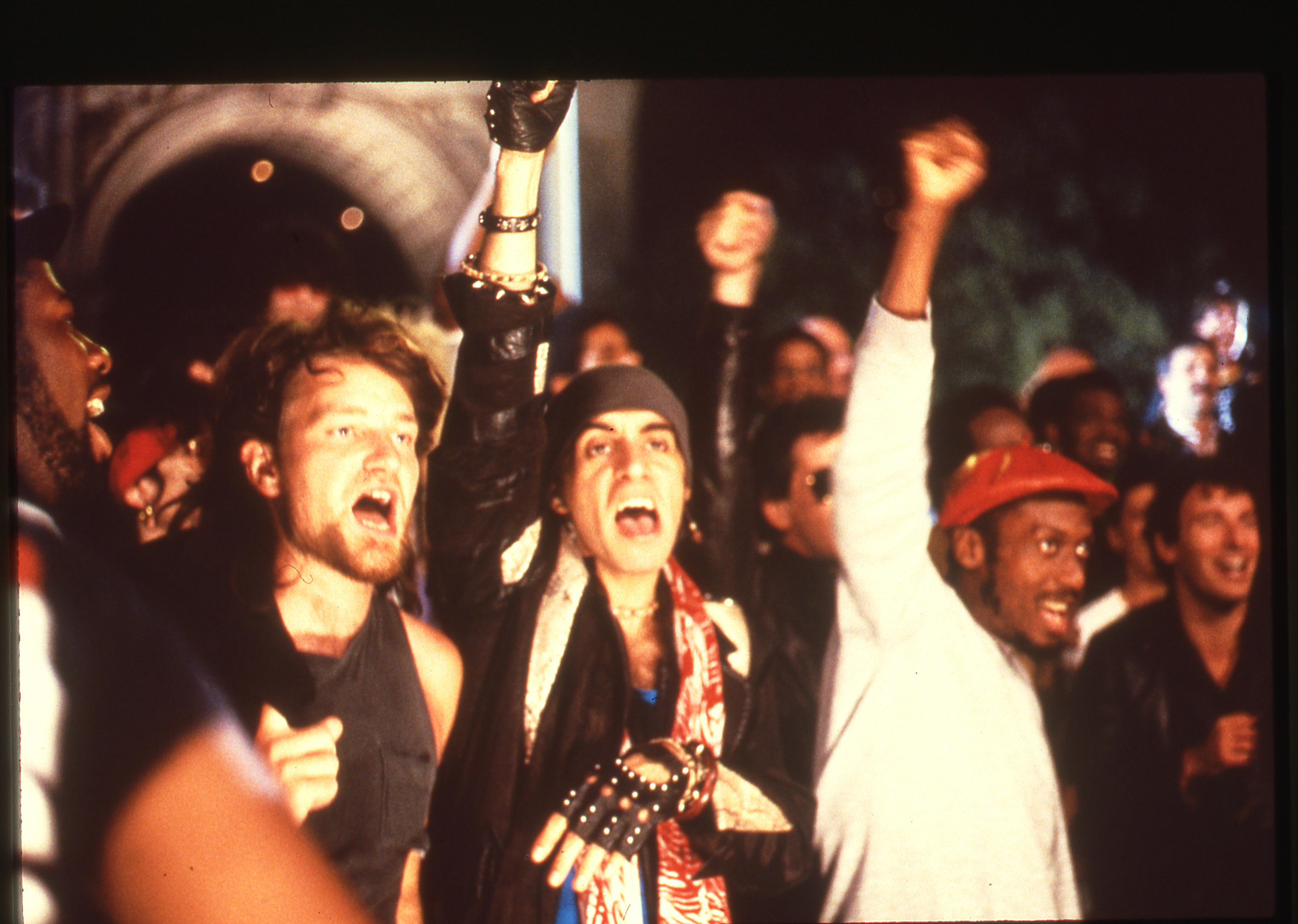
Van Zandt in between U2’s Bono and reggae star Jimmy Cliff at the “Sun City” video shoot. Also visible is Run DMC’s Jam Master Jay, Lou Reed and Bruce Springsteen. Photo by Reuven Kopitchinski/Courtesy of Hachette Books.

He continues that thread on the phone. “Should we have stayed together? Probably. But would I have done five solo albums? The Sopranos or Lilyhammer? Busted Nelson Mandela out of jail? Probably not!”

In fact, the book opens with Van Zandt hiding under a blanket on the floorboard of a car as he’s secretly shuttled to meet with the leaders of a revolutionary group in South Africa. He became obsessed with dissolving the country’s apartheid system after his political antennae was heightened after hearing a random playing of Peter Gabriel’s “Biko” in a movie theater.

Years earlier while on tour in Europe for The River, Van Zandt was approached by a kid in Germany who asked him “Why are you putting missiles in our country?” It was a pivotal moment where Van Zandt realized that whether he liked it or not, to some he was representing the United States—it all its good and bad. 

This lead to an obssessive desire to self-educate on history, politics, and racial/social issues. Culminating in the “Sun City” record that certainly helped the dominoes start falling. Though it was the video that made it happen: radio stations felt the song was too black for white stations, and too white for black stations and ignored it. 

On the airwaves, Van Zandt’s Underground Garage started (and continues) as a weekly radio show syndicated around the world and also a permanent 24/7 channel on SiriusXM radio. Its showcases perhaps the widest range of music from the pre-rock sounds of Big Joe Turner, to the pioneers, British Invasion, R&B, punk, and right up to today’s garage rock from new bands, a large number of whom seem to come from Scandinavia!

“I wish someone would steal my format. It’s up for grabs!” Van Zandt laughs. “But everybody was afraid of it. They said you can’t do all 60 – and now it’s 70 – years of rock and roll together. You can’t play soul next to rock next to blues. I said they were wrong. I had to fight to get on my first 20 stations, but then it took off and proved there was [an audience] for this. And for some people, it’s not a religion.”

Van Zandt the Educator is also behind the Rock and Roll Forever Foundation whose Teach Rock program offers hundreds of lesson plans, activities, and media for teachers to introduce music and music history to students across all grades subjects, and genres. All of it free at TeachRock.org. “I’ve gotten a lot of evidence it’s working. We did two tours [with Little Steven and the Disciples of Soul] and gave away 500 tickets every show to teachers, so we heard a lot about how they’re having amazing success,” he says. 

“It’s not just about the integration of the arts into the educational system, which is essential. We want to transform the educational experience with a new methodology for this generation. In a time when they can get an answer to any question in 30 seconds on their device. The kids have imagination and creativity and curiosity. And most of the time, school surpresses that. It’s more important to teach a kid how to think than what to think. And the arts really helps that.”

Van Zandt is also on the Nominating Committee for the Rock and Roll Hall of Fame and a passionate advocate for acts he thinks needs to be in. He was most notably the force behind the induction of the Rascals (and it was his hilarious speech honoring that that Sopranos creator David Chase caught and immediately thought he’d be perfect for the show.”

So, if he had a Magic Pass to give to Hall President and CEO Greg Harris for Instant Induction, who would get the nod?

“Well…there’s so many who need to go in and we try. But it’s embarrassing that the J. Geils Band is not in there,” he says. “And also Procol Harum, Joe Cocker, Free and Bad Company, Johnny Burnette and the Rock and Roll Trio, the Youngbloods. I got a whole list!”

Followers of Van Zandt on Twitter are used to hearing his opinions on subjects like this, along with history, politics, and sports. It’s one of the more engaging celebrity feeds where the celebrity is actually pushing the button on his or her phone. And he’s not afraid to mix it up with trolls or dropping a “fuck” here and there.

“I’ll take a break from writing or reading and just glance at it, answer a few, and then go back to it,” he says. “I try to mute most of the jerks, but sometimes I’ve just got to vent! They can be really obnoxious,” he says. “It’s not in my nature to just sort of let that stuff go! But my wife will yell at me that I can’t do those things and what if they’re a fan? But if they’re a ridiculous white supremacist, I don’t need them!”

Finally, when we talk it’s been two days since Van Zandt and his wife Maureen (a dancer/actress who was also on the Sopranos, playing her real-life husband’s fictional wife), attending the premiere of the Sopranos prequel movie The Many Saints of Newark.

In it, actor John Magaro plays a younger version of Silvio Dante character, complete with all the vocal cadence and physical tic and body language that Van Zandt brought to the character. So, what did he think of the acting/impression?

“It was so good, and when he came on, it got one of the biggest reactions of the night! It was hilarious, the place went crazy!” He laughs. “I hope that people can see it in the theaters. And you talk about a fanatical audience? Vera [Farmiglia, who plays matriarch Livia Soprano] was great.” He also calls And Michael Gandolfini—the real life son of the late James Gandolfini who plays his father’s Tony Soprano as a younger man–“terrific” in the role. 

Finally, anyone who follows Stevie Van Zandt across any media will keep seeing a recurring color: purple. He favors the shade it with his clothes and trademark head scarves, album covers, digital backgrounds for the Underground Garage online, and even the cover of Unrequited Infatuations. This begs the question: Is he trying to take ownership and association of the shade away from Prince?

“Well, you know, Jimi Hendrix started it!” He laughs. “So we’re all borrowing from him!”

This interview originally appeared at HoustonPress.com
Posted in Books, Steven Van Zandt | Tagged , | Leave a comment

The Violent Femmes Revisit Their Avian Roots

The Violent Femmes’ original lineup in 1991 for “Why Do Birds Sing?”: Gordon Gano, Brian Ritchie, and Victor DeLorenzo. Photo by Howard Rosenberg/Courtesy of Craft Recordings.

Note: This interview originally appeared in September 2021.

The Violent Femmes are just three gigs into their first live shows since the pandemic started. And singer/guitarist Gordon Gano is pretty much just picking up from where he left off.

“Well, the stage is the place to be after 40 years of us doing it! In the past, we’ve not played for stretches because of internal reasons. But this time, it’s because of the world,” he says.

“I have a friend who said ‘You must be excited to be playing live again because of the energy and intensity.’ And I hadn’t really thought about it. But I have to say, after getting onstage for the first show, she had a point! It’s a real, positive thing to have that presence from the audience.”

Last fall tour was with Flogging Molly, Me First and the Gimme Gimmes and THICK. And while the Femmes have had no previous connection or relationship to the raucous Irish rocking Mollies, Gano hopes to win over some of their fans.

“We’ve gone out with Barenaked Ladies and Echo and the Bunnymen before, and it’s kind of fun to play to a different audience who might not be there for us,” he says.

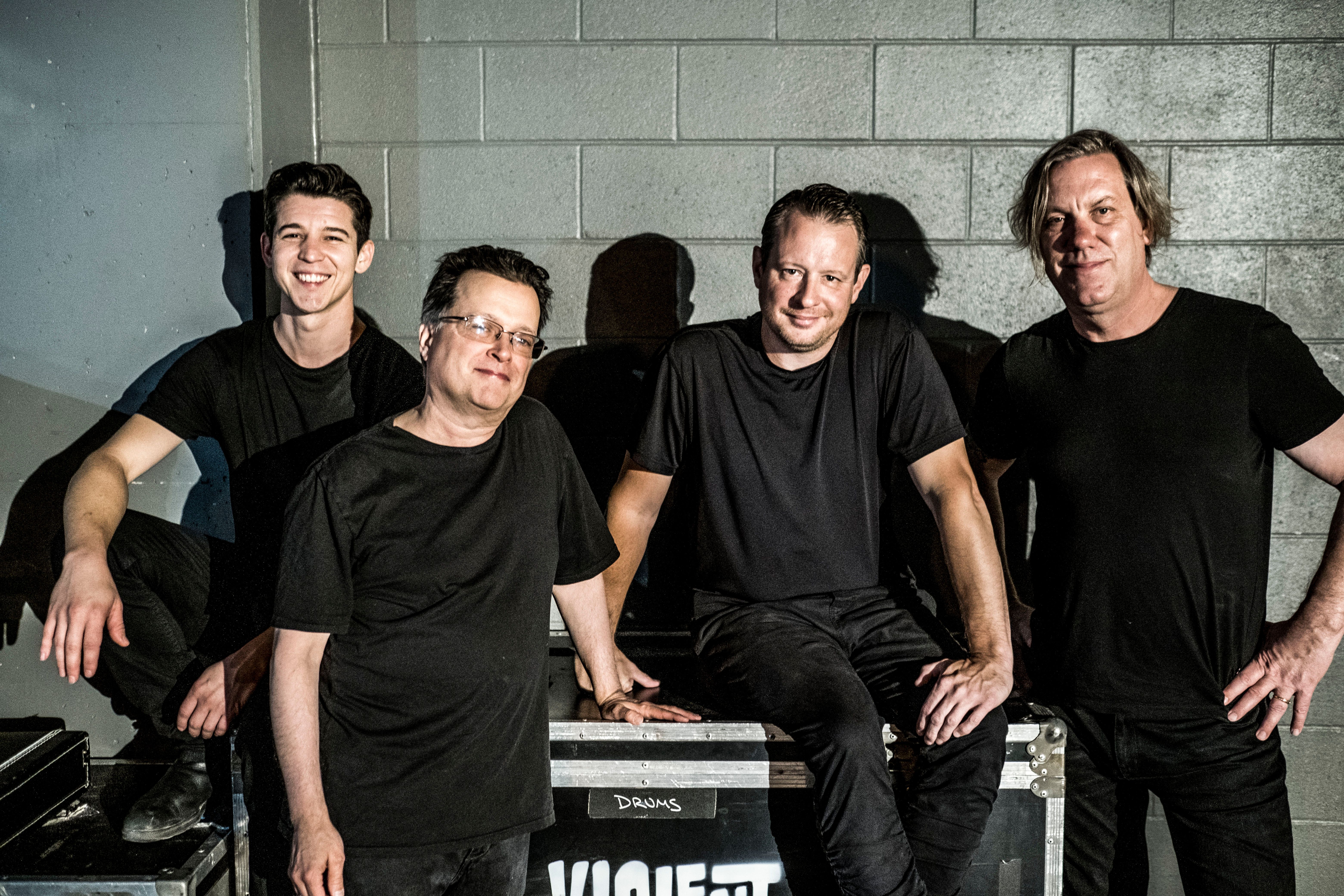
“I’ll look out and see people in a Flogging Molly T-shirt. And even if they’re not intense into what we’re doing, I can see they’re enjoying it. And that feels great.” The current lineup includes founding members Gano and Brian Ritchie (bass/vocals), along with John Sparrow (drums) and Blaise Garza (saxophone).

Other Femmes News includes an upcoming 30th anniversary reissue of the band’s 1991 release, Why Do Birds Sing? (Craft Recordings). In addition to the original album remastered, the 2CD package includes alternate takes and demos, an unreleased song from the sessions (“Me and You”), a raucous fan favorite with a lead “vocal” by Ritchie (“Dance, Motherfucker, Dance!”) and a complete 1991 live show. There’s also a single LP straight reissue. Both feature the original lineup of Gano, Ritchie and drummer Victor DeLorenzo.

Why Do Birds Sing? came out at a pivotal time in the band’s history. The critical acclaim and impact from their first three releases (1983’s folk punk classic Violent Femmes, 1984’s roots/Americana-heavy Hallowed Ground and 1986’s more experimental The Blind Leading the Naked) had faded a bit. The band had actually broken up before reconvening for 1988’s 3, but its reception and production were a bit underwhelming.

With Michael Beinhorn co-producing with the band and an armful of new material from Gano, Why Do Birds Sing? brought out the stripped-down power of the trio. It would be the last time the original lineup recorded together with DeLorenzo’s departure.

The record’s best-known tune—still a crucial part of the band’s set list today—is “American Music.” It was inspired by a double (or triple) album that Gano had come across in a library (or a thrift store) that was a 1960’s (or 1970’s) compilation of previously-released songs by artists ranging from Johnny Cash to John Cage.

“That song really connects with people, and it gets a popular response in a way unlike anything except those songs from our first album,” Gano offers. Songs there would include their biggest hit, “Blister in the Sun,” along with standards “Kiss Off,” “Add It Up,” “Gone Daddy Gone” and “Good Feeling.”

Gano’s lyrics and the almost sing-songy melody of “American Music” surprisingly expressed his sincere love for it, even if the lines about taking drugs and needing a date to the prom came from humor and personal experience respectively. Originally played faster, the reissue’s new liner notes by music journo Jeff Slate note that it was Ritchie who suggested the pace be slowed for most of the song, before shifting into a more punk sound at the end.

When told that given the general course of the band’s material that it’s surprising there’s no punchline or twist or irony to the lyrics, he considers the implication.

“Oh! I can see how people would think that!” Gano laughs. “But we have a way of doing that [straightforward] as a band and from the songs themselves. I remember with our gospel-type songs, people said ‘Where the twist?’”

The Violent Femmes in 2021: Blaise Garza, Gordon Gano, John Sparrow, and Brian Ritchie. Photo by Jay Westcott/Courtesy of Chummy PR.

To that point, he says that when Hallowed Ground came out with songs “Jesus Walking on the Water” and “It’s Gonna Rain,” some of the UK press actually congratulated the band on their religious satire and making fun of American gospel and country music. Even down to noting the “squeaky, out of tune” instruments. Gano—a devout Baptist—says that was not the real case at all.

In terms of Gano’s lyrics, especially during the ‘80s and ‘90s, one would be hard pressed to find someone who so expertly wrote about teenage male social awkwardness, sexual frustrations, and wanting revenge at school bullies. One of his most famous choruses in “Add It Up” goes thusly: “Why can’t I get just one fuck?/Why can’t I get just one fuck?/I guess it’s got something to do with luck/But I waited my whole life for just one…”

On “More Money Tonight” from Why Do Birds Sing?, Gano offers “Sometimes in school people pick on me/In the gym locker room or in the hallway/Cruel things people do and say/Wait a minute wait a minute/I’ll make more money tonight than you ever dreamed of/You thought I was strange well just look at me now/If you are lucky I’ll play in your city.”

So, do many of his fans just assume songs like these are completely autobiographical? “That’s a good question. And I’ve done that myself, like thinking Bob Dylan is saying exactly what happened to him,” Gano ponders.

“But in a sense of writing a song, it creates its own world and has its own truths. Something like ‘Country Death Song’ is completely made up, but the there’s others that are what exactly happened to me. Usually, it’s a combination.”

In the case of “More Money Tonight,” Gano continues. “Yeah, there’s a lot of autobiography in that, and people did pick on me a lot in junior high school. My first two years in high school, the vibe was ‘We want to beat you up, but we’re not sure why, so we’ll keep our eye on you.’ Then in the last two years when I moved to a different school, it completely changed. It was like ‘You’re different, and we like you.’”

The record also includes a cover of Culture Club’s “Do You Really Want to Hurt Me?” featuring a more much sinister vocal by Gano, who also rewrote some of the lyrics. According to the liner notes, Ritchie ran into Boy George at a hotel bar where the Karmic Chameleon proclaimed it the best cover of any of his band’s songs.

The Violent Femmes are technically “from” Milwaukee, Wisconsin, even though Gano was born in New York and has lived there most of his life. And while he notes that Ritchie and DeLorenzo have both said that the Cream City/Brew City impacted and influenced their music, he argues in the negative.

“They thought it made a difference and that we sounded different than if we had been anywhere else, and I completely disagree,” he says. “My family moved to Wisconsin when I was 10, and people always said to me ‘You’re not from here. Where you from?’ My influence was more from my family, what kinds of records my parents would play, and my father singing old country songs and my brothers and sisters who were at Woodstock or got into punk music. But I do like Wisconsin a lot.”

Finally, in terms of geography, Gano’s most omnipresent thought about Houston is not a particular gig or venue or gem of a restaurant, it’s found in one of the city’s greatest musical exports: blues man Lightnin’ Hopkins.

“I feel affinity for the people of Houston because of the floods and all the terrible things that happen. But going back, the biggest thing I think about is him. My older sister got me a Lightnin’ Hopkins tape when I was 14 or 15,” he says.

“And then there’s that documentary by Les Blank [1969’s The Blues Accordin’ to Lightnin’ Hopkins]. I must have watched that thing 30 or 40 times in the ‘80s! I just loved it. I can remember certain lines and certain shots. It felt like something profound. And it was!”

This interview originally appeared at HoustonPress.com

Posted in Violent Femmes | Tagged , , , , , | Leave a comment

The Metal Magic of Ronnie James Dio Shines in Posthumous Autobiography

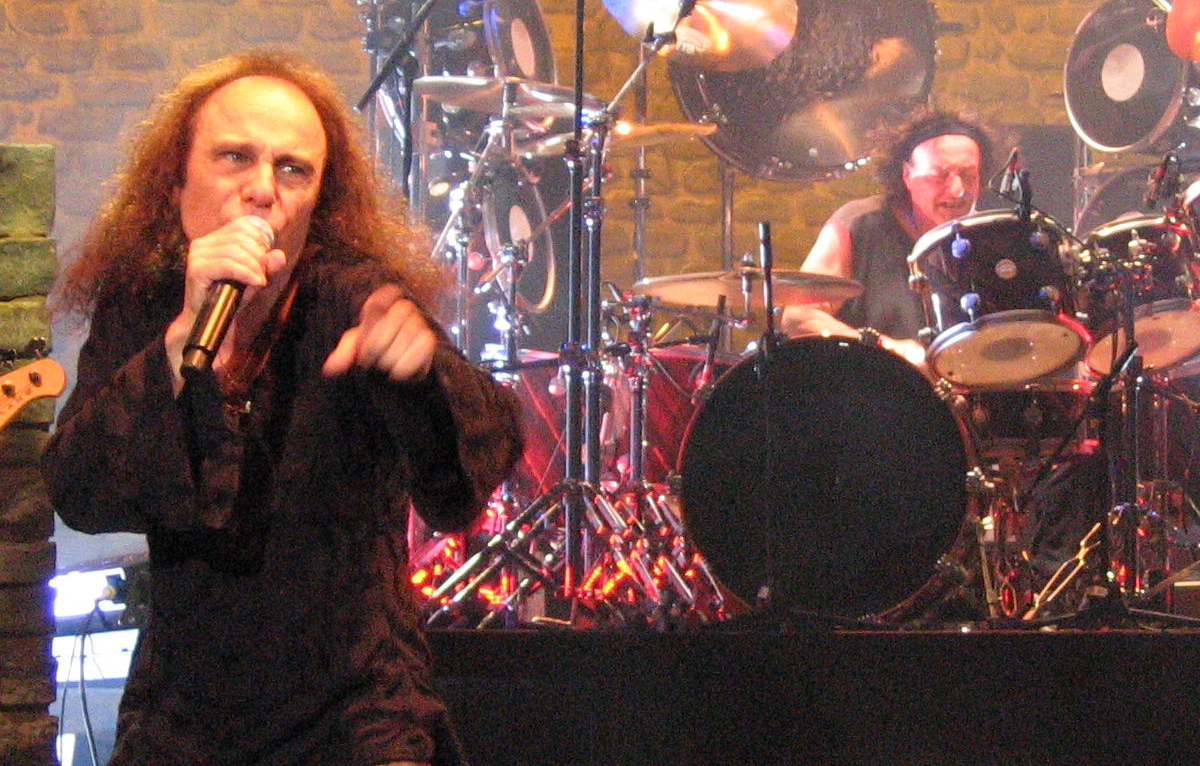
Ronnie James Dio with drummer Vinny Appice in 2007. He had reunited with his former Black Sabbath bandmates to tour and record as Heaven and Hell in the years prior to his death. Photo by Marek Krajcer/Wikimedia Commons.

Rainbow in the Dark: The Autobiography
By Ronnie James Dio with Wendy Dio and Mick Wall
264 pp.
$28
Permuted Press

When Ronnie James Dio—announced in 2009 that he had stomach cancer, it certainly gave him an impetus to complete the autobiography that he’d been working on for a while.

He’d already had a good chunk of the manuscript written down in what his widow Wendy Dio said was his “beautiful handwriting.” But it only took the narrative up to his early time with Rainbow. There were still so, so many years and much music to cover in his tenures with both Black Sabbath and his own long-running band, Dio.

As he became weaker, the pages became more notes and anecdotes he’d put down or relate to his wife. But time ran out, and Ronnie James Dio passed in May 2010.

Years later at the urging of Dio’s former publicist and esteemed hard rock/heavy metal journo Mick Wall, and the project took life again. The pair began to flesh out the narrative using the copious interviews Dio gave over the years, those sketchy notes, and other sources to continue the story in his voice, and bring the tale up to 1986.

That’s when the singer achieved a dream of selling out 20,000 tickets at Madison Square Garden with Dio. After several announced-then-rescinded publication dates, Rainbow in the Dark (named after his biggest solo hit) is finally out. It will leave fans of the man who is arguably heavy metal’s greatest vocalist (apologies, Rob Halford and Bruce Dickinson) more than happy to throw his signature metal horns in approval.

Born into an extended Italian-American family, Ronald James Padavona’s musical journey began at the tender age of 6. That’s when his father stopped him from going to play baseball with his friends and insisted on the spot that he pick a musical instrument to play. Something that the elder man felt was necessary to create a “well-rounded individual.” Stumped, the boy picked the trumpet, on which he then spent a dozen years taking lessons.

But it was the early ‘60s, and rock and roll bands did not have trumpets. So he switched to bass and gigged in a series of groups, the most notable of which was Ronnie Dio and the Prophets, who toured up and down the east coast and released ten singles between ’62 and ’65, with Dio also taking over vocals.

His new last name stemmed from a desire to have a tougher, Mafia-sounding moniker. That he took inspiration from real-life mobster Johnny Dio—then ill-advisedly might sometimes pose as his nephew to help bookings along. And that leads to some funny stories about the truth almost catching up with him.

Years later, Dio and wife Wendy are dining in a known mob-hangout restaurant and start receiving amazing service and expensive drinks they didn’t order. The waiter simply says that “Uncle Johnny” is taking care of the tab. Whether the real-life mobster was in the restaurant himself or someone else took it upon themselves to throw out the name, the couple never found out, because they never saw him.

The Prophets morph in to the heavier-sounding Elf, whose benefitted from the patronage of Deep Purple bassist Roger Glover on three albums. But despite opening for them near the peak of the Purps’ success, missed opportunities and a series of accidents (including a car wreck caused by a drunk driver that killed a bandmate and seriously injured Dio and the others) limited their success.

But Dio reminisces about one great 1974 Elf gig with Deep Purple and the J. Geils Band at Houston’s Astrodome. “We were awed by the structure…[but] the audience was not allowed on the field because of the fragile AstroTurf covering it,” he writes. When new Purple singer/bassist Glenn Hughes off-the-cuff invites the far-away audience to “come on down,” they did by the hundreds, swarming over barriers and onto the field. 

“The Astrodome management went crazy and threatened lawsuits. When the show was over, the band was charged $60,000 [$332,000 in 2021 dollars),” Dio continues. “Ritchie [Blackmore, Purple leader/guitarist] loved it. You couldn’t buy that kind of publicity.”

Blackmore then lures Dio to front Rainbow, though there was never a question about who was running this ship, but plenty on which version of the mercurial guitarist you’d get (Purple vocalist David Coverdale called Blackmore an “interesting bunch of guys”). Hijinks with drink, drugs, and hotel wrecking/ejection continues. But when Dio meets Wendy at the Rainbow Bar and Grill where she is working as a server, his groupie days are done. 

Dio’s lyrics continue on themes he would use for the rest of his life of kings and queens, angels and demons and dungeons and dragons. After Dio quits Rainbow over Blackmore’s desire to make more commercial music, he befriends Black Sabbath guitarist Tony Iommi who is looking to replace ousted lead singer Ozzy Osbourne.

The two collaborate on only two studio records at the time, but what doozies. Heaven and Hell is one of metal’s all times best records and Mob Rules is up there as well. But (again) creative tensions lead to a split, Alpha Males Dio and Iommi clashing while bassist Geezer Butler—voluntarily acquiescing lyric writing to Dio—wants his pen back in the mix.

It’s this section that readers get the definitive version of how Dio adapts a hand gesture credited to Italian culture and specifically his grandmother into the now ubiquitous “metal horns.” It’s actually called the “maloik,’ or evil eye to curse an enemy or protect yourself from one. Dio notes that since Osbourne was always flashing a peace sign, he needed a more nefarious gesture of his own. When he began flashing it at Sabbath crowds in 1980—and they started flashing it back—it took off immediately. Wendy also begins to take more guidance as her husband’s manager and fighter.

The end of the book is a whirwind journey of how the band Dio’s first three records, Holy Diver, The Last in Line, and Sacred Heart are massively successful. The relative brevity of pages dedicated to this era absolutely leaves the reader wanting a bit more. Though the circumstances under which it was written certainly explain why.

The Dios—both Ronnie in his words and Wendy in directly-quoted sections—do engage in a bit of score-settling. Especially with original Dio band members Vivian Campbell and the late Jimmy Bain, who have complained over the years about lack of financial rewards and songwriting credits given them during their time with the group.

They make their cases, although they’re not always entirely convincing (i.e. Bain’s crucial synth intro and musical theme to biggest hit “Rainbow in the Dark” is dismissed as a “little keyboard part”).

But the couple also took the biggest risks financially and artistically to break the group. And both are honest about the struggles and boundaries with Wendy’s dual role as the manager of the band as well as the wife of its driving force, and admit there were plenty of heated arguments when those lines blurred.

Overall, Rainbow in the Dark is a great work for any Dio fan (in any of his incarnations), and long overdue. A potential second volume covering 1986-2010  is mentioned by Wendy Dio and Wall, and fans would certainly love to see that coming to fruition.

This article originally appeared at HoustonPress.com

Posted in Black Sabbath, Books, Ronnie James Dio | Tagged , , , | Leave a comment

John Mellencamp’s Life of Roots, Rock, and Rebellion

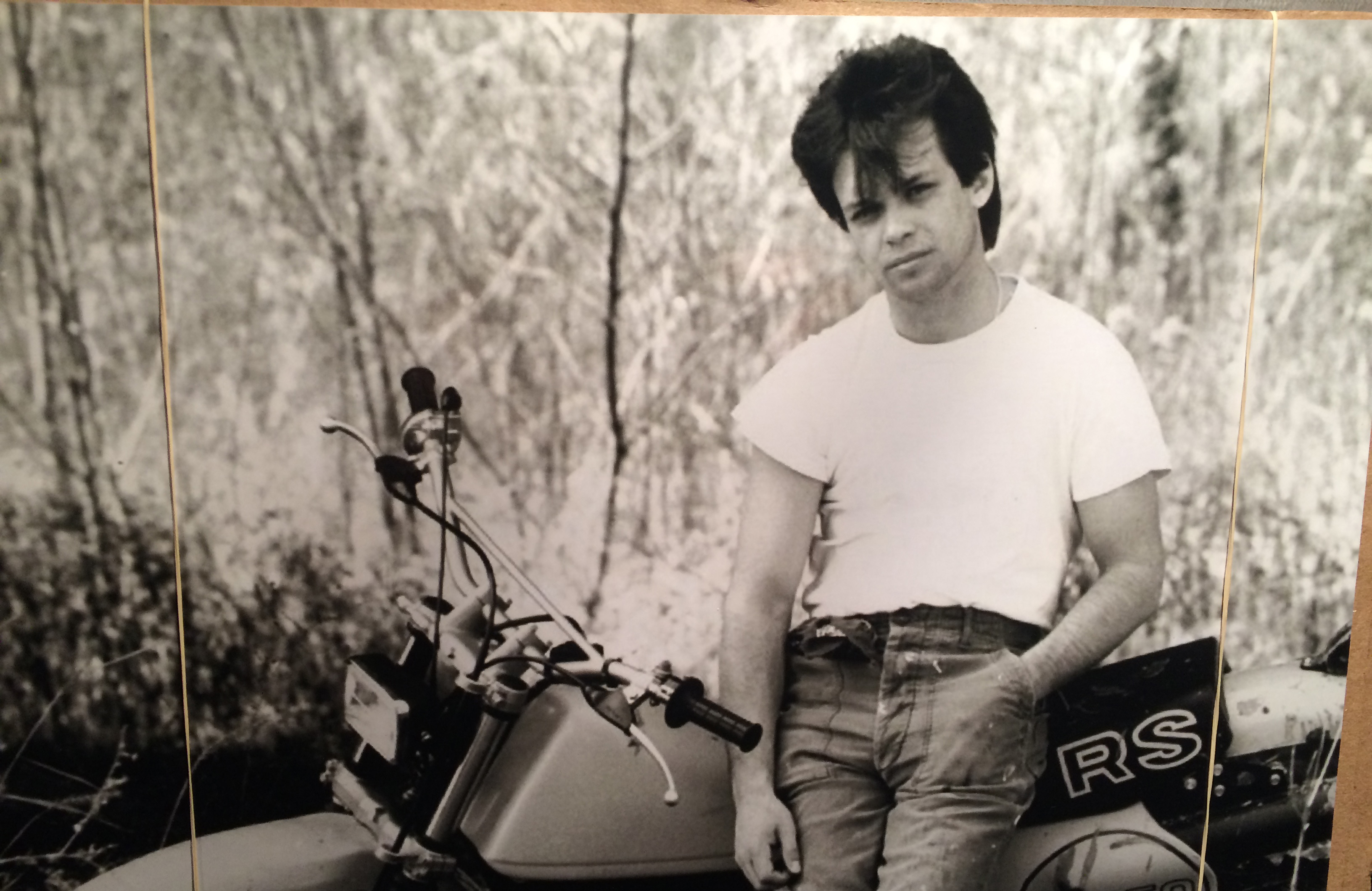
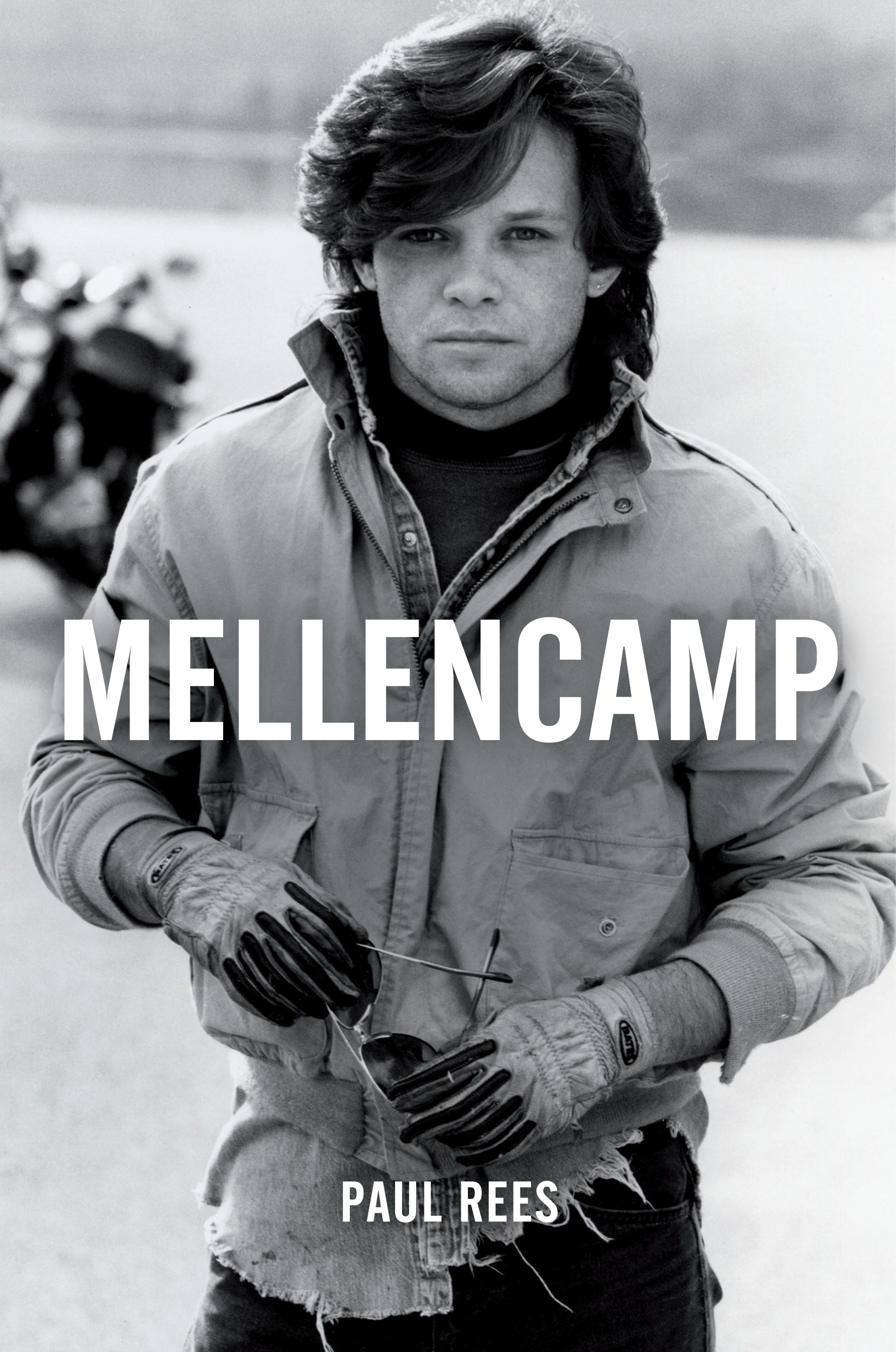
John Mellencamp with one of his ever-present motocycles. Courtesy of John Mellencamp personal collection/Used with permission.

It’s telling about John Mellencamp that his nickname, “Little Bastard,” is not only a sobriquet that he revels in, but does his damnedest to live up to.

His tough-as-nails/loud-as-a-motorcyle-engine persona and songs have helped define an image and put him on the same shelf as  Bruce Springsteen, Bob Seger, and Tom Petty. Though if you invited them all to a dinner party, it wouldn’t be hard to figure out which one would want to start a fight, even with the host.

Author and music journo Paul Rees has penned books on Led Zeppelin’s Robert Plant and the Who’s John Entwistle, while ghostwriting the memoirs of Toto’s Steve Lukather and UFO’s Pete Way. Mellencamp is the first major biography on the pride of Seymour and Bloomington, Indiana.

Mellencamp first came briefly into consciousness with 1978’s self-penned single “I Need a Lover” (released under the management-driven name “Johnny Cougar”), and then hit big success starting with 1982’s American Fool album.

It’s easy to forgot how many hits there are, among them “Hurts So Good,” “Jack and Diane,” “Pink Houses,” “Lonely Ol’ Night,” “Rain On the Scarecrow,” “Cherry Bomb,” “Check It Out,” “Authority Song,” “Crumblin’ Down,” “Small Town,” “Paper in Fire,” “R.O.C.K. in the U.S.A.” and “Pop Singer.”

Interestingly, “Jack and Diane” was originally written as “Jack and Jenny” – and as an interracial couple with Jack being Black. When record company advisors said there’s no way that would get played on the radio, Mellencamp rewrote, taking out any racial references. Also, the young lovers were originally suckin’ on cigarettes outside the Tastee-Freez instead of chili dogs.

Rees also discusses Mellencamp’s  “side gigs” as a painter, visual artist, screenwriter, actor, and a driving force behind the long-running Farm Aid shows and organization.

It’s a fascinating twist to Rees’ work that he’s so brutally honest in the book about what a, well, jerk his subject is. And there’s plenty of interview subjects here to back him up, some of whom worked with the performer for decades.

And that’s consistent behavior whether the artist was a struggling neophyte or world-famous troubadour. In these pages, John Mellencamp is alternately rude, difficult, argumentative, angry, temperamental, aggressive, vainglorious, insulting, and bossy beyond belief. It’s one thing to be demanding in the pursuance of artistic excellence in art, another when you’re physically assaulting your own band members in the studio or regularly belittling them in front of others.

Nor is Mellencamp the man ever satisfied. He hates being a nobody, he hates being world famous, and he hates being forgotten. “Well, happy is not a normal way to be,” Mellencamp offers. “If you see some guy who’s happy all the time, there’s something fucking wrong with him. He’s on drugs, or drunk. Happiness is a very small commodity and the idea that we live to be happy is just fucked up. And it’s wrong. We live to work.”

Ouch. Then again, this is the stubbornness level of a guy who didn’t drink or drug, but inhaled coffee, chain smoked up to 80 cigarettes a day (even after having two severe heart incidents), and once consisted on a diet of mostly fried food. As a young man when he gets into a very bad motorcycle accident while speeding and without a helmet, his idea of an F.U. to the cops is to go right back out – with a Tupperware bowl on his head.

At The Bottom Line, New York City 1980: Robert “Ferd” Frank, John Mellencamp, and Mike Wanchic. Photo by C. Pulin/Courtesy of Atria Books.

John Mellencamp made it into the Rock and Roll Hall of Fame in 2008, but Rees skips lightly over the event. He also barely mentions one situation that surely had some stories behind it: the MTV-run “Pink Houses” contests—one of the channel’s most famous—where the winner received an actual pink house in Indiana at which Mellencamp and band played a housewarming concert.

For the past two decades, John Mellencamp has stopped making records for general audience and instead released projects that appealed to himself or hardcore fans. His critical appreciation has grown with this broader, more Americana/roots based projects. There have been more overtly political tunes—his “Rodeo Clown” is about George W. Bush, and he’s recently written about Black Lives Matter. 

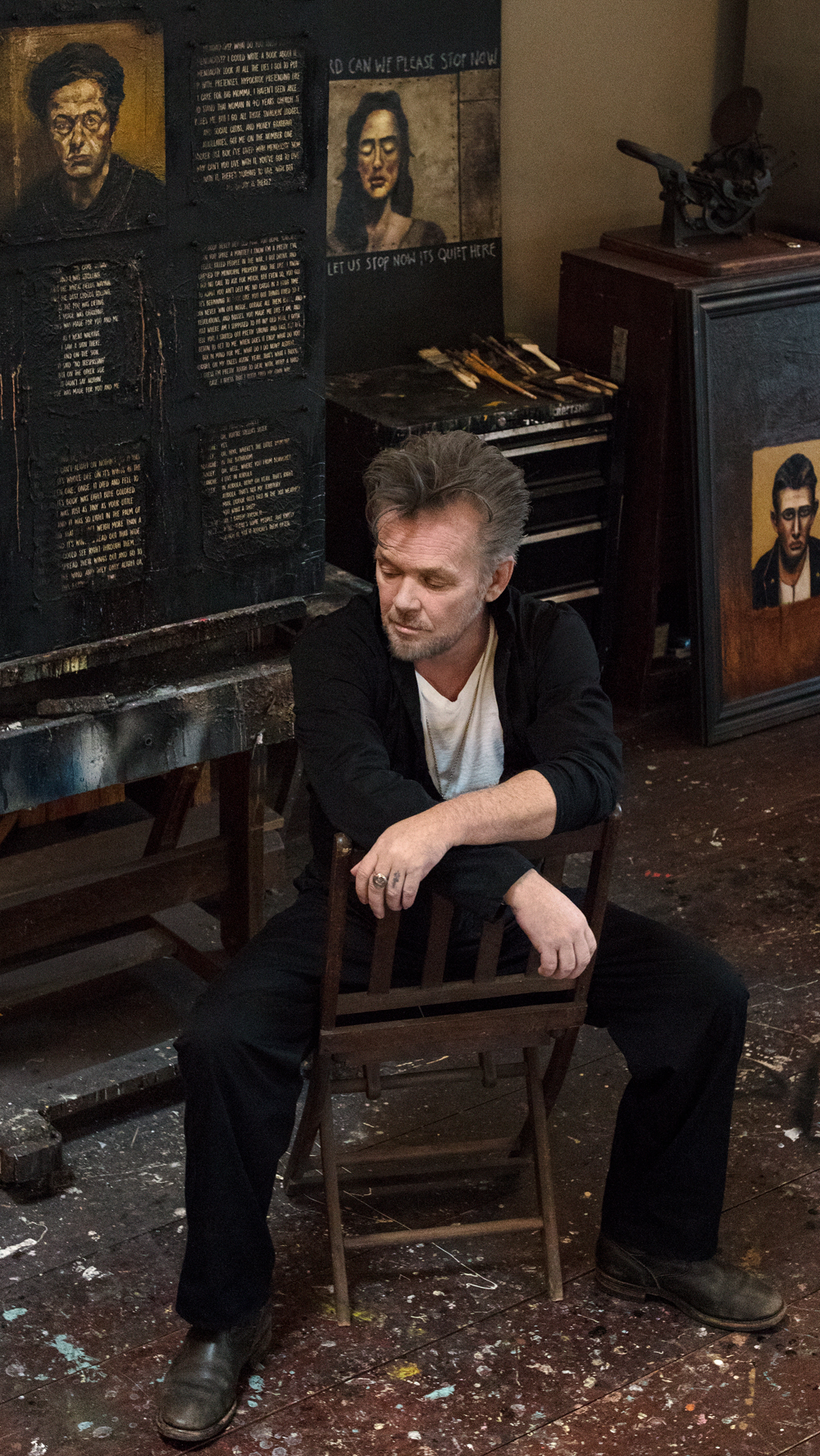
Mellencamp in his art studio at home in Bloomington. Photo by Myrna Suarez/Courtesy of Atria Books.

He and horror writer Stephen King collaborated on a long, long gestating musical theater project Ghost Brothers of Darkland County, which was presented both as a stage version and an all-star album project. 

And in 2013 he embarked on a tour of minor league ballparks, sandwiched between opener Willie Nelson and Family and closer Bob Dylan and band. Rees gets some humorous comments from Mellencamp band members who were instructed to and had to sign a form saying they would not be within 250 feet of Dylan…or even look him in the eye!

He also got more political, playing shows in support of both presidential candidates John Kerry and Barack Obama, while getting the John McCain campaign to stop using his music at their events (he supported Michael Bloomberg in the last election). The thrice-divorced performer also had high-profile romances with model Christine Brinkley and actress Meg Ryan. These days, he’s more likely to be found in front of one of his painting canvases than a studio microphone.

Rees is somewhat coy about what involvement/access he had to his title subject for the book. He clearly places him in the room with John Mellencamp for some segments…but they could have been from older interviews. 

It’s only in the acknowledgments that he thanks Randy Hoffman – Mellencamp’s manager – for “clearing the path.” He also quotes from family members and close colleagues who clearly must have had at least some nodding OK to participate from the Man Himself. Promotion for the book will include tie-ins with Mellencamp’s official social media accounts.

Mellencamp will appeal to fans, but probably also students of psychology as it dissects a multi-faceted music man. In Rees’ final pages, we shows a subject he’s just chronicled for nearly 300 pages as fairly indifferent about his legacy. When asked flat out by Rees how he’d like to be remembered, Mellencamp tellingly pulls yet another cigarette out of the pack, takes a long drag, and answers resignedly “Oh, I don’t give a shit.”

This review originally appeared at HoustonPress.com
Posted in Books, John Mellencamp | 1 Comment

The Box Tops are Still Delivering Letters

The Box Tops’ front line in 2021: Gary Talley, Bill Cunningham, and Rick Levy. Photo provided by the Box Tops/Used with permission.

In many rock, blues, and country songs, written letters do not bring good or welcome news to the recipients. They usually carry messages about the death of a loved one, a dumping by a romantic partner, demands for payment, or threats of retribution.

But in 1967’s “The Letter” by the Memphis, Tennessee-based Box Tops and written by Wayne Carson, the mailed missive contains some great news for the lovelorn addressee, as related in one of classic rock’s most famous opening stanzas:

Gimme a ticket for an aero-plane/Ain’t got time to take a fast train/Lonely days are gone, I’m a-goin’ home/My baby, just a wrote me a letter.

Despite being the band’s first single and clocking in at just under two minutes long, “The Letter” hit #1 on the Billboard charts for the group which included founding members Alex Chilton (lead vocals/rhythm guitar), Gary Talley (lead guitar), John Evans (keyboards), Bill Cunningham (bass) and Danny Smythe (drums).

But for Cunningham, even ascending to that lofty chart height didn’t quell an unease. “I have an interesting memory. I never felt secure as an act when ‘The Letter’ was out, even when it hit #1 and we were out on the road with the big acts,” he says. “Our second single, ‘Neon Rainbow,’ didn’t break into the top 10. It wasn’t until ‘Cry Like a Baby’ came out that we felt more secure we weren’t going to be just a one hit wonder.”

Cunningham notes that “The Letter” also got some unexpected extra play from DJs, as its short running time seemed to perfectly fill up the end of a programming hour when all the music and ads ran out. The song has gone on to be covered by more than 125 artists, the most famous version being Joe Cocker’s, which hit #7 in 1970.

That the deep, gruff voice on the Box Tops’ biggest hit belonged not to a grizzled bluesman like Howlin’ Wolf but the 16-year-old white kid Alex Chilton surprised a lot of people. The group epitomized Memphis rock and roll of the ‘60s.

“Memphis was a unique and magical city during that time. There was so much music coming out of there, especially with [labels] Sun and Stax and Hi. Memphis was a rebel city in that it wasn’t controlled by New York or L.A. We were not seen as sophisticated, and that’s what made our music special.” Cunningham says. 

“And everybody in town played something, some sort of instrument. I believe it was because we were so isolated. The closest really big cities were 200-250 miles away. There wasn’t a lot of television and there was radio, so our form of entertainment was learning to play music. Even if you were working, you’d come home and play at night.”

The Box Tops would have several more top 40 hits, most notably “Cry Like a Baby” (#2) and “Soul Deep” (#18). Others include “Turn On a Dream,” “Choo Choo Train” (which recently appeared in Quentin Tarantino’s film Once Upon a Time in Hollywood) and “Neon Rainbow” (used on a popular UK TV commercial). But “Sweet Cream Ladies, Forward March,” about the good work done by willing prostitutes, was met with controversy.

“It was on its way up the charts when the music programmers figured out what it was about, and they turned it off!” Cunningham says—though the song’s lyrics are hardly difficult to interpret. 

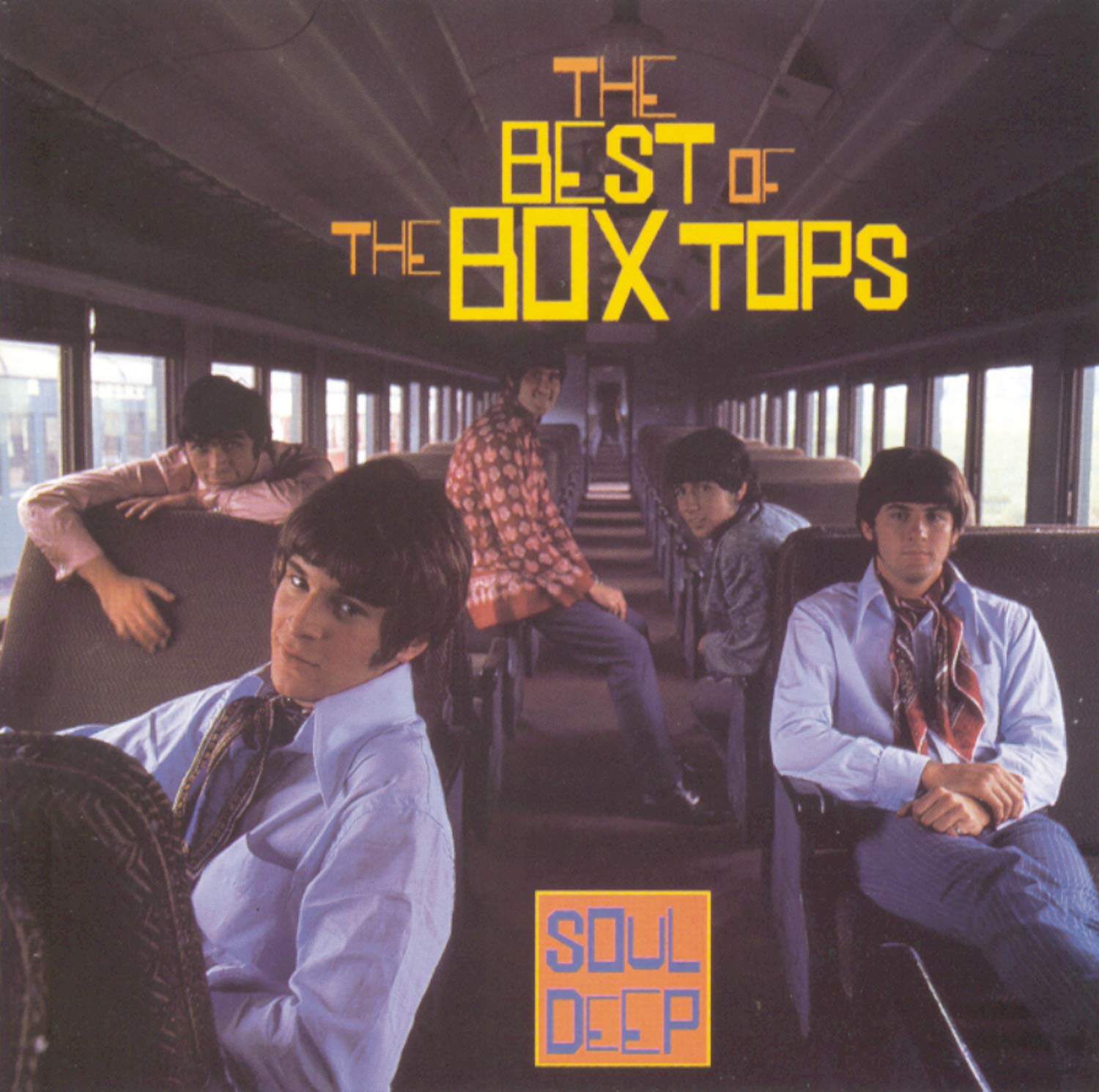
The Box Tops second lineup in 1968 (l to r): (1968), Gary Talley, Alex Chilton, Tom Boggs, Bill Cunningham, and Rick Allen. Record cover.

“But in places like Seattle, it went to #1 locally. You could have regional hits back then. Bands would form their sound playing live and have regional followings before they released a record. Music scenes weren’t like McDonald’s where everything is the same around the country. When you went somewhere, you wanted the local cuisine.”

Groups like the Box Tops, the Beach Boys, the Rascals, Paul Revere and the Raiders and the Lovin’ Spoonful were often portrayed as “America’s answer to the British Invasion.” But that wasn’t the reality, according to Cunningham, simply because the bands were so diverse.

“Everyone gets labeled by critics and reviewers, so we didn’t characterize ourselves. We didn’t know we were ‘blue-eyed soul.’ We originally just wanted to put out a record locally and play more skating rinks or jamborees,” he says. “But the Doors didn’t sound like Hendrix who didn’t sound like the Mamas and Papas or us. It was such a creative time musically.”

There were lineup changes, but the Box Tops were closed by 1970. The original quintet reunited in 1996 for several years, and various configurations continued after that. 

Cunningham and Talley (both now on vocals, with Talley on lead and sitar) reformed the group in earnest in 2015, and today play with Ricky Levy (guitar/vocals), Ron Krasinski (drums) and Mike Stewart (keyboards). Chilton, who also formed the cult fave power pop group Big Star, passed in 2010, and Smythe in 2016.

Chilton’s memory in particular hangs over the group and its legacy. He and Cunningham had been friends since the fifth grade. 

“Alex deserves everything he gets credit for and probably more. He was a really special person. We played in bands even prior to the Box Tops. And [Big Star guitarist] Chris Bell was one of my best friends,” he says. “Alex got attention because of his voice and when he passed away, we were still playing live [as the Box Tops]. It really destroyed me, and I couldn’t do anything for almost two years.”

It was when when Cunningham was invited to play on a tribute record to record producer Dan Penn (who also worked with Box Tops), that he reconnected with Talley, who had come along the sessions. And they decided to put the Box Tops back together.

“It just felt right. Everyone was asking us to go out and play those songs. It’s sad not to have the founding members together with us, but they’re all gone,” he reflects. 

“But we didn’t get anyone to sound like Alex, we sing them ourselves since we did backing vocals on the original songs. We’re not milking anything. It just brings back so many memories for our [audiences], and we love that. And I hear from a lot from people about what ‘The Letter’ means to them.”

The current lineup of the Box Tops are putting the finishing touches on a live CD, primarily to sell at shows as a souvenir. “We didn’t want to sell a CD with Alex’s voice on it,” Cunningham says. “This is more a memory of the performance that they just saw. I’m doing the mixing, and it sounds really good.”

Finally, after the initial breakup, Cunningham left rock and roll behind to concentrate on classical music (earning a Masters Degree), and played in symphony, ballet and opera orchestras. In the mid-1970’s, he landed a gig with the White House Orchestra playing stand up contrabass and performing at many state dinners, receptions and events until the end of the decade.

His last gig was during the Carter administration, playing with Itzhak Perlman and Pinchas Zukerman to celebrate the signing of the Camp David accord between Egypt and Israel. And then he left music behind for awhile to get an MBA in international business!

But his most memorable White House show was playing a special Bicentennial concert. Cunningham remembers the audience included—in addition to President Gerald Ford, his family and scores of dignitaries and politicians—Queen Elizabeth, Cary Grant, George Harrison and (possibly) Alfred Hitchcock.

“I was looking around and thinking ‘What am I doing up here playing?’” he laughs. “George Harrison should be up here!”

This interview originally appeared at HoustonPress.com

For more on the Box Tops, visit BoxTops.com

Posted in Box Tops | Tagged , , , , | Leave a comment

Ellen Foley Comes Out “Fighting” and Remembers Meat Loaf & Jim Steinman

Ellen Foley onstage – a place she’s eager to get back to. Photo by Bruce Cornil/Courtesy of Prime Mover Media.

Note: This interview was conducted and story published after the death of Jim Steinman, but prior to the January 20, 2022 death of Meat Loaf.

According to an interview she gave shortly afterward to Variety, Foley said her working relationship with Meat Loaf in the 1970s was “a beautiful, feisty, joyful friendship. Meat and Jim (Steinman) brought me into the consciousness of the rock ‘n’ roll world. And through ‘Paradise by the Dashboard Light,’ I get to be a horny teenager for all time.”

While her place in pop culture and rock history is secured as Meat Loaf’s duet partner on the epic “Paradise by the Dashboard Light,” Ellen Foley is just as importantly a multi-hyphenate entertainer whose long resume includes credits in movies, television, musical and theatrical roles on and off Broadway, and as a dancer.

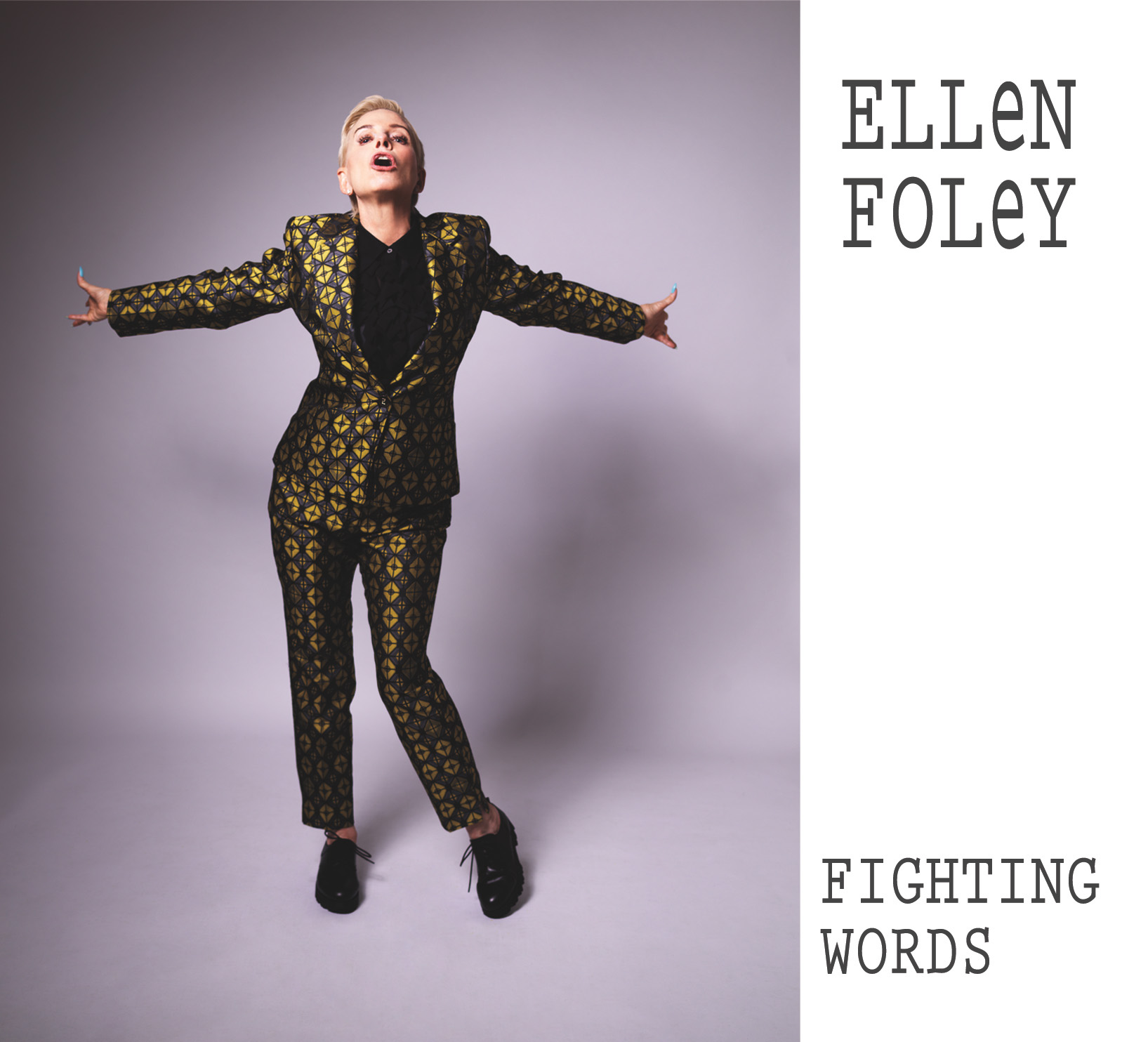
But foremost among her career tentacles is singing rock music. She does so splendidly on her fifth solo record and first in eight years, Fighting Words (Urban Noise Music). Its 11 tracks show the breadth of Foley’s styles from ‘60s girl group and ‘70s Springsteen/Seger meat (loaf) and potatoes rock, to side trips in ballads, soul, and even country.

Urban Noise Music record cover.

It was mostly recorded pre-pandemic, and the whole process from songwriting to recording took several years, with some of that done in her living room. “My first record some 25 years ago was about personal relationships and pain. In this one we had something else to say,” Foley says via Zoom from her home. She notes that the record’s title was at least partially inspired by a certain previous Presidential administration.

“I call him Voldemort because he’s the name that dare not be spoken. You’re in Houston, and when I talk to people in different parts, I’m not sure if I should open my big mouth!” she laughs. “You just woke up every day and there was always some sort of new struggle. I had to remove myself and not watch it and get worked up. You could really heighten your blood pressure with all the destruction and nonsense that was going on.”

Outside of two cover songs, the other nine tracks on Fighting Words were either written solely by or collaboratively with Paul Foglino, who has become Foley’s go-to songwriter. “He had a feminine side that understands women as people. He lives with his wife and two daughters! And we’ve gotten to know each other,” she says. “We’ll just sit in our living room and share things about our lives that we might not with others.”

“Be Nice” is a song of advice to young men on how to treat women, and “Leave Him Janie” has a similar theme, but with an older woman in a longstanding relationship. “Are You Good Enough” finds Foley trying to come to terms with someone who has substance abuse issues and “Fill Your Cup” a more socially aware song about homelessness and loneliness.

“On the streets, you see people who are just lost and have mental or financial problems and have just been forgotten,” she says. “And there’s this image of this long table with food and water and wine and just inviting people in.”

Ellen Foley today Photo by Gregg Delman/Courtesy of Prime Mover Media.

The record’s first single was the upbeat “I’m Just Happy to Be Here.” It’s a duet between Foley and Karla DeVito, with whom she shares an interesting history. The pair have only in recent years become friends.

“We never really hung out. I knew her before she got into the Meat Loaf thing, but we did a tribute show a few years ago to the music of [Meat Loaf main songwriter] Jim Steinman at a club in New York, and we just clicked,” Foley says. “We didn’t even talk about them, just our families and kids. She has an incredible magnetism.”

Both also sang on the Steinman-penned “Going All the Way (A Song in 6 Movements)” from Meat Loaf’s 2016 record Braver Than We Are. They plan on making a video for “I’m Just Happy to Be Here.”

Foley originally met Meat Loaf in the mid-’70s while both were performing in a National Lampoon’s Lemmings stage show. He and Steinman invited her to sing on Meat Loaf’s debut album, 1977’s Bat Out of Hell (which in itself had a laborious birth).

Foley’s place in pop culture was cemented in the 8+ minute “Paradise by the Dashboard Light.” In the epic duet with Meat Loaf, the pair sing from the perspective of a hot and horny teenage couple engaging in some car backseat sexual negotiation (complete with a “play by play” from actual New York Yankees announcer Phil Rizzuto), and a twist ending on the words spoken.

“I knew it was big when people started doing it at weddings and bar mitzvahs and karaoke. But being in those sessions with Jim and Meat and [producer] Todd Rundgren, it felt like something other than anything I’d ever heard,” Foley says. “The best part is that some people have told me they had sex for the first time to it. And that’s a big moment in someone’s life!”

Foley also ended up contributing vocals to “You Took the Words Right Out of My Mouth (Hot Summer Night),” “All Revved Up with No Place to Go,” and the title cut. On the first, she memorably offers to give her throat to “the wolf with the red, red rose” as intoned by a dramatic Steinman on the track.

Single from Foley’s 1979 debut LP “Don’t Let Go.” Record cover.

However, when Meat Loaf and Steinman took the Bat Out of Hell tour on the road and the record suddenly exploded, it was Karla DeVito and not Foley onstage and in TV appearances. DeVito also ended up filming several videos for songs, miming to Foley’s voice. Stories have varied as to why. 

Foley’s official bio notes she was busy performing the musical Hair on Broadway. In other interviews, she noted a desire to use the time to jumpstart a solo career and record her first album. Others note personal and/or professional disagreements with Meat Loaf.

In his own autobiography, Meat Loaf indicates that he was looking for more of an actress, nominally to get pawed every night on stage by him while acting out the “Paradise” narrative. Bat Out of Hell has gone on to sell more than 50 million copies worldwide.

Fighting Words concludes with Foley’s own take on the Bat Out of Hell ballad “Heaven Can Wait.” She had recorded it for a film she appeared in, Lies I Told My Little Sister. But today the wistful-yet-steely take has extra meaning given the recent death of Steinman this past April after a long illness.

“That song means so much to me, and it’s so beautiful,” Foley—who sang it pre-Meat Loaf days in Steinman’s Peter Pan-inspired Neverland rock musical—says. When Steinman passed, she heard the news from Joe Stefko, who drummed for both she and Meat Loaf. She had last seen Steinman in person about five years ago at that New York tribute show.

Foley took to social media to address her sorrow: “Stop. Right. There. Three words that changed my life forever. Three words that Jim Steinman gave me. Three words that gave me a career in music. And three words that exploded worldwide. Three words penned by the most brilliant, hilarious and unique human being I have ever known. Jim, ‘I will love you forever.’” 

Reflecting today, Foley still gets emotional when remembering it. “It was expected but it was rough. This is someone who is always part of you.”

As for her current relationship with Meat Loaf, she hasn’t seen him since that Braver Than We Are recording session. “It was really nice. We were grown-ups. Some of the behaviors were the same, and some were different,” she says. “I was going to call him after Jim died, but he seemed to be in quite a state. So I just left him alone. As much as Jim meant to me, Meat probably felt that his right arm had been cut off.”

As for now, the often overlooked and underrated Foley says she would love to do some live shows to support Fighting Words, and is in the process of working on a single gig livestream. “I’d love to be in front of a real audience. Because I’m in love with these songs,” she says. “But things are changing every day with [the pandemic]. You just don’t know anymore.”

This article originally appeared at HoustonPress.com

For more on Ellen Foley, visit EllenFoley.com

Posted in Ellen Foley | Tagged , , | Leave a comment

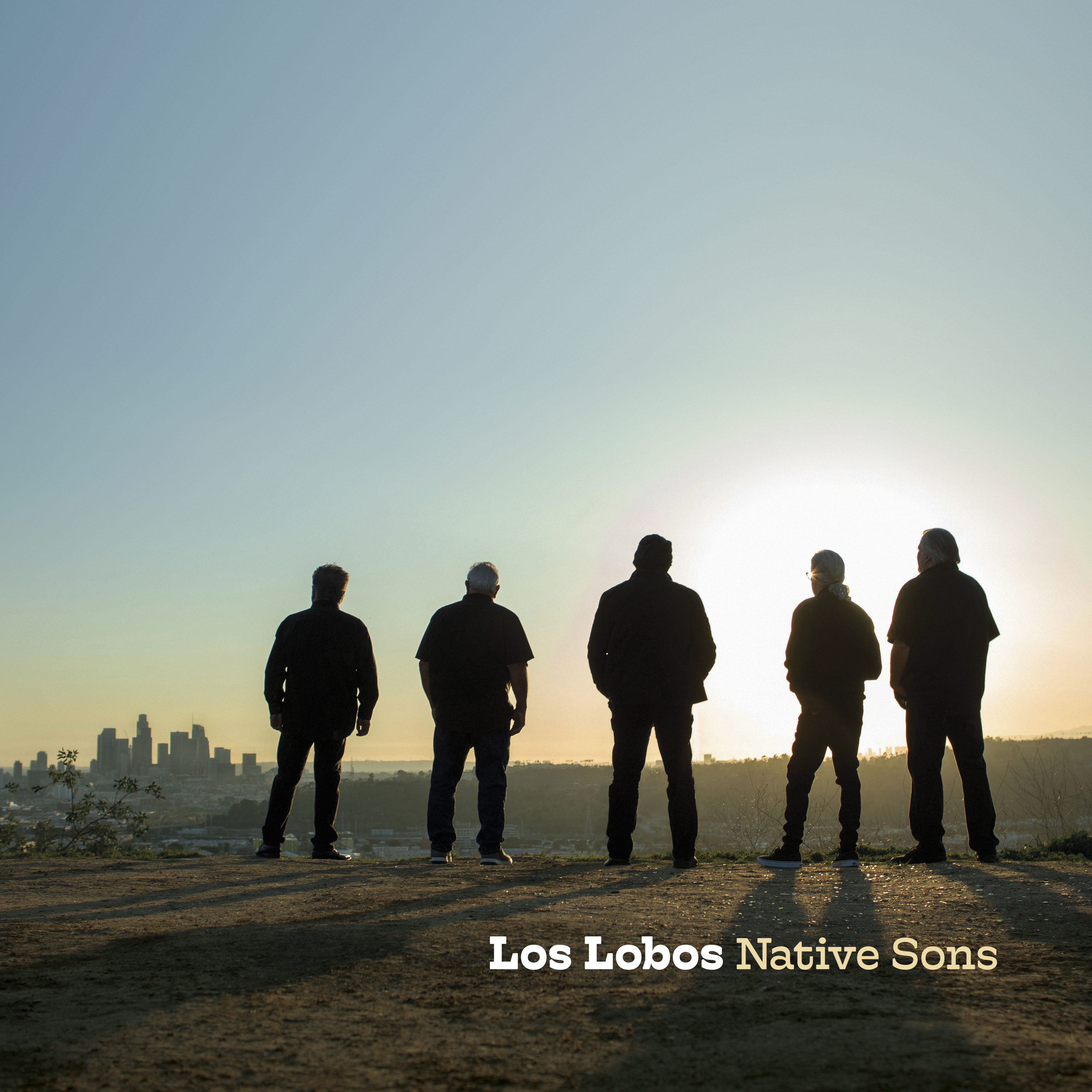
Los Lobos Pay Tribute to Hometown Music on “Native Sons”

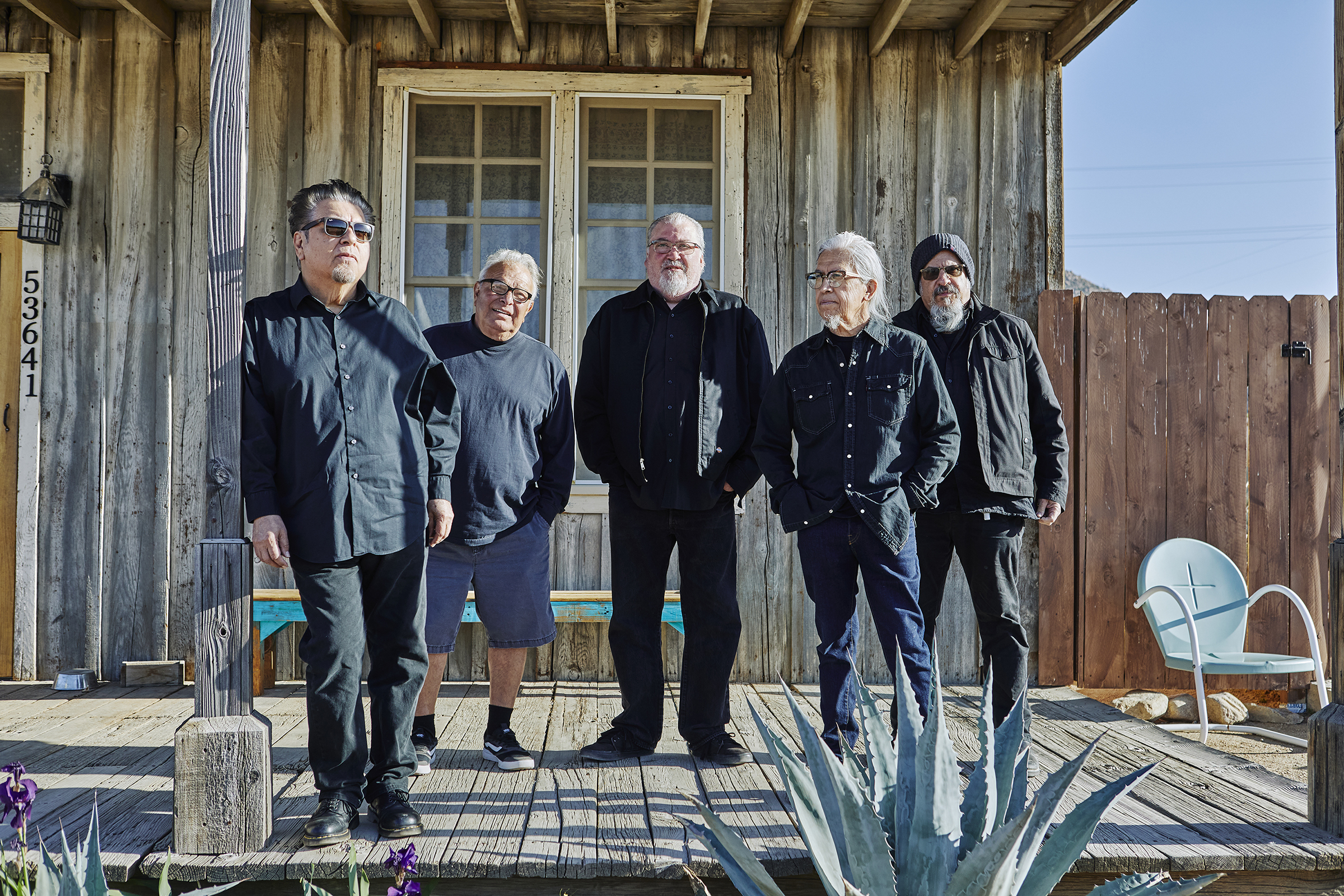
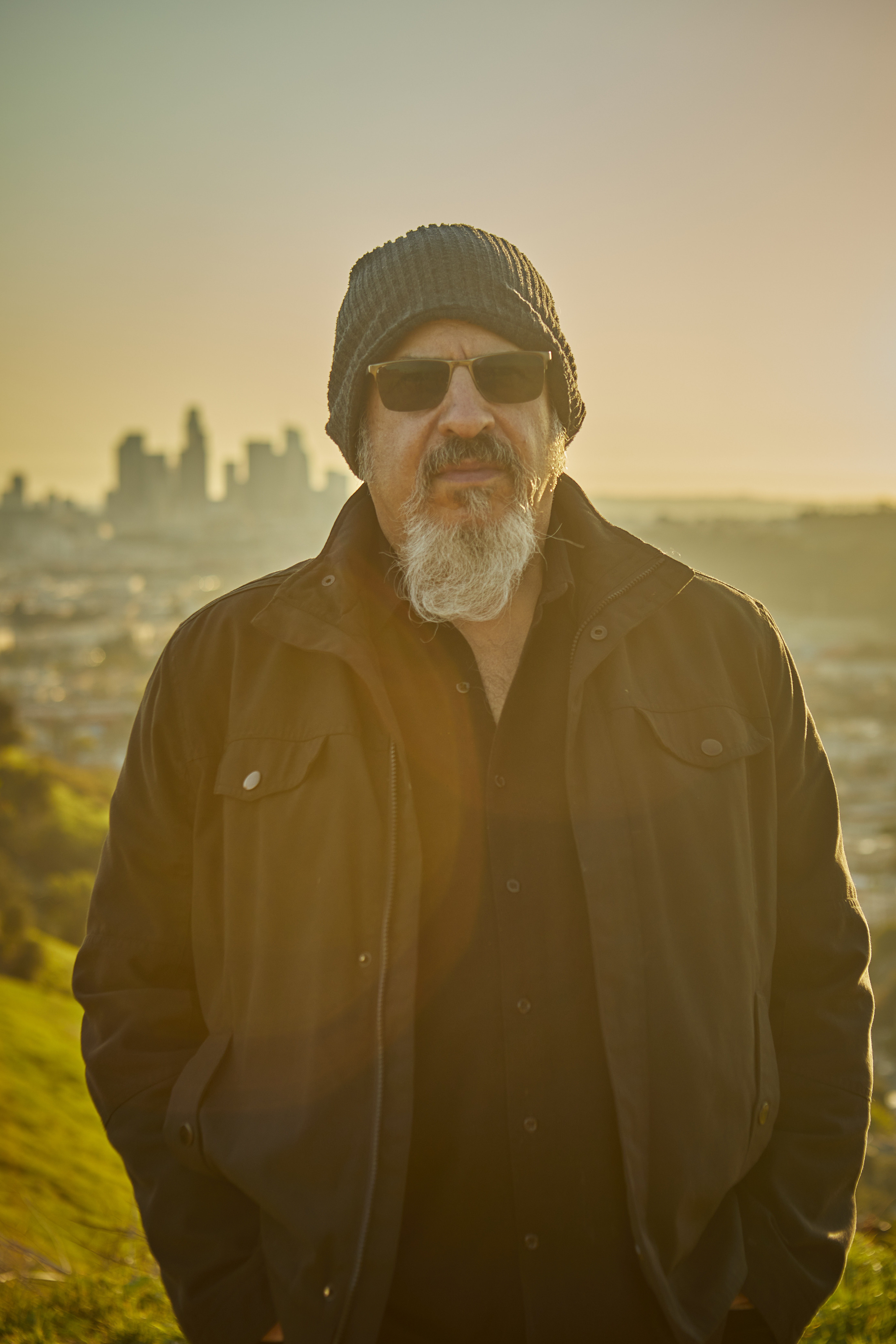
Definitely Not Just Another Band from East L.A.: Los Lobos are Cesar Rosas, Conrad Lonzano, David Hidalgo, Louis Pérez Jr. and Steve Berlin. Photo by Piero F. Giunti/Courtesy of New West Records.

Though they’ve long billed themselves since their 1978 record debut as “just another band from East L.A.,” Los Lobos is anything but that common. Their inventive and groundbreaking mix of rock, soul, blues, R&B and surf—all wrapped in traditional Mexican, mariachi and norteña music—have garnered them fans not just in their hometown, but around the world.

Now, the band has recorded a tribute to the City of Angels and its wide variety of musical sounds with the July 30 release of the covers record Native Sons (New West). It sprouted from an idea that band member Steve Berlin says came about in a year when every musician’s original plans got scuttled.

“We didn’t have the foresight to predict a global pandemic, and like everyone else, we thought it would be over in a few months. We had a ball doing the Christmas record in 2019, because it was fun and didn’t have the same [creative] stress level that a ‘normal’ Los Lobos record would,” he offers.

“So, the thought of a covers record as a project came up. And then the idea of making it our love letter to Los Angeles emerged. It could be fun and have some resonance, and would honor people who inspired us.”

Los Lobos is also one of the few bands of its time to still retain its entire classic (if not original) era lineup. They still are David Hidalgo (vocals/guitar), Louie Pérez Jr. (vocals/guitar), Cesar Rosas (vocals/guitar/bass/organ), Conrad Lonzano (vocals/bass) and Steve Berlin (saxophone/keyboards).

The dozen covers on Native Sons include entries from familiar names like Jackson Browne (“Jamaica Say You Will”), Buffalo Springfield (“Bluebird/For What It’s Worth”), WAR (“The World is a Ghetto”), the Blasters (“Flat Top Joint”) and the Beach Boys (“Sail On Sailor”).

But there’s also a wonderful treasure trove of songs by far lesser-known acts like garage rockers Thee Midnighters (“Love Special Delivery”), and R&B stars Barrett Strong (“Misery”) and Percy Mayfield (“Never No More”). Chicano/Mexican music is represented by Lala Guerrero (“Los Chucos Suaves”) and Willie Bobo (“Dichoso”).

Berlin says the epic “The World is a Ghetto” was especially special to the group.

“We knew there was going to be a WAR song. Our road manager used to work or them and our bass player’s son works for them, so there was no way we were going to do an L.A. record without paying tribute to them,” Berlin says. “All those guys have meant a lot to us as an inspiration. They don’t get their historical due. But I realized to my horror I didn’t do the horn part right. I was just doing it from memory!”

Steve Berlin Photo by Piero F. Giunti/Courtesy of New West Records.

And for the quintessentially Californian Beach Boys song “Sail On Sailor,” in the liner notes Berlin offers that it “seemed like it would be easy, but once we broke the eggshell it revealed itself to be a lot more complex.”

“I would characterize a lot of songs like that,” Berlin adds later. “You’re trying to put your spin on it and what made the song so great in the first place. It didn’t sound right when we started it, and we couldn’t figure out why. So, we hired a brilliant keyboard player named Phil Parlapiano who solved that riddle for us and how to play the chords. And it worked!”

There was one genre, however, that Los Lobos chose to skip. “We couldn’t find a punk rock song that wouldn’t sound weird given our ages!” Berlin laughs. “We’re too old to sound angry anymore! It would have been silly.”

The sole original tune and a heartfelt statement from the band, “Native Son” wasn’t even a thought by the time the record was almost complete. In fact, it was written and recorded entirely in a four-hour time period on a Friday—before the band had to turn in the finished project the next Monday!

But according to Berlin, that’s not an uncommon occurrence for the writing team of Hidalgo and Pérez. who often create on the fly for inclusion in an album.

“There’s always a song that emerges late in the game that basically puts everything in perspective. That’s what this one did,” Berlin says. “When we start every record, we have a vague idea or a vibe of what we’re doing. A plan. Then the records take their own shape. And a lot of times, it ends up different than the initial impulse. But we let it happen.”

For more on Los Lobos, visit LosLobos.org

This interview originally appeared on HoustonPress.com
Posted in Los Lobos | Tagged , , , , , | Leave a comment