Ronnie Platt and Kansas Keep On Carrying On

Ronnie Platt. Photo by Mark Schierholz.

In the litany of stories about how established Classic Rock bands replaced their original or established frontman, the tale of how Ronnie Platt came to hold the microphone for Kansas is one of the simplest, yet most mind-blowing.

Ronnie Platt. Photo by Jerry Watson

Original and then-returned singer Steve Walsh—to man who took “Dust in the Wind,” “Carry On Wayward Son,” and “Point of Know Return” to FM fame—decided to call it quits in 2014. After that became public knowledge, co-founding guitarist Rich Williams quickly received an unsolicited Facebook message from Platt saying that he was the man they needed and asked—practically insisted—to get a shot. Talk about balls!

Sure, when Platt was singing for the Kansas-based rockers Shooting Star, the two groups had shared a bill years before in 2009. But it wasn’t like they were buds. Intrigued, Williams and remaining co-founder Phil Ehart responded, and then spent some time with Platt to see if they could hang. Two days later, Platt was offered the job—less than a week after sending that fateful Facebook message.

“I really did that!” Platt laughs over the phone. “I remember being so pumped at that 2009 show that over on the side of the stage the guitarist from Kansas was checking me out. I don’t know if he put me in his back pocket. But even a blind dog finds a bone once in a while!”

Kansas has now had over 50 years in existence as a band. But since Platt’s arrival, the group has also put out two new studio records, The Prelude Implicit (2016) and The Absence of Presence (2020). This is in addition to two live albums focusing on complete performances of their best-known records from the ‘70s heyday, Leftoverture and Point of Know Return.

As to where they stand on the line between putting out new music to keep active or not bothering since only their diehard fans would even know about it (the challenge facing so many Classic Rock bands), Platt says their stance is clear.

“It’s not so much about trying to stay current as satisfying a creative vein in Kansas,” he says. “Think of all the different lineups of this band. For God’s sakes, Steve Morse was the guitar player on two albums! It’s been a departure from the original writing of Kerry [Livgren] and Steve [Walsh], but it’s still identifiable as Kansas. Phil and Rich wanted to continue because they are creative animals.”

Platt recalls being in the kitchen of the studio when they were recording The Prelude Implicit as Williams was noodling around on an acoustic guitar, venturing into new sonic places.

“I was in amazement,” he recalls. “Just the constant imagination of songwriting. Is another studio album coming? Possible. But we’re on an insane touring schedule right now!”

Of course, as with any band that’s notched hits, Kansas’ playlist features some “have to play” big songs, lest the audience start producing pitchforks and lit torches. And Platt loves singing those. But he’s also fond of some of the deeper, more Prog Rock-leaning material not as familiar to the average concertgoer.

He points to “Icarus–Born on Wings of Steel,” “Closet Chronicles” and “Journey From Mariabronn” in particular, describing himself as “a real deep cut guy.”

“It’s not backyard beer party kind of music,” he offers—though it’s likely that “Carry On Wayward Son” has blasted during countless of those gatherings. “Kansas has always appealed to the deep listener. And that’s what grabbed me about the band. It was progressive but still had a commercial attraction. And then the [vocalist] John Elefante era with ‘Fight Fire with Fire.’ Basic rock and roll, but still Kansas.”

Kansas current lineup: Clockwise from top left – Tom Brislin, Phil Ehart, Richard Williams, Joe Deninzon, Dan McGowan, Eric Holmquise, Ronnie Platt and Zak Rizvi. Photo provided by Kansas

In fact, those hits from Kansas have found a second life in movies and TV. From “Dust in the Wind” being key to a funeral scene in Will Ferrell’s Old School to “Point of Know Return” in the superhero flick The Suicide Squad to “Carry On Wayward Son” being featured on TV in Walker (where the band themselves performed it), Supernatural and Reacher.

The current lineup of Kansas includes co-founders Rich Williams (guitar) and Phil Ehart (drums), along with Platt (lead vocals/keyboards). There’s also Tom Brislin (keyboardist/vocalist), Zak Rizvi (guitar), Joe Deninzon (violin/guitar) and Dan McGowan (bass/vocals). As well as Eric Holmquist (drums), who plays live shows as Ehart is recovering from a series of health issues, including a 2024 major heart attack.

Platt’s own health issues have also been in the news. Earlier this year, he was diagnosed with malignant thyroid cancer. He has since undergone successful surgery to remove the offending nodule.

“Boy, if the stars ever aligned, they aligned for me. I got help from the right people that went above and beyond. People went to bat for me and got me into my surgeon, and he explained everything,” Platt gratefully says.

“I did my first show back a month to the day after the surgery. It wasn’t easy, but we made it through. My voice has been great, and I get better every show. I think I’m 95% back to where I was.”

Asked if he’s officially cancer-free or at least in remission, Platt says “that’s a tough thing to call.” Ultrasounds have revealed two more nodules—measuring .8 mm and .6 respectively. The good thing is that these types are traditionally very slow growing and rarely spread.

“That’s two positive things about it. They way my surgeon put it me, for those to affect my life I would have to live to be 150 years old!” Platt laughs. “I really don’t have plans on hanging around that long!”

Looking toward the future, original members Williams (75) and Ehart (74) may be near the end of their active touring days. This naturally follows other aging Classic Rockers who have voluntarily ended their careers or at least stopped touring.

At a relatively spry 65, Platt has no plans on giving anything up. But could he see a day in the near future where Kansas would continue to perform and/or record with no original or even classic members left like Foreigner or Lynyrd Skynyrd? Will the music ultimately outlast the particular individuals who are playing it?

“You just answered the question yourself, Bob!” Platt says. “I always use the reference ‘Why are symphonies still selling out?’ Mozart and Beethoven and Tchaikovsky have been gone a long time, but people are still playing their music and audiences are still paying to hear it. It is the music that lasts.”

He also adds that with more ensemble-based groups like Kansas (or, for that matter, Chicago or Foreigner), the transition seems easier. “It’s not like Aerosmith, where you instantly identify the band with Steven Tyler or Joe Perry,” he says. “And something like ‘Dust in the Wind,’ where have you not heard it? It’s in the grocery store, the dentist’s office and hamburger joint!”

For more information on Kansas, visit KansasBand.com

This article originally appeared at HoustonPress.com
Posted in Kansas | Tagged , , , | Leave a comment

Rock Doc on the Association’s Larry Ramos Has World Premiere in Houston

Larry Ramos performing with The Association in 1968 on “The Ed Sullivan Show.” Credit: Screenshot from “Along Comes Larry.”

Look at any publicity photo or album cover from the rock group The Association, and it’s easy to pick out bassist/singer Larry Ramos.

The contrast is even more noticeable watching old color footage of the band’s appearances on TV variety programs like The Ed Sullivan Show or The Smothers Brothers Comedy Hour. There, amidst six other white faces (at first, clean shaven, then sporting a variety of era-appropriate facial hair) is one guy with much darker skin and Asian facial features (or were they Mexican?). And a level of enthusiasm that marks the stage presence of Larry Ramos.

The Association would have four massive hits in the ‘60s with “Cherish,” “Along Comes Mary,” “Never My Love,” and “Windy.” The last two featuring Ramos—a native of Hawaii from Filipino descent—on co-lead vocals. Ramos had already been the first Asian-American performer to win a Grammy for an album from his previous group, The New Christy Minstrels.

The story of Larry Ramos, along with his musical triumphs and personal journey tied to his ethnicity and the color of his skin, is the subject of the documentary Along Comes Larry.

This summer, the 30-minute film had its world premiere in Houston at the Asia Society, followed by a Q&A with Writer/Director Rick Quan and members of the band. The evening culminated in a full concert by the current lineup.

Along Comes Larry was a passion project for Quan. The longtime Emmy award-winning broadcast-journalist-turned-documentarian (and younger brother of Houston politician and attorney Gordon Quan). And though he was aware of the Association’s music, it wasn’t until he was researching for a Grammy segment that he stumbled across an article about Larry Ramos and his place in music history.

“I enjoy making documentaries about Asian-American pioneers. I was working in Hawaii at the time, and Larry’s story fascinated me. I thought this guy needs to get more recognition,” Quan says prior to the event at the Asia Society.

Q&A panel with moderator Rose-Ann Aragon, Rick Quan, and Del Ramos. Credit: Photo by Chris Dunn for Asia Society Texas.

After gaining the trust of Ramos’ daughter, Tracey and filing a 3-minute report for a Honolulu TV station, he knew there was more to tell. And he began requesting interviews with family, former band mates, and music critics while sifting through archival footage.

Currently, Quan has entered the documentary for consideration in several upcoming film festivals, and hopes that leads to wider distribution. “I hope they feel inspired that there were people doing this back in the day, and give Larry some respect for opening doors in the music business.”

In an exclusive backstage interview, Association co-founder, 81-year-old Jules Alexander, and Larry’s Ramos’ younger brother, 79-year-old Del Ramos (who has spent decades in the group), spoke about Larry’s impact both personally and professionally.

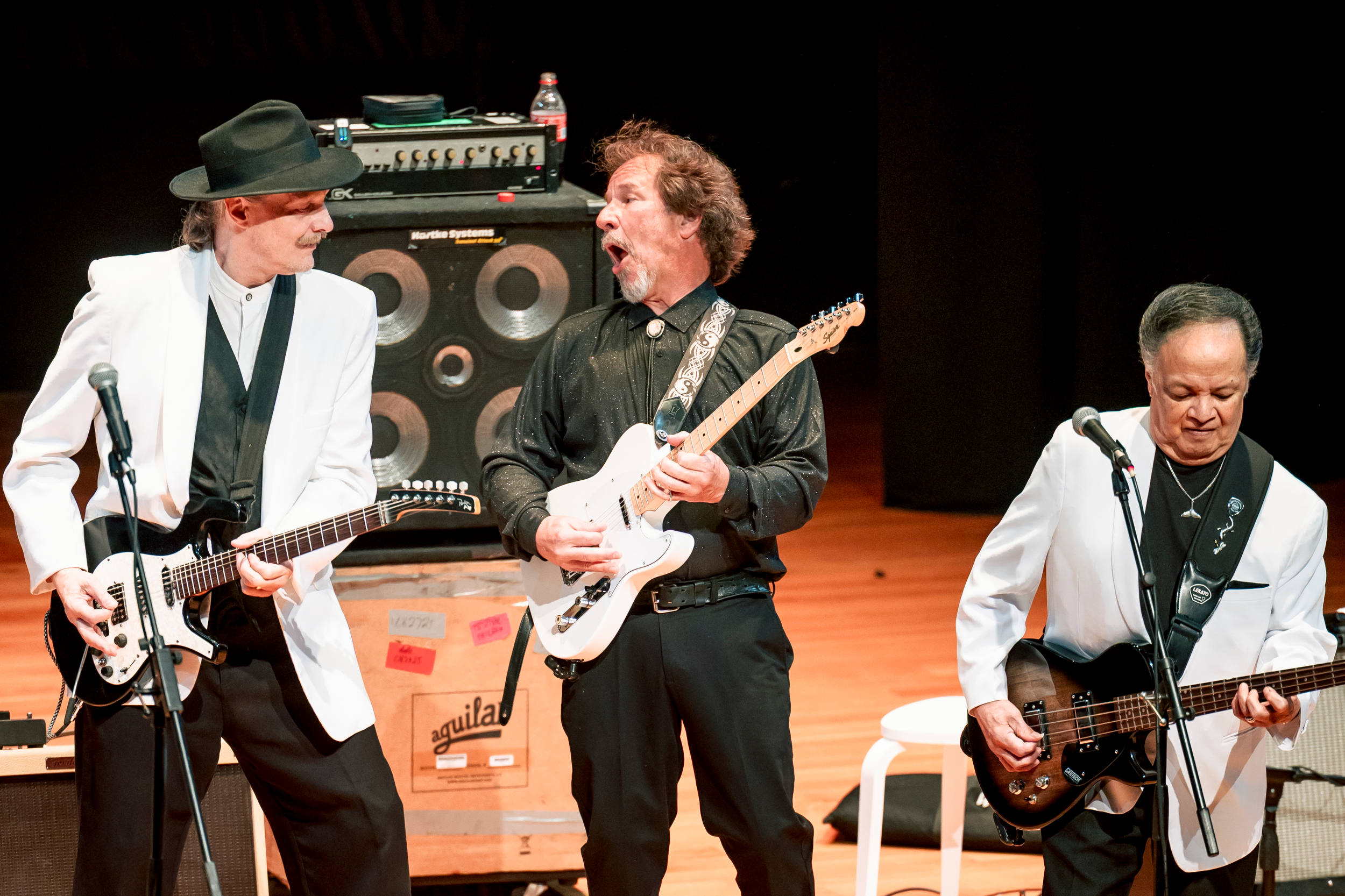
Jules Alexander, Del Ramos, and Paul Holland of the Association onstage in Houston. Credit: Photo by Chris Dunn for Asia Society Texas Center.

“He was an excellent musician and singer, just top of the line. No two ways about it,” Alexander says. “We were together for so long I knew him down, up, backwards and sideways. We’ve argued, we ‘ve laughed, we’ve cried. My memories of him are on such a big canvas.”

Ramos says he was set for a job path as a commercial artist. But at the age of 15 after seeing his brother in concert with the New Christy Minstrels at L.A.’s Troubadour Club—and the reaction he got—made him almost instantly switch his career desires.

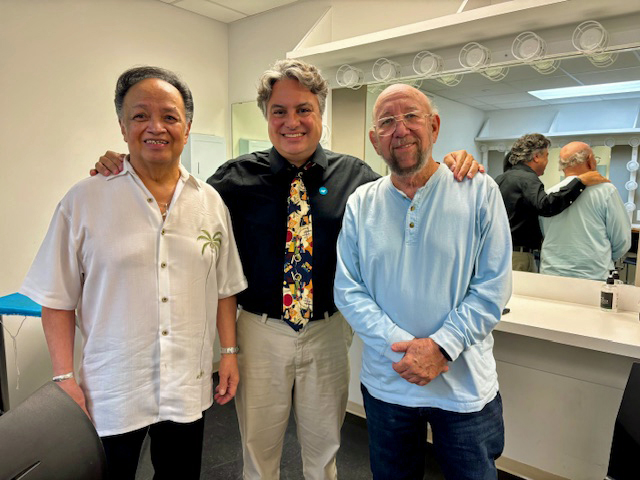
Del Ramos, Classic Rock Bob, and Jules Alexander backstage before the Association show at the Asia Society. Photo by Chris Dunn.

“He was the most talented person I knew. And I always admired him,” Ramos says. “I sat in the fifth row directly in front of his microphone. And at the end, everybody stood up and cheered. I was in shock. And then I said ‘This is what I want to do!’ To get recognition immediately after your work, with the audience, that was it. So I learned to sing and play.”

Along Comes Larry covers Ramos’ beginnings in music as a child ukulele prodigy in Hawaii (and catching the attention of talent scout/showman Arthur Godfrey). There’s footage of him at the age of eight playing and singing in the 1950 musical Pagan Love Song—though his footage was excised from the final film, possibly at the request of a jealous co-star.

Ramos joined the folk group New Christy Minstrels, and then the Association after Jules Alexander left the group to study spirituality in India (a full year before the Beatles made their more famous pilgrimage). When Alexander returned the next year, Ramos stayed on, making them a now seven-member group.

Jordan Cole, Paul Holland, and Del Ramos of the Association onstage in Houston. Credit: Photo by Chris Dunn for Asia Society Texas Center.

The doc’s heaviest moments come when Ramos (via an archival interview) and bandmates discuss the racism he would face on the road and in the industry. Epithets like “China Boy,” “Slant Eye,” and “Made in Japan” were slung around.

Sometimes even “good naturedly” from his own bandmates as part of onstage schtick. But when bandmate Terry Kirkman put an end to it, Ramos would say “You mean I can just be myself now?”

Writer/Activist Guy Aoki is also shown noting that Ramos would carry his ukulele everywhere with him—especially while touring in the South—to head off any harsh questions about his race, ethnicity or what he was doing there. As soon as Ramos told any inquisitor that he was from Hawaii, Aoki says their demeanor changed entirely. Everyone, it seems, loved Hawaii.

The Association continued to perform on and off for decades, often with a shifting lineup of original/classic members. Ramos was there for most of, until he began having health issues including a heart attack and metastatic melanoma. He made his last appearance with the band in 2014—at one point singing a special Hawaiian-language version of “Never My Love.” Two months later, he died at the age of 72.

“It broke my heart when he sat me down in our mother’s house and said ‘I can’t go on the road anymore. I’m having trouble playing simple chords and my left hand is going out.’” Del Ramos—tearing up—says.

He then laughs remembering his brother “never took care” of his instruments and saw them as simple tools of the trade, the musician’s equivalent of a plumber’s crescent wrench. He’d leave rusty strings and sweat-stained areas intact. Alexander adds “He needed to change his strings all the time, but he wouldn’t because he was lazy!”

Following the documentary screening and a Q&A with Quan and bandmembers, the current lineup of the Association (Alexander, Ramos, Jordan Cole, Paul Holland, Bruce Pictor, and Paul Wilson filling in for ailing original member Jim Yester), played an hour-plus show.

It featured all the hits, covers of ‘60s songs by other bands, and deeper cuts like “No Fair At All,” “Six Man Band,” and the anti-war “Requiem for the Masses” (the later accompanied by a video showing U.S. soldiers over the years). Also “Enter the Young,” which was the first song played at 1967’s Monterey Pop Festival, which the Association opened.

During the show, members would stop in between song to offer reminisces of Larry Ramos and the stories behind the songs. An enthusiastic audience made of largely of senior Asian-American clapped, sang, waved the lights on their cellphones. Some members even came dressed in their finest hippie clothing.

Of course, when the songs of so many bands that got their start in the ‘60s were recorded, there was for the most part no thought that they would last through time. Much less be appreciated by new audiences and still performed nearly six decades later.

In 1999 when music publishing organization BMI put out the list of the Top 100 Songs of the Century for radio and TV play, number one was “You’ve Lost That Lovin’ Feeling” by the Righteous Brothers. Number two? The Association’s “Never My Love.”

“You never know how long these things are going to go. You can’t predict if a song will really last, and there are so many reasons for that,” Alexander says. “It blows me away that these songs are still so popular!”

“Quality music lasts forever,” Ramos adds. “These songs affect people in a really positive way. The songs even get to us emotionally. There was one time we were doing ‘Never My Love’ and it was a tough time in my life and I started crying. And I looked around and so was Jim!”

This article originally appeared at HoustonPress.com
Posted in Association, Documentaries | Tagged , , , , | Leave a comment

Nancy Wilson Expects an Exceptional Evening with Heart

Nancy Wilson will slug ya with her gee-tar! Photo by Jeremy Danger.

Since she joined her sister Ann in the already-existing band Heart back in 1974, the group has played every kind of show: openers, headliners, multi-act bills, festivals, guest appearances, as a duo, and one-offs.

Nancy Wilson. Photo by Julia Bywater

But for their recent summer tour, the band is opting for the “An Evening With…” format. Two sets, one intermission, and more time onstage to not only plow the audience with hit after hit but dig deeper into the nooks and crannies of their catalog, along with the occasional cover song (hint: the sisters love the Zeppelin).

It’s something that Nancy Wilson—Zooming in from her kitchen table—is definitely looking forward to.

“We’re always really interested in switching things up and keeping them fresh. And adding new sections to the set so it’s not rote and we don’t get bored,” she says. “We’re also learning old songs we haven’t done for a while and plug them in. It’s just a more special show than the arena tour we just did. We’re really a mixed bag!”

They’re also playing smaller but more intimate venues than a “regular’ tour.

“We have a lot of cool songs, and we try hard not to do too many covers—though with Zeppelin, that’s hard not to!” she laughs. “And we used to do ‘You’re the Voice’ by John Farnham. It’s an [anti-war] anthem to pull people together for times like now when things are crazy in the world.”

Heart does indeed have a lot of “cool songs.” From the ‘70s FM radio classics like “Barracuda,” “Crazy on You,” “Magic Man,” “Even It Up,” “Dog and Butterfly,” and “Straight On” to their cache of ‘80s hits including “What About Love?” “These Dreams,” “Alone,” and “Never. And all sorts of stuff in between and from the past decades.

In addition to Nancy on guitar/vocals and Ann on lead vocals, the current lineup of Heart includes Ryan Waters and Ryan Wariner (guitars), Paul Moak (keyboards), Tony Lucido (bass), and Sean T. Lane (drums). As to what this lineup means to Wilson apart from others overs the years, she’s succinct.

“Well, this lineup is kick ass!” she says. “We’ve had so many great lineups, with the one consistent being me and Ann. For this one I brought my guy, Ryan Waters, from my solo band. I love having that extra guitar. We just have that thing together that allows me to stretch out as a player.” (In 2022, Wilson toured as “Nancy’s Wilson’s Heart” during a period of separation from her sister).

In 2013, the “classic” ‘70s lineup of Heart was inducted into the Rock and Roll Hall of Fame and included the Wilson sisters, Roger Fisher, Steve Fossen, Howard Leese, and Michael DeRoiser.

Inducted by fellow Seattle musician and Soundgarden frontman, the late Chris Cornell, their 3-song set included “Crazy On You” with the inducted lineup, the Wilson sisters alone on an acoustic “Dreamboat Annie,” and the then-current lineup for “Barracuda.”

To this writer, it was a summation of the band’s evolution in one neat package and unlike any other induction performance ever.

“That’s interesting—I never thought of it like that!” Wilson says. “But the thing I loved the most about the Hall of Fame experience was Chris Cornell’s introduction. It was spectacularly well-crafted, and beautifully written and delivered. And Lenny Kravitz wanted to be my guitar roadie. I always thought he was cool. And I guess he thought I was too! And Dave Grohl was already a buddy.”

Over the years, the Wilson sisters have also put out solo projects or records with other bands. In 2021, Nancy released You and Me, which featured a combination of originals, co-writes, and covers (Pearl Jam’s “Daughter”; Bruce Springsteen’s “The Rising,” Simon & Garfunkel’s “The Boxer”).  A special edition with a new track will be available for sale at the Heart merch table on the current tour.

“That’s my pandemic album! It was really nuts and bolts and was recorded [remotely] by emailing and DropBoxing and with notes,” she says. “Finding the songs was interesting. Some things I had laying around and some were [new]. It was a collection of creativity in progress and a way to keep from going crazy.”

The current Heart lineup: Ryan Waters, Nancy Wilson, Sean T. Lane, Ann Wilson, Paul Moak, Tony Lucido and Ryan Wariner. Credit: Photo by Criss Cain.

The mostly gentle track list concludes with the instrumental “4 Edward,” her tribute to Eddie Van Halen. The two groups toured together back in the ‘80s with Heart opening. At one point, Nancy gifted Eddie with an Ovation guitar because the king of electric shredding and tapping didn’t seem to have an acoustic model handy.

And as the sisters noted in their 2013 autobiography Kicking & Dreaming, there was at least one half-hearted attempt by the Dutch-bred Van Halen brothers to, um, pair off with the Wilson sisters romantically after one show.

“There were bars and brawls and drunk and high nights. We got pretty tight as party people. Crazy stuff you can only imagine,” she remembers.

“They were such an incredible rock band. And Eddie’s major key sensibility was amazing. You can hear it in the music and see it on his face,” she says. “When he left us too early, I wanted to give him something back.”

The title track of You and Me was also co-written with Sue Ennis, who has done the same with both sisters on scores of Heart songs. Ann and Sue went to high school together (Nancy is younger). Nancy says on the first day of school in 1968, the pair bonded over a shared love of the Beatles and soon the three were writing and playing together, with Nancy not even reaching her teen years yet.

For so many performers and bands who had their commercial heyday in the ‘70s and ‘80s, there’s sometimes a sharp division on the idea of putting out new music. Some feel it’s a necessity to stay creative and engaged, while to others there’s no point as only the diehard fanbase will ever hear it, and definitely not on the radio.

Heart’s last mostly original/non live/non-re-recorded songs album was 2012’s Fanatic.

“I think it’s up to the individual. For me, I’m always looking for a new way to express something. And I know for a fact that Ann is working on some new music with her Tripsitters band,” she says.

Wilson adds that she hopes to write original music for both a theatrical film and a documentary about Heart—the latter of which she says there are more than one suitor companies wanting their cooperation. She’s looking forward to digging deep into her own archives of music and film taken over the years.

Finally, when asked about any particular memories of Houston, an instant smile grows across Nancy Wilson’s face.

“Houston! Well, it’s always been a little bit overwhelming to me, because it’s such a big oil place and a country unto itself. So is Texas,” she says.

“But it’s also part of the charm of Houston you see the guys in the three-piece suits and big cowboy hats walking through the hotel lobby. I’ve always admired it as a curiosity because I’m from Seattle. And the food in Houston is really good. I love a good barbecue with molasses and slaw.”

Molasses?

Yes!” Wilson says enthusiastically. “That’s the secret part of the sauce!”

For more on Heart, visit Heart-Music.com or NancyWilsonofHeart.com

This article originally appeared at HoustonPress.com

Posted in Heart | Tagged , | Leave a comment

“I’m a Hippie”—Carlos Santana on Oneness, Unity, and Sentient Community

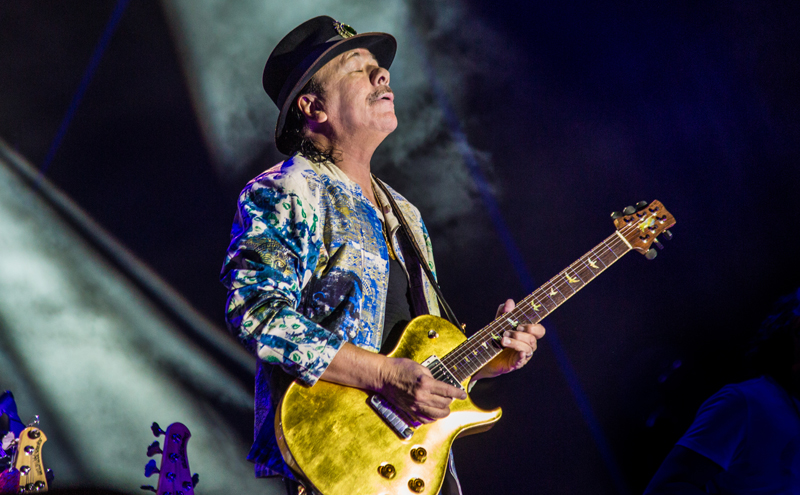
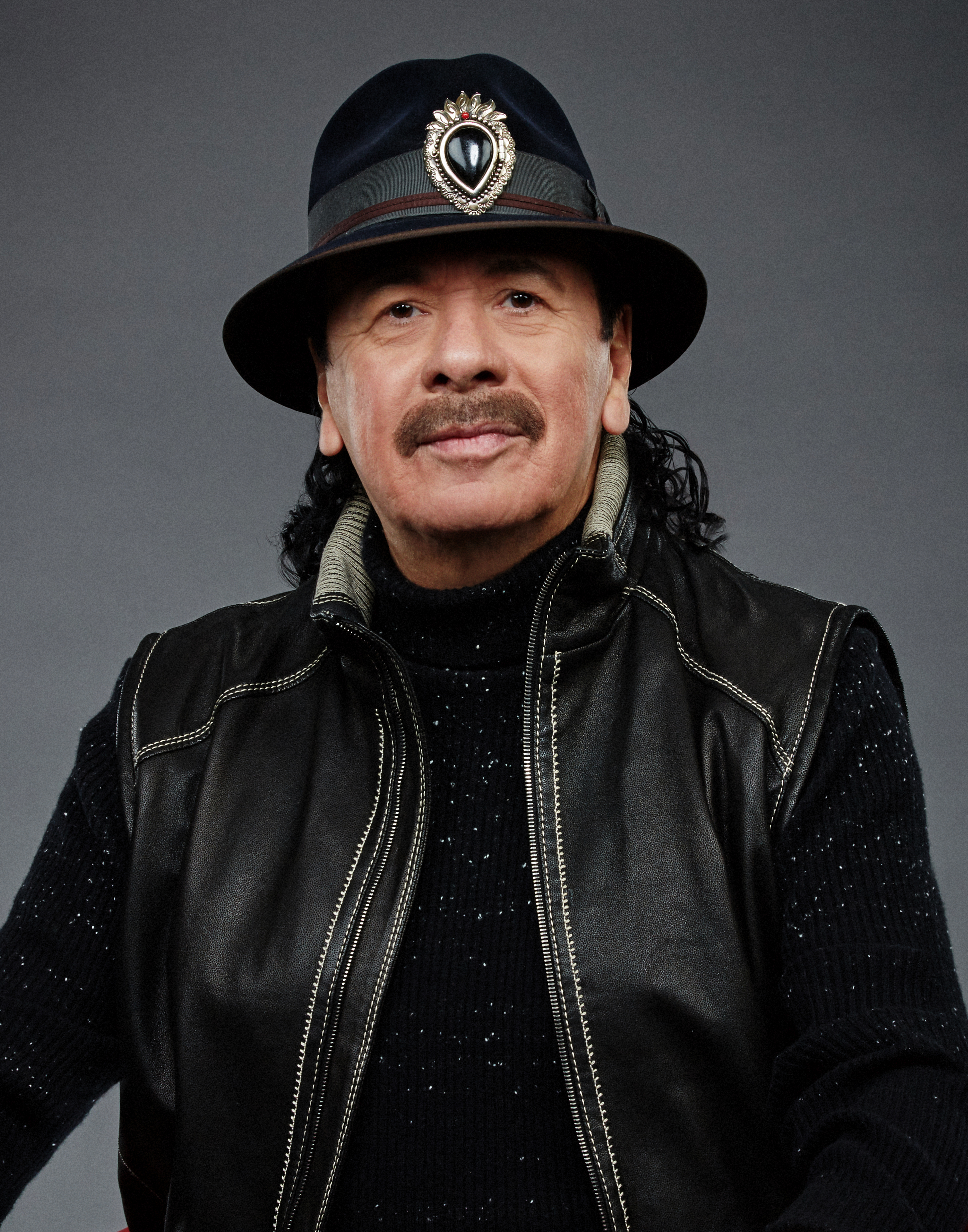
Carlos Santana onstage. Photo by Marylene Eytier.

It’s only April, but Carlos Santana—one of rock’s most legendary guitarists—is already thinking about Christmas. At least that’s the holiday on his mind when discussing the just-released album, Sentient.

Carlos Santana with one of his many signature hats. Credit: Photo © Maryanne Bilham.

“The most accurate way to describe it is like a Christmas tree. And all the ornaments are gratitude, compassion, consideration, mercy, and grace. And the Christmas tree is sentient,” he says in a promo video. “Very consistent with bringing energy and a sound resonant vibration that brings humanity together to celebrate, what? Our own divinity. Our own light.”

Speaking live from his home via Zoom with a plethora of awards and framed items behind him, the always spiritually conscious Santana notes that putting together the track listing for Sentient had a bit of divine intervention.

“Like always, I’m guided by the Holy Ghost. So, it’s easy for me to trust and hear the sequence. I wanted to create what was most memorable out of time,” he says. “Take a deep breath, step back, and see the record outside of time. Like Jimi Hendrix the Beatles, or Sly Stone. And Marvin Gaye and Bob Dylan. It’s creating art outside of time.”

As an example of art out of time in a different medium, he mentions Leonardo da Vinci’s Mona Lisa hanging in the Louvre Museum.

“It’s astonishing. If you go to Paris, there’s a line of people from all over the world to see that painting. It’s bigger than Taylor Swift!” he says.

“How he captured that smile, it’s a masterpiece. And here’s the good news. Everyone on the planet is a masterpiece. We need to learn to treasure and validate ourselves. Stop looking at ourselves as victims or villains. I like the grace that tells me I am a beam of light from God and worth of his love. I follow what Jesus said. Love one another, without condition.”

He proposes a sort of new “global CNN” that will only broadcast the “perfection of humanity.” And he namechecks Chef Jose Andres, whose organization World Central Kitchen and its staff often heads immediately into danger and destruction zones with the sole purpose of feeding people. In fact, Santana wants to see him win the Nobel Peace Prize.

Technically, Sentient is the 27th album from the band that bears his name, and of which he’s been the sole consistent member since it formed in 1966 as the Santana Blues Band (and that’s not including his many solo and collaboration records).

The classic Santana lineup in 1969 (l to r): Carlos Santana, Jose “Chepito” Areas, Michael Carabello, David Brown, Gregg Rolie, and Michael Shrieve. Credit: Columbia Records/Wikimedia Commons.

But it’s not an effort from the current lineup with newly written and recorded material. Instead, Sentient is a collection of remastered or alternate takes of previously released songs—along with some unreleased material—all of which feature at least Carlos.

They include many collaborations, including ones with Michael Jackson (“Whatever Happens”), Smokey Robinson (“Please Don’t Take Your Love”), Darryl “DMC” McDaniels (“Let the Guitar Play”), and his own wife and Santana band drummer, Cindy Blackman Santana (“Coherence”).

But to Carlos himself, it’s two songs recorded with his main musical hero, Miles Davis (“Get On,” “Rastafario”) that may mean the most. While he has always been upfront about his musical heroes and influences including Jimi Hendrix, John Coltraine, and John McLaughlin, Davis is on a level all his own.

The two first met in 1970 at the famed Tanglewood venue in Massachusetts. They were on the same bill along with the Voices of East Harlem in a show put together by famed promoter Bill Graham.

“I was both nervous and excited. He went out of his way to acknowledge that he liked my music. Miles was very gracious and respectful to me, and always was,” Santana says.

“I heard he had a potential for not always being so. But if he liked you, he liked you. If he didn’t like you, he would never like you! He just didn’t want to be around fake people. And he’d call me any time of day or night just to check out what I was doing! I was playing with a person who was a genius, genius, genius, genius!”

Sentient is just one of the projects keeping the 77-year-old Rock and Roll Hall of Famer and Kennedy Center honoree busy. This month, he launches a U.S. tour before another extended Las Vegas residency and then a string June dates in the UK and Europe.

Book cover

There’s the lavish, life-and-career spanning coffee table book Carlos Santana: Love, Devotion, Surrender: A Visual Journey (Insight Editions) by Jeff Tamarkin coming out May 27. He was also the subject and main interviewee in the 2023 free-flowing documentary Carlos, and published his autobiography, The Universal Tone, back in 2014.

In Tamarkin’s book, the author estimates that there have been about 80 different lineups of Santana over the past nearly 60 years. So, we ask: Does the leader of the band know who is going to work out and who won’t—and when?

“I can only go by the moment. And I very grateful that musicians bring their lineage with them. Where they’re from. What I need is energy. A lot of light and a lot of love in [players]. One thing I learned from my father is the importance of melody,” he says.

“Melody is the opposite of walls. The walls of China or Berlin. It makes things calm down. Walls are built with the excuse of protection. But fear creates walls. And the walls are in the mind.”

Santana immediately switches to his environmental concerns and their effects, before winging back again to nations.

“Planet Earth is alive now, and she’s shaking with greed and violence and brutality. And with all the shifting of the plates and the hurricanes, she’s trying to tell us something,” he continues.

“Don’t hit the brick wall with Russia, China, North Korea, and the Middle East and nuclear war. We need to be more like our angels than donkeys and monkeys at war with each other. I’m a hippie. And it takes courage to become a peaceful warrior. We need to transform the planet without weapons. And that’s what Sentient is about. More light, more hope, more courage.”

Finally, at any given Santana concert these days you can easily spot three generations of families sitting next to each other. That speaks to the longevity of Santana’s career. But what does the man himself think?

“It makes me feel very grateful. To feel a tangible oneness with people’s hearts, it has a lot to do with when I was a child and my dad. He had a way of putting the violin and playing and seeing kids or their grandparents dancing and smiling,” Santana sums up.

“That oneness and family. A collective hug. That’s what’s needed on this planet. A collective global hug. I know that’s what Woodstock was. When you hug, you get rid of fear. Love is the only thing that’s real. And we are one. We play music to bring unity and harmony. And I wake up every morning with enthusiasm to do it.”

For more information on Santana, visit Santana.com

This article originally appeared at HoustonPress.com
Posted in Santana | Tagged , | Leave a comment

May Pang Brought John Lennon-centric Photos (and Herself!) on Tour

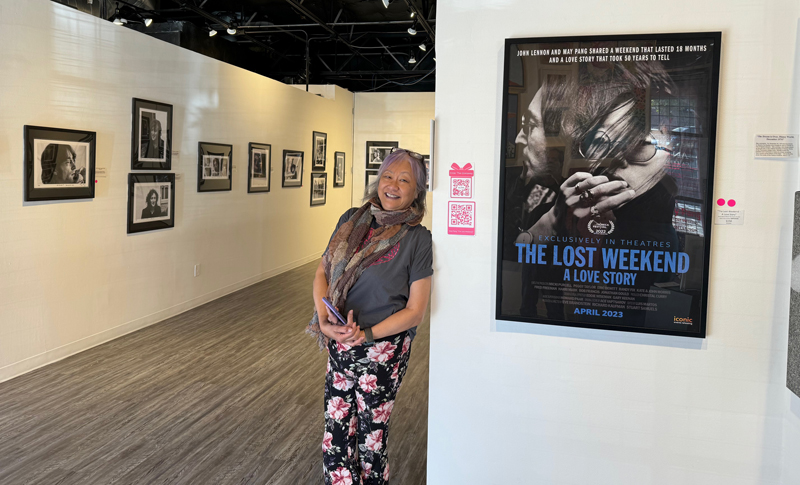
May Pang at a gallery showing of her photosgraphs.

May Pang was a rock and roll-obsessed teenager when she walked in off the street into a New York building to ask for a job at ABKCO. The company run by music manager Allen Klein, whose biggest clients just happened to be Apple Records and 3/4ths of the just-broken-up Beatles. Amazingly, she walked out with a receptionist position.

Pang’s lens often caught a playful Lennon pulling faces. Credit: Photo by May Pang.

But she soon gravitated toward one Fab in particular—John Lennon—and his wife Yoko Ono. She began helping them with their film projects, and in 1973 at the age of 22, had become their full-time personal assistant.

Later that year, Pang says that Ono had a request of her—one which would surely set off plenty of HR alarms today. The married couple hadn’t been getting along and were going to separate. Would Pang agree to “date” him in the interim? After all, she was nice, familiar…and someone who Ono could keep tabs on.

At first, Pang says she declined. But as she and Lennon began to spend more time together, he made a move, which was then reciprocated. Pang would be John Lennon’s companion, lover, sounding board, muse, and Ms. Fix-It during what is known in Beatles lore as “The Lost Weekend. An 18-month journey from New York to Los Angeles and back to New York again.

During that entire time, Pang took photos. Hundreds of them. The majority showing Lennon in a very relaxed mood in a variety of settings, along with any number of famous friends out on the town or in the studio (the female voice heard on the hit “#9 Dream” is Pang’s).

In 2025, she made several appearances at galleries with The Lost Weekend: The Photography of May Pang.

“I had no real exposure to photography except hanging out in Central Park with a group of men who were amateurs. They all had their cameras,” Pang says via Zoom. “So, I told him was interested, and they let me [shoot] for a few seconds. Then I bought my first one. I just loved taking pictures of friends and their faces and nature.”

John Lennon poses with a Harley the couple saw on a tour of an “Old West” town. He is wearing her jeans. Credit: Photo by May Pang.

She says that when her relationship with Lennon began, she brought her own 35mm along, and then also got an Instamatic. To her disappointment, she no longer owns the 35mm, which she loaned to noted celebrity photographer David Nutter. Unfortunately, when his loft was broken into, all a lot of his equipment was stolen, with Pang’s precious shooter also disappearing.

In today’s age where everyone is a photographer and can instantly see (and improve) their work, Pang recalls taking rolls of film to be developed—albeit to a professional photography place. No chance in her dropping off these to a local drug store where they could lost, damaged, or sold to the media by a teenaged clerk looking for beer money.

John Lennon and May Pang out on the town. Credit: Personal collection of May Pang.

By 1973, John Lennon had spent a decade being incessantly filmed and photographed, often to his annoyance. But being the subject of Pang’s lens was a wholly different situation.

“He liked my eye for photography, and I was shocked. I would take pictures of him just doing all sorts of things at home. And he said, ‘Let me see some of the work you’ve done.’ I thought he was going to yell at me and say not to take anymore,” Pang says.

“So, he looked at them and said ‘You can continue on. I like your eye. You make me look good!’ I said, ‘What do you mean, you have all these professionals taking pictures?’ He saw pictures of himself as fat and that got him at the wrong angles. He said I didn’t.”

In fact, Pang took a picture of a picture. When Bob Gruen took the famous photo of Lennon on a rooftop in a T-shirt that read “New York City,” Pang snapped a frame of Gruen snapping his. “That was right off our kitchen. You had to climb off through the side window to the roof!” Pang laughs.

Two other photos she took ended up being of extreme importance to Beatles fans. One was of Lennon and a visiting Paul McCartney lounging by the pool in a California house rented by singer/songwriter Harry Nilsson (Lennon was producing his Pussy Cats record). It is the last known photo taken of the famous musical partners together.

Even if McCartney at the time was had an unfortunate spiky Rod Stewart rooster haircut while sporting a small moustache.

“That was the period when Paul was going through that suave Dick Dastardly [phase]!” Pang says. “There’s also one of John and Ringo at the piano, and there’s all these patterns and colors and stripes. I went into a psychedelic [state] without even taking anything!”

Asked if there was ever a situation where she wished she had taken a picture and hadn’t, Pang is quick to answer: One of Lennon with George Harrison when the couple attended an after party to mark the end of Harrison’s “Dark Horse” tour.

She also regrets not having a camera in hand on November 28, 1974 at Madison Square Garden when Lennon joined Elton John onstage for three songs. It fulfilled a bet he lost to the bespectacled piano man if their collaboration “Whatever Gets You Through the Night” hit #1 on the chart. It did. And it marked the last public performance of Lennon’s life.

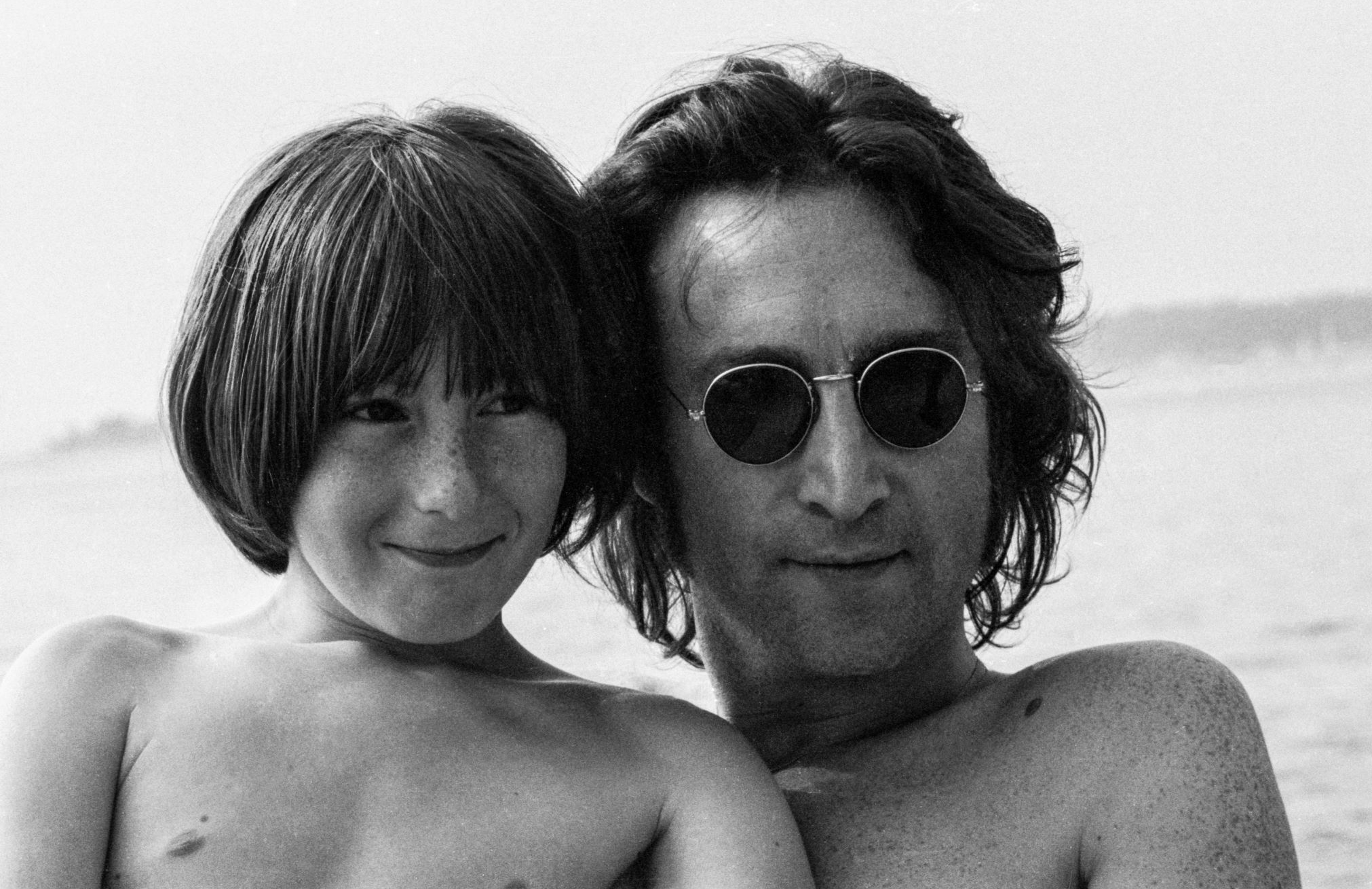
John Lennon and young son Julian on the beach. Julian credits Pang with improving his relationship with an often-distant father and remains close to her to this day. Credit: Photo by May Pang.

Another photo has no faces, but Lennon’s hand scrawling his signature across a document that formally dissolved the Beatles partnership. The other three had already signed, but Lennon had failed to show up at the set date and time. So the deed was done in a hotel room during a trip Lennon, Pang, and his son Julian, and former wife Cynthia Lennon had taken to Disney World in Florida.

Pang says it was just herself, Lennon, and two lawyers in the room. Lennon encouraged her to take the photo, but Pang was also concerned with Julian Lennon, alone in an adjoining room.

“The room was so dark, but I caught him mid-signature. John was actually laying on a bed when he signed it,” Pang says. “And all four signatures are there, even though some people can’t see it. One goes the other way. Because Ringo is a lefty!”

Julian Lennon has since gone on to praise Pang for not only bridging the tenuous relationship with his father but befriending his mother Cynthia as well. Julian and May continue to have warm relations, and Lennon the younger used a Pang-shot photo of his younger self on the cover of his 2022 record Jude.

“Those were cherished times with the two of them. And I’m glad that I was there to see it,” Pang says.

Pang and Lennon’s relationship ended abruptly when Lennon returned to Ono in early 1975, even as he and Pang were looking at houses to purchase. She says they continued to have occasional intimacies and at least communications right up until his 1980 murder. She chronicled her experience in the 1983 book Loving John (later reissued as John Lennon: The Lost Weekend) and in 2008 released a photo book, Instamatic Karma.

But the best telling of Pang’s story is undoubtedly the 2022 documentary The Lost Weekend: A Love Story. It’s inventive, charming, heartbreaking, and fascinating all at once, and features lots of never-or-rarely-seen videos and photos. There’s little doubt left to the viewer that their love affair was deep and real. And one surprise at the end can move even a hardened music journalist to tears.

The touring exhibit featured 38 of Pang’s photos, all available for purchase as 16” x 20” archival pigment prints, limited to 199 copies each, with most selling for $950. Pang with sign and number each purchase and pose with the customer in a photo.

For a less expensive option, 11” x 17” posters of The Lost Weekend doc sell for $50, and Pang will sign those. Due to an agreement, she can only sign gallery purchases, so people should not bring books, records, DVDs, etc. She will answer questions and tell stories about her life and work.

As for Houston, Pang says she’s never been to the city before but remembers its name of the coming off the tongue of Lennon.

“John would always call Houston ‘Who-ston’’” she laughs. “Because that’s how the English pronounce it!”

For more on May Pang and her work, visit MayPang.com

This interview originally appeared at HoustonPress.com

Posted in Beatles, John Lennon | Tagged , , | Leave a comment

Skip Spence’s Psychedelic (and Sometimes Psychotic) Journey

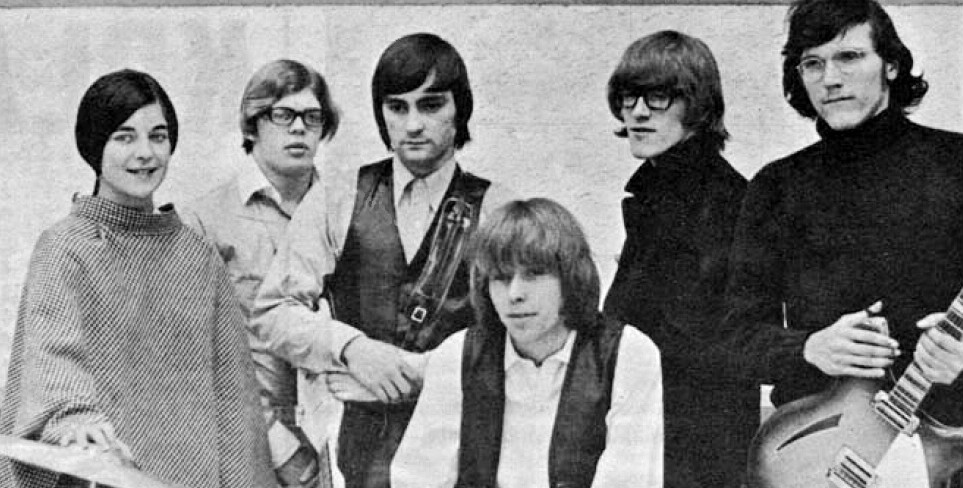
The original lineup of Jefferson Airplane: Signe Anderson, Jack Casady, Marty Balin, Skip Spence, Paul Kanter, and Jorma Kaukonen

Skip Spence was a near-founding member of the Jefferson Airplane, a founding member of the well-regarded Moby Grape, and released a solo album that is cherished by rock critics and famous fans.

Unfortunately, his name usually comes up in conversation not about San Francisco’s trailblazing musicians, but as a drug casualty who fried out his brain, and someone who struggled with mental illness. Just like Pink Floyd’s Syd Barrett, Fleetwood Mac’s Peter Green, and the 13th Floor Elevators’ Roky Erickson. Guys who took their pharmaceutical adventures a little too far and never quite returned whole.

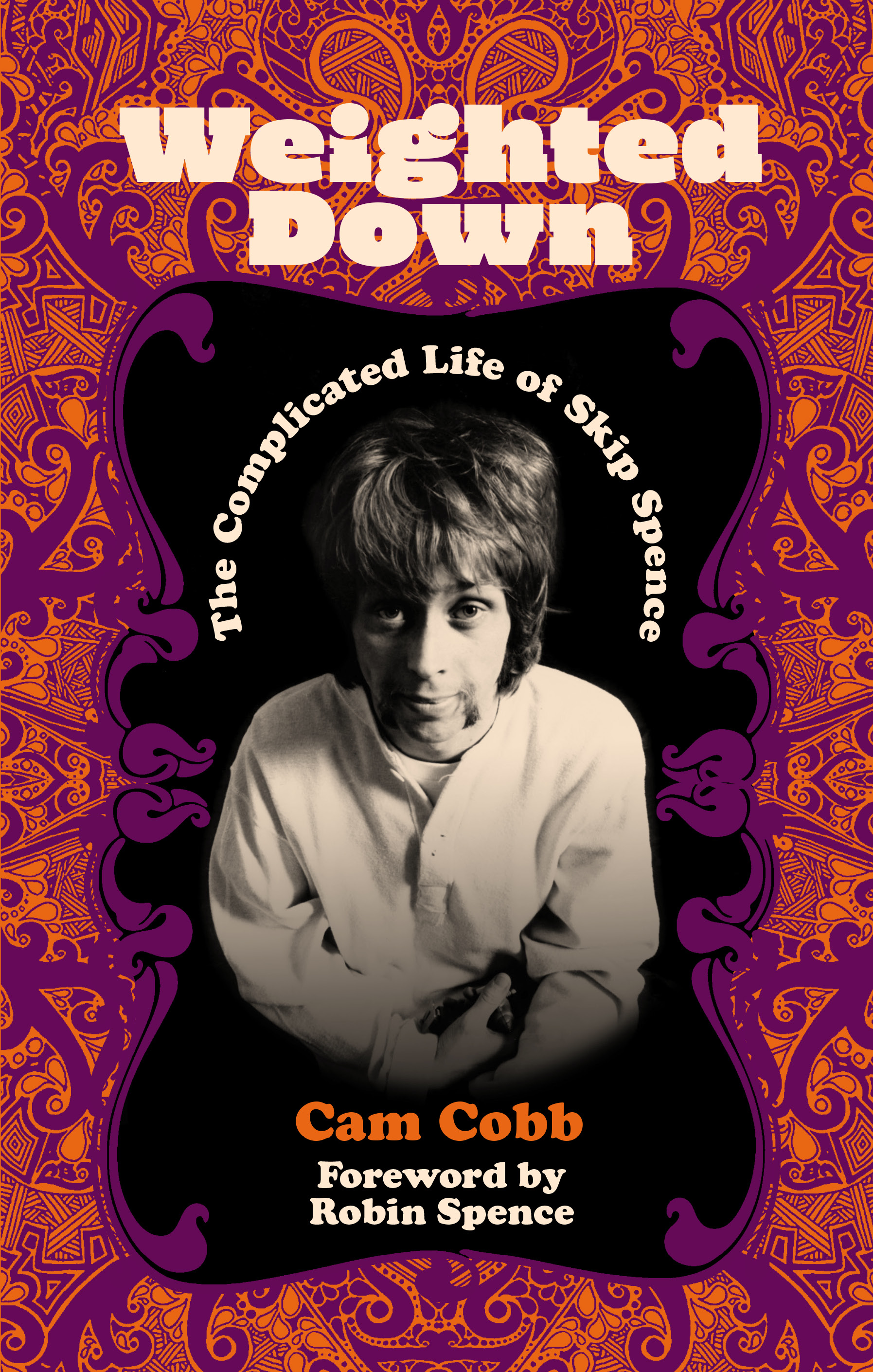
But fortunately, author Cam Cobb navigates down the rabbit hole of the life and music of the free-spirited but troubled soul in Weighted Down: The Complicated Life of Skip Spence (384 pp., $36.99, Omnibus Press).

Though he started in folk music, Skip Spence soon gravitated toward the rock and roll that was becoming more and more prevalent in the rehearsal spaces, clubs, and theaters of San Francisco in 1965/66. He was asked to join the Jefferson Airplane shortly after they formed—but as drummer rather than the singer/guitarist he had been to that point.

After playing that role in shows an on their debut album The Jefferson Airplane Takes Off, he was let go for (pick your reason) conflicts with singer Marty Balin, a tendency to disappear at times, or his stated desire to move back to a more prominent musical role.

He got that as one of three guitarists in Moby Grape, and band whose name should be uttered today in the same general breath as the Airplane, Grateful Dead, Janis Joplin, and Santana as heavy hitters from the City by the Bay. The material was great, they could play rock, blues, jazz, country, and psychedelia, and all five members sang lead at some point. The buzz on them was huge.

But, as Cobb details both in this book and his previous Moby Grape boy, What’s Big and Purple and Lives in the Ocean?, a series of unfortunate events—several out of their control—torpedoed the band’s chance at national success.

Weighted Down benefits from Cobb’s extensive interviews with several Moby Grape members and Spence’s family, though Spence’s own voice does not crop up often. Cobb’s prose sometimes also reads as methodical and fact-based as one of the tour itineraries printed in the back.

All the while the band was forced to compete with an entirely fake “Moby Grape” also touring the country. Former manager Matthew Katz claimed he owned the name and could create any lineup he pleased. All parties would spend decades in and out of courtrooms.

Spence initially parted ways with Moby Grape after their second album when, under the influence of lots of drugs and a girlfriend who claimed to be a witch, he tried to attack two bandmates with an axe. He was then committed to Bellevue Psychiatric Hospital. Skip Spence was 22 years old, married, with three children and another on the way.

In 1969, Spence would release his only solo record—Oar—on which he wrote and sang all of the songs and played every instrument. It bombed commercially. But in years after became a cult hit favorite, reissued in various formats with more and more bonus material. It was a raw, and sometimes spooky, look into the state of mind of Spence at the time, in which he sometimes heard voices.

Over the next decades, Spence would alternate between drug addiction and sobriety; between homes, churches mental wards, halfway houses and jails; in and out of various Moby Grape reunions and new musical collaborations, and record projects that never went anywhere, even as his legend grew.

Skip Spence died in 1999 at the age of 52 from lung cancer, but his health had been in decline for years. Only a few weeks after, the tribute album that was already in the can, More Oar, was released. Famous fans like Robert Plant (who especially loved Moby Grape), Beck, Tom Waits, and Mudhoney participated. And in 2018, a 3-disc Oar box set appeared to hosannahs.

In his intro to Weighted Down, Cobb says he hoped that his work clarifies or at least finds common ground between the “myth and truth” of Skip Spence. That it does—and in abundance.

This article originally appeared at HoustonPress.com

Posted in Jefferson Airplane, Moby Grape, Skip Spence | Tagged , , | Leave a comment

Peter Wolf’s Close Encounters

Peter Wolf fronting the J. Geils Band during a 1979 Netherlands concert. Wikimedia Commons.

As the motor-mouthed, elastic-bodied frontman of the J. Geils Band (and later solo career), Peter Wolf was a ball of energy. And as a former DJ, the “Woofa with the Goofa” often told stories to audiences over the airwaves, at shows, and in countless backstage and hotel encounters.

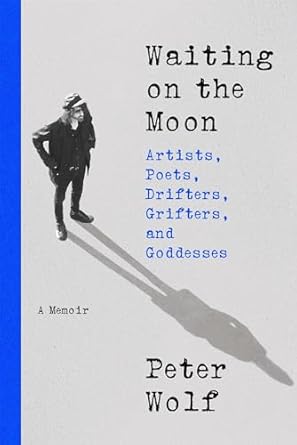
A born raconteur, Wolf has put down a unique twist on his life story in Waiting On the Moon—Artists, Poets, Drifters, Grifters, and Goddesses: A Memoir (352 pp., $30, Little, Brown and Company).

Eschewing a normal straight biography, Wolf instead tells his tale in a series of dozens of vignettes of interactions populated with both insanely famous and completely unknown. And in each story, the reader learns a little more about Peter Wolf and who he is.

You want variety? Like Woody Allen’s Zelig (and closer to six degrees than Kevin Bacon), with Wolf there seems to be two degrees of separation between himself and everybody.

His musical encounters are pure Gold. Growing up near Greenwich Village, a teenage Wolf become fascinated and then tags along to a young singer just arrived in town—Bob Dylan—who treats Wolf alternately with welcomeness and wariness.

When the two are both at a Village bar and Dylan keeps putting down his half glass of red wine to engage in animated conversation with others, a thirsty Wolf quietly swipes the glass, empties it, and returns it unnoticed. Even after several of these incidents, Dylan can’t seem to understand what’s going on.

Wolf was also obsessed with the blues, seeing many of the greats in small New York clubs. He becomes such a presence that soon Muddy Waters, Howlin’ Wolf, and members of their band decide to hang out at Wolf’s small apartment to drink scotch and gin, play records, shoot the shit, and show the young white kid some musical pointers.

Waters in particular becomes a friend, calling Peter “Little Wolf.” But when he takes a picture with the Big Wolf—Howlin’ himself—and someone makes a joke about the “two wolves sitting together,” Howlin’ growls in his distinctive, scratchy voice “There’s only one Wolf in this room.”

Peter Wolf’s wanderlust might mean he hitchhikes across the country on a whim, crashing with friends with varying degrees of welcomeness, always carrying his art supplies and paintings (his initial artistic pursuit). He manages to sit in on scores of art classes at various colleges without actually ever being enrolled.

A chance encounter at a bulletin board even led Wolf to spend a brief time as the college roommate of future visionary director David Lynch. Lynch’s fastidiousness in dress, speech, and behavior at wild odds with Wolf’s disheveled, chaotic approach to all those areas. Eventually, Lynch would toss Wolf out (and change the locks) for non-payment of rent.

Years later, when Wolf sent Lynch a gift book to celebrate the director’s breakthrough success with Blue Velvet, Lynch sends back a letter of thanks—and a reminder that the singer still owed him $33.40.

But it’s not just the famous who Wolf makes come alive on these pages. We also learn about his artistic, Bohemian, and politically-active parents—for whom parenting was sometimes an afterthought, as well as early girlfriend and soulmate Edie, whose life is tragically cut short.

The encounters are so varied. A benevolent Eleanor Roosevelt, tense Andy Warhol, open John Lee Hooker, moody and liquored up Van Morrison, and a sober Alfred Hitchcock —who really wanted to drink with Wolf. Thinking it would be improper, Wolf declined despite many asks from the director. Only later did he find out that Hitchcock’s wife would only allow him to drink during the day if he was entertaining guests.

Celebrities seem to drop from the sky at every page. Wolf has a drink with a disheveled guy near a recording studio. Who turns out to be Harry Nilsson. Who then takes Wolf in to meet John Lennon. Drinks ensue.

At a later session with the pair, Paul Simon, Art Garfunkel, and Diane Keaton walk in. He gets a whip cracked at him by an out-of-his gourd Sly Stone. He passes (passes!) on smoking dope with Willie Nelson, Ray Price, and Merle Haggard on their tour bus. But Wolf does drain a lot of glasses in these pages.

What encounters! A chapter on insane parties with the Rolling Stones dissolves into one about attending a wine tasting at Julia Child’s house to one sitting next to Tennessee Williams at staging of the playwrights A Streetcar Named Desire starring Wolf’s then-wife, Faye Dunaway.

Ah yes, Faye Dunaway. The actress here is far more free-spirited, music-loving, and party driven then her somewhat icy screen persona would seem (Wolf notes she also struggled with substances).

Still, when she and Chinatown co-star Jack Nicholson disappeared in his bedroom for hours, leaving Wolf fuming and waiting downstairs, Wolf got the last laugh: dumping a coffee table’s worth of books and cocaine and then furniture in Nicholson’s pool. Their relationship would be rocky at times.

There are two issues with the book. Those looking for really anything about the J. Geils Band, its members, or records will find almost nothing I these pages. He mentions some gigs occasionally. But the band itself gets one, short, bitter chapter. They did part ways over musical direction, after 15 years. He does not remember the various “reunions” fondly either. Nothing at all here about “Centerfold,” “Freeze Frame,” “Musta Got Lost,” or “Love Stinks.”

Likewise, Wolf’s chapters are dialogue and quotes-driven—which he even admits he’s only recreating to the best of his memories, albeit decades later. And while the veracity of the words come into question, it all flows well.

This article originally appeared at HoustonPress.com

Posted in Books, J. Geils Band, Peter Wolf | Tagged , | Leave a comment

All the Manic Mondays (and Other Days of the Week) Recounted in Bangles Book

The Bangles in Polaroid, c. 1986: Vicki Peterson, Susanna Hoffs, Debbi Peterson, Michael Steele Vicki Peterson Personal Collection.

July 15, 1989. While tens thousands of Houstonian Gen Xers won’t necessarily recall what they were doing on that date, mention “The Bangles Beltway 8” concert and they’ll instantly recall the bizarre gig when the hitmakers behind “Manic Monday,” “Walk Like an Egyptian,” “Eternal Flame,” “A Hazy Shade of Winter,” and “In Your Room” played a free show…celebrating the opening of a stretch of paid highway between I-10 and 290.

Officials were estimating 25,000 attendees, though accounts note the nearly three times that amount actually showed up. Even the odd location aside, throw in the fact that it was boiling hot, the shaky stage had been cobbled together, and the overpass actually started swaying under the weight of the people, with the stage and lighting began to move., the Bangles cut the show short before disaster could happen.

The incident looms so heavily in the band’s history that it opens author Jennifer Otter Bickerdike’s Eternal Flame: The Authorized Biography of the Bangles (416 pp., $30, Grand Central Publishing).

Being an “authorized” tale, of course, has its pros and cons. Bickerdike was given unfettered access to the archives of the group and conducted extensive and fresh interviews with co-founders Vicki Peterson (guitar/vocals), sister Debbie Peterson (drums/vocals), and Susanna Hoffs (lead vocals/guitar).

As was as band admirers, record company execs, producers, promo men, roadies, managers, and co-founding bassist Annette Zilinskas, who left the group just prior to their recording their full length debut and massive success.

This also means the book is largely complimentary, though Bickerdike does note tensions that grew out of Hoffs’ visual and vocal dominance on stage and in videos, and who garnered the most press attention, a sticking point for the other three in both archival and contemporary interviews. In other instances, Rashomon-style, they sometimes have completely different takes on the same incident or situation.

Conspicous by her absence (though through no fault of Bickerdike) is the fourth member who was there for the classic lineup bassist Michael Steele, who chose not to participate. Her input and observations are missed, especially as she seemed the “odd one out” of the quartet.

Bickerdike chronicles the often rampant sexism the Bangles faced—throughout the first phase of their career—from record company execs, DJs, media, and even fellow musicians. She also notes the media-created “rivalry” with The Go-Go’s, almost exclusively based on their shared all-female lineup despite their very different sounding music. The Go-Go’s light punk/pop tunes versus the Bangles more ‘60s-inspired jingle jangle rock sounds.

Still, the influence—wanted or not—of men is a thread in the book. Whether it’s Prince who gives them their breakthrough hit with “Manic Monday” (seemingly based on his potential romantic feelings for Hoffs that went unrequited) or the creative struggles with producer David Kahne, who brought in session musicians for their first two albums. As to why the band (and especially Vicki, the most distraught on the latter) didn’t push harder for themselves, is not wholly answered.

Debbi Peterson at the drums. Debbi Peterson Personal Collection.

She also notes how a band or record could “break” with seemingly the input and interest of a single DJ (in this case KROQ’s Rodney Bigenheimer) or booker. Or how a band would have to stir interest themselves with flyers placed in club bathrooms or giving away 45s. A way of getting your music noticed that must seem simply arcaic in this era of TikTok, YouTube, and Bandcamp.

While there was no clear defined “leader” of the Bangles, the duties largely happened under the umbrella of Vicki Peterson (as the driving force) and Hoffs (as the “frontwoman”) and writers of most of their original material.

One of the best aspects of this book is that it sends the reader (and this reviewer) to take a deeper dive into the band’s discography. Not only did I find that they produced a lot of great music beyond the hits, but that the lead vocals were pretty equally distributed between the four members. Though it’s understandable to view Hoffs as the main vocalist since it’s her on almost all of the hits.

Save “Walk Like an Egyptian,” in which three of them take turns. Interestingly, the group dismissed the Jules Shear-penned song as a novelty tune and didn’t give it much thought after recording it. That it would become their most recognizable song and most-watched video–in the words of Chuck Berry—goes to show you never can tell.

Other musicians from Duran Duran and Prince to the Go-Go’s and even Robert Plant make cameo appearances in stories. And the group dubs Police frontman Sting as “Stink” because, well, he apparently was not the biggest proponent of personal hygiene the time they shared a house with him (the Police drummer Stewart Copeland’s brother, Miles, was the Bangles’manager).

But one of the biggest takeaways from the book is just how unhappy the members seemed to be, even at the height of their successes when they were getting double platinum sales for Different Light, selling out shows, and winning awards. And that unhappiness was often with each other, though it often went unaddressed. At times, the reader wants to reach into these pages, shake each member up, and say “just talk to each other!”

The Bangles broke up in 1989 not too long after that disastrous Houston Beltway 8 show. Over the decades there have been periodic full and partial reunions, tours, some solo/new group/side project releases, a great archival release of their earliest and most blatantly ‘60s-inspired music from when they were just known as The Bangs (Ladies and Gentlemen…The Bangles) and even new Bangles music (the last being 2011’s Sweetheart of the Sun).

Steele left for good in 2005 and Zilinskas was brought back into the fold, though the band has not performed since 2019 and according to their website, only the Petersons and Hoffs are “official” members.

Eternal Flame is a solid and overdue look at a band that not only helped pioneer and pave the way for a bigger stake of women in rock and roll, but were a treasured part of many a Gen Xers memories. It will hopefully help put attention to their music and a reassesement of their career beyond their looks and videos.

BONUS!
A YouTube Video where the Bangles talk about the infamous Houston freeway concert and the audio from the show!

This article originally appeared at Houston Press.com

Posted in Bangles, Books | Tagged , , , , , | Leave a comment

WAR Receives Star on the Hollywood Walk of Fame!

Just a brief post today. I was so happy and excited that a band very close to my heart—WAR—received a star on the Hollywood Walk of Fame today. The 2,814 star to be exact.

And yes, I know that stars are technically paid for or sponsored, but it’s still a honor for a band I chersh. So much so that I spent 3+ years writing and then self-publishing a book on them, Slippin’ Out of Darkness: The Story of WAR.

It all stemmed from my thought: I’ve read hundreds of music biographies and autobiographies, but how is it that there was NO book about this incredibly successful. popular, and influential group?

So I decided to write it. And I did. I traveled the country interviewing former members in person, did phone interviews, and a lot of archival research. It remains the most important thing I’ve ever done as a music writer.

As I watched the ceremony via livestream, I was overjoyed that the four original surviving members— Howard Scott, Lonnie Jordan, Lee Oskar, and Harold Brown—shared the stage with producer Jerry Goldstein and the children of late members B.B. Dickerson and Charles Miller. Papa Dee Allen was also mentioned, former member Tweed Smith was there, as well as the current lineup.

There’s been a rumbling of activity around the band recently with the Rhino Records new box sets, archival Live in Japan 1974 release, and more things ahead.

They’ve been nominated for The Rock and Roll Hall of Fame three times so far, but never gotten in. I hope this helps!

I was honored and so touched that Howard Scott, WAR’s founding singer/guitarist, took time out of a very busy day to call me at 6:30 am California time where he was to tell me how much he appreciated my work promoting the band’s legacy. As well as expressing his appreciation to the FANS for keeping their music alive. It was one of the best calls I’ve ever received, much less on the drive to my “real” job!

Anyway, my deepest congratulations and sincere apprecation for this band. You can watch the induction ceremony below via the Hollywood Walk of Fame website.

And you can find out about my book here: https://www.amazon.com/Slippin-Out-Darkness-Story-WAR/dp/197416652X and my Facebook page here: https://www.facebook.com/theWARbook/.

See the entire ceremony here (and skip to 17:30 for the start).

Posted in War | Tagged , | 3 Comments

Orleans Wants You to Know They’re “Still the One”

Orleans in 2025: Tom Lane, Brady Spencer, Lance Hoppen, Tony Hooper, Lane Hoppen. Ash Newell Photography.

According to their website, there have been a whopping 19 different lineups of the band Orleans since their 1972 start, and they’ve been an active unit in all but three of those years since then.

“I’ve tried to honor everybody, but yes, that’s a lot!” laughs the longest serving member of all those incarnations—bassist/singer Lance Hoppen—via Zoom from his home. He was still a teenager when he joined the group started by his brother Larry Hoppen (guitar/keyboards), John Hall (lead vocals/guitar), and Wells Kelly (drums/keyboards) shortly after the founding.

And it is he who leads the current lineup that will bring two shows including their troika of lasting hits “Still the One,” “Dance with Me,” and “Love Takes Time” to Tomball’s Main Street Crossing on March 15.

“What we have now is a different animal then the ’70s band. That was more funky, improvisational, and explorative. We wanted to push boundaries, but everyone was looking for their space,” he says, adding that members might also leave and then come back. “This version has a lot more pop, with five strong singers who all sing lead at one point. And it’s a band band. It’s not me with four guys backing me.”

Orleans in 1975: Wells Kelly, John Hall, Lance Hoppen, Larry Hoppen. Asylum Records PR photo.

The rest of the band today includes Tom Lane (guitar), Brady Spencer (drums), Tony Hooper (guitar), and his younger brother Lane Hoppen (keyboards). The Hoppens share most of the lead vocals.

“There’s history thrown in as well, but not too much,” he continues. “I’ve very pleased and proud of this band. And of course, we culminate with ‘Still the One.’”

Ah yes, “Still the One.” It’s the band’s highest charting hit, reaching #5 in 1976. The buoyantly upbeat tune is about a man who tells his longtime love that after all these years “they’re still having fun.” Written by member John Hall and his then-wife Johanna, it also got a ton of airplay when the ABC network first used it as its theme song to promo the 1977-78 television season, then again in 1979-80 (both versions of the song were re-recorded by some peppy studio singers).

That means plenty of Gen Xers waiting to watch “The Hardy Boys/Nancy Drew Mysteries,” “The Six Million Dollar Man,” “Happy Days,” “Laverne & Shirley,” and “Three’s Company” had it drilled into their heads. It was an early use of an existing hit song used in advertising.

“It’s still one of the most licensed songs every for TV and movies and commercials and political campaigns. It’s a publishing deal. They have to get rights to use the song, then they can use the original or a soundalike or a live version,” Hoppen explains.

He adds that John Hall was already “itching to leave” the band to go solo, and this lucrative deal for he and his wife perhaps made it easier to do so soon after. “It led to the [classic lineup] breakup, which everyone in retrospect believed was a very, very bad idea!”

The album it came from was Waking and Dreaming. The title track would be considered Orleans’ “epic” song, and features some of Hoppen’s best bass playing. “It was challenging to record, and it was always challenging to play live,” Hoppen says. “And since it doesn’t have an ending, it transitioned to the next song.”

The album cover features the five members (by now including drummer Jerry Marotta) posting shirtless together. In the years since it’s also held a famous (or infamous) position as one of the weirdest or worst album covers of all time. And in fact, Hoppen notes it is one of six chosen to be featured on the cover of the 2004 book The Worst Album Covers Ever.

He’s maintained a good humor about it, though, adding that the band never intended to show skin at all when they showed up for the photo shoot.

“That was nobody’s idea!” Hoppen laughs. “We were sent to the studio of [rock photographer] Norman Seef, and it was very L.A. There were models walking around and wine. And we’re doing the shoot and Norman says ‘Hey guys, you are so stiff! Take your shirts off and see what happens!’ And then took photos of all of us with our eyes open, and then our eyes closed.”

In the final product though, Hoppen says that Seef airbrushed Hall’s face in reverse from the second shot, so his “closed” pose contrasts with everyone else’s “open.” That’s reversed on the back cover, where Hall is looking at the listener and everyone else has their peepers closed. But it’s on point.

“That’s the ‘Waking’ and ‘Dreaming’—but nobody ever gets that!” Hoppen laughs. “And we were not completely naked, only from the waist up. Wal-Mart would not even carry it! But no one talks about the Pablo Cruise where they are stark naked. They’re just kneeling!” (That would be 1976’s Lifeline).

By that time, Orleans had already been pegged as a “soft rock” band since the year earlier, their first hit “Dance with Me” went to #6 on the charts. And it stuck, even though material like “Cold Spell” were deep cut rockers.

“We were more of a rock, funky, college band. And then ‘Dance with Me’ came out of the blue as an anomaly. But that’s what broke through and we got kind of pushed into the MOR thing,” Hoppen says. “We then toured with Melissa Manchester while—no shade on her—it was that kind of [soft rock] audience. We then toured with Little Feat, and that’s where we belonged.”

Another genre that Orleans gets lumped into is Yacht Rock. Their hits are often found on YR playlists, and behind Hoppen’s head on the Zoom is a poster for the 2013“Sailing Rock” tour they were on alongside Christopher Cross, Firefall, Gary Wright, John Ford Coley, Robbie Dupree, Player, and Al Stewart.

Music nerds of course, will debate the credentials of some of those, under the auspice that “All Yacht Rock is Soft Rock, but not all Soft Rock is Yacht Rock.” The originators of the web series that gave the genre its name even have a website, www.yachtornyacht.com, which ranks performers and songs by their Yachtiness.

When I show Hoppen the grid for Orleans, he’d never seen it before and is surprised that the only song in their catalog that gets even a passing grade on the boat is the 1982 deep cut “I Found Someone.”

“That got no airplay whatsoever! But that’s interesting they even know about that song!” Hoppen says. “We are tangentially Yacht Rock, but not mainstream.”

In recent years, Orleans has put out a mixture of brand-new material, remixes, re-recorded songs, YouTube videos, and even a Christmas album that was recorded wholly remotely during the COVID lockdown.

He notes that it’s difficult for a classic band to find an audience for new material, though he says that Orleans is working on songs. He has several things in the works, and feels the band has “one last capper album” in them, that may also include some compilation and live material. He and Hall are still in communication (of the “original” quartet, Wells Kelly died in 1984 and Larry Hoppen in 2012). Hall actually had an entire other career in 2007-2011 representing New York in the U.S. House of Representatives.

As to if he feels any extra pressure as the “last man standing” of the classic lineup in the current band, Hoppen says it is a mixture of pressure and responsibility. But as long as bookers and promoters and audiences still want to see the band, he’s willing—at the age of 71—to go out. And he addresses the group’s evolution and changes during the show.

Finally, Hoppen says that while he does not have any particular memories of Houston over the years, the night before the band will be playing in New Braunfels. That’s near where Hoppen’s daughter and three grandchildren (ages 14, 11 and 8) live, because his military-career son-in-law is based at San Antonio’s Fort Sam Houston.

“This will be good to play in front of the grandkids. And the oldest will be working the merch table!” he laughs. “Having them experience Poppy onstage will be a cool thing. And Grandad really is the best gig.”

For more on Orleans, visit OrleansOnline.net

This interview originally appeared at HoustonPress.com

Posted in Orleans | Tagged , | Leave a comment