Just a brief post today. I was so happy and excited that a band very close to my heart—WAR—received a star on the Hollywood Walk of Fame today. The 2,814 star to be exact.
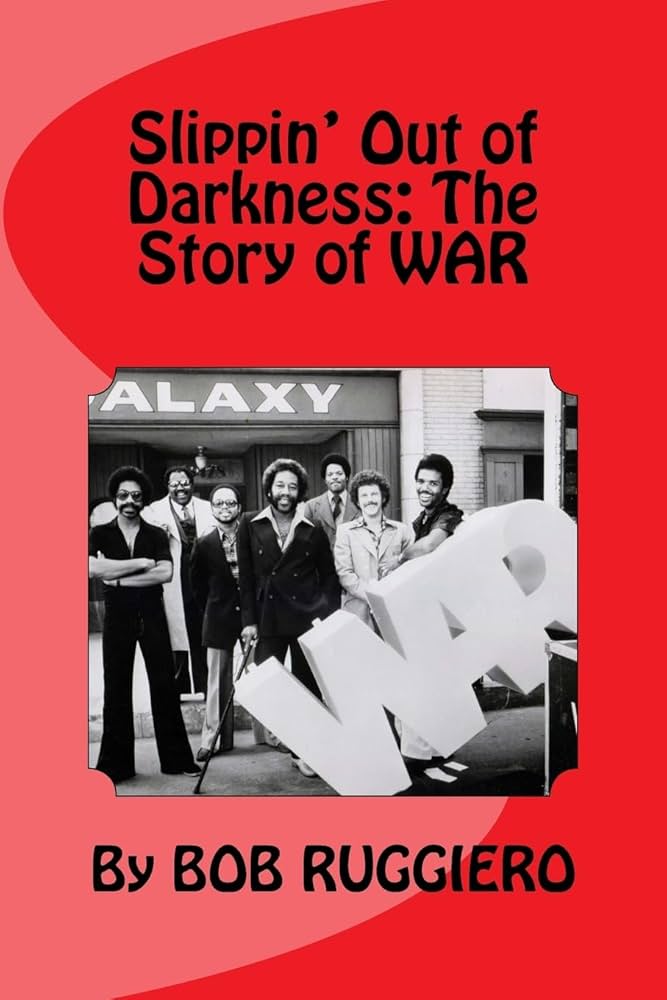
And yes, I know that stars are technically paid for or sponsored, but it’s still a honor for a band I chersh. So much so that I spent 3+ years writing and then self-publishing a book on them,Slippin’ Out of Darkness: The Story of WAR.
It all stemmed from my thought: I’ve read hundreds of music biographies and autobiographies, but how is it that there was NO book about this incredibly successful. popular, and influential group?
So I decided to write it. And I did. I traveled the country interviewing former members in person, did phone interviews, and a lot of archival research. It remains the most important thing I’ve ever done as a music writer.
As I watched the ceremony via livestream, I was overjoyed that the four original surviving members— Howard Scott, Lonnie Jordan, Lee Oskar, and Harold Brown—shared the stage with producer Jerry Goldstein and the children of late members B.B. Dickerson and Charles Miller. Papa Dee Allen was also mentioned, former member Tweed Smith was there, as well as the current lineup.
There’s been a rumbling of activity around the band recently with the Rhino Records new box sets, archival Live in Japan 1974 release, and more things ahead.
They’ve been nominated for The Rock and Roll Hall of Fame three times so far, but never gotten in. I hope this helps!
I was honored and so touched that Howard Scott, WAR’s founding singer/guitarist, took time out of a very busy day to call me at 6:30 am California time where he was to tell me how much he appreciated my work promoting the band’s legacy. As well as expressing his appreciation to the FANS for keeping their music alive. It was one of the best calls I’ve ever received, much less on the drive to my “real” job!
Anyway, my deepest congratulations and sincere apprecation for this band. You can watch the induction ceremony below via the Hollywood Walk of Fame website.
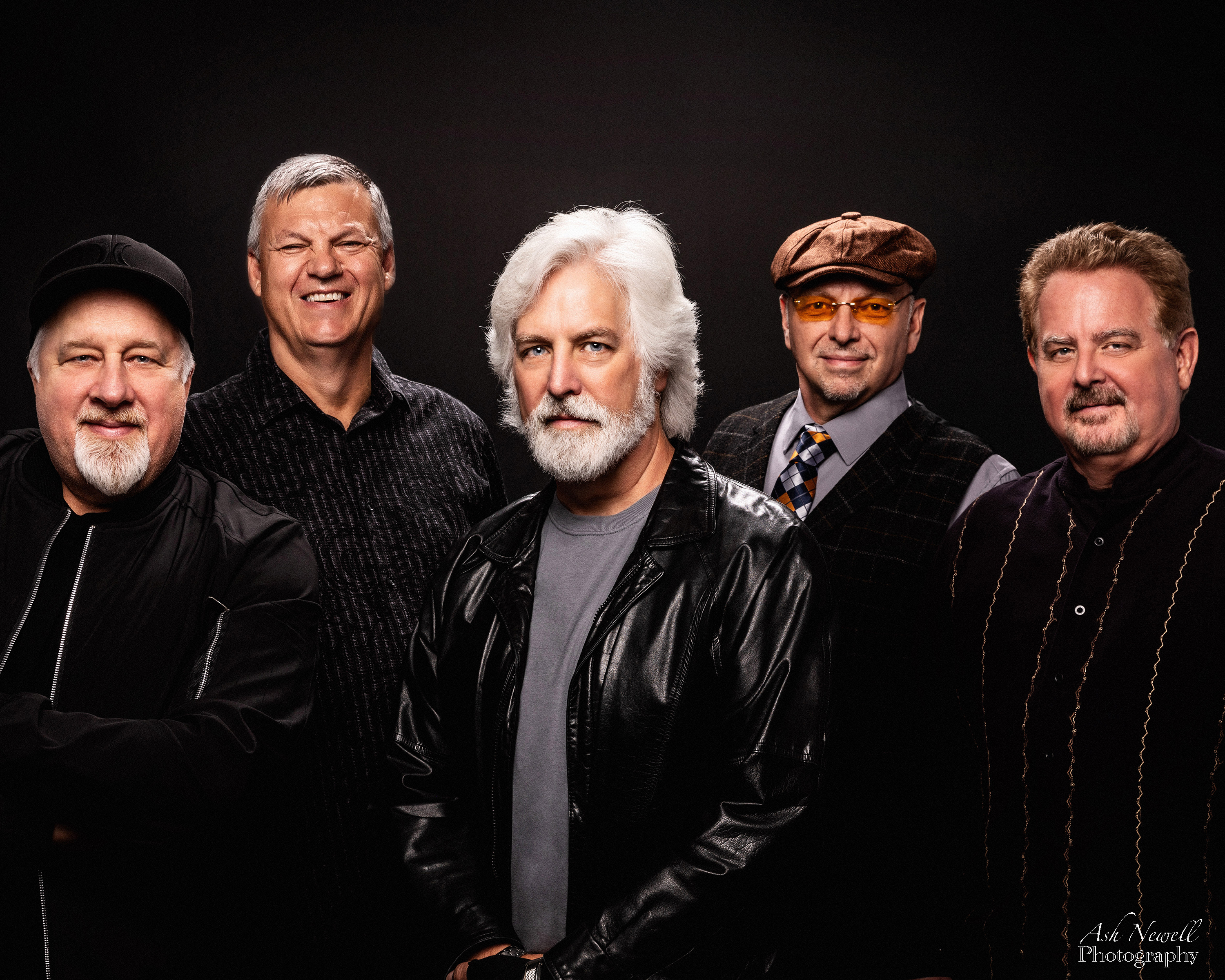
Orleans in 2025: Tom Lane, Brady Spencer, Lance Hoppen, Tony Hooper, Lane Hoppen. Ash Newell Photography.
According to their website, there have been a whopping 19 different lineups of the band Orleans since their 1972 start, and they’ve been an active unit in all but three of those years since then.
“I’ve tried to honor everybody, but yes, that’s a lot!” laughs the longest serving member of all those incarnations—bassist/singer Lance Hoppen—via Zoom from his home. He was still a teenager when he joined the group started by his brother Larry Hoppen (guitar/keyboards), John Hall (lead vocals/guitar), and Wells Kelly (drums/keyboards) shortly after the founding.
And it is he who leads the current lineup that will bring two shows including their troika of lasting hits “Still the One,” “Dance with Me,” and “Love Takes Time” to Tomball’s Main Street Crossing on March 15.
“What we have now is a different animal then the ’70s band. That was more funky, improvisational, and explorative. We wanted to push boundaries, but everyone was looking for their space,” he says, adding that members might also leave and then come back. “This version has a lot more pop, with five strong singers who all sing lead at one point. And it’s a band band. It’s not me with four guys backing me.”
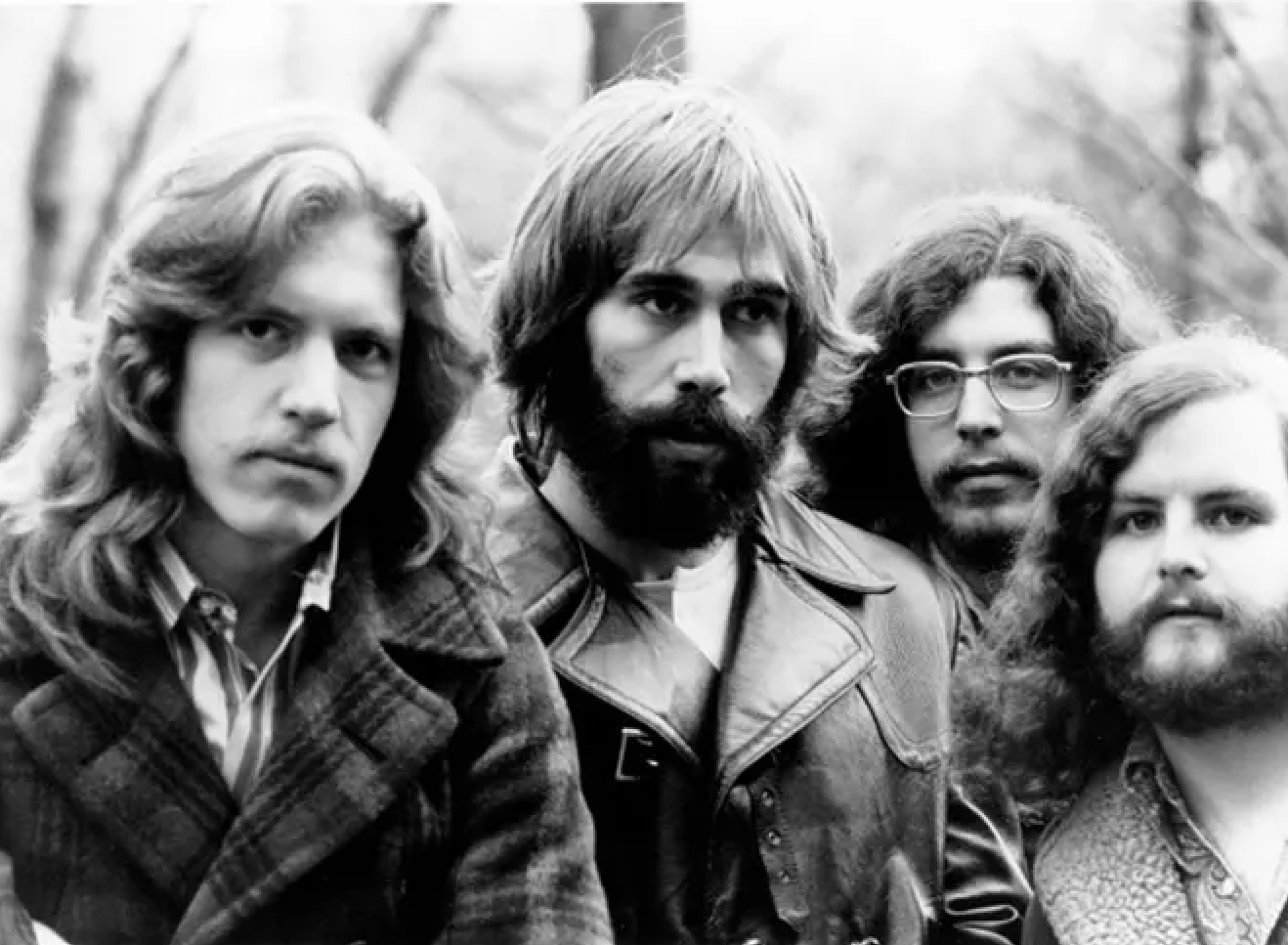
Orleans in 1975: Wells Kelly, John Hall, Lance Hoppen, Larry Hoppen. Asylum Records PR photo.
The rest of the band today includes Tom Lane (guitar), Brady Spencer (drums), Tony Hooper (guitar), and his younger brother Lane Hoppen (keyboards). The Hoppens share most of the lead vocals.
“There’s history thrown in as well, but not too much,” he continues. “I’ve very pleased and proud of this band. And of course, we culminate with ‘Still the One.’”
Ah yes, “Still the One.” It’s the band’s highest charting hit, reaching #5 in 1976. The buoyantly upbeat tune is about a man who tells his longtime love that after all these years “they’re still having fun.” Written by member John Hall and his then-wife Johanna, it also got a ton of airplay when the ABC network first used it as its theme song to promo the 1977-78 television season, then again in 1979-80 (both versions of the song were re-recorded by some peppy studio singers).
That means plenty of Gen Xers waiting to watch “The Hardy Boys/Nancy Drew Mysteries,” “The Six Million Dollar Man,” “Happy Days,” “Laverne & Shirley,” and “Three’s Company” had it drilled into their heads. It was an early use of an existing hit song used in advertising.
“It’s still one of the most licensed songs every for TV and movies and commercials and political campaigns. It’s a publishing deal. They have to get rights to use the song, then they can use the original or a soundalike or a live version,” Hoppen explains.
He adds that John Hall was already “itching to leave” the band to go solo, and this lucrative deal for he and his wife perhaps made it easier to do so soon after. “It led to the [classic lineup] breakup, which everyone in retrospect believed was a very, very bad idea!”
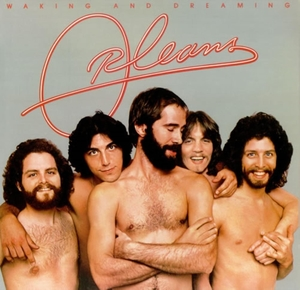
The album it came from was Waking and Dreaming. The title track would be considered Orleans’ “epic” song, and features some of Hoppen’s best bass playing. “It was challenging to record, and it was always challenging to play live,” Hoppen says. “And since it doesn’t have an ending, it transitioned to the next song.”
The album cover features the five members (by now including drummer Jerry Marotta) posting shirtless together. In the years since it’s also held a famous (or infamous) position as one of the weirdest or worst album covers of all time. And in fact, Hoppen notes it is one of six chosen to be featured on the cover of the 2004 book The Worst Album Covers Ever.
He’s maintained a good humor about it, though, adding that the band never intended to show skin at all when they showed up for the photo shoot.
“That was nobody’s idea!” Hoppen laughs. “We were sent to the studio of [rock photographer] Norman Seef, and it was very L.A. There were models walking around and wine. And we’re doing the shoot and Norman says ‘Hey guys, you are so stiff! Take your shirts off and see what happens!’ And then took photos of all of us with our eyes open, and then our eyes closed.”
In the final product though, Hoppen says that Seef airbrushed Hall’s face in reverse from the second shot, so his “closed” pose contrasts with everyone else’s “open.” That’s reversed on the back cover, where Hall is looking at the listener and everyone else has their peepers closed. But it’s on point.
“That’s the ‘Waking’ and ‘Dreaming’—but nobody ever gets that!” Hoppen laughs. “And we were not completely naked, only from the waist up. Wal-Mart would not even carry it! But no one talks about the Pablo Cruise where they are stark naked. They’re just kneeling!” (That would be 1976’s Lifeline).
By that time, Orleans had already been pegged as a “soft rock” band since the year earlier, their first hit “Dance with Me” went to #6 on the charts. And it stuck, even though material like “Cold Spell” were deep cut rockers.
“We were more of a rock, funky, college band. And then ‘Dance with Me’ came out of the blue as an anomaly. But that’s what broke through and we got kind of pushed into the MOR thing,” Hoppen says. “We then toured with Melissa Manchester while—no shade on her—it was that kind of [soft rock] audience. We then toured with Little Feat, and that’s where we belonged.”
Another genre that Orleans gets lumped into is Yacht Rock. Their hits are often found on YR playlists, and behind Hoppen’s head on the Zoom is a poster for the 2013“Sailing Rock” tour they were on alongside Christopher Cross, Firefall, Gary Wright, John Ford Coley, Robbie Dupree, Player, and Al Stewart.
Music nerds of course, will debate the credentials of some of those, under the auspice that “All Yacht Rock is Soft Rock, but not all Soft Rock is Yacht Rock.” The originators of the web series that gave the genre its name even have a website, www.yachtornyacht.com, which ranks performers and songs by their Yachtiness.
When I show Hoppen the grid for Orleans, he’d never seen it before and is surprised that the only song in their catalog that gets even a passing grade on the boat is the 1982 deep cut “I Found Someone.”
“That got no airplay whatsoever! But that’s interesting they even know about that song!” Hoppen says. “We are tangentially Yacht Rock, but not mainstream.”
In recent years, Orleans has put out a mixture of brand-new material, remixes, re-recorded songs, YouTube videos, and even a Christmas album that was recorded wholly remotely during the COVID lockdown.
He notes that it’s difficult for a classic band to find an audience for new material, though he says that Orleans is working on songs. He has several things in the works, and feels the band has “one last capper album” in them, that may also include some compilation and live material. He and Hall are still in communication (of the “original” quartet, Wells Kelly died in 1984 and Larry Hoppen in 2012). Hall actually had an entire other career in 2007-2011 representing New York in the U.S. House of Representatives.
As to if he feels any extra pressure as the “last man standing” of the classic lineup in the current band, Hoppen says it is a mixture of pressure and responsibility. But as long as bookers and promoters and audiences still want to see the band, he’s willing—at the age of 71—to go out. And he addresses the group’s evolution and changes during the show.
Finally, Hoppen says that while he does not have any particular memories of Houston over the years, the night before the band will be playing in New Braunfels. That’s near where Hoppen’s daughter and three grandchildren (ages 14, 11 and 8) live, because his military-career son-in-law is based at San Antonio’s Fort Sam Houston.
“This will be good to play in front of the grandkids. And the oldest will be working the merch table!” he laughs. “Having them experience Poppy onstage will be a cool thing. And Grandad really is the best gig.”
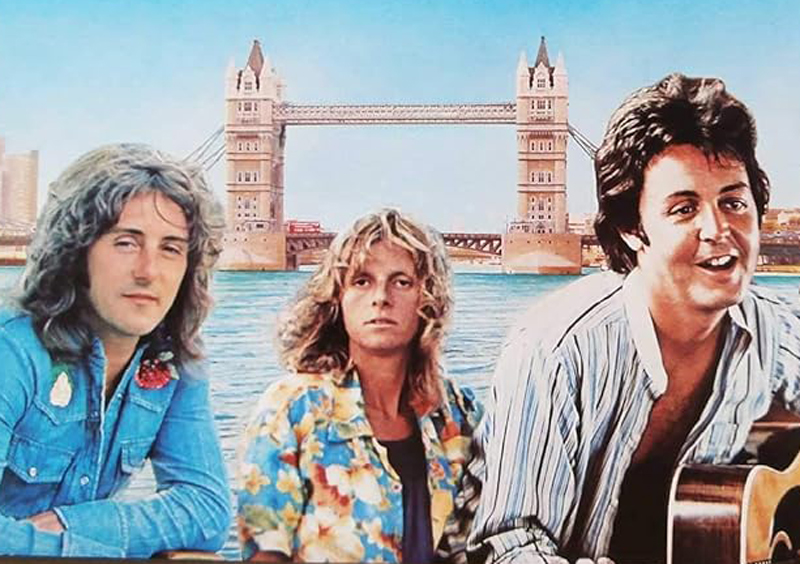
By the time of 1978’s “London Town” album release, Wings were a trio for the second time: Denny Laine, Linda McCartney and Paul McCartney. Record back cover.
For nearly 50 years, biographer Robert Caro has been working on his massive, sprawling, set of books on the life of former U.S. President Lyndon Johnson. Now 89 years old, Caro is reportedly wrapping up the fifth and final volume for publication.
Authors Allan Kozinn and Adrian Sinclair are younger but may need a similar timeline to complete their current quest to put in print every single detail about the life and music of Paul McCartney—and specifically his post-Beatles years—in a similarly expansive fashion.
2022 saw the debut of their 700+ page first volume of The McCartney Legacy. Now just two years later comes the even longer The McCartney Legacy: Volume 2: 1974-80 (768 pp., $35, Dey Street Books). That means it covers the studio albums Venus & Mars, Wings at the Speed of Sound, London Town and Back to the Egg, as well as the live Wings Over America and the recently released One Hand Clapping live retrospective sessions.
Make no mistake: This book is not for the casual fan of Paul McCartney’s work with Wings or a solo artist. The amount of detail is staggering even by Beatleologist terms.
We know that when the McCartney family’s airplane touched down in Nashville on June 6, 1974, Paul was wearing a “green, sleeveless jacket and brightly colored shirt.” We know on the Fourth of July weekend in 1975, they saw both Jaws and Nashville in the movie theater.
The “Wings over America” plane was a BAC 111 model. And the Scottish architectural firm hired to build a studio in one month where Wings would record “Mull of Kintyre” (still the highest selling, non-charity British single in history), was Weir, Ferguson, Martin, Ltd. And that sculpture on the cover of Wings Greatest that was carried to the top of a snowy Swiss mountain by helicopter to be photographed? Semiramis by Demétre Chiparus.
While the first volume got perhaps a bit too in the weeds about specific recording dates, instruments, and takes, this one thankfully trims that down a bit for more biography about Macca’s movements.
So, while we get everything you need to know about the Venus and Mars recording sessions, there’s also lot of color and commentary. Like when Paul and Linda tried to blend into a raucous New Orleans Mardi Gras street celebration by wearing clown costumes (they were soon found out and had to high tail it back inside their building).
The Wings’ tours get attention, including the one that spawned triple disc Wings Over America live record and accompanying Rockshow film/video. Kozinn and Sinclair note that Wings played Houston’s Summit on May 4, 1976, to a sold out 16,000 strong audience.
Two photos are included and the book quotes Dale Adamson of the Houston Chronicle’s review: “McCartney proved quickly that he hardly needed the rest of the Fab Four to dazzle an audience his own way…The keynote of the show was its variety—a full two-and-a-quarter-hours of invigorating and refreshing music.”
Had McCartney read that, he would have certainly been pleased in both addressing “The Beatles question” and promoting the idea (not actually true) that Wings was a true democratic decision-making band and not just McCartney and a backing group. Though Wings members Denny Laine, Geoff Britton, Jimmy McCulloch, Joe English, Laurence Juber, and Steve Holley get plenty of pages about their contributions (and sometimes foibles).
Including then-contemporary interviews and record/concert reviews helps put the story in the terms of the times rather than the long lens of history.
The book ends with Paul McCartney’s 1980 drug bust at a Japanese airport for trying to smuggle marijuana in his suitcase into the country…which normally carries a seven-year prison term. Will Paul get out? History knows, but this book ends with “to be continued”…for Volume III.
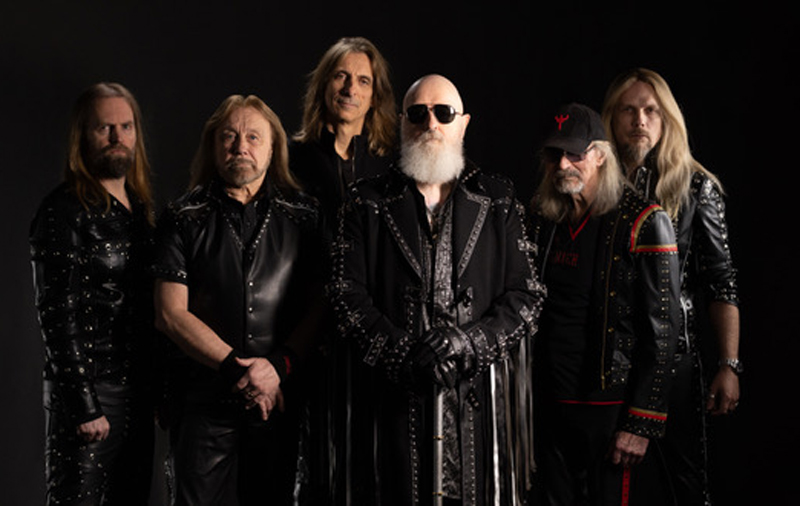
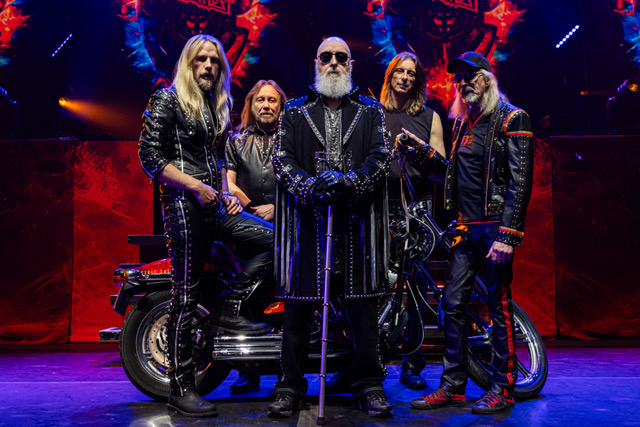
Judas Priest: Andy Sneap, Ian Hill, Scott Travis, Rob Halford, Glenn Tipton and Richie Faulkner Photo by Andy Elvis-McGovern.
It’s understandable why the general public’s perception of what music writers do is based on Cameron Crowe’s semi-autobiographical 2000 film Almost Famous. Hanging out with the band for a week! Backstage and hotel parties! Drugs! Groupies!
But the reality of profession in 2024 is that for features to advance a concert, you might get 20 minutes on the phone with a bandmember, sandwiched between similar chinwags with a bunch of other writers likely asking many of the same questions.
The one boon from the pandemic, though, is the prolificacy of the Zoom interview. More and more musicians are OK with this option and both writer and subject get to actually see who they’re talking to. It makes for a better conversation, better answers, and a better story.
Still, it’s a bit of a shock to see The Metal God himself, Rob Halford of Judas Priest, pop up on the laptop screen in my dining room in all of his bald/bearded/tattooed/nose-ringed glory. And yes, I can confirm that his Zoom screen name is actually “The Metal God.”
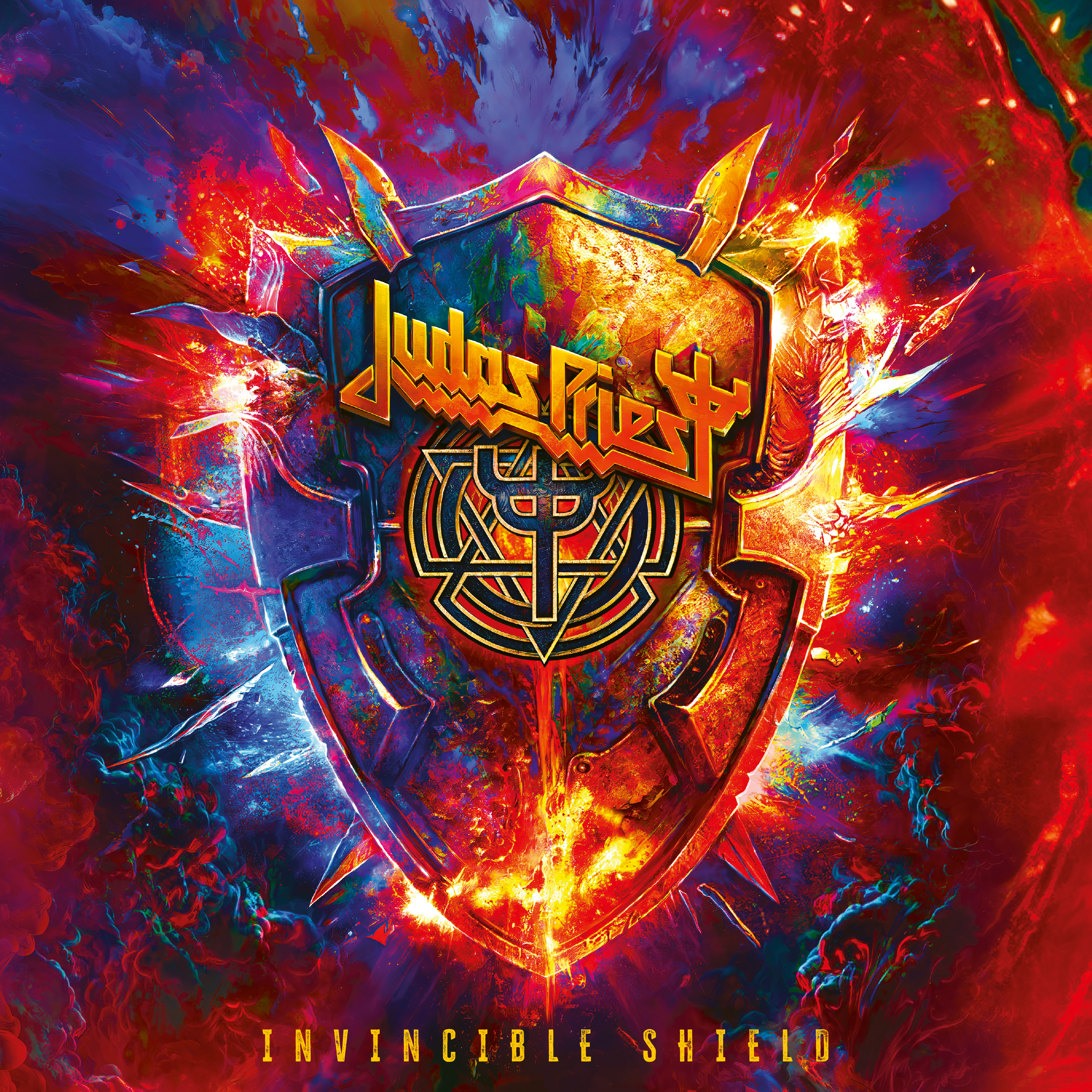
“Texas is nuts for Priest!” the lead vocalist says on a call whose main purpose is to discuss their powerful latest record Invincible Shield. And the tour that will bring them to Houston. “There’s a lot of heavy metal fans in that state. Always have been.”
When the I last spoke with Halford back in 2008, he was calling all the way from Bucharest, Romania during a tour stop. And while U.S. fans certainly love heavy metal and have supported Judas Priest for now more than 50 years, fans in Eastern Europe and Latin/South America are in particularly rabid, even if they don’t speak English.
Halford has some thoughts as to why.
“Metal hits everybody in the same way. But there are some cultures that display their emotions and passions a bit differently,” he offers. “We’re all on the same field, we’re all together, the heavy metal community. But there were certain countries that were very repressed and depressed with music and what they could listen to or not. There are no inhibitions. They just let it out.”
Beyond that, he’s notes it’s just this explosive joy of coming together with thousands and thousands of people at a concert. And not just with Judas Priest, but any kind of music.
Richie Faulkner, Rob Halford, and Andy Sneap onstage. Photo by Artur Tarczewski.
Halford tells the story of appearing on a TV show hosted by Slavi Trifonov, who he calls “the Johnny Carson of Bulgaria.” Trifonov told him how as a teenager he and his friends would sneak into a basement and play Judas Priest records—but softly—since the band and heavy metal in general were actually banned by the government at the time.
Last year’s Invincible Shield is Judas Priest’s 19th studio album. It’s a shockingly strong effort, better than their previous release, 2018’s well-regarded Firepower. Even more shockingly, Halford’s trademark scream and falsetto seem untouched by time, further cementing his stature as one of the top three classic heavy metal vocalists of all time (along with Mssrs. Dickinson and Dio).
Halford is passionate that Judas Priest does not want to become a “legacy band” simply living in the past. And that the creative fire still burns hotly within the current lineup that includes Halford, founding bassist Ian Hill, longtime drummer Scott Travis, and guitarists Richie Faulkner and Andy Sneap. Founding guitarist Glenn Tipton, unable to tour due to his health, also contributed to writing and playing.
Richie Faulkner, Ian Hill, Rob Halford, Scott Travis and Glenn Tipton Photo by Andy Elvis-McGovern.
“It’s about not resting on your laurels. Burn the laurels, throw them on the fire! Priest is determined to give you the best metal that we can make. We are here representing metal in 2024. It’s a love and passion and desire,” Halford says.
“The joy about music is that you can’t control it. It should be uncluttered and free as its being created. And the way these songs came together was really no different that the hundreds we’ve done in Priest. It’s the connectivity between the start of the record and the back end. We’ve always been an album band. And it’s the passion and thinking what can we do next and push the gas pedal a little harder.”
Invincible Shield was recorded in a way that the band wasn’t used to. Due to years lost because of the pandemic, then the band’s “50 Years of Heavy Metal” tour, members often recorded their parts separately.
Faulkner and Scott in Nashville. Halford in Phoenix. And Hill “in various hotels rooms throughout Europe.” Through the magic of technology, it was all patched together, still sounding cohesive. Halford calls the process “difficult,” but realizes it was necessary.
Still, Halford is aware of the “treasure trail” of their back catalog, from 1974’s debut Rocka Rolla (about to get the 50th anniversary reissue treatment), through Sad Wings of Destiny, Screaming for Vengeance, British Steel, Painkiller, Turbo, and beyond.
During the past few years, Rob Halford has also become—much to his chagrin—an “author.” First came his highly entertaining and revealing 2020 autobiography, Confess. It was followed two years later his Halford’s-Thoughts-on-Heavy-Metal-and-Other-Topics, Biblical. Both were written with (uncredited) ghostwriter Ian Gittins.
“I’m not an author. It’s a book with my yabbering in it! But it is nice. And if you’re going to do an autobiography, you really only get one chance. Because once it’s out there, you can’t change it,” Halford says. Detailing he’d “yabber” into Gittins’ three simultaneously running tape recorders, which would then be sent to a transcription service, then returned to the pair for editing.
“We had so much fun!” he notes. When asked about a potential third book, Halford says it’s been on his mind, but he’s stuck for a topic or theme. “If you have any ideas, Bob, please call the office and let me know! I could use some inspiration!”
Of all the current members, Halford undoubtedly has the closest and longest relationship with Ian Hill. In fact, it was Hill who brought Halford and his voice into the already-existing band in the first place, while he was dating Halford’s sister in the early ‘70s (Halford would replace singer Al Atkins in 1973, prior to Rocka Rolla).
“We have an unspoken language. He’s the brother from another mother. He’s such a beautiful man, just a remarkable person. He’s so calm where I’m so explosive!” Halford laughs.
“He’s the anchor of the band with his bass. Just the way that he stands there. Originally, he would never move like his friend the Ox, John Entwistle of the Who. Eventually he started rocking [side-to-side] like on a Heavy Metal Galleon. And his work with Scott on percussion, man that is vital to the band!”
Finally, in a bit of unintended heavy metal confluence, the I recently spoke with Tim “Ripper” Owens. He famously replaced Halford in 1996 after Halford quit Judas Priest, and stayed until Halford’s return in 2003. Owens was in town recently fronting K.K.’s Priest, an offshoot group led by original Priest guitarist K.K. Downing, who left the group in 2002. Got all of that?
And while Owens says some of the press has made them out to be enemies, he says he “loves” Halford, and asked this writer to pass along his greetings when told their interviews would take place a week and a half apart.
When Halford hears this, he is pleased.
“I love that guy! There’s an enormous amount of mutual respect between me and Tim. He sings what he feels. I’m so happy he’s out with K.K.,” Halford says
“It’s such a great time because you’ve got them out on the road, also Priest, Iron Maiden, Accept, and Saxon. Look at the longevity of these bands. It says a lot about these guys and the validity. All of us were pioneers of heavy metal. It’s a blast!
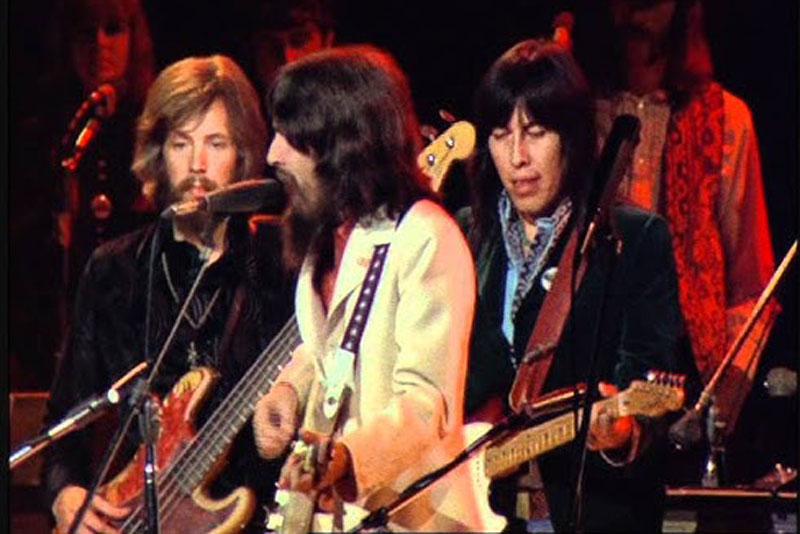
Klaus Voorman, George Harrison, and Jesse Ed Davis during 1971’s “Concert for Bangla Desh.” Screenshot.
Unless you’re a Classic Rock music nerd/liner note reader, the name Jesse Ed Davis is probably unfamiliar to your eyes. But you’ve definitely heard his guitar stylings.
That’s him ripping the searing electric solo on Jackson Browne’s “Doctor My Eyes.” That’s him strumming the lush, syncopated guitar intro on Rod Stewart’s “Tonight’s the Night.” He plays lead on Bob Dylan’s “When I Paint My Masterpiece” and “Watching the River Flow.” And that’s him in the background at the Concert for Bangla Desh: George Harrison had him as a safeguard in case a drug-addled Eric Clapton didn’t show up.
Now, Douglas K. Miller – a professor of history at Oklahoma State University, former musician, and author of other works on Native American History – tells the guitarist’s story in Washita Love Child: The Rise of Indigenous Rock Star Jesse Ed Davis (464 pp., $32.50, Liveright).
Throughout his career a sideman, Davis shared the concert stage and/or recording studio with Bob Dylan, Leon Russell, the Rolling Stones, all the Beatles sans Paul, Taj Mahal, Eric Clapton, Gene Clark, and Rod Stewart. Gregg Allman has gone on record saying that Davis’ slide guitar playing on a Taj Mahal record directly influenced his brother Duane to take up the style and become one if its greatest practitioners.
Davis always preferred to be known as a guitarist who happened to be Native American instead of a Native American guitarist. His ethnic background from multiple Indian tribes (mainly Comanche and Kiowa) gave him a striking visual look unlike any other Classic Rocker, but also opened him up to racism in and out of the music industry.
Davis turned frontman for three solo albums in the early ‘70s: ¡Jesse Davis! (which includes the autobiographical track that gives this bio its name), Ululu, and Keep Me Comin’. And while he had his limitations as a vocalist, each showcases his distinctive playing style, with a sound akin to The Band/Little Feat/Leon Russell/Dr. John.
And while he took great pride in his playing, he could also be dismissive of it. That “Doctor My Eyes” solo? Davis played it exactly once, with no rehearsal, and that’s what you hear on the record. It’s his most famous playing, yet for years he would badmouth it to anyone who’d listen.
He could also self-sabotage. Davis and most of his admirers considered Keep Me Comin’ the record that would finally break him as a solo artist. But after rejecting a cover featuring art that (again) would lean on hid Indigenous identity, he replaced it with a stern picture of himself, arms folded, against a backdrop of nudie magazine cut outs, barely airbrushed. Many outlets refused to carry it.
His music and his personal behavior would continue to get more erratic as his drug use – usually heroin – increased.
Still, his skills were in demand. He was in John Lennon’s band during the “Lost Weekend” and recordings of Rock and Roll and Walls and Bridges. He nearly stepped in as a Rolling Stone for a 1973 tour when Keith Richards’ legal issues almost prevented him from playing. He joined Rod Stewart and the Faces for a tour just as Stewart’s own star was rising.
In the last years of his life, Davis struggled. With addiction, with romantic relationships, multiple stints in rehab, and more blown opportunities. It wasn’t uncommon for friends to not hear from him for months, then get a call from the guitarist asking for money.
And while a stint in the band Grafitti Man [sic] fronted by the Indigenous poet John Trudell helped connect him with his heritage via their collaborative and esoteric music (Dylan was a great fan), it wasn’t enough to keep the proverbial bad spirits at bay.
Miller conducted scores of original interviews for the book, while using a treasure trove of archival materials, some provided by Davis’ own family. Throughout, his admiration and love for Davis and his music are evident, though his writing is honest about the darker episodes and behavior of his subject.
Jesse Ed Davis died in 1988 at the age of 43 when police found him slumped on the floor of an apartment complex laundry room, his body showing fresh evidence of heroin use. An ignoble end for the Oklahoma native whose admirers included so many titans of Classic Rock.
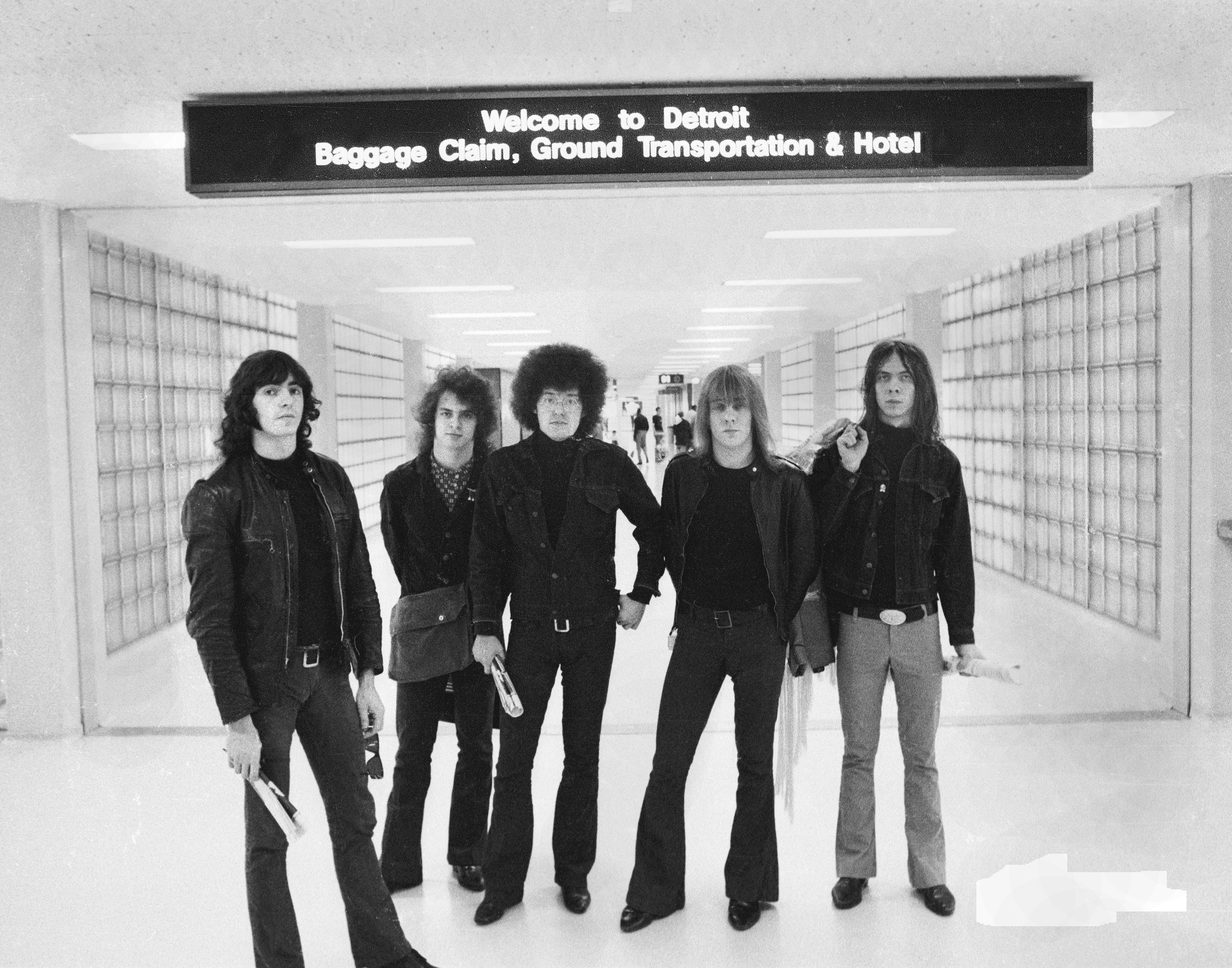
The MC5 at the Detroit Metro Airport before embarking on a 1972 tour of Europe. They were hoping for a fresh start, but it was the beginning of the end for the group who had been fragmenting due to hard drugs. Photo by Charles Auringer.
“Kick out the jams, motherfuckers!”
The exhortation is one of the best-known in rock and roll history, even if it appeared at the beginning of the debut album by a group which never rose about cult status in their lifetime.
But as the authors of a new book on that raw, revolutionary, incendiary, and short-lived musical collective, those five words contain all you really need to know about the scope and the mission of the MC5.
A band whose influence far outweighed their album sales, and who were loud and proud proponents of police reform, Black Lives Matter, and cannabis legalization decades before such issues became regular parts of the daily conversation.
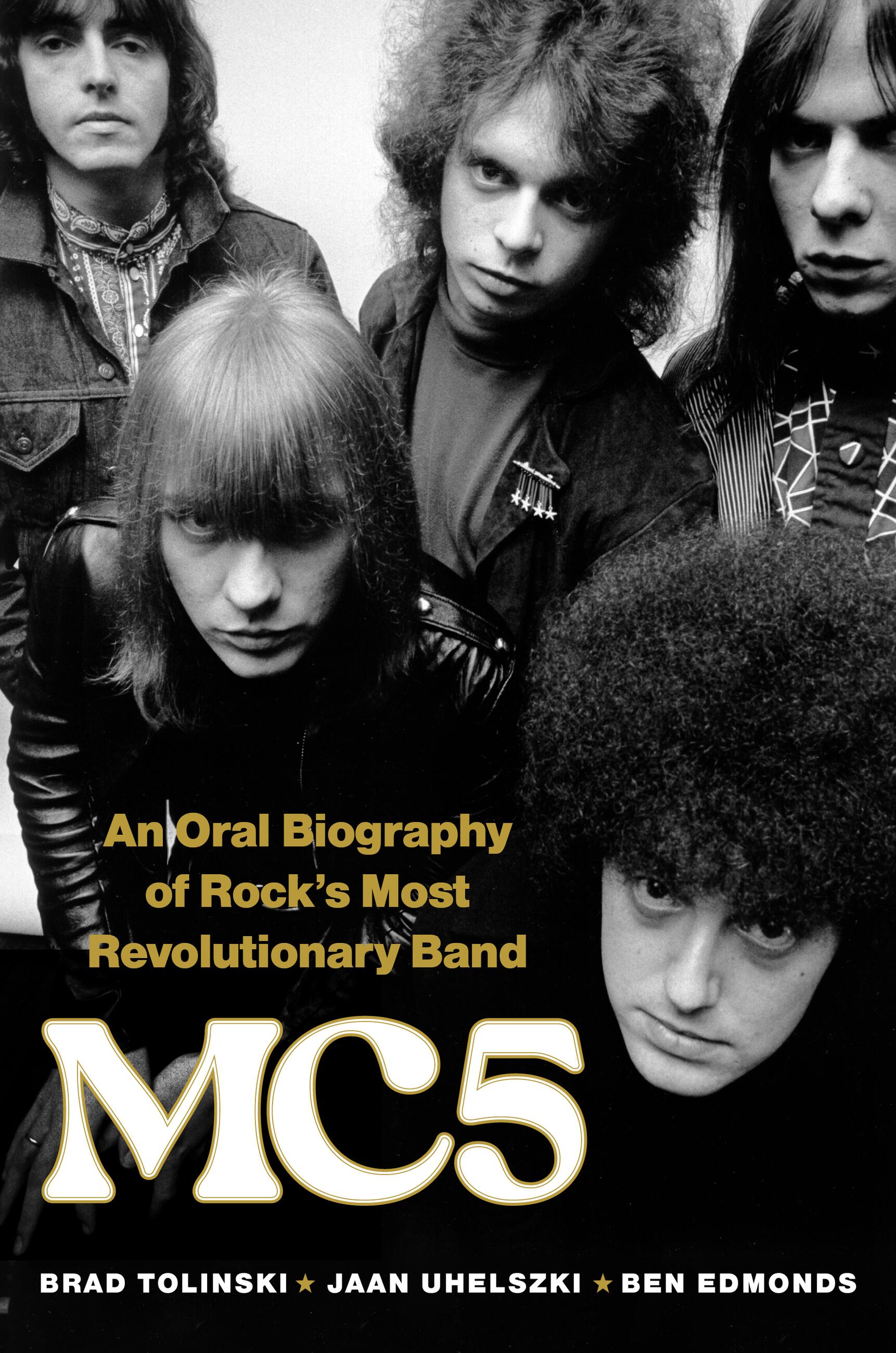
Their history, aftermath, and legacy are told in MC5: An Oral Biography of Rock’s Most Revolutionary Band by Brad Tolinski, Jaan Uhelszki and Ben Edmonds (304 pp., $30, Hachette Books).
This was a ragtag scrappy band, as unfiltered and raw as the Detroit area that spawned them. In this primordial state, it was hard to get any traction with their unpredictable and chaotic performances when the formed in the mid-‘60s.
Things began to look brighter for the band when they gained the support—and then the managerial position—of John Sinclair. A local radical political activist and writer with a LOT of energy, he helped create a whole support structure for the band, the music, and soon, the message.
He also used contacts to help place them as the house band at the Grande Ballroom. It was the hippiest music place in the motor city where the ragtag quintet of heathens would open for national acts like the Jimi Hendrix, Big Brother and the Holding Company with Janis Joplin, Cream, and reportedly blow them away.
The MC5 also became the musical mouthpieces after their debut record was released for his newly formed (and somewhat tongue-in-cheek) political unit, the White Panther Party. Except the platform plank most remembered had little to do with racial relations: It was “Rock and roll, dope, and fucking in the streets.” And the idea was to blend music, politics, and culture.
Wayne Kramer lets his freak flag fly at the Grande Ballroom Photo by Charles Auringer.
Though ultimately, Sinclair’s use of the band as a political instrument to his increasingly, “radicalized” beliefs took the focus off the music. But hey, the party never stopped at the group’s commune (in their new home of Ann Arbor, Michigan) home which at any point could include dozens of people/leeches and over which Sinclair was the final word.
The MC5’s 1969 debut record, the recorded live Kick Out the Jams was positioned to break the band nationally. But a combination of radio censorship (over the “motherfucker” – even though the group had recorded a “clean” single without it). Elektra Records scheduling screw-up and hubris, band self-sabotage, derailed it.
There was even one week of events that caused them to be hated by BOTH two of the most powerful concert promoters in the country and the radical left. Oh, and then Elektra dropped them.
But then again, it was their own fault. When a local department chain, Hudson’s, refused to carry the album due to the profanity, Sinclair took out a full-page age in the underground press that said “Fuck Hudson’s,” and threw in the Elektra logo. Which caused the store to then suspend carrying all Elektra product.
The band’s sound became more polished and tighter on two follow up albums, Back in the USA and High Time (the former produced by a then 21-year-old Jon Landau, rock journalist and future Bruce Springsteen symbiote). But again, blown opportunities—both the band’s fault and not—internal tensions, shifting allegiances, a messy split with Sinclair, and heavy drugs doomed a group perhaps never meant to have a long lifespan in the first place.
That this book exists at all is due to the tenacity of its three co-authors—one of whom is deceased. When Edmonds died in 2016, he had been interviewing band members and associates for 10 years for a project that did not come to fruition. Esteemed music journos Tolinski and Uhelszki decided to finish the work.
MC5’s symbol-laden gig posters were created by Gary Grimshaw Art by Gary Grimshaw/Courtesy of Laura Grimshaw.
However, Edmonds was not a believer in, uh, computers. So, the pair had to sift through hundreds of pages of handwritten notes and transcriptions on lined paper, haphazardly organized. Tolinski and Uhelszki then provided additional content, fresh interviews, and bridge chapters.
Interestingly, though all of the band members and most of the key players in their story have voice here, it’s all very Rashomon with Rob Tyner (vocals), Wayne Kramer and Fred “Sonic” Smith (guitars), Michael Davis (bass) and Dennis “Machine Gun” Thompson (drums) a quarrelling quintet still bickering, laying blame, and seeing things very differently even decades after they happened.
Of them all, Kramer comes off as the most passionate, while Tyner—actually often ridiculed for any number of fashion, vocal, or opinion “sins” within his own band—the most thoughtful and reflective.
The MC5 have been credited with helping sow the seeds of both heavy metal and punk. And though they’ve been on the ballot several times previously, this month they’ll finally be inducted into the Rock and Roll Hall of Fame (albeit in the opaque “Musical Excellence” category instead of “Performer”). Unfortunately, none of the members are still alive to accept that honor.
This book serves as likely the definitive firsthand account of the MC5. A lot of musicians and bands gave lip service to “changing the world through music.” But for a while the MC5 believed they could actually do it.
In the pursuance of music journalism, it’s not often that the subject of a scheduled interview tells you right off the bat to bugger off. But that’s what happens when Roger Glover, bassist for Classic Rock royalty Deep Purple, appears on computer screen via Zoom.
“I haven’t got time to talk to you, Bob. I’m reading!” he says, unwrapping what looks to be a CD copy of the band’s new studio album =1, out on July 19. “I’m actually seeing the album for the first time right now. I’m so privileged!”
Glover is, of course, joking. But he’s got every right to be jazzed about the release and the solid new music it contains from him, vocalist Ian Gillan, drummer Ian Paice, keyboardist Don Airey, and—making is recorded debut with the storied group—brand new guitarist Simon McBride.
“What that equation in the title means is up to the listener. To me, it sums up our entire career,” he says. “We’ve had such a soap opera with comings and goings and break ups and leavings and sackings.” For those keeping count, the current lineup is “Mark IX.”
Rather than just resting on their considerable laurels, it’s the seventh album of new material from Deep Purple in this century, and their fifth with legendary producer Bob Ezrin (KISS, Pink Floyd, Alice Cooper, Aerosmith) at the helm. Glover says issuing new music is a no brainer.
“It’s not so much important as necessary. It’s what we do. It’s what we love. It’s the way we live,” he says.
“It’s different than pop music, which is here and gone. The reason for doing that is to have a hit. We’re not worried about that. We’re doing it to have fun and express ourselves. Sure, if it’s a hit, it’s better. But if you’re a songwriter, you can’t just stop writing.”
Younger than his bandmates by nearly two generations, McBride is certainly steeping into some big shoes in the six string slot. Shoes formerly worn by Ritchie Blackmore, Tommy Bolin and Joe Satriani (briefly), and from 1993-2022, Steve Morse.
McBride was already familiar to the Purps from playing with Don Airey’s solo band, which then also backed Ian Gillan on a rock-meets-classical tour. He was originally going to be just a fill in for Morse on their previous tour. But when Morse needed to leave the group permanently to care for his ailing wife, McBride was the logical choice for replacement. No one else was even considered.
“I hate auditions. They’re a real drag!” the 78-year-old Glover laughs.
Bob Ezrin’s return to the producer’s chair was similarly almost a foregone conclusion. “He’s energetic, dynamic, and a good musician and songwriter himself. And he works very quickly,” Glover says.
“But more than that, he recognized things in us that we didn’t ourselves. When he first saw us in Toronto 12 years ago, what struck him was the musicality and the spontaneity of Deep Purple. We don’t learn solos to play them, they’re fresh every night. And that’s what got him.”
For comparison, Glover says the band’s 1987 effort The House of Blue Light, which the band produced themselves, took six months to record. For =1, he estimates that they laid down the basic backing tracks for 15 songs in 11 days.
“There’s no such thing as ‘Take 49.’ It’s usually two takes at the most, and if it’s more than that, you lose something,” he says.
Topics of the tunes include familiar Purple territory of love, lust, scheming women, and the occasional orgy. But its first two singles address more contemporary concerns. There’s the blabbing, boring, and forceful opinion spouter of “Portable Door,” and the romantic seeker whose online photos don’t quite match up the reality in “Pictures of You.”
“When you write lyrics, the world seeps in. You can’t ignore it. And the world around is pretty dire at the moment. But then again maybe it’s always been dire,” Glover offers.
“Conversations, memories, newspapers, we [use] it all But no one person in the band speaks for the band. That wouldn’t work for us, it would probably break us up. We stay away from politics or preaching, unless it’s an overall observation.”
Something that undoubtedly goes a long way to keeping the band together is that all five members—along with Ezrin—share writing credit on all 13 tracks. And there’s a reason.
“It takes the five of us to write everything. Nobody comes to a Purple session with a completed song. When I joined Purple, they were mostly known for doing covers. Then we started writing our own. It’s a whole feel. The way the drums are played are as much part of the writing as a riff or a word. And we always decided to share credits,” he says.
“When Ian [Gillan] and I left the band in ’73 and [David] Coverdale and [Glenn] Hughes came in, Ritchie changed that. He said ‘No, he who writes gets.’ Because in his mind, he was writing most of the stuff. Now, it’s a guitar-based band, so a lot of the stuff came from him. But not all of it.”
He mentions that even Blackmore’s opening riff to “Smoke on the Water”—one of the most famous openings to one of Classic Rock’s biggest song, is just part of its entire makeup.
After Blackmore left the reunited “Mark II” lineup in 1993, Glover said they decided to go back to more collaborative credits (for those keeping count, the current lineup is “Mark IX”).
He adds that it takes away a lot of jealousy and unease about choosing which tracks (and thus, the writer’s royalties) about which songs are picked to include. Something he feels goes against the very nature of creativity.
Glover admits to going through a rough patch after that contentious ’73 departure. “I was pretty depressed, blown apart actually. This wonderful dream I had just lived for four years of going from nothing to owning the world suddenly stopped. And it was difficult to take,” he says.
But his spirits—and professional resume—were buoyed by the sudden success of a little-known Scottish hard rock band whose third record he produced: Nazareth.
Glover stuck mostly to producing for several years until joining Blackmore’s “other” band, Rainbow. Then their paths led back to Deep Purple.
Finally, audiences across the world got to hear both material from =1 and songs from across their 56-year history this past summer on a world tour.
With some creative math, the current tour marks “50 Years of ‘Smoke on the Water.’” And the album that birthed it, 1972’s Machine Head, was recently reissued in a Super Deluxe Edition.
Amazingly, its tale about a mobile recording unit, a floating Swiss casino burnt to the ground with a flare, and a cameo from Frank Zappa and the Mothers of Invention is a true story. More amazing was that this epochal piece of rock and roll history was never meant to be issued as a single. And its success was a shock to the band itself.
“The first single from the album was something called ‘Never Before.’ And it died a certain death,” Glover recalls. “For some reason, an American DJ started playing ‘Smoke on the Water.’ The guys at the record company said it was too long and would need an edit. But that song changed everything.”
Later that year, the band’s well-received live record Made in Japan, which also featured “Smoke on the Water,” renewed interest in both the song and Machine Head.
“I’m in constant amazement and surprise that we wrote a song and recorded it, and it became something we didn’t ever intend it to be!” Glover sums up. “It’s beautiful.”
The Marshall Tucker Band, 2024: B.B. Borden, Ryan Ware, Doug Gray, Marcus James Anderson, Rick Willis, and Chris Hicks. Photo by Mariah Gray/MG Photography.
If you think metaphorically about Southern Rock, its barstool has three primary legs serving as its base: the Allman Brothers Band, Lynyrd Skynyrd and the Marshall Tucker Band.
The Allmans quietly dissolved in 2014, and now drummer Jaimoe is the only surviving member of the original lineup. Skynyrd continues on their farewell-but-not-really-farewell tour, but with last year’s death of Gary Rossington, now have no original or classic members currently taking the stage (though former drummer Artimus Pyle sometimes performs with his own group).
Early MTB publicity shot, circa 1972: Toy Caldwell, George McCorkle, Jerry Eubanks, Doug Gray, Paul Riddle, Tommy Caldwell. Marshall Tucker Band Official Archives/Provided by Absolute Publicity, Inc.
The leaves the Marshall Tucker Band, still touring regularly, and still with their founding/classic lead singer Doug Gray (and yes, there are some other out there doing solo or occasional gigs like Wet Willie’s Jimmy Hall). So, the question must be put to the 76-year-old bearish vocalist: Does he feel like the Last Man Standing?
“None of the Southern Rock bands ever toured the way we did. And our new agency is working us like dogs! But at the same time, dogs like to be on the road anyway!” the amiable Gray chuckles while talking from the front porch of his home near Myrtle Beach, Florida, birds audibly chirping in the background.
“I still consider Gregg Allman was and is the best Southern Rock singer ever. And Ronnie Van Zant had all the intensity of satisfying the crowd. And they’re gone. You get to know them over the years and it’s like losing a family member,” Gray says.
“As you age, Bob—of course, I never age! But you think about these things. It’s not being the Last Man Standing, it’s more like being the One That’s Still Around,” he continues.
“And I feel the respect that people give me at shows. It’s an honor. I mean, I walk on and they applaud automatically. How great is that! And then they applaud for the band and that’s showing respect for the music.”
Gray adds that he loves peeking out before a show and watching the crowds arrive, some now with multi-generational representatives in the same family.
The Marshall Tucker Band was founded in 1972 in their hometown of Spartanburg, South Carolina. They took their name, oddly, from a real-life blind piano tuner in town whose name was on the key to the band’s then-rehearsal space, and who died only last year at the age of 99.
The lineup included Gray, Toy Caldwell (vocals/lead guitar), his brother Tommy Caldwell (bass), George McCorkle (rhythm guitar), Jerry Eubanks (sax/flute) and Paul Riddle (drums).
Signed to the Southern Rock-centric Capricorn Records, the band racked up a slew of hits and well-received tunes like “Can’t You See,” “Take the Highway,” “This Ol’ Cowboy,” “Fire on the Mountain, “Searchin’ for a Rainbow,” “Long Hard Ride” and “Heard it in a Love Song.”
Tommy Caldwell died in 1980 after suffering severe head trauma in a car wreck, right around the time the band’s heyday was over as popular music tastes shifted. But the MTB continued to tour and record with varying lineups, leavings, and returns over the past four decades.
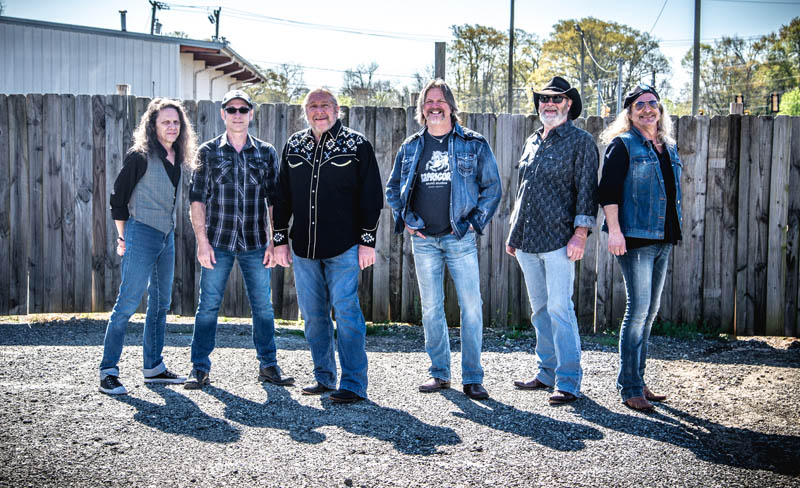
The current lineup includes Gray, longtime MTB members B.B. Borden (drums), Rick Willis and Chris Hicks (guitars/vocals), and Marcus James Henderson (sax/flute/keyboards). All have served between 15 and 25 years with the group.
By comparison, the clearly much-younger Ryan Ware (bass/vocals) has held down his spot for just a couple of years. Though there is a past history with the band.
The hit years MTB: Doug Gray, Paul Riddle, George McCorkle, Tommy Caldwell, Toy Caldwell, Jerry Eubanks. Marshall Tucker Band Official Archives/Provided by Absolute Publicity, Inc.
“The beautiful part is that his dad, Ronnie, worked for me as my bodyguard for eight years. Ryan had inherited Tommy [Caldwell’s] favorite bass when he was just born. He plays that bass every night on stage now,” Gray says. He also notes that Ware had gigged with “20 or 30 different country bands while living in Nashville,” but told Gray that he was at one point exhausted.
“I told him that if he was in this band, he’d work more with me that he ever would with them!” Gray laughs. “So, be prepared! I’m already booking shows into 2025!”
The Marshall Tucker Band also have a better-than-usual grip on their recorded music and history. Their own Ramblin’ Records label not only currently issues—often with new vinyl—their storied records with the Capricorn label which they purchased back, but a still-ongoing series of archival live recordings from (so far) 1973-81.
Their last proper studio effort was 2007’s The Next Adventure. But, echoing a sentiment spoken by many a Classic Rock-era band, putting out “new” material that will only be absorbed by their most diehard fan base may not be worth the effort.
“We have plenty of songs. But do we put records out now and convolute what we had before? Can we make them as good? Only God knows that. I don’t sing the way I used to. That’s from 50 years of trying to do ‘Ramblin’!” he says.
“We kind of let the audience decide what we put out, and they really like those [older] records maybe they don’t have any more or lost. And we find that some new fans respond to different songs, like ‘In My Own Way.’ I guess because it’s a cross between more country and Southern music,” he says.
He notes that some of those new fans like MTB in the same way they do a current artist like Carrie Underwood or Lee Brice or Jason Boland. Some artists, he says, even call him up for advice, to which he always gives them the same suggestion: “Write, write, write! Write music that touches the heart and the soul and the mind. You don’t have to always live on the edge to have good music.”
Just then, the chirping birds in the background of Gray’s front porch get a little extra loud, making it hard to hear him. “Hold on,” he laughs. “There’s some military planes flying around doing exercises or something today, and it’s got the birds all riled up!”
As for retirement or putting up his singing spurs for the last time, Gray doesn’t even want to hear it.
“I’m in pretty good shape. But what makes me want to keep doing it is the crowd that I see when I walk on that stage,” Gray—who also does frequent benefit shows for military veterans and first responders—says.
“People know that we care about them. We pay it back. And it’s important to keep the love alive. I see the 15-year-olds in the front and grandma and grandpa in the back. That’s something special.”
Finally, while you might think that Doug Gray is only listening to Southern Rockers of a Certain Age for his own pleasure, think again. Turns out he’s a big fan of Taylor Swift (especially the earlier, country-tinged material). And one artist that he’s taking his 14-year-old granddaughter and her friends to see at an upcoming show in New York this October: Billie Eilish.
“She’s a person who I think is different enough to be great. And she’s got her brother with her, and he won’t lead her in the wrong direction!” Gray says. “She’s starting to get into her own, and I love a lot of her lyrics. I hope we can go say hi and get a picture. We’re going to have a great time!”
The main Doobies: Patrick Simmons, Tom Johnston, Michael McDonald and John McFee. Photo by Clay Patrick McBride.
In 2020, the Doobie Brothers were all set to launch a massive tour celebrating 50 years since their founding. And it would be marked in a special way with a lineup featuring both co-founding singer/guitarist Tom Johnston with his replacement, singer/keyboardist Michael McDonald.
Add co-founding vocalist/guitarist Patrick Simmons—the only constant member of the lineup since 1970—and Doobies fans would get to hear material from across the entire span of their career.
Well, COVID scuttled that launch, which began the next year and saw the Doobies play shows across the U.S., Australia, Japan, and back to the U.S. And they are still at it.
So, the question must be asked: At what point does it just become more accurate to call it the 55th Anniversary Tour?
“Well, we’re definitely on to the next 50 years by now. And I like not having to work so hard with the three of us up there!” Simmons laughs via Zoom from his home in Hawaii on the island of Maui.
“It’s nice to be able to do all the songs that people want to hear. We’ve done a song or two of Mike’s through the years when he hasn’t been with us. But it’s great to have the real guy right there!” Simmons says. “Having him is a huge bonus. We’re still here, still able to do it, and have a great band.”
Expect to hear the early, biker-bar-band hits (“Long Train’ Runnin’,” “Listen to the Music,” “Black Water,” “China Grove,” “Rockin’ Down the Highway”) along with the later R&B-tinged material (“What a Fool Believes,” “Minute by Minute,” “It Keeps You Runnin’” “Takin’ It to the Streets”) and some deeper cuts.
In 2022, Simmons and Johnston collaborated with music journalist Chris Epting on their memoir Long Train Runnin’: Our Story of the Doobie Brothers. And when a copy is held up to the Zoom camera, Simmons has an instant reaction.
“Oh, that one’s been banned! It’s not an, uh, complete summation of the band’s story, but it’s an approximation!” he laughs.
“We had contemplated doing a book through the years, but it’s hard to get started. We’re not novelists. Chris got things going. We told stories to him, he wrote it down, and gave it back to us. He really helped to shake our memories. We’d tell him a story and he’s go find a poster or photograph and bring it back, and that would open more memories. And then we rewrote more.”
Simmons adds that he and Johnston would have the same experience, but sometimes conflicting memories, which they’d toss back and forth from different angles.
“It was fun to remember stuff and laugh about it. We also had some more serious things. Not really sad stories, but there was some sadness there. It was the truth of what went down.”
The lineup for this tour will again include Simmons, Johnston, McDonald, John McFee (multiple instruments/vocals), and longtime touring members Marc Russo (sax), Ed Toth (drums), John Cowan (bass/vocals), and Marc Quiñones (percussion)
In 2020, and longtime snub was set right when the Doobies Brothers were finally inducted into the Rock and Roll Hall of Fame. But again, COVID reared its ugly head.
Instead of the usual lavish ceremony in New York or Cleveland with speeches, video reels, and live performances and jams, the “virtual” online ceremony featured a brief clip highlights of the band’s career, with short comments from Johnston, Simmons, and McDonald, filmed from their homes.
Nevertheless, Simmons takes a light approach to matters. “We’ll always remember not being there!” he chuckles.
“But it was a great moment. It’s something you certainly think about as an artist. We had hoped to be recognized, but thought maybe if we don’t get it now, we’ll get it after we’re dead! There are so many deserving artists out there, and I didn’t hold it against them. No offense to [Hall co-founder] Jann Wenner, but Jann never liked us! So, I wasn’t holding my breath for us to come in on our walkers. But Jann’s gone now!”
Last year, the Rock and Roll Hall of Fame removed Jann Wenner from its Board of Directors after he made some comments about Black and female artists during promotion for his book of interviewed The Masters that were widely criticized as both sexist and racist.
Texas fans have always been very receptive to the Doobies throughout the years of touring, but there’s one Texas show that was a bit unique. In 2005, the Doobie Brothers played Willie Nelson’s Fourth of July picnic at the outdoor venue Billy Bob’s Texas in Fort Worth, where this writer covered the show for The Houston Press.
I got to chat briefly with both Simmons and Johnston backstage, and even made it onto Willie’s bus for a brief interview (where I recall trying not to wake up a slumbering David Allan Coe, fast asleep on his wife’s shoulders).
The lineup was unique in that Bob Dylan followed the Doobies’ set prior to Willie’s slot. And the notoriously prickly and security-conscious Dylan required that all press be removed from the pit as security forced an open path through the crowd to allow him to walk uninterrupted straight from his bus to the stage.
The writer backstage with Patrick Simmons during Willie Nelson’s Fourth of July Picnic in Forth Worth, 2005. Photo by Mace Wilkerson.
Simmons remembers the show well, with a mischievous glint.
“It was super-hot! But Dylan was totally insulated. Nobody could look at him or talk to him. He was surrounded by all these guys. We had just finished playing, and they cleared the stage and said nobody could go on there,” he recalls.
“So, I just walked up and some of his guys tried to get me off, and I said ‘Fuck you! I saw you on our stage!’ It’s everybody’s stage’” and he said ‘Well…just don’t let Bob see you!’”
Nelson’s sons Lukas and Micah, along with Simmons’ own son, also managed to sneak up there to watch Dylan’s set. “I don’t think anybody was going to tell Willie’s sons they couldn’t be on Willie’s stage! Sorry, Bob!”
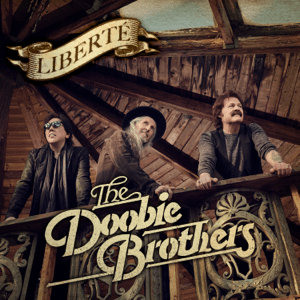
The Doobies’ last studio effort was 2021’s Liberté, and they are working on new songs—with McDonald—for an upcoming release.
But their most recent effort concerns a location of more pertinent interest to Simmons. It’s about 36 miles from his home on the island of Maui, and that’s Lahaina.
Much of the city were destroyed in August 2023 by wildfires that ate everything in sight, killing more than 100 people and damaging or destroying more than 2,200 structures. It left many people homeless while levelling businesses and burning out cars.
The Doobie Brothers quickly released the benefit single “Lahaina,” written and sung by Simmons. Helping out the band were Fleetwood Mac drummer Mick Fleetwood (whose own Lahaina-based restaurant was destroyed) and Hawaiian musicians Jake Shimabukuro, and Henry Kapono. All proceeds benefit the People’s Fund of Maui.
For Simmons, it was not only just important to help, but to connect with the land and its inhabitants.
“People come from all over the planet to experience the climate and peace of Hawaii, and it is a special place. Those of us who have come here and stayed, there’s a reason for that,” Simmons says.
“No matter what your beliefs are, the Hawaiians believe in the spirituality of nature and the place. That’s part of a reverence here that myself and most of the locals have. The ‘Aloha.’ We all feel, experience, appreciate it, and try to live it,” he says.
“I grew up in northern California. I took acid. I dropped out. I was a hippie—still am probably. And it’s a continuance of my beliefs from that era. It’s not something spoken. It’s something that you feel.”
He adds that visitors and tourists to Hawaii inevitably ended up in Lahaina, and the warmth and connection from business owners was palpable and a “charming way of existence.”
“That’s all gone now. But Aloha is still here and that song was my attempt to keep that spirit alive for the people here and to spread that to further communities,” he sums up.
“People are still going through trials and tribulations here, and it will take a long time for those folks to recover. Chipping in a dollar or two or more will help immediately. It will come back around, but we have to work together.”
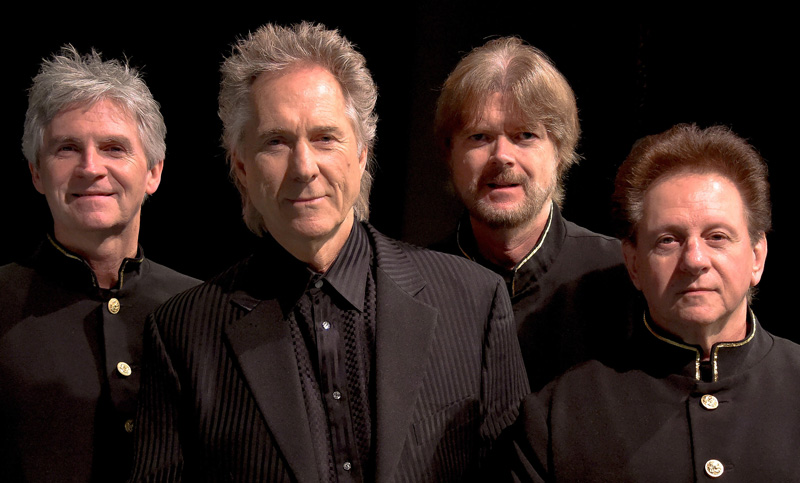
Gary Puckett & the Union Gap today: Woody Lingle, Jamie Hilboldt, Gary Puckett and Mike Candito Photo by Ron Elkman.
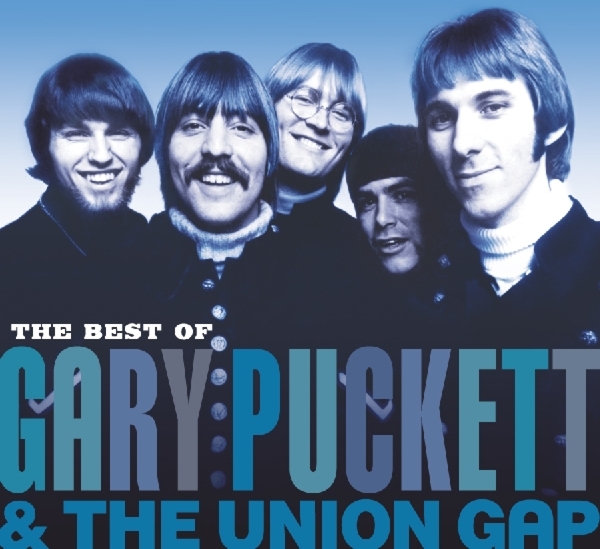
When they burst onto the national music scene in 1967, Gary Puckett & the Union Gap had a signature sound, anchored by the very distinctive voice of its lead singer. They also had a visual trademark in their Civil War-era Union Army stage uniforms.
But Puckett remembers on an early tour that Southern audiences might not be so, um, receptive to those costumes. So he and the band hatched a plan to not get run out of town for their first gig south of the Mason-Dixon line in Birmingham, Alabama.
“We did one of those big radio station shows and were pretty nervous. I mean, we’re wearing Union Army outfits!” Puckett laughs over the phone from his home in Florida.
“So we went and got a pretty good size Confederate flag, rolled it up, and put it on the piano. When we started the show, two of us walked up on either side of it and let it unfurl. And 6,000 people let out the Rebel Yell. We were in!”
Opinions about said flag and the meaning behind it have of course changed greatly over the ensuing nearly six decades. But the uniforms have stayed and will be on full display when Gary Puckett & the Union Gap perform in Houston.
The original band formed in 1967 with Puckett (lead vocals/guitar), Kerry Chater (bass), Dwight Bement (sax), Paul Wheatbread (drums) and Gary “Mutha” Withem (keyboards). They came to the attention of Columbia Records exec Jerry Fuller, who took them under his wing, selecting material for them to record as well as writing songs himself.
They notched up a quick series of radio hits including “Young Girl” and “Lady Willpower” (both hitting #2 on the singles charts), “Woman, Woman,” “This Girl is a Woman Now,” “Over You,” “Don’t Give in to Him” and “Let’s Give Adam and Eve Another Chance.”
Many featured horns and lush string arrangements, but it was Puckett’s husky-yet-smooth and Very Manly voice that was the clear focus. Song themes often centered around the troika of I Want to Sleep with You/I Can’t Sleep with You/Don’t Sleep with That Other Guy.
The band was even invited to play the Nixon White House in 1970 at a reception for the visiting Prince Charles and Princess Anne. This was the same gig at which government authorities requested that the also-on-the-bill Guess Who not play their war protest hit “American Woman” for obvious reasons. The Canadians—politely, of course—acquiesced.
“The concert closed the evening with an incredible fireworks display. I don’t recall them saying anything to us about our material,” Puckett says. “But I do remember that Ed Sullivan didn’t want me to sing the line ‘But I’m afraid we’ll go too far’ when we did ‘Young Girl’ on his show!” [Note: For the show, the band indeed altered the line to “How can this love of ours go on?” On the same episode for “Lady Willpower,” the term “the facts of life” was changed to “the way of life”].
Ah yes, “Young Girl.” The tale of an older man who is warning off the affections a younger female paramour because of her lack of trips around the sun in terms of age: ‘Young girl. Get out of my mind/My love for you is way out of line/Better run, girl/You’re much too young, girl.”
Puckett has spent decades alternately explaining and defending the hugely popular Fuller-penned tune. And that’s as recently as last year when an Australian TV interviewer mentioned the Oz version of the word “pedophile” in relation to it.
“I said to her ‘You don’t know the lyrics to this song! He’s telling her to go away because she can’t give him the love he wants to have before it’s too late! It’s an upstanding song.’” Puckett says. “And afterward, people wrote in online to support that idea. And I thought that was great.”
After four studio records, Puckett and Fuller began to butt heads over the musical direction and choice of many covers as material, and Puckett dissolved the group in 1971. He started a solo career and even went into acting and dance. But as he told me in 2016, he later admitted that he might have pulled the plug too early.
Puckett put together a new Union Gap in the early ‘80s. They also—along with a Peter Noone-less Herman’s Hermits and the Grass Roots fronted by original vocalist Rob Grill, served as opening acts on the massively successful 1986 Monkees reunion tour (sans Michael Nesmith).
This writer was in attendance for the June 27, 1986, show at Astroworld’s Southern Star Amphitheatre. By some estimates, it was the highest grossing U.S. concert tour of the year. Not bad for a bunch of “old guys”…then mostly only in their early/mid 40s!
“We were all very thankful for that resurgence. In the ‘70s, there was little or no activity for the ‘60s artists unless you were Stevie Wonder or Paul Simon. It was a lonely and confusing time, so I figured I’d just write songs and come back and be greeted with open arms,” Puckett says.
Gary Puckett today Photo by Ron Elkman.
MTV’s constant two-year rerunning of the Monkees TV show episodes primed both the band’s original ‘60s audience and now their children to be receptive to the music of the era again. Nostalgia for the decade was in full swing. And the prominence of package tours with multiple acts playing their best-known material in shorter sets—another throwback idea—proved to be very popular.
Puckett himself has taken part in many of them over the years, including the gold standard “Happy Together” tours (going back to its 1984 inception) as well as “Stars of the Sixties.”
“On that first [Happy Together] tour, it was highly successful, and we toured for eight months all over the U.S. It was a good paycheck, and interest in the music and the bands came back,” Puckett says.
It was also around the same time that Gary Puckett went through a pretty sizable personal change, becoming a Born-Again Christian after spending years following the teachings of the Beatles/Donovan guru the Maharishi Mahesh Yogi.
And the Big Moment happened to happen during one of his daily transcendental meditation sessions, which he says had always helped him great mentally, emotionally and spiritually.
“I was a roommate in this house in Beechwood Canyon under the ‘Hollywood’ sign with an eclectic group of people. And I was sitting on the bedroom floor meditating,” he says.
“Believe it or not—and this is the truth for me—I heard a voice and I could only suspect it that was the Voice of God himself saying ‘Walk away from Maharishi and I will show you the Way.’ And I opened my eyes and thought ‘Did I just hear that?’ And I knew I did.”
Over the ensuing years he says he was pulled into other directions toward Christians and a specific church and never looked back. “I believe that God had guided me all of my life,” he says. “I just didn’t know it at the time.”
In 2024, The current enlisted Union Gap of Woody Lingle (bass) Jamie Hilboldt (keyboards) and Mike Candito (drums) have all served at least a decade tour of duty.
Thanks to the wonders of streaming, listeners can now hear more of Gary Puckett & the Union Gap’s music than ever before. Spotify currently offers all four of the band’s original albums and a bevy of live and greatest hit compilations along with Puckett’s solo material stretching from 1971’s The Gary Puckett Album to 2020’s American Portraits.
On one hand, it’s unbeatable exposure for new and old fans to the music, especially since much of it is out of print. On the other, royalties for artists are slim.
“I don’t have negative thoughts about streaming. ASCAP, BMI, and Sound Exchange sort of police that to distribute money to artists. I’d rather that people are able to hear the music than not, even if it’s not a great payment,” he says.
“It’s all a money game out there. I think that CBS and then Columbia and now Sony/CBS always treated me fairly. But you can still look into it and find hidden things!”
Finally, Puckett’s most recent solo CD is the all-‘70s/’80s covers record Love Songs. It finds Puckett interpreting some obvious suspects from Lionel Richie, Bryan Adams, and Air Supply. But also power ballads by more hirsute acts like Whitesnake, Survivor and Journey.
“I was enthusiastic about the songs from the Big Hair Groups. And it was fun for me to play guitar!” he laughs. “It fulfilled part of my guitar fantasy!”
Gary Puckett & The Union Gap play at 8 p.m. on Friday, March 15 and Saturday, March 16 at Main Street Crossing, 111 W. Main in Tomball. For more information, call 281-290-0431 or visit MainStreetCrossing.com. Both shows are sold out, but there is a waiting list.









 Classic Rock Bob