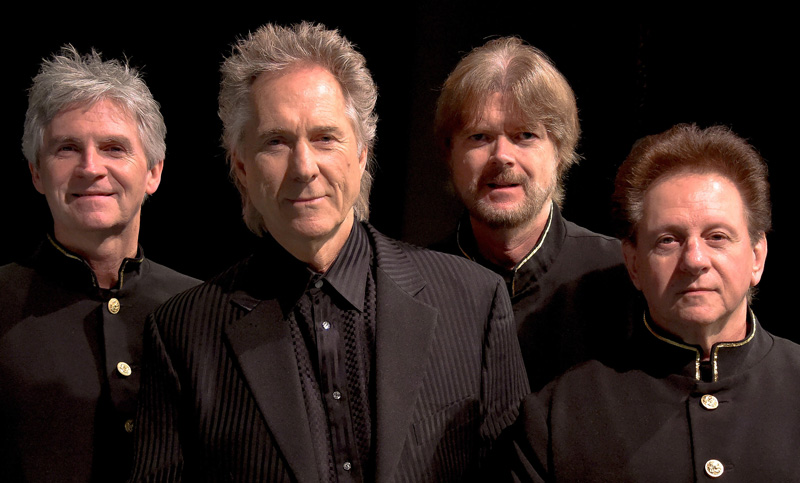
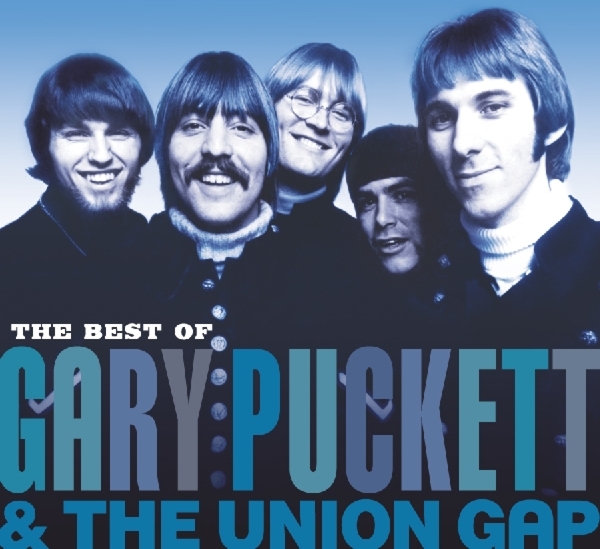
When they burst onto the national music scene in 1967, Gary Puckett & the Union Gap had a signature sound, anchored by the very distinctive voice of its lead singer. They also had a visual trademark in their Civil War-era Union Army stage uniforms.
But Puckett remembers on an early tour that Southern audiences might not be so, um, receptive to those costumes. So he and the band hatched a plan to not get run out of town for their first gig south of the Mason-Dixon line in Birmingham, Alabama.
“We did one of those big radio station shows and were pretty nervous. I mean, we’re wearing Union Army outfits!” Puckett laughs over the phone from his home in Florida.
“So we went and got a pretty good size Confederate flag, rolled it up, and put it on the piano. When we started the show, two of us walked up on either side of it and let it unfurl. And 6,000 people let out the Rebel Yell. We were in!”
Opinions about said flag and the meaning behind it have of course changed greatly over the ensuing nearly six decades. But the uniforms have stayed and will be on full display when Gary Puckett & the Union Gap perform in Houston.
The original band formed in 1967 with Puckett (lead vocals/guitar), Kerry Chater (bass), Dwight Bement (sax), Paul Wheatbread (drums) and Gary “Mutha” Withem (keyboards). They came to the attention of Columbia Records exec Jerry Fuller, who took them under his wing, selecting material for them to record as well as writing songs himself.
They notched up a quick series of radio hits including “Young Girl” and “Lady Willpower” (both hitting #2 on the singles charts), “Woman, Woman,” “This Girl is a Woman Now,” “Over You,” “Don’t Give in to Him” and “Let’s Give Adam and Eve Another Chance.”
Many featured horns and lush string arrangements, but it was Puckett’s husky-yet-smooth and Very Manly voice that was the clear focus. Song themes often centered around the troika of I Want to Sleep with You/I Can’t Sleep with You/Don’t Sleep with That Other Guy.
The band was even invited to play the Nixon White House in 1970 at a reception for the visiting Prince Charles and Princess Anne. This was the same gig at which government authorities requested that the also-on-the-bill Guess Who not play their war protest hit “American Woman” for obvious reasons. The Canadians—politely, of course—acquiesced.
“The concert closed the evening with an incredible fireworks display. I don’t recall them saying anything to us about our material,” Puckett says. “But I do remember that Ed Sullivan didn’t want me to sing the line ‘But I’m afraid we’ll go too far’ when we did ‘Young Girl’ on his show!” [Note: For the show, the band indeed altered the line to “How can this love of ours go on?” On the same episode for “Lady Willpower,” the term “the facts of life” was changed to “the way of life”].
Ah yes, “Young Girl.” The tale of an older man who is warning off the affections a younger female paramour because of her lack of trips around the sun in terms of age: ‘Young girl. Get out of my mind/My love for you is way out of line/Better run, girl/You’re much too young, girl.”
Puckett has spent decades alternately explaining and defending the hugely popular Fuller-penned tune. And that’s as recently as last year when an Australian TV interviewer mentioned the Oz version of the word “pedophile” in relation to it.
“I said to her ‘You don’t know the lyrics to this song! He’s telling her to go away because she can’t give him the love he wants to have before it’s too late! It’s an upstanding song.’” Puckett says. “And afterward, people wrote in online to support that idea. And I thought that was great.”
After four studio records, Puckett and Fuller began to butt heads over the musical direction and choice of many covers as material, and Puckett dissolved the group in 1971. He started a solo career and even went into acting and dance. But as he told me in 2016, he later admitted that he might have pulled the plug too early.
Puckett put together a new Union Gap in the early ‘80s. They also—along with a Peter Noone-less Herman’s Hermits and the Grass Roots fronted by original vocalist Rob Grill, served as opening acts on the massively successful 1986 Monkees reunion tour (sans Michael Nesmith).
This writer was in attendance for the June 27, 1986, show at Astroworld’s Southern Star Amphitheatre. By some estimates, it was the highest grossing U.S. concert tour of the year. Not bad for a bunch of “old guys”…then mostly only in their early/mid 40s!
“We were all very thankful for that resurgence. In the ‘70s, there was little or no activity for the ‘60s artists unless you were Stevie Wonder or Paul Simon. It was a lonely and confusing time, so I figured I’d just write songs and come back and be greeted with open arms,” Puckett says.

MTV’s constant two-year rerunning of the Monkees TV show episodes primed both the band’s original ‘60s audience and now their children to be receptive to the music of the era again. Nostalgia for the decade was in full swing. And the prominence of package tours with multiple acts playing their best-known material in shorter sets—another throwback idea—proved to be very popular.
Puckett himself has taken part in many of them over the years, including the gold standard “Happy Together” tours (going back to its 1984 inception) as well as “Stars of the Sixties.”
“On that first [Happy Together] tour, it was highly successful, and we toured for eight months all over the U.S. It was a good paycheck, and interest in the music and the bands came back,” Puckett says.
It was also around the same time that Gary Puckett went through a pretty sizable personal change, becoming a Born-Again Christian after spending years following the teachings of the Beatles/Donovan guru the Maharishi Mahesh Yogi.
And the Big Moment happened to happen during one of his daily transcendental meditation sessions, which he says had always helped him great mentally, emotionally and spiritually.
“I was a roommate in this house in Beechwood Canyon under the ‘Hollywood’ sign with an eclectic group of people. And I was sitting on the bedroom floor meditating,” he says.
“Believe it or not—and this is the truth for me—I heard a voice and I could only suspect it that was the Voice of God himself saying ‘Walk away from Maharishi and I will show you the Way.’ And I opened my eyes and thought ‘Did I just hear that?’ And I knew I did.”
Over the ensuing years he says he was pulled into other directions toward Christians and a specific church and never looked back. “I believe that God had guided me all of my life,” he says. “I just didn’t know it at the time.”
In 2024, The current enlisted Union Gap of Woody Lingle (bass) Jamie Hilboldt (keyboards) and Mike Candito (drums) have all served at least a decade tour of duty.
Thanks to the wonders of streaming, listeners can now hear more of Gary Puckett & the Union Gap’s music than ever before. Spotify currently offers all four of the band’s original albums and a bevy of live and greatest hit compilations along with Puckett’s solo material stretching from 1971’s The Gary Puckett Album to 2020’s American Portraits.
On one hand, it’s unbeatable exposure for new and old fans to the music, especially since much of it is out of print. On the other, royalties for artists are slim.
“I don’t have negative thoughts about streaming. ASCAP, BMI, and Sound Exchange sort of police that to distribute money to artists. I’d rather that people are able to hear the music than not, even if it’s not a great payment,” he says.
“It’s all a money game out there. I think that CBS and then Columbia and now Sony/CBS always treated me fairly. But you can still look into it and find hidden things!”
Finally, Puckett’s most recent solo CD is the all-‘70s/’80s covers record Love Songs. It finds Puckett interpreting some obvious suspects from Lionel Richie, Bryan Adams, and Air Supply. But also power ballads by more hirsute acts like Whitesnake, Survivor and Journey.
“I was enthusiastic about the songs from the Big Hair Groups. And it was fun for me to play guitar!” he laughs. “It fulfilled part of my guitar fantasy!”
Gary Puckett & The Union Gap play at 8 p.m. on Friday, March 15 and Saturday, March 16 at Main Street Crossing, 111 W. Main in Tomball. For more information, call 281-290-0431 or visit MainStreetCrossing.com. Both shows are sold out, but there is a waiting list.
For more on Gary Puckett, visit GaryPuckettMusic.com. He is also on Cameo.
This article originally appeared at HoustonPress.com











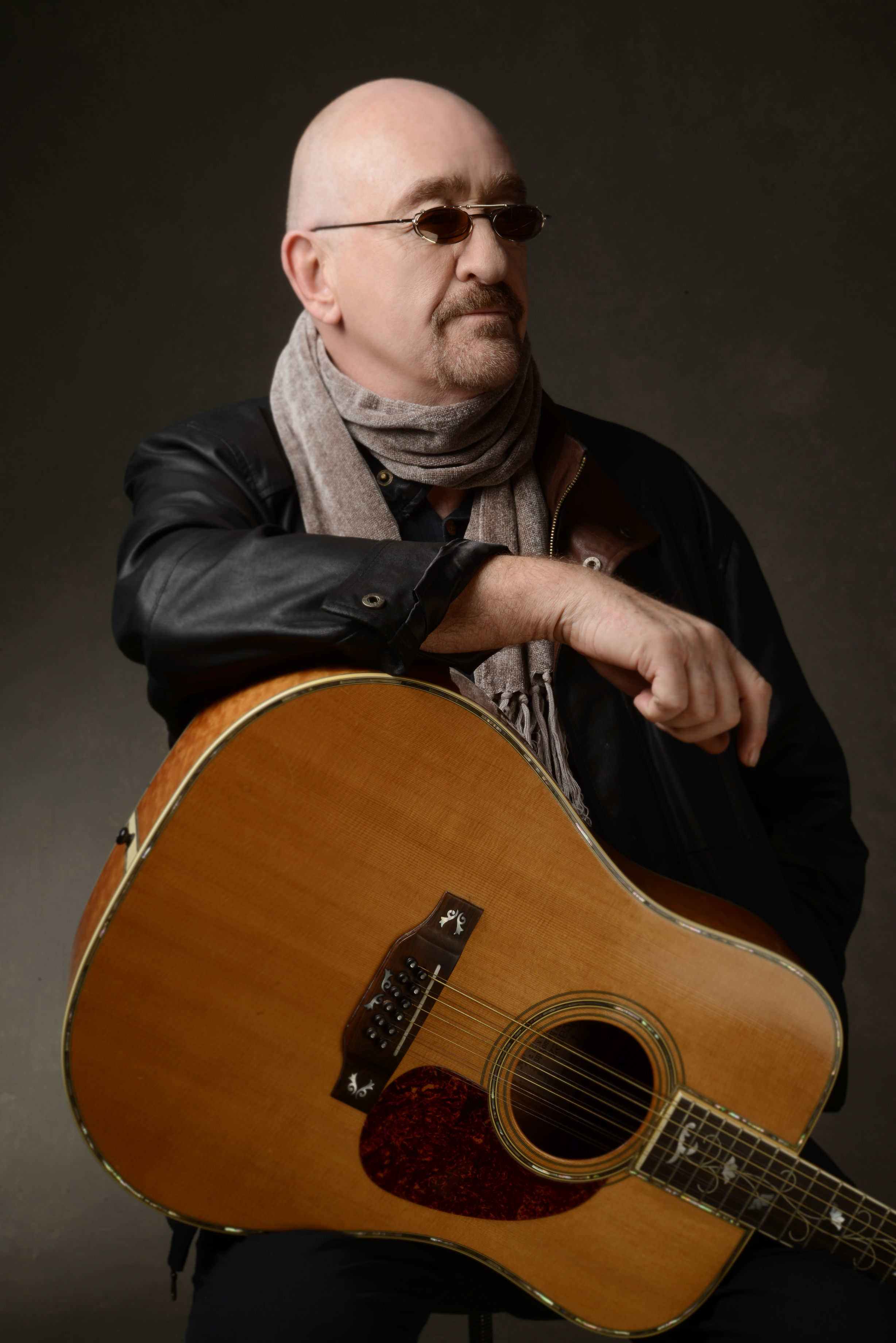


 Classic Rock Bob