When Mark Farner Funked Up Woodstock Nation

Mark Farner onstage recently Photo by Jim Summaria.

There have been three “official” iterations of the Woodstock Festival. The 1969 original that gave its name to an entire generation and spawned almost as many myths as truths; the 1994 edition that attempted to bridge the music, and the 1999 version infamous for its destruction, chaos, and bonfires.

But many “unofficial” gatherings have flown under the flag, including the California-held “Woodstock: 20 Years After” festival in 1989.

The lineup included acts that grace the stage in 1969 (Melanie, Canned Heat, Edgar Winter), others of the era (Humble Pie, Blood, Sweat and Tears, Iron Butterfly), and Mark Farner, lead singer/guitarist for Grand Funk Railroad (later shortened to Grand Funk).

Audio and video from Farner’s set has been unearthed as Rock ‘n’ Roll Soul: Live 1989 (Liberation Hall). His backing band on this date included Arnie Vilches (guitar), Lawrence Buckner (bass), Mike Blair (keyboards) and Mike Maple (drums).

Perhaps the person most surprised about this record is Mark Farner himself. He’d been told long ago that the audio/video was missing or unusable, so it was a pleasant surprise to find out otherwise.

“It’s so crisp and live and captures the spirit of the audience and captures the interaction between the audience and the band. I was just really pleased with it. I think people will embrace it,” Farner says over the phone.

From 1969 until their original dissolution in 1976, the Flint, Michigan-based meat-and-potatoes power trio Grand Funk Railroad (later shortened to Grand Funk and including drummer Don Brewer and bassist Mel Schacher) had plenty of hits.

There were originals (“I’m Your Captain [Closer to Home],” “Bad Time,” “We’re an American Band,” “Walk Like a Man,” “Rock ‘n Roll Soul”) along with covers (“The Loco-Motion,” “Some Kind of Wonderful”) and deeper FM cuts (“Paranoid,” “Mean Mistreater,” “Heartbreaker”). Many of them appear on Rock ‘n’ Roll Soul: Live 1989.

The famously sold-out Shea Stadium faster than the Beatles, and later added keyboardist Craig Frost. Over the ensuing decades, they had several full and partial reunion records and tours.

In 2000, Farner was voted out of the group by his bandmates, though each side has a different story. Farner contends it had (mostly) to do with his Christian faith and conservative political and social beliefs. Brewer and Schacher shot back it was over control and financial issues.

At the time of 1989, Farner’s invigorated faith naturally seeped into his art. He addresses it to the audience on Rock ‘n Roll Soul: Live 1989. “I want to put away a little myth, something that’s going around. Some people said ‘Man, I heard you got religion!’ I want to put that thing to rest because I want to tell you something. I didn’t get religion. I got Jesus Christ!” he says on the record.

The set includes a trio of songs “Come to Jesus,” “Judgement Day Blues,” and “Isn’t It Amazing” that would each fall into the categories of any blues, rock, and power ballad structures.

The last was written by musician John Beland for his 8-year-old daughter. Farner had heard the demo, which was more countrified in a way that Kenny Rogers might interpret it. But he knew underneath that was a rock power ballad. His studio version it nearly topped on the Contemporary Christian singles charts and was nominated for a Dove Award.

“Everyone has an occasion to pray, whether someone has been hardened or doesn’t believe. Maybe music can break through the shell of that individual and get to the softness of the heart. And that’s the hope in that song,” Farner says.

“People tell me that all the time. And I did it in bars and nightclubs and concert halls and casinos. I want to increase the knowledge of love and the chance for peace while we’re still on the planet.”

Of all the GFR songs Farner has written, probably his most lasting and impactful is “I’m Your Captain (Closer to Home).” Really two songs in one about journeys, destinations, yearning, and a sense of belonging, it was originally championed by homesick Vietnam vets and has since taken on deeper meanings than just a singalong concert bit.

Farner says the words literally come to him in a dreamlike state in the middle of the night when he was only partially conscious. And though not yet “born again” as he would be years later, he was still spiritually in-tune.

“I always keep a Steno pad by my bed. And I asked God to give me a song that would reach and touch people, and that’s the one I was given. And Brother Bob, when I was done with those words, I was completely spent. Then I slept hard!” he laughs.

The next morning, Farner says he was having coffee in his kitchen and looking at the horses on his Michigan farm when he started playing with some chords on his George Washburn acoustic guitar. He came up with the opening lick, struck on odd chord that “sounded wonderful” and froze to memorize where his fingers were. Soon, he matched words in the other room with his music and hit “record” on his cassette player.

“I took it to rehearsal that day and we worked on it. Both Don and Mel told me it was a hit. And they were right!”

Mark Farner in 2019 at a homecoming concert in Flint, Michigan Photo by Brad Shaw.

In between stints with Grand Funk Railroad, Farner spent 1994-95 as one of the still-rotating cast of players in Ringo Starr’s All-Starr Band. His group was especially full of heavy Classic Rock hitters and included Randy Bachman (Guess Who/Bachman-Turner Overdrive), Felix Cavaliere (Rascals), keyboardist and “Fifth Beatle” Billy Preston, and Starr’s son Zak Starkey on drums with multi-instrumentalist Mark Rivera.

What Farner remembers most about his time playing An Actual Beatle was not Starr’s stature in the music world, but how “normal” he was, down to coming to Farner’s apartment to meet his family before rehearsals started.

“He’s such a wonderful individual. And he’s just a regular guy. I wasn’t as much star struck as respectful. In Japan we had a press conference with the whole band at a long table. We filed in on either side or Ringo, sort of like the Last Supper!” Farner laughs.

“This young gal comes up and asks me ‘What is it like playing with a Beatle?’ And I said ‘Honey, let me tell you something. Ringo puts his pants on one leg at a time just like I do!’ Ringo stood up, came over and hugged me and was elated! From that point on. I knew I was on the right track with Ringo. To treat him as a brother, instead of as superstar.”

Unfortunately, Farner’s relationship with two other brothers—Brewer and Schacher—and not a similar Mutual Admiration Society. Farner says that for more than two decades he’s expressed a desire both to their faces and otherwise for the original lineup to reunite for one more tour. So far, to no avail.

Their current Grand Funk Railroad lineup just announced a celebration and live dates for the 50th anniversary of the single and album “We’re an American Band.” And it likely chaps Farner—who sang and wrote almost all of the band’s material—that their likely best-known hit came from the pen and mouth of Brewer.

“There’s only three guys on the planet that can make that sound and give Grand Funk fans Grand Funk. And we’re all still alive,” he offers. “We should just bury the hatchet long enough to give the fans what they can’t get from them alone or me alone. But I’m met with the same criticisms and harsh, evil words every time I present it.”

Today, Farner is concentrating on making music and playing gigs with his Mark Farner’s American Band, as well as filming segments for his “Farner’s Chords” online guitar instructions series. He’s also very excited about Rock ‘n’ Roll Soul: Live 1989.

“Man, the people were eating it up! And that started from the get-go!” he says, still marveling at the project’s rediscovery. “It’s got the energy and the love. It’s so positive. To bring that out, it’s exciting for me. I thought it was kaput for so many years. And now here it is!”

For more on Mark Farner, visit MarkFarner.com

This interview originally appeared at HoustonPress.com

Posted in Grand Funk Railroad, Mark Farner | Tagged , , , , | 8 Comments

A Half Century of KISStory is Celebrated—Loudly—in New Book

KISS made literal Rock Star Superheroes. Their 1976 “Destroyer” record remains their best seller. Record cover detail/Art by Ken Kelly.

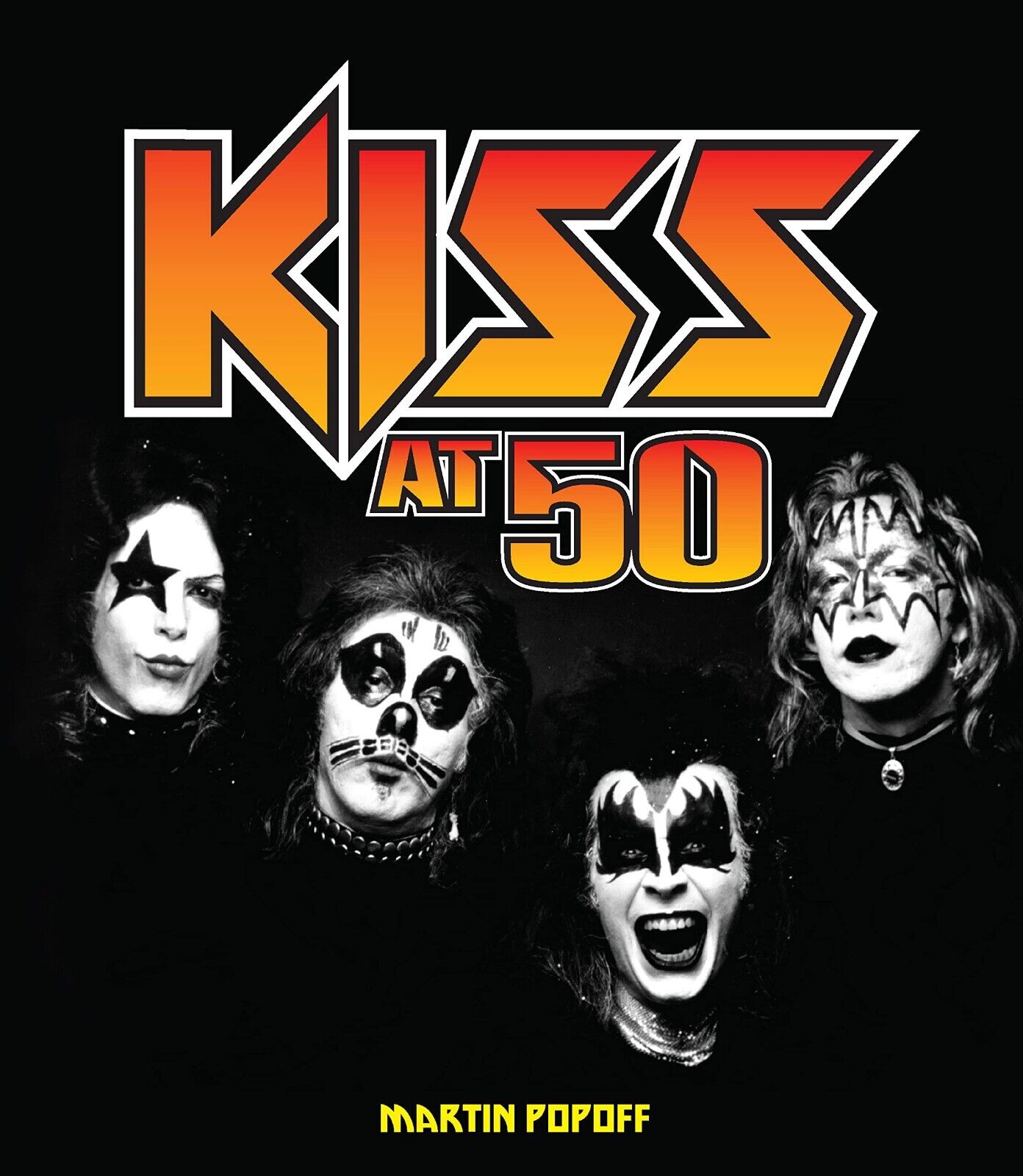
If you’ve got a KISS fan on your upcoming gift list and don’t know what to possibly get for he or she (though it’s probably a he…), fear no more! Your shopping stress just got a little easier with the arrival of the fine and fantastic new glossy tome KISS at 50 by Martin Popoff (192 pp., $40, Motorbooks/Quarto Publishing).

Popoff is perhaps music journalism’s most prolific scribe, with approximately 115 books and nearly 8,000 record reviews to his credit. Though as he says upfront, this subject is particularly close to him as fan since the two bands he most cherishes are KISS and his fellow Canadian countrymen in Rush.

Taking a track from some of his previous work, instead of a straight biography (of which there are several already), Popoff instead choose 50 different events, albums, or important points in the band’s career to tell their story since their founding in 1973. And gets into the nitty gritty detail that a card-carrying member of the KISS Army can appreciate.

As in when he offers that Michael Doret, when he designed the cover for the Rock and Roll Over album, had already birthed from his mind the official logo for the New York Knicks. Or that the actor who overdubbed all of drummer Peter Criss’ unintelligible (or not recorded) dialogue lines for the now-punchline TV movie KISS Meet the Phantom of the Park was by Michael Bell, who would later lend his voiceover talents to The Smurfs cartoon.

The story is evenly told across time, with attention even given to the years that KISS was creatively afloat and out of contemporary pop culture (this includes their forays into hair metal, soppy balladry, “grunge” and—gasp!—disco.

And what makes Popoff’s writing a bit refreshingly different here is that he seems to give voice to common opinions of fans about both the high and low points of KISStory.

Popoff covers pretty much everything here, with two nitpicky omissions. He could have devoted one of his sidebar chapters to books written by and about KISS, as well as a look at the merchandising from the most-merchandised band in history. After all, there were not only dolls and lunch boxes and games and makeup kits for the original childhood fans, but later KISS condoms and deodorant. And, infamously, the KISS Kasket (which Pantera’s murdered guitarist Dimebag Darrell was laid to rest in, reportedly as a gift from the group).

As usual with Popoff’s coffee table books, this one is visually stunning with more than 300 color images. There’s plenty of posed and live shots of the band over the decades, but the fun stuff is in the ephemera: posters, advertisements, rare album and single covers, backstage passes, buttons and even patches.

And while the original foursome of Paul, Gene, Ace and Peter get the most attention (including the latter two’s in-and-outs of the lineup), other members of the family get ink as well.

Like a lot of other rock bands, the previously-announced KISS “farewell” or last tours have proven to be premature. But their current “End of the Road” world tour—begun in 2019—recently brought the party to a stop in New York City, the band’s birthplace. Most fans think this one will actually stick to that promise. Especially since at the end of the show as the flesh-and-blood KISS left the stage, they immediately introduced…Animated Avatar KISS. Who can tour forever and don’t need per diem.

The article originally appeared at HoustonPress.com

Posted in Books, KISS | Tagged , , , | Leave a comment

Beck, Bogert & Appice—Classic Rock’s “Lost” Power Trio—Thunder on Live Box Set

Carmine Appice, Jeff Beck and Tim Bogert during their short-lived time together as a band. Photo by and © Sam Emerson/Courtesy Rhino-Warner Music.

Though it’s been nearly a year since the sudden and unexpected death of guitarist Jeff Beck from bacterial meningitis, his former bandmate, drummer Carmine Appice, is still stunned.

Especially since the two had been working closely together on a new box set project featuring archival live recordings from their short-lived early ‘70s Classic Rock trio Beck, Bogert and Appice.

“It’s so weird. My manager had written the liner notes and we had delivered them to Jeff and his manager to look over on a Sunday. We were waiting to hear back, and he passed away on Tuesday,” Appice says from his Florida home.

“I was shocked and I felt very empty. I wasn’t in contact with Jeff all the time, but he was a part of my life. It just blew me away.”

That project comes to fruition with next month’s release of Beck, Bogert & Appice: Live in Japan 1973 and Live in London 1974 (Atco/Rhino). Available in multiple formats, it includes two discs of music recorded in each location in a handsome box that includes a hardcover book with those extensive liner notes, a reproduction Japanese show program, and a replica poster.

“I helped mix the set with Jeff’s engineers and he had personally okayed all of them. The last thing he said to me when we talked was ‘Not only is the playing great, but it’s humorous.’” Appice says. “I didn’t know what he meant. And he said he’d play something silly and Tim would answer him and I’d answer Tim.”

Carmine Appice onstage with BBA Photo by and © Barry Plummer/Courtesy Rhino-Warner Music.

Tim would be Tim Bogert, the third member of the power trio. And while he died in 2021, he knew about the project and was able to overdub some vocal fixes to the original recordings. Appice is well aware he’s The Last Man Standing now, noting he’s even saved the last two texts Bogert ever sent him.

When the names of Classic Rock’s greatest power trios are evoked, Cream, ZZ Top, the Jimi Hendrix Experience, and Rush come trippingly off the tongue. Deeper fans might also toss out Emerson, Lake and Palmer, Mountain, Blue Cheer, the James Gang, or early Grand Funk Railroad.

Rarely mentioned on that list—despite boasting what many consider as Rock’s Greatest Guitarist in the lineup as well as the rhythm section of Vanilla Fudge and the mighty Cactus—is Beck, Bogert and Appice.

Perhaps because the lifespan of that unit only lasted from 1972-74, producing only one studio record. And like many on the list, aficionados note they were better in a live situation that encouraged experimentation and improvisation.

While Bogert and Appice had sung an occasional lead vocal with their previous groups, they found themselves splitting the duties in BBA.

“We know some of the PR at the time talked about how the singing wasn’t strong, but at that time people were writing songs that jammed. The quicker you got to the jam, the better. And we had brought some of that boogie sound over from Cactus,” Appice says (though at one point, Beck’s estranged former bandmate in the Jeff Beck Group, Rod Stewart, was a possible choice from front man).

The Live in Japan set was recorded on May 18 & 19 at Osaka’s Koseinenkin Hall and had been previously released in that country only. The January 26, 1974, Live in London at the Rainbow Theatre had been broadcast across U.S. radio stations later that year, but the full tapes sat in Beck’s archives for half a century. Sessions started in January 1974 for a follow up studio record, but the group unceremoniously disbanded shortly thereafter.

The material on the box set runs the gamut from live versions of both original tracks on the BBA album (“Black Cat Moan,” “Lady,” “Sweet Sweet Surrender,” “Livin’ Alone,” “Why Should I Care”) and covers (the Impressions’ “I’m So Proud,” Stevie Wonder’s “Superstition”). Also tunes earmarked for the second studio record (“Jizz Whizz,” “Satisfied,” “Solid Lifter”). Beck also uses a talk box on several tracks—pre-Peter Frampton!

“On the Live in London set, there’s like seven new songs. And versions that were better than what we had planned for the second record,” Appice says. “I was just amazed as the power and level of energy when I heard the test pressings. And I’ve got a nine-minute drum solo. You can’t do that today. People will get up and go get popcorn!”

When BBA first got together, expectations were high. Beck was already hailed as a Guitar God for his early work in the Yardbirds and his own Jeff Beck Group. Bassist Tim Bogert and drummer Carmine Appice had bona fide pedigrees from Vanilla Fudge (“You Keep Me Hangin’ On”) and cult favorite Cactus.

England music mag Melody Maker called BBA “the first successor to Cream” while NME hailed them as “an ensemble of virtually unparalleled magnificence.” Interestingly, the trio first jammed together in 1969 and were set to form the group then, but it was put on ice when Beck was involved in a major car crash and upon recovery, formed The Jeff Beck Group without the pair.

Carmine Appice: The inspiration for the Animal the Muppet? Photo by and © Barry Plummer/Courtesy Rhino-Warner Music.

Still, to this day, Appice can dwell on what could have been if BBA stuck it out a bit longer.

“We never reached the potential we could have. It was stupid. We could never get in the studio what we wanted, and Jeff was always unhappy there,” Appice says. He notes that he and Beck would also travel to gigs together in the same car, where the American skin thumper would play English guitar slinger more experimental rock music like Mahavishnu Orchestra and Billy Cobham records.

Appice also thinks that Beck was “tired of competing with Tim” onstage when it came to their instruments. Bogert was well known for playing bass as if it were a lead on par with the guitar in terms of volume and impact. Maybe not the best move in a band that has Jeff Beck in the lineup.

After BBA, Beck would put out his solo Blow by Blow LP, his hugely successful 1975 solo effort. Appice even traveled to England and play on some tracks, but business decisions kept him off the final mix.

Jeff Beck onstage Photo by and © Barry Plummer/Courtesy Rhino-Warner Music.

“I was pissed. But then I joined Rod Stewart and ended up co-writing ‘Do Ya Think I’m Sexy’ with him’ [the pair also penned “Young Turks”]. “We had huge records and played in front of zillions of people. So, it turned out OK!”

Appice did broker a meeting between Beck and Stewart when both were on the road in the same city, and it turned out well. The former bandmates reunited on disc for a 1985 cover of Curtis Mayfield’s “People Get Ready.” Appice tells the full story on his website on one of a series of videos.

As for his previous groups, Vanilla Fudge’s biggest hit—a heavy cover of the Supremes’ “You Keep Me Hangin’ On”—got a recent boost when a considerable chunk of it was featured in perhaps the most pivotal scene of Quentin Tarantino’s 2019 film Once Upon a Time in Hollywood.

Appice—who calls himself a movie buff—made sure he saw it for the first time in an actual theater, his pounding drums kicking things off on the track and the scene. And while he says it was “amazing” to see it, he notes it’s not the only time the song has soundtracked violence in mayhem onscreen.

“They used it three times in the Sopranos, the last time when they killed Phil [Leotardo]!” Appice laughs. “I said ‘Man, what is this? The Killing Spree Song?”

Today, the 76-year-old Carmine Appice remains quite busy. In addition to promoting the BBA release, he puts down original music in his new home studio, gigs/records occasionally with the current Vanilla Fudge, plays drums in “The Rod Experience” (A Rod Stewart tribute act), and holds drums clinics and speaking engagements.

He’s also finishing up production on a brand new Cactus record with their current lineup coming out next March. The discs revisits their ‘70s catalog but with an extensive group of high-profile guests including Ted Nugent, Joe Bonamassa, Steve Stevens, Dee Snider, Billy Sheehan, and Dug Pinnick and Ty Tabor of Houston’s King’s X.

“I got a lot going on!” Appice laughs. “I’m just sorry that Jeff and Tim aren’t around anymore to see this [box set] come out. They would have loved it.”

For more on Carmine Appice, visit CarmineAppice.net

This interview originally appeared at HoustonPress.com

Posted in Beck, Bogert and Appice | Tagged , , | Leave a comment

Mark Volman of the Turtles is Happy—Forever!

The Turtles in 1967, Hollywood Bowl promo photo: Jim Pons, Mark Volman, Johnny Barbara, Howard Kaylan, and Al Nichol.

He wasn’t the lead singer—that would be his lifelong partner in music and comedy, Howard Kaylan.

He didn’t write any of his band’s many ‘60s hits like “Happy Together,” “It Ain’t Me Babe,” “Elenore,” “You Showed Me,” “You Baby,” “She’d Rather Be With Me,” or “She’s My Girl.”

And he didn’t play any traditional rock musical instrument—unless you count the tambourine permanently implanted in his head and with which he could do all sorts of acrobatic tricks.

But Mark Volman was arguably the heart and soul of the Turtles. Easily identifiable on stage and in videos with his large frame, wild frizzy halo of black hair, thick, black-rimmed glasses, and permanent smile singing the high harmony that was crucial to the band’s sound.

He tells his story—with more than a little help from his friends—in the new book written with John Cody Happy Forever: My Musical Adventures with the Turtles, Frank Zappa, T. Rex, Flo & Eddie, and More (368 pp., $24.95, Jawbone Press).

In a unique twist, Volman’s story is told largely through the 100+ interviews Cody conducted with his musical contemporaries, collaborators, bandmates, friends, lovers, ex-wives, and children. Classic Rockers Alice Cooper, Micky Dolenz, Tommy James, Leslie West, Chuck Negron and Felix Cavaliere are included.

“You never know what you’re going to say until you put pen to page, and it took a long time to feel comfortable as a writer doing this. But I wanted to try something new here,” Volman says from somewhere out on the road. “In this, you think ‘Well, what’s a true story? What’s not a true story?’ I enjoyed the shift.”

The format has its risks because while most of the remembrances are positive or factual, not everyone interviewed sings his praises. Volman is sometimes painted as greedy, shifty, a cheating husband and an absent father, control freak, substance abuser, and ego tripper.

“There is that. And some of it also vindicates me. But only a few people stepped out to air their hostility,” he says. “There’s a lot of different layers there. I just hope that people enjoy it.”

Fans certainly enjoyed the Turtles and their offbeat and always on display sense of humor, even if the rock cognoscenti of then (and now) dismiss them for daring to be fun or include comical interludes and satirical songs onstage.

Starting as a mostly instrumental surf-rock group called the Crossfires, they became the Turtles almost as a joke because there were a lot of bands named after animals and insects.

Their first single was a cover of Bob Dylan’s “It Ain’t Me Babe,” which came out at exactly the same time Dylan’s own “Like a Rolling Stone” did. And their first gig? In front of 87,000 people on a package show at the Rose Bowl.

The Turtles’ signature tune, of course, is “Happy Together.” And as the book points out, had already been turned down by the vocal groups the Vogues, the Happenings and the Tokens.

Written by Garry Bonner and Alan Gordon, it hit #1 in March 1967. It not only became a big hit and the biggest of the Turtles’ discography, but an anthem of love and positivity in the 1960’s with an incredible afterlife in movies, TV shows, and commercials. And anytime the original recording is used, Volman and Kaylan get paid.

“It gets reborn all the time. It has a life totally of its own. We make it easy to use and realized it’s bigger than whatever we were going to earn otherwise,” he says.

“It showed us the importance of a song in a variety of different [media] and the teamwork that went into not just the performance but the songwriters who were involved. The family of Alan Gordon opened the door for us to take care of that song for them. They knew Howard and I wouldn’t sell it. And lot of offers have come through!”

While turtles can live up to 100 years, these musical ones only lasted in their original form from 1965-70, though Volman and Kaylan would use the valuable name for decades only after a lengthy legal fight for use of it.

Mark Volman and Howard Kaylan as “Flo and Eddie” at New York’s KROCK radio with guest Ozzy Osbourne (center) in 1989.

In fact, the pair seem to have spent a lot of time in court (and usually emerging victorious) concerning the band’s name, royalties, and illegal sampling in rap songs. As when De La Soul illegally sampled “You Showed Me” in their “Transmitting Live from Mars” one of the first legal motions of its kind.

And—more recently—SiriusXM Radio for playing and not offering royalties to groups on pre-1972 recordings. Kaylan and Volman lead a class action suit that in 2016 saw a judgement against the satellite radio provider and a settlement, though appeals reduced that amount.

“I truly believe the Turtles became a bit enigmatic because we were kind of outspoken about problems as a band and had a lot of problems with management. Ultimately, the business that gave us the success was the same one that [used] us,” Volman says, adding that he had to make “seven round trips” between New York and Los Angeles during the SiriusXM suit, which he called “draining.”

In fact, it seems like the pair could practically be lawyers for all the writs and depositions over the years. Most famously when they were prevented from first label White Whale from not only recording and performing as their Turtles but from using their actual real names.

Thus, copping the nicknames of two of their roadies, they became “Flo & Eddie” while working with Frank Zappa, T. Rex, and an entirely separate career as live and studio backing vocalists. Most famously adding the ‘aah-aaah’ choruses that lifted Bruce Springsteen’s “Hungry Heart.”

The book shows that Volman and Kaylan were nothing if not masters of reinvention. In addition to gigging, they segued into stints as morning DJs on New York’s K-ROCK and doing music for children’s cartoons like Strawberry Shortcake and The Care Bears.

In the 1990s while in his 40s, Mark Volman returned to school and earned a Master in Fine Arts degree from Loyola Marymount University and was named class valedictorian. He is currently an Associate Professor and Coordinator of the Entertainment Industry Studies Program at Belmont University. 

Asked what’s the #1 thing he’d tell his students today they should know that he wished he did in 1965, the answer comes easy.

“Publishing! And understanding about performance royalties and those things that can be a financial winner. You’ve got to understand that from Day One,” he offers.

Mark Volman today Photo by Blake Wylie.

Last summer, Volman is on the road as part of the oldies “Happy Together” package tour he’s had a hand in running since its late ‘80s inception. On a personal note, I saw it first in the late ‘80s on the Arena Theatre’s revolving stage, and Volman and Kaylan generously spoke for a while to my teenaged self and a friend after the show.

As usual, the “Turtles” headline, though Volman is the only reptile left. None of the original/classic members play with this group, and Kaylan retired from performing in 2017. Replacing him is Ron Dante (“Sugar, Sugar,” the Archies). Also on board at various stops are Little Anthony, Gary Puckett, The Vogues, The Classics IV and The Cowsills.

When the I interviewed Kaylan a decade ago for his autobiography, he noted that a key aspect of keeping his and Volman’s relationship good was that they didn’t socialize and kept very different hours. Volman laughs when told this.

“Even in high school back in 1962, Howard was much more in the business of going to school and I was a bit of a troublemaker!” he says. Still, it must have been hard initially to look over on stage and not see Kaylan there after a half century performing together.

“It wasn’t completely a shock, and there were times we didn’t [perform] together. Part of it was me being comfortable onstage without him. But I had done some [solo] things around Nashville,” Volman says.

“Howard had some health issues beginning to get in the way. And he had several surgeries this past year. But about two months ago, we talked about doing some podcasting together!”

This article originally appeared at HoustonPress.com

Posted in Books, Turtles | Tagged , , , , | 2 Comments

Geezer Butler’s Lifetime of Sabbaths—and the Days of Metal In Between

Geezer Butler today, trusty bass in hand. Photo by Ross Halfin.

The song opens unlike anything else that had been heard in rock music to date. The sounds of a howling wind, drizzling rain, thunder, and then the slow, repetitive tolling of a bell. Just when you think it’s a Halloween sound effects record, instruments kick in—most prevalent the deep notes of an ominous, eerie guitar. Then, the vocals of a seemingly unhinged and unbelieving narrator.

“What is this that stands before me?/Figure in black which points at me/Turn ‘round quick and start to run/Find out I’m the chosen one…Oh Nooooooooo!”

The song is “Black Sabbath.” The lead track off Black Sabbath. The 1970 debut record by…Black Sabbath (there’s something to be said for repetition in marketing). Its lyrics were mainly written by the band’s bassist, Terence “Geezer” Butler, based on an actual vision he had one night and whose title was inspired by the 1963 horror anthology film featuring Frankenstein himself, Boris Karloff.

And while Black Sabbath didn’t singlehandedly “invent” a new form of music known as heavy metal with Classic Rock Warhorses like “Paranoid,” “Iron Man,” “Into the Void,” “War Pigs,” “Children of the Grave,” and “Sabbath Bloody Sabbath,” they were certainly one of the Founding Fathers.

With a career spanning decades, commercial and critical highs and lows, an interchangeable lineup, and a body of work that still inspires and horrifies listeners today.

Butler tells the hang-on-to-your-seats story of his life, his band, and his music with unusual candor in the new memoir Into the Void: From Birth to Black Sabbath—and Beyond (288 pp., $29.99, William Morrow).

“The original book was about 500 pages long. But when we sent it to the publisher, they said ‘Oh, you can’t say that!’” Butler says on the phone from his California home. “And I said, ‘I was in Black Sabbath—not the Osmonds!’ But unless you can prove something happened with letters or whatever, it couldn’t go in the book. They were afraid of getting sued!”

For much of his time in the group from the start (though there were some hiatuses), Butler was their chief lyricist. As he writes, the band would often have the music portion formed, with singer Ozzy Osbourne making up words of the top of his head to the melody. Butler would keep some of them, but mostly put his own spin and themes into it. Since the band agreed to split credits among the four (including guitarist Tony Iommi and drummer Bill Ward), all contributed in some way, though Iommi’s riffs were often the genesis.

But toward the end of the [original lineup’s first] time together, he says that Osbourne started losing interest in Buter’s words. “He wouldn’t even read them! And when [Osbourne’s replacement after he was fired] Ronnie James Dio came in, he could write his own lyrics.”

Butler covers his early life in the very working-class area of Birmingham, England in a strict Irish Catholic family. The gloominess and drudgery of the surroundings (and not just that infamous English weather) definitely influenced both him and his future Sabbath bandmates. Even as they tried to find their musical way in early versions with names like The Polka Tulk Blues Band (??) and Earth.

Central to the band’s image and music were themes of the occult, horror, black magic and Satanism—all early interests of Butler. Though, as he writes, there’s a considerable gap between showing curiosity or interest in something and actually becoming involved with it.

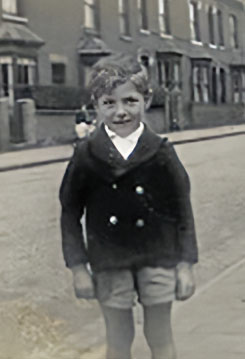
Young Terence Butler Geezer Butler photo/Courtesy of Romanello Public Relations.

“It was one of those passing fads you go through as a teenager. But as a strict Catholic, I was hearing about hell and Satan all of the time already. [My interest] was like a going against your parents sort of thing,” Butler says.

“Then horrible things started happening to me and I blamed it on me getting into black magic. So, I quit it. That’s where the song ‘Black Sabbath’ came from. Don’t get involved what you don’t have control over! But it wasn’t a glamorous place where we grew up. And the music reflected that.”

Black Sabbath was notorious for shifting lineups and questionable holds on the name after Osbourne was fired from the band in 1979. Even among a group of heavy drinkers and drug abusers, Ozzy was especially out of control. And the appeal of “fun” antics like him taking a full-on shit in the elevator of a busy hotel were growing thin among his band mates and management.

The book is full of wild tales and stories, like the recording of Vol. 4, where Butler says they spent more money on cocaine than actual recording costs. Or when they first came to America and asked a perplexed cab driver where they could find “10 fags…preferably English ones” and if there were a “gift shop” nearby they could get some. “Fags,” of course, at the time was perfectly acceptable English slang for cigarettes.


And how does a boy christened Terence end up being known for most of his life as Geezer? Well, it turns out that in Birmingham, the phrase “Alright, geezer?” is the English equivalent of “What’s up, dude?” on these shores.

Second singer Ronnie James Dio quit (or was fired) after creative and management struggles. Butler did mend fences with him and in the 2000’s successfully toured and recorded as Heaven and Hell with the Heaven and Hell/Mob Rules lineup of Dio, Iommi, Butler, and drummer Vinny Appice. The quartet chose not to fly under the “Black Sabbath” name for fear of litigation from Osbourne’s formidable wife/manager, Sharon.

Butler and his wife, Gloria, would also frequently socialize with Dio and wife Wendy. And the Butlers accompanied the Dios to Houston when Ronnie sought treatment for stomach cancer at MD Anderson hospital. The rapidly-forming disease would eventually kill him in 2010.

“Ronnie and I had our ups and downs in the band. But outside of the business and outside of music, Ronnie and Wendy were really good friends of ours,” Butler says. “He was really scared. Up until that time he thought it was just a stomachache. And when he got diagnosed, the best place in America to go for cancer treatment was Houston. I’m really glad that we went with him and checked him in.”

Butler and Osbourne Geezer Butler photo/Courtesy of Romanello Public Relations.

Black Sabbath made one final record, 2013’s 13, started a final world tour dubbed “The End” in 2016, and wrapped up their career with two final shows at the Genting Arena in their hometown of Birmingham. Onstage were Osbourne, Butler, Iommi, and…Tommy Clufetos on drums.

Founding member Bill Ward declined to take part in the tour after publicly stating he’d been given and “unsignable contract” by Sharon Osbourne and band management, likely involving his compensation. Barbs were traded in the press for months.

In Into the Void, Butler muses that perhaps the contract was deliberately meant to fall not in Ward’s favor as a way to eliminate his involvement (there were questions if the drummer—who had a series of physical ailments over the years—could handle the strenuous job). Butler says he has no inside information and doesn’t know what the contract terms were.

“We asked him if he’d do two or three songs a show or whatever he felt comfortable doing. And he said he’d do the whole show or nothing at all. And I totally respect that. If they told me to do two or three songs on bass and go away, I’d have told them where to go!” Butler says. “All I know is Bill was in the band, then me and my wife went to Hawaii for a week, and when we got back, Bill wasn’t in the band anymore.”

Finally, Into the Void makes a nice circular round when Geezer Butler proudly watches his own granddaughter play none other than Black Sabbath’s “Iron Man”—at her Catholic school no less. Well, Butler does write that the song was at least partially inspired by the thought of Jesus Christ coming back. Though not in a particularly happy or forgiving mood.

“She had the whole school choir singing it!” Butler laughs. “That was very strange for me. I thought people would be looking at me as if I was the devil or something!”

This interview originally appeared at HoustonPress.com

Posted in Black Sabbath, Books | Tagged , , , , , | Leave a comment

Firefall Focuses on Famous Friends & Family

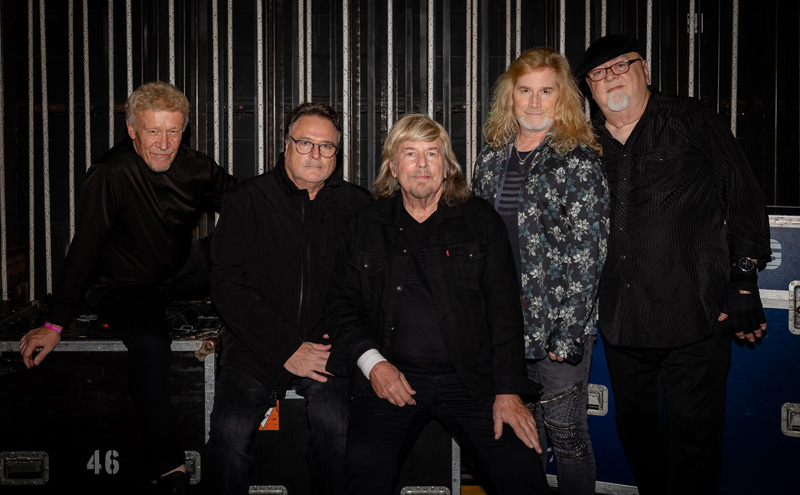
Firefall 2023: Steven Weinmeister, Jim Waddell, Jock Bartley, John Bisaha, and Sandy Ficca. Photo by Firetours, Inc.

The country-tinged classic rockers in Firefall first ignited their musical ember in 1974. That means they’ve had nearly five decades worth of touring with other bands, while various members have also played with big-name artists or been in noted groups.

The band is best known for a trio of big ‘70s hits, all written by original guitarist/vocalist Rick Roberts (“You Are the Woman,” “Just Remember I Love You,” and “Strange Way”). As well as some more minor charting tunes (“Livin’ Ain’t Livin’,” “Cinderella,” “Mexico”).

On Friends & Family (Sunset Blvd.), their latest record set for release next month, the group pays homage to acts they’ve crossed paths and guitar wires with over the years with 13 cover tunes. But they’re not straight covers—all have been “Firefalled up” to reflect the band’s own sound.

“The truth is, I know how to make good Firefall records. The main thing about this album was to treat these songs and the bands that made them with respect and love and reverence,” guitarist/singer Jock Bartley offers. “To do right by them. But give them a sound like us.”

Friends & Family includes material from frequent tourmates like Fleetwood Mac (“World Turning”), Lynyrd Skynyrd (“Simple Man”), the Marshall Tucker Band (“Can’t You See?”), and the Band (“Chest Fever”).

And groups that current or former members were part of like Spirit (“I Got a Line On You”), Heart (“What About Love”) and the Byrds (“I’ll Feel A Whole Lot Better).” Tunes by pals and collaborators Dan Fogelberg, the Doobie Brothers, the Flying Burrito Brothers, Gram Parsons, and Loggins & Messina also make the cut.

Jock Bartley Photo by Firetours, Inc.

There are musical tweaks. An accordion intro to “Simple Man” gives the song a more down-home feel. “My mom was an accordion player!” Bartley laughs. It is also the record’s first single. Slide guitar replaces synthesizer parts from “What About Love” Bartley’s own playing doesn’t exactly replicate those original versions either.

“I’m aware that I’m playing these guitar parts originally done by amazing players like [Marshall Tucker Band’s] Toy Caldwell and Lindsay Buckingham and Jim Messina and Dan Fogelberg,” Bartley says.

“And Randy California’s signature solo for ‘I Got a Line on You?’ I used to play that song when I was in a club band in college! Later, I got to know Toy a little bit. We’d compare Les Paul guitars!”

Friends & Family also features guest appearances by former members of Heart, Bad Company, Chicago, Desert Rose Band, the Subdudes, and the bands of Kenny Loggins and Elton John.

The last time we spoke with Firefall was for the release of 2020’s “Comet”, their first original studio effort in over 25 years. Since then, original member Dave Muse died from cancer in 2022 and near-original member Mark Andes retired.

That leaves Bartley with Last Man Standing syndrome. Though it’s not for the first time.

“I was the last man standing when everybody quit in the ‘80s and into the ‘90s. And I kind of didn’t like that. It was great when David would come back for a year or Mark came back,” he says.

“I’ve even heard arguments that we’re a Firefall cover band and not the original guys. Michael [Clarke] died. Rick and Larry [Burnett] aren’t in good voice and don’t perform anymore, and David passed away,” Bartley offers. “I don’t feel bad about continuing. We sound like Firefall in 2023. And when this project was put in front of us, we couldn’t pass it up!”

The current lineup includes members who have been on-and-off with the band since the mid-‘80s and in addition to Bartley include Steve Weinmeister (co-lead vocals/guitar), John Bisaha (co-lead vocals/bass), Sandy Ficca (drums), and Jim Waddell (flute/sax/keyboards)—on his fifth stint with Firefall.

“I tell you, the vocals on this record with Steve and John as the main singers, we can do anything. They’re fantastic,” Bartley says. Though he himself does sing lead on “Can’t You See,” “I’ll Feel a Whole Lot Better,” and album closer “Ooh Las Vegas.”

Of course, as scores of Classic Rock-era bands have discovered, putting out new music only brings in limited results. The records are usually sold only to diehard fans or at the gigs, and there’s no radio station on the ground or in the sky that will play it. That leaves more contemporary social media and streaming as the only way to get this music heard to new potential buyers.

“The truth is, moneymaking on royalties for selling albums doesn’t even figure into [a reason for] putting out new music. The industry and publishing is so weird now. Songwriters and publishers used to make fortunes back in the ‘70s and ‘80s. You could make millions,” Bartley says.

“That’s all gone now. Look at Toto! They put out new music, and there’s no support or airplay. The station will just play ‘Africa’ again. Same with the Doobie Brothers! Even the Eagles only had one new airplay song with [2007’s] Long Road Out of Eden.”

Instead, he says he looked at picking and playing the tunes on Friends & Family as “an opportunity and a challenge.” He also admits that though he’s “in his seventies and pretty arthritic,” he wanted to “burn” with his playing on the record where it counted.

Mortality is on the mind. Bartley says he turned in the final tapes for Friends & Family just over a year ago. And just in that time a number of people in the bands covered on the record have died: Christine McVie, Gary Rossington, David Crosby, and Robbie Robertson.

In fact, Bartley says that two of his favorite tours ever were when they opened for Fleetwood Mac on the massive Rumours stadium jaunt, and on the Band’s last tour. But he plans on continuing the tributes in Firefall’s future.

“I got a scoop for you too, Robert! We’re at the start of making Friends & Family II!,” he says.

“I’ve got a list going, and it will definitely have the Byrds’ ‘So You Want to Be a Rock ‘n’ Roll Star.’ We’ve got another song by Fleetwood Mac and one from Stephen Stills. I also want to do a Beach Boys song. Brian Wilson came out to see us in Japan once. But I don’t want to do any of the car songs.”

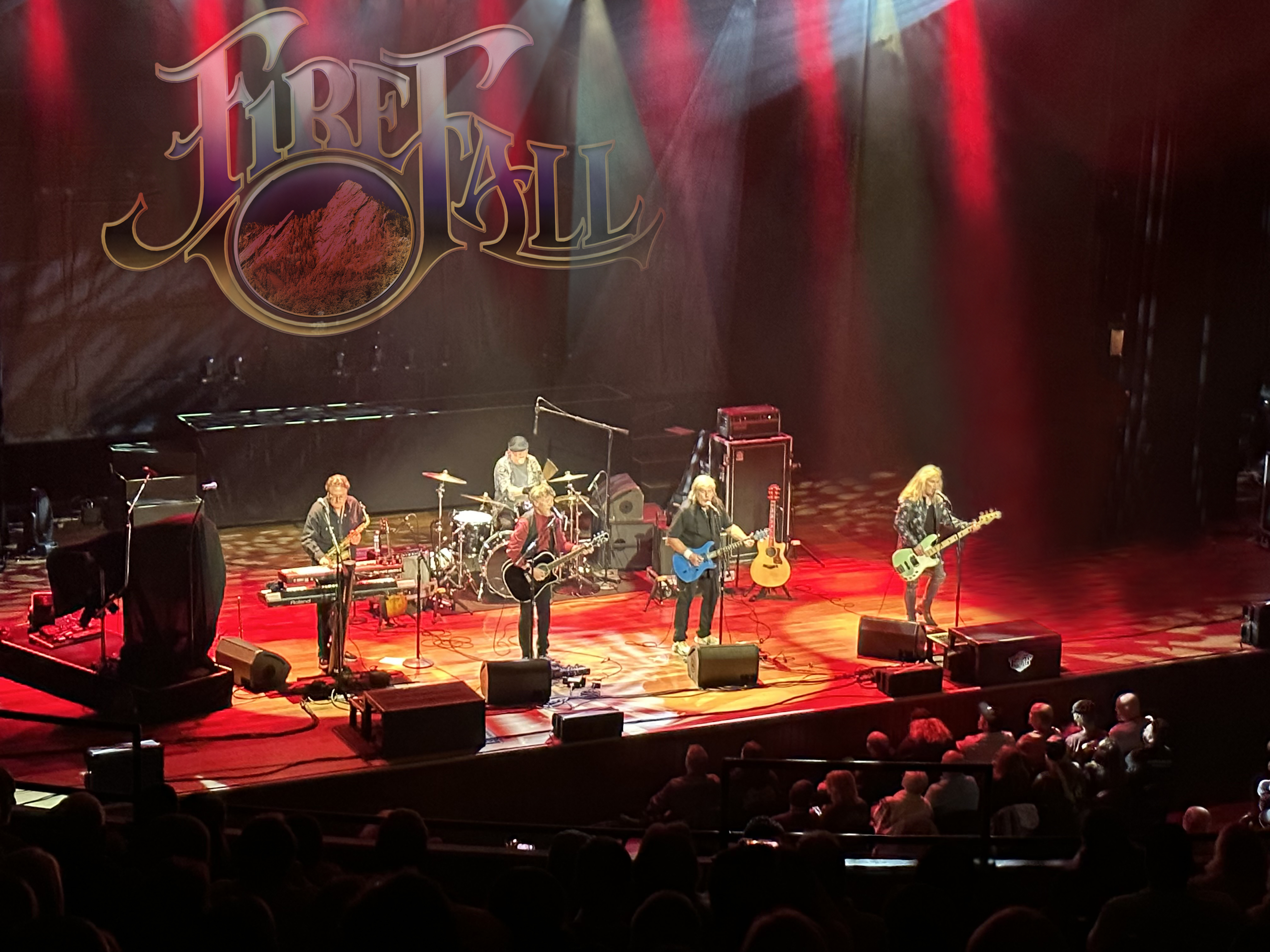
Firefall onstage recently Photo by Firetours, Inc.

As for their own hits, Bartley knows that’s the band’s bread and butter which brings people to their live shows. And while other bands often try to “reimagine” their hits to stave off boredom or lethargy, he says Firefall will not mess with the music—or people’s memories.

“As a bandleader, I know there’s a lot of people in the audience paying to hear ‘You Are the Woman’ and ‘Just Remember I Love You’ just like the records. Some bands like to change it up and the crowd doesn’t recognize it until two minutes in!” he says.

“We do have room every night on solos to stretch out and be spontaneous. But I’ve been playing ‘You Are the Woman’ the exact same way for 45 years!

For more on Firefall, visit FirefallOfficial.com

This article originally appeared at HoustonPress.com

Posted in Firefall | Tagged , | Leave a comment

Celebrating Quadrophenia—The Who’s “Other” Rock Opera

It’s not the Who’s most famous rock opera—that would be the one about the deaf, dumb and blind kid with great flipper action, Tommy. Nor is it the great “What If?” never-assembled rock opera—that would be Lifehouse, most of which ended up on Who’s Next, considered the band’s greatest album.

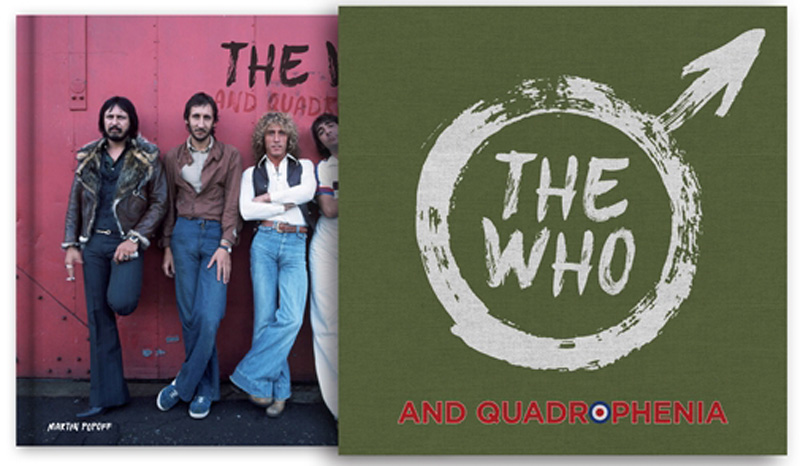
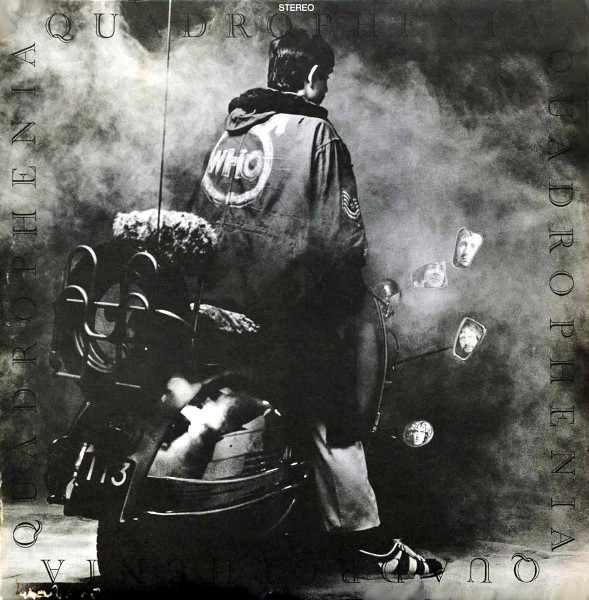
“Quadrophenia” record cover

After that pair came 1973’s Quadrophenia which, in a way, was closest to the band’s own history and background. Written entirely by guitarist/singer Pete Townshend and performed with bandmates Roger Daltrey, John Entwistle, and Keith Moon, it harkens back to the band’s own origins in England’s Mod youth movement.

With a penchant for short haircuts, smart suits, parkas, Italian scooters, and a love of R&B music and speed pills, the Mods also favored UK bands like the Kinks, the Small Faces, and the Who, who in turn adapted Mod looks in their image and themes in their music (at least early in their careers).

Everything about the writing, recording, and touring of Quadrophenia—as well as its lengthy afterlife and how it fits into the Greater Who History—is explored in Martin Popoff’s The Who & Quadrophenia (176 pp., $50, Quarto Press).

Over the course of four LP sides, Quadrophenia tells the story of a young Mod in 1964 named Jimmy as he struggles with his life, parents, girlfriend, buddies, rivals in “The Rockers,” and purpose in life. Before reaching a conclusion that’s open to interpretation about his ultimate fate.

The “Quadrophenia” title came from the fact that Townshend recorded part of the rock opera in the new quadrophonic sound system, but also a play on the word “schizophrenia.” In the songs, Townshend introduces four aspects of Jimmy’s personality, each one to mirror a specific member of the Who. Timely, as band relations weren’t always the best—and even got physical at some points.

The ultra-prolific Popoff, as usual, leaves no detail unexplored in his latest in a series of high-quality coffee table books. This one with its own slipcase and featuring 150 photos of the band in posed, casual, and live shots, along with ephemera like record covers, posters, and ticket stubs.

There’s also plenty about the filming and reception of the 1979 movie adaptation. A straight drama with the Quadrophenia tunes used as background or narrative progressors, it starred a then-unknown 19-year-old named Phil Daniels as Jimmy, with an on-the-cusp-of-fame Sting playing the role of the Mod’s former top dog, “Ace Face,” now reduced to working as a bell boy at a posh London hotel.

In short, while its text on the rock opera and the band is delivered in small-but-convenient bite-sized chapters, The Who & Quadrophenia, shines a fine light on Pete Townshend’s sonic meditation. A work not only about his and the Who’s own past, but also identity, mental health, anxiety, and youthful lusts and longings for a future.

This article originally appeared at HoustonPress.com

Posted in Books, Who | Tagged , , , , , , | Leave a comment

Book Charts Eagles’ Soaring Heights and Plummeting Crashes

The Eagles (Don Henley, Glenn Frey, Randy Meisner and Bernie Leadon) got to play cowboy on their 1973 concept album “Desperado.” Record cover detail/Photo by Henry Diltz.

As esteemed rock journo Mick Wall writes in his introduction, Don Henley hates books about his band, Eagles (there is technically no definite article in the group’s name—so you’ve been saying it wrong all these years. See also: Talking Heads).

He didn’t like Marc Eliot’s 2004 bio To the Limit: The Untold Story of the Eagles, even though he agreed to sit down for interviews with the author. But only if he would (as Wall writes) not include some info about a party at Henley’s house, a 16-year-old girl, and a drug overdose. And he really didn’t like former bandmate Don Felder’s 2009’s tell-all Heaven and Hell: My Life in the Eagles since Felder’s firing led to a string of lawsuits and verbal battles.

Well, Gilmer, Texas’ most famous son will get the trifecta, because he really, really probably won’t like Wall’s Life in the Fast Lane: The Eagles’ Reckless Ride Down the Rock & Roll Highway (304 pp., $18.99, Diversion Books).

Right away, Wall—who has also penned more straight-ahead bios on Led Zeppelin, the Doors, Black Sabbath, and Jimi Hendrix—takes a literary leap here with the book’s writing style, likely to divide his readers.

It’s far less of a string of facts and quotes as it is a long, colorfully and informally written, stream-of-consciousness narrative with decidedly subjective (and descriptive) third person observations. In the parlance of an earlier decade, Wall lets it all hang out, damn the consequences, sensitive feelings, and parsed words.

While Eagles (especially in the early days) were known for there close, tight harmonies, those vocal characteristics rarely bled over into band relations.

While it’s never been a secret (and the pair themselves have never indicated otherwise) that group was run with no peaceful, easy feelings by Don Henley and Glenn Frey in most musical, business, and personnel matters. Wall digs a bit deeper into the relationship. They needed each other. But boy, did they have vicious arguments too.

He shows how the quiet, cunning, cutting Texan with that voice and brash, cocky, and loudmouth son of the Detroit area were each other’s ying and yang with the single-minded and ambitious pursuit of fame, money, drugs and women (not necessarily in that order).

Sure, Bernie Leadon, Randy Meisner, Felder, Joe Walsh, and Timothy B. Schmit were on the boat to the Sea of Success—but none of them ever sat in the two-seated captain’s chair, ever.

Throughout, Wall introduces a bevy of players who orbited in and around the band’s universe. From fellow performers and collaborators (Linda Ronstadt, J.D. Souther, Jackson Browne), “elder” statemen (Gram Parsons, Chris Hillman, Richie Furay), and cutthroat managers/agents (Irving Azoff, David Geffen, Elliot Roberts), they all add a few strokes to the band chiaroscuro.

Wall also alters some of our collective (if not entirely accurate) memories. Remember, Desperado, their second LP, was a concept album purportedly linking the “outlaw” image of murderous Old West gangs of the 1870s with the rock groups of the 1970s. And it was a big flop. The band’s version of the title track only gained traction in the wake of Ronstadt’s cover, and “Tequila Sunrise” never scratched the Top 40.

And while Eagles definitely didn’t “invent” country rock, until they became more of a rock band they took it the furthest: to the radio stations, the turntables, the concert halls and the bank

Wall also charts the band’s (mostly Frey and Henley’s) evolution from scruffy, scuffling, country-friend pot-and-beer users to the mega-successful cocaine-snorting luxury jet-flying millionaires and King Dicks to the Classic Rock elder statesmen now (or what’s left of them) on the purported “real” farewell tour, belting out precious memories nightly at ticket prices that would bulge the eyes of the same players 50 years ago.

More pages are naturally centered on 1976’s Hotel California, the band’s enduring and telling sonic statement. The book’s main text ends with the band’s dissolution on the last date of 1980’s The Long Run tour, site of the famous fistfight between Felder and Frey (though he does bring Eageland News over the ensuing decades up to date).

The book was published before the summer 2023 death of founding bassist/singer Randy Meisner, and here he’s characterized as almost the Doomed Eagle. Too nice, passive, and silent for such a cutthroat group of type A personalities (though replaced—as he was in Poco—by the somewhat similar in tone Timothy B. Schmit).

Wall’s descriptions of loose cannon/wild man Joe Walsh and the jolt he added to the group are entertaining. And Bernie Leadon’s image is only burnished by his steadfastness and dedication to music. Even if the security guards that followed his girlfriend, Patti Davis (daughter of then-California governor Ronald Reagan) on the road were a drag on the non-stop party.

At the end, Wall is witness to a 2022 Eagles show at Hyde Park. His more reflective prose of the event is a combination of snark, wistfulness, disdain, and familiarity, and what’s-been-lost all together. Some of the reflections aren’t quite fair, but they’re not wrong either.

Life in the Fast Lane is not the definitive Eagles bio yet to be written. But it is the most entertaining, full of attitude, and rollicking on any feathered friend’s reading list.

This article originally appeared at HoustonPress.com

Posted in Books, Eagles | Tagged , , , , , , , , | Leave a comment

Cows, Pigs and Prisms: Doc Tells the Graphic Story of Hipgnosis

Members of Pink Floyd, Hipgnosis, and friends mingle in 1968: Nick Mason, David Gilmour (hidden), unidentified woman, Storm Thorgerson, unidentified woman, Aubrey “Po” Powell, Roger Waters, unidentified woman, Rick Wright, unidentified woman. Screen shot courtesy of MFAH.

If you were a rock performer or band in the late ‘60s and ‘70s and wanted a cover for your record that was mysterious, arty, and a bit jarring all at the same time, then Hipgnosis was you go-to graphic design company.

Founded by designer Storm Thorgerson and photographer Aubrey “Po” Powell, they churned out covers for Led Zeppelin (Houses of the Holy, Presence), Paul McCartney and Wings (Band on the Run, Venus and Mars), T. Rex (Electric Warrior), Wishbone Ash (Argus), Genesis (The Lamb Lies Down on Broadway) and a litany of others including Black Sabbath, Bad Company, 10cc, UFO, the Scorpions, Yes and AC/DC.

Their most fruitful and famous collaborating partners though, were Pink Floyd. Hipgnosis did the bulk of their covers, including one of the most iconic in Classic Rock history—the rainbow prism of Dark Side of the Moon. That relationship began way back when they all went to school together. Thorgerson and Floyd’s Roger Waters even played on the same teenage rugby team.

The story of the company—and the fruitful-but-fractious relationship between its two founders on both personal and professional levels—is told in the new documentary from director Anton Corbijn Squaring the Circle (The Story of Hipgnosis).

“We screen about 225 films a year, and while we have an art house identity, we show a lot of smaller documentaries like this,” says Ray Gomez, Assistant for Community Outreach & Administration Department of Film & Video at the Museum of Fine Arts, Houston. “And this is about a time when rock and roll was the medium of youth. And if we don’t show something like this, it probably won’t get seen.”

The MFAH’s Ray Gomez Photo by Ray Gomez.

As Thorgerson died in 2013, it’s up to Powell to guide viewers through most of the narrative in recent filmed interviews. Though Thorgerson is featured in some archival footage and was himself the subject of the 2015 doc Taken by Storm: The Art of Storm Thorgerson and Hipgnosis).

The closeness but also push-and-pull of the pair comes out clear, and Powell emerges as the “sane” one. And even while Thorgerson elicits plenty of admiration for his skills and vision from the talking heads, in a hilarious montage they also refer to him as (varyingly) “rude,” “difficult,” “annoying,” “cantankerous,” and a “pain in the pass.” The duo’s relationship is also likened to “chalk and cheese.”

“I think collaboration part of the history, and that’s how these two people made their mark. They made this great work together. The mercurial guy like Storm and the more reasonable Po,” Gomez offers.

“I found it bittersweet at the beginning where Po is showing all these record covers. And something like [Hipgnosis] was only possible in the analog era. Now, everybody’s a content creator.”

The doc features contemporary interview segments with A-list names who worked with the company including Paul McCartney, Robert Plant and Jimmy Page of Led Zeppelin, Peter Gabriel, and all three surviving members of Pink Floyd: David Gilmour, Roger Waters, and Nick Mason.

Shot in black and white, the visuals are somewhat jarring as it serves to remind the viewer that these men are understandably no longer the Cute Mop Tops or Golden Gods of some half a century ago, but grizzled men in their 70s and even 80s whose faces show every bit of that aging.

And it’s a stark reminder of mortality and the passage of time, especially when photos and videos are shown of their younger selves.

One major theme is the lengths that Hipgnosis would go to in order to get a shot, achieving the same result that many 15-year-olds can easily do with Photoshop today.

A selection of Hipgnosis-designed covers.

For the Nice’s 1971 album Elegy, Powell recalls flying to the Sahara Desert with 60 deflated English footballs that he would hand pump up (each taking 20 minutes) to position on the sand. And, as Thorgerson notes about to the cover of Pink Floyd’s Wish You Were Here, in those days if you wanted a photo of a man on fire, you had to actually set a man on fire first.

“That has a [comparison] in film with location work. When you see the 1977 Star Wars movie, Tatooine is actually the Tunisian Desert. It’s not a green screen,” Gomez says. “It was also a movement away from always having the band on the cover. Pink Floyd put a cow on Atom Heart Mother! It also leaves an ambiguity for the listener to look at and fill with their own meaning.”

Hipgnosis co-founder Aubrey “Po” Powell Screen shot courtesy of MFAH,

For Wings Greatest Hits, Hipgnosis took a statute that Paul McCartney has recently purchased at an auction to the top of a snowy Swiss mountain—getting an image that could have been achieved much more cheaply in a London studio with pile of salt.

But then again, that wouldn’t be Hipgnosis! Several artists mention the high costs of using the company, and it’s noted multiple times that Thorgerson paid scant attention to expenditures in pursuit of whatever artistic vision he was chasing.

But perhaps the most famous story involves the cover of Pink Floyd’s Animals. Based on a concept by Roger Waters, the idea was to fly the band’s new giant inflatable pig over England’s Battersea Power Station for an incredible image.

Things were scrapped on Day One when the pig inflation didn’t work properly, but on Day Two the swine was afloat…but broke its grounding line.

The phrase “when pigs fly” became reality as a helicopter and UK government fighter jets were deployed to find the pig (which as it was made of plastic, was invisible on radar) and air traffic around nearby Heathrow Airport was halted. A police sniper hired to shoot down the pig just in case of this situation reportedly did not show up on Day Two as he wasn’t paid for Day One.

Paul McCartney used Hipgnosis for the covers of “Band on the Run,” “Venus and Mars” and “London Town.” Screen shot courtesy of MFAH.

Later that night, Powell got a call from an upset farmer who said the pig has landed in his field—and for them to come retrieve it fast as it was scaring his cows. For the final cover, Hipgnosis ended up pasting a previously-shot pig image in the air.

Another theme of the doc is the vast difference between the function of a record cover then as compared to now. Oasis’ Noel Gallagher talks about how crucial the image was to the fan and the entire experience of a new record, while adding that his teenaged daughter has no concept that records even have covers until he tells her it’s image of the little square on her cell phone when she listens to music.

For Gomez—though not wanting to sound like Old Man Yelling at Clouds—he says something has been lost.

“It was a big deal to get an album and stare at the cover and read the liner notes down to the copyright notice,” the former rock drummer says. Plus, he notes that the covers for his records like Led Zeppelin IV and Rush’s 2112 also served a second functionary purpose as a hiding place for certain, um, leafy contraband.

And that’s one of the things that led to the natural demise of Hipgnosis in the early ‘80s. Record companies and bands were no longer interested in expensive, arty covers and instead favored bright colors and photos of the musicians. So, Thorgerson, Powell, and a later, third partner (Peter Christopherson) closed up shop in 1983.

For Gomez, Squaring the Circle comes back to one thing again and again.

“I go back again to the power of collaboration, both between [Storm and Po] and Hipgnosis and the bands. And how lasting those images were,” Gomez sums up. “I Googled ‘Dark Side of the Moon T-shirt’ and all this merchandise came up. And you know all of it isn’t licensed. I wish I could get all my old concert T-shirts back!”

This article originally appeared at HoustonPress.com

Posted in Documentaries, Led Zeppelin, Pink Floyd | Tagged , , , , | Leave a comment

The Allman Brothers & Their Family Ways

The lineup that recorded “Brothers and Sisters:” Jaimoe (aka Jai Johanny Johanson), Gregg Allman, Butch Trucks, Chuck Leavell, Lamar Williams, and Dickey Betts. The Big House Museum Archives.

In the fall of 1972, the Allman Brothers Band found themselves at a crossroads—one with more ominousness and uncertainty than the one Robert Johnson went down to. A year earlier, they had lost Duane Allman, the group’s founder, leader and driving force in a freak motorcycle accident.

Almost exactly year later after that, another loss came with the eerily similar freak motorcycle accident death of bassist Berry Oakley, just three blocks from the site of Duane’s demise.

Ironically, the band had finally broken through commercially and becoming more popular with 1971’s epochal Live at Fillmore East and follow up Eat a Peach. So, there was much, much riding on the group when they entered Capricorn Studios in their hometown of Macon, Georgia to piece together what would become 1973’s Brothers and Sisters.

The tale of this record that clocked in at just over 38 minutes—and the ensuing years up until the group’s initial breakup in 1976—is told in Alan Paul’s Brothers and Sisters: The Allman Brothers Band and the Inside Story of the Album That Defined the ‘70s (352 pp., $32, St. Martin’s Press).

That subtitle, Paul admits, might be hard for some to swallow in a decade that also saw the release of Exile on Main Street, Who’s Next, Dark Side of the Moon, Rumours and Hotel California.

“I knew I’d have to answer this question!” Paul laughs from his home via Zoom. “But the book is bigger than just the album. It brings together a lot of things about the era, and I wanted to convey that.”

In addition to detailing the creation of some jaw-dropping music, the book’s narrative also covers the band’s internal and external tensions, drugs, booze, more drugs, legal tangles, career peaks and valleys, and the explosion of Southern Rock. Along the way, there are important cameos from players as diverse as Geraldo Rivera, the Grateful Dead, Jimmy Carter, and Cher.

Paul is uniquely qualified to tell this story. Arguably the world’s foremost expert on the Allman Brothers Band, he’s already written a definitive oral history (One Way Out) and has personal and professional ties with various bandmembers and players in the ABB orbit. He even sings and plays guitar in the gigging “continuation group” Friends of the Brothers.

Gregg Allman onstage, 1972. Photo by Dina Regine.

For Brothers and Sisters, Paul had something of a guardian angel in the form of the ABB’s longtime friend, photographer, archivist and “tour mystic” Kirk West. In the mid-1980’s West conducted hundreds of hours of interviews with band members for a biography he never wrote. The band would reunite in 1989 and make him an employee.

The boxes containing those cassettes gathered dust in West’s office for nearly four decades until he sold and entrusted them to Paul (who had long known about their existence) in 2021.

Paul recalls carrying the precious cassette container with him on the plane home and storing it in the overhead compartment, not wanting to risk it becoming lost luggage. He then began the process of absorbing and digitizing many of them for use in Brothers and Sisters, first simply on his iPhone and then having an associate do them professionally in batches.

The Grateful Dead’s Jerry Garcia and Dickey Betts onstage in 1973. Photo by Sidney Smith, AllmanBrothersBookbySidneySmith.com.

“Kirk thought the book was a good idea, and I had already started on it when he offered me the tapes,” Paul says. The handover is documented in the book’s expansive photo insert, the shots taken by Paul’s son Jacob.

“The volume of what I had was overwhelming, and I didn’t [digitize] every single tape,” he continues, adding that the audiobook of Brothers and Sisters will feature some 40+ audio snippets of the bandmembers themselves talking, licensed from West.

“He’s really happy that these have finally come to light and people can hear them,” Paul says.

The Allman Brothers Band went through two major changes with Brothers and Sisters. The first was the stepping-up of singer/guitarist Dickey Betts as a writer, player and vocalist. He was reluctant front man who shared a sometimes-uneasy power balance with Gregg.

And the second was the arrival of two new member who provided the energy, freshness, and joy that the ABB desperately needed: Lamar Williams, Jr. (replacing Oakley) and Chuck Leavell, who was added on keyboards.

Gregg Allman and Phil Walden at Capricorn Music Weekend, 1973. Photo by Sidney Smith, AllmanBrothersBookbySidneySmith.com.

“Dickey was definitely reluctant to step out. Neither he nor Gregg were natural leader types. And what I mean by that is there’s a certain burden to that in making decisions and interacting with people,” he says.

“Gregg was withdrawn and self-centered and struggling with his own issues. And Dickey would sometimes just disappear into himself to where even his bandmates weren’t comfortable talking to him. That was an issue for all of the band, except Duane. And I think Dickey knew that about himself.”

For Gregg, he says, it would have been hard to change roles from the little brother who adored his older sibling with the big personality and calm demeanor and step into his place. To complicate matters, Allman was recording his first solo record, Laid Back at the same time the sessions for Brothers and Sisters were going down. Betts would also later release a solo effort, Highway Call.

Paul also goes into the complicated role that Phil Walden played (and some feel, abused) in the career of the Allman Brothers Band. A charming but slightly-sketchy industry character along the lines of Morris Levy or (for Houstonians) Don Robey and Huey Meaux.

Not only was he the head honcho at Capricorn Records, the band’s label and recording home. But he was also the their manager, booking agent, merchandiser and publisher. Roles that brought with them heavy conflicts into what was the band’s best interests at a time.

He was also going full-bore into Southern Rock with other acts like the Marshall Tucker Band, Charlie Daniels Band and Wet Willie, while indulging in his own substance abuse issues.

Jimmy and Rosalynn Carter (right) visit Dickey Betts (arms folded) and Phil Walden (leaning) in the Capricorn studio while Betts records his “Highway Call” solo record, 1974. Photo by Herb Kossover.

Brothers and Sisters also gives perhaps the most in-depth print dissection of the extremely close relationship between then-Presidential hopeful Jimmy Carter and the band, and in particular Allman and Walden.

“If it hadn’t been for Gregg Allman, I never would have been President,” Carter is quoted in the book. And indeed, the band and Walden threw early clout, exposure, and—perhaps most importantly—financial contributions the long-shot candidacy of the Bob Dylan-quoting peanut farmer from Georgia with the sizable choppers and honey-soaked accent.

Paul says that to his credit, even after he was elected President, Carter stood by Allman when the latter was going through very public issues surrounding drug and legal issues. That exploded when Allman testified in open court against his own road manger and valet/bodyguard, John “Scooter” Herring in a criminal trial. Herring had also supplied Allman with drugs. For most, the “Brotherhood” code had been not just been broken, but betrayed and destroyed.

Kirk West (left) hands over interview tapes to Alan Paul. Photo by Jacob Blumenstein Paul.

“It’s been interesting and surprising to me that a lot of people don’t know about that relationship with Jimmy Carter. And I didn’t realize the extent to which everyone abandoned Gregg and Jimmy didn’t,” Paul says.

“Carter by far had the best reason to abandon him. What politician wouldn’t issue a statement [against] Gregg? No one would have blamed him. But he didn’t do that, and I think that’s impressive. Jimmy Carter wouldn’t have existed as a national figure without the Allman Brothers. And they used the national popularity they had with Brothers and Sisters to boost him when he needed it.”

Paul adds that there is a direct link between the album’s Betts-penned/sung tracks “Southbound,” “Pony Boy,” and their biggest ever commercial hit, “Ramblin’ Man” and the Outlaw Country movement of Waylon, Willie, and the boys. Ironically, “Ramblin’ Man” peaked at #2 but was held off by “Half-Breed,” a tune performed by Cher…the future Mrs. Gregg Allman!

But back to West’s audio tapes. The question must be asked: When Paul first got his hands on the irreplaceable complete collection, did he ever consider purchasing an extra plane seat next to him just to keep the container in sight at all times?

“No!” he laughs. “But that would have been such a good story!”

This interview originally appeared at TheHoustonPress.com

Posted in Allman Brothers Band, Books | Tagged , , , , | Leave a comment