Warrant Enjoys a Slice of Cherry Pie – with Eddie Trunk!

Warrant today: Steven Sweet, Joey Allen, Robert Mason, Erik Turner, and Jerry Dixon. Photo by Stephen Jensen/Courtesy of Stardust Publicity.

Note: This article originally appeared last summer.

To his listeners across the country on various radio shows and a podcast—but most prominently his daily Trunk Nation program on SiriusXM—Eddie Trunk is an Oracle of All Things Hard Rock and Heavy Metal. Add Prophet to the list, since something he’s been saying nearly since the pandemic started has started to come true.

“The music touring industry was decimated by this thing, and it’s going to be a long time before it recovers completely. But I knew all along once the first tour announcements started to come out, the floodgates would open, and they have,” he says.

Radio host, author, and show emcee Eddie Trunk. Photo by Maro Hagopian/Courtesy of SiriusXM.

Eddie Trunk will emcee a triple bill of live hard rock from a trio of ‘80s-birthed bands on the same bill when Warrant, Lita Ford, and the BulletBoys.

“To have taken 15 months off is kind of weird, so it’s wonderful to kick right back into it,” says Warrant singer Robert Mason. “Once you deep clean and scrub every inch of your house and garage, you’re looking for things to do! There’s stuff I didn’t even know I had in there!” Thankfully, Mason’s hobbies of driving and maintaining classic cars, riding motorcycles, and target shooting have kept him active outdoors.

Trunk adds that while his home of New Jersey and the New York area have been “fairly locked down” through the pandemic, states like Texas, Oklahoma, and Florida have been much more open. “Doing a daily national radio show, I hear from all over. But it’s great to see things opening,” he says. “I’m fully vaccinated, and I believe in the vaccines.”

Headliners Warrant had a bevy of radio hits and videos that were MTV staples from the late ‘80s to early ‘90s including “Down Boys,” “Sometimes She Cries,” “Big Talk, “Blind Faith,” and “I Saw Red.” They also stretched out with the bayou crime noir of “Uncle Tom’s Cabin,” and chalked up one of the biggest Power Ballads of the era (and highest charting single) in “Heaven.” But their best known song and biggest charting single is the sex-drenched, double-entendre-filled “Cherry Pie.” It’s over-the-top video remains (for better or worse) burned in people’s minds.

The band has maintained most of the classic lineup: Joey Allen (lead guitar), Erik Turner (rhythm guitar), Jerry Dixon (bass), and Steven Sweet (drums). Troubled lead vocalist Jani Lane passed away in 2011 from alcohol poisoning, and Mason has been frontman since 2008 on stage and in the studio for new records.

As with all pop culture, everything comes around again, and nostalgia for the ‘80s and ‘90s is in full swing. Mason is now seeing two generations in the audience and at meet and greets. Both of veteran and new ears responding to the hard rock/hair metal where with few exceptions, it’s all about partying, hooking up, and having a nothin’ but a good time.

“It’s music that is built around optimism, having a good time, and forgetting your problems. That’s the ethos of the entire thing. And people want that again,” Mason says. “You can instantly transport yourself back to when you were younger and all those memories. I’m blessed with the opportunity to hear people’s stories about that. And it’s a huge rush to be on my side of the microphone doing live music again.”
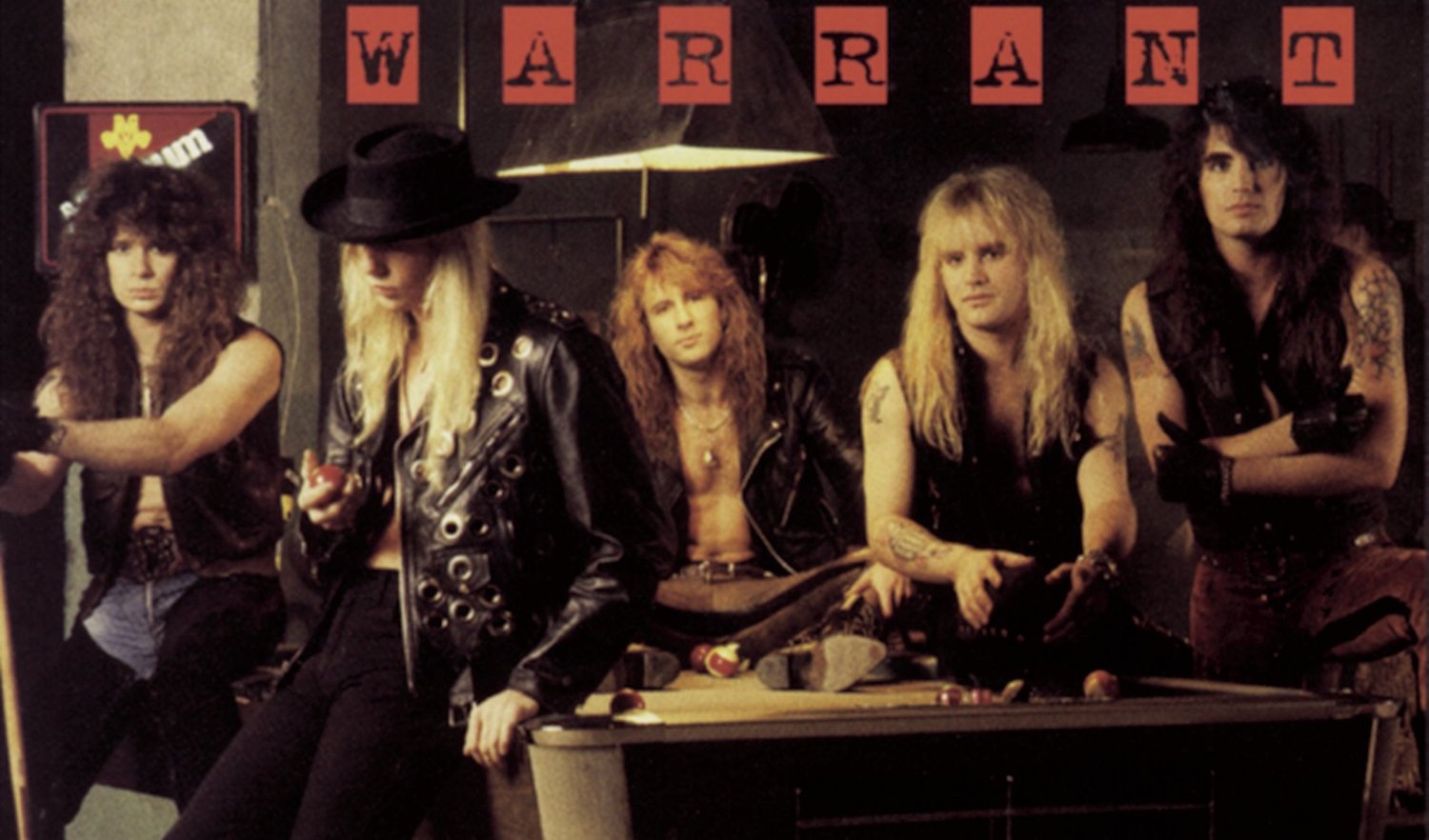
Classic Warrant lineup: Steven Sweet, Jani Lane, Erik Turner, Joey Allen, and Jerry Dixon. Record cover detail.

Trunk adds “I think Warrant is a band that had much better songs than they were given credit for. Jani Lane was a tremendous songwriter and singer. They are a band that when they first started, the songs were better than their ability to executive them! But they’ve grown tremendously as musicians. And Robert is a fantastic singer. I have a lot of history with him since he’s from Jersey.”

In fact, Trunk was there emceeing at a Rocklahoma Festival when Lane was “struggling,” and witnessed Joey Allen first talking to Mason about possibly helping out the group if Lane wasn’t capable of performing. Part of Lane’s issues, he himself admitted in an interview shortly before he died, was that he didn’t want to be known as just “The ‘Cherry Pie Guy.” And that over-the-top video wouldn’t go away.

“He carried that as a bit of cross. But that video sums up so much that period of time and that type of music in so many ways, it did become bigger,” Trunk offers. “But if you know their catalog, there’s way more to them.”

The current tour is in celebration of the 30th anniversary of the release of the Cherry Pie record, the band’s second. Though it’s actually the 31st anniversary, as the pandemic has caused a lot of tours pegged to a band’s founding or certain records to be a little creative with math. 

“We only did like three shows last year for the actual 30th, so we took a mulligan on that!” Mason laughs. “That record has so many great songs on it, and we’re playing the entire record. It’s a stamp in time for people. Warrant were in the shadow of Poison and Ratt and Mötley Crüe, but they had really great songs, and still all that ‘80s Sunset Strip imagery.

Eddie Trunk also has thoughts about the other two acts on the bill. “I often refer to Lita Ford as the First Lady of Rock and I mean that. I think she’s underrated and deserves more. She’s such a pioneer of women in rock music whether with the Runaways or solo career,” he say. “She still sings and plays really really well and deserves a lot of respect.”

And the BulletBoys? “They came out and had a couple of semi-hits, but they never quite got fully over the hump. The big change with them is that a couple of years ago they reunited the original lineup of all members. And that’s almost unheard of for ‘80s based acts,” Trunk says. “They’re probably to me the most straight up hard rock band on the bill, more modeled after ‘70s riff-based bands. They play great and lead singer Marq Torien still has an incredible voice.” [Update 4/11/22 – The original lineup reunion has splintered again, with only Torien left and fronting a new version of the BulletBoys.]

Finally, Mason is well aware that the frontman of a band is likely the most difficult to replace for good. So he’s cognizant of the dual responsibility to recognize Lane’s songs and history with Warrant, but still put his own mark on territory that’s his and his alone.

“Jani was an amazing writer, and a really good frontman. People loved what he did, and I get to sing those songs now. I was a fan,” Mason sums up. “My influence is more blues and soul, and you can detect that in my voice. But we see people connecting to those songs, every night. Not to paraphrase Popeye, but I’m going to be who I am. Wow, I must have had a lot of coffee to come up with that!”

This article originally appeared at HoustonPress.com
Posted in Eddie Trunk, Warrant | Leave a comment

KISS Calls Doc-Tour Love on A&E Series

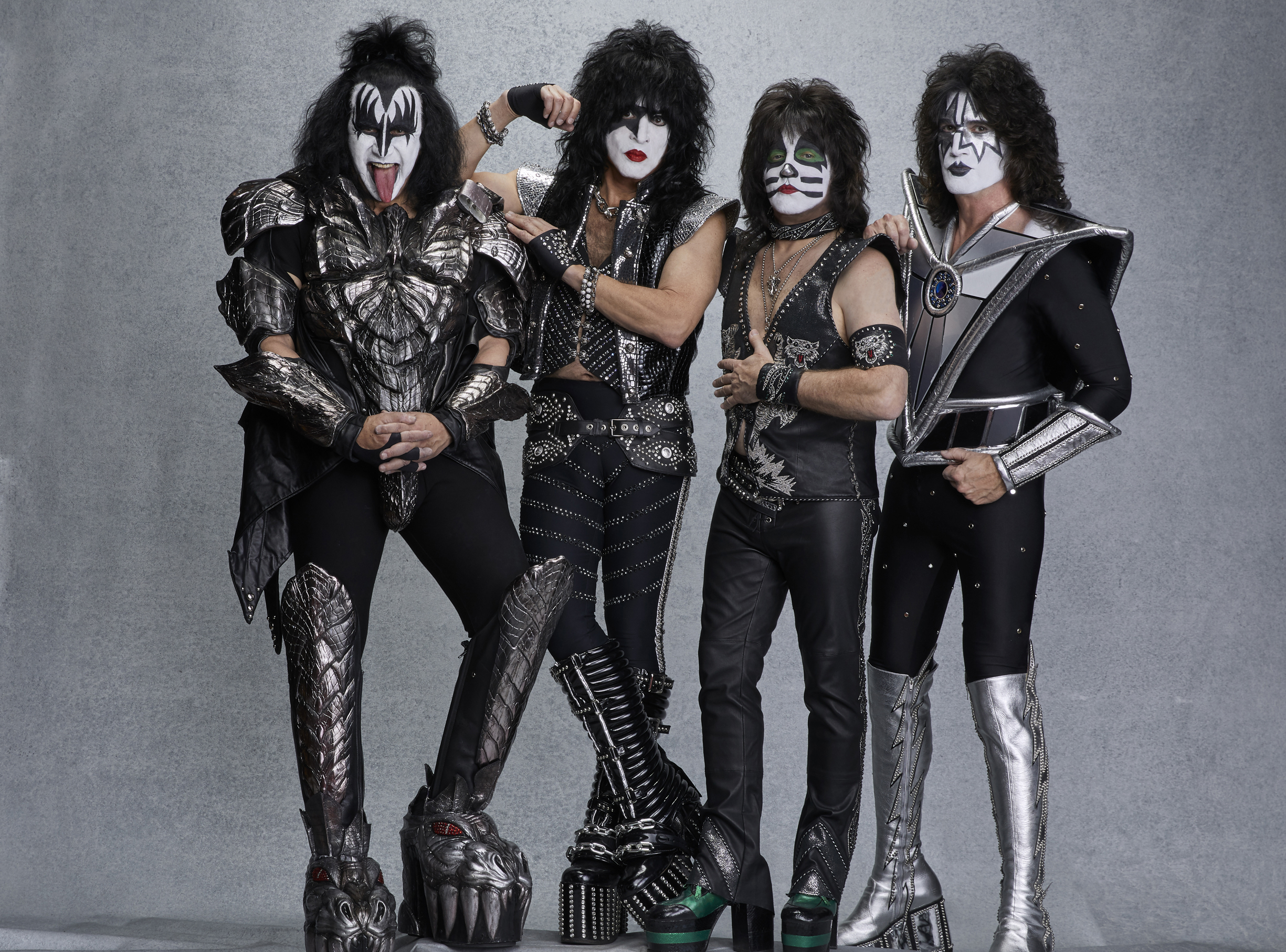
KISS today: Gene Simmons, Paul Stanley, Eric Singer, and Tommy Thayer. Photo by Brian Rowe/Courtesy of A&E Network.

Though he was born in 1973 – a bit too late to experience the impact of the band at its commercial and cultural peak – young D.J. Viola nevertheless became a hardcore KISS fan. Though he knows it wasn’t always easy for other kids to sneak that fandom past a certain gatekeeper.

“To be a fan, it depended on what age you were when they hit the scene and how protective your mom was. Not many suburban moms thought this was a good idea to be exposed to!” he laughs. “But once you’ve experienced KISS, there’s no way you go back. It was the soundtrack of so many good times in my life. In the documentary, Paul talks about no matter how big the KISS Army fandom got, it was still like being a member of the Black Sheep Society.”

The bombastic, fire shooting-and-breathing, makeup wearing, and costume clad hard rock foursome is about to resume the pandemic-delayed “End of the Road” Farewell Tour. And the now 48-year-old producer and director Viola has been charged with helming the “definitive” documentary on the group. Biography: KISStory screens on the A&E Network, telling the story of the band, its various lineups, music, and cultural impact from their very beginning up until today.

KISStory Director D.J. Viola Photo courtesy of A&E Network/Used with Permission.

And it’s already got two exacting fans in KISS co-founders and remaining original members Gene “The Demon” Simmons and Paul “The Starchild” Stanley. Notorious for their tight grip on the image and presentation of the band, Viola—who has known Stanley for years—said the duo put no constraints on his vision.

“After the screening at Tribeca, Paul called me and said ‘No one has ever seen my band like this before.’ And that was a massive compliment, given they were [the subject] of like 30 odd docs before,” Viola says.

“I had to get a trust with these guys. And there was never any mandate or one single note from them that said ‘Please don’t go there.’ It was warts and all. They’ve always been in such control of the story before with a firm grasp on their brand. This was more personal.”

Viola says that he wasn’t even originally that intensely involved, but that the project had trouble “finding its footing.” So he stepped in to help more and direct segments and write scripts. Then he started combing through thousands of old interviews and stories about the band in books, magazines, newspaper articles, and video footage. Before he knew it, he became “The Guy.” With a career that has one foot in the scripted film world and one in the documentary arena, Viola has no question about which genre is more labor intensive.

“Documentaries are such long-haul jobs and take so much longer than scripted movies. This one was like making two full movies. And it was three years in the making!” he says.

“The legal on this project was bonkers. For the first part alone, we had to get 2,500 individual licenses for footage. And not just set a price, but get everyone to sign off on it. I may be leaving the industry after this. We’re still editing this stuff right now!” Mind you, Viola says this just five days before the worldwide premiere of KISStory.

Another challenge Viola had was getting Simmons and Stanley to break out from their well-worn and well-rehearsed stories of the band’s history and anecdotes. Even if it bristled them initially.

“I had to break that up. I wanted them to be introspective of their career rather than retrospective. The ‘hows’ and the ‘whys’ of things that happened and how they felt. I tried to bring the humanity to it,” Viola says. “Gene and Paul are icons, but you have to stop them and say ‘I already know that.’ And it was like ‘Did you just interrupt me? I am the DEMON!’” And then over time it turns into ‘Yeah, that’s OK.’”

In addition to all four current members of KISS: Simmons, Stanley, Eric Singer, and Tommy Thayer, Viola has other onscreen interviews with KISS acolytes and current big name rockers Dave Grohl and Tom Morello, manager Doc McGhee, producer Bob Ezrin, engineer Eddie Kramer, and more.

Not shown in new interviews onscreen – and sure to the consternation and conspiracy dabbling of many – are the band’s other two co-founders, Ace Frehley and Peter Criss. Their conflicts with Simmons and Stanley, especially over substance abuse issues, have let to them various times over the years to being fired or quitting.

Today, Thayer and Singer perform in their original’s “The Spaceman” and “The Catman” makeup and costumes. Frehley and Criss are heard in archival interviews, though both were approached to participate with new footage.

Stanley’s side, as he told Ultimate Classic Rock, is that fell apart when both wanted to be paid and have “final editing rights.” Ultimately, Criss also denied permission for the filmmakers to use any excerpt from the band’s biggest crossover hit, the ballad “Beth.”

“It comes down to…mastering and publishing and who the authors are. That song is written by three people, and two of them [Bob Ezrin and Stan Penridge] signed off on it,” Viola says. “By the time I got really involved, that ship had sailed. And I’m not getting to Peter, I’m getting to his team who says ‘Please stop bothering our client.’ But you can’t avoid [“Beth”] and the huge success and how it became mainstream to an audience who could not name another KISS song.”

Viola adds that Simmons asked him specifically to please not exclude the participation and importance of Frehley and Criss. “KISS exists because of those four original members and it continues with the four current members,” the director says. “I tried to balance [Frehley’s and Criss’s] stories as well. We did our best to still include them. To talk about the realities of the lows, but also celebrate the highs.”

Finally, the question must be asked: Would we still be talking about KISS today – much less as the subjects of such a long documentary – if it were based just on the music and not the makeup, costumes, stage show, and products ranging from KISS dolls, games, and comic books to condoms and even KISS coffins? (one of which Pantera guitarist and KISS superfan Dimebag Darrell was buried in?).

“Quite possibly. In a visual sense, they lend themselves to film. And that’s why the shows were the first big draw of the fanbase over the records. They have an incredible library of music. Paul says in the doc it’s hard for him when writers confuse stupidity with simplicity,” Viola says.

“A hard driving, perfectly placed beat and solo is an art form. Those songs hold up. They do have an impact sonically, but you can’t [deny] the show, and that’s of their making. But ultimately, everyone is at home at a KISS concert when the place is practically on fire and your eyes and your ears are bleeding. I don’t know how the fire marshal ever approves these shows.”

Well, one clue may rest in something the director tacks on at the end of the interview. “I asked Gene once how they got away, and still get away with it,” he laughs. “And he told me ‘No one ever believes the explosions are gonna be that big.”

This interview originally appeared at HoustonPress.com

Posted in Documentaries, KISS | Tagged , , , | 1 Comment

Miles Copeland Remembers the Police, Go-Go’s, Bangles, & Timbuk 3 in Memoir

Miles Copeland is ready to ride. From the Miles Copeland Collection.

Miles Copeland II was a longtime CIA operative in the Middle East and involved in all sorts of secretive spy missions from the 1940s through the ‘60s. And his son—Miles A. Copeland III—often had to use similarly delicate skills and negotiating tactics, only in the world of rock and roll from the 1970s through the ‘90s.

As either a band manager or record company executive (Copeland co-founded I.R.S. Records in 1979), he had a hand in guiding the early careers of R.E.M., the Go-Go’s, the Bangles, Squeeze, Wall of Voodoo, Wishbone Ash, the Cramps, the English Beat, and Oingo Boingo.

Most famously, he helped morph the Police (which featured his little brother Stewart on drums), from a scrappy pseudo-punk band to a stadium filling juggernaut that enjoyed massive commercial success.

Along the way, he had to invent his job and think on his feet, even if it meant going maverick or rubbing people the wrong way. Copeland recounts his career, dishing more than a Luby’s Cafeteria buffet, in his memoir Two Steps Forward, One Step Back: My Life in the Music Business (336 pp., $22.95, Jawbone Press).

Calling from California, Copeland says that he originally planned on writing a story-filled motivational/marketing book. But so many people had been on him “for years” to write a memoir, he switched the order. The forced downtime during the pandemic sped the process along a bit.

As a music fan, Copeland definitely had “ears.” In fact, there are two big hits that may not have ever been released had he not basically insisted: The Police’s “Roxanne” and the Bangles “Walk Like An Egyptian.” Copeland pushed for both to be released as singles, against the wishes of other executives and even some band members themselves.

“The Police were all into the whole punk thing and that’s how they were selling themselves. But then they recorded the album, it didn’t really feel like that,” Copeland says. “When it came to ‘Roxanne,’ it was a ballad and they didn’t want to play [the recording] for me. It was a love song that wasn’t angry. And the minute I heard it, I knew it was special, so I got A&M to put it out.” “Roxanne” became the band’s first single, and it broke them in the U.S.

As for “Walk Like an Egyptian,” Copeland was even more flabbergasted at resistance to it. “I still scratch my head wondering how the record company could dismiss what seemed to be such an obvious hit single. But the word that came back was that it was ‘too quirky,’” he recalls. “To me, that’s what made it work! I had to cajole them into releasing it, and it just took off like a rocket.” The single’s success was also buoyed by its iconic video, played in heavy rotation on MTV.

Back in the day, the punk/new-wave/iconoclastic-friendly I.R.S. Records was almost second hand code for being cool. Like Stax or Def Jam or Subpop, some people bought records based on the label almost as much as the individual acts.

“A lot of the things we were doing, nobody else was, so that was filling a vacuum. I didn’t sit back and plot to make it an iconic label that represents a type of music,” he says. “I just saw bands that I liked and were interesting that people were neglecting and gave them a chance to put out records. And what I like can’t be that crazy—there must be other people like me out there!”

But not all of I.R.S.’s records were critical successes. One anecdote Copeland tells involves the English group Alternative TV. When the band turned in their record Vibin’ Up the Senile Man (Part One), Copeland heard nothing but odd noises, snippets of conversation, and the occasional musical instrument. He assumed a tape machine had just been left on accidentally.

No, leader Mark Perry told him, that was the record (you can judge for yourself here). Some have compared it to Lou Reed’s Metal Machine Music, a disc comprising mostly of shrieking guitar feedback that Reed purportedly turned in just to fulfill a contract and as a final “fuck you” to his record company.

“Unlike that one, Vibin’ was supposed to be a real record from a real artist, and we sold it as such. However, it turned out to be an unmitigated disaster. I think it now stands as the worst record ever recorded. And I had the luxury of putting it out!” Copeland says. “My sons didn’t believe me until they looked it up. I think they probably lasted three minutes!”

I.R.S. artist Timbuk 3, the Austin, Texas duo consisting of married couple Pat and Barbara MacDonald, scored a Top 20 hit in 1986 with “The Future’s So Bright, I Gotta Wear Shades.” Copeland said he fielded offers totaling $3 million (or about $6.7 million today) from several companies including Ray Ban, Ford, and Clairol who wanted to use the song in their TV commercials. The band turned them all down, citing artistic integrity.

Ironically, Copeland was responsible for somewhat shifting band (and public opinion) on that very topic in 1999 with the video for Sting’s “Desert Rose.” It featured the artist wandering the Mojave Desert in a Jaguar S-Type car. Looking at marketing synergy, Copeland negotiated a deal with Jaguar, giving them the video for free to use in the car company’s massive commercial campaign. It gave the song huge exposure and made it a hit. Copeland says he also pushed for Algerian raï singer Cheb Mami to appear with the memorable, exotic backing vocals.

“Prior to that, it was a no-no for an act to place a song in a commercial, particularly a new one. Levi’s had bought old songs for a few, but this was unprecedented until Sting and I did it,” Copeland says. “And when that was a huge success, people woke up and you saw the Rolling Stones and other big artists do it.”

Copeland says he lined up a second, $10 million commercial deal for the next single, “After the Rain.” But Sting balked, hoping to have a hit without the additional exposure. He was wrong. Nevertheless, Sting still fired Copeland in 1999.

Copeland says he’s very happy that the Go-Go’s are being inducted into the Rock and Roll Hall of Fame, and was interviewed for the recent documentary which many people believe upped the band’s profile and helped lead to the nod. Copeland points out that they are still the only all-female band to have a #1 record (debut Beauty and the Beat) on which they wrote and performed every song.

Today, Copeland owns booking and multi-media agency Copeland International Arts (CIA…get it?). But rather than rock and roll, most of the acts he’s involved with are of the world music variety like Celtic Crossroads, Otros Aires, Zohar, and the Bellydance Superstars. In a way, he’s come full circle with both the agency’s name and the music he grew up around during his youth in Syria, Egypt, and Lebanon, where his father was stationed.

“There’s all sorts of interesting music all around the world, and in the back of my brain, I had an appreciation for the instrumentation. And when you mix that hardcore Arabic music with Western bass and drums, you see it in a refreshing way,” he says. “Look at the Police, combining punk and pop. You wouldn’t normally put those two together, but sometimes it can really work.”

As for the band with whom he had his biggest success, Copeland had no part in the band’s massively successful 2007/08 reunion tour, and not by his choice. When asked about relations with members Sting, Andy Summers, and his brother Stewart today, Copeland demurs.

“I think the reality is you’ve kind of been there done that. Sting is one of these people that you get to the top of the mountain, and then he’s looking at the next mountain. He’s not one to look back,” Copeland says. “And Andy and Stewart are doing what they’re doing, and I’m sure they’re happy about that. I’m doing what I am, and I’m happy. I’m into the present and what’s going to happen next. I mostly watch politics now and what’s going on in this crazy world!”

This article originally appeared on HoustonPress.com

Posted in Bangles, Books, Go-Go's, Police | Leave a comment

Dennis DeYoung Wraps Up Recording Career with Nostalgic Yet Timely Release

Dennis DeYoung rocks into recording retirement, but is ready to hit the road again next year. Video screen grab/Courtesy of Frontiers Music s.r.l. & Dennis DeYoung.

He thought he was done making new music. Finito. End of the Road. When Dennis DeYoung released what he was calling 26 East last year, he fully expected it to be his final studio album in a long and storied career that stretched back to 1972 with the first Styx record and through his solo career.

After all, the songs were drenched in nostalgia. And the closing track, “A.D. 2020,” not only quoted from his former band’s hit “The Best of Times,” but ended with these words: “And so my friends/I’ll say goodbye/For time has claimed its prize/But the music never dies/Just listen and close your eyes/And welcome to paradise.” 

Well, DeYoung’s label, Frontiers Music, had other ideas. There were plenty of other tunes leftover from the sessions and, well, DeYoung might want to write a few more during quarantine. So that title became an optimistic 26 East Vol. 1. Now, the company—and DeYoung’s fans—get their wish for a little extra something something with last year’s 26 East Vol. 2.

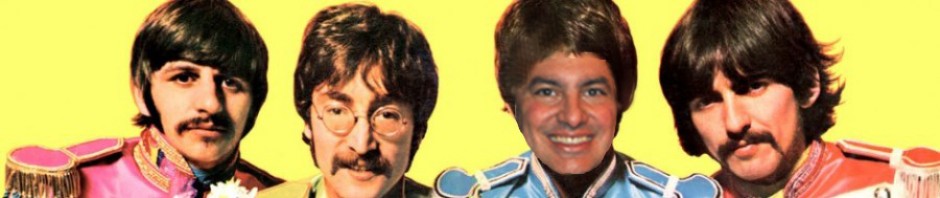
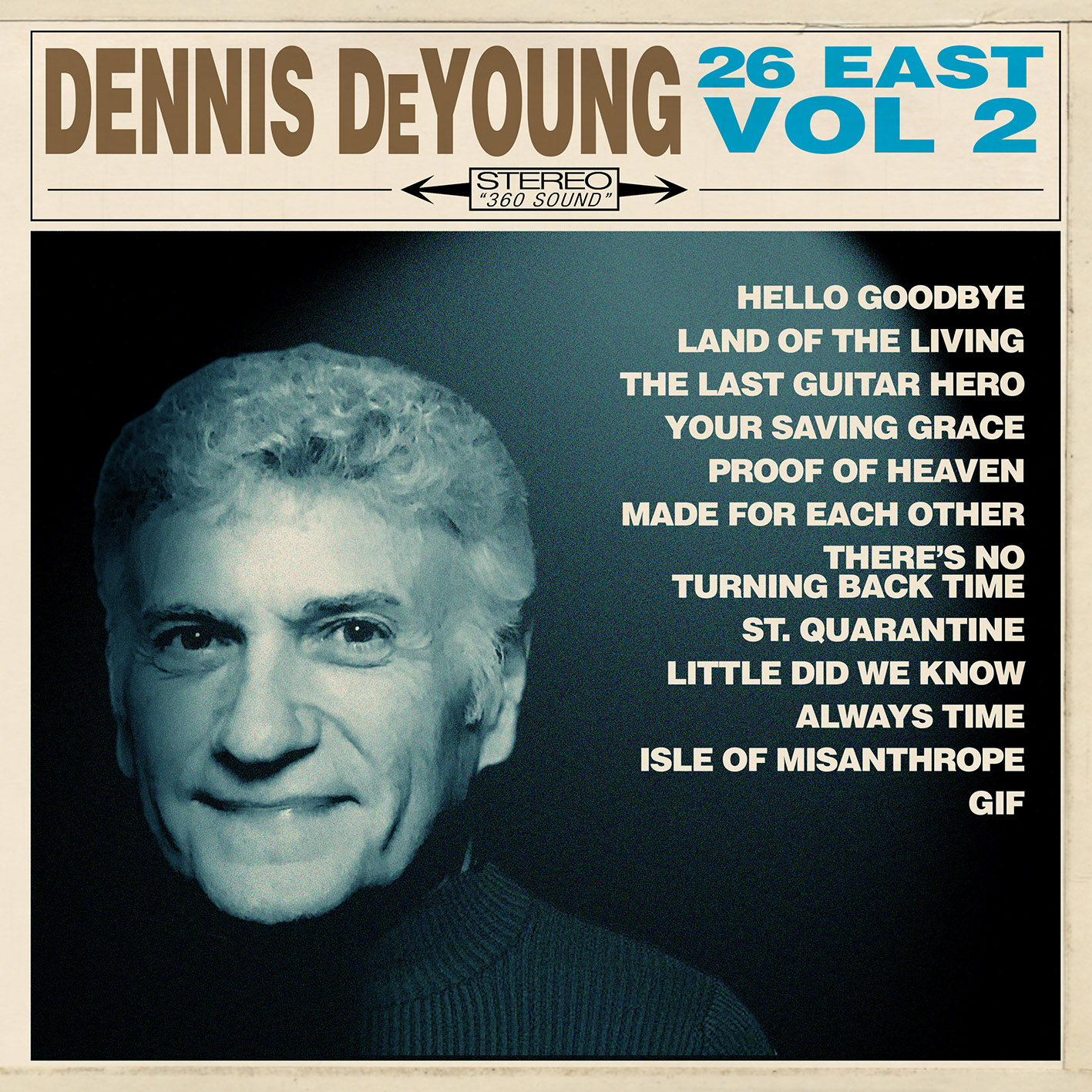
The cover of 26 East Vol. 2  is a visual nod to the American release of Meet the Beatles and opening track “Hello Goodbye” a gushing love letter to the Fabs which features plenty of Easter Egg lyrical and musical quotes from the catalog.

DeYoung is one of hundreds of musicians who had their “Beatles on Ed Sullivan” moment in February 1964 that set them on a career path to rock and roll. But how would the 74-year-old DeYoung tell a 17-year-old teen today how a band simply playing a few songs on TV was such a big deal and seismic shift in the culture?

“Well, it’s not a teen’s fault at all. They can’t understand. They live in the culture of ubiquity where everything is available all the time. Imagine what’s in that kid’s hand with [a phone]. It’s the power of kings,” DeYoung says, pushing his palm into the Zoom camera for emphasis.

“And I say, that dooms mankind. There is no [singular] culture anymore. There were three channels to watch on TV back then. Top 40 radio played all kinds of music, but you had to wait for it. Now, you can listen to music from an Albanian, one-legged, heavy metal poetry reading. There was a oneness to humanity which is being disintegrated by subcultures. So a teenage boy couldn’t understand that any more than what it would be like to be a father.”

The instant ability to absorb and delete or create music, or how technology can replace what someone had to learn to do before, is also a point made in “The Last Guitar Hero.” He got Tom Morello (Rage Against the Machine, Audioslave) to provide a searing solo and outro. And it oddly ties in Adam Sandler.

DeYoung says that Sandler, a noted Styx fan, was hosting his annual Hannukah/Christmas party at which he played. The two talked and Morello explained that while his early interests were KISS and heavy metal, he also got heavily into Styx and saw several concerts back in the day. That inspired DeYoung to write the song with Morello in mind as both the subject and a contributor.

“I listen to what they claim to be [mainstream] rock today, but the guitar player is a lost item. It’s all synthesizers and producers. I just saw a video of a 4-year-old Japanese kid playing Eddie Van Halen. How does that happen? It’s because you can watch a video tutorial and learn how to do anything.” DeYoung says. “Except plumbing. I still don’t understand that.”

Of course, a theme of the Styx’s 1983 album Kilroy Was Here and the song “Mr. Roboto” was indeed how “too much technology” can dehumanize people. Or provide too many options to where it becomes overwhelming. DeYoung says it’s all coming true.

“Look at Marky Mark Zuckerberg. He decides that his mission is to connect everyone. I thought ‘Have you MET everyone? It’s a revolution and we’re living through it,” he says. “And it’s exposing the bad angels in mankind because it gives them free reign to say and do anything, cloaked in anonymity. There’s no consequence, and that’s dangerous. I say bring back the fistfight. You walk into somewhere and you start shooting your mouth off, you might get your nose punched.”

Finally, there’s a trio of songs that the listener can’t help but connect to commentary on a number of political and social issues of the past few years: “Little Did We Know” (about missing sign that point to destruction), “Isle of Misanthrope” (an allegorical tale about ruined civilizations), and “St. Quarantine.” In the last of those, DeYoung has two characters seemingly on opposite sides of the quarantine/vaxxing/mask debate state their cases.

DeYoung is more obtuse in his lyrics, often hinting rather than stating. That’s because he wants listeners to shape their own views of the songs. “All I’ve done with songwriting, after I understood how to do it, was find chords I like, put notes on them that I like, and then put words on the notes. And then I give you my point of view hoping that you the listener find yourself in my story,” DeYoung offers.

“After I make them and send them out into the great ether, they belong to the listener. And it’s what they make of those songs that matters. My lyric combination has always been a combination of the literal with imagination. I like to leave some room for the fans to decide what I’m saying.”

Many commentors on DeYoung social media have noted that leadoff single “Isle of Misanthrope” harkens back to the very early Styx albums that had a more Prog Rock bent. DeYoung says it’s that genre’s “mysticism” in lyrics that sometimes left him cold. “I never knew what the [Prog bands] were talking about most of the time, it was all mood. But in ‘Isle,’ I’m trying to spark an interpretation that could be completely different from what I intended.” He also gives credit to Jim Peterik (Survivor) who co-wrote some of the tracks on both volumes.

DeYoung says “God willing and the creek don’t leak,” he plans on hitting the road, but not until possibly 2022. “I’m gonna sit back and wait. I’m gonna watch. The first bands going out on the road now? They all have big alimony payments, that’s my theory,” DeYoung – who has been married to his wife Suzanne for 51 years, says.

In fact, given the amount of hit songs that DeYoung wrote about his wife (which include “Lady,” “Babe,” and “The Best of Times,”) she could give Patti Harrison/Clapton a run for Rock’s Greatest Muse. DeYoung notes that “Lady” was originally not even a hit for the band, but it’s ballad was a departure sound for the group, and he knew it was meant for something bigge when concert audiences responded extremely well to it.

“Nobody wants to be chained down to this thing, but it’s not over. We just need some humility. We don’t know everything, and Scientific American doesn’t either. I’m not putting myself or my fans in jeopardy. I’ve had a family though all this, and I’ve found during this thing that I value things other than what I do professionally.”

The album’s closer, “Grand Finale,” brings DeYoung’s recording career and personal life somewhat full circle. It features the drumming of his son, Matthew, who uses a cymbal given to him by John Panozzo, the late drummer and co-founder of Styx. DeYoung had to supervise recording remotely via camera.

“Matt and John were really close when John was alive, and that’s why he plays drums. I had to watch the recording on an iPad through Facetime or Zoom, which isn’t ideal,” DeYoung says. “But it was great having him do that. And I didn’t know he was going to use John’s cymbal.”

The track also has a lyrical nod to Styx’s “Come Sail Away,” with its very last words a quote from “The Grand Illusion”: “And deep inside we’re all the same/All the same.”

“The last words I sing are the words that meant so much to me in 1977. You may aspire to great success or be a big shot or be an intellectual giant or just a mook trying to get through life. But we’re all the same,” he says. “And the pandemic has shown us that. And when you go out for the last time, it’s good to have someone next to you that loved you and cared about you and gave meaning to your life. And I write about that.”

This interview originally appeared at HoustonPress.com

For more on Dennis DeYoung, visit DennisDeYoung.com

Posted in Dennis DeYoung, Styx | Tagged , | Leave a comment

Styx Rocks Again While Heading (on Purpose!) Into a Crash

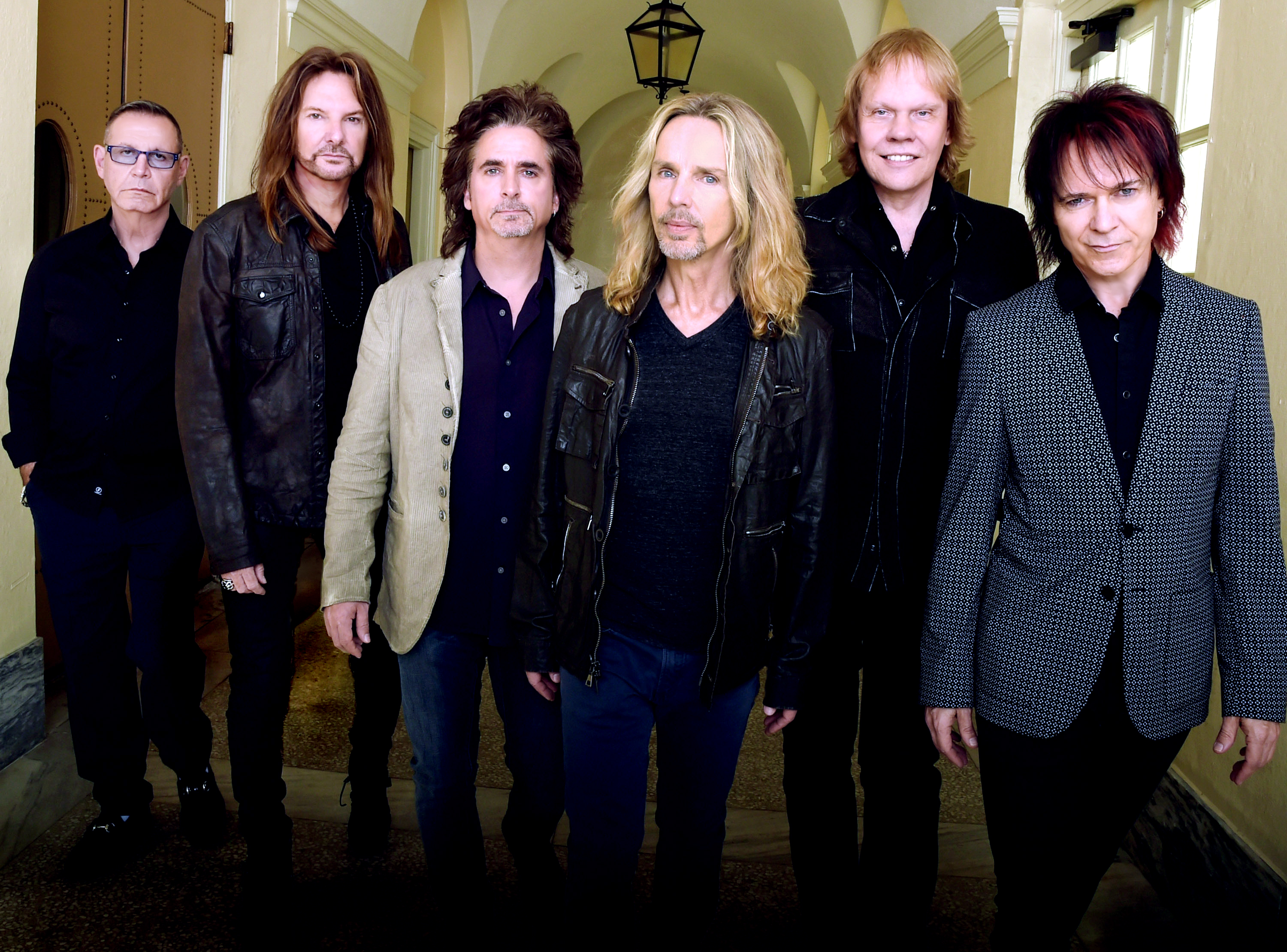
Styx today is: Chuck Panozzo, Ricky Philips, Todd Sucherman, Tommy Shaw, James “JY” Young and Lawrence Gowan. Photo by Rick Diamond/Courtesy of ABC PR.

It’s 8:30 a.m. in Houston when Lawrence Gowan calls from his home in Toronto, Canada, which is a decidedly un rock-and-roll time for an interview. And even more so when the singer/keyboardist for Styx says he’s been up since 6:30 a.m. EST, already completed another interview, and run down the set list for the band’s upcoming summer tour at his home keyboard.

“I was definitely not a morning person before, but I have become one over the past 14 months. Something happened in March of last year, I can’t remember what. It’s converted a lot of our old habits!” Gowan says.

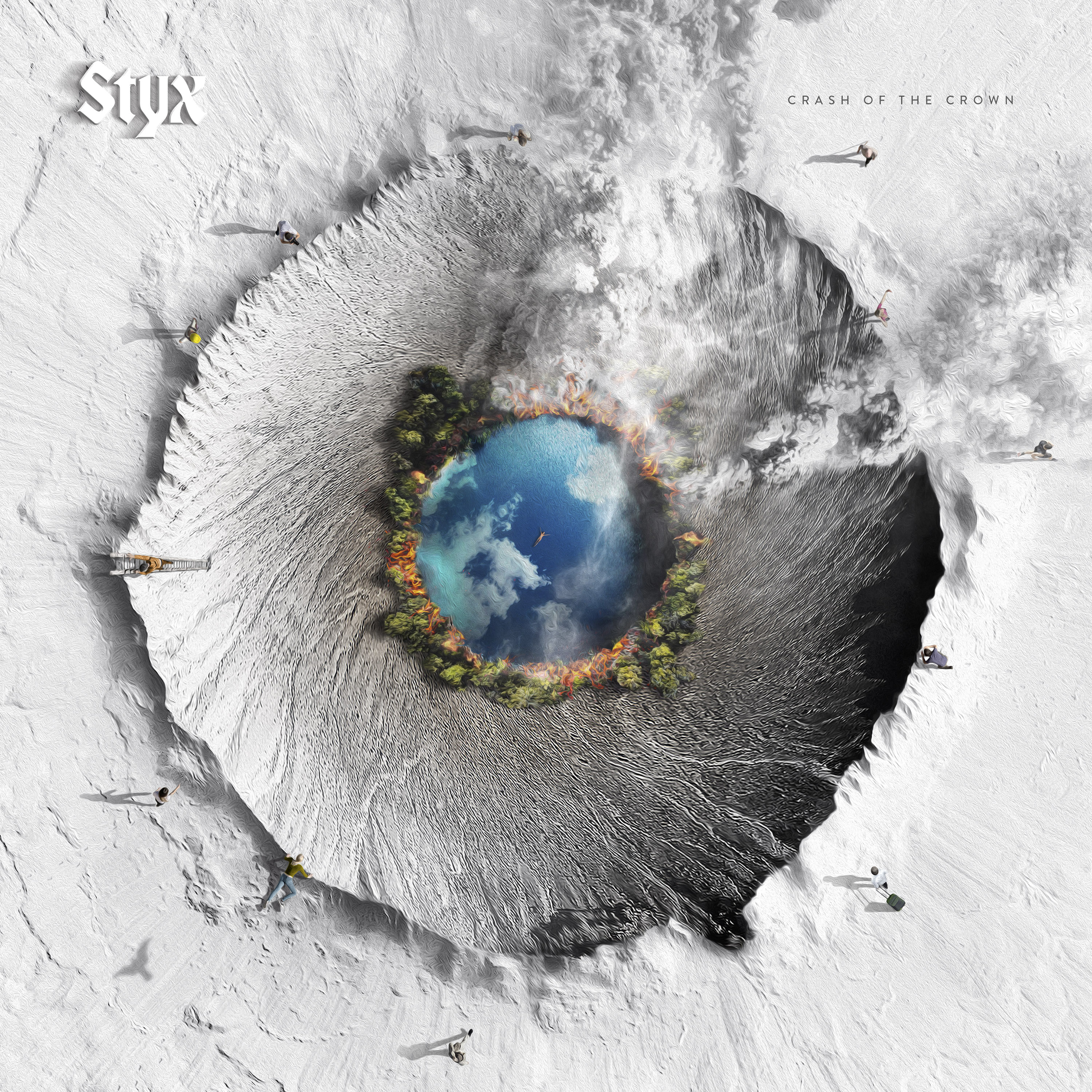
He’s talking because last year Styx released Crash of the Crown (Alpha Dog 2T/UMe), the band’s 17th studio release since its 1972 debut. It comes just four years after the space exploration concept effort The Mission, but you’d have to go back to 2003 for Cyclorama for the band’s previous all-original effort and Gowan’s first with the group.

“We’re thrilled with it. It was well on course before the pandemic, but it gave us the opportunity to put in a few extra songs,” he says. The album was done in a sort of Frankenstein recording process.

Gowan had already laid down much of his vocals and playing. Other members made the trek to bandmate Tommy Shaw’s Nashville studio, and the drum tracks were all done in another home studio.

“We thought, like everyone, that the pandemic would last a few months. But when it became obvious things would stretch out, we found new tools that we didn’t have before,” Gowan offers.

“I didn’t know what a Zoom call was or what Audio Movers was, which is an app that allows someone to play in a studio and someone in another studio to hear them and play along simultaneously,” he continues. “Other than breathing the exact same air—which is exactly what you’re not supposed to do during a pandemic—we’re having the same experience. So it went from an obstacle to an opportunity. And I finally got to play my mellotron on a Styx record!”

In addition to Gowan, the current lineup includes founding members James “JY” Young (lead guitar/vocals) and Chuck Panozzo (bass, who performs and records as his health permits), classic lineup member Tommy Shaw (vocals/guitar), with Todd Sucherman (drums) and Ricky Philips (bass).

There’s not a unifying story or concept in Crash of the Crown as there was for The Mission. But there are themes of perseverance, positivity, and fighting against bad times in tracks like “Hold Back the Darkness,” “Sound the Alarm,” “Long Live the King,” and “Coming Out the Otherside.”

And while Styx has never been a “political” band, it’s hard not to interpret at least some intention in songs like “A Monster,” “Save Us From Ourselves,” and “Common Ground” in light of the amplified political and social divisiveness and partisanship of the past five years. Gowan says that’s on purpose.


“You want a song to say something. But more than that, you want to personalize it so people can find themselves in the song. That’s always been a [hallmark] of Styx’s music and why it’s stood the test of time,” Gowan says. “I’d say there are veiled comments that run through the songs. Like little philosophies or commentary on the sidelines. Then you put a great melody to it, and suddenly people are drawn to it. But they can make of it what they will.”

Tommy Shaw and Crash of the Crown producer, songwriting partner, multi instrumentalist (and effective seventh member of the group) Will Evankovich have the bulk of writing credits. And Shaw takes the most vocals (though the title track features all three of the band’s singers). Gowan admits it’s a challenge in a group that has three singer/songwriters plus Evankovich to have a final product with balanced contributions from each person, yet still sound like a Styx record.

If Crash of the Crown has a centerpiece song, it’s “Common Ground.” A collaborative effort between Shaw, Evankovich, and Gowan, it tackles the subject of ambitious youthful dreams gone awry in the coldness of reality, and how strident beliefs and confusion of intentions can rip people apart.


“That’s one of my favorites on the record. And let’s face it, it’s a timely song,” Gowan says, adding that Shaw first played him the hook of the melody about four or five years ago on a tour bus. “As the keyboard player and the classically trained guy, I’m always trying to push the Prog Rock side of Styx. So we made it more musically inartistic. In Styx songs like ‘Fooling Yourself’ or ‘Come Sail Away,’ the scene changes very quickly [musically and lyrically] within the same song. That’s Prog at its core!”

Lawrence Gowan has been in Styx since 1999, yet the fanbase continues to be somewhat fractured since the dismissal of former lead singer/keyboardist and chief songwriter Dennis DeYoung. Despite two decades of bad blood and recriminations, DeYoung has long advocated doing a reunion tour for the fans. Shaw and Young have staunchly taken a hard pass, though, even if they have added fan favorite (and DeYoung staple) “Mr. Roboto” to their set list.

Styx begins a short summer tour on June 16 in St. Augustine, Florida, two days before Crash of the Crown’s release (so far, there is no Houston date booked). Just as they did for The Mission tour, several cuts from the new record will go into the set list, though Gowan says the band may not at least at first preface each by saying “and here’s one of our new tunes…”


That’s long been code for the casual, “greatest hits” fan to leave their seat and head to the bathroom or beer stand. And unfortunately, new music from classic rock bands will rarely get played on radio (though SiriusXM DJ Jim Ladd has been playing the title track on his Deep Tracks channel show).

On The Mission tour, Gowan says the band would play that record’s lead single “Radio Silence” with no introduction. And as it sounds very much like “classic” Styx, the band would be bemused by the looks on audience member’s faces.

“You’d see one person look all confused trying to think what [older] record the song came up that they couldn’t remember, or if it was from The Grand Illusion era. And another person who had the new album go ‘YEEAH!’” Gowan laughs. “And by the end of the song, those two were in agreement.”

The last time all members of Styx were in the same room at the same time was February 2020, and they’re anxious to get back out on the road. “For a band that has played 100 shows a year for 20 years to suddenly not do anything for over a year is daunting, quite honestly,” Gowan sums up. “But that first concert is on paper. And we’re going to rehearse our asses off for a week before that show!”

For more on Styx, visit Styxworld.com

This interview originally appeared at HoustonPress.com

Posted in Lawrence Gowan, Styx | Tagged , | Leave a comment

Mercy, Mercy She: A Groupie’s Wild Child Story

G.T.O.s Pamela Des Barres and Miss Mercy, with friend Ricky Klampert, at Marlon Brando’s house, 1968. Photo by Andee Nathanson/Courtesy of SRO PR.

In the late ‘60s and early ‘70s, Mercy Fontenot was anything but a shrinking violet. In her alter ego as “Miss Mercy” – sporting distinctive raccoon eye makeup and dressed in layers of flowing gypsy clothes of lace, leopard prints, and feathers (usually purchased at local thrift shops) – she was a flamboyant rock and roll scenester. And she seemed to be everywhere.

There she was at Ground Zero of the Summer of Love in San Francisco’s Haight Ashbury district before later decamping to Los Angeles. She hung out at parties, backstage, and in the studio with the likes of Jimi Hendrix and the Rolling Stones. She was at the infamous Altamont concert, even after doing a tarot card reading for the band that seemed to predict death and disaster—which she kept to herself. 

She popped out of a cake at a party for Alice Cooper while loaded on PCP. And most famously, she was part of the G.T.O.’s – or “Girls Together Outrageously.” The all-girl “groupie” group (and more on that term later) put together by Frank Zappa who put out one album.

Miss Mercy’s wild ride and life in and out of rock and roll is told in the new autobiography  Permanent Damage: Memoirs of an Outrageous Girl (208 pp., $27, Rare Bird Books). It was written by Miss Mercy with music journalist and SiriusXM Volume West host Lyndsey Parker.

“I’m so close to it and having worked on it for so long and knowing Mercy so well, it takes another person to go ‘Oh, yeah, this story is completely bonkers’ to make me realize that!” Parker says from Los Angeles. 

The pair first met at one of Pamela Des Barres famous house parties at her “fabulous hippie pad in L.A.” Des Barres is probably the world’s best known groupie with her 1987 memoir I’m With the Band and related projects. Des Barres was also Miss Mercy’s G.T.O.’s bandmate/friend and later, a much-needed benefactor when things weren’t going so well in her life.

At that party in 2013/14, Miss Mercy had recognized Parker from some of the latter’s local TV appearances, and a fast friendship was born. “Pamela’s parties always have a very colorful cast of characters. And one of the most fascinating in five different layers of leopard-print outfits and all of her black eyeliner was Miss Mercy,” Parker offers. “She yelled at me from across the room and said ‘Hey! I’ve seen you on TV! I like you!’” 

They became Facebook friends and Mercy was always reposting Parker’s articles and talking on the phone, regaling the younger woman with one crazy story after another about her earlier life. Stories that all of Miss Mercy’s friends told her should be in a book. Finally, during a dinner at a Mexican restaurant with “a couple of margaritas in her,” Parker boldly rose to tell the assembled that she would write the book. 

The next morning, Mercy called and asked when they would be starting. And more than 60 hours of taped interviews began in earnest in early 2017.

The stories came fast and furious, as Mercy recounts her encounters with acts like those mentioned above along with Gene Simmons of KISS, Arthur Lee of Love, Shuggie Otis, Jobriath, Ike Tuner, Gram Parsons, and Janis Joplin. Then there’s the book’s Marquee Batshit Crazy Story: Chuck Berry. 

Before a concert – and after he and Miss Mercy had sex (of which she’s pretty sure – though she was high at the time), Berry gave her a bucket and asked her to, uh, defecate in it while he watched. She acquiesced, and handed him the bucket back. Then when it was time to go onstage, she carried his guitar case for him, also at his request.

Co-author and friend of Miss Mercy, Lyndsey Parker. Photo by Renee Silverman/Courtesy of Lyndsey Parker.

Even Arnold Schwarzenegger shows up. After Miss Mercy saw his picture and blatantly pursued him, she ends up on a basement weight room with him, Lou Ferrigno, and another bodybuilder. But when the future Conan gets aggressive sexually, she freaks out and begs off. Oddly, she assumed that all bodybuilders were gay.

In the book, Miss Mercy admits that drugs have made some of the memories fuzzy, but Parker says she never saw herself in any sense as a victim or taken advantage of. She just wanted to be part of the action, even when the action got freaky. 

“I thought ‘You’ve done so much risky and stupid shit!’ The book has a lot of sadness, but she wanted it to be fun. She thought her life was fun and didn’t look back on it feeling sorry for herself,” Parker says. “She made a lot of bad and foolish decisions that didn’t go well for her, but there were also things from her childhood she couldn’t help. The last thing she would want is for someone to close the book and go ‘Oh, poor Mercy.’”

In pre-rock days, Miss Mercy’s life was often unhinged with her family, and there were some assaults and abuse. So reinventing herself with a new outrageous “character” was a form of escape. And even in the wild childs of the G.T.O.’s, Parker says Miss Mercy was the “most outrageous and possibly least put together.”

But while her more slender, blonde, and sexually omnivorous G.T.O.’s and friends were bedding rocks stars one after another (or, in the case of the Plaster Casters, making molds of rock stars’ dangling prepositions), the book makes clear that sex was never Miss Mercy’s prime motivation. Her relationships – with both men and women – tended to be more intense and all-consuming. And sometimes didn’t involve the actual act of fucking at all. 

“Although she had affairs and one night stands with rocks stars and even married one, getting into bed with them was never her main agenda. She wanted to  be part of rock history or get in on the ground floor of someone’s fame and evangelize for them,” Parker says. 

Miss Mercy in her punk rock days, 1981. From the estate of Mercy Fontenot/Provided by SRO PR.

“Some of it was her body issues and she was a closeted bisexual whose most intense feelings were probably for women. She was in her late ‘20s before she had a sexual encounter that blew her socks off, but it was just one time with the guy. When I asked her why it was only once, she was like ‘I did that. I don’t need to do it again.’”

The term “groupie” of course, has a wide-spanning definition. And it’s role has morphed over the decades from the eras of Free Love to the Me Decade to #MeToo. A groupie could also be anyone from the local girl who will do any sort of sexual favors no matter how seemingly degrading to get to the band. Or, as Kate Hudson’s Penny Lane character in the movie Almost Famous claims—act more as muses or “band aids.”

“It is a complex term. Mercy said she felt it changed in the ‘80s when MTV and the [hair metal bands] came around,” Parker says. “I’m not trying to slut shame, but they would go through the roadies and the bus drivers to get to the musicians, as opposed to being invited to be part of the entourage, part of the party.”

And that party could be mobile as well. Nothing was going to stop Miss Mercy from having a good time or being in the action, even geography. “She was very strong minded and hard headed and spontaneous,” Parker continues. “She just took off to Memphis [on a whim] because she liked Stax soul music and ended up working for the Bar-Kays and sleeping with Al Green. Who does that?”

The book also details Miss Mercy’s rocky marriage to and divorce from musician Shuggie Otis (they have a son), her involvement working with some punk rock bands at the genre’s dawn, and her many, many episodes with drugs. Make no mistake, Miss Mercy loved her heroin, her cocaine, and her meth. 

But a little over two decades ago, Miss Mercy decided she had enough and quit cold turkey. She has spent that time since working for Goodwill in the acquisitions department (seemingly a perfect fit for a woman whose entire visual persona was thrift store chic). Her co-author says that Miss Mercy was very excited for the release of Permanent Damage and the ensuing media attention, book signings, and interviews that would follow. 

Tragically, none of that will come to pass. Miss Mercy died on July 27, 2020 at the age of 71 from cancer, having signed the book contract just nine days prior.

Pamela Des Barres and Miss Mercy, 2017. Photo by Daniel Vega-Warholy/Courtesy of SRO PR.

Parker—who gets very emotional on the phone just talking about it—says that Miss Mercy did get to approve a rough draft, around the time she got news from her doctor that gave her a window of life from four months to two years.

“It’s so bizarre to me Bob, my mind went straight to two years. She defied death so many times, I just assumed it would be the longest period possible,” Parker says  quietly. “I fully expected he to be here because she was so resilient. She had cancer and told almost no one. She didn’t want people to know she was sick. And she died alone at a friend’s house. But she went out knowing the book was coming out.”

Parker said that she knew something was off in the weeks leading up to her death when she emailed a video of a warm greeting to her that fellow Frank Zappa protege Alice Cooper had sent her. Normally, Miss Mercy would gush to Parker and repost it on her Facebook page (she was a big user of Facebook). 

But this time, all Parker got back was a thumbs up icon. And Miss Mercy’s texts about finalizing the contract became more urgent, for a reason that Parker now knows: she knew she was dying. And when Parker’s phone lit up and the caller ID said “Pamela Des Barres,” her gut told he the worst had happened.

The next day, Rolling Stone ran an obituary—something Parker says Miss Mercy would have been “very excited” to know about. And her photo was even shown later at a Grammy-related “In Memoriam” segment. But the irony is still not lost in that a woman who unapologetically sought fame and attention will miss the biggest opportunity for it nearly in five decades.

“It’s strange that she died at 71 from natural causes when she could have very easily died at 21 from so many other things. It feels weird doing an interview without her,” Parker says, before apologizing about getting emotional. “She should be here for this. I really miss her.” 

This interview originally appeared at HoustonPress.com

Posted in Books | Tagged , , | Leave a comment

Jack Blades of Night Ranger Says You Can Still Rock in America—Even in a Pandemic!

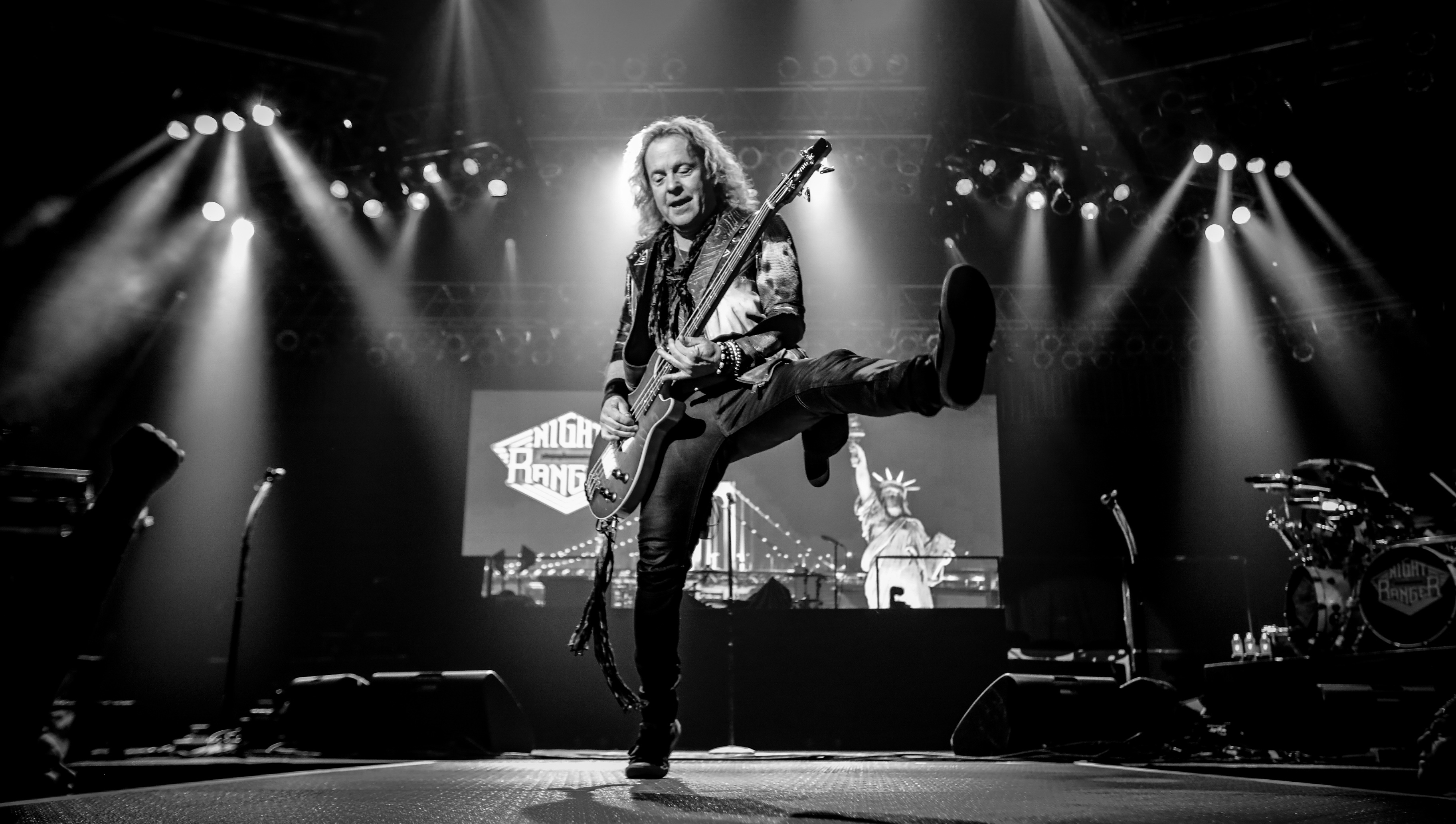
Jack Blades onstage with Night Ranger Photo by Kelcee Hardwood/Courtesy of Blades Entertainment.

Note: This article originally appeared in May 2021.

As live concerts slowly start up again and bands cautiously plot summer and fall tours, it may be hard to tell who will be more excited: those standing in front of the stage, or those on it. For Jack Blades, singer/bassist for classic rockers Night Ranger, their upcoming Houston show (the first in a series of May dates) can’t come soon enough.

“We did our last [pre-pandemic] show on March 12, 2019. And we call March 13 ‘The Day the Music Died.’ Because on that day, everybody on the planet cancelled everything!” Blades laughs. “We’re chomping at the bit to get out there again.”

And while the band has played a handful of shows since then, he says that Night Ranger really didn’t have to woodshed or rehearse much to get back in the groove.

“You mean play these songs again that I’ve been playing my entire adult life? I think we rehearsed enough in the ‘80s!” he laughs again. “We did go over some parts. But you forget how wonderful and important it is when the lights go down and you hit the stage. I forgot how much I miss it. It’s my life and my passion and everything. And it’s nice getting back together.”

And the headliner for this Houston show, Blades says the band can “dig deeper” into not only into their own catalog, but also play covers and songs they grew up listening to. The current set list includes “School’s Out” (a tribute to band friend Alice Cooper), “Crazy Train” (a nod to guitarist Brad Gillis’ stint with Ozzy Osbourne),” and the two hits from Blades’ time in Damn Yankees (“High Enough,” “Coming of Age”). He says it wasn’t a hard sell to his bandmates.

“Things don’t have to be rushed with a [headline] slot, we have so many songs we can play. Those [Damn Yankees] songs are just an extension of who I am, and the guys in the band do a killer job with them,” Blades says. “And Bro, there’s nothing like playing a hit for an audience when everybody sings along. Hands down, that’s a pretty amazing feeling.”

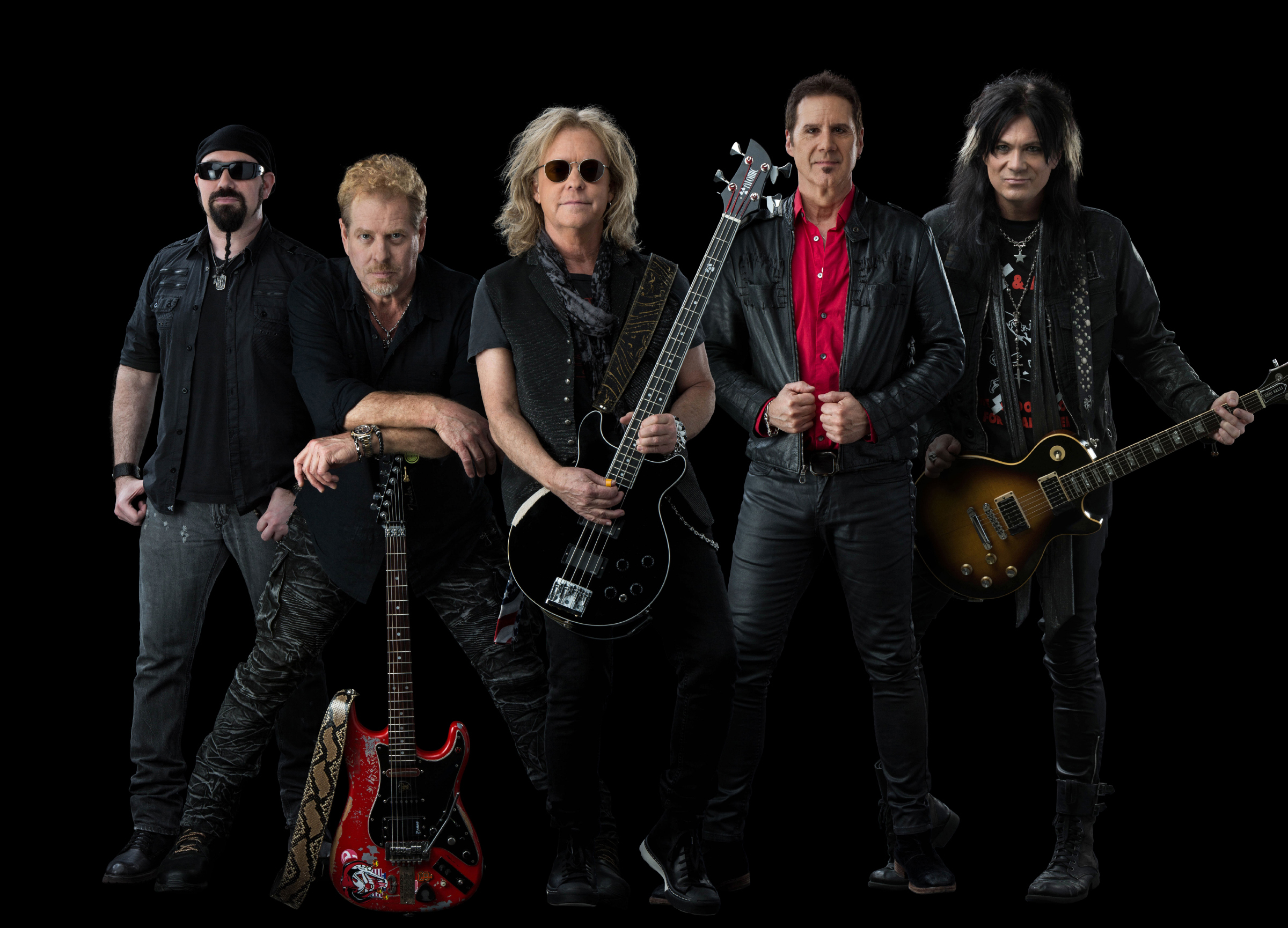
Night Ranger today: Eric Levy, Brad Gillis, Jack Blades, Kelly Keagy, and Keri Kelli. Photo by Jay Gilbert/Courtesy of Blades Entertainment.

The seeds of Night Ranger began when Blades and Brad Gillis (guitar) met while members of the Jerry Martini (ex-Sly and the Family Stone sax man)-led group Rubicon. After that band dissolved, the pair began putting together their own group, adding Kelly Keagy (drums/vocals) and Alan Fitzgerald (keyboards). In 1982 with the addition of Jeff Watson (guitar), they became Night Ranger and released their debut record, Dawn Patrol.

This classic lineup would stay together for much of the ‘80s, dropping hit rock singles on radio and/or in heavy MTV rotation like “Don’t Tell Me You Love Me,” “(You Can Still) Rock in America,” “When You Close Your Eyes,” “Goodbye,” and “Four in the Morning,” along with “Sentimental Street” the massive, monster power ballad “Sister Christian” (written/sung by Keagy and inspired by his actual sister).

Lineup changes and more records followed, and in 1989 Blades joined fellow classic rockers Ted Nugent, Tommy Shaw (of Styx), and Michael Cartellone (drums) in Damn Yankees, later playing in a duo with Shaw before returning to Night Ranger. He’s also currently in Revolution Saints, which released a record in 2020. The current Night Ranger lineup includes Blades, Gillis, Keagy, Eric Levy (keyboards), and Keri Kelli (guitar).

Usually closing their set is the classic rock anthem “(You Can Still) Rock in America.” Blades says he was inspired to write the song while on tour with Sammy Hagar for Night Ranger’s first album. At a stop, he went to a drug store and had picked up a bunch of music magazines. All of them featured pictures of then-hot new wave acts like Blondie, the Cars, Devo, and Flock of Seagulls, screaming hoary headlines of the “Rock is Dead!” variety. Blades then sat in his cheap hotel room in Springfield, Illinois, and the words came out.

“We didn’t see that, what the magazines were saying. We were out playing with Sam and the [venues] were full and the audiences were having a great time. I thought the whole thing about the magazine was wrong and said to myself ‘You can still rock in America!’ Then it was like ‘Hey! That’s a great idea for song!” Blades laughs. “We’re very grateful that our songs have stood the test of time and that one in particular is in everybody’s heads. People just jump up and sing it immediately, and I feel blessed about that.”

Blades also recalls a telling cartoon in (of all places) the alternative music-championing Spin magazine that showed two rock critics, with one of them professing a love for Night Ranger’s “Sentimental Street.” “Yeah,” the other critics sniffs dismissively. “Nobody likes them but the public.”

During the past year, Blades says that the band has used their time well, even if it’s not so original. “Well, like every other band on the planet in the least year, we put together an entire new album. Alice [Cooper] and I were joking that there were going to be 300,000,000 new albums released this year!” he says. The July release will be called A.T.B.P.O. (which stands for “And the Band Played On”).

“I think that title is pretty apropos with all the [pandemic difficulties] that have gone on and all the shit that’s going on in this country. Everything’s crashing! Everybody’s got to wear a mask! Everybody’s got to stay home! But the band played on!” he says “I haven’t had this much time off probably since before we formed Night Ranger, and you realize how much you miss it when you can’t do it.”

Unfortunately, usually new music from classic rock bands is met with a collective shrug from the casual “greatest hits” audience, and almost nonexistent on any radio station playlist, terrestrial or otherwise. But Blades likens Night Ranger to a certain big fish in terms of creative—and maybe physical—survival.

“It’s really like a shark. When it stops swimming, it dies. If I stopped creating, that’s the end of it, and it won’t be a pretty sight,” he says. “We’re lucky that we’re still getting the hi sign from [our fans] to keep doing it.”

For more on Night Ranger, visit NightRanger.com

A longer version of this interview originally appeared at HoustonPress.com
Posted in Jack Blades, Night Ranger | Tagged , | Leave a comment

Ric Lee Still Drumming Away…55 Years After!

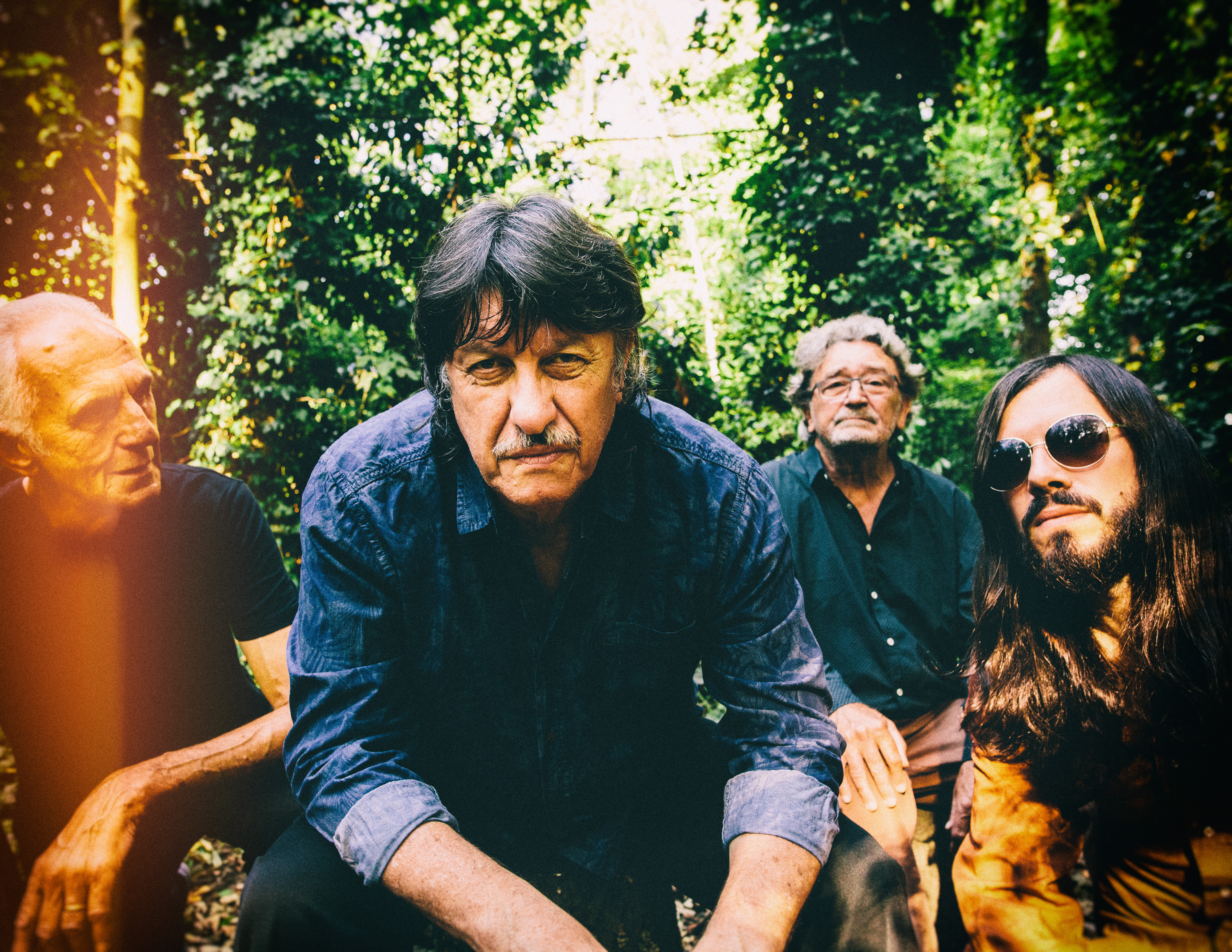
Ten Years After today: Colin Hodgkinson, Ric Lee, Chick Churchhill, and Marcus Bonfanti. Photo by Rob Blackham/Courtesy of Chipster PR

For more than a year now, musicians unable to play live shows have been forced to utilize virtual venues, performing everything from solo acoustic shows filmed with a shaky iPhone to full-blown professionally shot band concerts on large stages. It also means that Ric Lee, drummer for classic rockers Ten Years After, has to give drum lessons to his students two days a week over Zoom. And it’s not quite the same.

“It’s awkward at times. Zoom isn’t really designed to [convey] the frequency of musical instruments. There’s drop outs, delays, and then you can’t hear each other!” Lee laughs from his home in England. “But I’ve got a good bunch of kids, and we make it work.”

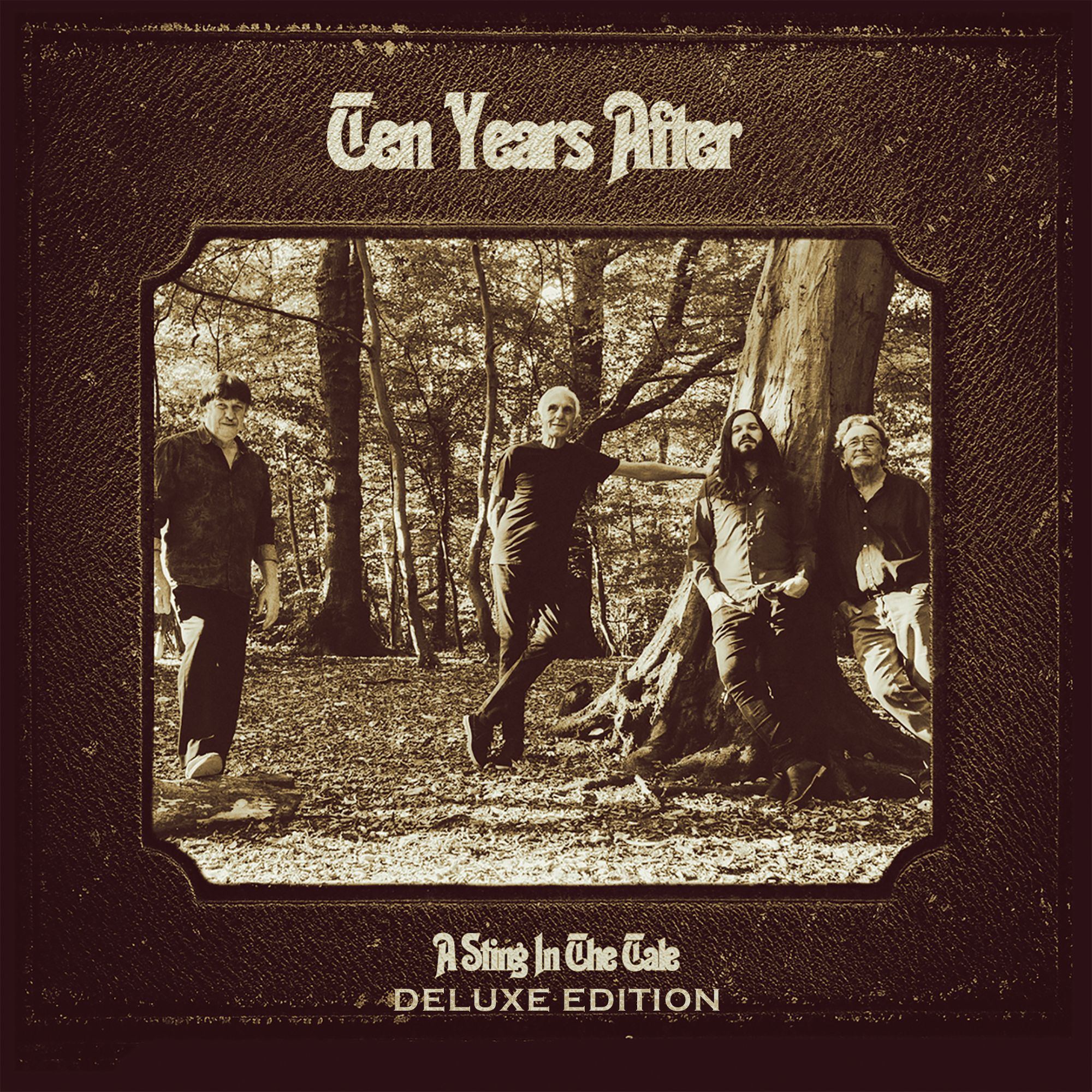
He also hopes to return to touring soon to support two projects: a deluxe edition of the band’s last studio album, A Sting in the Tale (Deko) with bonus live tracks, and his autobiography, From Headstocks to Woodstock. Both are now available in the U.S. Lee adds that the tracks on A Sting in the Tale are more “radio friendly” than some of the band’s previous efforts (though what radio stations would be playing new music from Ten Years After are, unfortunately, few).

“A lot of our tracks over the years have been pretty long, so the record company would always have to make edits to send to radio stations,” he says. “And what else is new with this record is that all four band members have been involved with all the writing. Previously, it was Alvin Lee who did everything.” The current lineup includes original members Ric Lee and Chick Churchill (keyboards), along with Marcus Bonfanti (vocals/guitar), and Colin Hodgkinson (bass).

The origins of Ten Years After began in the mid-1960s. After various members played in bands including Jaybirds, the Bluesyard, and the Ivy League, manager Chris Wright told the quartet of Ric Lee, Chick Churchill, Alvin Lee (vocals/guitar, no relation), and Leo Lyons (drums) that they needed a better name. And while some sources claim it was a tribute by Alvin Lee to Elvis Presley’s breakthrough year of 1956, in Lee’s book, he mentions it was far more random.

He says that in 1967, Lyons picked up a copy of Radio Times—then the UK’s only radio/TV listing publication, and two program names stood out: Life Without Mother and Suez: Ten Years After (a documentary about the tenth anniversary of the 1956/57 Suez Canal Crisis). The immediately chose the latter as their new moniker.

The hard rock/blues rock band gigged and recorded consistently, but it took their incendiary performance of Alvin Lee’s “I’m Going Home” from the Woodstock movie to bring them to prominence. In his book, Ric Lee describes something of a chaotic scene on the ground involving disorganization and inclimate weather, with Ten Years After the first band to play a full electric set after an August 17 rainstorm.

At that point, it was just an odd gig for many of the acts. It wasn’t until the concert documentary movie was released in 1970 did Woodstock really become “Woodstock.”

Lee remembers attending the premier at a Los Angeles theater with the rest of the group and many of the other featured acts. It was only then that he realized the fortunes of the band were about to change.

“The movie did absolute wonders for us. When ‘I’m Going Home’ finished, the whole cinema gave us a standing ovation. It was unbelievable, it was gobsmacking!” Lee recalls. “And from there on in, we were flung onto the world stage and playing the Enormodomes, from playing to 6,000 people at the Fillmore East to Madison Square Garden with 20,000 people. And two nights at the Albert Hall in London instead of one. Same at the Budokan in Tokyo. We’d never played Japan at all until then.”

Later, they scored an unlikely hit with the psychedelic/socially conscious “I’d Love to Change the World,” the lead single off the band’s 1971 album A Space in Time and the band’s only Top 40 hit. “Chrysalis [Records] is doing something really nice for the 50th anniversary of that album this year, and it was a watershed for us, especially with Alvin’s writing. He was hitting the peak,” Lee says. “And Clive Davis had signed us to Columbia. He said ‘Give me the material, and I’ll give you a gold album.’ And that’s exactly what happened.”

Ric Lee behind the kit for Ten Years After. Photo by/copyright Rui M. Leal/Courtesy of Chipster PR

But so had something else, and that was how the band’s management and label—with at least some complicit behavior from Alvin Lee—was pushing him as the star/guitar hero of the group, at the expense of the other three members. Ric Lee says things came to a head when the cover of 1969’s Shhh featured only Alvin Lee on the front cover and the group on the back.

“That kind of upset us, and management were definitely in the vein of pushing Ten Years After as a ‘guitar hero’ band, which I guess we were,” Ric Lee recalls. “But still, the band was the sum of the parts rather than just any one part. Alvin was obviously the star of the show and had a lot of charisma. If you and I were in a room with a few other people having drinks and Alvin walked in, you’d know immediately that he had that something.”

Lee says the band “learned to live with it,” but did successfully push for all the group to do to at least a few of the interviews with the music press. The original quartet broke up in 1974 with one later reunion, but then all four came back from 1988-2003, after which Alvin Lee left (he passed in 2013 after complications from surgery).

As for performing in Houston over the years, Ric Lee has one memory that jumps out immediately. “I do remember Houston! One afternoon, I came out of the shower in the hotel room and went out into the street. And it was so humid, I felt like I was back in the shower again!” he laughs. “I should have just stayed there!”

For more on Ten Years After, visit Ten-Years-After.co.uk

This article originally appeared at HoustonPress.com
Posted in Ric Lee, Ten Years After | Tagged , , | Leave a comment

Former Grand Funker Mark Farner Offers Up His Chile Recipe

Mark Farner onstage in Chile, 2019. “From Chile with Love” screen shot.

As the former lead singer/guitarist for Grand Funk Railroad, Mark Farner’s voice and playing have been classic rock staples on stereo systems and radio for more than 50 years.

Tracks he wrote or covered include “Some Kind of Wonderful,” “Bad Time,” “The Loco-Motion,” “Rock and Roll Soul,” “Footstompin’ Music” and the epic “I’m Your Captain/Closer to Home.” They’re all fine examples of good old, no-frills, Midwest meat and potatoes rock and roll. The style is not a critical favorite, but it certainly moved a lot of vinyl and put a lot of rears in seats from the late ‘60s throughout the ‘70s. In an oft-quoted fact, Grand Funk Railroad sold out Shea Stadium faster than the Beatles did.

All of those songs – along with other hits and deep cuts – are featured on the new concert DVD from Mark Farner’s American Band, From Chile with Love. Featuring 16 songs with five bonus solo audio tracks and two videos (including the mini-movie “Never and Always”), it was filmed at a 2019 show at the Teatro Caupolicán in Santiago, Chile during a South American run of shows.

“We decided to film there because when we had been to the venue previously, It was such a raucous and happy and rocking crowd. They’re part of our community, just a little south of the equator!” Farner laughs from his home in Lansing, Michigan. “All rockers have that free heart, no matter what country you live in.’”

South American audiences are especially known for their love of hard rock and heavy metal. But surprisingly, it’s the slower, more introspective GFR tune “Heartbreaker” that receives one of the most impassioned audiences responses, complete with a bellowing sing along and many, many hoisted phone cameras filming.

Farner recalls that a South American friend once told him that song was especially popular there, and that he himself learned English from the song. “They love that chorus refrain and vocal phrase. And when it happened the first time, I was full of goosebumps. What a rush! And they were singing the right words!”

And while many performers say some variation of how they “feed off the energy of the crowd,” Farner is an actual practitioner of that, something very plain in the film. “Some [performers] are more concerned how they come off, it’s a sensitive place. I just lay back in the groove and feel it,” Farner says. “It’s a guttural, instinctive emotion.”

Farner has long been an advocate of veteran’s causes and charities, and he and wife of 40+ years Lesia are donating $3 from every copy sold of From Chile with Love to Veterans Support Foundation, an organization that provides transitional housing services for veterans. And he’s lost count of how many Vietnam-era vets have told him how much the song “Closer to Home” (much like the Animals’ “We Gotta Get Out of This Place”) meant to them in the fields of war.

He says the cause is personal, noting that his father was a World War II veteran as a tank driver in the Seventh Armored Division of the U.S. Army. And that his mother was the first woman in the U.S. to weld on Sherman tanks at Fisher Body in the family’s hometown of Flint, Michigan.

“My dad returned home with four bronze stars in four major battles, but a lot of tank drivers didn’t even get to see a second battle,” he says. “I love my brothers and sisters of the armed forces, and I have a passion to help them when I can. [VSA] does a lot of incredible work. If you can’t believe in your armed forces, you’re in the wrong country! I wish Lesia and I could donate all of the proceeds from the DVD!”

One of the original rock power trios, Grand Funk Railroad (later shortened to Grand Funk) included Farner, Don Brewer (drums/vocals) and Mel Schacher (bass). They later added keyboardist Craig Frost in a series of successful records from 1969-1976. In pop culture, they’re one of a certain Homer Simpson’s stated favorite bands, as he reminisced about “the wild, shirtless lyrics of Mark Farner.”

The group splintered and reformed in various lineups. The original trio came back together in 1996 for a series of benefit shows and touring. But they split again two years later. Two years after that, Brewer and Schacher reformed GFR with Max Carl (vocals), Bruce Kulick (guitar), and Tim Cashion (keyboards), and have toured ever since.

The details behind the status are not agreed upon by the factions involved. Farner contends he was misled into signing a corporation agreement, which led to being voted out by his former bandmates. He has said that they also held a disdain for Farner’s very public Christianity and conservative politics. Brewer and Schacher (at least in the bio on GFR’s official website) counter that Farner left to return to his solo career and never returned.

In fact, the blood is still so bad that Farner had to recall the first pressing of the DVD and reprint the jackets of From Chile with Love to eliminate two songs that were the subject of legal threats: “Shinin’ On,” and what is likely the band’s best-known hit, the Brewer written/sung “We’re An American Band.”

But he hasn’t given up hope of a reunion, even after he was sued by GFR LTD. – of which he’s a 1/3 shareholder – for touring as “Mark Farner’s American Band” (GFR LTD. Has the trademark on “The American Band”). In 2019, a federal court ruled in Farner’s favor for the name, though bookers are still cautioned not to mention “Grand Funk Railroad” in materials promoting Farner’s solo band.

Mark Farner onstage in the U.S. in 2019. Photo by Brad Shaw/Courtesy of MOXIE PR.

“The Bible says ‘stay out of the courts’ and I can tell you why brother, they are crooked as a pan of guts! I don’t like going to courts. But for Mark Farner’s American Band, I did,” Farner says.

“But that’s the way it’s been, and that’s too bad. I would love to give the Grand Funk fans the original band. I’ve been trying to do that for over 20 years. Every time we have a corporate meeting though, it’s shot down. I’m a shareholder, but not an officer. So I have no say so in actually what goes on in the corporation. Though I wrote 92% of the songs!”

But through whatever challenges life gives him: musical, legal, or personal (his and Lesia’s son Jesse passed in 2018 from complications of a horrific crippling accident years before), the 72-year-old Mark Farner finds comfort in a higher power. And that’s even more so after he says he had an out-of-body experience during the installation of a pacemaker, before he returned to what he calls his Earth-bound, mortal “bone suit.”

“I always pray before I go onstage and I’m serious about it. I sing my songs from my heart. And I still have my faith because Jesus is my Redeemer and his love is unconditional, though it’s not practiced much on this Earth,” he sums up. “Unless you’ve got a real good dog!”

For more information on Mark Farner and From Chile with Love, visit MarkFarner.com

This interview originally appeared at HoustonPress.com
Posted in Grand Funk Railroad, Mark Farner | Tagged , , | Leave a comment

Richie Furay is Still DeLIVErin’ Country Rock After 50 Years

Richie Furay and daughter Jesse Furay Lynch onstage. Photo by Howard Zyrb/Courtesy of SRO PR

Located in West Hollywood on Santa Monica Boulevard, the Troubadour is not only one of the most storied live music nightclubs in the U.S., but holds a crucial place in  the development of California music in the 1960s & 70s. The Byrds, James Taylor, Joni Mitchell, Neil Diamond, Linda Ronstadt and so many more have graced its stage. And as depicted in the movie Rocket Man, the “Troub” also hosted the first U.S. performance by a fledgling singer and piano player named Elton John.

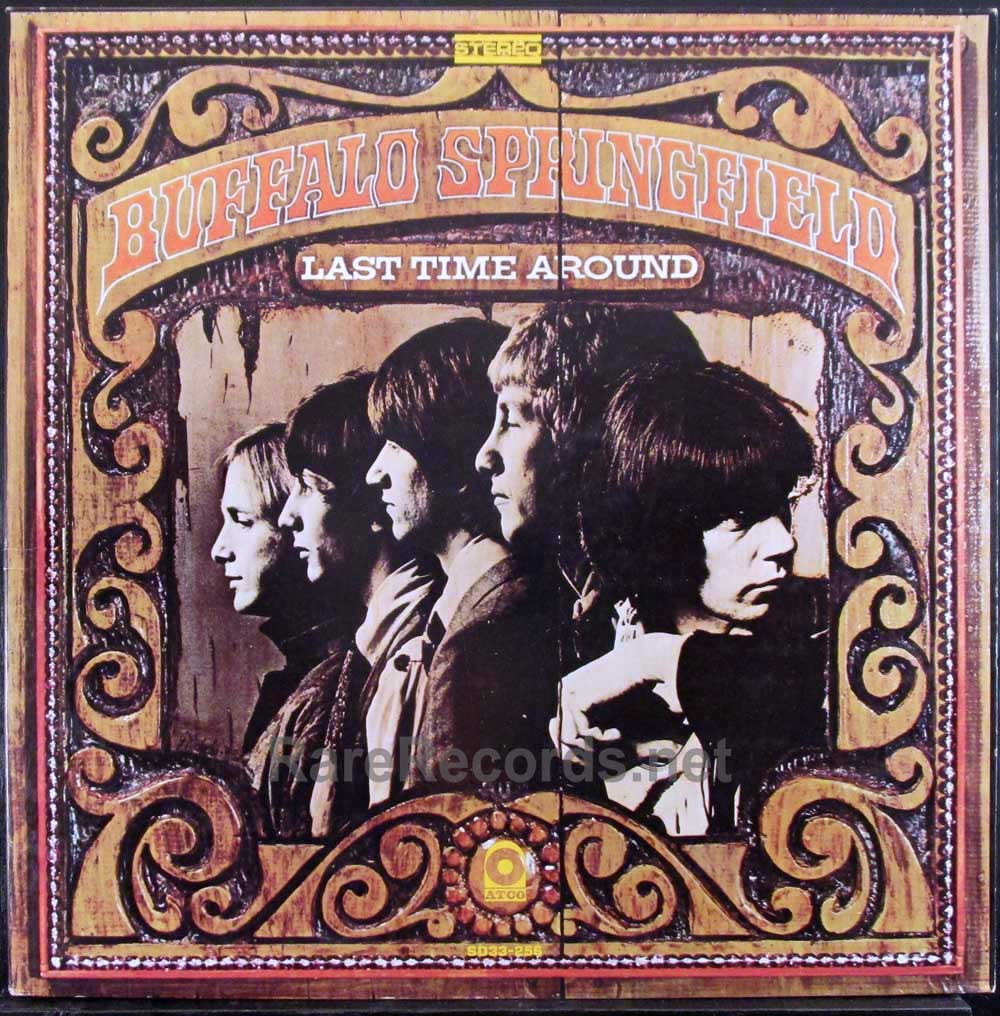
Two other bands who played scores of shows there were Buffalo Springfield and Poco, both co-founded by singer/guitarist Richie Furay. Now, to celebrate the 50th anniversary of Poco’s live record DeLIVErin’, Furay will release the CD/DVD set Return to the Troubadour: DeLIVErin’ Again (DSDK Productions).

The first set includes a career retrospective of tunes from Furay’s groups (Buffalo Springfield, Poco, Souther-Hillman-Furay Band) and solo work, while the second half features DeLIVErin’ in its entirety. The show was filmed in pre-pandemic times, and features a guest performance by current Eagle and former Poco singer/bassist Timothy B. Schmit. Furay would leave Poco in 1973, before they scored the hits “Crazy Love” and “The Heart of the Night.”

“With Poco, we did a lot of rehearsals at the Troubadour when we got started. [Owner] Doug Weston let us use it. Of course, we had to also play there at night!” Furay laughs on the phone from his home in the foothills west of Boulder, Colorado. “There was a really popular scene around the club around our genre of music at the time. Poco put in a lot of hard work on that stage.”

In a sort of onion skin-layer logic, Still DeLIVErin’ is essentially a live record of a live record of songs from studio records. Surprisingly, it wasn’t an idea that Furay was too keen on when it was first presented to him.

“I was a bit hesitant at first. The original live record was so special to Poco fans, but in my set over the past few years, I was performing most of the songs anyway! So we set out to learn the other ones, and it turned out pretty cool and unique,” Furay says. “I just wanted to know if we could pull it off, readdress the songs, and bring them more up to date. Recording technology has come so far since the original record. I’m not looking for comparisons, I just want people to enjoy the music.”

Performer/Manager Peter Asher and former Eagle/founding Poco singer-bassist Randy Meisner were in the audience as well. Furay’s band includes Scott Sellen, Jack Jeckot, Aaron Sellen, Alan Lemke, daughter Jesse Furay Lynch, and guest Dave Pearlman.

One thing that’s palpable in the video is the musical and personal respect and admiration that Furay and Timothy B. Schmit (who also wrote for Poco) have for each other. “Our relationship has never waned, and I’m very thankful for that,” Furay says. “And I hadn’t seen Randy [Meisner] in many years. That was special.”

Richie Furay and former Poco bandmate Timothy B. Schmit in “DeLIVErin’ Again.” Screen Shot/DSDK Productions

While the Byrds and Buffalo Springfield made some early dabs into what would be called “country rock,” and the Flying Burrito Brothers and Eagles gained media attention or took it to the bank respectively, Poco often gets lost or overlooked in the story of the genre. Furay points to exclusion of the band’s story in two separate recent documentaries on the music of Laurel Canyon as partial evidence.

“When we were playing at the Troubadour, the audiences just kept coming. It was packed every night. We were there at Ground Zero. But I felt that a couple of recent media projects kind of dissed Poco. It was disheartening, like we weren’t even there,” Furay says.

“We pioneered that country rock sound, while we may not have had the success as some others who came after us. I remember [Eagles singer/guitarist] Glenn Frey sitting on my living room floor in Laurel Canyon while I was rehearsing Poco, and he was picking up on something. He and the Eagles took it to the limit so to say, but somebody had to be the groundbreaker.”

In 1997, Furay was inducted into the Rock and Roll Hall of Fame as part of the Buffalo Springfield. He, Stephen Stills, Bruce Palmer [bass] and Dewey Martin [drums] all attended. Conspicuous by his absence was Neil Young, the result of an abrupt decision.

“I wish Neil would have showed up because it would have been the last time all five of us would have been together,” Furay says. “I got a phone call from him saying how great it was going to be. Then I got a fax saying ‘I’m not coming.’” In video footage of the band’s acceptance speech, Furay and Stills joke about getting the same fax from Young.

It would not be the only abrupt decision of Young’s that would affect the band. An effort reunite the original five in 1986 (with percussionist Joe Vitale added) only lasted a couple of rehearsals. In 2011, a lineup of surviving members Furay, Stills, and Young, along with Vitale (drums) and Rick Rosas (bass) played Young’s Bridge School Benefit at his request, which then led to a handful of California dates and a headlining slot at the Bonnaroo festival. But just when fans were salivating for concert seats, Young pulled the plug in a proposed 30+ date 2012 tour shortly before it was set to begin.

“The one in 1986 was a train wreck and never got off the ground,” Furay says. “But the one about 10 years ago was completely different. It’s [unfortunate] that it didn’t last longer.”

To the casual student of rock history, Furay has been cast in a role—like Hillman with the Byrds and Graham Nash with CSN/CSNY—as the peacemaker between more mercurial bandmates. But he doesn’t see it that way.

“Sometimes Bob, I feel that people are trying to make more out of it a situation than really what was there. A lot of people want to think there was a lot of tension and dissension in the Springfield. But there were about nine people in and out of that band in two years, so it would be hard to keep that together anyway,” Furay offers. “Stephen [Stills] and Neil [Young] were such prolific songwriters. The funny thing is, we looked at what happened with the Byrds and said ‘That will never happen to us.’ And then it did!”

Outside of music, Furay is very much open about his devout Christianity, something he was introduced to in the 1970’s by multi-instrumentalist and Manassas member Al Perkins, and shares with former bandmate Chris Hillman. The latter of whom told The Houston Press last year he sometimes speaks with Furay about religion, and while their faiths may differ, they’re “all on the same ball team.”

“If Jesus is front and center, then that’s good enough for me!” Furay laughs. In fact, for much of the past decades, Furay has also written and recorded Christian music. And in 2017, he retired from Calvary Chapel in Broomfield, Colorado after serving as Pastor for 35 years. He and his wife Nancy—who he met at an early Buffalo Springfield gig at the Whisky a Go Go—have been married for more than 50 years.

Today, Furay is busy with a number of new projects  including a “Nashville record” with special guests set to come out in June, a Cameron Crowe-narrated documentary on his life and music in development called Through it All: The Life and Influence of Richie Furay, and new music like “America, America,” which he debuted on the Mike Huckabee show. And he’s still writing new songs.

“It’s just instilled in me,” Furay sums up. “I don’t sit down and think ‘I’m going to spend three hours today writing songs.’ I sit down and do it when I’m inspired.”

For more on Richie Furay visit RichieFuray.com

This interview originally appeared at HoustonPress.com

Posted in Buffalo Springfield, Poco, Richie Furay | Tagged , , | Leave a comment