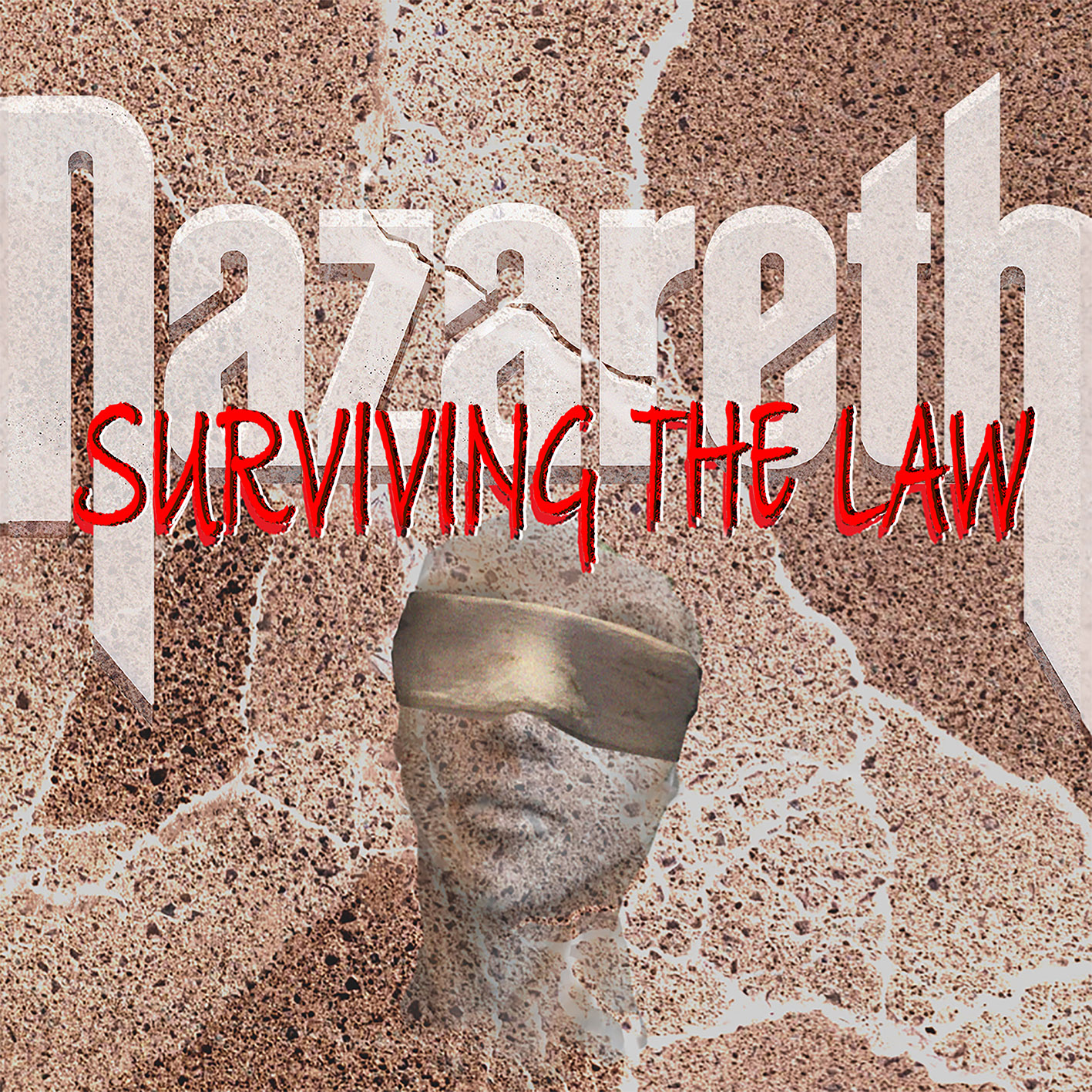
Classic Rockers Nazareth Keep Surviving on 25th Album

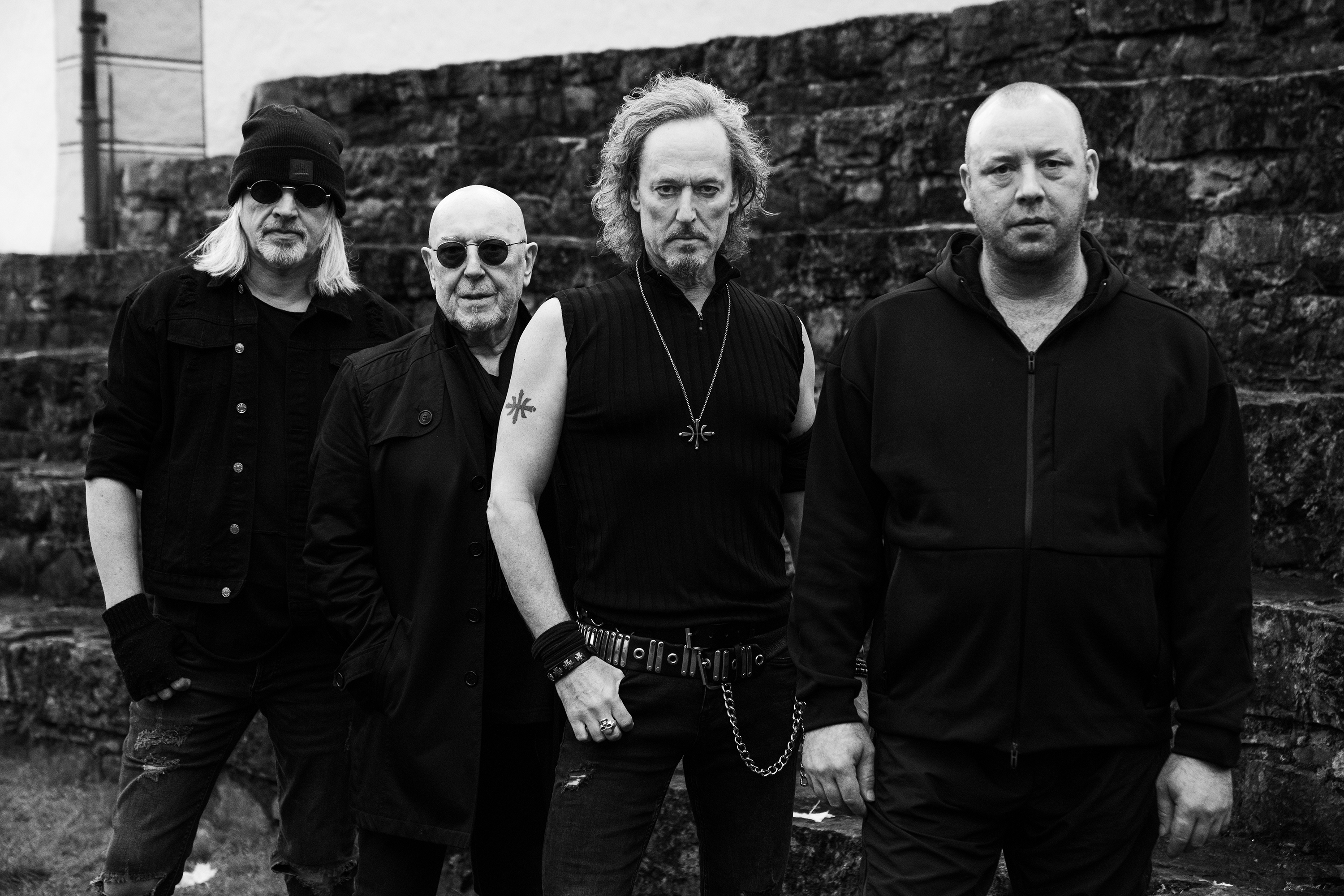
Nazareth in 2022: Jimmy Murrison, Pete Agnew, Carl Sentance and Lee Agnew. Photo by Lewis Milne/Courtesy of Freeman Promotions.

Ah, COVID, you bastard! You have not been a friend to so, so many Classic Rock bands who had ambitious and wonderful plans to celebrate a 50th anniversary of their founding or first album in 2020…or 2021…or 2022.

That includes Scottish hard rockers Nazareth, whose self-titled debut dropped in 1971. But 75-year-old bassist Pete Agnew—the sole remaining original member—sees the proverbial light at the end of the tunnel.

“It’s hurt a lot of bands’ 50th anniversaries. And us, we’ve had to put dates up on the website and then take them down all because of the COVID. It will be the summer before we get kickstarted,” he says via Zoom from his home in Scotland.

“I know that there in America it’s almost back to normal. But it’s not like that here in Europe, where they still restrict audience sizes. We’ve still got the masks in Scotland and promoters are nervous about putting any shows on. But we’ll make up for it!”

Not that the band didn’t just sit on their arses the past two years. The proof is in their new 25th studio record, Surviving the Law (Frontiers Music). The current lineup of Agnew, son Lee Agnew (drums), Jimmy Murrison (guitar) and new vocalist Carl Sentance lay down not just the bombastic rockers they’re known for (“Hair of the Dog,” “Expect No Mercy,” “Bad Boy,” “Razmanaz,” “Holy Roller”), but several tunes that take on a decidedly contemporary slant.

Like “Strange Days” and “Mind Bomb” which will bring to mind respectively—at least to many—Donald Trump (“Go ahead and act like a martyr/But you can’t handle the sting”) or organizations like QAnon (“Generate another lie/Consume the disenfranchised/Every day brings a new fear/And let them hear what they want to hear).” Both were written by Lee Agnew.

“Lee’s a bit like that – he doesn’t trust anybody!” his father laughingly offers. “His lyrics are always great. But he’s left it obtuse enough to mean something to one person and something else to another. Even when I’m talking to him, I’m not sure who he means! And his ‘Let the Whisky Flow’ is about Scottish nationalism and not trusting the government. He’s a very, very angry man!”

There are also songs about good times, romance gone bad and the pandemic (“Waiting for the World to End”). But the elder Agnew has the last word on Surviving the Law with the “You Made Me,” which he wrote and sings himself.

“I always wanted to do a bluesy, jazzy, R&B type thing,” he says. “This was album number 25 and I sang a song on our first album, “I Had a Dream,” when I was 25. So, 50 years later, I thought it was time to do it again! And I did the vocal on my 75th birthday!”

In terms of anniversaries, though, Nazareth has always pegged their origin as 1968. That’s when the original quartet of Agnew, Dan McCafferty (vocals), Darrell Sweet (drums) and Manny Charlton (guitar) and were all first in the same band together.

In 1961, Agnew started a show band called the Shadettes, taking lead guitar and vocal duties. He was later joined by Sweet, and then McCafferty. They mostly played covers of other people’s hits in local and nearby clubs. Not exactly helping their touring prospects was the fact that they hailed from the tiny town of Dunfermline in Fife. Members came and went, until just the quartet with Charlton was left.

By that time, Agnew had switched to bass—mainly because their earlier bassist always failed to show up for rehearsals. “The other guys said ‘Well, it’s only got four strings and you can manage that.’ And I thought I’d give it a go,” he says. “But it wasn’t like I woke up and said, ‘I’m going to be a bass player!’”

Knowing they needed a new name, group members were sitting in a hotel bar in 1970 when the Band’s “The Weight” came over the sound system. Its first line was “I pulled in to Nazareth/Was feeling ’bout half past dead.” Agnew thought “Nazareth” would be a great name, and thus it was.

Ready to get out of the house and play: Jimmy Murrison, Pete Agnew, Carl Sentance and Lee Agnew. Photo by Lewis Milne.

The band soon scored a record deal. Which back then was a much bigger achievement than it is today, according to Agnew. Especially for a band so far removed geographically from the big city of Glasgow, much less London where the UK music biz was really centered.

“In the clubs, you didn’t make records, you played everybody else’s. We were human juke boxes! So having an actual contract was a big, big deal. And making our own record was incredible,” Agnew says. “Today, kids can make a record on their phone. I was at a club awhile back and the band said they wanted to do a song from their third album. I thought ‘Third album? They’re playing in a bar!’”

A steady stream of albums and tours upped Nazareth’s profile through their ‘70s and early ‘80s hard rock heyday. So it’s something of an irony that their biggest hit—“Love Hurts”—is actually a ballad.

A cover of a tune originally done by the Everly Brothers and written by Boudleaux Bryant, Nazareth gives it an epic sound with McCafferty’s gravelly, pleading vocals sending it over the top. In early 1976, it hit #8 in the U.S. More recently, its soundtracked commercials for products ranging from Gatorade and Nissan to Aspercreme.

One huge fan of the song and the band was a certain singer born William Bruce Rose, Jr., who later changed his first name to Axl. His band, Guns ‘n’ Roses, did some early gigs with Nazareth, and the vocal similarities between him and McCafferty did not go unnoticed.

So when Rose wed girlfriend Erin Everly in 1990, he really wanted one thing at his wedding. And while it’s been widely reported that Nazareth “turned down” his request, Agnew says the real story is much different.

“That’s a story that’s keeps growing legs!” he laughs. “Axl was getting married to Don Everly’s daughter. He loved Dan’s voice and ‘Love Hurts’ and wanted him to sing it at the wedding. He didn’t want to [book] Nazareth – we weren’t going to be the wedding band! But we were in Russia or Poland at the time and Dan just couldn’t do it. But it would have been nice!”

McCafferty retired from playing live with Nazareth in 2013 due to a diagnosis of COPD which often left him gasping for air. Agnew still keeps in touch with him—they live about five minutes apart in different Scottish villages—but they haven’t visited in person during the pandemic in order to keep the singer’s health protected.

One person he keeps most in touch with is Mick Box, guitarist and founding member of UK rockers Uriah Heep, whose history with Nazareth has often intertwined. When Box spoke to the Houston Press for that band’s 50th anniversary, he had clear memories of McCafferty’s meticulous clothes ironing system on the road.

Agnew roars with laughter when he’s told that. “Yeah, yeah! I remember that and getting a few ironing lessons from him! Dan was always very tidy!” he remembers. “Mick is like me—he’s the last original guy left in his band. But we’re on the internet with a bunch of other [older classic rock musicians] like us. And we send each other stupid stuff and jokes all the time.”

Finally, asked if there’s any pressure or extra weight he feels about the band’s now 50+ year legacy and being the “last man standing” on stage, Agnew says there’s only one reason he hasn’t hung up that bass just yet.

“I simply refuse to go!” he laughs. “There have been many different lineups of the band. And I’ve got to tell you, I’ve enjoyed every one and had really good fun. And I really believe that last two albums that we’ve done are two of the best Nazareth albums of all time! I’m not just going off and away.”

For more on Nazareth, visit NazarethDirect.co.uk

This article originally appeared at TheHoustonPress.com

Posted in Nazareth | Tagged | Leave a comment

American History: Dewey Bunnell on 50 Years (Give or Take) of Music

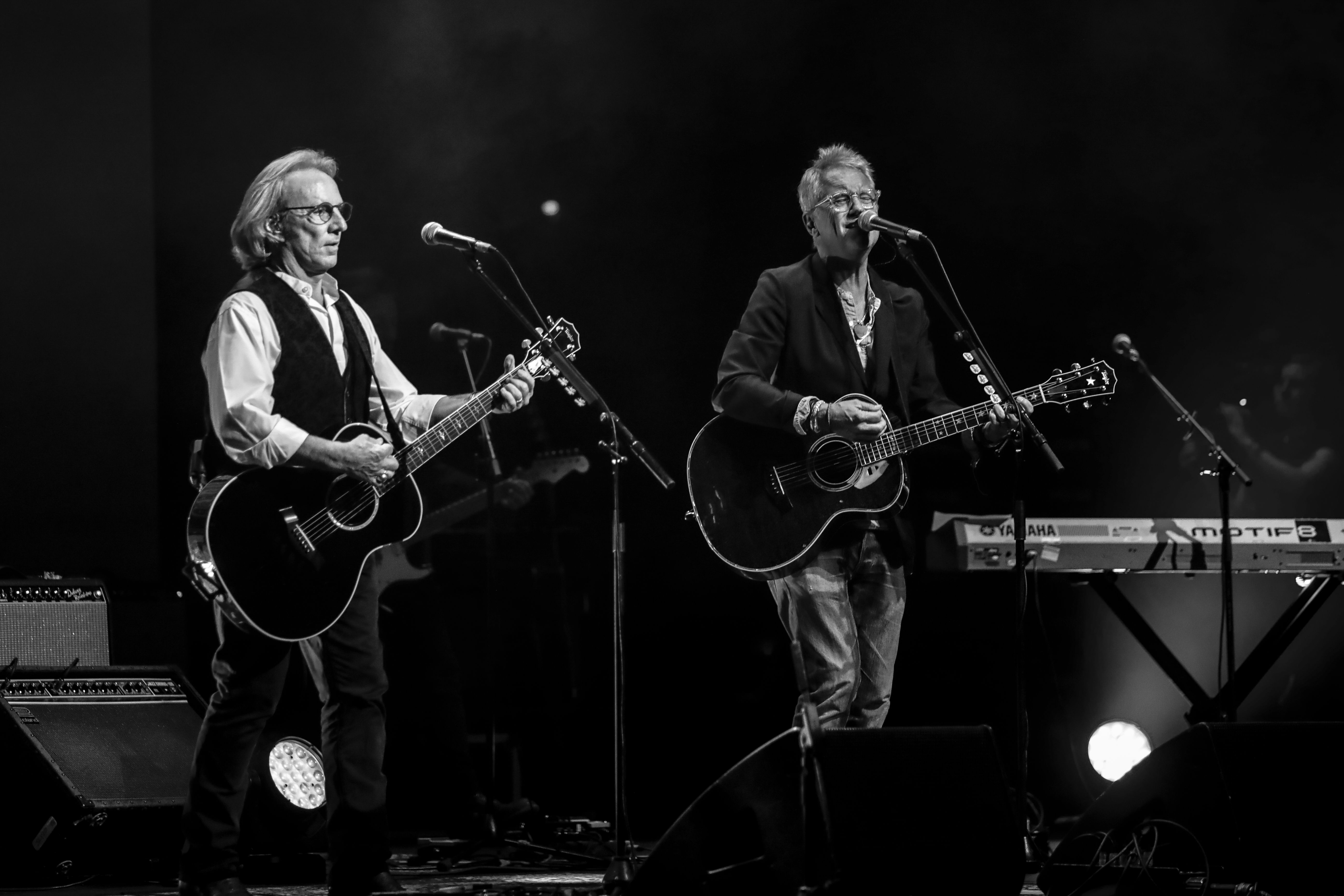
America at the London Palladium in 2018: Rich Campbell, Dewey Bunnell, Ryland Steen, Gerry Beckley and Steve Fekete. Photo by Christie Goodwin.

Among Beatlemaniacs, there’s a famous 1963 interview clip with the Fab Four in which they’re asked what the future might hold when the bubble inevitably bursts on their showbiz career. Ringo Starr—apparently serious—said that he fancied opening a string of ladies’ hairdressing salons.

The idea that a pop or rock group could have a healthy career lasting even five years was thought of even by the bands themselves as an impossibility. Flash forward to 2022 and so many groups are out there (in some form) on the road having celebrated their 5-0 anniversary.

And while the pandemic put a stop to a lot of those plans, some groups are utilizing, uh, creative math. And that includes America, continuing the “50th anniversary tour” of their 1970 birth.

“We had no idea we’d still be out here playing these songs!” says founding member Dewey Bunnell from his home. “The parameters were making it last five years, and that was the total lifespan for a group. In our cases, we didn’t have other careers to look toward or fall back on. We came straight from high school! We had no mindset other than playing music and following our noses.”

As for being on the road, America logged 39 dates last year with 54 planned in 2021. Though some are still being shifted around the calendar for COVID-related reasons. “It’s good news to play live again. The band just wanted to be together and play together. I didn’t like spinning our wheels the past couple of years,” he says.

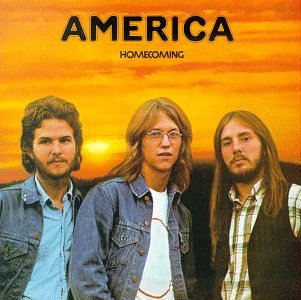
America was started by three singer/guitarists friends in their late teens – Bunnell, Gerry Beckley and Dan Peek. They took the name as a tribute to their home country while living with their military families, all stationed in England.

The first album in 1971 began a considerable string of hits including “Ventura Highway,” “Lonely People,” “I Need You,” “Sandman,” “Tin Man,” “Don’t Cross the River,” “Sister Golden Hair,” “You Can Do Magic,” “Don’t Cross the River,” and their first hit and signature tune “A Horse with No Name,” written and sung by Bunnell. Peek left the band in 1977 for a career as a solo Christian music artist and passed away in 2011.

Bunnell and Beckley have carried the flag on the road and in the studio for decades, and now see three generations of families in the audience. With the youngest of those now able to listen to the entire catalog of America at the touch of a screen on their phone.

“Isn’t that incredible? Spotify and the whole streaming situation had made access to music—all music—incredibly instantaneous. I love that concept to immediately bring a song to your head that you’re thinking about,” Bunnell says.

He himself has used streaming and YouTube to not only investigate deeper cuts by bands and performers he already knows and likes, but really “introduce himself” to other performers for the first time. He brings up English singer/songwriter/guitarist John Martyn.

“There’s no excuse to not hear an artist you’re interested in. And you don’t have to try and sift through piles of records in a store. If they even had a John Martyn record!”

Bunnell and Beckley participated in the writing of a recent authorized biography of the group by journalist Jude Warne, who in 2020 spoke with the Houston Press about the project.

“I don’t think an autobiography is a concept that we could have done ourselves. But it was about time for a [book] on us,” Bunnell says. “We talked to several people, but Jude just had this outline to approach the book [concentrating] on the music itself. It was really well done. And she left no stone unturned!”

Dewey Bunnell and Gerry Beckley. Photo by Christine Goodwin.

Because they have so many recognizable songs, about 2/3rd of the average America set list are set in stone “must play” tunes that the audience knows and wants to hear—otherwise, the pitchforks will come out. Bunnell knows this, but still likes to toss in a deeper cut for the hardcore fans, especially from the first few albums like “Moon Song” and “Rainbow Song.” The current band also includes Rich Campbell (bass), Steve Fekete (guitar) and Ryland Steen (drums).

“Some of the songs we’d like to do just won’t [adapt] from the recorded version to a live setting. You can’t capture the moment as well,” he says. Though they are including some material from 2015’s Lost & Found compilation of older and unreleased material.

Bunnell says this just as some whirring noises commence in the background. “Our printer is in this office and my wife is printing some recipe,” Bunnell laughs. Which begs the question: What is Penny Bunnell whipping up to eat tonight?

“It’s maple balsamic glazed carrots!” he says. “Though it may not be for tonight. My wife is a really good cook!”

Over the course of America’s career, bandmate Gerry Beckley has put out several solo efforts, with the latest, Aurora (Blue Élan Records) dropping soon. But Dewey Bunnell has never gone out on his own. Why?

“Well…that guy Gerry Beckley…he’s just a fountain of prolific works!” Bunnell laughs. “But I kind of made a conscious decision that I was never going to do that myself, though I never slammed the door on it. But you have to be driven, and Gerry definitely is. That’s his creative bent and I support that 100%. He’s got so many songs in his archives and on his hard drive. I’m even on one song on his new record!”

One thing both men are excited about and are working to see come out is a rare 1975 live recording of the band at the Hollywood Bowl. A show at which the “opening act” was legendary Beatles producer George Martin conducting an orchestra of classical and pop tunes with a program titled Beatles to Bond and Bach. Martin had a close relationship with America as producer of their records Holiday, Hearts, Hideaway, Harbor (they apparently loved the letter “H”) and then Silent Letter.

Bunnell says it’s something he especially wants to see released as it would be the band’s first live record release to feature Peek and are working out licensing and permission issues.

Speaking of Peek, Bunnell says questions about what happened to him when he gives interviews are almost as prevalent as “How did you get the name America?” and “What’s the meaning of ‘A Horse with No Name.’” So…which question is he most tired of?

“No that’s a great question, Bob!” he laughs. “I don’t know!”

He’s glad to hear that the Houston outdoor show will happen after sundown, because there’s “a lot of really great video components” that go with certain songs they plan on projecting behind the band.

Finally, while his most famous song was written about a horse, he himself did not own any or even ride. That changed about five years ago when he and his wife purchased a mustang that they named (wait for it…) “Nonami.” Get it? The animal even made a cameo appearance during a profile on the band that ran on CBS Sunday Morning in 2019.

“Yes, we still have her!” he laughs. “I’m a very novice horse owner and actually have been very wary of horses, even afraid of them. But she’s doing great and has had more training. Of course, she’s still begging for crumbs. And you have to be careful she doesn’t step on your foot!”

Which Nonami just might do later—if there’s maple balsamic glazed carrots in the offering.

For more on America, visit VenturaHighway.com

This article originally appeared at HoustonPress.com

Posted in America | Tagged , , , | Leave a comment

Gilbert O’ Sullivan is Not Alone Anymore

Gilbert O’Sullivan today. Photo by Andy Fallon/Courtesy of BMG/

In the spring of 2020, the UK-based Gilbert O’Sullivan was excited about coming to the U.S. in April for his first tour of these shores in a while. Then, of course, the world (and the entire concert business) shut down. And while that was devastating for most bands and performers, it had some positive effects on the Ireland-born singer/songwriter/pianist.

“I’m very lucky in the sense that I’m not an artist performing 50 weeks a year. I’m mostly writing songs, quilt solitarily. So, the lockdown kind of suited me. But I know it affected a lot of others badly,” O’Sullivan says via Zoom from his home on the island of Jersey in the Channel Islands.

Gilbert O’Sullivan Zooms with me!

“It was uncharted territory. I hope it’s not back again in a few months’ time. The omicron seems mild, and there’s more herd immunity. So, I hope we’re heading for a good year.” O’Sullivan opened his U.S. tour this past March 4 at Main Street Crossing in Tomball, Texas.

Amazingly, this is his first American series of dates in more than four decades, since an aborted tour with the Carpenters in the late 1970s.

Born in Waterford, Ireland and raised in Swindon, England (fun fact: the city is also the setting for Ricky Gervais’ original version of The Office), Raymond Sullivan was one of six children in a working-class family. He began playing the family’s piano but eschewed formal lessons.

Gilbert early in his career. Courtesy of BMG.

And though he went to college to study graphic design, music was calling louder as he played in several bands. A collaborator and friend was Rick Davies, who would go on to co-found classic rockers Supertramp.

He moved to London in 1967 to pursue a music career and—looking for something to set him apart—developed a sort of costume that made him look like a street urchin: bowl haircut, newsboy cap, suspenders and short pants. It was purportedly inspired by his love of silent films, though some questioned his sartorial choice. It didn’t last.

What did was a name change: a manager thought that “Gilbert O’Sullivan” might recall the songwriting team of Gilbert and Sullivan. The manager, Gordon Mills, has similarly altered the birth names of Tommy Scott and Arnold Dorsey to Tom Jones and Engelbert Humperdinck, respectively.

Sullivan had his first European hit in 1970 with “Nothing Rhymed,” but it was two year later he achieved international fame with still his best-known number, “Alone Again (Naturally).”

Though its depressive (but non-autobiographical) lyrics covered romantic jilting, suicidal thoughts, and the death of both of the narrator’s parents, Sullivan’s pumping piano and upbeat singing gave it an unexpected sonic lift. In the U.S., it stayed on the top of the Billboard charts for four weeks in 1972. Not that he had any precognition of its rise.

“I think it’s important not to know that if you’re writing something, it’s going to be successful,” he says. “The more important thing is are you happy with it? Does it have the lyrics and melody you want?”

In fact, it was originally going to be the B-side behind the more commercial “Out of the Question,” but manager Mills pushed for the switch. “When we were recording it, nobody said ‘Wow, this is something special!’ I had no idea it would be as successful as it was. And it was a [bigger hit] in the U.S. than a lot of other countries,” he offers.

The song has had several covers, including a 2010 version by Neil Diamond, who O’Sullivan says sent him a nice note about it. “Ultimately, it’s a compliment to you as a songwriter. You don’t have to like the cover versions necessarily, but the fact that somebody wants to do it means something.”

He also notes not a week goes by where someone doesn’t tell him how much the song means to them or how they can relate to it from experiences in their own lives. Interestingly, when he’s rehearsing for a tour, it’s the only song he does not practice, on purpose.

“I don’t sing that because when I sing it onstage, I put my heart and soul into it. It’s that important,” he says. “I just keep it until we’re actually performing. And it’s amazing the reaction that I get from people.”

The song—and O’Sullivan—also have a unique place in the history of the confluence of music and legal issues. In 1991, he successfully sued rapper Biz Markie for sampling the song’s distinctive piano riff on his own release “Alone Again” (in which the Biz also sings the song’s hook “alone again…naturally” in its original melody). O’Sullivan was eventually awarded a judgement of $250,000, and the song was prevented from being further sold on single or album.

Gilbert in the 1970s. Courtesy of BMG.

Coming on the heels of the ‘60s group the Turtles challenging something similar against rappers De La Soul, the cases set a precedent for unauthorized use of copyrighted material in rap songs. Biz Markie’s next record was tongue-in-cheekly titled All Samples Cleared!, with a cover of him as an English bewigged judged in court as well as the defendant.

O’Sullivan says that Biz Markie’s team had actually reached out for permission to sample the sing, but he denied the request. The rapper—who passed away last year—used it anyway.

“All I can say is that I never wanted to take anybody to court. They asked and my [initial thought] was to hear who wanted to do it. Then I realized that he was a comic rapper, and I said no way. Not that song,” O’Sullivan says.

“I had to take some action and go to New York and get lawyers and spend hundreds of thousands of dollars and it was time consuming. And who was the first person to have to answer questions? Me, not him. He wasn’t even there! But it did set a precedent, and that’s a good thing.”

He had more minor hits with “Clair,” “Get Down” and “Out of the Question. But his later commercial successes were mostly in the UK, Holland, New Zealand and especially Japan. He’s consistently toured and released records, often with lyrics of wordplay, and spanning the genres of rock, balladry, piano-based, and even dance.

“It’s always been the same writer since I don’t collaborate with anyone. I like the diversity, and I like going into different areas,” he says. “I can even listen to Jay-Z and like it. Not necessarily because of the songs, but because of the production. And I can learn from it.”

His most recent record was 2018’s Gilbert O’Sullivan, produced by Ethan Johns. It was recorded in O’Sullivan’s 48-track home studio, the building visible behind him in the Zoom call. “Ethan is all about analog and very anti-digital. And his approach made people feel it had the same approach as my very first album with a lot of warmth. So, we just titled it [plainly],” he says.

He has a new record coming out in July called Driven, produced by Andy Wright (Simply Red, Simple Minds). “I’m 75 and I still have an enthusiasm for this, so that’s why we used that title!” he says.

“I like using different producers to bring out things that maybe haven’t been done before. Andy met up with me, I played him 15 or 16 songs, he picked out the 12 he liked, then he picked out the musicians. It’s not rocket science. I sit at the piano and play it for the band, they go back to their chairs, and we hit the record button.”

For the upcoming short U.S. tour (which will be followed by European dates), O’Sullivan will be surrounded by family—literally. His wife Aase, daughters Tara and Anna Marie, and “even the babies” will accompany him Across the Pond. Looking at the itinerary, most of the stops are at City Winery in various locales. Which begs the question: Is Gilbert a fan of the grape?

“Well, in moderation!” he laughs. “And it’s usually just on weekends. Fridays are for whites and Saturdays are for reds!”

This interview originally appeared at HoustonPress.com
For more information on Gilbert O’Sullivan visit GilbertOSullivan.co.uk

Posted in Gilbert O'Sullivan | Tagged | 1 Comment

Groundbreaking Band Fanny Reserves the Right to Rock—Again!

Jean Millington, Brie Darling, and June Millington of Fanny in 2018. Photo by Linda Wolf.

In the last issue of Rolling Stone produced in the 20th century, a bevy of musicians were asked what musical issues they’d like to see remedied or addressed in the 21st. In a quote that was pulled out to feature, David Bowie was very much to the point.

“One of the most important female bands in American rock has been buried without a trace. And that is Fanny,” part of his comments ran. “They were one of the finest fucking rock bands of their time. They were extraordinary, and nobody’s ever mentioned them. They’re as important as anybody else who’s ever been, ever. Revivify Fanny. And I will feel that my work is done.”

Unfortunately, Bowie’s vision had not come to fruition by the time of his death in 2016. But he’d likely be thrilled to see the band’s story, music and legacy given the full documentary treatment in last year’s Fanny: The Right to Rock.

Written and directed by Bobbi Jo Hart, it sheds light and appreciation on the group the way that other recent female-driven rock docs have done for the Runaways, Suzi Quatro and the Go-Go’s. Fanny: The Right to Rock will screen at Houston’s Museum of Fine Arts on March 18 and 19.

“We get pitched a lot of films—and I’m happy that we’re back to actually showing films!” says Marian Luntz, MFAH Film and Video Curator. “I thought this would be a good for Women’s History Month in March. And while I was confident that I would like it, I did not know the whole backstory of Fanny and the sexism, homophobia and racism they faced.”

For local punk rock legend Dianna Ray, co-founding member/bassist/vocalist of Mydolls (formed in 1978 and still active today), she remembers hearing Fanny on FM radio in Port Huron, Michigan as a teen. But she really discovered it through her love of the music of fellow female trailblazer and Detroit native Suzi Quatro. Suzi’s sister Patti was in later lineup of Fanny.

“I remember seeing Fanny on The Midnight Special and I was just thrilled to see a female rock band. I never thought it was possible!” Ray laughs.

The documentary includes contemporary interviews with almost all band members, those who worked with them, and an A-list of musician admirers including Bonnie Raitt, Joe Elliott of Def Leppard, Kathy Valentine of the Go-Go’s, Kate Pierson of the B-52’s, Cherie Currie of the Runaways, Jeff “Skunk” Baxter of Steely Dan/Doobie Brothers and Todd Rundgren, who produced on of Fanny’s records.

As the doc details early on, Fanny’s lineup had its roots in a ‘60s all-girl California-based group called the Svelts. It featured Half-Filipino/Half-American sisters June (vocals/guitar) and Jean (vocals/bass) Millington, Addie Clement (guitar), and Brie Berry (drums), the last also of Filipino ancestry. Brandt left to get married and have a child and was replaced by Alice de Buhr.

Now known as Wild Honey, the group caught the eyes and ears of producer Richard Perry, who convinced Warner Brother’s Reprise Records to sign them. After Lee departed and keyboardist Nickey Barclay was brought on, they became Fanny.

Jean Millington, Nickey Barclay, Brie Brandt, and June Millington rehearse at Fanny Hill, c. 1969-70. Photo by Linda Wolf.

The group set up their living and rehearsal space near L.A. in a house dubbed “Fanny Hill,” which served as equal parts rehearsal space and party pad. It was not uncommon to wake up and find rockers like Joe Cocker or Mick Jagger sitting at the dining room table.

Brandt came back into the fold as a lead singer/percussionist, but Perry and manager Roy Silver envisioned Fanny as a “female Beatles”—of which there were only four. She was dismissed amidst hurt feelings by all. The hard-rocking quartet released their self-titled debut in 1970.

Soon, they were opening for acts like Humble Pie, Jethro Tull and Deep Purple, and churned out three more studio albums, one per year, with June Millington and Barclay providing the bulk of the songwriting. Oddly, they (like Suzi Quatro) found more success in the UK, where somewhat humorously the term “fanny” is slang for…vagina.

Yet, they still had to field questions in every interview like “What’s a like to be a girl in a band?” and “Can you compete with male rockers?” Some skeptics didn’t believe they actually played their own instruments or wrote their own songs.

But they face the usual, gender-free suspects of constant touring/recording grind and personality/musical conflicts. Though tacked on was the added fight for acceptance and respect because of their gender, ethnicity and some members’ sexuality. It led June Billington and then de Muhr to leave.

Brandt (now Brie Darling) came back into the fold, and Patti Quatro (sister of Suzi) was added on guitar. Cam Davis has a brief stint on drums. A move into a more glam-and-glitter sound (and forced “sexier” stage costumes) from their hard rock beginnings did not move the needle on Fanny’s record sales. Their highest-charting single was the sexually-charged “Butter Boy” (inspired by Jean’s then-boyfriend…David Bowie) at #29.

Lyrics for that included “He was hard as a rock but I was ready to roll/What a shock to find out I was in control.” Presented with a vintage 45 in the documentary, Jean lets out a laugh. However, by the time it hit the charts, Fanny had already broken up, burnt out and frustrated.

The last part of the documentary showcases the Millington sisters and Darling as they reunite to make new music with 2018’s Fanny Walked the Earth (which for some reason, also became the band’s new name). Patti Quatro and de Muhr guested, but not Barclay, who “just disappeared” and purportedly does not want to be contacted or have anything to do with the band anymore.

It would be churlish and spoiling to denote what happens next but suffice to say it puts the documentary—and the band—on a jarring and complete other path.

Writer/Director Hart also shows recent footage of June Millington instructing and mentoring a group of teen and pre-teen girls who want to rock at her Institute for the Musical Arts. In fact, the film’s very title comes from a young female punk performer who tells the camera “Fanny gave us the right to rock.”

One fortunate outcome of the film is that many who watch it will want to hear more of Fanny’s ‘70s music. But unfortunately, none of their studio albums (or a 2002 anthology) are currently in print, so they can go for collector’s prices online.

For Dianna Ray, Fanny’s legacy goes well beyond the music, as she says that the group made other lasting and meaningful impacts.

“So, I’m a lesbian and thinking of people who aren’t aware of [Mydolls’] GLBT history for the young people who come to a show, but it’s no big deal. And it’s no big deal because of a band like Fanny,” Ray adds.

“I mean, I love the Runaways and they added a great deal, but they were sold like a novelty. Their musical talents weren’t the first thing that came to mind. Fanny wasn’t created for the male gaze. It was meant for everyone.”

Ray herself got to meet and spend some time with both June Millington and Patti Quatro as part of 2013’s MEOW Con in Austin, a conference/performance of female musicians at which Suzi Quatro was an honoree and Mydolls performed.

“What a powerhouse that June was! And she was a real visionary for that band. And there were a lot of freaking amazing female musicians there. It was an amazing experience,” Ray recalls. “To me, it was a mind-blowing moment to have this full circle thing for me. To be involved in the same event with these women I had admired for a long time.”

Luntz says it checks off a lot of boxes for the MFAH in terms of programming and her mission.

“I think overall that this film is very empowering, and the band definitely has prevailed through the challenges,” Luntz offers. “We’ve booked a lot of music films, and it’s just great to be able to turn up the volume and really hear the music and see it performed on a big screen. I think people will be rocking in their seats!”

This article originally appeared in TheHoustonPress.com

For more on Fanny, visit FannyRocks.com or FannyWalkedtheEarth.com

Posted in Documentaries, Fanny | Leave a comment

The Two Tastes of Ambrosia

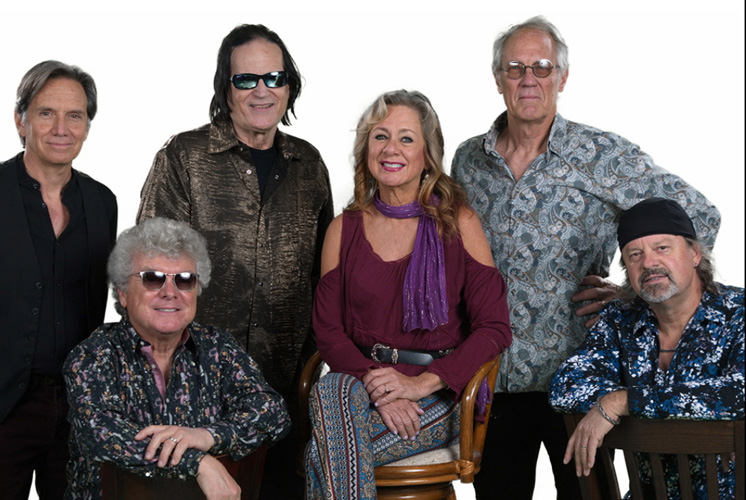
Ambrosia in 2022: Kipp Lennon, Joe Puerta (seated), Christopher North, Mary Harris, Burleigh Drummond and Doug Jackson. Photo by Ed Clark.

Sometimes, bands can have two entirely separate musical lives. There’s the group that casual listeners “know” from their successful, Top 40 hits. Then there’s a different side understood by more hardcore fans and deep cut listeners. Such is the case with Ambrosia.

Ambrosia’s place in music culture is cemented by a troika of massively successful romantic hits from the late ‘70s/early ’80s. All are still in constant rotation on plenty of Soft Rock and Yacht Rock channels and playlists: “How Much I Feel,” “Biggest Part of Me,” and “You’re the Only Woman (You and I).”

But the truth is that Ambrosia started out as much more of a Prog Rock band. Closer to Yes, Genesis and King Crimson than Bread, Firefall or Orleans. And according to drummer Burleigh Drummond, they’re not alone.

Joe Puerta onstage Photo by Chris Schmitt.

“Look at Phil Collins and Todd Rundgren!” he laughs. “But yes, the Yacht Rock [association] has brought in a younger audience for us. We’re still able to slip in a couple of our more musically elaborate tunes. It’s important that we put that out there. And with those songs, we get [better] royalty checks!”

“It’s given us a platform, especially with our hits,” adds bassist/vocalist Joe Puerta on the same phone call. “But we need a new term, like Yacht Prog!” In fact, only days after this interview, Ambrosia will be playing on the high seas as part of the revivalist group Yacht Rock Revue’s Steal Away cruise to Jamaica.

The current lineup includes original members Puerta, Drummond and keyboardist Christopher North. Along with Doug Jackson (guitars), Mary Harris (keyboards/vocals) and Kipp Lennon (lead vocals).

 “When ‘How Much I Feel’ came down the pike, the FM stations who had been playing Ambrosia said ‘You deserted us!” Drummond continues. “But the Beatles did both ‘Yesterday’ and ‘I Am the Walrus.’ Radio was more codified then. But those [three songs] gave us a whole new audience, which was young girls. Nowadays when we play live, it all works together.”

The quartet who would form Ambrosia did so in 1970. Along with Puerta, Drummond and North, the band included lead vocalist/guitarist David Pack. They had previously gigged under the very-Proggy name of Ambergris Mite.

But—shockingly—they discovered another band was already using the name Ambergris. Puerta opened a dictionary in the same general area, and they came upon “Ambrosia,” the word meaning “nectar of the Gods” in Greek Mythology. It stuck.

Their self-titled debut appeared in 1975, and band scored five Top 40 singles over the next years including first charter “Holdin’ On to Yesterday,” and the Pack-penned trio of hits “How Much I Feel,” “Biggest Part of Me,” and “You’re the Only Woman (You and I).” There was also a cover of the Beatles’ “Magical Mystery Tour,” their contribution to one of the ‘70s more offbeat projects film/music projects, All This and World War II.

Their Proggier side came out in tracks like “Nice, Nice, Very Nice”—set to a poem by Kurt Vonnegut, “Time Waits for No One,” “And…Somewhere I’ve Never Travelled” and “Cowboy Star”. Members also collaborated with Alan Parsons on Alan Parsons Project records and were avowed fans of King Crimson and the vocal harmonies of CSNY.

Ambrosia broke up in 1982, the same year they released their fifth and to date last studio album. The original quartet reunited in 1989 while continuing to use touring members and recorded three new tunes for a 1997 anthology. Pack left for good in 2000.

Puerta says hardly a day goes by when someone doesn’t tell him how an Ambrosia song played an important part of their lives. People courted, married, and perhaps even had, um, intimate relations to their music.

“For me it’s gratifying. And some of the fan mail goes even deeper. Some of it says that [our music] actually helped save people’s lives,” he says. “Anything that is confirmation you’ve affected people is wonderful.”

Joe Puerta is a different kind of bassist in that he approaches the instrument as more of a lead than simply playing second fiddle (bass?) to the guitar. It’s something he learned on record from some of his own favorite players.

“I started off as a guitarist and had to transition to the mentality of a bassist. I have always favored bass players who do something interesting and add another element to the songs,” he says.

Burleigh Drummond onstage Photo by Chris Schmitt.

“Players like John Entwistle, who had the first bass solo in a [rock] record with ‘My Generation.’ And of course, Paul McCartney took it to another level—there’s a whole bass solo under ‘Something.” But I also love jazz guys like Jaco Pastorius and Charles Mingus. They’re creating melodic interest with the bass.”

So, given that Ambrosia in 2022 features 75% of the original lineup with some extensive history, is there any extra comfort or camaraderie that other ‘70s/’80s bands with one or no classic current members doesn’t have?

“We have a communication musically that has developed over 50 years,” Drummond offers. “I don’t consider myself the greatest drummer in the world, but our rhythm section is great.”

Puerta adds “We’re just trying to hang on for dear life, actually!”

As for new music, Puerta says they’ve been “sitting on” a lot of material that he vows to get out somehow. And Drummond says it’s “some of the best things” the band has ever written. But they are also acutely aware of commercial and publicity realities of legacy bands putting out new music in 2022.

Cut off from their main source of incoming gigging live during the pandemic, members of the group collected government unemployment—and were grateful for it. Drummond, who is married to bandmate Mary Harris, formed a family group with their singing/instrument playing son and daughter. They also perform on their own and with others, though it wasn’t their original career path.

“My son went to school to become a doctor, and he came back his junior year and said wanted to be a musician. What were we supposed to say!” Drummond laughs. “And my daughter started out in the Peace Corps. Now, she’ll go out and busk or play in a restaurant table to table and come home with $700!”

Finally, when asked about any special memories of Houston, there’s a silence on the phone. And then a conspiratorial exchange.

“Burleigh, can I tell this story?” Puerta asks.

“Is it about my state of consciousness at the time?” Drummond responds.

“OK!” Puerta starts. “It was I think 1976. Burleigh had gotten wasted and went through some crazy thing and had gotten married just before we got on a plane to Houston. So we said we’d have a bachelor party and went to a strip club in Houston,” he says.

“We’re sitting in the front row and this girl comes out. And what does she play for her song to strip to? ‘Holdin’ On to Yesterday!’ We all jumped up and went ‘Hey, that’s us!’ And the bouncer told us to sit down.”

The band talked to the woman (named “Candy Kane”) after the show. And the next night—dressed “rather provocatively”—she introduced Ambrosia at the packed Summit before their set opening for Styx.

“OK, but I need to add to the story with what happened before!” Drummond jumps in.

“We were about to go on the road, and I realized I didn’t have anyone to take care of my cat. He was a huge cat I named Barry White. I panicked. I kind of had a girlfriend at the time and asked her to take care of the cat. And she said, ‘I’ll do it if you marry me.’” Drummond recalls. “It was two hours before the flight took off. We ran down, got married. And that’s that. It was a different time, but it didn’t last.”

For more on Ambrosia, visit AmbrosiaLive.net

This article originally appeared at HoustonPress.com
Posted in Ambrosia | Tagged , , , , , , , | 1 Comment

The Gin Blossoms Get Miserable Again

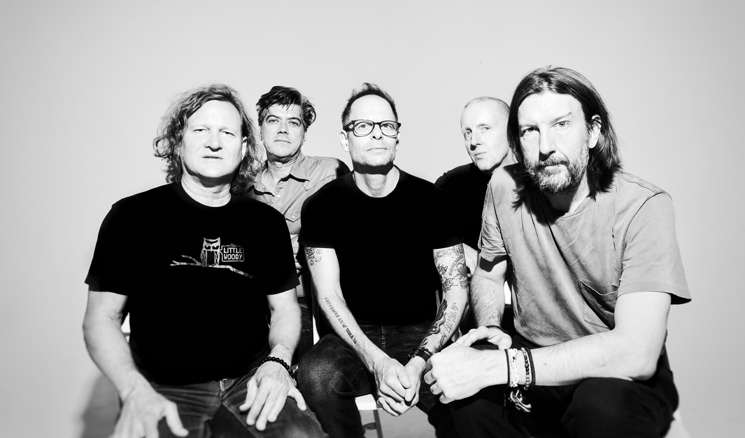
The Gin Blossoms in 2022: Scotty Johnson, Jesse Valenzuela, Robin Wilson, Bill Leen and Scott Hessel. 
Photo by Shervin Lainez

Note: Since this article was originally published, the Gin Blossoms postponed their anniversary tour when bassist Bill Leen broke his arm. It has since resumed.

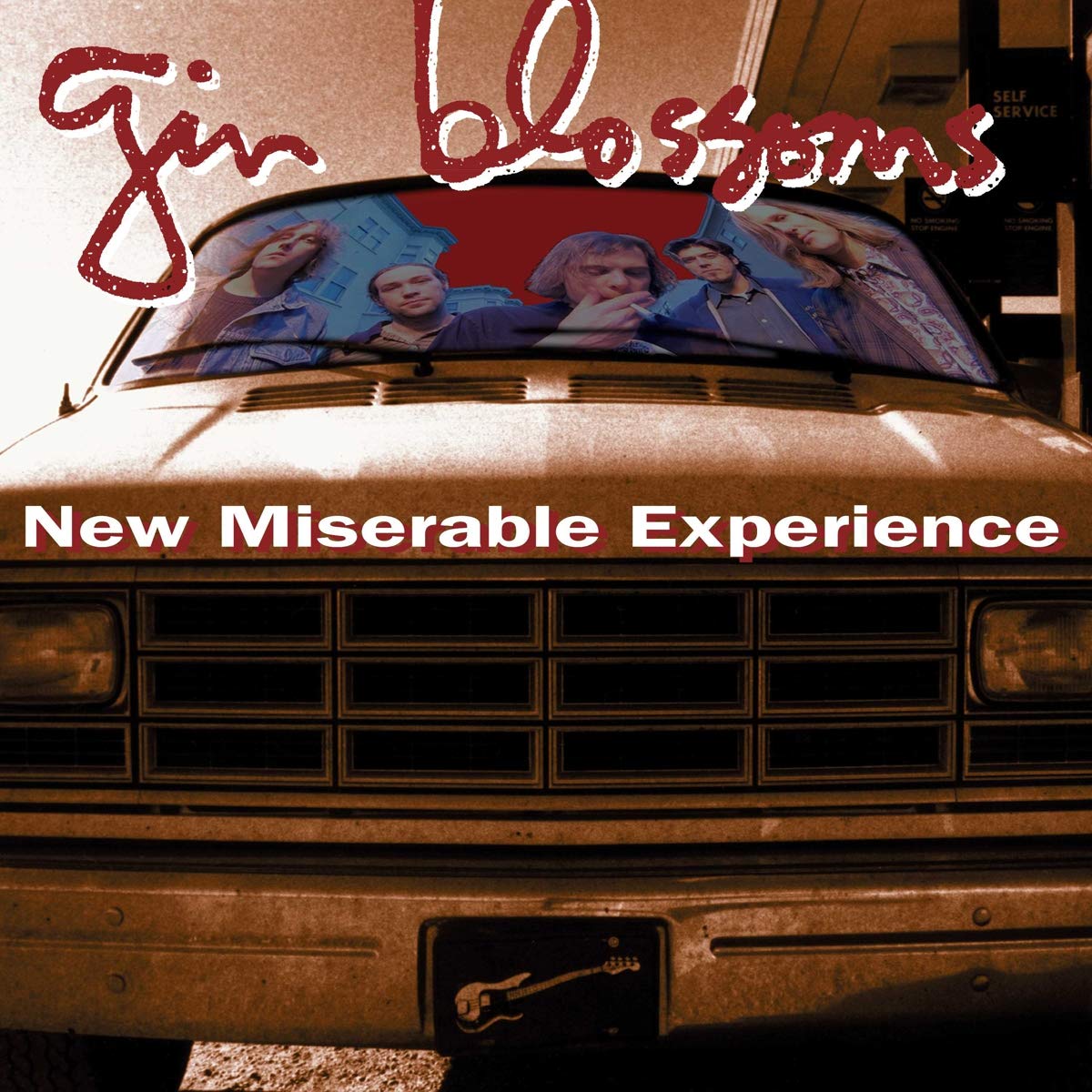
It was March 2019 and the last chords of “Cheatin’” rang out over the audience at Houston’s House of Blues. It’s the last track on the Gin Blossoms’ New Miserable Experience, and the band was performing their 1992 breakthrough record in its entirety on this tour.

Houston was the last stop, and lead singer Robin Wilson looked almost wistful. “This is probably the last time we’ll ever do this,” he said. “It’s been great!”

Flash forward to almost exactly three years later. The Gin Blossoms are touring and will perform the whole record again (along with other career-spanning numbers) for its 30th anniversary.

“Well, honestly, it was pressure from the fans and our booking agent and manager to do it again. We sell more tickets with New Miserable Experience!” Wilson laughs. “But the anniversary is worth noting. And it’s really not asking much from us as a band. I’m already thinking how to incorporate our other material into the show.”

New Miserable Experience featured three considerable radio and MTV hits (“Hey Jealousy,” “Until I Fall Away,” “Found Out About You”), smaller ones (“Mrs. Rita,” “Allison Road”), caustic tales of romantic despair and drinking (“Lost Horizon,” “Pieces of the Night,”) and some genre-hopping (“Cajun Song,” “Cheatin’”).

However, it was not a success upon its initial release. That took nearly another year, a heavy promotional push and a complete reissue with new artwork. And for the band, that was a very long year waiting.

“There were moments that [worried] us for sure,” Wilson says. “In early 1993 we were opening for the Neville Brothers and hanging out with a record company VP. We had only sold about 76,000 copies of the record. One night in our van, I asked what was going to happen after the tour, and he said they might be moving on. And I thought ‘Fuck!’”

A month later, management decided to send them on a tour of college campuses across the country, which would also generate publicity. It was then that “Hey Jealousy” started to pick up steam.

“It was grueling. Every morning we’d hear ourselves on the radio, and then in the afternoon play a college cafeteria or student union, and then a nightclub gig in town,” Wilson offers. “And we’d get sick all the time. It would work its way around the van. At one point, I felt hopeless.”

Wilson says that a conversation between a VP at MTV and VP at their A&M Records label led to a decision: If the band would shoot a new, better video for “Hey Jealousy” (which would actually be their third version), the channel would play it and break the band. That’s when A&M relaunched New Miserable Experience.

No discussion of the record can leave out one aspect forever tied to it, the tragic fate of original guitarist Doug Hopkins, who wrote “Hey Jealousy” and “Found Out About You.”

A troubled man with as severe, uncontrollable drinking problem, Hopkins was fired by the group toward the end of the album’s creation. Adding a sting was for the 1993 reissue while his name (and guitar) remained on the liner notes and actual music, the cover photo now included his replacement, Scotty Johnson.

It devastated Hopkins. And when the record became a huge smash, Hopkins committed suicide by gun in December. The band’s next effort carried the solemn title Congratulations, I’m Sorry.

Wilson takes a moment at each show to pay tribute to his late friend, and he especially likes performing the New Miserable Experience deep cut “Hold Me Down.” It’s the only recorded song that the pair is crediting with writing together, an upbeat-sounding tune with dark lyrics about excessive partying, lack of self-control and substance abuse.

He says that he shared with Hopkins a vision for an “edgy, upbeat, Cheap Trick kind of song with some darkness in the lyrics.” A couple of days later, Hopkins came back with most of “Hold Me Down” while Wilson added more musical and lyrical aspects.

“There were a few other things we collaborated on that Doug never wanted to give me credit for, but that one’s special,” he says. “And with the perspective of time, that means a lot to me.”

As for the entirety of New Miserable Experience, it holds a place in Wilson’s heart and mind outside of it just being their commercial breakthrough.

“So many memories. The first time we went to Ardent Studios to work with [co-producer and engineer] John Hampton. And Doug’s melting down and that relationship falling apart while we were trying to make the record. There’s a lot of heartbreak,” he says.

“And the hours and hours in that fucking van! Sometimes 15-20 hours a day. It was an experience. But we pulled it off and built a career making music that’s really connected with people. Music that we still play today. It’s a rare thing to have that opportunity, and we are humbled by it.”

The Gin Blossoms have released a handful of other studio records, with their most recent being 2019’s very good Mixed Reality. However, the realities of the music business have changed drastically over the decades, and there’s practically no consistent outlet to hear new music from bands who got their start in the ‘70s, ‘80s or ‘90s.

Surprisingly, Wilson doesn’t betray extreme frustration. Though he says that creating new music is just as important to the group as playing the hits like those mentioned along with “Follow You Down,” “’Til I Hear it From You” and “As Long As It Matters.”

“It’s not something we think about too much. We take the new material and put it into the set. Honestly, a good portion of the people in the audience if they hear a newer song, they don’t recognize it like that,” Wilson says.

“They might think it’s a B-side from the 2000s or something they don’t remember from the ‘90s. As long as the show doesn’t lose momentum and we play engaging material, the show keeps going. But of course, you break out one of the hits, and everybody’s phones come out.”

The current band includes 4/5s of the classic lineup—Wilson, Bill Leen (bass), and Jesse Valenzuela and Scotty Johnson (guitars). Drummer Scott Hessel has been in for more than a decade and is actually the longest-serving skin thumper. Phillip Rhodes drummed on the original record.

“It’s a brotherhood. And after 33 years, the [four classic members] are pretty much through all the bullshit and are in tune with each other and know what to expect,” Wilson offers. “It’s a complex brew. But we’re a family that’s dedicated to making sure that all our kids get through college!”

Finally, the Gin Blossoms are blessed with not one but two recognizable band logos that spell out the band’s name: the original swirly, cursive script-looking one, and a later with a block font and lightning bolts.

They’ve alternated on record covers, and both are available on band merchandise. Wilson says he favors the lightning-bolt one but admits he’s in the minority vote of his bandmates as the original is more familiar and sells better.

But that didn’t stop the man who says in another life he would be a graphic designer, photographer or art director (all roles he already fills in the Gin Blossoms) from creating one logo that the public will never see.

“A couple of years ago, I tried to design a heavy metal-style T-shirt for the band, and the logo had a flaming pentagram and ‘Gin Blossoms’ was written in blood like a Slayer T-shirt. I thought it was so fucking awesome and so fucking funny and ironic!” Wilson remembers. “But it got voted down among my partners. They didn’t think it was funny. But I tried!”

A longer version of this interview originally appeared at HoustonPress.com

For more on the Gin Blossoms, visit GinBlossoms.net

Posted in Gin Blossoms | Tagged , | Leave a comment

Robby Krieger Opens the Doors of His Memories

The Doors at the Hollywood Bowl in 1968: Morrison, Densmore, and Krieger. Photo © Henry Diltz and the Morrison Hotel Gallery/Courtesy of Littlte, Brown.

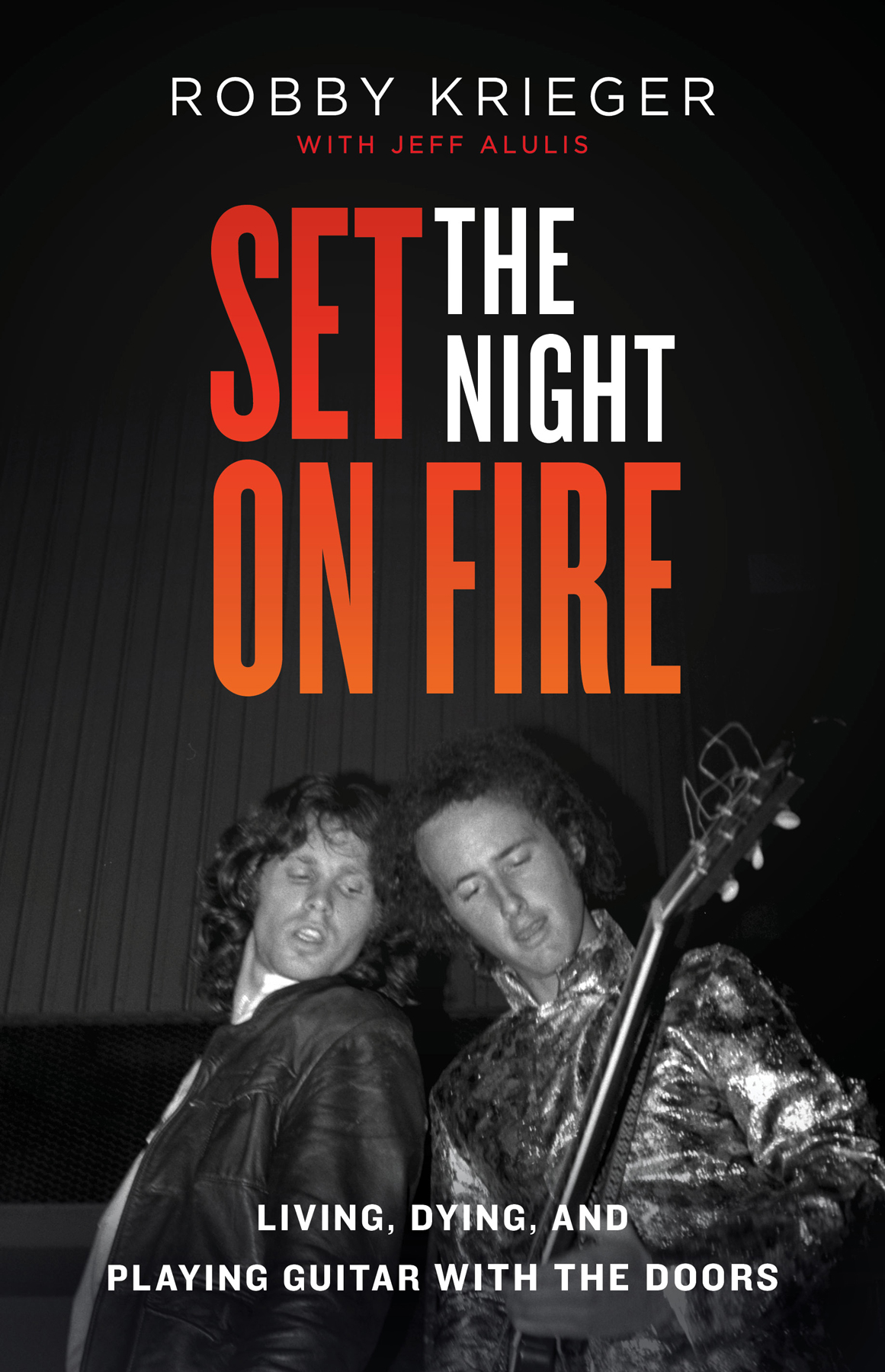
Set the Night on Fire: Living, Dying, and Playing Guitar with the Doors

By Robby Krieger with Jeff Alulis

432 pp., $29, Little, Brown and Company

Of all the classic rock bands, the Doors might have the most solid connection with literature. After all, they were named after Aldous Huxley’s must-have-hippie-bookshelf-title The Doors of Perception

Singer Jim Morrison wrote reams of poetry and lyrics, anthologized in this year’s The Collected Works of Jim Morrison. The late keyboardist Ray Manzaeak wrote an autobiography, as did drummer John Densmore, along with a more recent book of musical encounters.

Now, guitarist Robby Krieger offers his entry into the Doors canon. Written in an easygoing style, he offers his version of the band’s history, impact, his life outside of the band and throws some truth bombs about other books, docs and movies about the band (sorry, fans of Oliver Stone’s The Doors movie).

Once the Doors coalesce and try to find their place in the pantheon of California-bred 1960’s rock bands, Krieger writes about their inauspicious first gigs: a Hughes Aircraft Company party with well-dressed middle aged couples in an airplane hanger (Manzarek’s dad was an employee). Or gigging at Krieger’s parents’ New Year’s Eve backyard cocktail party.

But once they started playing more Los Angeles and San Francisco rock clubs, there was both an air of danger and “anything goes” about the group with no live bass player (Manzarek did double duty onstage). 

That encompasses often improvised performances and a volcanic frontman who enjoyed flirting with women, seeking dangerous situations and baiting the crowd and police. Those proclivities led to Morrison’s arrest in New Haven, as well as the charges from a Miami show in which law enforcement said he exposed himself.

Accounts of this famous event vary, but Krieger maintains while the singer (drunk at the time) made suggestions, he never actually pulled his pants down. This legal case would drag on, ending only when Morrison’s life did.

One of the greatest strength’s of Krieger’s remembrances is how he explains (as much as he can) the personal appeal and complexities of Jim Morrison and how he could get away with such bad behavior. Like, say, not showing up for a gig, or emptying a fire extinguisher inside a recording studio, or destroying Manzarek’s record collection by spinning discs to crash against the wall of his living room.

“His apologies were so simple, and yet so hypnotic,” Krieger writes. “I still don’t know how he got us to forgive him for half the stuff he did.” Krieger even theorizes that some of his more reckless behavior—whether driving a vehicle, massive alcohol intake, or provoking fights—was some sort of self-punishment.

The Doors: Ray Manzarak, Jim Morrison, John Densmore, and Robby Krieger. Photo by Paul Ferrara/Courtesy of Little, Brown.

And even though Morrison wrote the bulk of the lyrics and could have easily demanded the main songwriting credit, he insisted for most of their career that it be credited to all four members for their contributions (and to share in the royalties). 

Though it was Krieger who wrote the bulk of words and music their biggest hit, “Light My Fire” (Morrison contributed the verse about the funeral pyre). Krieger also wrote or co-wrote the hits “Love Me Two Times,” “Love Her Madly,” and “Touch Me.”

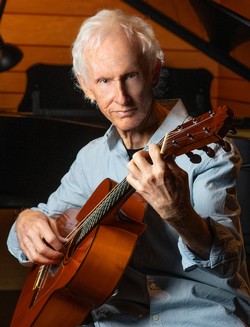
Robby Krieger today. Photo by Jill Jarrett/Courtesy of Little, Brown.

Houston gets a shout out for a 2003 performance by The Doors of the 21st Century—the band that Krieger and Manzarek formed with Cult singer Ian Astbury to play Doors music. “In Houston, a bunch of the crowd members stripped naked,” Krieger writes. 

This writer was at that show and didn’t recall seeing naked people. Though it was filmed for a live concert DVD, and the stage was full of audience members on the final number.

Krieger also touches on his and wife Lynn’s struggle with heroin, recent health scares, relationship with his parents and disturbed twin brother. Also post-Doors musical endeavors that included Doors-related band projects, jazz fusion, guitar rock, and a stint in the unfortunately-named The Butts Band.

There’s also a neat summary of the various ups and downs of the members’ relationships post-Morrison, lawsuits against each other and occasional reunions.

As to when Jim Morrison not-unexpectedly died in Paris at the age of 27—the true circumstances of which will likely never be known—Krieger admits honestly at first he felt relief that the chaos was over. And happiness that his fried bizarrely fulfilled a goal he talked about a lot (though later sorrow and anger came into the picture). And he does not want to contribute another theory or myth about his friend’s demise.

Now 75, Krieger still performs with his band and occasional Doors-related gigs. And while he self-effacingly describes himself as having “the worst hair in rock and roll” multiple times, Set the Night on Fire is the best memoir by a band member of one of the era’s most unique—and mythologized—groups.

This review originally appeared at HoustonPress.com
Posted in Books, Doors, Uncategorized | Tagged , , | Leave a comment

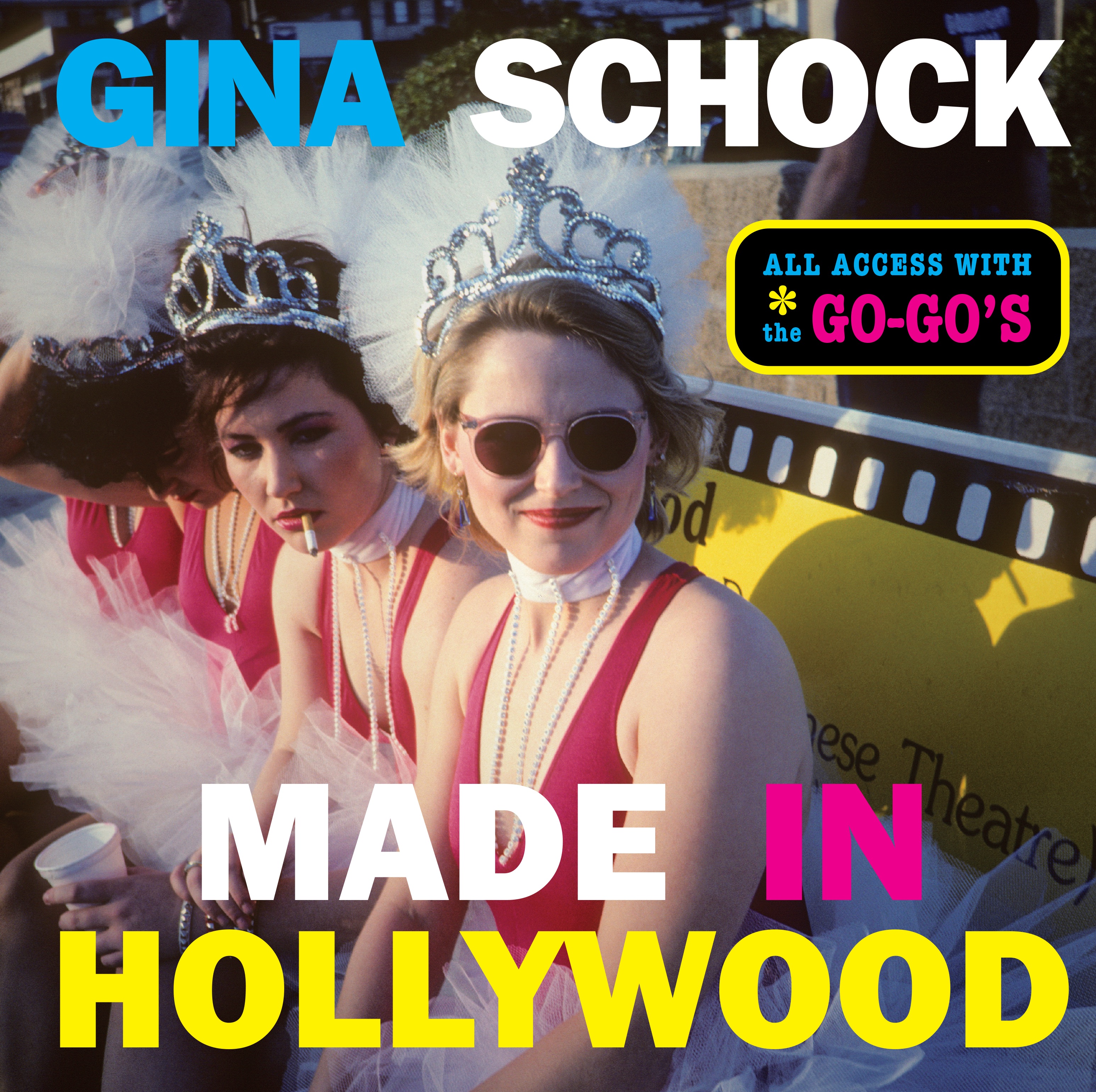
Gina Schock of the Go-Go’s Gets Snappy in Her Book

Gina Schock onstage with the Go-Go’s in recent years. Photo from the Collection of Gina Schock/Courtesy of MAD INK PR.

Almost as much as music, Gina Schock has had a love for an interest in photography for her entire life. And that includes before, during, after, and again during her career as the drummer for the Go-Go’s.

Backstage, onstage, at house parties and in various airports and hotels, Schock always kept her camera clicking, while also appearing in those taken by others. In the process, she and the rest of the band mugged for each other, and were often caught in the company of some fairly famous faces.

Scores of those casual photos—along with biographical text from Schock and remembrances from her bandmates and famous friends—come together in her book, Made in Hollywood: All Access with the Go-Go’s (240 pp., $40, Black Dog & Leventhal).

“I love photography. I have a lot of framed photographs on my wall at home, and I’ve always been a very visual person. Even in 1979 when I was just a kid traveling across the country, I had an Instamatic camera. And when I made a little money, I got a Canon 35 mm. And then I got into Polaroids,” Schock says from her home in California.

“A photograph tells you everything you need to know about moment in time. You look at it and you think and you remember exactly what was happening and who you were with and where you were. I’m excited and proud and happy to put this out. I’m in grateful mode.”

While her bandmates bassist Kathy Valentine and singer Belinda Carlisle have already written more prose-heavy memoirs (no word if guitarists Jane Wiedlin or Charlotte Caffey will get into the book game as well), Schock says that the much more photo-heavy format works better in her case.

In addition to the Go-Go’s, the snapshots show a who’s who of early ‘80s music and entertainment from the Police, Joan Jett, David Bowie, Billy Joel, Chrissie Hynde and Robert Palmer to Bill Murray, John Belushi, Christopher Reeve and even country stars like Johnny Cash, Dolly Parton and Tammy Wynette.

Schock with Go-Go’s singer Belinda Carlisle. Photo from the Collection of Gina Schock/Courtesy of MAD INK PR.

What’s refreshing is that they’re all very casual and often showcase a relaxed and goofy charm that no posed photo could deliver.

“It was a group of friends, we just happened to be the Go-Go’s. And everybody would do whatever I asked. They were perfect subjects!” Schock says. That includes the band in various nutty poses, with props, and in one series documenting a, uh, live “birth” of one of their own.

Tracking down the photos (most of which have never been published) wasn’t as simple as pulling down a carefully-curated scrapbook of images encased in protective mylar. Schock says they were culled from battered boxes in closets, underneath furniture and in storage facilities.

One of the photos takes on a more recent significance, from a sole October 1981 gig in Illinois where the Rolling Stones tapped the band to open for them. Posed with the Go-Go’s are then-bassist Bill Wyman and the recently-deceased drummer Charlie Watts. Not surprisingly, skin thumper-to-skin thumper, it’s that encounter that Schock may treasure above all others.

“First of all, it was a once-in-a-lifetime opportunity to open for them. We were knocked out and so excited,” Schock recalls. “I idolized Charlie Watts. I could hardly speak to him! But he was so sweet and such a gentleman and everything I’d hope he would be. Then I got to sit on his drum kit and fool around. I was in heaven!”

A couple of other photos are from backstage at a December 1981 taping of TV’s Solid Gold that featured the Go-Go’s, KISS in full makeup and costumes and hairy-chested host Andy Gibb. Quite a mixture of musical styles and looks. But if you’re thinking Shock would roll her eyes at the memory, you’d be wrong.

“Oh my god! I loved doing Solid Gold. We probably did that show more than any of the others!” she says without a hint of snark. “The thing I remember the most is that they used to make you wear this makeup that made you look orange, though I guess it didn’t pick up on the camera. And of course, the Solid Gold dancers doing their interpretation of your song around you while you’re playing it. It was a blast.”

The Go-Go’s have an extremely important career milestone coming up later this month when they’ll be onstage in Cleveland as inductees into this year’s class at the Rock and Roll Hall of Fame. The band will give speeches and are expected to play a three-song set.

The Go-Go’s are the most commercially successful all-female band ever, and still the only one to have a #1 album with their debut Beauty and the Beat (it eventually surpassed the Ghost in the Machine by the Police, for whom the Go-Go’s had opened for on a portion of that tour). Their hits include “Our Lips are Sealed,” “We Got the Beat,” “Vacation,” “Head Over Heels,” “Turn to You,” and “Get Up and Go.”

They’ve had their Rock Hall champions for years. But Schock (and the rest of the group) feels it was last year’s career-spanning documentary The Go-Go’s, directed by Allison Ellwood, that put the band back on people’s radars and Rock Hall members’ ballots.

“I gotta tell you, the documentary was the kick in the ass that the general public and the industry needed to recognize this band again and have a real look inside. Allison did an incredible and beautiful job, and we all loved it,” Schock offers.

When it’s suggested that many casual Go-Go’s listeners only know the more pop commercial hits and nothing about their much more punk rock roots, she agrees.

“At heart, we’re a punk band, and we always will be. And in our live shows, we really rock out,” she says. “The way we play, we’re not really great musicians or trained musicians, but it works for this band. The punk era was a time when everybody picked up their instruments whether they could play or not and just had a good time with their friends. And lot of bands that came out of that are a still around.”

Joan Jett with Gina Schock. Photo from the Collection of Gina Schock/Courtesy of MAD INK PR.

Schock carries that feeling over with an answer to the question: If she had a Magic Induction Pass to get any other group into the Rock Hall. Who would get the go-go sign? She first offers the names of the Clash and the Ramones (who are both already in). She’ll have to try again.

“Shit, let me just think here!” she laughs. “OK, it’s got to be X. They were an incredible band and still are. We were in awe of them when they played. They were like a hurricane coming in,” she says of one of the most critically acclaimed acts of the original L.A. punk scene. “So powerful, and all the songs had really great hooks.”

Of course, today anyone reading this can immediately pick up their phone and within minutes download the entire discography of X. Schock says that ease of access to any music is helpful for people of any age group to discover older acts, but something is lost in the process as well.

“You just push a button and get whatever you want. But [younger people] need to learn how to go to a record store and dig through vinyl. It’s coming back!” she laughs. “There was something great about going to a record store and seeing all the latest releases. And the artwork. Now, it’s all streaming.”

It’s clear leafing through Made in Hollywood that the five Go-Go’s have a deep affinity for each other (even though later years would bring quittings, breakups and lawsuits). All that’s settled now. They released a new song to go with the documentary (“Club Zero”), have some live dates in California toward the end of this year, then a UK tour supporting Billy Idol in 2022.

Finally, when Go-Go Kathy Valentine spoke with the Houston Press last year for her memoir All I Ever Wanted, she likened the chemistry of the classic five member lineup to a really good cake: Take one ingredient out, and it just doesn’t taste the same. Her fellow rhythm section member agrees.

“That’s a great analogy. When the five of us get into a room together, it just…starts!” she laughs. “And then when we pick up our instruments, it goes up ten levels. So by the time we’re about to play, we’re ready to explode! And that doesn’t happen with anybody else. It’s a magical thing. It just is.”

Note: This interview originally appeared at HoustonPress.com
Posted in Books, Go-Go's | Leave a comment

Rickie Lee Jones Won’t Run Out of Chances

Rickie Lee Jones is ready to get back on the road after sharing family stories in her memoir. Photo ©Astor Morgan/Courtesy of Kid Logic Media.

It’s common for musicians to feel that their work lets listeners into their minds, their souls, or their hearts. It’s less common that fans are invited into their actual homes.

But that’s what many artists did — at least virtually — when the pandemic caused mass cancellations of tours that are most performers’ main source of income. So fans saw a lot of living rooms, garages, and home studios via live-streaming where the performance was often free, but the star of the show’s Venmo and CashApp accounts were open.

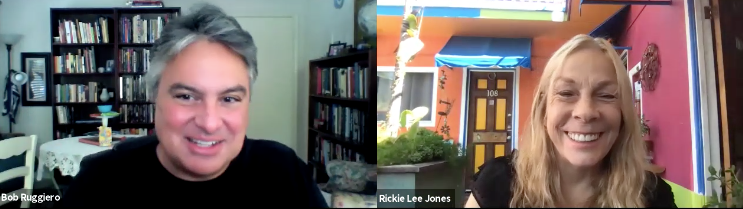
Classic Rock Bob (that’s me!) and Rickie Lee Jones chat over Zoom. She’s got a colorful house!

Singer/songwriter/guitarist Rickie Lee Jones did a number of livestreams from her home in New Orleans. First, tentatively trying to work the camera with just her and a guitar, later including other instruments and players as well.

“At first, it seemed like a revolutionary act to not have any middlemen and bring the show to the people directly. It was a brand new idea. I’m not there physically, but it’s between me and my audience personally,” she says from Los Angeles on a Zoom interview.

Rickie Lee Jones is an avid gardener. Photo ©Astor Morgan/Courtesy of Kid Logic Media.


“In a live show, there’s more pressure because they’ve traveled to see you and you have to be more snappy. But with these, it’s more like you’re talking to your friends. But people still want to come see a live show in person.”

To that end, Jones is about to embark on a short tour that will bring her to Houston for a September 30 show at the Heights Theater (which will have COVID protocols).

She’ll be performing material that will span the entirety of her career, beginning with 1979’s debut Rickie Lee Jones. Its leadoff track is her best known song, the  No. 4 hit, “Chuck E.’s in Love.” She’ll be accompanied onstage by multi-instrumentalist Kai Welch and drummer Mike Dillon.

“I did a couple of shows last week and once you break that into the membrane as a [performer], it’s the same. It feels good to be in front of people, and they’re happy to be out again,” she adds.

Outside of music, Jones has been in the literary news for this spring’s release of her inventive and engaging memoir, Last Chance Texaco: Chronicles of an American Troubadour. The book takes its title from one of her best known songs, nominated for a Grammy for Best Female Rock Vocal Performance despite never being released as a single (though she did win Best New Artist at the 1980 ceremony).


While most musician’s memoirs tend to gloss over or speed through their childhood and teenage years, that’s what makes up the bulk of this text. In fact, the book is 50 pages from the end when Rickie Lee Jones is released (though she considers its follow-up, Pirates, her best album).

But in this case, Jones tells about her unorthodox family, shaky relations both with and between her parents, frequent moves, and a vagabond lifestyle. Her story is filled with colorful real-life characters as she starts to take an interest in writing and playing music.

All from a girl whose was rejected from membership in her high school choir because her voice was “too unusual.” But unusual enough to have been featured on more than a dozen studio albums and many collaborations.

A true hippie girl, at the age of 14, Jones started hitchhiking around the country, with later jaunts to Canada and Mexico. Most often not knowing or having planned out where she was going, how she was going to get there, who she would be staying with or where her next meal was coming from. And mix in the cocktail of drugs, alcohol and free love.

“I had an unusual life and came from an unusual background. And the book is about my family. I can still see through my 14-year-old eyes why that was a good idea. But as a mother of a daughter, I am horrified!” Jones laughs.

“I truly believe I still had this sort of innocence that kept me safe. It made me just catapult through really dangerous situations, glide through things that could be and often were very dangerous. I had a child’s view of life. And it was also the end of the hippie time where it was ‘Come and we’ll take care of you.’”

At the start of her career, as she writes, Jones was flooded with comparisons to Joni Mitchell – though only on the surface of a high-voiced-blond-girl-singer-with-guitar. But since then she’s followed wherever her creative muse has taken her to rock, pop, R&B, avant garde and her beloved jazz music.

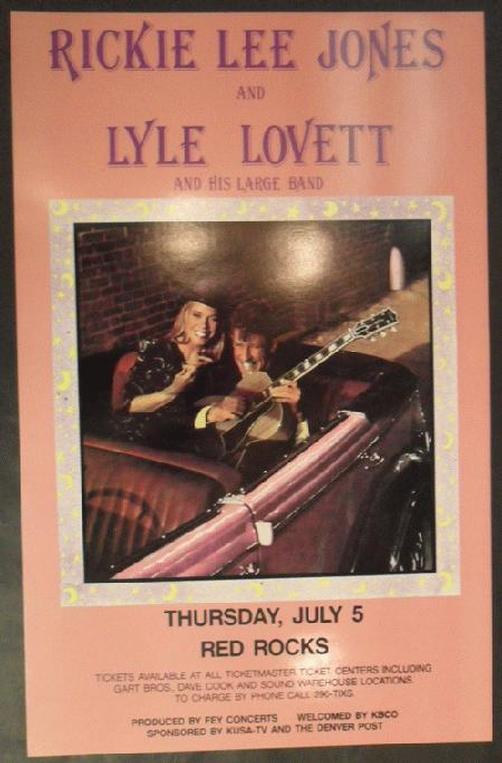
Tour poster


“No, it wasn’t a good career move because it confused the audience. Everybody likes to decide who someone is and put a frame around them and keep them that way,” she says. “So I have a diverse group of people who like different things that I do and may not like each other at all! But it gives some elbow room to have a more diverse career. I always knew that, and I was always drive to do what I had not done before.”


Among her other musical compadres was area boy (via Klein) Lyle Lovett, who opened for Jones on a 1990 tour of outdoor theaters early in his career. Her new manager from Texas had talked him up.


“Lyle was able to slip into this thing because people weren’t sure exactly what he was,” she says. “We did this photo session to make a poster for the tour and Lyle never smiled at all. So we got into a car and I don’t remember what I did, but he smiled—and that’s the picture we used! Him and his great big hair!”

Jones adds that by the end of the tour, Lovett had met director Robert Altman who would cast him in his film The Player, as well as future wife, actress Julia Roberts. “And by then was a big star!” Jones laughs. “So, you’re welcome, Lyle!”

But one relationship that Jones writes about in Last Chance Texaco is her years-long on again-off again intense and pyrrhic romance with fellow troubadour Tom Waits. And if Jones was—as Time magazine dubbed her—“The Duchess of Coolsville,” then the growly, ramshackle Waits was her Duke. The pair rolled around California in a world with equal residency in reality and fantasy, acting out scenarios from the Bohemians, Beats or a Charles Bukowski book.

“Now we were religions, we converted to each other, we inspired each other and we spoke in tongues,” she writes in the book. “We stayed in character for our entire romance and our characters were sometimes cruel and often selfish. We needed those characters to love from our ‘real’ selves, but maybe our real selves were too damaged to trust.”

The final break came when Jones admitted to Waits that she had been secretly hiding a heroin addiction, but was ready to quit and asked for his help. Instead, she writes that seemed to get miffed and abruptly left for good. It took more time for Jones to get truly clean.


“We were that way from the time we got up in the morning. We had made those people, those characters to be, and we didn’t take them off,” she says now. “I really think that together we began to imagine becoming regular people like our parents. But I felt that he and I weren’t wholly developed people. We were figures from books or the past, characters.”

Finally, there was the death of songwriter/performer/and Waits’ top bro Chuck E. Weiss this past July from a longstanding battle with cancer. As the subject of Jones’ most famous song, Weiss has had an up and down relationship with the tune and Jones herself. She eulogized Weiss with a piece in the LA Times, though they hadn’t been close in a long time.

“A friend called to let me know that he was gravely ill, and I wrote a letter and sent it to him,” Jones says wistfully. “But he died before he got it.”

After the current tour ends, Jones says she has some projects in the fire, possibly springing from Last Chance Texaco as well as a potential separate theatrical production. “And who knows?” she laughs. “I might even do more shows from my living room!”

This interview originally appeared at HoustonPress.com
For more on Rickie Lee Jones, visit RickieLeeJones.com

Posted in Books, Rickie Lee Jones | Tagged , , | Leave a comment

Yes Keyboardist Geoff Downes is on a Proggy Quest

Yes in 2021: Steve Howe, Jon Davison Billy Sherwood, Alan White, and Geoff Downes Photo © 2021 Gottlieb Bros/Courtesy of SRO PR.

Note: Since the original publication of this interview, Yes drummer Alan White passed away in March 2022 at the age of 72.

When MTV celebrated their 40th anniversary, the old trivia question about “What was the first video ever played on the channel?” came around again. It was, of course, “Video Killed the Radio Star” by the English duo Buggles, made up of singer/bassist Trevor Horn and keyboardist Geoff Downes.

In 1980 both would later (very) briefly join the Prog Rock group Yes, and Downes returned to the band full-time in 2011. Still, it’s surprising that when he appears onscreen via a Zoom interview from his home in England, sporting a T-shirt with an old school MTV logo decorated as the United States flag. That begs the question: Did Buggles know how prophetic that song would become?

“The song had been out two years before and had been #1 all over the world except in America!” Downes laughs. “By the time MTV showed it, Trevor was off doing productions and I was in [the band] Asia. So we didn’t give it a thought! Though in hindsight, it was pretty prophetic.”

Today, Downes is ready to discuss the new record from Yes, The Quest (Inside Out Music). Featuring eight tracks and three bonus tracks, the songs were largely discussed and at least started coalescing at the end of 2019 and early 2020. But then the pandemic hit and things changed. It would now have to be recorded with members flung across the U.K., the U.S., and Barbados.

“It was a challenge,” Downes offers. “But I was used to doing it that way before, in the albums I did with the Chris Braide in the Downes Braide Association. But for the other guys in Yes, I think it was a bit different.”

The “other guys” include Downes, classic lineup members Steve Howe (guitar) and Alan White (drums), Jon Davison (vocals) and newish bassist Billy Sherwood, who took over after the death of founding member Chris Squire. Squire was the only member of a constantly-rotating lineup who appeared on every Yes record. And The Quest marks the studio debut of Davison.

“I think we’re the longest lasting lineup of all time! Over six years or something!” Downes laughs. “It was nice that we had this opportunity to make this album. We’ve talked about it for years. We exchanged all the ideas before the pandemic, then we had to figure out how to make it.”

Some of those ideas in an overall more gentle-sounding record include calls for unity and humanity working together, hope for the future, and some romance. Close to Downes’ heart in particular is the material about climate change like lead single “The Ice Bridge.”

“But we didn’t want to be too heavy about it,” he adds. “Like stand on soapbox and dictate to the world about it.”

Geoff Downes Photo © 2021 Gottlieb Bros/Courtesy of SRO PR.

For Downes, putting fingers to keys is something of the family business. His mother was an accomplished piano player, and his father the local church organist—and a bank manager.

“He was good at both things!” his son laughs. “I would say there was a lot of piano and keyboard music around me in the house. That was the way I was brought up, and I started playing piano when I was six and then went to music college. I was fortunate I got involved in the music scene in London.”

Downes arrived in London in the mid-‘70s, and by that time English Rock Stars had developed something of an exclusive intermingling practice at clubs and venues like the Speakeasy, the Scotch of St. James, the Marquee, Bag O’Nails, and the Ad Lib. By that time, the group that he would eventually join were already known.

“All of the members of Yes met at the Speakeasy and the Marquee. These were clubs that musicians went to. You’d see Jimi Hendrix having a drink with George Harrison,” Downes says. “I think all of Yes also met their wives at the Speakeasy! I heard all the stories from Chris and Steve!”

In the 1980s, Downes found commercial success with Asia, who hit with singles like “Heat of the Moment,” “Time Will Tell,” and “Don’t Cry.” All got a boost by (there is is again) frequent videos plans on MTV. For many Gen Xers, it was their first exposure to Prog Rock, albeit greatly infused with a pop sensibility. 

“The other three guys had come from huge Prog bands. John [Wetton, singer/bassist] from U.K. and King Crimson, Steve [Howe guitarist] from Yes and Carl [Palmer, drummer] from Emerson, Lake and Palmer,” Downes says. 

“They were at the top of their game. I think when I came into the fray, I think I took it more into the melodic and pop areas. And they rose to that challenge. They’d done all the long pieces and the massive progressive rock tours in the ‘70s. This was like a breath of fresh air to them. It still – especially the first couple of albums – had the underlying progressiveness, but it was condensed. There was still musicality in there.”

Finally, while the pandemic has put the kibosh on any touring to promote The Quest, Yes, has booked dates in Europe beginning in May 2022 in which they’ll play the entirely of 1974’s Relayer album (of which only Howe and White actually played on) as well as a greatest hits set. 

Downes says it will be a challenge, but he’s looking forward to working on songs that no lineup of Yes has ever played live. The band was inducted into the Rock and Roll Hall of Fame in 2017, but Downes was not among the members chosen to be enshrined at the glass pyramid in Cleveland.

“We’ve done a lot of those early albums in their entirety after I joined in 2011, but Relayer really stuck out,” he says. “It’s a very challenging record, especially for a keyboard player. It’s very intense. It will be a big challenge. I come from a line of Yes keyboardists like Tony Kaye and Rick Wakeman and Patrick Moraz.”

But don’t be surprised if some of the material from The Quest also gets a delayed workout. And even when Yes isn’t active, the 69-year-old Downes has plenty of other musical avenues and collaborations waiting.

“It’s been a very wide ranging career, and I’ve enjoyed every aspect of that,” he sums up. “Working on this Yes album was great to communicate with the guys again. I’m very happy with it.”

For more on Yes, visit YesWorld.com

This article originally appeared at HoustonPress.com

Posted in Yes | Tagged , , | Leave a comment