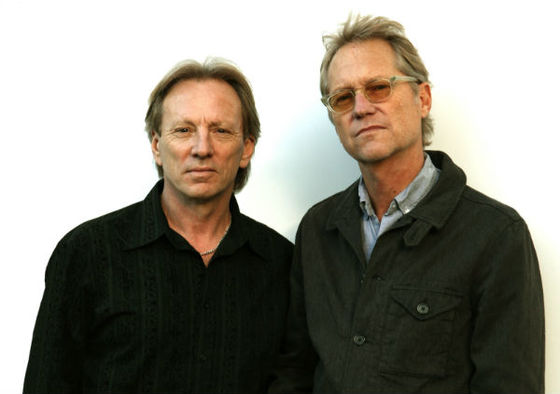
Former Eagle Don Felder on “Hotel California” and Flying Solo

DonFelder copy

For anyone making a Top 10 list of classic rock’s most iconic songs, there of course has to be a slot for “Hotel California.”

Right up there with “Hey Jude,” “Stairway to Heaven,” “Layla” and “Smoke on the Water,” the 1977 Eagles song – written by band members Don Henley, Glenn Frey, and Don Felder – has a melody as memorable as its lyrics are cryptic. And while the #1 hit is arguably the band’s most memorable track, it wasn’t until fairly recently that Felder realized just how iconic it has become.

“I was playing a small gig two years ago for the United Nations in Washington, D.C. for about 500 heads of state, political personalities, and dignitaries from all over the world. And probably half of them didn’t speak English,” the affable Felder recalls today.

“But when I went out to play ‘Hotel California,’ the place just erupted. Everybody stood up and applauded and knew that song. And to me, that meant more than standing on stage and playing it even for 100,000 people.”

The impossibly young-looking 68-year-old is also touring on the re-release of his most recent solo record, Road to Forever (INGrooves). It’s an extended edition featuring four additional tracks with the original version’s dozen.

“Some places like Amazon, iTunes, and Japanese distributors wanted exclusive songs when it came out, so that’s where those come from. I’m glad to see them all living together now in the same place like they were supposed to!” Felder laughs.

With numbers running the gamut from hard rock and ballads to laid back grooves and even a lullaby, Felder notes that it was “liberating” to do the project, especially coming on the heels of a divorce from his wife of 29 years.

The subject and feelings color a number of tunes, including “You Don’t Have Me,” “Heal Me,” “Over You,” and “Wash Away,” the last co-written with longtime friend Tommy Shaw of Styx.

DON_FELDER_COVER copy

“If there’s a human common denominator in life, it’s that life batters us emotionally. Loss of loved ones and family, heartbreak from relationships. All these become scars on our heart, and we all wish we could go through the process to wash away all that pain and history we carry,” he says in explaining the song. Although he’s also quick to point out that he and his ex-wife (who have four children together) have a “wonderful” current relationship, and often spend holidays together with their new significant others.

“It was amicable. We just sat down and decided to spare ourselves the agony of a long process and keep the money for our kids instead of giving it to lawyers,” Felder offers. “We still talk on the phone once every week or two, we have hundreds of friends together, compassion for each other, and we shared and appreciated the time we had together. But we’re happier individually now.”

Felder’s divorce from the Eagles hasn’t been so quite amicable (more on that in Part 2 of this interview), but he’s kept other musical friendships intact and thriving, as Felder is at the axis of a sort of Florida Classic Rock Galaxy.

Duane Allman taught him some new ways to play slide guitar. He and Stephen Stills have been friend and collaborators since they were teens and Felder’s mother would drive them to shows. And a young Felder once gave guitar lessons to an even younger student – a guy named Tom Petty. He would go on to do pretty OK for himself.

“Stephen now lives about a mile down the road from me. We play golf, do charity events together, even go to each other’s kid’s birthday parties!” Felder laughs. So when “Fall From the Grace of Love” on Road to Forever was begging for some crisp harmony vocals, it wasn’t hard for Felder to call in Stills and a couple of guys he’s sung with for decades – David Crosby and Graham Nash – to lay it down.

Don Felder and Joe Walsh ripping it up - likely on "Hotel California."

Don Felder and Joe Walsh ripping it up – likely on “Hotel California.”

Felder used to play guitar for the Crosby/Nash offshoot group in the ‘70s and had known the duo for years prior. In fact, it was Nash who encouraged him to leave their employ and join the Eagles in 1974. Even convinced him.

“I was very reluctant to leave [Crosby/Nash] because I was making $1,500 a week in 1973, which is like $15,000 today. And my first son was about to be born. So why would I leave that security to join a band that seemed to be perpetually breaking up?” Felder says. “But Graham told me that there was a glass ceiling on being a sideman. And he was right.”

Don Felder’s subsequent career with the Eagles to the massive heights of success, break-up, reunion, dismissal, and legal maneuvers has enough material for its own book [and was in Felder’s own 2009 autobio, Heaven and Hell: My Life In the Eagles (1974-2001)]. So…

Coming up in Part II: Felder’s often bumpy flight with the Eagles, his thoughts on the recent History of the Eagles DVD, and why he can’t understand the depth of hatred Don Henley and Glenn Frey still seem to hold for him.

Portions of this article originally appeared in The Houston Press.
Posted in Don Felder, Eagles | Tagged , , , , , , , | Leave a comment

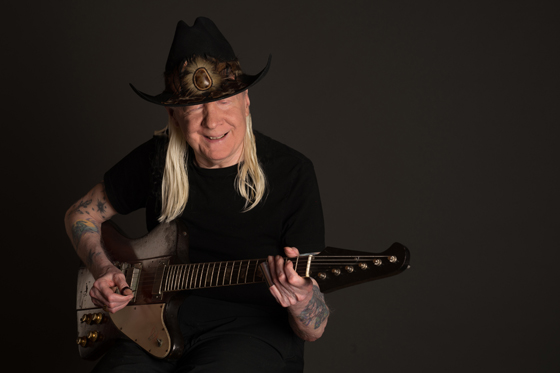
Johnny Winter Stays True to the Blues

Johnny Winter today. Photo by Michael Weintraub for Sony.

Johnny Winter today. Photo by Michael Weintraub for Sony.

A December 1968 edition of Rolling Stone featured Texas musicians who were at the time making inroads into the magazine’s home city of San Francisco.

Featuring a cover photo of cowboy-hatted Doug Sahm (balancing toddler son Shawn on his knee), it mentioned players and singers both known (Janis Joplin, Steve Miller, Boz Scaggs) and others familiar only to hardcore fans.

But it was a mention of a shit-hot blues player, Johnny Winter, that seemed to generate the most buzz.

Soon, the Beaumont native found himself in demand. The article described “A cross-eyed albino with long, fleecy hair, who plays some of the gutsiest, fluid blues you ever heard.”

A guest appearance with Mike Bloomfield and Al Kooper at the Fillmore East gave a major audience their first real look at this mythical figure. Columbia Records execs were in the audience, and it led to a then-unheard of advance for an unknown act — a reported $600,000 — resulting in Winter’s 1969 self-titled debut.

And while his career and personal life have seen plenty of ups and downs, Johnny Winter has always stayed the quintessential Texas bluesman, true to the genre even when seeing other guitar heroes reap more popular acclaim.

So it’s fitting that in time for his recent 70th birthday on, he’s feted on disc with the career spanning 4-CD box set True to the Blues: The Johnny Winter Story (Columbia/Legacy).

“I was very happy with the way it turned out. They did a good job picking stuff,” says Winter, ever succinct in answering questions, from somewhere on the endless road. “I’m happy with it”

True to the Blues features 56 tracks culled from a whopping 27 albums (as well as unreleased material), and spans tracks recorded in 1968 at legendary Austin club the Vulcan Gas Company to 2011 collaborations with Vince Gill and Derek Trucks, taken from 2011’s Roots CD.

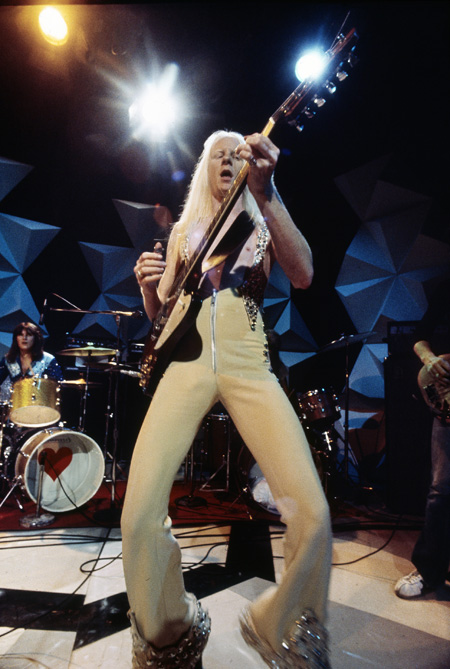
Johnny Winter shreds back in the day. Photo courtesy of Sony.

Johnny Winter shreds back in the day. Photo courtesy of Sony.

Also making their appearance for the first time are incendiary live cuts from the 1970 Atlanta Pop Festival, as well as Woodstock. Sadly, Winter’s management didn’t think much of the event at the time, hence his absence from the movie.

“It was very emotional music with a lot of feeling. More than I’d ever heard,” Winter says of his first attraction to the blues, which he shared with brother Edgar. His similarly albino sibling also carved out a career as a musician, albeit in a more rock direction (“Frankenstein”). The two would play with each other’s bands for decades.

But this was also back in the day where, say, having any song by any artist of any era instantaneously at the click of a computer mouse was something akin to science fiction. The Winter brothers had to become something of musical detectives to find the blues.

“Yeah, there were several radio stations that played it. Beaumont had a black station, KJET,” Winter remembers. “There was WLAC in Nashville, a 50,000-watt station. In Shreveport that was KWKH and a big station in Mexico, XKRS that Wolfman Jack was on. You could get those stations all the way up to Canada.”

He adds that there was a good record store in Beaumont run buy a guy who owned few juke joints: “He had a good blues selection.”

Johnny with his hero, Muddy Waters. Photo by Don Hunstein/Courtesy of Sony.

Johnny with his hero, Muddy Waters. Photo by Don Hunstein/Courtesy of Sony.

Among his many collaborations with musical heroes, peers and spawn, it’s his relationship with Muddy Waters that stands above all. Winter produced the blue giant’s last four records, including his 1977 comeback effort Hard Again.

“I loved Muddy,” he offers. “We got to be great friends, real close. He liked me a lot too. I’d go over to his house in Chicago and he’d cook dinner for me.”

Of any Texas musicians he feels never got the credit due them, Winter goes for an obscure one: Joey Long.

“Joey Long was really good,” he says. “He played all over Texas and Louisiana, but never got successful. He was the first black guy I knew who made a living playing blues.”

Today, as always, Winter is on the road, and is planning a series of celebratory birthday-night shows at B.B. King’s in New York City. A new record is in the can and ready to be mixed, featuring collaborations with Dr. John, Billy Gibbons, Mark Knopfler, Joe Perry and Joe Bonamassa.

Finally, a trailer has just been posted for Down & Dirty, the documentary on Winter’s life and career in music making its world premiere at this year’s SXSW Film Festival.

“I’ve been working on it for a couple of years now, so I’m hoping it will be out [in general release] soon,” he says, in the most animated tone of our entire interview. “It’s exciting to have a movie done of your life!”

A version of this article originally appeared in The Houston Press.
Posted in Johnny Winter | Tagged | 1 Comment

Former YES-man Jon Anderson on His Roundabout Prog-Rock Career

Jon Anderson today. Collage by Deborah Anderson.

Jon Anderson today. Collage by Deborah Anderson.

Classic rock fans might not see the connection between intricate, musically adventurous Progressive Rock and all-you-can-eat shrimp and shuffleboard tournaments. But increasingly, fans of this genre – or Southern Rock, or blues, or country, and even Rick Springfield or KISS – have gathered on the high seas on cruise ships on the high seas packed with hardcore fans enjoying concerts, Q&A sessions, workshops and…shrimp.

Recently, Jon Anderson – the legendary former lead singer of Yes embarked on the “Progressive Nation at Sea” jaunt, while his former bandmates headline “Cruise to the Edge.”

Anderson – who also just wrapped up a career-spanning solo tour – has done a couple of these events and grown to like them, despite initial reservation. “It ends up being a good time for me and my wife. And this time, we’ve got a balcony and a patio. And we won’t eat too much!” he says in a high voice that lends credence to the fact that he does not sing in falsetto.

Anderson’s own tour mixed (of course) the classic rock warhorse tunes of Yes, solo material, collaborations with other artists like Vangelis, and a seemingly unstoppable flow of new music. It’s a lower key affair that the stadium and amphitheater locations he used to play with Yes.

The most recognizable songs, of course, came from his lengthy service with the group and material like “Long Distance Runaround,” “Roundabout,” “I’ve Seen All Good People” and “Owner of a Lonely Heart.”

The tour was the direct result of a journey he began about six years ago after recovering from vocal difficulties which began in 2004 and that saw the cancellation of a 2008 Yes tour. It led to the group he co-founded jettisoning him rather than wait any longer for his recovery, and he was replaced with Benoit David, the very Anderson-sounding lead vocalist of a Yes tribute band (their current lead singer is Jon Davison).

“People were very receptive to my solo shows,” Anderson – who says he’s fine now and “sings every day” to keep his voice in shape. “And if I’m having a good time, the audience is as well.”

Yes – along with Deep Purple – are probably the two highest profile acts not in the Rock and Roll Hall of Fame who absolutely should be. Both were in the initial ballot for induction this year, but didn’t make the final cut. And while it speaks to what many fans of hard rock, metal, and prog rock see as a bias against their favored genres, Anderson is confident that soon the Hall will say yes to Yes.

Yes in the satined '70s: Alan White, Steve Howe, Rick Wakeman, Chris Squire, and Jon Anderson

Yes in the satined ’70s: Alan White, Steve Howe, Rick Wakeman, Chris Squire, and Jon Anderson

“Bands like Yes and Deep Purple and Jethro Tull and Emerson, Lake & Palmer have sold millions of records, and we actually connected musical eras,” he says. “It’s something I don’t dwell on much, but I think if it happens, I’ll be very happy, especially for the fans.”

He also says that’s the most likely chance for him to reunite with his former bandmembers – if only for a few songs at the one-off ceremony. “I have communication with them now for a few business things, but generally, they are doing their thing. I’m in touch with Alan [White, drummer] now and again because we were very close. But Steve [Howe, guitar] and Chris [Squire, bass], not really. We all have our lives to live, and you just get on with things.”

“I’m making new music all the time,” he says, ticking off a list of projects and collaborations filling his plate these days. A 22-minute suite, Open, was released as a digital download in 2011. Interestingly for one of the leading lights of “progressive rock” music, much of his work is being created with the help of the Internet. It allows him to collaborate with other artists he has never laid eyes on.

“The other day, I was singing on this track from a composer in Italy, and now we’ve done four songs together. I made another track and sent it to a friend on the internet, and now we’re talking about putting a band together this summer,” he offers.

“And I was in Iceland two months ago with a guy I’ve known on the internet for four years. I sang with his band a small orchestra. It was magic! There’s so much music, it kind of drives me crazy most of the time!”

Anderson also sees the Internet as his preferred way to release music now. “I’m just trying to figure out a better way to get the music out there than making a CD or having a contract,” he admits.

“I’m also trying to create an app where fans can have a new song from me every week or two weeks,” continues Anderson. “That’s a lot quicker than going through a record deal or making a video. We’re just living in a different world now. You can work with musicians at their home or on a laptop. The world has become a studio!”

And that’s a world where a band like Yes — prog-rock kings known for long song suites, mystical themes and shifting time signatures — might not have a chance in hell of success if they appeared today.

“The band was brilliant for five or six years,” Anderson recalls. “But then everybody had a life and it became difficult for us to get in the same place at the same time. And we had a [changing lineup]. Sometimes the albums were a little lopsided. But that’s music and that’s life.”

Yes in the late '90s (Anderson center)

Yes in the late ’90s (Anderson center)

What surprised even the members of Yes was the amazing career resurgence they had with 1983’s 90125. The album produced three catchy hit singles — “Owner of a Lonely Heart,” “Leave It,” and “It Can Happen,” with a smaller success for “Hold On.”

While other classic-rock contemporaries were sometimes struggling with adapting to a video age, Yes embraced the medium. And MTV embraced the innovative videos, putting them in heavy rotation, especially the creepy clip for “Owner.”

MTV showed the edited clip, but the full-length version with prologue is even more bizarre, featuring a prologue and band members shape-shifting into animals.

“We had a great time touring around the world and being No. 1,” Anderson says. “It was a wonderful and unexpected experience.”

Though he adds that while he wanted to take the band back more to its prog-rock sound with follow-up Big Generator, others in the group wanted to continue the more commercial sound blazed by 90125 producer Trevor Horn and guitarist Trevor Rabin.

Creative differences, personnel battles, a lengthy recording process (and producer switching), and shifting musical taste plagued the follow-up. It produced a minor hit in “Rhythm of Love.”

As to the term “prog rock” to describe his music, Anderson says that the term is “kind of OK” and it “doesn’t bother him,” but notes that it’s limiting.

“I do creative progressive music, but I’ve also worked with symphonies and operas and even rap and hip-hop,” he says.

A longer version of this article originally appeared in The Houston Press.

Posted in Yes | Tagged , , , , , , , | Leave a comment

When Eric Clapton Got Laid Back – Drummer Jamie Oldaker on the ’74/’75 Recordings

Eric Clapton recording in Miami. Photo by David Gahr

Eric Clapton recording in Miami. Photo by David Gahr

This article originally appeared in The Houston Press.

In the fall of 1974, Jamie Oldaker was a 22-year-old drummer riding in the backseat of a car with a girl he met at a club. And he wanted to get to know her a little bit, uh, better.

Tooling down the streets of his native Tulsa, Oklahoma, a song came on the radio with a lazy, syncopated beat and lyrics about cop killing. “I Shot the Sheriff” was the single from Eric Clapton’s new record, and it made the electrified Oldaker bolt up.

“I said to her ‘Hey, that’s me! That’s me playing on that record! But she didn’t believe me. Nobody did. They said ‘If that’s you, then what the hell are you doing here!” Oldaker laughs four decades later. “So I still got no girl and no respect. But I did fulfill my dream playing on a hit record.”

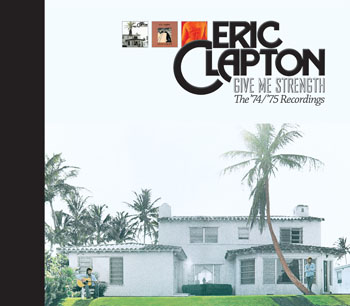
Well, if that chick is still around, all she has to do is check out the liners notes on the new Eric Clapton box set Give Me Strength: The ‘74/’75 Recordings (Polydor) to see that Oldaker was telling the truth.

The 5CD/1 Blu-ray set offers remixed, remastered, and expanded versions of the albums 461 Ocean Boulevard, There’s One in Every Crowd, and the live E.C. Was Here. There is also a treasure trove of outtakes, alternate versions, live cuts, and numbers from a session Eric and the boys did with blues great Freddie King.

CD cover

As many followers of Clapton’s life know, when he set foot in Miami’s Criteria Studios to record 461 (named for the actual address of the rented beach house the band stayed in), he was at a “crossroads” of his own.

After the huge success of 1971’s Layla and Other Assorted Love Songs and the subsequent drug-and-ego fueled collapse of Derek and the Dominos, Clapton spent three years holed up in his mansion with his girlfriend, becoming a heroin-addicted recluse who rarely even picked up a guitar.

Friends like the Who’s Pete Townshend would try to get him interested in playing again – organizing the fabled Rainbow concert partially for that purpose – and Dominos bassist Carl Radle would play Clapton some of his demos and live tapes, which featured Oldaker.

Still, as Clapton worked to pull himself together, the band that assembled at Criteria (under the direction of producer Tom Dowd) had no idea what to expect.

“I knew who Cream was, but I wasn’t sure about who Eric Clapton was so much. But Carl talked me into being in the group, and I jumped on it, even though I had to quit my job with Leon Russell’s band,” Oldaker recalls.

What Radle, Oldaker, and some of the other musicians – including guitarist George Terry, keyboardist Dick Sims, and backing vocalist Yvonne Elliman – found was an Eric Clapton who was not at all interested in revisiting his burning guitar-like “God” status, but a man who was in the middle of a musical 360.

And while there were some blues workouts (“Motherless Children,” “Steady Rollin’ Man”) the laid-back, calm, lolling vocals and music on 461 tracks like “Please Be With Me,” “Let it Grow,” and the box set’s title song was something of a shock to many.

“That type of music was the way we played it in Tulsa, so it wasn’t [new] to me. And Eric was not in the greatest shape to do fiery guitar solos, we all know the stories. He’s always said he just wanted to be a guitar player in a band and not the front guy,” Oldaker says.

He adds that most of the songs on the record, were “created on the spot” in the studio and the result of jamming and collaboration. But the song that came to define the record – and give Clapton one of if not his biggest solo hit which hit #1 – almost never got released.

Jamie Oldaker with a friend in 2008. Courtesy Jamieoldaker.com

Jamie Oldaker with a friend in 2008. Courtesy Jamieoldaker.com

George Terry had started adding some reggae strummings to his guitar work, and gave Clapton a copy of the then-current Bob Marley album Burnin’, which included the song “I Shot the Sheriff.” The group decided to tackle a cover.

“You have to understand at this time that Bob Marley wasn’t really known, and reggae music had not really made it further than outside of south Miami. We recorded it, but Eric didn’t want to release it because he didn’t think we’d done justice to the original,” Oldaker remembers.

“But the record company wanted it out and in those days, they prevailed. And obviously, they made the right decision!”

As for the home, which gave the album it’s name and is featured on the cover, Oldaker has nothing but fond memories.

“We did a lot of drinking, a lot of partying, and we had some equipment set up. But we’d mostly play in the studio, going in about 6 p.m. and staying until the early morning,” he says.

“Then we’d get up, sit in the sun by the pool and talk songs. We had cooks, food, everything came to us. We didn’t have to go anywhere! I was 22 and started realizing what all this [rock and roll lifestyle] was!”

The album was released in July, and the band hit the road. They knew full well that Clapton’s return to live performances would be scrutinized and fans would demand to hear a heaping helping of the louder, more rock-oriented tunes like “Badge,” “Crossroads,” and “White Room.”

“Eric’s repertoire is quite large, so played all kinds of things, both from the new record and older songs,” Oldaker says. “But Eric was not in the greatest of shape, and there was a lot of drinking going on. And the press killed us. We would open with ‘Smile,’ a ballad [co-written] by Charlie Chaplin, and people didn’t know what to make of it at first.”

After the tour, the band reconvened in Jamaica to record the follow-up, There’s One in Every Crowd. The material was not inspired as 461, and after that April 1975 release, they hit the road again. The expanded E.C. Was Here combines material from both tours. And put together, the three records set the template for Clapton’s highly successful solo career, still going strong today.

In the years after, Oldaker would continue to tour and record with Clapton, appearing on more than 10 records. He says the pair are “still good buddies,” and saw each other last September while working on a tribute record for the recently deceased J.J. Cale.

Cale’s work would be a huge acknowledged influence on Eric in the ‘70s (they finally did an album together in 2006, The Road to Escondido). And in fact, Oldaker says it was in Jamaica that he himself introduced Clapton to the work of the Oklahoma singer/songwriter.

“I told Eric that I was really proud of him that he’s gotten through all the [challenges] he’s had in his life. And now he has a family…and plenty of money!” Oldaker laughs. “And he still has an incredible, mischievous sense of humor. He’s a stand-up tall person that I’ve been glad to know for 40 years.”

As for Oldaker himself, he is currently working on his autobiography (which he hopes to take on the road next year with readings and a multi-media show) and is actually heading to Austin – where he lived for some years – to record with bluegrass legend Peter Rowan.

“I’m excited to get there and have some Texas barbecue again!” he laughs, while remembering his Texas concerts with Clapton over the years. “People may not realize that. After the show, a big concern of ours was always ‘Where are we going to eat!’”

Posted in Eric Clapton | 2 Comments

Carmine Appice Drums Up an Active Year

Carmine Appice today. Courtesy of Rocker Records.

Carmine Appice today. Courtesy of Rocker Records.

Note: This interview originally appeared in two parts in The Houston Press.

He may be a senior citizen, but 67-year-old classic rock skin thumper Carmine Appice will have a busier 2014 than you for sure.

In addition to co-launching a new startup label, Rocker Records, he has rehearsal and recording sessions with a new group, and a busy slate of live gigs with three different bands.

He is also working with a writer on his autobiography, the opening scene of which he says takes place in my town of Houston. Appice has also drummed for Rod Stewart, Ozzy Osbourne, Blue Murder, and Beck, Bogert, and Appice.

“Oh yeah, that’s how I’m opening the thing, in Houston. Because that’s where I got fired from Ozzy’s band!” Appice laughs. And while he wants to save details of the ousting after the February 17, 1984 show at the Summit during Osbourne’s Bark at the Moon tour for the book, he will give some details of the night involving a local radio personality.

“I have been friends with [then-KLOL disc jockey and current motivational speaker/coach] Dayna Steele for a long time, and I was staying at her house that night,” Appice recalls.

“I drove her car to the gig. And then Sharon [Osbourne, Ozzy’s wife/manager] fired me after the show, so I drove back right away. Dayna was looking for me at the gig, but I was already back at her place, and she didn’t know where I was with her car!”

Of Appice’s other projects for the year, he will be part of a new hard rock supergroup, the appropriately-named Legacy X, with vocalist Joe Lynn Turner (ex-Rainbow, Deep Purple), bassist Tony Franklin (ex-Firm, Blue Murder), and guitarist Jeff Watson (ex-Night Ranger).

Vinny and Carmine Appice go for the throat in their "Drum Wars" shows. Courtesy of CarmineAppice.com

Vinny and Carmine Appice go for the throat in their “Drum Wars” shows. Courtesy of CarmineAppice.com

Then there are live dates with the relauched Cactus. And then he will also be doing more “Drum Wars” shows with brother and fellow drummer Vinny Appice (ex-Black Sabbath, Dio, Heaven & Hell) in which the duo and a full band play material from both of their lengthy careers. The show culminates in a pound-off between the two siblings.

But perhaps the most intriguing stint will be his shows with “The Rod Experience.” It’s a multi-media Rod Stewart “tribute” show featuring former members of his band (Appice and bassist Phil Chen from the original lineup, guitarists Jimmy Crespo and Danny Johnson from later incarnations).

Rounding out the band will be keyboardist Alan St. Jon (ex-Billy Squier) and, on vocals, Rick St. James impersonating Stewart – complete with blonde rooster hair wig and white leopard print tights.

Appice himself co-write two of Stewart’s biggest hits, “Young Turks” and the dance warhorse “Do Ya Think I’m Sexy?” How the latter came about owes a bit of thanks to…Mick Jagger.

“Rod used to listen to what was on the charts all the time. He would hear something and come to the band and say ‘I want something that sounds like that or that.’ And we’d come back with ideas,” Appice recalls.

“So he wanted a song like ‘Miss You’ by the Rolling Stones. I went back to my house where I had a keyboard and drum machine and put my ideas down, then went to [producer and songwriter] Duane Hitchings’ house studio and polished it,” he continues.

“We presented it to Rod, and he loved it. He came up with the chorus line, we then we had the verse and bridge done, and that was it…I never expected it to be so big!”

Prime Cactus (clockwise from top): Jim McCarty, Tim Bogert, Rusty Day, and Carmine Appice.

Prime Cactus (clockwise from top): Jim McCarty, Tim Bogert, Rusty Day, and Carmine Appice.

As for Cactus, they were one of the most underappreciated hard rock ‘n’ boogie bands of the era. Few would have predicted their short, but prickly story would still not be finished in 2014.

Formed in 1969 and hailed by Creem magazine (somewhat prematurely) as “the American Led Zeppelin,” Cactus was a semi-supergroup bringing together members of Vanilla Fudge (Tim Bogert, bass; Appice, drums), Ted Nugent & the Amboy Dukes (Rusty Day, vocals), and Mitch Ryder and the Detroit Wheels (Jim McCarty, guitar).

But by 1971 after three records and scores of live gigs, the classic quartet split amidst (what else?) drugs, egos, and creative differences, with a different lineup producing a final LP.

Cut to June 3, 2006 when a Cactus grew again as Appice, Bogert, and McCarty took the stage at B.B. King’s Blues Club in New York City for their first gig together in decades. The trio also brought Jimmy Kunes (ex-Brownsville Station) on vocals – as Day was murdered in a 1982 drug deal gone bad – and Randy Pratt on harmonica.

A live CD of that show, Cactus Live in the U.S.A., is one of four initial releases from Appice and partner Mike Cusanelli’s new startup label, Rocker Records (a DVD of the show was previously released, and bootleg CDs had already appeared).

Cactuscover copy

Others in the batch include Bogert and Appice: Friends, Travers and Appice: TNA Live in Europe, and Cactus Live in Japan, and are available for download at Rocker Records.

“That was an amazing show, and who would have thought it would have happened?” Appice. “We had already been doing some recording for what became the record Cactus V, and got an offer to play the Swedish Rock Festival. But we needed a warm up gig, so that show at B.B. King’s worked out great.”

It turns out that the impetus for the three-quarters reunion was musician Pratt, a “billionaire” (thanks to inheritance, according to Appice) and huge band of the band and whose late father was the CEO of Pfizer.

As for replacing the charismatic Day, Appice says Kunes had a challenge, but met it.

“Sometimes it was scary he sounded so much like Rusty. [But while] Rusty was a great front man and could get the crowd in the palm of his hands, but he wasn’t a great singer, just like Mick Jagger,” Appice says. “But he did write incredible lyrics. I mean, just listen to ‘Alaska,’ ‘Restrictions,’ and ‘One Way or Another.’”

Today, Cactus continues to tour, though Bogert has since left the group.

Appice says that the idea for Rocker Records came after he had some business dealings with Cusanelli, who inquired if Appice or any of his many other classic rock pals had material they’d like to release.

“He was looking for bootlegs, live shows, unreleased things, and I looked on my hard drive and had a lot of it. And the live CD with [Pat] Travers actually came from a fan.” Appice offers. “So we cleaned them up, remastered them, and here you have the first four records.”

At this stage, the current and future Rocker music is available only as digital downloads. And while Appice doesn’t rule out physical releases, he says that the realities of the music industry today provide some steep challenges.

“The way the business is today, there’s no way to sell hard copies – especially for music like this – unless you’re AC/DC or Van Halen and you make a deal with Wal-Mart,” Appice laughs. “Plus, given our [age demographic], some of our fans might not even know how to use a computer to download stuff!”

For more on Carmine, visit his website at www.carmineappice.com

Posted in Carmine Appice | Tagged , , , , | Leave a comment

Give the Drummer Some! Docs on Ginger Baker & Levon Helm

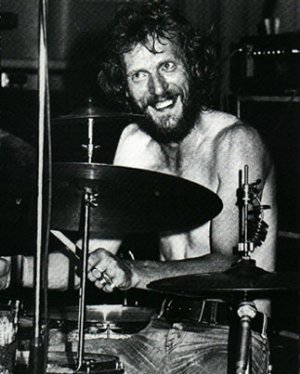
Bakerdrumming

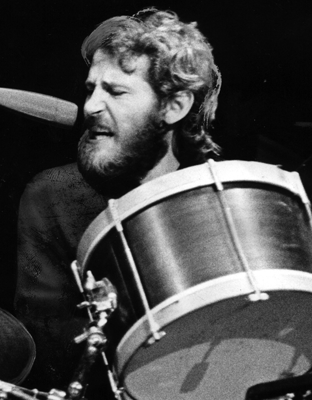
Levodrumming


While lead singers get the attention, guitar heroes are worshipped by players, and bassists tend to be the strong, silent types, it is drummers who are sometimes classic rock’s most eccentric band components. Think Keith Moon, John Bonham, and Ringo Starr.

I recently caught two fine documentaries – each with a completely different approach to its subject – on skin thumpers Ginger Baker and Levon Helm, and both are definitely worth checking out.

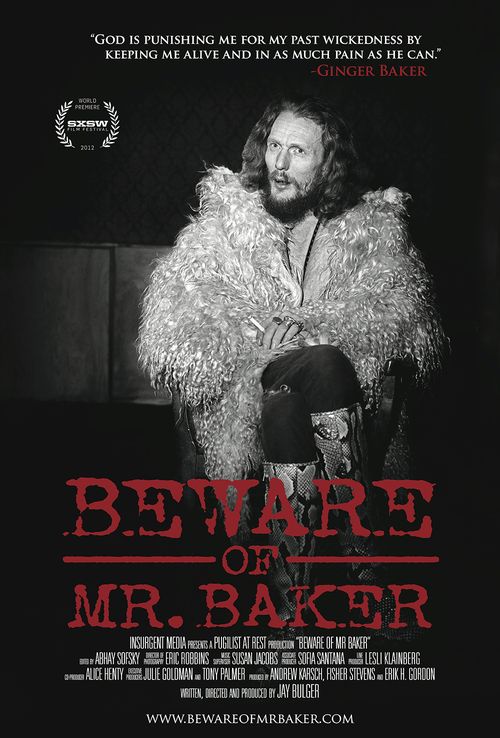
Jay Bulger‘s 2012 Beware of Mr. Baker has perhaps the greatest opening of any rock doc ever – the subject beating the director bloody with his cane while screaming epithets as the latter tries to frantically drive away.

It’s just the first of many amazing vignettes of Baker – best known for his stint with Cream – that Bulger captures in contemporary interviews at Baker’s African home and with plenty of archival footage.

“A motherfucker,” “certifiably nuts,” “looked like the Devil,” “virtuoso madman,” and “surprised he’s still living” are just some of the comments bandied about Baker – and these are by his musical admirers .

Eric Clapton, Jack Bruce, Charlie Watts, Steve Winwood, Nick Mason, Mickey Hart, Lars Ulrich, Neil Peart, and Carlos Santana are just some of the names who wax on the red-haired psycho, but no interviewee is more entertaining than Baker himself, as he traces his life in music, drugs, women, tax exile, bankruptcies, divorces, world travels, and obsessions with horses and polo.

BakerDVDcover

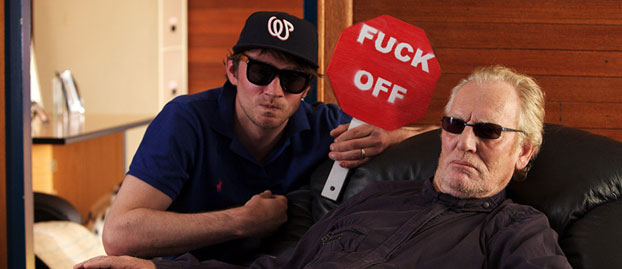
Throughout, Bulger (who at first lies and tells Baker he’s on assignment for Rolling Stone) acts as a guide for his irascible, irksome, and indignant subject, who spends much of the film reclined in a puffy chair that threatens to swallow him as he smokes and drinks coffee endlessly.

Director Bulger and his wary subject.

Director Bulger and his wary subject.

Hilarious animation throughout the film also illustrate some of Baker’s wilder tales and reminisces (some of which come from ex-wives and children he abandoned).

That’s not to say Beware of Mr. Baker is all bizarre and eccentric show. Bulger takes pains to show how talented a drummer Baker truly is, even while he dismisses many of his fellow rockers as pounders without the talent to pull off Baker’s runs, heavily influenced by jazz.

But it’s clear that Baker’s views of himself and his relationships with others aren’t always in sync. He calls ex-bandmate Clapton “my best friend in the world.” Cut to a bemused Clapton pondering to Bulger “Do I really even know him?”

By film’s end, it all comes back around. Baker is shown with his much younger, African fourth wife and her children (looking more like wide-eyed hostages than a happy family). And, later, his beating of Bulger, who dared mention that he wanted to talk to others in Baker’s circle for the film. This sends the drummer into an angry frenzy.

Beware of Mr. Baker is unlike any other rock doc I’ve ever seen, and insanely wild ride.

LevonDVDcover

Of more bucolic, gutsy, and melancholic nature is Ain’t In It For My Health, Jacob Hatley‘s 2010 look at the last years in the life of The Band drummer/singer Levon Helm, who died of cancer two years later.

Some if it is tough to watch as Helm – once such a physical force – is beset by a variety of health issues. This includes throat cancer, as he struggles to gig one-nighters under decidedly lower-rent circumstances then when The Band was playing stadiums.

Eventually, Helm falls upon the idea to have audiences comes to him, hosting star-studded and informal “Midnight Rambles” as this Woodstock home’s sizable barn.

He also gets more recognition toward the end both for his work with the fractious Band (though, in portions detailing group history, he never forgives Robbie Robertson for purported song credit hogging), and his own latter records, including the critically-acclaimed Dirt Farmer.

“Everyone wants to live a long time, but it’s how you live that matters,” a painfully-thin Helm reflects in one of many interview segments held at his ramshackle dining room table amidst family and friends like Billy Bob Thornton and the Black Crowes’ Chris Robinson. And he’s not above lighting up joints even though throat cancer is ravaging him. His theory – why not enjoy life while you can, before it’s too late?

Helm’s daughter Amy – herself an accomplished singer and instrumentalist, calls her father’s journey “a different kind of survival story.” And it’s one that only a classic rock giant could go through.

And though the wild-eyed, erratic Englishman Baker and the drawling, earth-solid Arkansan couldn’t be more different in temperament, attitude, and musical leanings, both of these documentaries showcase the ups and downs of classic rock lives led to the hilt.

Find out more about these films at:
bewareofmrbaker.com
www.levonhelmfilm.com

Posted in Band, Cream, Rock Docs | Tagged , , , | Leave a comment

Life is Just Beachy for Brian Wilson & Al Jardine

Beach Men: David Marks, Brian Wilson, and Al Jardine

Beach Men: David Marks, Brian Wilson, and Al Jardine

I recently had the opportunity to talk to not one, but two Beach Boys in my capacity as a music writer for The Houston Press. Well, technically Brian Wilson and Al Jardine are ex-Beach Boys, as Mike Love owns the rights to the band’s name. According to some, Love pulled the plug on the hoped-for continuance of the group’s 50th anniversary tour last year that found all five surviving original/classic lineup members on stage.

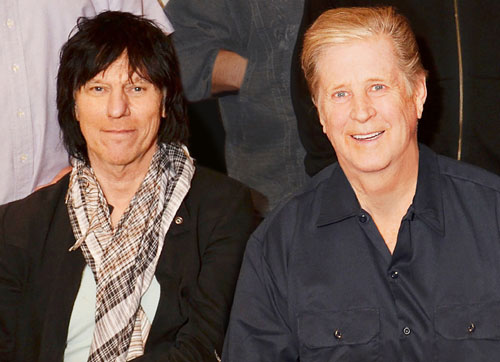
Ostensibly, the pair were to talk up the current fall tour that finds Wilson and band (which includes Jardine and original Beach Boy David Marks) in an unlikely pairing with guitar hero Jeff Beck. Though, as Houston Press music editor Chris Gray pointed out in his review, the result has been a bit of a musical mess.

The chance to speak with Wilson, one of rock and pop’s true geniuses, was of course, thrilling. But as any writer who has spoken with him over the past couple of decades can tell you, it is also a bit frustrating.

The years of fragile mental health, drugs, and controversial recovery methods, have clearly taken a toll. In concert, he sits motionless with a vacant stare. And while unfailingly polite in interviews, he often gives two-or-three sentence answers, often cloaked in superlatives (“He’s a great singer! One of my favorites!”) And when he’s done, he’s done. Next question.

Jeff Beck and Brian Wilson

Jeff Beck and Brian Wilson

I found that out the hard way a few years back when I first spoke to Wilson for his Pet Sounds tour when we burned through 10 of my carefully thought out queries in two minutes, leaving me desperate. This time, it took seven minutes to go through about 16 questions. I’m learning.

Ironically, Brian Wilson seems busier these days than ever before. After wrapping up the Beach Boys 70+ date reunion tour and new studio CD last year and his current jaunt, he’s in the studio working on three different records, speaking with a journalist for his second autobiography, and keeping an eye on the feature film of his life, Love & Mercy, which just wrapped filming (with Paul Dano as the young Brian and John Cusack as the older one).

In this excerpt from my interview, Jardine discusses his unique perspective as the only non-family member of the classic five-man Beach Boys lineup that included three brothers (Brian, Carl, and Dennis Wilson) and their cousin (Mike Love).

You can also read Part 1 and Part 2 of my full interview.

“I didn’t have a lot of brothers and cousins [in my own family], so it was quite a big leap for me,” he says. “And watching these guys fuss and fight over the years could be pretty traumatic.

“At the same time, you can see how people can still work with each other after they fight, and that’s important. To get beyond that and create great music. I like to think that I was the glue at some point who kept things together.”

Jardine also credits the late Carl Wilson — who he credits as being the band’s “moral center” — with keeping the various egos and personalities and frailties of his bandmates on an even keel.

“He had a great sense of fairness and the right and wrong beyond all the emotional stuff,” he says. “He became a great leader for the band in the later years, even as a stage manager. He was a very astute guy.”

Carl Wilson even had a catchphrase that would signal the end of any intense discussion or confrontation, no matter how heated it got.

“Carl’s last line was always ‘It is what it is,'” Jardine laughs. “When you heard that, you knew it was the end of the conversation!”

Posted in Beach Boys | Tagged , , , | Leave a comment

The Sunday Funnies Rock

PearlsBeforeSwine

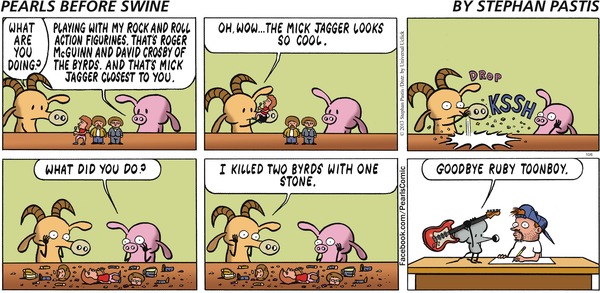
One of my favorite comic strips is Stephen Pastis’ Pearls Before Swine. His “Rat” is one of comics’ most inappropriate, bitter, and hilarious characters. His strips sometimes have elaborate puns, but this one has a classic rock theme. Find out more about Patsis and his work at http://stephanpastis.wordpress.com/

Posted in Comics | Tagged , , , , , , | Leave a comment

Clash Compadre/Director Don Letts on Handling Joe Strummer and Armadillos

Don Letts and Clash bassist Paul Simonon brandish the Guns of Brixton

Don Letts and Clash bassist Paul Simonon brandish the Guns of Brixton

I recently spoke with Don Letts, close friend and video director of The Clash, for The Houston Press about the release of the band’s massive new box set, Sound System. Featuring every studio album remastered (except for last entry Cut the Crap), plus a treasure trove of demos, B-sides, alternate takes, unreleased and live cuts, and a DVD with rare footage, concert clips, and all the band’s official videos, it’s all you ever want from “The Only Band That Mattered.”

Below, Letts discusses filming the clip for “Rock the Casbah” and how he almost ate dirt trying to teach an armadillo to act.

Read the full Part 1 and Part 2 of my interview here.

Filmed in Austin around a 1982 show the band did at the City Coliseum, the video is memorable thanks to the images of an Arab and Hasidic Jew rocking out to a boom box, the band miming the song in front of a pumping oil derrick, and one charismatic armadillo in a crowd of fans. Letts is clear on who the video’s real star was.

“The way I got the armadillo to walk toward the camera was to get on the ground on my hands and knees and blow in its face. So you can imagine the scene with a Jew and Arab running around, and a guy with dreads laying on the ground,” Letts remembers. “But what’s amazing was that the armadillo attracted the most attention because the [crowd] had only seen dead ones! Or as ashtrays or handbags.”

Curiously, guitarist Mick Jones is seen in the lip-synch section, with his face and head completely covered. Letts notes it wasn’t a costume decision that he made for himself.

“Mick was having one of his Elizabeth Taylor moments and was [pissed off] at Joe [Strummer], so he showed up on the set wearing red Long Johns and black Doc Martens. Now, he’s a skinny guy, so he looked like a matchstick!” the director recalls.

After pulling Jones aside and reminding him that “video is forever,” the guitarist changed his outfit, but wore a camouflage hat and veil to show he was still upset. It was forcibly ripped off by Strummer toward the end of the clip.

Read the full Part 1 and Part 2 of my interview here.

Posted in Clash | Tagged , , , , , , | Leave a comment

America’s Dewey Bunnell on That Elusive Horse with No Name

DeweyGerry

Dewey Bunnell and Gerry Beckley today

Below is an excerpt from my interview with Dewey Bunnell of America, which originally appeared in The Houston Press.

Read Part 1 and Part 2 of my piece in their entirety.

It is one of the ’70s’ most analyzed — sometimes in jest — songs. Why does the Horse have no name? Why can no one in the desert remember your name? And why the hell does the narrator let the horse run free after nine days? If the desert has turned to sea, shouldn’t he have traded the horse for raft, or at least a life vest?

These questions, and many others, will probably never be answered about “A Horse with No Name,” a No. 1 hit in 1972 for the trio America. Formed by three sons of American military personnel who were barely out of their teens — Gerry Beckley, Dewey Bunnell and Dan Peek — the band would go on to have many other Mellow Gold hits including “I Need You,” “Ventura Highway, “Tin Man,” “Sandman,” “Sister Golden Hair” and “Lonely People.”

While Peek left the group in 1977 to concentrate on Christian music (he died in 2011), Beckley, Bunnell, and a three-man group are still on the road.

GerryDanDewey

The original trio: Gerry Beckley, Dan Peek, and Dewey Bunnell

For Bunnell, who wrote and sang lead on “Horse,” the band’s most identifiable tune is one he’s still happy to perform.

“I can honestly say that I’ve never gotten sick of it. When we were young and arrogant and we thought the song was ‘over,’ we took it out of the set. And that didn’t go down so well with promoters or fans!” Bunnell laughs.

What has changed, he says, is his relationship with the song and its meaning, as the “Horse” was originally a metaphor for a vehicle to get away from life’s confusion into a quiet, peaceful place.

“It has changed for me as I’ve gotten older,” he says. “The lyric-writing and imagery takes on new meaning,” he continues. “It also used to be more about the sights and sounds and physical aspect of the desert that I loved. Now, it takes on more of a feel of isolation and contemplating-your-navel-type stuff.

“See, I’m overthinking all of this again!” he laughs.

Read Part 1 and Part 2 of my piece in their entirety.

Posted in America | Leave a comment