Graham Nash Has Some Wild Tales to Tell

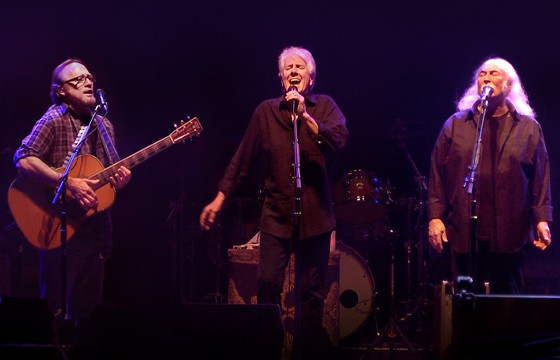
CSN today, with harmonies still soaring high. Photo by Chris Kissinger/Jensen Communications.

CSN today, with harmonies still soaring high. Photo by Chris Kissinger/Jensen Communications.

One of my all-time favorite interview subjects over the years has been Graham Nash. Engaging, open, wry, and blunt, it’s no wonder he’s long been the glue that holds the sometimes-fractious CSN (and sometimes Y) together. Here is my most recent talk with him about  the big CSNY box set that came out awhile back. I also highly recommend his memoir, Wild Tales.

“We knew it was something special,” Graham Nash says. “No one had done a tour like that, in that many big venues. But I felt we were up to the task. We could all play and sing, and there were four of us. With four intense egos!”

Today, massive football stadium tours by rock’s major acts are taken for granted. But many years ago it hadn’t even been attempted. While the Beatles and Stones had done the massive gigs as one-offs, it was a reunited Crosby, Stills, Nash and Young who took the plunge first.

Their fabled 1974 tour encompassed 31 shows in 24 cities in three countries from July through September, with the group presenting nearly 80 songs played in various personnel combinations – a quarter of which hadn’t even been released at that point but would find their way onto later group, solo, and duo records.
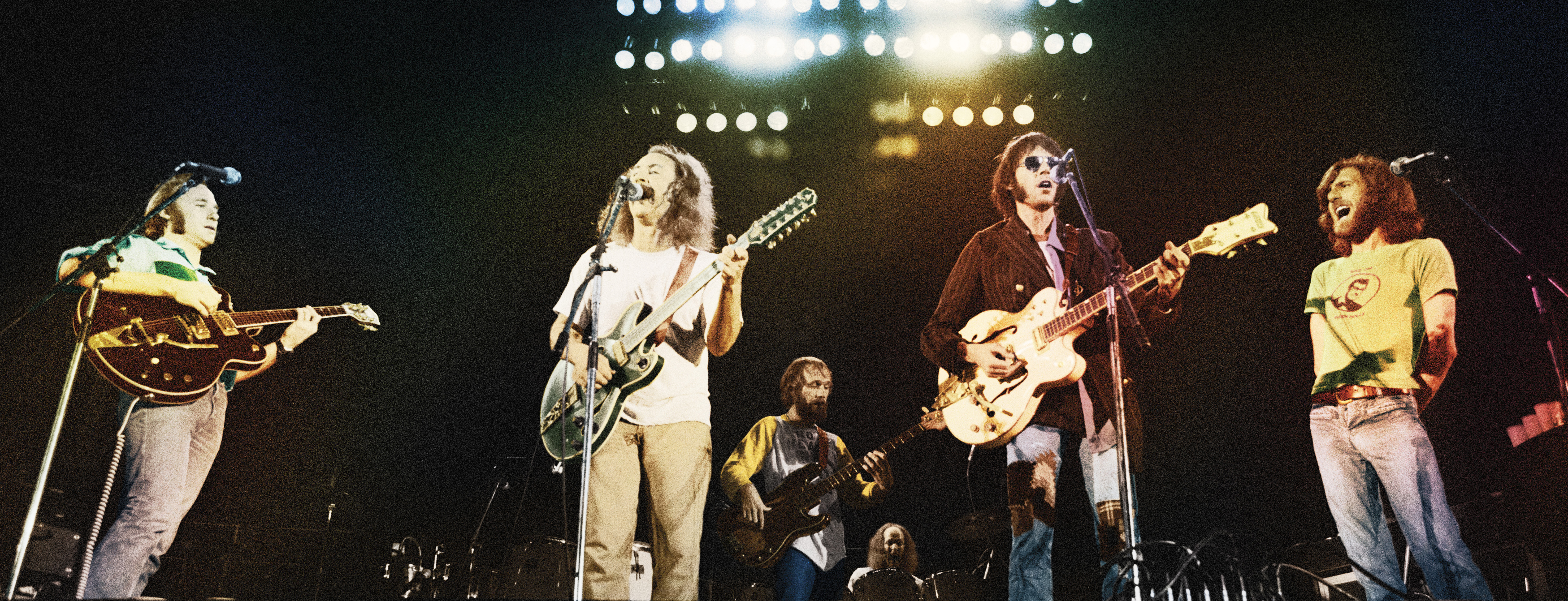
CSNY on the 1974 tour. Photo courtesy of Rhino.

CSNY on the 1974 tour. Photo courtesy of Rhino.

And the jaunt has passed into rock legend. David Crosby dubbed it the “Doom” tour for its manic mix of music with huge highs and lows, drugs, crazy financial expenditures, and the aforementioned egos.

A handful of those shows were recorded. And while shitty bootlegs have circulated for years, the massive box set simply titled CSNY 1974 (Rhino) has 40 live songs over three CDs, as well as a DVD with rare video footage shot during two of the shows, and a thick booklet with essays, photos, and liner notes.

The project – like other archival sets from the group – was helmed and produced by Graham Nash himself and Joel Bernstein, with Stanley Johnson as sound engineer. And it took four years to put together.

“It was an absolute labor of love. And we set a high bar both musically and graphically,” Nash says. “Our original intent was to present the best possible performances from this tour. And that’s why ‘Carry On’ isn’t on there. We just couldn’t find a performance that stood up to the other songs.”
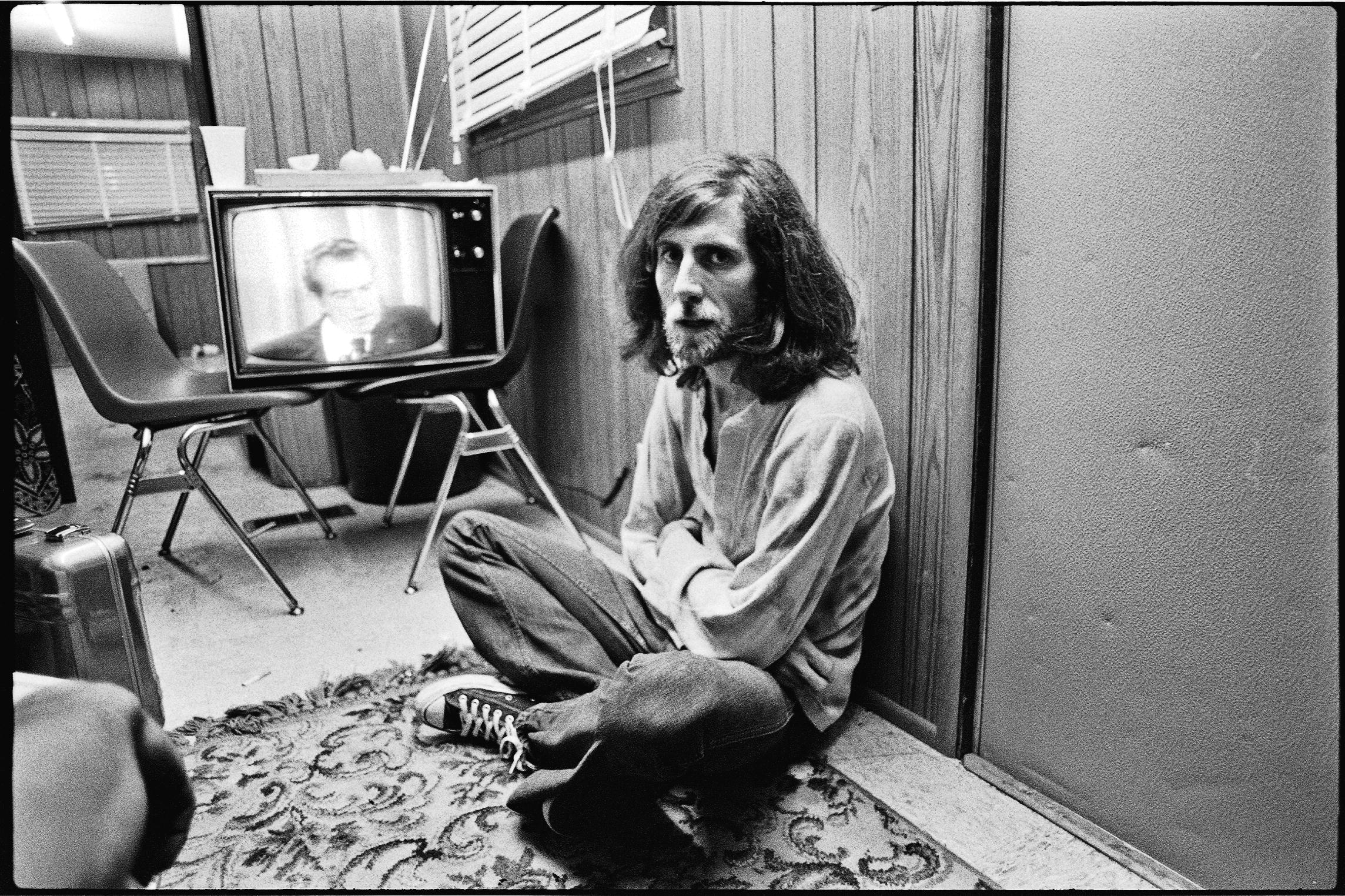
Backstage at Roosevelt Stadium on the 1974 tour, with Richard Nixon on the tube. Photo by Henry Diltz

Backstage at Roosevelt Stadium on the 1974 tour, with Richard Nixon on the tube. Photo by Henry Diltz

The songs that did make it on the box run the gamut from CSN (and/or Y) warhorses (“Wooden Ships,” “Suite: Judy Blue Eyes,” “Déjà Vu”) and solo songs (“Love the One You’re With,” “Old Man,” “Prison Song”), and rarities (“Grave Concern,” “Myth of Sisyphus,” “Fieldworker”). Some others, audiences were hearing for the first time anyplace.

“So many of the songs are relevant even today, like ‘Immigration Man’ and ‘Military Madness.’” Nash offers. “Even ‘Goodbye Dick!’”

The last song is perhaps the most ultra rare CSNY tune – a bizarrely funny, one and half minute, seemingly improvised ditty by Neil Young in which he celebrates the then-recent resignation of Richard Nixon. Ironic, since Tricky Dick himself is back in the news with the recent release of more damning audiotapes. It was performed only once, and is captured on the box set.

While very few “live” records by any band are actually live, Nash says he wanted to keep the music of CSNY 1974 as real as possible, but does cop to a little tweaking.
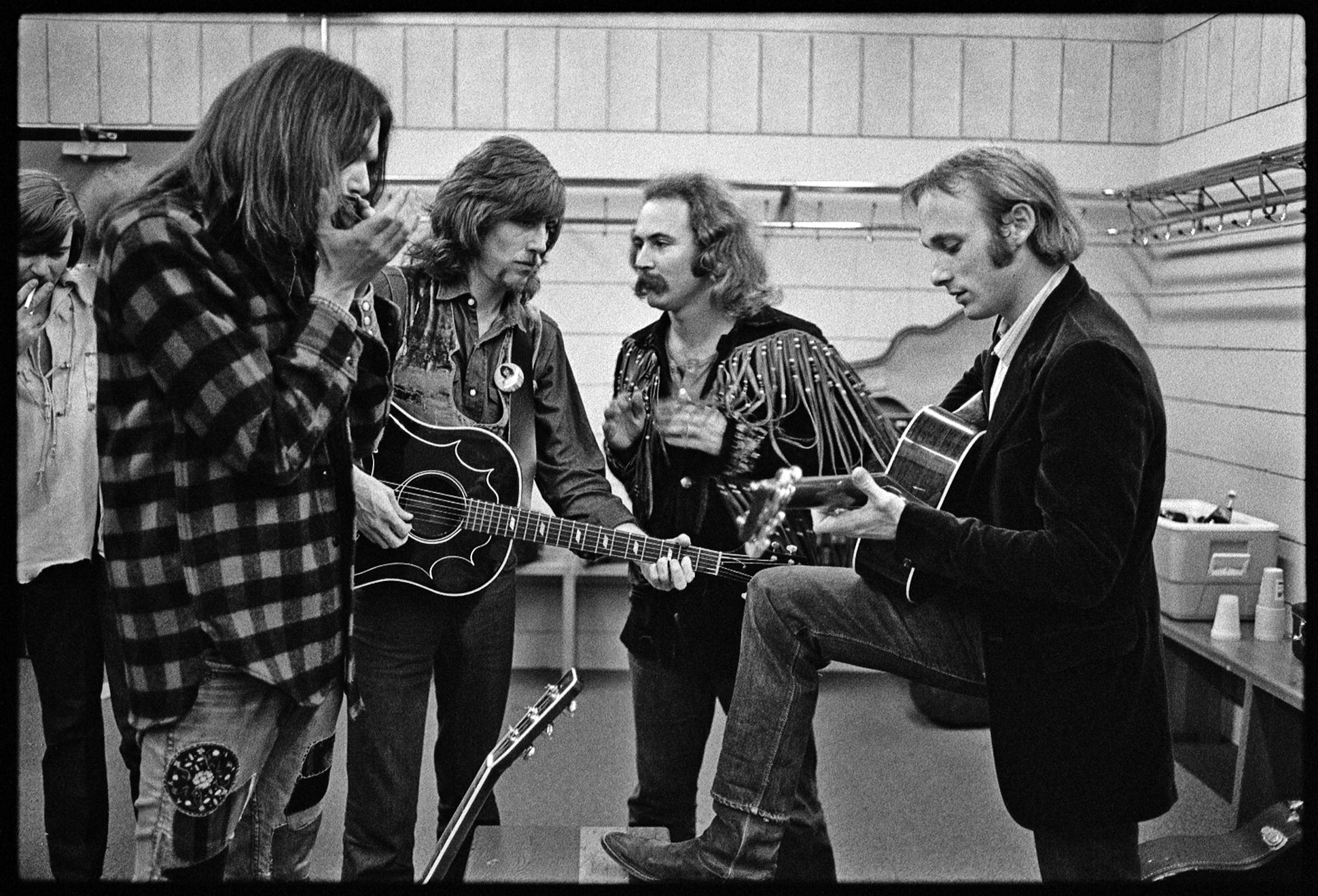
CSNY in dressing room, 1970, Minnesota (photo by Henry Diltz)

CSNY in dressing room, 1970, Minnesota (photo by Henry Diltz)

“There is not one single overdub on the entire album,” he says. “Did I tune certain things? Yes. And if I could find a note or phrase that make a song better, I took it from another performance. But it’s very true to us. Anybody who is curious about who CSNY was or is, they can go to that box set.”

The quartet were aided and abetted onstage by longtime CSNY associates Tim Drummond (bass), Russ Kunkel (drums), and Joe Lala (percussion).

And while Nash says he doesn’t have a particular memory of that show, playing to huge, huge crowds was not intimidating. “We had already played Woodstock, and that was nearly a half a million people,” Nash says. “So playing to 40 or 80,000 people wasn’t that big a deal to us.”

And while all members have contributed songs to the group pot over the past nearly five decades, it’s Nash who – as Crosby told audiences during the last tour – “writes the songs that the world knows by heart and sings along with.”

Those would be chiefly “Teach Your Children,” “Our House,” and “Just a Song Before I Go” – also some of the band’s best-known and commercially successful tunes.
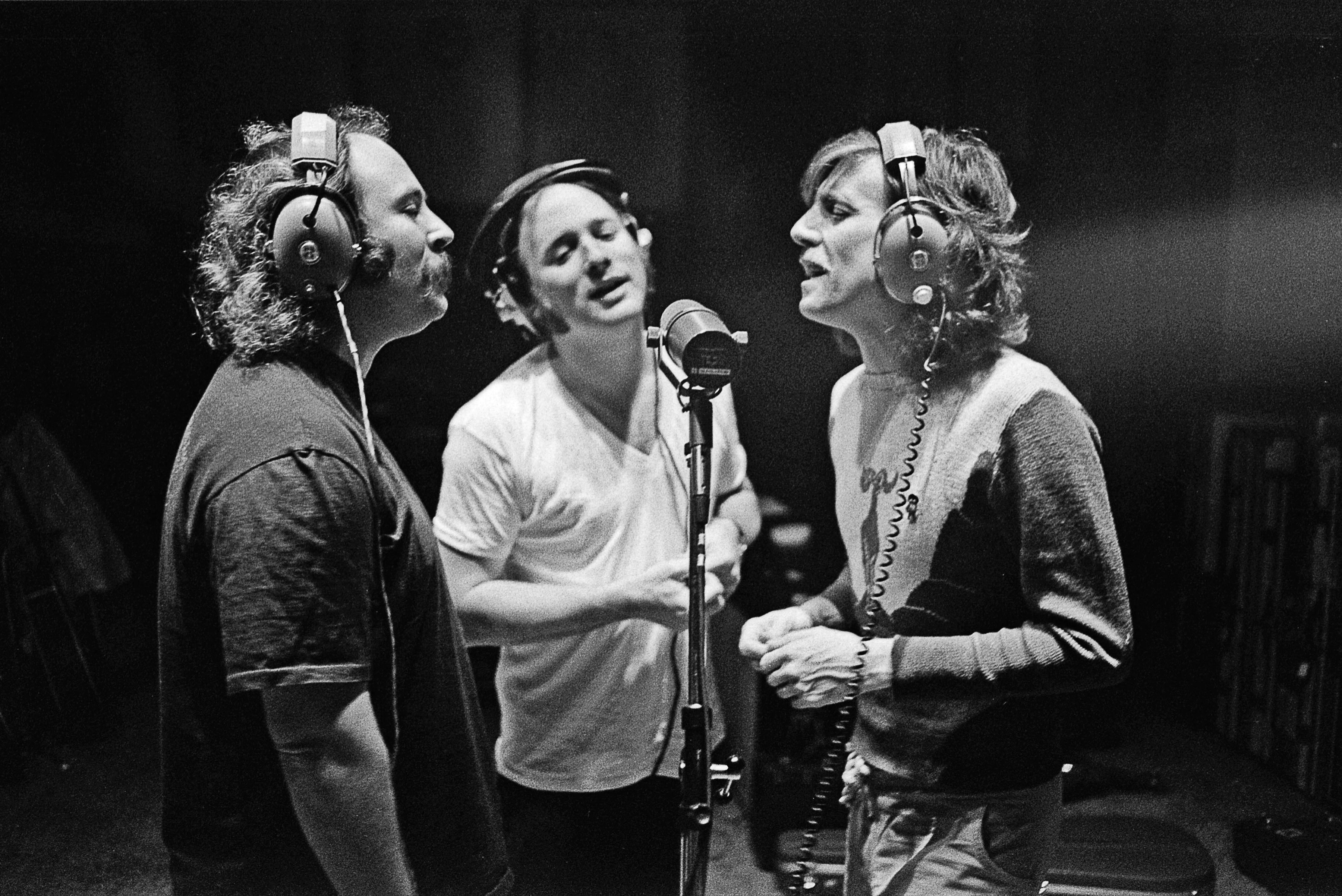
CSN at Criteria Recording Studios, Miami, March 1977 (Joel Bernstein)

CSN at Criteria Recording Studios, Miami, March 1977 (photo by Joel Bernstein)

“Teach Your Children” in particular, Nash feels, will “be around long after our physical selves are gone.” And two incidents – one years ago, one recent – drove that point home to him.

“A few years back, a friend called me, and he was sitting in a small coffee house on the top of a mountain in Katmandu in Nepal, and the song came on in the café. In Nepal!” Nash says.

“And I was in an Apple store in Italy, and one of the employees rushed up to tell me he’d just been listening to the version on CSNY 1974 and how much it meant to him. To think I wrote a song that touches so many heart and minds and has for so long…that’s a thrill as a writer.”

And while he readily admits having fun with various substances for many years, Nash’s indulgences never derailed the band, hurt the music, or caused bizarre behavior.

So, as the man in the middle, how many times over the years has the long-suffering Nash thought, “Am I the only sane one who just wants to make music?”

“Oh, I always think that. I have from day one actually!” Nash says. “I mean, I’m English. My country was devastated twice by war in 80 years. And there were times you didn’t know if your house was going to be still standing or your friends were going to be alive. So you just want to get the job done because you don’t know if it’s every going to end.”

For more on Graham Nash, visit his website.

Portions of this interview originally appeared in The Houston Press.

Posted in CSN & CSNY | Tagged , , , , , | 1 Comment

Dennis DeYoung: Styx and Stones Won’t Break His Bones

HOUMUS_4115_DennisDeYoungMain

Dennis DeYoung today, still rockin’ the Paradise and fans all over.

To many classic rock fans, it would seem a bit of unnecessary clarification to bill a Dennis DeYoung show as “Dennis DeYoung and the Music of Styx.”

After all, as the band’s main vocalist, chief songwriter, and keyboardist, anyone with a ticket to the show surely knows they will hear the headliner belt out classics like “Lady,” “The Grand Illusion,” “Babe,” “The Best of Times,” “Come Sail Away” and – yes – “Mr. Roboto” in that utterly distinctive voice.

Yet, despite all that success, DeYoung himself felt that his name alone doesn’t have enough familiarity, and thus the extra wording. Which he is allowed to use after some messy legal wrangling following his unceremonious 1999 ouster from the band. After all, it’s his legacy too.

“When I was replaced, I had to find a way to work it out. I worked really hard at promoting a certain four letter word my whole life,” DeYoung says today. “And there is a genuine honesty to Styx music. It was heartfelt. We weren’t trying to be ironic or smarter than anybody. And I’m proud of that.”

From the time in 1975 when he joined the already-existing Styx, DeYoung was the group’s strongest creative force in a lineup that also included vocalist/guitarist Tommy Shaw, guitarist James “JY” Young, and a rhythm section of brothers Chuck and John Panozzo on bass and drums. And he was happy with that.

“I loved being in a band. I wanted to be in the Beatles, but those son of a bitches never called me!” DeYoung laughs. “But a band is the sum of its parts. The Beatles were all great individually, but put together…that was something else. And that’s how I felt about Styx.”

Dipping their musical toes in pools of straight ahead rock, ballads, and prog during their ‘70s and ‘80s heyday, there seemed to be a Styx song to fit any mood. And it’s that versatility that DeYoung feels boosted the band’s career.

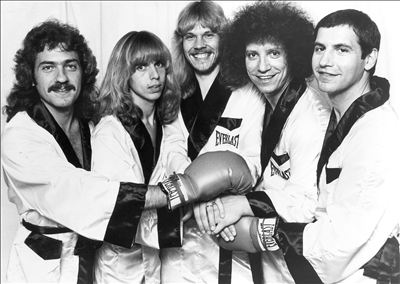
HOU_MUS_33115_ClassicStyx

Classic Styx: Dennis DeYoung, Tommy Shaw, James “JY” Young, John Panozzo, and Chuck Panozzo. The boxing gloves wouldn’t be needed for several years in the future.

Along the way, many of their more popular tunes became cornerstones in the soundtrack-of-your-lives way. This writer recalls that during the late ‘70s/early ‘80s at Magic Skate in Humble, the opening electric piano notes of “Babe” instantly signaled it was time for a Couples Skate. Kind of ironic, given the song’s actual lyrics about leaving.

DeYoung notes that hardly a day goes by that he doesn’t hear a similar story about how the music of Styx is in the fabric of someone’s life, often during what he says are “high voltage emotional events.”

“And I find that is true of a lot of bands from that era, because the music during that time was so essential to young people’s lives. There were not as many other distractions as there are today,” he offers.

“Look, I lived in the greatest time in history to be a musician, something that never happened before and will never happen again. I hit the sweet spot by matter of birth. And I feel a warmth from the audience when they talk to be about this music. It goes beyond anything I thought I would ever achieve.”

It’s a feeling that has run off into his earlier parallel solo career and then post-Styx endeavors.

“The vast majority of people on this planet never have the opportunity to be appreciated as I have because of the music,” he says. “I’ll go someplace, people will pay me to go there, and then afterward thank me for coming to their town and performing. It’s a miracle.”

But things aren’t always so heavy and misty-eyed in the world of Dennis DeYoung. In fact – as he demonstrates during the interview – he possesses a quick and self-deprecating sense of humor (even if some of his jokes are a bit practiced – “I’m half Italian…from the waist down!”).

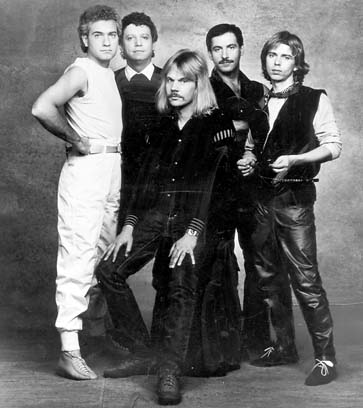
Trouble in Paradise during the "Mr. Roboto" days: DeYoung, C. Panozzo, Young, J. Panozzo, and Shaw.

Trouble in Paradise during the “Mr. Roboto” days: DeYoung, J. Panozzo, Young, C. Panozzo, and Shaw.

It’s a humor that wasn’t always on display during his time with the Styx.

“Writers always characterized us in ways we weren’t based on our music. You couldn’t be funny if you were in Styx,” he says. “And all the photos of bands from that time, everyone is so dead serious trying to be cool. But we were misunderstood. If there was ever a Clown Alley, it was the guys in our band. And John Panozzo – may he rest in peace – was the funniest guy I’ve ever known.”

Still, despite their huge commercial popularity and sold out shows, Styx – both then and now – were never critic’s darlings. Which DeYoung feels is a big reason that the band is not in the Rock and Roll Hall of Fame. Though at least they are in some good company.

“I don’t want to sound like the guy with sour grapes and who is not in the club, but this is the truth,” he says.

“Styx, Journey, Foreigner, Boston, Kansas, REO Speedwagon, Chicago, and the Doobie Brothers. The people who never liked them are the same people who decides who gets in. I have been saying that there’s no room for Deep Purple, because Leonard Cohen is in!” [Note: since this interview was conducted, it was announced that both Deep Purple and Chicago would be inducted in 2016].

DeYoung also feels that rock critics and writers who make up a chunk of the voting bloc favor lyrics over music. And while he’s tried a “half a dozen times” with his best shot to get through the music of the Velvet Underground, he still can’t see what the critical fuss is all about on any level.

“Night after night, I see people locking arms and singing my songs. And after the first 12 words, they may not know the rest, but they know the melody,” he says. “And that’s why the music is more important that the words.”

If Styx ever does make it into the Rock and Roll Hall of Fame, fans may not want to hold their breath for an on-stage performance reunion of the four surviving classic lineup members.

“I have no personal communication with them, and it’s a shame,” DeYoung says. Young and Shaw lead the current lineup, with the health wise fragile Chuck Panozzo making an occasional appearance. Any viewing of their episode of “Behind the Music” will fill in some of the story.

But for Dennis DeYoung, he’s content to look both backwards at the music he made with Styx, and forward to performing it with his current band of five years standing (“They work for cheap!”)  for fans that now span nearly three generations. And he knows what he would tell them today.

“Rejoice in the music that has given you pleasure. And remember that it was created by five guys. And if you change one of those parts, you change the music,” he says, before urging this writer to watch a video on his website of Styx miming to their song “Rockin’ the Paradise.”

“That, my friend, is who the band was. Just watch it.”

For more on Dennis DeYoung, visit www.dennisdeyoung.com

A version of this interview originally appeared in The Houston Press.


Posted in Dennis DeYoung, Styx | Tagged , , , , , | Leave a comment

The Zombie Invasion Continues with Colin Blunstone!

HOU_MUS_3315_ZombiesMain copy.jpg

The Zombies today: Tom Toomey, Rod Argent, Jim Rodford, Colin Blunstone, and Steve Rodford

2015 turned out to be pretty good year for the Zombies. They released a well-received album of new material (Still Got That Hunger). And they embarked on a tour that saw surviving original former members Chris White and Hugh Grundy – join current members and originals Rod Argent and Colin Blunstone – to perform Odessey and Oracle in its entirely, before the current lineup closed out the show.

Before those developments, though, I spoke with Blunstone about the band’s legacy, music, and Argent’s intensity.

So imagine this sonic scenario.

You are a member of a ‘60s British Invasion band looking to distinguish yourself from various Beatles, Stones, Kinks, Animals, Pacemakers, Hermits, Troggs, and Pretty Things.

Your group has had a couple of Top10 hits in America a few years before, both nothing that was sustainable careerwise. Or reflective of the new, heavier, and trippier sound that is in vogue.

Then – partially to the thanks of a well-known U.S. record industry insider and fan who brings a copy of your most recent record back across the pond – one song goes into heavy rotation on radio and is picking up steam.

Interest and curiosity in your band begins to surge, inquiries are made from promoters about tours, and the music press begins to take note.

Unfortunately, your band has already well-broken up by the time that “Time of the Season” hits #3 on the Billboard chart in 1968. Most bands would make a mad dash to reform and take advantage of the situation. But not the Zombies.

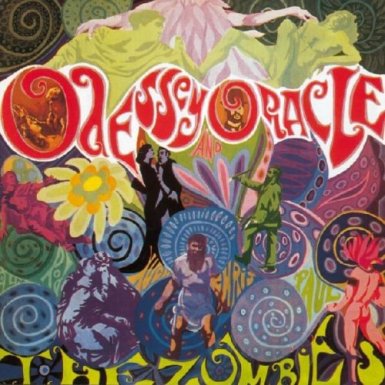
HOU_MUS_3315_ZombiesOld copy.jpg

The original Zombies: Top row – Paul Atkinson, Rod Argent, Colin Blunstone; Bottom row – Hugh Grundy and Chris White

“I know that all of the other guys felt it was the absolutely right thing to do. There was never even a conversation about getting together again,” Zombies vocalist Colin Blunstone says today from his home in England.

“Rod [Argent, keyboardist/vocalist] and Chris [White, bassist] were already committed to their new band, Argent, and writing new songs. Sometimes, I do wonder what would have happened if we had kept going, because they were on such a really wonderful streak writing for the Zombies, and I would have loved to have seen what we could have done next. It does intrigue me.”

Instead, the Zombies became a short-lived, but much beloved group for their mixture of pop (“Tell Her No”), R&B, garage (“She’s Not There”) and psychedelia, which culminated in their masterpiece/swansong, Odessey & Oracle.

After the split, the five original members pursued careers both in and out of music. Argent had the most successful run with the band under his name (“Hold Your Head Up”) with White along as writer/producer. And Blunstone had a decent solo career in England.

Blunstone, White, and drummer Hugh Grundy briefly reunited in 1990 for a record and tour. But the last time all five appeared together – including guitarist Hugh Atkinson – was for a few numbers at a small club gig in 1997 to celebrate the release of their box set, Zombie Heaven. Atkinson, who had spent his post-band years as a respected music A&R man, died in 2004.

the-zombies_band_members_young_5x3.jpg

Blunstone and Argent began collaborating again in 1999, which led to touring and new records. Though originally, they did not use Zombies name or play more than two or three Zombies tunes in a set.

“Our intention was not to reform the group, and we didn’t use the name for six or seven years. But it got to a point when promoters were billing us like that, even though they weren’t supposed to,” he says.

“Our audiences wanted more and more Zombies music, and it was a pleasant surprise. As was when we found out there was a huge interest and fascination in the group all these years later.”

Finally, with the blessing of the rest of the original lineup, The Zombies reconstituted, with ex-Argent/Kinks bassist Jim Rodford (who was, ironically, also in a very early lineup), son Steve Rodford on drums, and Keith Airey on guitar. Tom Toomey later replaced Airey.

The band has released two records of new music, including 2011’s Breathe Out…Breathe In. They are finalizing material for another effort that they’ll start recording after the current U.S. tour, and are including some songs in the current set including “Movin’ On.”

“I can say emphatically that if we didn’t have new music, we wouldn’t be doing this. New music is the life force of artists,” Blunstone says, bluntly. “Neither one of us would be interested in just playing the tunes of the ‘60s. At the same time, we love to play both the old hits and the [deeper cuts] that we are now rediscovering.”

61ULf-nGSuL

And while Blunstone writes songs mostly for his parallel solo career, most Zombies tunes flow from the pen (or computer screen) of Argent.

“For him, the sound of the lyric is important, maybe moreseo than the actual words, and that’s how he typically writes. It’s very sophisticated,” Blunstone says of the man he has known for more than 50 years.

“Rod can be very single minded, but every band needs someone like that. He was incredibly talented, even at 14, 15, years old when we met. And he’s incredibly generous and supportive.”

So as the Zombies continue to march forward (though not as slow as their brethren on “The Walking Dead”), Blunstone is very pleased to see that the band – and their work in the ‘60s – is getting more and more their due.

“I think we have been getting more recognition and attention in recent years, and it’s really great,” Blunstone sums up. “It validates everything we did back then!”

A version of his article originally appeared in The Houston Press

For more on the Zombies, visit www.thezombies.net


Posted in Zombies | Tagged , , | Leave a comment

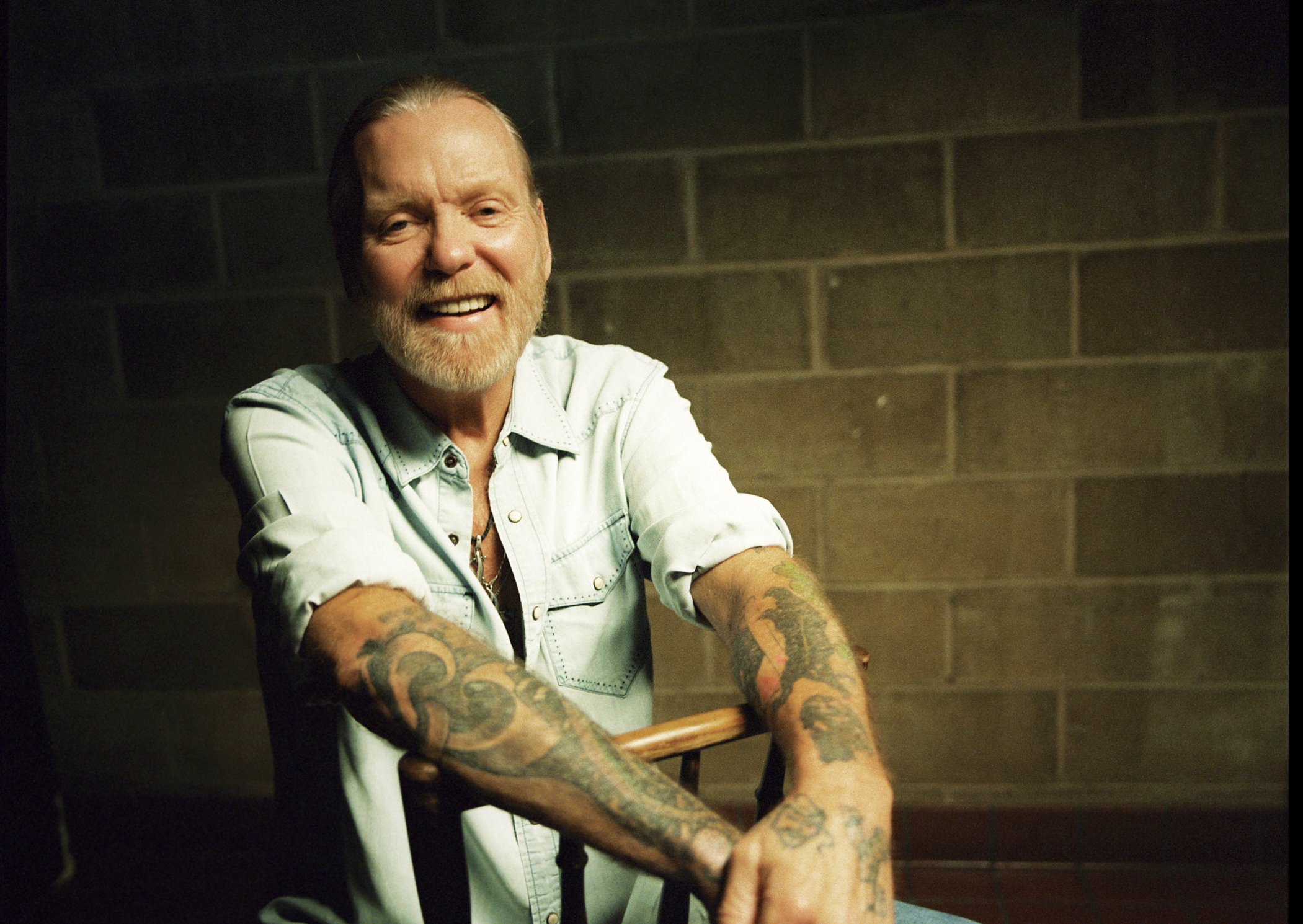
Gregg Allman Keeps Riding Well Past Midnight

Gregg Allman CRB

Gregg Allman, his publicist tells me, rarely does phone interviews anymore. And really, who can blame him?

Why would the 67-year-old classic rock icon want to answer another litany of queries about the past and future of the Allman Brothers Band, brother Duane, Berry and Dickey, drugs, health and Hep C, wives and girlfriends, trials, and the recent judgment which sent the director of his now-in-limbo bio film to jail after the negligent death of a crew member?

Anything he presumably wants to say on those matters, he’s said before in countless talks, his autobiography (My Cross to Bear), and the more recent ABB oral history, One Way Out.

And while his last solo effort was 2011’s well-received Low Country Blues, Allman is excited about an upcoming spring and summer tour with his solo band for a variety of reasons.

The Rock and Roll Hall of Fame member agreed to answer some questions via email, and here he discusses the tour, favorite Texas bluesmen, and (yes) the status of the little ol’ band from Macon he co-founded nearly 50 years ago.

Aside from a wider choice of material, what do you enjoy most about doing a solo tour at more intimate venues?

Allman: One of the things I like most about playing with my band is that there’s only one cook in the kitchen, if you know what I mean.

That wasn’t the case with the Allman Brothers, so I really enjoy how relaxed and easy things are when I’m doing solo shows. I’ll tell you, it is nice to play some small venues, because it allows me to get a bit closer to the fans, and I like that feeling. It reminds me of the old days, man.

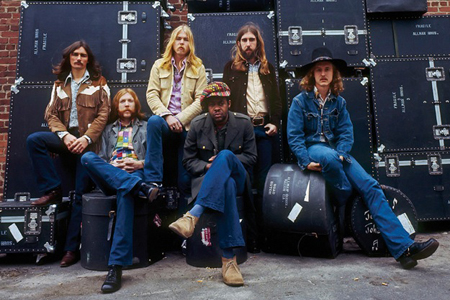
The Allmans live at Fillmore East: Dickey Betts, Duane Allman, Gregg Allman, Jaimoe, Berry Oakley and Butch Trucks.

The Allmans live at Fillmore East: Dickey Betts, Duane Allman, Gregg Allman, Jaimoe, Berry Oakley and Butch Trucks.

Tell me a bit about the structure of the show, and what songs you are looking forward to playing most.

Allman: We play a real nice mixture of songs from my solo career, some Allman Brothers tunes that I’ve rearranged to better fit the sound of my band, and a few killer covers as well.

I like playing them all, man, but I know there a few – “Melissa,” “Midnight Rider,” “I’m No Angel,” “Statesboro Blues,” – that the fans expect to hear, and that’s cool.

I really enjoyed the All My Friends DVD of the tribute concert to you last year. How did you first find out about the project, and what made you decide to do it?

Allman: My manager, Michael Lehman, brought the concept to me, and when I saw the list of names – Taj Mahal, Jackson Browne, Keb Mo, Sam Moore – plus the country guys like Eric Church, Trace Adkins, and Zac Brown. Boy, how could I say no?

I was so humbled that night. It truly was one of the highlights of my latter years, no doubt.

HOU_MUS_5115_GreggAllman2

Which Texas musician of the past – blues, rock, or otherwise – had the most impact on you growing up and during your early career?

There have been three guys from Texas who influenced me, and I’m proud to say that two of them were dear, dear friends of mine.

The first was Lightnin’ Hopkins. When we were kids, my brother loved his playing, and that’s how I came to find out about Lightnin’. The second was Johnny Winter. Johnny was another big influence on us, and he played with the Allman Brothers from time to time. Johnny sat in with us during the 2009 Beacon run, and he tore it up, boy!

The third was Stevie Ray Vaughan. Good God almighty, nobody played like that man did. We toured together in the mid-’80s, and we had some times back then, let me tell you. Texas has turned out some kick-ass players, no question.

Which contemporary Texas musician do you like most today on a strictly musical level?

Allman: I’d say Doyle Bramhall II; he is a tremendous guitar player, man. Doyle has played with Mr. Clapton and with Derek Trucks, and he added a lot to Low Country Blues. I had heard that Doyle could play, but when he got in the studio with us, he just blew me away.

Many fans were surprised that the Allman Brothers Band seemed to end so abruptly last year with no big farewell to mark the occasion. And comments in the press by yourself and others have not really been clear what, if any, future the band has either as a recording or touring unit. Where do things stand in your view today?

Allman: Right now, the plans are there are no plans. That being said, I learned a long time ago to never say never about the Allman Brothers.

 Finally, what are your own future plans? And anything you’d like to add?

Allman: I’m going to keep playing as long as I can; I still love it, man. As I’ve said many times, music is my life’s blood.

A version of this interview originally appeared at http://www.houstonpress.com

For more on Gregg Allman, visit www.greggallman.com

Posted in Allman Brothers Band | Tagged , , , | 1 Comment

Punk Legend Marky Ramone Gabba Gabbas!

Da Bruddahs: Johnny, Joey, Marky, and Dee Dee Ramone

Da Bruddahs: Johnny, Joey, Marky, and Dee Dee Ramone


In his Band of Bruddahs, Marky Ramone’s primary role was that of drummer, the pounding heartbeat and engine of so many of the legendary punk rock group’s numbers.

But over many years in meetings, rehearsals, recording studios, concert stages, and countless miles on the road in their trustworthy van, he also had another occupation: constant mediator between his lead singer and guitarist.

Acrimony had always been thick between Joey and Johnny Ramone, as the pair were on opposite of ends of the spectrum in politics, temperament, hygiene, and punctuality. Not to mention musical direction. Oh, and Joey’s girlfriend also left him for Johnny. The couple later married.

So Joey and Johnny Ramone had not spoken a word directly to each other in nearly 15 years. And when they needed to communicate with each other, they did it – through Marky.

But out of the blue toward the end of their career, Joey leaned over in the van and asked the baseball-obsessed Johnny a simple question about his thoughts on the New York Yankees chance for the pennant. The guitarist offered a brusque “I don’t know.”

MarkyRamoneCover
Joey turned back around, and radio silence continued. A chance slipped by, never to return. Johnny would not even bring himself to call his bandmate of 22 years as Joey was dying from lymphoma. Johnny himself would later succumb to cancer.

This story – and many others about the punk rock pioneers – get told in Marky Ramone’s memoir written with Rich Herschlag, Punk Rock Blitzkrieg – My Life as a Ramone (416 pp., Touchstone, $28).

“I wish they had talked, I do,” Marky says today. “At that point, Joey was on Prozac, which made him more extroverted. And John knew it was the drug talking. But Joey was a friendly guy, and at that point John should have at least made some small talk to break the tension between them.”

The man born Marc Bell was not the band’s original drummer who laid down the template for the band’s sound, but joined on the fourth album, Road to Ruin. He spent 15 years with the group (not including a hiatus after being fired for alcoholism), and played roughly 1700 of the band’s 2,263 gigs.

Even after the very last show the Ramones ever played in 1996, Marky writes how the band’s interrelations remained frosty, with the band simply leaving the stage and drifting off.

“We were brothers and band mates and business partners. But there were no goodbyes, not handshakes, no pats on the back. We just left,” he remembers. “I went back to the hotel and ordered Ben and Jerry’s ice cream and watched TV all night. The next morning, I went back to New York.”

Thankfully, the Ramones left a large catalogue of albums behind for fans to discover or rediscover. With Joey, Johnny, bassist Dee Dee, and original drummer Tommy now dead, Marky is (with apologies to later members Richie and C.J.) the last Ramone who was inducted into the Rock and Roll Hall of Fame standing.

Yet, the band is today more popular and known than they were at any other time in their actual career.

Marky Ramone today

Marky Ramone today


Their songs like “Blitzkrieg Bop,” “I Wanna Be Sedated,” “Beat on the Brat” and “Rock and Roll High School” appear on soundtracks and in TV commercials. Bands like Pearl Jam, Soundgarden, Motorhead, Green Day, and Rancid have sung their praises. And 14-year-old girls – who Marky says may or may not actually own a Ramones record – wear their T-shirts bought from the local mall.

“It’s nice to see your band’s name on people’s chests!” he says. Marky has continued to play Ramones music with different musicians. Marky’s weekly radio show, “Punk Rock Blitzkrieg” on Sirius XM’s Faction channel is also going into its tenth year of airing.

“I will continue to perpetuate the band’s name through the music around the world. The songs are too good not to be played,” he adds. “There’s a whole new generation of Ramones fans out there.”

In the book, Marky also relates tales of his upbringing as well as his stints in other groups. Prior to joining the Ramones in 1978 (four years after their founding), Marky had played drums for early hard rock power trio Dust, the gender-bending Wayne County and the Backstreet Boys, and punk rockers Richard Hell and the Voidoids.

It was while on a tour of England with that last group on a bill with the Clash that Marky saw the difference between U.S. and U.K. punk music.

“We could see that [punk music] was very political over there. Lots of people on the dole, homeless people, and the structure of the country was dwindling,” Marky says. “For our [scene] at CBGB’s, we just wanted to provide our listeners with a good time, a fun time, just throwing out those songs in rapid-fire succession. A few hours to get away from your problems.”

Problems of a different sort were apparent in 1982. For while Dee Dee and Joey had substance abuse issues of their own, Marky’s drinking got him booted from the band. It ended up being a blessing in disguise, albeit a leather-jacketed one.

“I was a periodic drinker, but it was starting to get to me. When Joey told me it was time to leave the band and get some help, it was the best phone call anybody ever made to me,” Marky says.

“The first rehab didn’t work – it was like a country club. The second one was like one of those places you see in ‘40s and ‘50s movies about alcoholics. And when I walked out of there, I never wanted to go back to a place like that. But life is an adventure, and that was part of it.”

After taking a series of odd jobs including bicycle messenger and construction demolition worker, a sober Marky was asked to rejoin the Ramones and 1987 and stayed with them until the end, and has not touched a drink since.

So it’s with some head scratching that one of his latest business ventures (he already has a line of marinara sauce) is a…beer. One whose natural brown ale “rich in flavor and aroma” has never made it to its namesake’s own stomach.

“It was some business advice I was given!” he laughs. “I swished some of it around in my mouth 20 or 30 times and then spit it out. I wasn’t going to swallow it, because it would break my sobriety.”

He adds that some of the proceeds from the beer will go to the group Musicians Without Borders, and other monies from sale of the sauce are earmarked for the charity Autism Speaks.

For more on Marky Ramone, visit his website.

A version of this interview originally appeared in The Houston Press.
Posted in Ramones, Uncategorized | Tagged , , , , , | Leave a comment

Jim Peterik Still Has That Eye of the Tiger

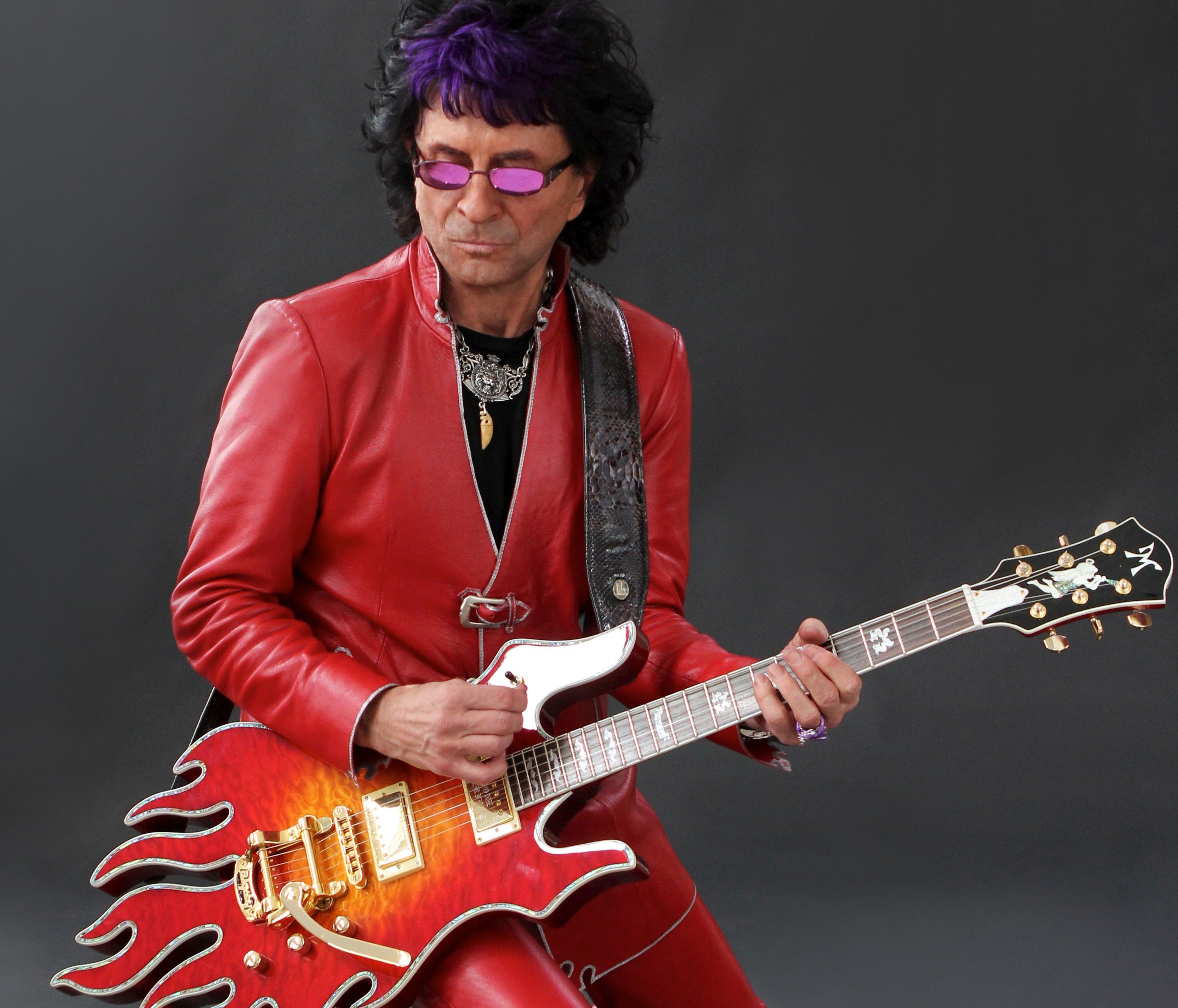
Jim Peterik today - still flaming on.

Jim Peterik today – still flaming on.

It was an answering machine message that would not only change Jim Peterik’s life forever, but lead to the creation of one of the ‘80s biggest anthems that can still be heard all over the place some three decades later.

“When I played the message, I thought someone was pranking me, because our road manager, Sal, did a pretty good impression of Sylvester Stallone,” Peterik says today.

But no, it was legit: the actor/director was putting together Rocky III and needed a blood-pumping song to start the movie off after his original choice (Queen’s “Another One Bites the Dust”) proved unattainable.

“The message was like ‘Yo, Jim, that’s a nice answering machine message you got there!” Peterik says with his own impression. “I really like that song you have called ‘Poor Man’s Son.’ It’s got a street sound, and I want that for my movie!”

When Peterik returned the message (“Call me Sly”), Stallone sent him a rough cut of the opening sequence as Peterik and Survivor guitarist Frankie Sullivan started writing. “The ‘rising up,’ that was Mr. T. and I just started with the ‘diga-dig-diga-diga’ guitar opening, and then the ‘Bom! Bom! Bom! Bom! to coincide with the punches,’ he recalls.

The song’s title came from a line that Rocky’s trainer Mickey (Burgess Meredith) says in the movie about the boxer losing his hunger and getting too soft for his pugilistic profession.

ETcover
It’s one of many stories that Peterik tills in his memoir, Through the Eye of the Tiger: The Rock and Roll Life of Survivor’s Founding Member (480 pp., Benbella Books, $16.95).

The tune went on to be nominated for an Oscar, and win a Grammy in 1983 for “Best Rock Performance.” Though, due to inner-band conflict, with Sullivan, instead of taking the stage to accept the statue, Peterik watched the ceremony on a tiny TV in his kitchen while eating frozen pizza.

In fact, Peterik’s relationship with Sullivan reads like something of a dysfunctional marriage, with the two battling constantly over the sound and direction of the band. Even as they wrote together tracks like “I Can’t Hold Back,” “The Search is Over,” “High on You,” and “Burning Heart” (the last for Rocky IV). Since the entire band was not invited to the Grammys, it was Sullivan’s thought to boycott the whole thing.

“It was devastating to not be there, but if I had gone, I would have been frozen out of every dressing room and kicked off the bus and ostracized,” Peterik says, saying he “felt like a kept man” in his usual subservience to Sullivan.

Sullivan was also pissed that Peterik was co-writing songs with .38 Special’s Don Barnes and Jeff Carlisi, resulting in some of that band’s biggest hits like “Hold On Loosely,” “Caught Up in You,” and “Rockin’ Into the Night.”

“Frankie thought I was giving away hits to the enemy, but those songs would not have happened without Don and Jeff’s participation,” Peterik says.

“Eye of the Tiger” has only gotten bigger as time has gone on, appearing in countless TV spots and movies, and is the go-to inspirational song for athletic training and exercise.

The "Eye of the Tiger" lineup of Survivor: Stephan Ellis (bass), Jim Peterik (vocals/guitar), Dave Bickler (vocals), Marc Droubay (drums), and Frankie Sullivan (guitar).

The “Eye of the Tiger” lineup of Survivor: Stephan Ellis (bass), Jim Peterik (vocals/guitar), Dave Bickler (vocals), Marc Droubay (drums), and Frankie Sullivan (guitar).

“If you had told me that in 2014 it was still be such a big song and motivating people, I wouldn’t have believed you!” Peterik says. “It just shows that iconic [songs] aren’t born, they become that.” He would leave the band he co-founded, return, and leave again for good in 1996.

The break from Survivor allowed Peterik time to pursue a bevy of projects including solo records, collaborations, and a reunion with his first band, the Ides of March. The Chicago-based group had a #1 hit in 1970 with “Vehicle,” a tune that Peterik wrote and sang lead on.

Along with Chicago and Blood, Sweat and Tears, the Ides of March helped introduced horns to rock bands, though the trend was short lived.

“Musical tastes just shifted. Clive Davis came in and told us ‘horns are out.’ And then our managers said ‘horns were passe,’ and this was around 1972,” Peterik says. “So, being young and stupid, we listened, and our next records had more of a harmony, Crosby, Stills and Nash vibe.”

Last year, the Ides of March headlined a 50th anniversary concert for the group that also included performers and various lineups from a number of Chicago-area rock acts like the Buckinghams, The Cryan’ Shames, and the New Colony Six.

But a few days earlier, Peterik attended a much more solemn occasion – a church memorial service for the second Survivor vocalist, Jimi Jamison, who died suddenly from a heart attack on August 31, 2014.

Peterik (right) with former Survivor singer Jimi Jamison worked together after the band dissolved.

Peterik (right) with former Survivor singer Jimi Jamison worked together after the band dissolved.

Jamison and Peterik were particularly close, and collaborated outside of the band. Peterik recalls getting the news while at home celebrating his 42nd wedding anniversary.

“That was a tough day, really tough,” he says. “I get this call from a sobbing young lady who turned out to be Amy Jamison, one of Jimi’s daughters. And when she stopped crying enough to talk, she told me he’d died. I said that was impossible. I had just talked to him!

“But he was my beloved friend one of the greatest talents I ever worked with, and he was gone,” he continues. “He was such a soulful cat. I felt like I was punched in the heart.”

At the service, which was “more rock concert than church event,” Loverboy’s Mike Reno sang “Almost Paradise” with his wife, while Peterik offered “Streets of Heaven” from a Jamison solo record. He also wrote a new song for the occasion, “Heaven Passes the Torch,” which was sung by protégé Marc Sherer to accompany a slideshow of Jamison’s life.

Through the Eye of the Tiger also has plenty of humorous stories from Peterik’s musical journey’s outside of Survivor and the Ides of March, like some of his commercial work. That’s him singing on the Sunkist soda “Good Vibrations”-takeoff commercial from 1984 (he would eventually collaborate with a real Beach Boy, Brian Wilson, on “That’s Why God Made the Radio” for the band’s recent reunion record).

And when he was offered the chance to pen a song for Johnny Rivers that needed some Spanish-sounding words, the non-bilingual Peterik cobbled some phrases together he thought sounded ok. That is, until a bilingual studio engineer pointed out that “Viva Diablo” translated to “Long Live the Devil.”

“Johnny’s face was so red and his veins were popping out and he’s screaming at my publisher and my publisher is screaming at me. I mean, I thought ‘viva diablo’ sounded Spanish. What did I know?” Peterik laughs.

After a call to the local Spanish consulate for translation (“This was in the pre-internet, covered wagon days”), he found some new words, substituting “angel” for “devil.”

Peterik says he doesn’t know if Rivers ever actually released the song, but knows that David Hasselhoff recorded a version a decade later.”

A version of this interview originally appeared in The Houston Press.

Posted in Survivor | Leave a comment

Welcome Back, John Sebastian!

John Sebastian today: still a traveling troubadour.

John Sebastian today: still a traveling troubadour.

“Houston had a special message for me as a young musician, and it came directly through Lightnin’ Hopkins,” John Sebastian says from his home in New York.

But the former frontman of the ‘60s band The Lovin’ Spoonful and solo artist didn’t just get the Houston vibe through the music of the storied and legendary bluesman. He got it up close and personal with the man. Real personal.

“Lightnin’ would stay with me in New York when he came to play at the Village Gate or some other places in midtown. And it was hilarious, our relationship was completely obsequious. It became all about getting Lightnin’ to the gig, carrying his guitar, and getting him his pint!” Sebastian laughs.

John Sebastian first encountered Hopkins when the bluesman appeared on the same television show as Sebastian’s father, who was a classical harmonica virtuoso. “His playing was astonishing. By the end of the afternoon, I wanted to be Lightnin’ Hopkins!” he recalls. Soon, the teenaged boy was acting as unofficial guide and valet for the elder performer.

“I began to sort of speak for him because he didn’t like talking to white club owners. He also needed an interpreter because he had this thick accent and would slur his words on purpose as a device to back off the white guys,” Sebastian continues.

And when he finally got to Houston? “It was a mythical thing to me, this city,” Sebastian laughs. “I was like ‘wow, this is a modern city with skyscrapers! I thought I was going to see a Centerville or something!”

Recently, John Sebastian returned to the not-so-mythical city for a “One Guy, One Guitar” show performing material from his Spoonful and solo catalogue. “I’ll have my Baritone and by big fat arch top guitars. Me offering my renderings of songs that had 18 overdubs originally!”

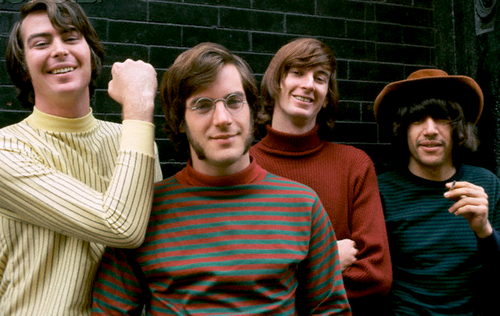
In the mid-‘60s, the Lovin’ Spoonful – Sebastian (vocals/harmonica/guitar/autoharp), Zal Yanovsky (guitar – later replaced by Jerry Yester), Steve Boone (bass), and Joe Butler (drums/vocals) racked up a string of chart hits including “Do You Believe in Magic?” “Summer in the City,” “Daydream,” “Did You Ever Have to Make Up Your Mind?” “You Didn’t Have to Be So Nice,” and “Darling Be Home Soon.”

The original Lovin' Spoonful: Joe Butler, John Sebastian, Steve Boone, and Zal Yanovsky

The original Lovin’ Spoonful: Joe Butler, John Sebastian, Steve Boone, and Zal Yanovsky

Sebastian and Yanovsky – who became fast friends – actually met at Cass Elliot’s place to watch the Beatles make their debut on “The Ed Sullivan Show” in 1964. All three were also part of a group called the Mugwumps (the story is told in the Mamas and the Papas single “Creeque Alley”).

“Cass had this kind of salon going, even before she had any money. She introduced Zal and I just like she did for Crosby, Stills and Nash. And I think she enjoyed the ‘den mother’ role,” Sebastian says. “It was almost as if she could have all these beautiful boys at her feet in a way that smokin’ hot babes couldn’t.”

But with Yanovsky’s departure due to a drug bust, and his own desire to write more personal, mellower music in the singer/songwriter vein, Sebastian left the Spoonful (who were inducted into the Rock and Roll Hall of Fame in 2000). He then put out albums like John B. Sebastian, The Four of Us, and Tarzana Kid.

Lesser known was his occasional collaboration with the Doors, via their producer, Paul Rothschild. That’s Sebastian blowing harp on “Roadhouse Blues” from Morrison Hotel. He also appeared on stage with them and could be heard on a couple of live records.

“They weren’t anxious to advertise or make a fuss that I was on that record, and I got that, I did. The atmosphere for me was that they’ve already been [recording] for awhile, but Paul was trying to get them to be consistent in the studio as Jim was becoming more erratic,” Sebastian recalls.

“I was there and Lonnie Mack was playing bass to kind of snap Jim [Morrison] out of it to be more responsible,” he continues. “And I think it worked beautifully. Jim came in very together, and that session didn’t have any kind of drama. We got the job done.”

Sebastian also made an impromptu appearance at Woodstock, playing a short solo set and with borrowed equipment. Asked to name the one reality about Woodstock that doesn’t jibe with the myth, he says that with a few notable exceptions (including Sly and the Family Stone, Richie Havens, and Creedence Clearwater Revival), “the music wasn’t that great.”

John Sebastian in 1970

John Sebastian in 1970

He chalks that up to the fact that, because the festival ran well behind schedule, some acts spent up to nine hours onstage or in the back tent just waiting to go on.

“The real star of Woodstock was the audience, and the way they maintained and kept things relatively calm,” he says. “That was the real victory of the show.”

Ironically, his only solo top 40 hit – which went all the way to #1 in 1976 – was a one-off job, the theme to the TV show “Welcome Back, Kotter.” In fact, the show was originally titled just “Kotter,” but the song’s obvious power and hook made producers change the name. And Sebastian knew it was going to be a hit.

“I knew it immediately. I spent one day writing it and stuck on the tail end this [bit] about ‘welcome back, welcome back, welcome back.’ And I knew it was fucking catchy!” he laughs. “ I finished it the next day, made the demo that afternoon, and I think I was in the studio the next available day. It all happened very fast.”

Unfortunately, the scheduled drummer for that session – Kelly Shanahan – couldn’t make it to the studio. Which explains why there are no drums on the track. And why Shanahan hasn’t collected any lucrative royalty checks since then.

“To this day,” Sebastian says, “Kelly Shanahan goes ‘god DAMN it!”

This interview originally appeared in The Houston Press.

Posted in John Sebastian | Leave a comment

Gary Wright Still Weaving Dreams Today

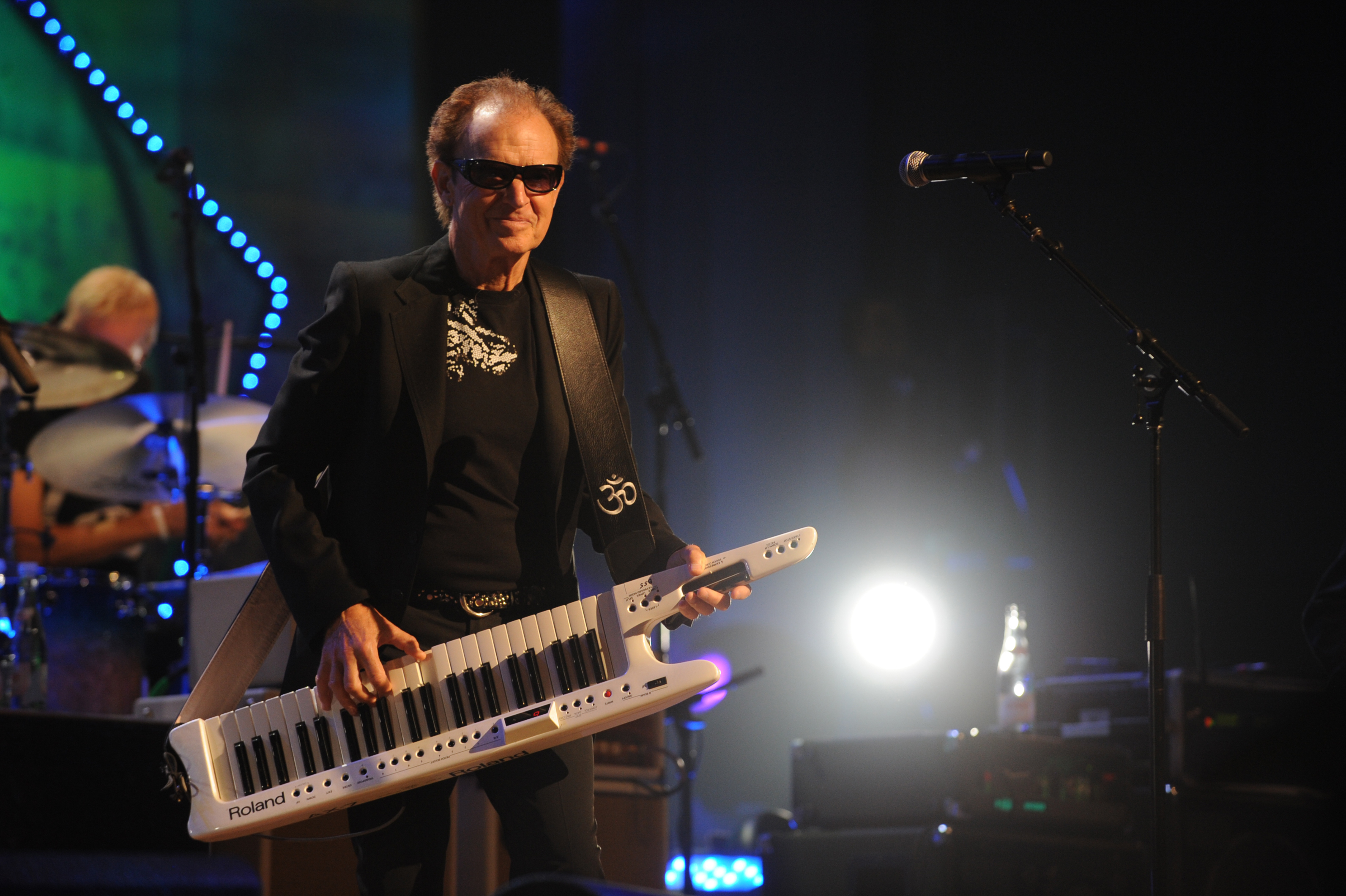
Gary Wright today. Photo by Rob Shanahan/Courtesy Tarcher Books

Gary Wright today. Photo by Rob Shanahan/Courtesy Tarcher Books

There aren’t many more solid instances of one singer being so clearly connected to one song in the classic rock canon than Gary Wright with “Dream Weaver.”

The 1976 single – recorded with all synthesizers – reached #2 on the Billboard chart, has been a constant presence on radio and in movies (from Wayne’s World to Toy Story 3), and is easily Wright’s best known number.

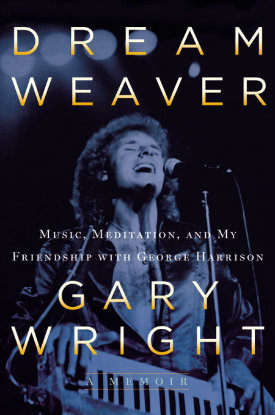
In fact, “The Dream Weaver” has also become a nom de plume for Wright, the URL of his official website, and the title of his autobiography (Dream Weaver: Music, Meditation, and My Friendship with George Harrison, 256 pp. Tarcher, $26.95).

But the song – about God and inspired by Wright’s intense devotion to Hindu religion and teachings – almost never made it on the album that would eventually bear the same name.

“It was the last song I put on the record, and I thought it was a nice little thing, but didn’t put any credence in it. I didn’t think it would be [a hit], but it took on a life of its own,” Wright says today. “And I feel very blessed and fortunate that I was able to have written a song that reached that kind of status.”

DWcover

In fact, Wright says that he has gotten e-mails over the years from people telling him that they were suicidal, but ultimately changed their thoughts after hearing the song’s message of cosmic hope.

“I’m not saying that to glorify myself or say I’m some kind of spiritual giant, but I’m happy to have been an instrument in helping these people,” he offers. “Writing that song was part of my own spiritual journey. And with all synthesizers, when it came out, it was just such a different sounding kind of record.”

“Dream Weaver” and the record’s other hit single, “Love is Alive” weren’t Wright’s first brush with success either. He was the co-vocalist/keyboardist/songwriter with the well-regarded late ‘60s band Spooky Tooth (with featured the U.S.-born Wright with four Brits). The band was set to take off after the commercial and critical success of their sophomore release, 1969’s Spooky Two.

But in one of the more tragic career blunders in classic rock history, the band was coerced into making their next effort – released the same year – a collaboration with French electronic artist and “found object” composer Pierre Henry called Ceremony. The concept effort took the form of a largely-instrumental church service, and the hideous cover featured a drawing of a man with a nail in the back of his head and a trickle of blood down the neck.

The only nail, however, relating to the band was the one Ceremony put in the coffin of their rising career. Wright left the band, which released one more album, and would reunite live and record sporadically through the decades.

“That was a really, really bad call by the record company. And Ceremony was mostly [Henry’s] electronic music. Our contributions were minimal because his stuff was mixed really high,” Wright says. “I already had a bunch of songs written for the next Spooky Tooth record that ended up on my first solo album. The next [Spooky Tooth record] could have been a big success.”

As the title indicates, Wright’s book is about more than just his musical career. Some of the best passages describe his deep and lasting friendship with George Harrison.

Initially bonding over music (Wright played on the ex-Beatles first solo effort, All Things Must Pass), the two began to talk about more religious and spiritual matters, in particular the brand of Hinduism and guru teachings of which Harrison was a devotee.

George Harrison at the Kali Temple in India.

George Harrison at the Kali Temple in India.

“George turned me on to that whole world, and it was and is such a big part of my life. And it was important for me to include that in the book,” Wright says. “He was the catalyst that started the whole thing, but a lot of the studying and meditating I did on my own.”

In fact, Harrison would invite Wright to seminars and pilgrimages to India, during one of which he also met Indian sitar master Ravi Shankar. Wright would make other trips on his own to the country.

The friendship between Harrison and Wright would last until Harrison’s 2001 death. It produced at least one songwriting collaboration, “Discover Yourself,” which is available as part of the e-book’s publication.

“When you’re philosophically aligned in a friendship to someone else, you grow a lot closer. And we had that. George was a deep and wonderful human being and amazingly creative,” Wright says. “He was also really, really funny. A lot of people don’t know that side of him.”

Gary Wright’s main instruments have been the keyboard and synthesizer – his Dream Weaver record featured no guitars, save for a brief bit on one song (though he wrote the title track on an acoustic guitar). Still, even he has been impressed at the advances in musical technology since the ‘70s.

Gary Wright in full flight, 1976. Photo by Bruce Kessler/Courtesy of Tarcher Books.

Gary Wright in full flight, 1976. Photo by Bruce Kessler/Courtesy of Tarcher Books.

“It’s quite amazing what’s going on now. But I think some [musicians] have gotten too wrapped up in the technology part, and songwriting has suffered,” he believes. “People [today] may have amazing voices, but I miss the artists with unusual lyrics and melodies like Jackson Browne, Joni Mitchell, and Crosby, Stills and Nash.”

In addition to the Dream Weaver book, Wright has released some digital-only music, including a new compilation, Best of the Best, and a box set of five albums he did for Warner Brothers. He also embarked on a short, “Storyteller”-style tour with music and stories.

For more on Gary Wright, visit www.thedreamweaver.com

This interview originally appeared in The Houston Press.

Posted in Gary Wright | Tagged , , | Leave a comment

Andy Powell of Wishbone Ash’s Prog Rock Journey

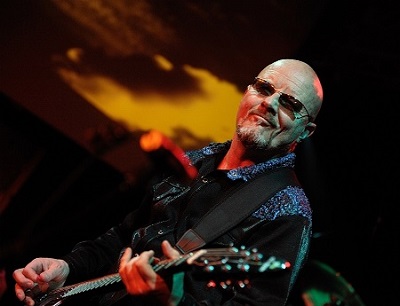
Andy Powell today

Andy Powell today

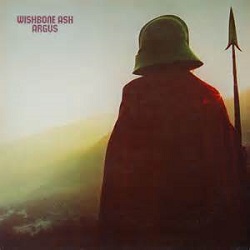
One of the greatest prog rock albums ever, Wishbone Ash’s 1972 epic Argus also remains the English band’s best known and definitive sonic statement.

And while other acts in the genre like Yes, Jethro Tull, ELP, and Genesis have wider name recognition, Wishbone Ash have cultivated a cult following by consistently touring and recording in some formation since their founding in 1969.

The current lineup, which features original co-vocalist/guitarist Andy Powell, along with Muddy Manninen (guitar), Bob Skeat (bass), and Joe Crabtree (drums), is performing Argus in its entirety on its current tour. Though there is still plenty of stage time to explore both the band’s rich history and its brand new record, Blue Horizon (Solid Rockhouse).

“It completely works, because when we put these albums together in the ‘70s, we structured it so that you could listen to them in their entirely” Powell says today. “But at 45 minutes or so, Argus only takes up a portion of our set. We’re about nostalgia, but it’s not the whole story. Wishbone Ash is still a work in progress, and I couldn’t be in a band that wasn’t still being creative.”

Indeed, while fans will undoubtedly cheer at the first notes of Argus tracks like “Sometime World,” “Blowin’ Free,” “The King Will Come,” and “Warrior,” Blue Horizon shows a classic rock band not treading water.

The band's 1972 opus, "Argus."

The band’s 1972 opus, “Argus.”

“We had some people outside the band contribute music and lyrics. And it’s an eclectic group of songs,” he offers. “It’s got some prog, some Celtic, and even a bit of California rock. It gave us musicians a chance to spread out.”

Lyrically, some songs address more mature topics. In “Take It Back,” Powell’s son Aynsley pens a tale of a man who had a lot of dreams and plans in his youth, only to find them curtailed by decisions of more staid career and family options. He finds himself reassessing everything once the kids are out of the house and the wife has left him, and to “take back” his life and potential.

“It’s that mid-life thing!” Powell laughs. “You get out there and sow your wild oats and then you settle down. But life is a circle. My son is only 31, but he’s seen my trials and tribulations. And I think that inspired him!”

The record also features Wishbone Ash’s signature twin guitar harmony. And while Thin Lizzy and – later – Iron Maiden would be most identified with the sound, Wishbone Ash was there first.

Powell says that he and Manninen still have to practice, though, to get the highly-synchronized style down just right. “One of us will start a line, and the other will join in,” he says. “At this point, it’s almost inherent, and we try to make a clean sound. It gives the music a richness, and the bass moves against it.”

Ah, the bass. For the first decade-plus of the band’s heyday, Powell was used to seeing his co-vocalist, Martin Turner, in the spot, along with Steve Upton on drums and Ted Turner on guitar (no relation to Martin, Ted Turner was replaced in 1974 by Laurie Wisefield).

And while Powell would be the only constant in a revolving door lineup that saw members come, go, and sometimes return. A conflict arose when Martin Turner began performing with a group as “Martin Turner’s Wishbone Ash,” causing some confusion among fans and promoters.

After much legal wrangling, a judge found last year in favor of Powell’s exclusive right to use the band’s name. An appeal by Turner was dismissed in February (though he is allowed to reference himself as a founding member of the band and bill his shows as “Martin Turner plays the music of Wishbone Ash.”

“It’s a sad fact of life that sometimes bands of our longevity get into these lawsuits, but I needed to protect myself and protect our name. And I’ve never had any legal issue before in 44 years of being in and running this band,” Powell ponders.

“It wasn’t a pleasant thing to go through. But you can’t leave a band for 15 or 18 years or whatever and then come back and put your name on it. It could have been handled better, and there’s a lot of wound-licking going on now.”

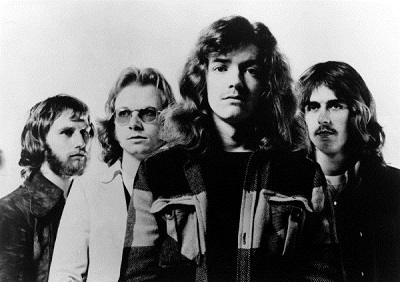
The band in the early ’70s: Steve Upton, Andy Powell, Martin Turner, and Ted Turner

The band in the early ’70s: Steve Upton, Andy Powell, Martin Turner, and Ted Turner

Still, Powell likens bands to sports teams, where members come and go over the years. And he believes that rather than acting out of malice, Turner just got and acted on “some really bad advice from people with a vested interest in the name and its [financial] benefits.”

When discussing the band’s visits to Texas, Powell remembers one ugly occurrence at Wishbone Ash’s first show in Austin – which he pegs around 1973. That’s when a hot dog vendor at the venue was shot and killed by an audience member over a dispute involving food.

And while Powell ponders that “illicit substances may have been involved,” the band was not told about the tragedy until after the show. Though he does remember seeing the audience “scattering to the sides” at one point.

The incident inspired the song “Rock ‘n Roll Widow” about the vendor’s shell-shocked spouse, which they still perform onstage.

As for Houston, Powell thinks fondly on the band’s first tours which brought them to the city. “I remember the great hospitality there,” he says. “Growing up in Britain, things were very reserved and conservative. But Houston was different, and Texans in general were very open and friendly.”

He also notes that playing large stadiums in Texas with the likes of The Who and Three Dog Night encouraged Wishbone Ash to expand its musical into grander themes and ideas.

“It made us think bigger and had an impact on our music,” Powell sums up. “And Argus came out of playing those bigger venues. You had to communicate with the audience in a different way than the clubs.”

A version of this interview originally appeared in The Houston Press

Posted in Wishbone Ash | Tagged , , | Leave a comment

More with Don Felder on Eagles Sometimes Hostile History

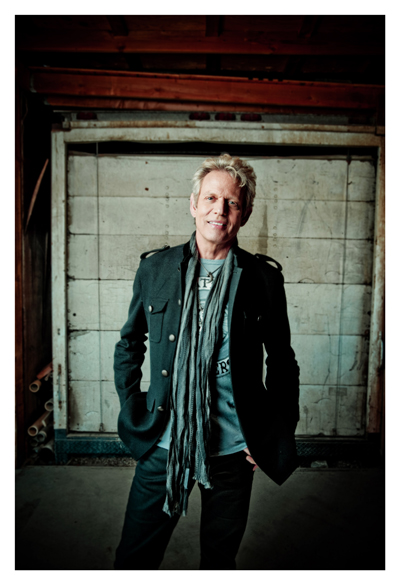
Don Felder today.

Don Felder today.

When guitarist Don Felder joined the Eagles in 1974, he was seen by many as a sort of bridge member as the band was morphing from the more countrified lineup with Bernie Leadon and Randy Meisner to the latter, rockier quintet that also included Timothy B. Schmit and Joe Walsh.

But – just in case anybody ever thought any differently – the Eagles were always run by the not-always-so-benevolent dictatorship of co-founders Don Henley and Glenn Frey. And while Felder was in the lineup when “Hell Froze Over” and the band reunited in 1994, he was terminated in 2001 after purportedly questioning the split of the financial pie.

Felder in turn sued for wrongful termination and breach of contract and fiduciary duty (the suit was settled out of court years later), raising Henley and Frey’s ire. Felder’s no-holds-barred autobiography, Heaven and Hell: My Life in the Eagles (1974-2001) ramped ill will up even more.

Felder contributed his reminisces to the recent lengthy History of the Eagles documentary DVD, sitting for what he says was about 3 ½ hours of interviews in which about five minutes ended up on screen.

And while he doesn’t necessarily quibble with his onscreen time, saying “the full story would take about 12 hours,” he was taken aback at how much vitriol Henley and Frey apparently still hold out for him. The pair refer to their former band mate as “Mr. Felder” throughout, getting plenty of shots in. One scene is even edited to show a tearful Felder bolting from his interview chair when discussing his dismissal.

“I felt a lot of the history of the band members before they joined the Eagles was left out, and a lot of [us] were in popular bands before. Most of it was about Don and Glenn. But they controlled it, owned it, and paid for it, so they could do what they wanted,” Felder says today. “But it did take me back how angry they were and how much venom they still had toward me, especially Glenn.”

Still, Felder says he got a kick out of seeing old footage and remembering how “skinny we all were and how long our hair was.” He also juxtaposed in his mind viewing the at-the-time recent Beyoncé Super Bowl halftime extravaganza with pyro, dancers, lip syncing, and effects versus Eagles shows of “five guys in ripped jeans and football jerseys with no concern about making a visual statement playing and singing live” (though, to be fair, the comparisons are hardly comparative).

Outside of the Eagles, Felder has steadily recorded and toured on his own, as well as with others like the Bee Gees, Diana Ross, and Stevie Nicks, while contributing the occasional song to a film. With no chance at singing in a band that already had three lead vocalists, he also had to find his performing voice.

Reunited copy

The reunited Eagles during the “Hell Freezes Over” period: Joe Walsh, Timothy B. Schmit, Don Henley, Glenn Frey, and Don Felder.

Interestingly, it was Felder who scored an early post-Eagles breakup hit in 1981 with the title song to the cult favorite animated film Heavy Metal. Although the tune could have actually appeared on the Eagles last pre-breakup record, having begun life during the recording of The Long Run.

“There were rigid constraints writing and recording songs with the Eagles. You had to be in ‘Eagles World’ and anything outside of that just didn’t fit. And it might be that some guys couldn’t play the parts,” Felder says today.

“So I wrote this great guitar track and we recorded it, but we didn’t finish it because we ran out of time. A couple of years later, I rerecorded the basic track and wrote new lyrics, and that became ‘Heavy Metal.’”

His first solo record, Airborne, came out in 1983. It would be almost 30 years before he released the follow up, Road to Forever (recently re-released as an extended edition with bonus tracks).

Even with all the bad blood that’s flowed amongst them, Felder has hoped that some bridges could still be mended, but says even his divorce from his wife of 29 years has been much more amicable.

“I tried numerous times to reach out to the Eagles in a brotherly way to dispel a lot of anguish, but the only responses I’ve ever gotten is from their lawyers. So I’ve decided to move on,” he says.

“But if they ever wanted to have lunch or try to be friends again, I’d be up for that. I don’t want anything from them and I don’t necessarily want to play with them again,” he continues. “I would not want to go back into that environment with those [bad] feelings. I just want to resolve it and go on in that happier way. But they’re just not interested. And I’m thinking, ‘Gee, didn’t [Henley] write ‘Get Over It?’”

Even without his former band, though, the 68-year-old Don Felder is not just sitting around collecting royalty checks. His concert schedule includes classic rock package tours, band dates, and solo acoustic shows ranging from charity concerts to “billionaire birthday parties.” And he’s already working on a new record.

“At my age, if I’m not loving what I do, I should just quit. But music drives me,” Felder says. “And I’m writing constantly. Either using a program called Master Writer on my computer, or singing into my iPhone while driving!”

Portions of this interview originally appeared in The Houston Press.
Posted in Don Felder, Eagles | Tagged , , , , , | Leave a comment